Poetry Friday: Joyce Sidman’s “First Life”

poetry-friday-1-1

I’m immersed in a poetry project that is challenging me in every way imaginable, so I’ve been reading stacks of poetry books for guidance and inspiration. Over the past week, I’ve returned to Joyce Sidman’s Ubiquitous: Celebrating Nature’s Survivors (Houghton Mifflin Books for Children, 2010) again and again, savoring Sidman’s masterful use of language and form.

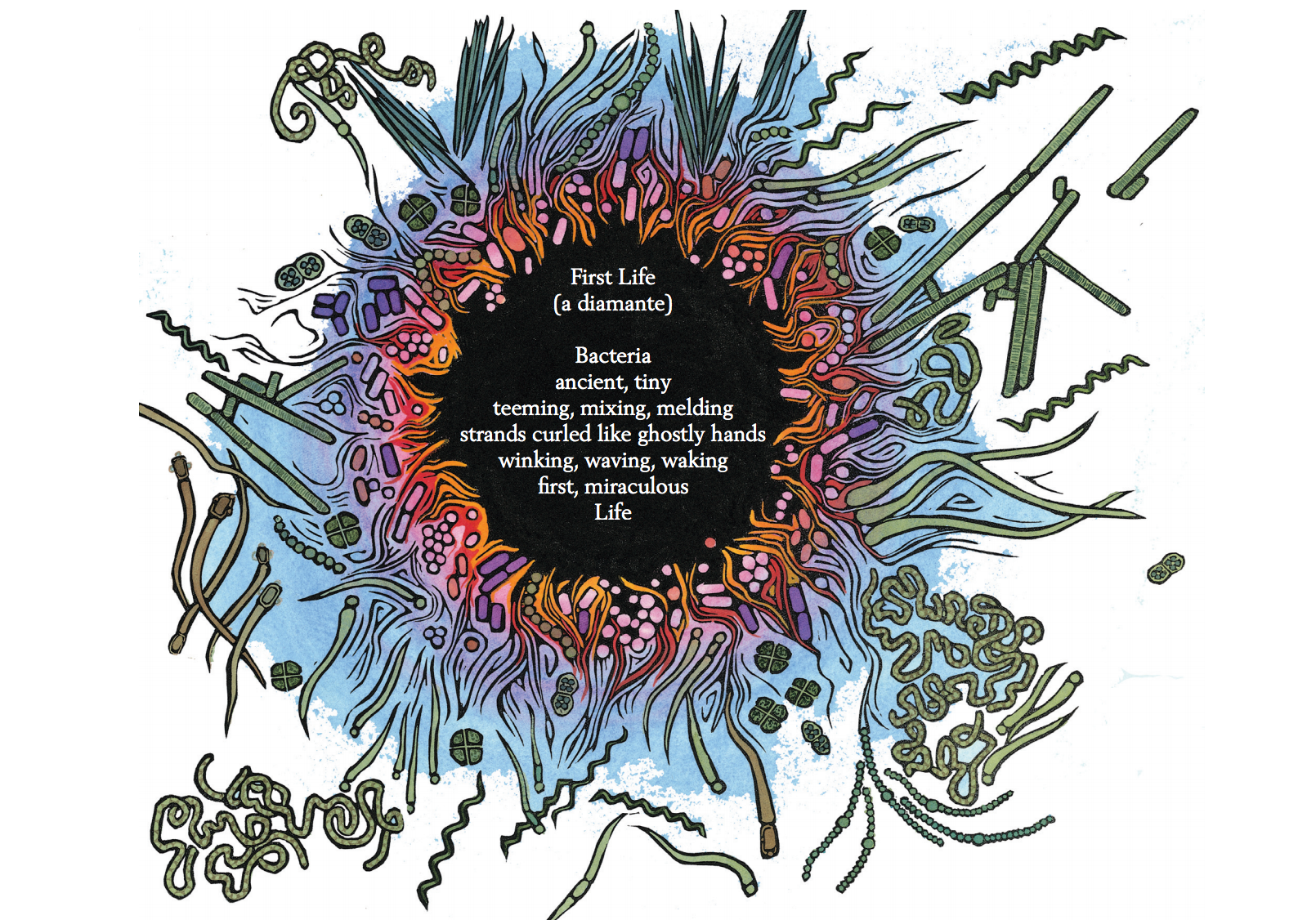
The book’s opening poem, “First Life” has become one of my favorites.


Screen Shot 2015-07-08 at 1.29.26 PM

This screen shot comes the excellent Teacher’s Guide Joyce wrote, which is available here.

Sidman finds beauty and wonder in all these species, from the lowliest bacteria to wolves, sharks, and humans. The poems in this collection truly are celebrations of  these survivors. In her author’s note, Sidman tells readers that “…99% of all species that have ever existed are now extinct…the ones who made it, and are thriving, are indeed remarkable.

Please be sure to visit Katie at The Logonauts for the Poetry Friday Round Up.

Slice of Life: Wonder Poems

                     11454297503_e27946e4ff_h   new-teachers-write-2015

For the fourth summer in a row, Kate Messner, Gae Polisner, Jo Knowles, and Jen Vincent are hosting Teachers Write!, a wonderful online summer writing camp. What began as the result of a comment during a Twitter chat has grown into a huge community and even inspired a book, 59 Reasons to Write (Stenhouse, 2015).

Yesterday, Kate kicked off the 2015 season with an invitation to wonder. Kate writes that wondering is where authentic writing starts, that “Wonder is essential for writers, but sometimes, we don’t leave time for it in our daily task-finishing, dinner-making, laundry-sorting lives.” Unfortunately, this is often true in our classrooms, too.

I usually make time for wondering during my drive to work and when I’m walking my dog, so it didn’t take me long to come up with a list, which soon morphed into a poem:

What wonders does the world behold?
a chirping robin greeting the dawn
a mighty river carving stone
a million stars shining in the sky above
the ringing of a telephone
the warmth of your hand in mine
finding a friend in the pages of a book.

Not sure what I would do with this list, I went about my morning. Within an hour, I heard a story on NPR about the NASA’s New Horizons mission to Pluto. Of course I started wondering what discoveries will be made about this most-mysterious non-planet. The similarities between the word “planet” and “Pluto” popped out at me, and I started thinking about how to work this into a poem.

J. Patrick Lewis says that in poetry, like architecture, “form follows function.” My work-in-progress has me thinking a lot about poetic forms. Lately, I’ve been working on a diamante (Which J. Patrick Lewis doesn’t consider a true verse form; read why here.) because it seemed like the form might help me accomplish my purpose for writing. This form also seemed like it might work for a planet/Pluto poem. Here’s a draft:

Planet
celestial, spherical
orbiting, rotating, reflecting
rock, solar system, outcast
freezing, wandering, eluding
distant, mysterious
Pluto

While there are parts of this I like, I wasn’t thrilled with it. Still wondering, I did a little research. Tricia Stohr-Hunt’s blog, The Miss Rumphius Effect is a treasure-trove of poetic resources, so I checked her site for more information. Coincidentally, Tricia’s post yesterday was about cinquains, another short form with a strict pattern. So I decided to try the Pluto poem as a cinquain.

Frozen,
rocky mystery
wandering at the edge
of our solar system; outcast:
Pluto

I’m still pondering this one, but playing around with different forms was fun. It also helped me see a new possibility for a poem that’s been challenging to write. In addition, a few implications for teaching became clear as I was writing.

Asking a child, “What are you wondering about?” is such simple act, yet how often do teachers do it? What a gift it would be to ask our students this fundamental question each morning! What a list kids would generate! If we did this, then all the moaning about not knowing what to write about or groaning about making revisions might fall by the wayside. When you’re truly invested in what you’re doing, it doesn’t feel like work. And who knows where their questions will lead? 

Thank you Kate, and everyone at Teachers Write! for the inspiration, and thank you to Stacey, Tara, Dana, Betsy, Anna, and Beth for this space for teachers and others to share their stories each Tuesday. Be sure to visit Two Writing Teachers to read more Slice of Life posts.

Slice of Life: Astray on a Summer Breeze

11454297503_e27946e4ff_h

How to teach poetry? “This has always worked: find the material in your own life.”
~ Naomi Shihab Nye ~

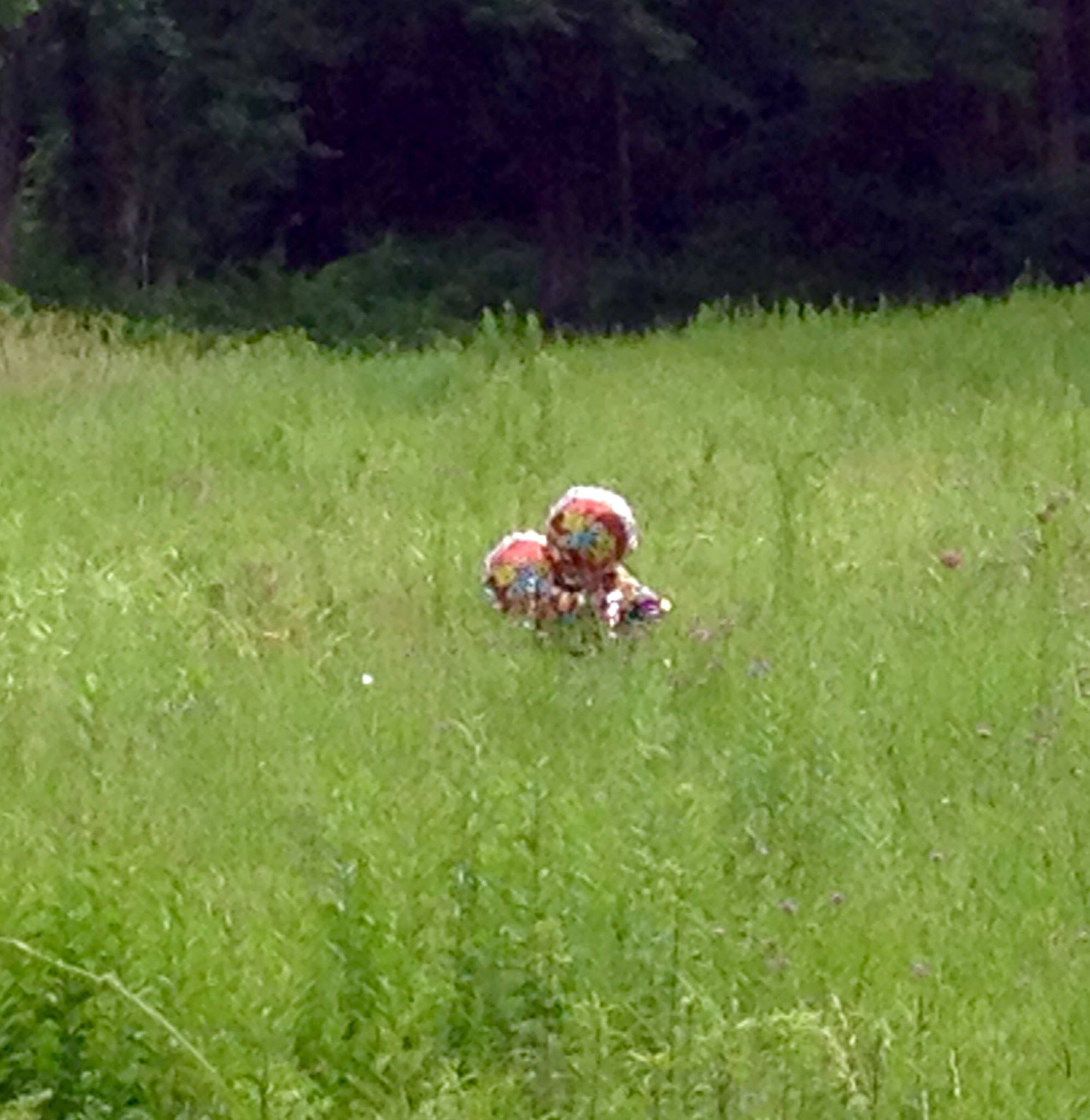
Penny Kittle tweeted this last night from the Boothbay Literacy Retreat, quoting a line from Naomi Shihab Nye, the evening’s “Distinguished Lecturer.” I had been thinking about this very idea earlier in the afternoon after I saw this on my way home:

11055357_10204625144249428_5430622315365011610_o

Needless to say, I did a double take. So I drove home, parked the car, and the dog and I walked back to the field to capture the moment. The camera on my phone really doesn’t do justice to the scene, so I’ll try to paint a picture with words.

A balloon bouquet,
astray on a summer breeze,
touched down in a
sun-drenched meadow
to dance with butterflies.

I hope you all have a chance to enjoy a few sun-drenched afternoons this summer!

Thank you to Stacey, Tara, Dana, Betsy, Anna, and Beth for this space for teachers and others to share their stories each Tuesday. Be sure to visit Two Writing Teachers to read more Slice of Life posts.
Poetry Friday: A Treehouse All Your Own

poetry-friday-1-1

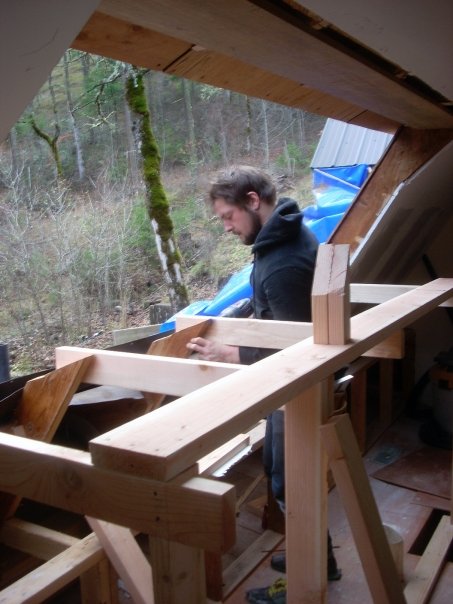
Each month, Michelle Heidenrich Barnes has a poetry challenge over at her blog, Today’s Little Ditty. This month, her guest poet, Corey Rosen Schwartz, challenged readers to “Write a stanza or two about building a treehouse and challenge yourself to come up with a rhyme word that is two or more syllables. “

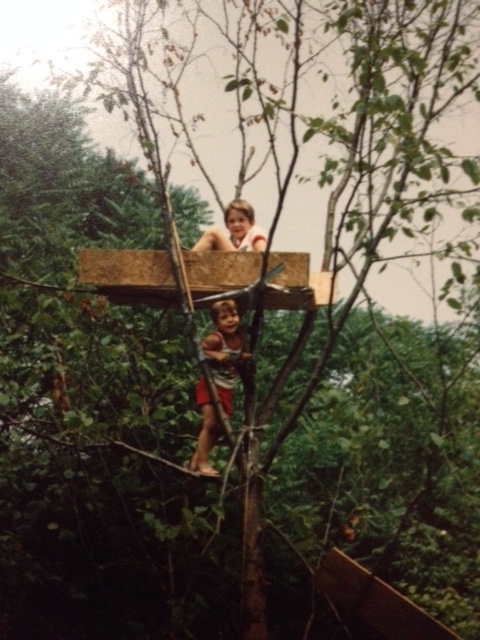
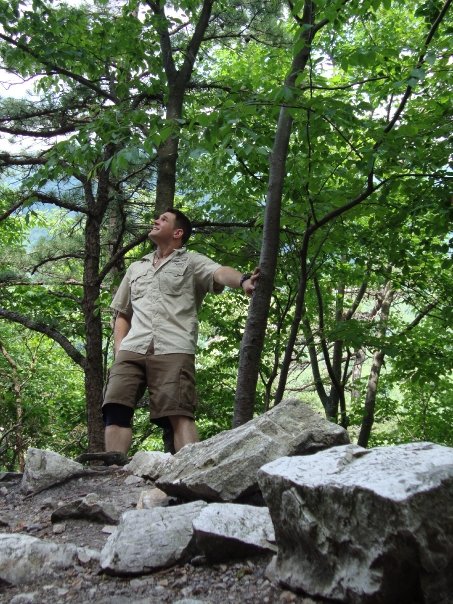
Well, I managed one pair of rhyming multisyllabic words in this poem inspired by my boys. And although their tree climbing days are long past, they still like to play in the woods.

IMG_2938

When you’re feeling boisterous,
rowdy, shouty, roisterous,
go outside and find a tree
that you can call your own.

One that has a flat, wide space
between the branches that can brace
a treehouse hideout
that you can call your own.

Find a friend to help you hoist
smooth pine planks for each floor joist
plywood walls and a flat tin roof
that you can call your own.

Once you’ve built your private lair
twenty feet up in the air,
you can jump and stomp and shout
in a treehouse all your own.

Be careful as you prance about.
The ground’s a long way down!

Catherine Flynn, ©2015

               4927_579285156077_2685386_n    1934992_1063901857594_7838799_n

Please be sure to visit Carol at Carol’s Corner for the Poetry Friday Roundup.

Slice of Life: Trusting Myself

11454297503_e27946e4ff_h

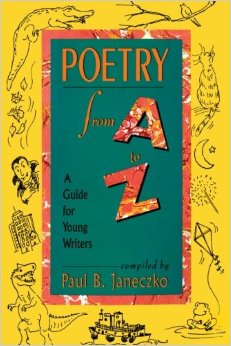
My school is undergoing some renovations this summer and several teachers are moving to new classrooms. Because of this, people were cleaning and weeding like mad during the last few weeks of school. I am not moving, but should have been doing my own weeding. Instead, I couldn’t resist going through other people’s discard piles. Unbelievably, I found a copy of Paul B. Janeczko’s Poetry from A to Z: A Guide for Young Writers (Simon and Schuster, 1994).

51MHmbefxrL._SY344_BO1,204,203,200_

I’ve been savoring this anthology, which includes poems by Valerie Worth, Myra Cohn Livingston, Ralph Fletcher, Eve Merriam, and more. Many poems are accompanied by notes of advice and guidance from the poets themselves. My favorite so far is this piece of wisdom from Georgia Heard:

“I write first drafts with only the good angel on my shoulder, the voice that approves of everything I write. This voice doesn’t ask questions like, ‘Is this good? Is this a poem? Are you a poet?’ I keep that voice at a distance, letting only the good angel whisper to me: ‘Trust yourself.’ You can’t worry a poem into existence.”

This is exactly the encouragement I need as I write the first draft of a poetry project I’ve been working on. School demands have been draining and distracting me for the past few months, so I haven’t gotten too far beyond pages of notes. But now that summer is here, I’ll be at my desk every day with that good angel on my shoulder, trying not to worry, trusting myself.

Thank you to Stacey, Tara, Dana, Betsy, Anna, and Beth for this space for teachers and others to share their stories each Tuesday. Be sure to visit Two Writing Teachers to read more Slice of Life posts.
Poetry Friday: Bells

poetry-friday-1-1

At the beginning of May, Michelle Heidenrich Barnes, of Today’s Little Ditty, posted a lovely interview with Nikki Grimes. At the end of the interview, Grimes challenged readers to write a “wordplay exercise and create your own free verse poem” based on a word chosen from a short list. Be sure to head over to Michelle’s blog to read all of the poems contributed for this challenge.

I’ve been playing with this all month. First I picked lemon, but wasn’t happy with the results. Once I started thinking about bell, the possibilities and references in popular culture seemed endless. If I had more time, I think it would be fun to create a found poem just from lines in songs and movies. Here is my current draft:

Bell is a heralding word—
Whether pealing in joy
or tolling in grief;
clanging on trains
or ding-donging on doors,
a bell says, “Listen to me!”

Bells are blue in the garden
and silver on sleighs.
Bells of brass
sound on ships at sea.

Bells wake us each morn,
they urge us to flee;
they can jangle our nerves
or proclaim angels’ new wings.

Once the town crier,
now they ping on our phones.
Whatever song they send
through the sky,
Bells cry out “Listen to me!”

© Catherine Flynn, 2015

Please be sure to visit Margaret Simon at Reflections on the Teche for the Poetry Friday Round Up.

Slice of Life: Sprouting Words

11454297503_e27946e4ff_h

Words sprout from my pen
like weeds in my garden,
crowding my thoughts
and obscuring what I really
want to say.

If I keep at it long enough,
will I one day know
how to show and not tell
as easily as I can spot
a purple coneflower
hidden among the grasses?

I’ve been gardening for a long time. Some of my earliest memories are of helping my grandmother in her garden. Both of my grandmothers were expert gardeners, and they taught me the names of favorite flowers and the basics of gardening. Many of my peonies, iris, and poppies came from their gardens, and I feel confident when I’m caring for these hardy plants.

My writing is a different story. I didn’t keep notebooks when I was growing up, and I haven’t always wanted to be a writer. In fact, for a while I seriously considered majoring in horticulture. Although I keep at my writing, it’s easy to become frustrated and want to give up. In the garden, I know which weed to pull. In my writing, I go back and forth, changing this word and deleting that one, until all that’s left is an unintelligible pile of gibberish.

And yet, from time to time, I see a glimmer of hope. A turn of phrase that is good, not just one I think is good because I wrote it. I feel something, some awareness or knowledge that I can’t even name, begin to take root in my brain. The gardener in me knows I have to nurture this fragile shoot. It needs watering and feeding. It needs the right amount of sunlight. This nascent writing requires the same kind of attention I give my newly sprouted plants. If I leave them for too long, they’ll be choked out by dandelions and other hardier plants.

In his memoir Practicing: A Musician’s Return to Music, Glen Kurtz writes that practicing is “a process of continual reevaluation, an attempt to bring growth to repetition…that teaches us the sweet, bittersweet joy of development, of growth, of change.” The process of growing and changing isn’t easy, but the rewards are many. So I’ll keep practicing as faithfully as I tend my garden. Who knows what will sprout up?

Thank you to Stacey, Tara, Dana, Betsy, Anna, and Beth for this space for teachers and others to share their stories each Tuesday. Be sure to visit Two Writing Teachers to read more Slice of Life posts.

It’s Monday! What Are You Reading? Marilyn’s Monster

IMWAYR

When I was a kid, my imaginary friend was nameless and unacknowledged. Sure that others, including my parents, would think I was weird, I never mentioned my imaginary friend to anyone.

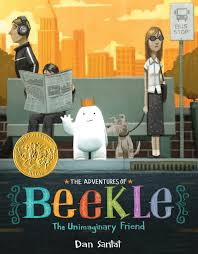
How times have changed! Not only are there plenty of picture books about imaginary friends, Dan Santat’s The Adventures of Beekle: The Unimaginary Friend (Little, Brown, 2014) won this year’s Caldecott Medal. So much for weird.

                         imgres     51MDBfXWDGL._SX258_BO1,204,203,200_

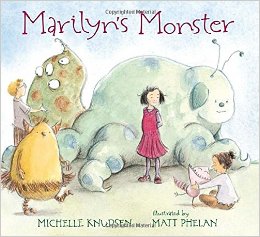
Marilyn’s Monster (Candlewick Press, 2015), by Michelle Knudsen, with illustrations by Matt Phelan is a variation on having an imaginary friend. Knudsen’s heart-felt storytelling and Phelan’s expressive illustrations work together to create a satisfying emotional journey all children will recognize.

Having a monster is “the latest thing,” but Marilyn doesn’t have one yet. “Your monster has to find you.” Soon, Marilyn is “the only one left without a monster.” At first she’s sad, and “tried to be the kind of girl no monster could resist.” Then she gets mad and tries to convince herself she doesn’t need a monster. Deep in her heart, though, Marilyn knows she wants a monster “more than she could say.” She defies the rules and takes matters into her own hands. She follows her instinct, faces her fears, and sets off in search of her monster. Along the way she discovers, like Beekle, that sometimes it’s necessary to push back against conventional wisdom to achieve your goal.

Marilyn’s happiness at the end of the book is more than just satisfaction at having found her monster. It’s far deeper than that. It’s happiness that comes from the confidence gained by overcoming her fears and accomplishing her goal by herself.

Marilyn’s Monster is an endearing book that young audiences will love, but I would share it with second and third graders, too. Not only will they enjoy the story, they will learn much about word choice, tension, and character growth from Knudsen’s masterful writing. In addition, Marilyn’s Monster and The Adventures of Beekle: The Unimaginary Friend are a perfect pairing for comparing and contrasting point of view and setting. Most importantly, though, the theme that when you follow your heart, anything is possible is one worth sharing again and again.

Candlewick has an interview with Michelle Knudsen and Matt Phelan here, and an activity guide here.

Don’t forget to visit Jen at Teach Mentor Texts and Kellee at Unleashing Readers to find out what other people have been reading lately. Thanks, Jen and Kellee, for hosting!

Poetry Friday: Spring Blossoms

poetry-friday-1-1

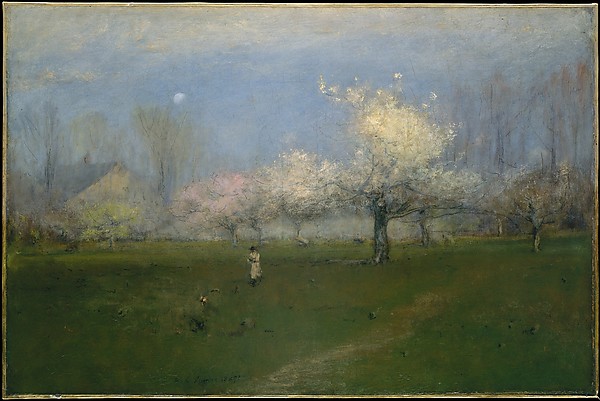
Spring has finally arrived in Connecticut. The weeping cherry trees, magnolias, and apple trees are in full bloom. Their beauty, and this painting by George Inness, inspired today’s poem.

Metropolitan Museum of Art, Gift of George A. Hearn, in memory of Arthur Hoppock Hearn, 1911

After “Spring Blossoms, Montclair, New Jersey” by George Inness, 1891

Beneath a sea of blue,
the orchard has unfurled
a delicate veil
of pink and white,
and the bees are all abuzz.

Under silken petals,
that soon will fall
like snow,
a farmer strides
toward the barn,
ready to tend
the newborn lambs.

© Catherine Flynn, 2015

Please be sure to visit Michelle Heidenrich Barnes at Today’s Little Ditty for the Poetry Friday Round Up.

Poetry Friday: Eileen Spinelli & Another Day As Emily

poetry-friday-1-1

I can’t believe how quickly April flew by. Because today is Friday, I feel like we have a bonus day of National Poetry Month!

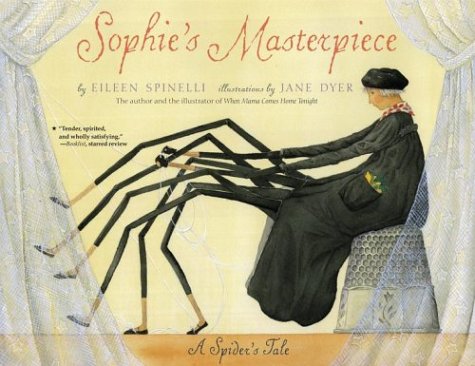
On her webpage, Eileen Spinelli has a list of tips for young writers. Her number one piece of advice? “Keep your eyes and ears and heart open.” There is no doubt that this is what drives Eileen’s writing as well. I first encountered Eileen’s writing in Sophie’s Masterpiece (Simon & Schuster, 2001). Sophie, the heroine of  this tale, is one of the most thoughtful and caring spiders this side of Charlotte. Sophie’s kindness and generosity inspired my third grade students to learn how to knit after 9/11 and, ultimately, create an afghan that we raffled to raise money for charity.

                     51X5BZ62W9L    519wFzxAgWL._SY344_BO1,204,203,200_

So when I wasn’t surprised when I saw that Eileen and her husband, Jerry Spinelli, would be part of a panel hosted by Janet Wong and Sylvia Vardell titled “Sharing Random Books of Kindness: The Power of Story” at NCTE last November. (Read Eileen’s heartbreaking “Poem for a Bully” in this post by Mary Lee Hahn & Janet Wong about the role of poetry in literacy learning here.) The next day, I waited in line to meet Eileen at a book signing and got a copy of her latest book, Another Day As Emily (Random House, 2014).

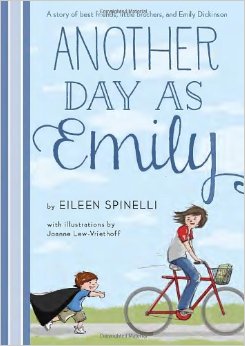
I finally found time recently to read this charming verse novel, and I’m so happy I did. Suzy Quinn is almost twelve. She collects rocks and loves the Philadelphia Phillies. She also has a pesky little brother named Parker, who saved their neighbor’s life and is now an official hero. Feeling left out because of all the attention Parker’s getting, Suzy plunges into a project for her library’s summer program and learns all she can about Emily Dickinson. At the same time, Suzy is trying to navigate the challenges of friendship. Overwhelmed when she isn’t chosen for a part in a play and devastated when her birthday trip to a Phillies game is cancelled, she retreats to her room “…to be left alone…Forever. Like Emily Dickinson.” Suzy dresses in white, bakes gingerbread, even renames her goldfish Carlo, after Emily Dickinson’s dog.

Spinelli spins a story full of realistic details about the trials and tribulations of adolescence. Suzy’s family and neighbors remain loving and supportive, even as Suzy pushes the limits of their patience. Eventually, Suzy decides there’s more to life “than being a twelve-year old hermit.” In the process, she discovers that she “missed herself,” even though the self she missed is forever changed.

One of the magical things about books is that they let you try on different personas. Lucky readers of Another Day As Emily get to try on two through the “eyes and ears and heart” of Eileen Spinelli. What a gift!

Here is another gift from the pen of Eileen Spinelli:

“The Month of May”

May is a merry month
a flower-into-berry month,
the month to skip outdoors to play,
to tuck your winter boots away,
to honor moms and aunties too
with cards and hugs for all they do.

Read the rest of the poem here.

Mary Lee at A Reading Year and Ellen at Elementary Dear Reader  have The Poetry Friday Round Up. Be sure to stop by for more poetic gifts.