Happy National Poetry Month, everyone! To kick off this month-long celebration of poets and poetry, I used Bob Raczka’s contribution to The Poetry Friday Anthology for Celebrations,“Some Reasons To Write A Poem” as a model, and came up with my own list of reasons to write a poem.
More Reasons to Write a Poem
Because a dew-laden branch looks like a string of diamonds in the morning sun
Because mixing soap and water creates iridescent bubbles
Because the ice is gone and swans have returned to the river
Because the fluffy orange cat curled up next to you is purring
Because the moon is hanging in the afternoon sky like a gauzy cotton ball
Because you surprised your mother with a bouquet of yellow roses
Les Roses jaunes, Pierre Laprade, 1920 [Public domain], via Wikimedia Commons
Looking for resources and ways to celebrate National Poetry Month? Head over to Jama’s Alphabet Soup, where Jama Rattigan has collected a treasure-trove of helpful links.
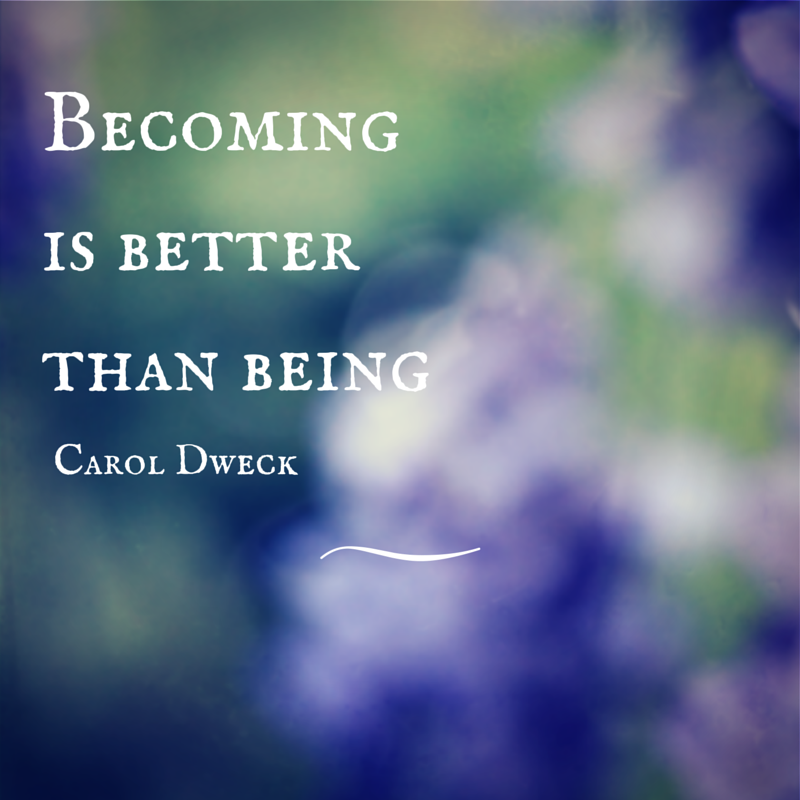
My One Little Word for this year is discover. What have I discovered over the past month? Many things, but I have to confess this slice has eluded me for the past two days. It’s been hiding, making me work to discover what I wanted to say about a month of blogging every day. In the end, I thought about what is necessary to being open to and making discoveries. Carol Dweck’s “Growth Mindset” came to mind, so I decided to frame it in terms of Dweck’s basic tenets.
Created with Canva
Embrace the challenge. We made it! Thirty-one days, thirty-one slices.
Be inspired by the success of others. I am in awe of the talented writers who have shared their writing this month. Your writing has inspired and humbled me. I have discovered several new blogs and new voices and am excited to continue to learn from all of you.
Thrive on feedback. I cannot thank you all enough for your kind and encouraging comments. I feel so fortunate to be part of this incredible, supportive community!
Support and encourage each other. I have loved reading all your slices and have left as many comments as possible. But one of the downsides of this challenge is that there just isn’t enough time to do my own writing AND read all the slices that sound so interesting.
Expect excellence. I have strived each day to create a piece of writing that was worth sharing with you. This has given me more insight into my writing. Sometimes I feel pretty slow about these discoveries and think, “Duh, you’re just figuring this out now?” But at least I figured it out, right? After all, that’s what this journey is about.
Be resilient and overcome obstacles. Many times this month, I’ve started a piece of writing with one idea in mind, but ended up with something very different from what I envisioned. This was often frustrating and never easy. But I did it.
Accept hard work, effort, & deliberate practice. Like all of your, over the course of the month I have struggled to find the right word, rearranged a paragraph after I thought a piece was finished, and tried new forms I wasn’t comfortable with. But all those struggles were worth it.
Congratulations, everyone, for this incredible accomplishment!
Thank you to Stacey, Tara, Dana, Betsy, Anna, and Beth for your dedication and the hard work it took to make this challenge possible. You are all an inspiration to me!
I have been attending Saturday Reunions for almost ten years and I am always amazed at how much information and inspiration Lucy Calkins and her team of staff developers manage to pack into six short hours. Natalie Louis is now a Lead Staff Developer, but when I first heard her present, she was fairly new at the project. Her passion, intelligence, and practicality was apparent immediately, though, and I have attended as many of her sessions as possible over the years. I am a much better teacher because of what I have learned from Natalie.
So on Saturday morning, I made my way to the 10th floor of Riverside Church for her session, “Tap the Power of Interactive Writing to Help Readers Surge Forward.” One thing you should know about Natalie Louis. She could have had a career in stand up comedy. She has a terrific sense of humor, but when it comes to doing what best for children, she’s absolutely serious.
Natalie began her session acknowledging the reality of first grade: we have students with a wide range of abilities and background knowledge, and sadly, many who have little experience with books and little motivation to read them. But they love to write. She encouraged us to get in there and “make stuff” with our students. “What kids doesn’t want to make stuff?” Louis wanted to know.
Interactive writing was on the schedule every day in Louis’s classroom because writing is a natural way to teach reading. Writing with first graders (or Kindergarteners or second graders) is developmentally appropriate because kids at this age love to tell stories about themselves. It’s also appropriate because there is an entry point for every child, regardless of their skill level. If they can only draw pictures, then they draw. If they know initial consonants, that’s what they write, and so on.
“The beginning of literacy is all about talk and finding meaning in our lives,” Louis reminded us. We have to help students find “stuff in their life that worth writing down.” This may mean creating a shared experience to talk and then write about. This helps kids learn that “when we do things in our lives, we have to remember them, we have to tell the story about what we did.”
Once you and your students have a shared experience, tell the story orally, for “talk is the basis of all writing.” Natalie assured us that at first “only the talkers will talk,” but that’s okay. By listening to the talkers, the “ummers” are internalizing the structure and language of the story.
After the kids have told the story many times, maybe as long as a month, write the story down. Louis urged us to “talk a rich picture book, but write it more like a leveled text.” This will ensure that students will be able to read it on their own. Say the sentence and reinforce the idea that “here’s our message.” Then count the words together.
Because this is interactive writing, share the pen with children, but only when the word is in their zone of proximal development. If a word is too hard, you should write it, and if a word is too easy, such as a word wall word, direct their attention to the word wall to find the word.
Louis had a great list of suggestions of how to keep the kids who aren’t writing engaged. You can lead them in skywriting the word or lip syncing the letters in the word. Other options include writing the word on their hand, on the rug, or whispering to a partner. Natalie said she only used white boards on Friday because it takes time to distribute and collect them, and they can bedistracting. She assured us not to worry about the child with the pen, they will probably make a mistake, but then you’ll help them fix it.
Corrections can be made after each word is written down. Louis suggested that “amazing intellectual work” is done when we give kids a chance to analyze their mistakes. She recommended that we say “Can I show you all the things you did right?” This is especially helpful if other children are laughing and an error. Rereading the sentence after each word is written is excellent reinforcement and practice.
Natalie’s realism about teaching our youngest readers and writers was clear when she advised us not to “be obsessed with levels. Level growth is not the only measure of growth; we have to look at the skills within the levels.”
Thank you, Natalie Louise, for sharing your wisdom with us last Saturday. I can’t wait to get back into the classroom to “do stuff, tell stuff, write stuff,” with kids.
Thank you also to Stacey, Tara, Dana, Betsy, Anna, and Beth for this space for teachers and others to share their stories each day during the month of March and on Tuesdays throughout the year. Be sure to visit Two Writing Teachers to read more Slice of Life posts.
Congratulations, Brenda Davis Harsham of Friendly Fairy Tales! You are the winner of last week’s giveaway of a copy of The Poetry Friday Anthology for Celebrations. I’m know you’ll love this impressive collection.
Recently, I’ve been reading A Poetry Handbook, by Mary Oliver. In the chapter, “Imitation,” Oliver wisely counsels readers that “you would learn little in this world if you were not allowed to imitate.” As I read these lines, I thought of “Postscript” by Seamus Heaney. My head had been full of Heaney’s words and images for days. How would I imitate this gorgeous poem? Could I? Should I even try?
I have very vivid memories of driving from freshman orientation at the University of Maine at Orono to my summer job in Camden for the first time, almost forty years ago. Over the years, I made that trip hundreds of times. But it was that first drive that came to mind instantly when I read Heaney’s poem.
And some time make time to drive down east Along Route One, where it hugs the edge of Penobscot Bay
In late June, when lupines
Stand at attention, spreading a carpet of lavender
Over the hills and in the hollows
And the bay on one side catches the bright light
Of early summer, glistening like shards of glass
scattered among the whitecaps,
blown up by the ceaseless breeze.
And inland, among the stones left behind by sheets of ice
the pastures are green once again,
dotted with cows grazing
in the shadow of a farmhouse,
that has stood for a century, sheltering
weariness and joy, sorrow and laughter,
filling its ever-expanding heart.
Thank you to Stacey, Tara, Dana, Betsy, Anna, and Beth for this space for teachers and others to share their stories each day during the month of March and on Tuesdays throughout the year. Be sure to visit Two Writing Teachers to read more Slice of Life posts.
Throughout the movie Julie and Julia, Julia Child, played by Meryl Streep, keeps up a correspondence with Avis DeVoto. Late in the film, Julia and her co-author, Simone Beck, or “Simca,” travel to Boston to meet with a potential publisher. The two have this exchange when they arrive at the station:
Julia: “Avis said she’d be here…wearing a plaid jacket. That’s how I’m to recognize her.”
Simca: “What do you mean, ‘recognize her?’ Has she changed?”
Julia: (pulling out then reading from a letter) “Look for the middle-aged woman in the plaid jacket.”
Simca: (with some alarm in her voice) “You and Avis have never met?”
Julia: “We’re just pen pals.”
Simca: “You don’t know each other?”
Julia: “Well, we do. We write.”
“We write.” That sums it up, doesn’t it? Through their letters, Avis and Julia have become devoted friends. And when Avis runs into the station, she and Julia embrace like the old friends they are.
I had a pen-pal once. I have the vaguest memory of getting a post card from a girl in France. What a thrill it was to receive mail! When I was in college, my grandmother wrote to me almost every day, and I got letters from high school friends who were all far away. After college, I moved back to my home town, so there was no need to write to my family any longer. But now my high school and college friends were far flung. We wrote from time to time, but we were all busy getting our lives off the ground. The letters became few and far between.
My grandmother got letters from her sister and other relatives throughout her married life. When we cleaned out her house, it seemed as if she had saved every letter she ever received! As I read through some of these recently, and was struck by how similar the contents of these letters are to what we write these days in texts, Twitter, Facebook, and blogs.
In a letter my uncle wrote from Oberpfaffenhofen Air Depot in Oberpfaffenhofen, Germany in 1947, he says, “In one of your letters you asked if I was getting enough to eat I get all I can eat. There isn’t any shortage of food in Ober.” (Mothers never change!)
Another letter from Uncle Stuart reports that he and his girl “ went to Munich to the opera…we saw ‘Carmen.’ It was all in German, but I enjoyed it anyway. The Red Cross takes a group every Sat. afternoon.”
Later that year, my uncle included the Thanksgiving menu served at Oberpfaffenhofen Air Depot. Printed on creamy, heavy paper, the airmen were served quite a feast.
A postcard from my grandmother’s aunt, dated November 11, 1955 reads, “I drove 349 miles today from Cheraw, S.C. to Waynesboro, GA.”
On stationary from the Davenport Hotel in Spokane, Washington, someone named Flo wrote to tell my grandmother that she “had a private cabin with Mrs. Taber” and that they are “1st class passengers.”
I know many people lament the decline of physical letters and snail mail, and certainly the old fashioned kind of pen-pal has gone the way of the dodo. But no matter what medium is being used, the stories of our lives emerge through our writing and friendships are maintained or forged. I have made so many friends and acquaintances online who I would never have met otherwise. I feel like so many of you are my pen-pals. I know about your children and grandchildren, husbands and jobs. Like Avis and Julia, we support and encourage one another.
You have enriched my life in countless, unimaginable ways.
Thank you.
Thank you to Stacey, Tara, Dana, Betsy, Anna, and Beth for this space for teachers and others to share their stories each day during the month of March and on Tuesdays throughout the year. Be sure to visit Two Writing Teachers to read more Slice of Life posts.
Driving to work this morning… Thinking about a poem for Heidi’s MarCH challenge. Today’s word was clutch.
Clutch— of eggs,
fancy purse,
exciting baseball,
get a grip!
Won’t let go changing gears…
I need a dictionary.
Or a thesaurus.
Oh wait. I shared this book with a group of fifth graders toady. The Right Word: Roget and His Thesaurus, by Jen Bryant and illustrated by Melissa Sweet.
Later, at home…
On the treadmill. Reading a chapter from Kate Messner’s 59 Reasons to Write: “Point of View, Voice, and Mood”
“What would this object say?”
I look around.
What a weird conglomeration of stuff there is in this basement!
My eyes settle on my son’s collection of antique hand held planers. Think of all the wood they’ve caressed,
boards they’ve smoothed and
readied to become a table or a bookcase.
Later still…
At my desk What to write about?
I have no idea!
Thank you to Stacey, Tara, Dana, Betsy, Anna, and Beth for this space for teachers and others to share their stories each day during the month of March and on Tuesdays throughout the year. Be sure to visit Two Writing Teachers to read more Slice of Life posts.
Like millions of people across the country, I look forward to the StoryCorps segment on NPR each Friday morning. Some of these stories have made me laugh, others have moved me to tears. They are always compelling. Yesterday, nine-year old Aiden Sykes had some questions for his father, Albert Sykes. When Aiden asked “What are your dreams for me?” Mr. Sykes told him
“My dream for you is to live out your dreams. There’s an old proverb that talks about when children are born, children come out with their fists closed because that’s where they keep all their gifts. And as you grow, your hands learn to unfold, because you’re learning to release your gifts to the world…For the rest of your life, I want you to see you live with your hands unfolded.”
Mr. Sykes’s wise words reminded me of Cornelius Minor’s keynote, “The Things that Break Us Don’t Have To,” at last Saturday’s Educator’s Institute in Providence. He urged the teachers in the audience to empower kids to be the superhero of their own lives and “give kids the tools they need to rescue themselves.” In other words, teach them that they have the power to find their gifts, to unfold their hands.
So how can we support our kids, both at home and in the classroom, so they can discover their gifts and passions?
Give them the skills they need to accomplish their goals. Begin with the basics of reading, writing, and math. But go further. Give them resources, both print and digital. Surround them with as many books as possible. Then, as Cornelius encouraged us, teach them “how to acquire their own prior knowledge.” The gift of how to learn is one they will never lose.
We also have to give kids plenty of opportunities to practice whatever it is they want to be good at. This is true for both home and school. My son can play one particular Nirvana song REALLY well because he played it about a gazillion times when he was 14 and 15. I personally don’t like the song, but I listened to it a gazillion times because it was important to him.
But above all, we have to be their champion. We have to, as Cornelius pointed out, give kids the feedback and encouragement that will help them pick themselves up after they fail. Because it is through these failures and missteps that they learn. It is through the advice and guidance of mentors that they gain knowledge. It is through our faith in them that they learn to have faith in themselves and realize their dreams.
Thank you to Stacey, Tara, Dana, Betsy, Anna, and Beth for this space for teachers and others to share their stories each day during the month of March and on Tuesdays throughout the year. Be sure to visit Two Writing Teachers to read more Slice of Life posts.
Welcome to Poetry Friday! Today is my first time hosting, so I feel like celebrating, and there is a lot to celebrate today. To begin with, it’s the first day of spring! It’s also the International Day of Happiness. What better way to spread happiness than by sharing poetry? So share your poems, read what others have shared, and enjoy! And, to celebrate the publication of The Poetry Friday Anthology for Celebrations, edited by Sylvia Vardell and Janet Wong, I’ll be giving away a copy to one lucky person. Just leave a comment and a winner will be chosen at random. In the meantime, visit Poetry Celebrations for a sneak peek at this fun-filled collection.
It’s also World Folk Tales and Fables Week. To celebrate that, I’m sharing an original poem inspired by this photo (from a calendar I received for Christmas) and “The Frog Prince.” Although “The Frog Prince” is technically a fairy tale, the connection was too good to pass up.
Automaton, Swiss, 1820, Metropolitan Museum of Art, Gift of Murtogh D. Guinness, 1976
No princess would refuse this frog with shiny ruby eyes.
His pearl encrusted legs
would surely mesmerize.
But, oh, poor frog, trapped within this jeweled enamel toy;
no longer can he jump and splash,
or sing his songs of joy.
Her company cannot replace the summer sky above.
Back to the pond he’d rather go,
And forsake her possessive love.
Please leave your link in the comments and I’ll be back throughout the day to round up your links. Thanks so much for stopping by!
Spring is sprouting everywhere today!
Robyn Hood Black at Life of the Deckle Edge starts us off by celebrating spring with a triolet all teachers will relate to.
Buffy Silverman has a menagerie of animal poems at Buffy’s Blog.
At Friendly Fairy Tales, Brenda Davis Harsham has gorgeous photos and a lovely concrete poem about the coming season.
Michelle Barnes welcomes Laura Shovan to Today’s Little Ditty, where shares her plans for an upcoming poetry workshop and a list poem from Heidi Stemple.
Jama is also celebrating spring with a poem from Wendy Cope, a bouquet of photos, and a giveaway of a Julie Paschkis print!
At Random Noodling, Diane Mayr has two poems for Heidi Mordhorst’s March CH challenge, and at Kurious Kitty, she shares Wallace Stevents “The Poems of Our Climate.”
Keri Collins Lewis, of Keri Recommends, takes us traveling to California with a tanka for Michelle’s challenge.
Colette Bennett celebrates the anniversary of Gen. Douglas MacArthur’s “I Shall Return” speechwith a tribute to teachers at Used Books In Class.
Matt Forrest Esenwine is sharing his original poem, “No-Moon Day” at Radio, Rhythm & Rhyme.
Linda Baie at Teacher Dance has another sign of spring with her original haiku, “Arrival.”
Charles Waters has a poem of spring and a basketball poems for Heidi’s CH challenge today at his Poetry Time Blog.
Over at GottaBook, Greg Pincus tries to convince us he’s in a poetry drought. I, for one, find that hard to believe!
At The Opposite of Indifference, Tabatha Yeatts has a beautiful poem, written by her daughter, about finding poems.
Robins have arrived at The Poetry Farm, and Amy is celebrating with an original poem.
At My Juicy Little Universe, Heidi isn’t letting a little snow spoil spring sharing from hatCHing out. Her original poem about 4 year old chefs is making me hungry!
Laura Shovan and Laura Gehl have an interesting discussion about whether rhyming picture books are poetry at Author Amok.
There are more spring poems at Reflections on the Teche, where Margaret is sharing two poems from her talented student, Erin.
Cathy Mere at Merely Day By Day contemplates the beauty of being up before dawn in her original poem.
At The Logonauts, Katie is featuring Jane Yolen,Heidi Stemple and Melissa Sweet’s lovely new book, You Nest Here With Me.
Memories of childhood inspired Donna Smith of Mainely Write to write a hatCH poem for Heidi’s challenge.
Catherine Johnson shares a peek into Alice Walker’s book of poems, There is a Flower at the Tip of My Nose Smelling Me.
Myra has a wonderful clip of spoken word poets Sarah Kay and Phil Kaye performing “When Love Arrives” over at Gathering Books.
Tricia at The Miss Rumphius Effect has two inconceivably good poems, both entries from her March Madness rounds.
Have you ever wondered what those black carts full of books at the library are thinking? JoAnn Early Macken share her idea in an original poem at Teaching Authors.
At The Drift Record, Julie Larios is sharing a spring spell, of sorts.
Julieanne Harmatz is sharing an amazing found poem her students have written from their responses toJacqueline Woodson’s Each Kindness at To Read To Write To Be.
Karen Edmisten is in today with James Weldon Johnson lovely poem, “Deep in the Quiet Wood”.
Bridget Magee has a tanka about a crane fly for Michelle’s challenge at Wee Words for Wee Ones.
At Bildungsroman, Little Willow is sharing “If Spirits Walk” by Sophie Jewett.
At Reader Totz, Lorie Ann is sharing “Paulette” from Bronzeville Boys and Girls by Gwendolyn Brooks and illustrated by Faith Ringgold. She also has an original haiku at On Point.
Football season may be over, but that’s no reason not to celebrate Jone’s poem in The Poetry Friday Anthology for Celebrations.
Over at Pleasures from the Page, Ramona shares her thoughts about I Lay My Stitches Down: Poems of American Slavery by Cynthia Grady with illustrations by Michele Wood.
Just in time for National Poetry Month, Kim of Flukeprints has a review of A Poem in Your Pocket, by Margaret McNamara and G. Brian Karas, as well as how she plans to celebrate with her students.
At Poetry for Children, Sylvia Vardell’s 700th (!) post is celebrating the publication of The Poetry Friday Anthology for Celebrations and features “Spring” by Jane Lichtenberger.
Carol Varsalona is anticipating spring in a lovely CH poem at Beyond Literacy Link.
This post is doing double duty for the March Slice of Life Challenge at Two Writing Teachers. Thank you to Stacey, Tara, Dana, Betsy, Anna, and Beth for this space for teachers and others to share their stories each day during the month of March and on Tuesdays throughout the year. Be sure to visit Two Writing Teachers to read more Slice of Life posts.
Earlier this month, Michelle Barnes, of Today’s Little Ditty, interviewed poet Margarita Engle about her new book Orangutanka (Henry Holt, 2015).Margarita challenged Michelle’s readers to write a tanka, a traditional Japanese form with five lines and a 5-7-5-7-7 syllable count.
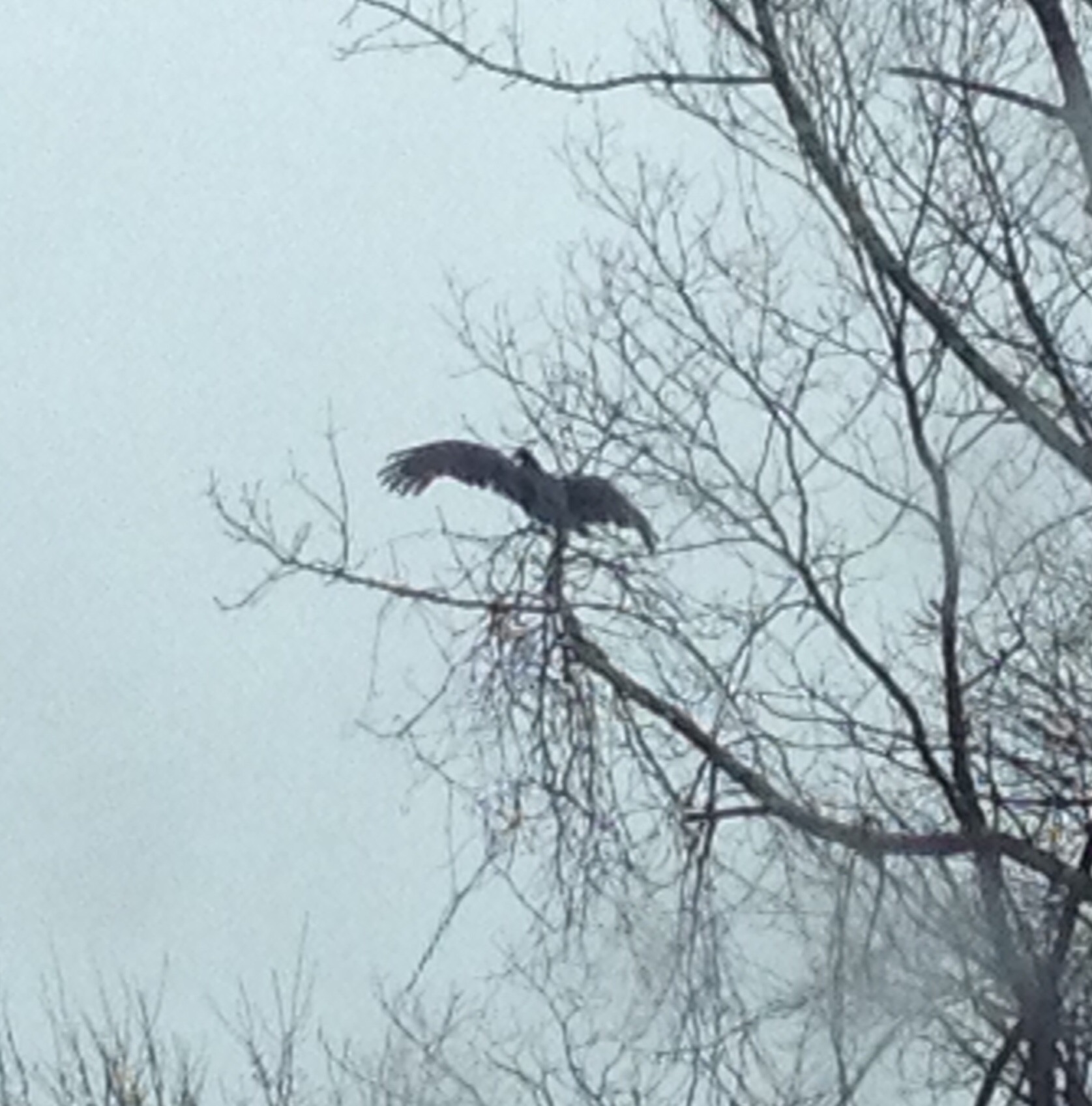
As I was driving to work yesterday, I noticed a red-tailed hawk perched in a tree near the edge of a field. That sighting inspired this tanka:
Still as a statue,
keen eyes scan the field below,
spot a flash of gray.
Swooping down on silent wings,
red-tailed hawk scoops up breakfast.
Thank you, Michelle and Margarita, for inspiring me to write these tanka. And thank you to Stacey, Tara, Dana, Betsy, Anna, and Beth for this space for teachers and others to share their stories each day during the month of March and on Tuesdays throughout the year. Be sure to visit Two Writing Teachers to read more Slice of Life posts.
We live in an age of information overload. There are so many books, blogs, and websites that it’s impossible to read everything. Because of this, I was only vaguely aware of author Lisa Bonchek Adams and her blog that chronicled her battle with metastatic breast cancer. Ms. Adams passed away from this disease last week and the outpouring of grief from her followers has been astonishing. Among the tweets have been quotes from Ms. Adams’s writing. And although I don’t in any way equate the challenge of writing a blog post every day with the challenge of having cancer, I found this bit of wisdom tailor made for those of us half way through this month long writing challenge:
“Find a bit of beauty in the world today. Share it. If you can’t find it, create it. Some days this may be hard to do. Persevere.”
Driving home from Rhode Island yesterday, the sky was overcast and gray. Suddenly, an almost perfect rectangle of blue appeared. The clouds seemed to have made a window just to let that bit of beautiful blue sky shine though.
Dave Spicer [CC BY-SA 2.0 (http://creativecommons.org/licenses/by-sa/2.0)%5D, via Wikimedia CommonsGiven that one theme running through Saturday’s conference was opening doors, I couldn’t help but think it was a sign that the door was open, that I should persevere. Persevere with my writing, which I sometimes question. Persevere with improving relationships that sometimes feel too hard. Persevere with doing what I know is right for my students. There is beauty to be found in pursuing our goals.
Thank you to Stacey, Tara, Dana, Betsy, Anna, and Beth for this space for teachers and others to share their stories each day during the month of March and on Tuesdays throughout the year. Be sure to visit Two Writing Teachers to read more Slice of Life posts.