Slice of Life: Summer STEAM

11454297503_e27946e4ff_h

“Wisdom Begins in Wonder”
Socrates

These words are as true today as they were 2500 years ago. I may have heard or read them before, but I was happy to see them painted on the wall of the “Cabinet of Art and Curiosity” installation at the Wadsworth Atheneum in Hartford yesterday. I was there to participate in the museum’s “Summer STEAM” workshop, designed to show teachers “the many ways art can enhance science, technology, engineering, and math” in their classrooms.

Lisa Delissio, a STEM Faculty Fellow at Salem State University, began the day with a talk about the intersection of art and science. She explained that the “perspective and knowledge of artists is essential to scientific approaches to problems.” Specifically, she listed the observational skills artists bring to their work that have been found to have an impact on the skills of her biology students. These include:

  • visual qualities
  • other sensory qualities
  • perspectives
  • materials
  • connecting to meaning: memories and metaphor
  • context, function, and purpose

Dr. Delissio then showed us this image:

By Prosthetic Head (Own work) [CC BY-SA 4.0 (http://creativecommons.org/licenses/by-sa/4.0)], via Wikimedia Commons
By Prosthetic Head (Own work) [CC BY-SA 4.0 (http://creativecommons.org/licenses/by-sa/4.0)%5D, via Wikimedia Commons

She asked us to use the observational skills of an artist and the perspective of a biologist to respond to the image with word and/or  pictures. My sketch was very rudimentary, but my jottings were very much dominated by my poetry brain. I was immediately drawn to the stamens of the large flower in the foreground, which reminded me of sunspots exploding on the sun and the flower in the bottom center waiting to bloom. To me, its folded petals looked like hands folded in prayer.

We were given ten minutes to work on this, which sounds like a long time. But it really wasn’t. I could have easily  spent another half hour working on my observations and the poem I was beginning to formulate. Keeping the STEAM theme of the day in mind, I started a Fib poem, a poem which uses the Fibonacci sequence to determine the number of syllables in each line.

Fat
skink
rests on
bright purple
aster petals, their
stamens exploding like the sun.

The auditorium full of dozens of teachers was absolutely still as people worked. But it didn’t feel like work at all. We were completely engaged in our creativity, our intellectual curiosity sparked by the blending of diverse disciplines. As Dr. Delissio explained, students who pursue double majors in science and the arts are more creative, and exhibit more intellectual curiosity and divergent thinking than students with a single major.

Attending this workshop was a joy for me, not because I needed convincing that the arts should be included in STEM, but because it bolstered my belief in the importance of including the arts in our classrooms. As schools across the country embrace STEM and devote time and resources to integrate STEM into the curriculum, we have to ensure that the arts are always included. As Anne Jolly points out in a recent Education Week article, “The purpose of STEAM should not be so much to teach art but to apply art in real situations. Applied knowledge leads to deeper learning.”

Thank you to Stacey, Dana, Betsy, Beth, Kathleen, Deb, Melanie, and Lisa for this space for teachers and others to share their stories each Tuesday. Be sure to visit Two Writing Teachers to read more Slice of Life posts.
Poetry Friday: A Bale of Turtles

poetry-friday-1-1

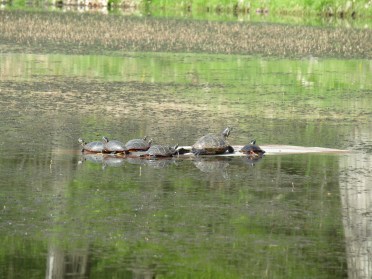
“A Bale of Turtles”

After months of hibernation
buried in the mud and muck,
a bale of turtles emerge
into a world of glimmering green.

Heads raised high in jubilation,
they bask in the glittering sunshine,
silent and still,
chasing away winter’s chill.

© Catherine Flynn, 2016

IMG_0138

I took this picture at the end of April at a pond near my house. Since then, I’ve been working on this poem, trying to find just the right form, words, and phrases. During that time, I’ve felt like I’ve been buried in the mud and muck of school busyness, which has drained my writing energy. Now that school is over, I decided to revisit these happy turtles, and emerge into the sunshine with them.

Please be sure to visit Carol at Carol’s Corner for the Poetry Friday Roundup!

Slice of Life: Finding Compassion

11454297503_e27946e4ff_h

“Compassion is not religious business, it is human business, it is not luxury, it is essential for our own peace and mental stability, it is essential for human survival.”
~ Dalai Lama XIV ~

how to write a

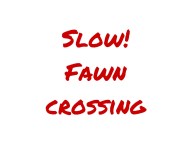
I noticed this sign on the edge of the road as I was driving to work. And it did make me slow down. I noticed its counterpart on the other side of the road on my way home that afternoon. Even though there was no sign of the fawn or its mother, I was thankful for this reminder.

I thought of this sign over the weekend when I was at dinner with my family. It was a beautiful summer evening, and we were eating on the sidewalk terrace of a busy restaurant. Suddenly, a woman was sprawled on the sidewalk.

Her toddler had wriggled away from her (they are slippery little things!) and she tripped while running after him. Her hands were scraped and she split her lip, which was bleeding profusely. I ran into the restaurant to get napkins, and someone else got her a glass of water. She was more startled than injured, and after a few minutes those of us who had helped her returned to our dinners.

Helping this woman wasn’t something I thought about. I just did it. Over the past year, my family, like far too many families, has been coping with a sudden loss. We have been overwhelmed by the many kindnesses, large and small, often from total strangers, shared with us during this time. How could I not extend my hand to this woman?

Since Sunday’s horrific news from Orlando, I’ve felt dismay and revulsion at some of the rhetoric being bandied about so carelessly. But I’ve also been heartened by the countless selfless acts of kindness, from women passing out carnations to the families of the victims to the hundreds of people lined up to give blood. This outpouring of sympathy and solidarity from all corners of the world gives me hope. Hope that we can rise above fear and hate. Hope that we can all find the compassion within ourselves to slow down, extend a hand, and treat others with care. Hope that love will prevail.

Thank you to Stacey, Dana, Betsy, Beth, Kathleen, Deb, Melanie, and Lisa for this space for teachers and others to share their stories each Tuesday. Be sure to visit Two Writing Teachers to read more Slice of Life posts.
Poetry Friday: “Through an Open Window”

poetry-friday-1-1

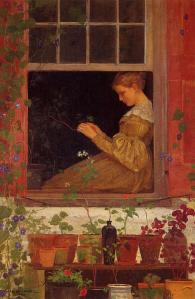
Today I’m sharing the latest draft of the persona poem I’ve been working on for Laura’s Ditty Challenge over at Michelle’s blog, Today’s Little Ditty. I’ve loved this painting for years, so it wasn’t hard to decided to write a persona poem for this young woman.  The more I studied the painting though, the more contradictions I saw and the more questions I had. This draft answers some of them, but not all.

"Morning Glories" Winslow Homer 1873
“Morning Glories” Winslow Homer 1873

Through an open window,
the wide world beckons
me.

I toss my crewel work aside,
its neat silk stitches
no match for the ropes of green
twining up outside the sill,
toward the sky,
where a menagerie of clouds
is parading by.

I watch them skitter and shift,
morphing into fantastic creatures.

I wish I could transform
into a hummingbird.
I’d dart and hover
among the morning glories
and geraniums,
sipping their summer sweetness.

But like this philodendron, I’m
trapped inside, bound to this place,
never allowed to roam free,
never allowed to touch the sky.

© Catherine Flynn, 2016

Please be sure to visit Julie Larios at The Drift Record for the Poetry Friday Roundup.

Slice of Life: Playing With Grammar

11454297503_e27946e4ff_h

“The purpose of grammar is to enhance writing. Writing is ALWAYS the goal,” Jeff Anderson told a packed conference room last Saturday. Spending an hour and half with Anderson at the New England Reading Association Conference gave me new insights into how engaging grammar instruction can be.

Photo by Aaron Burden via unsplash.com

Anderson began the session by reading a section of his book, Zack Delacruz: Me and My Big Mouth. He correctly pointed out that there are often times when kids (and adults) need to be “juiced up” for writing. Reading a snippet of a book, poem, or article can “inspire great writing.”

After hearing about Zack and his school’s anti-bullying assembly, we had at least four topics to choose from for a free write:

  • assemblies
  • being/feeling different
  • picked on/bullied
  • teachers

I wrote a stream-of-consciousness riff on watching middle school kids at my school, which took me back to my own middle and high school days.

Anderson then explained that grammar “rules aren’t hard; it’s applying them that’s hard.”

So how can we make our grammar instruction effective? By focusing on function and practical application.

Why does this matter? Because grammar “helps writing come alive.”

Anderson urged us to abandon our practice of putting up sentences with errors, a la Daily Oral Language, for correction. Rather, we should display correct sentences, then study these mentor sentences to figure out why they’re effective. In this way, we “merge craft and grammar” instruction.

“Every choice a writer makes has an effect,” Anderson pointed out. By studying models, we can begin to “view grammar with a sense of possibility.” We can begin to imagine how we can use grammar to “help our writing come alive.”

“All grammar decisions add elaboration,” Jeff explained. This seems so obvious, but I had never thought about it that way. He went on to say that “commas act like a zoom lens—going from the big picture to close details.”

Using the first line of Ali Benjamin’s book, The Thing About Jellyfish, Jeff modeled exactly what he meant by this, and how to design a cycle of instruction to “immerse kids in the power of grammar and editing.”

The first step is to display a sentence, then invite kids to NOTICE what the comma is doing when they read it out loud. Then have them read it again and think about what the comma does when they read with their eyes.

Once kids have noticed something and thought about how a comma is used, they begin to see it everywhere, thanks to our reticular activating system. (Thank you, Jeff, for naming this phenomenon.) Once they’re aware of this pattern, the “more likely they are to try it in their own writing.”

Now invite students to COMPARE & CONTRAST the mentor sentence with a teacher-written model. Discuss how the construction of the two sentences is similar and/or different. Then talk about the impact of the two sentences. Is one more intriguing? Why? What grammar decisions (which are really CRAFT decisions) did the author make to create a powerful sentence?

Then collaborate to write a similar sentence together. (We didn’t have time for this in our session, but it’s the logical next step in a gradual-release model. You can view Anderson’s presentation slides here).

Invite students to IMITATE the mentor sentences. By trying it on their own, students will be able to see and understand the “possibilities of grammar acrobatics.” Inviting kids to imitate also gives them choice. Choice of what to write about, but also choices about how to imitate the mentor sentence.

Finally, invite students to REVISE. Have them revisit a piece of writing and “find a place where you can sharpen an image.” Have them imitate the model again, whatever it was. On Saturday we were using “the right-branching closer.”

Here is my revision from the free write we did at the beginning of the session:

Original:

What an act of bravery it is, though, to come to school in middle school with the new shoes or new pants that you think are like everyone else’s, but something isn’t quite right. Now, instead of feeling cool and fitting in, you feel like even more of an outsider. The Levi’s tab isn’t red.

Revision:

I strode into school, feeling cool in my brand new Levis with the red tab waving from the back pocket.

I know I never would have written this sentence without Anderson’s “invitation to play” with my writing. By inviting our students to do this work, not worksheets, we invite them to see what’s possible, and in so doing, invite them do their best work.

Functional application at its finest!

Thank you to Stacey, Dana, Betsy, Beth, Kathleen, and Deb for this space for teachers and others to share their stories each Tuesday. Be sure to visit Two Writing Teachers to read more Slice of Life posts.
Intent: The Teacher I Want to Be…

slide11

This post is part of “DigiLit Sunday,” hosted by Margaret Simon at Reflections on the Teche. This week’s topic is INTENT

“What we learn with pleasure we never forget.”
Alfred Mercier

Photo by Tina Floersch, via unsplash.com

Love.
Passion.
Joy.

These words echoed throughout the rooms at the Sable Oaks Marriott in Portland on Saturday. Teachers from around New England and beyond gathered to learn from superstar educators Ralph Fletcher, Tom Newkirk, Vicki Vinton, Kathy Collins, Matt Glover, Jeff Anderson, and Katie Wood Ray, among others.

At the end of a panel discussion about a trip to the Italian school Reggio Emilia and the book which grew out of that trip, The Teacher You Want to Be: Essays about Children, Learning, and Teaching, Kathy Collins invited us to complete this statement: The teacher I want to be…

Here is my response to Kathy’s appeal:

I want to be a teacher who grows passionate, joyful, independent learners. A teacher who, in the words of Thomas Dewey, gives students “something to do, not something to learn; and when the doing is of such a nature as to demand thinking; learning naturally results…”

I want to my students to be curious and observant.

I want them to be thoughtful readers who understand that reading is about more than answering questions about the main character and his problem. I want them to understand that when we read, we learn about ourselves, our lives, the lives of others, and the world around us.

I want to be a teacher who gives my students time to think and write about what they want to think and write about. I want to give them the time and tools they need to follow their thinking wherever it leads them.

I want my classroom to be a greenhouse where students thrive and see possibilities in themselves they hadn’t ever imagined.

I also want to be a teacher who can rise above the day-to-day frustrations that could distract me from this goal.

I want to be a teacher who doesn’t let demands and pressures of the inevitable changes in standards, assessments, etc., deter or sway me from this vision. In the words of Katie Wood Ray, I want to make myself  “as smart as I can be about my work so that I can articulate” my beliefs.

This vision is one I’ve strived to fulfill through all my years of teaching. Thank you to all the wise, passionate educators at NERA whose words helped me express these ideas. Thanks to them for also showing me how this vision can become a reality.

Slice of Life: Waiting to Bloom

11454297503_e27946e4ff_h

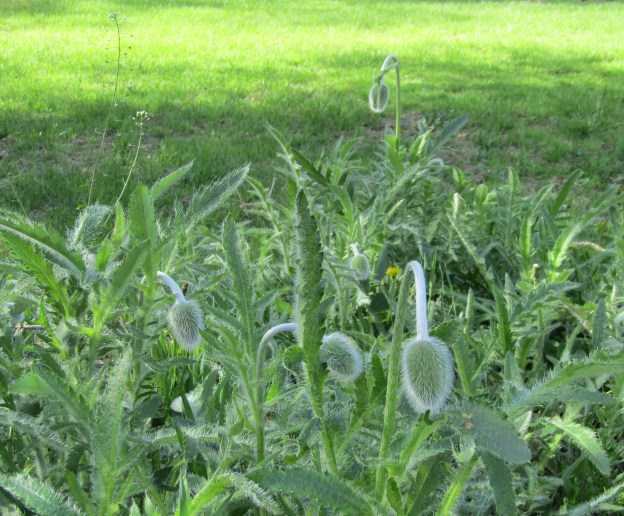
The rain has finally stopped and my flower gardens are ready to burst. It won’t be long before the papery orange blooms of these poppies are dancing in the breeze.

IMG_0162

They inspired this poem:

Patient poppies bow their heads
like dancers offstage
waiting to make their entrance,
waiting their turn to shine
in the spotlight.

© Catherine Flynn, 2016

  Thank you to Stacey, Tara, Dana, Betsy, Anna, Beth, Kathleen, and Deb for this space for teachers and others to share their stories each Tuesday. Be sure to visit Two Writing Teachers to read more Slice of Life posts.
Poetry Friday: Valerie Worth’s “Peacock”

poetry-friday-1-1

Earlier this week I came across this video of a peacock rattling his feathers.

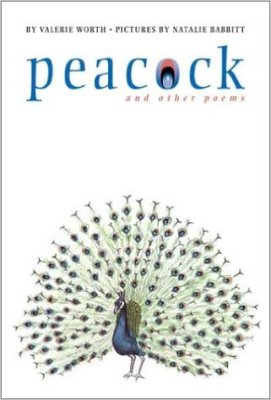
Completely by coincidence, I had this book on my desk:

41EX0V8QVJL._SX319_BO1,204,203,200_

Valerie Worth was a master at zeroing in on the essence of an animal or object, then describing it in the most original, yet obvious way. Here is her take on one of nature’s most extravagant birds.

peacock

He fans
Out that
Famous halo,

Turns it
About for
All to see,

Folds it
Down and
Saunters away,

Trailing his
Heavy burden
Of beauty.

(Meanwhile,
His freckled
brown wife

Rambles around
Him, plain
And free.)

To learn more about Valerie Worth, visit these links:

After you’ve enjoyed Sylvia’s post about Valerie Worth, be sure to head over here to the Poetry Friday Roundup.

The FUNction of Poetry in the Classroom

slide11

This post is part of “DigiLit Sunday,” hosted by Margaret Simon at Reflections on the Teche. This week’s topic is FUNCTION.

poetry-from-india-talkies-online

What’s the function of poetry in the classroom? As National Poetry Month comes to an end, this is a good time to to ask this question. Poetry can play many roles and deserves a place in our classrooms every day.

Poetry has always been woven into my instruction, no matter what time of year. When I taught third grade, we began the year studying Mary O’Neill’s Hailstones and Halibut Bones (1961). O’Neill’s “Adventures in Poetry and Color” were perfect for helping my students become more observant and thoughtful about description. Close study of these poems also helped kids solidify their understanding of parts of speech.

Now I work with readers who are considered Tier 3 in the RTI model. They aren’t special ed students, but they also aren’t progressing at a rate that makes it likely they will reach end-of-year benchmarks. Whether we call them struggling readers or striving readers, the bottom line is the same: They need extra help. And I’m lucky to be the person to give them that assistance.

When I was working on my reading specialist certification, one professor urged us to start each lesson with a poem as a way to “warm up our ears.” I didn’t need convincing, but loved the rationale. So each day, my students and I read poems. Poetry is ideal for students who find reading challenging for many reasons. Poetry tends to come as a small packages, which is perfect for beginning readers who get overwhelmed by lots of print.

Another important reason to include poetry that rhymes in lessons with young readers is that these poems give kids a chance to practice phonics patterns in an authentic text. This repetition is key for all learning. Average young readers need “four to fourteen repetitions” in order to “reach a reliable level of word reading accuracy…[but] more than 40 repetitions [are needed] for those with reading difficulties” (Katherine Garnett, “Fluency in Learning to Read: Conceptions, Misconceptions, Learning Disabilities, and Instructional Moves” *) Using poetry ensures these repeated readings will be fun!

I carefully chose poems that are engaging and incorporate the phonics elements we are working on. This allows students experience success with reading right away. Early success not only keeps kids engaged, it increases the likelihood that they’ll want to keep reading. Certain poems quickly become favorites and are soon memorized. These are recited with confidence and pride.

“I See a Cat” by Cindy Chapman (found here) is perfect for beginning readers:

I see a cat.
I see a big cat.
I see a big, fat cat…

You can see the appeal. We also act out the poems, sometimes with props, adding an extra sensory dimension. This increases the likelihood that the students will retain what they’re learning. Copies of poems are always sent home so kids care show off their skills to their families and friends.

Making poetry part of every lesson also helps build vocabulary, science and social studies concepts, and more. The list is really endless, and I haven’t even mentioned comprehension or the emotional impact of poetry. Because we’ve read so much poetry, writing poetry becomes a natural extension (and provides additional authentic practice!).

What is the function of poetry in the classroom? Poetry brings laughter and joy, something we all need, every single day.

Not convinced? Here a few of the hundreds of resources available in print and online:

* Chapter from: Birsch, J. R. (2011). Multisensory Teaching of Basic Language Skills, 3rd Edition. Baltimore: Paul H. Brooks Publishing.

“Our revels now are ended…”

“Our revels now are ended…”
William Shakespeare
From The Tempest, Act 4 Scene 1

William Blake [Public domain], via Wikimedia Commons
William Blake [Public domain], via Wikimedia Commons (Mixing plays, I know, but I love the joy of these revelers from A Midsummer Night’s Dream.)

And what revels there have been! Bravo to all of you who had daily poetry projects this month. I may not have visited or commented every day, but I truly admire your hard work and dedication. You are an inspiration!

Although National Poetry Month comes to an end today, true believers know no day is complete without poetry. We’ll always dream; we’ll always write…

Words click
into place like
tumblers inside a lock,
revealing truths hidden within
my heart.

© Catherine Flynn, 2016