It’s Monday! What Are You Reading?

IMWAYR

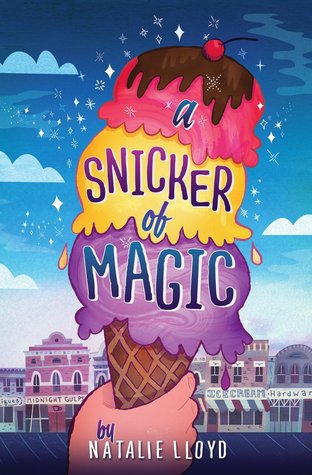
I feel like I’m late to the party for A Snicker of Magic (Scholastic, 2014), Natalie Lloyd’s debut middle-grade novel. Even though it’s only been out for a little over a month, A Snicker of Magic has gotten oodles of love on Twitter and kid lit blogs. This love is well deserved. 

18222556

A Snicker of Magic is one of those “good stories” that “take your heart someplace else.” Felicity Pickle, a 12 year old who “sees words everywhere,” is the heart of Lloyd’s story. After years of being “sweet gypsies,” Felicity, her mother, and sister arrive in the tiny town of Midnight Gulch, Tennessee. Tired from years of wandering, Felicity is ready to stay, but fears her mother will become restless and want to leave again at any moment. Midnight Gulch “used to be a secret place… because the people who lived there had magic in their veins.” But the magic is gone. Felicity is curious about why it left and where it went. With the help of her new friend, Jonah, and a colorful cast of characters, she does her best to find the magic and return it to the town. 

Felicity is a poet who knows that she holds “the finest magic, words worth spinning, stories worth telling.” Hope has perched in her soul, and she uses her gift with words to heal the pain caused by a century of anger and misunderstanding. Lloyd has spun a story filled with magic, a story well worth telling. A Snicker of Magic is a good choice for a read aloud in fourth or fifth grade and will likely inspire many students to become word collectors and poets themselves.

el-april14-left

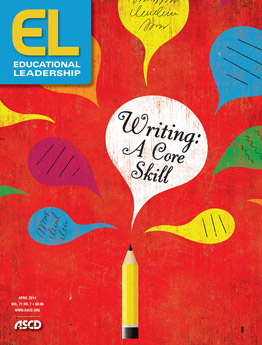
Educational Leadership, the monthly journal published by ASCD, always has timely articles by leading researchers, and the April issue is no exception. Devoted to “Writing: A Core Skill,” contributors include Carol Jago, Mary Ehrenworth, Kelly Gallagher, Penny Kittle, and more. I’m still reading, but can see already that this issue is a valuable resource. The articles I’ve read offer a succinct introduction to many elements of good writing instruction, including using mentor texts, teaching craft rather than formulas, types of writing, and more. I plan on sharing Jeff Anderson’s contribution, “What Writing Is & Isn’t,” with my colleagues. This article is the perfect springboard for a discussion about our understanding of writing instruction.

Don’t forget to visit Jen at Teach Mentor Texts and Kellee at Unleashing Readers to find out what other people have been reading lately. Thanks, Jen and Kellee, for hosting!

Slice of Life: Bo, the Outdoor Cat

11454297503_e27946e4ff_h

Two cats live at our house. Two fluffy orange cats. Every afternoon when I get home, Noodles, our indoor cat, is waiting for me at the front door. He darts out before the door is even open all the way, anxious to be out in the fresh air and sunshine. Noodles is always ready to come back inside, though, and curl up with me on the couch.

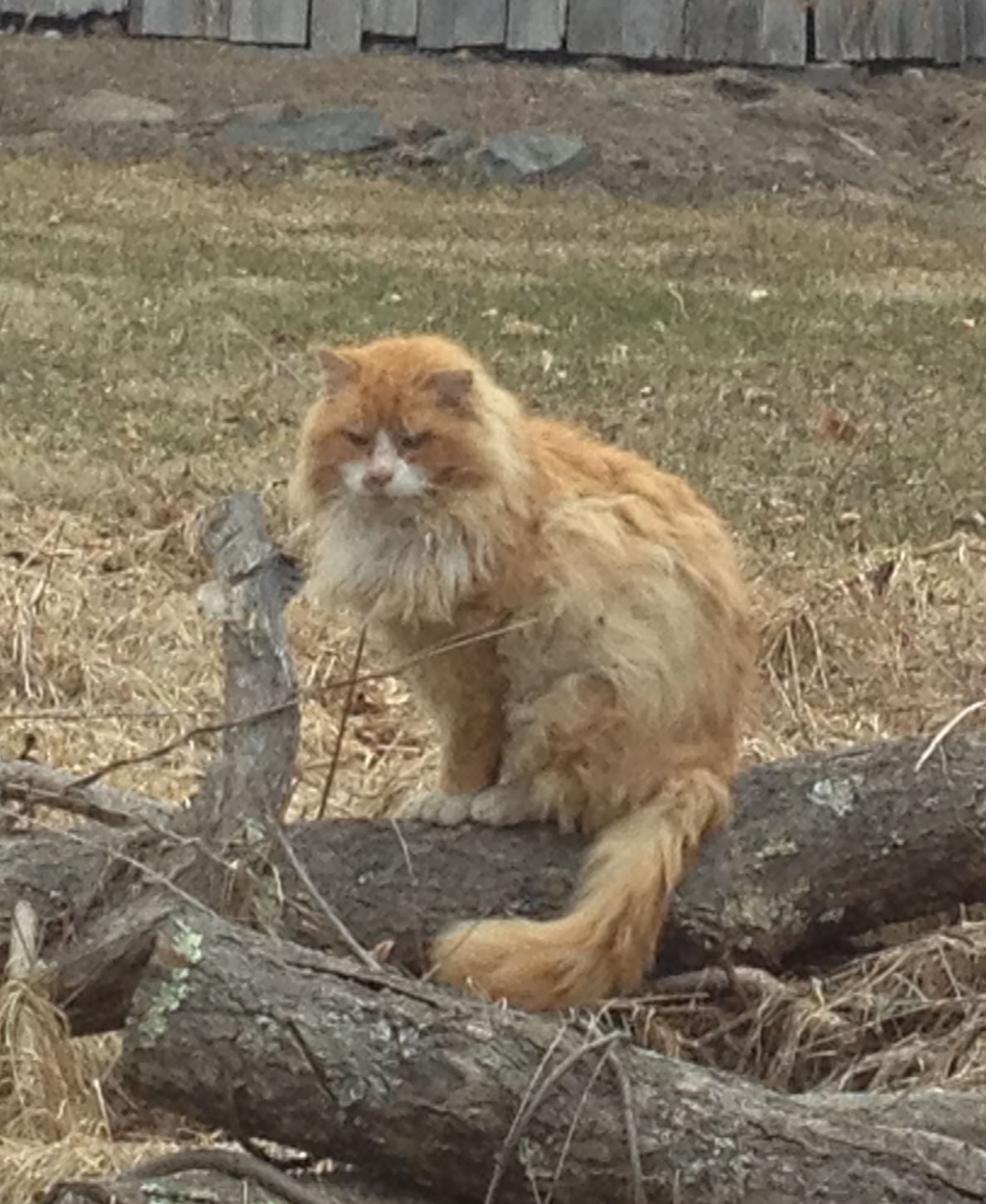
Bo is an outdoor cat. He adopted us; just started hanging around. At first we tried to shoo him away, but he kept turning up. I asked the neighbors if anyone was missing their cat, but no one knew anything about him. So I started feeding him. My husband was against this, said we didn’t need a stray hanging around. But Bo looked so sad. He’d clearly been in his share of fights, and his coat was matted and unkempt.

At first he scurried away whenever we were outside. He found a way into a ramshackle storage shed behind the garage and made a home for himself there. Whenever I left food on the porch, he’d slink up, gobble down the kibble, then run away to his hiding place after he was full.

Then he started sleeping on the wicker settee on the porch if the weather was fine. He still ran away if he saw us, but not all the way back to the shed. He stopped hissing at me when I brought food out for him.

Now, he’s part of the scenery. I named him Bo because I thought he was very bold to just make himself at home here. His hardscrabble looks also made me think of the song “Mr. Bojangles.” He waits by the front door every morning for his breakfast and doesn’t run away when I come outside. He seems content enough, but still doesn’t let me get close enough to pet him. And I’ve noticed that he always sleeps with his legs under him, ready to bolt at the first sign of danger.

He reminds me of a student who lived in our town for a short time a few years ago. He had been in a series of foster homes, and had a tough, gruff exterior. He didn’t act out or cause trouble, but he never looked completely comfortable or relaxed. He always looked ready to bolt.

I won’t ever know where Bo got his scars or how he landed on our doorstep. All I do know is that he needed a home and someone to care for him. I hope someday he’ll let me pet him. In the meantime, he reminds me everyday that sometimes the children who put up the toughest barriers are the ones who need our love the most.

Bo outside his shed.
Bo, outside his shed.

Thank you, as always, to StaceyTaraDanaBetsyAnna, and Beth for hosting Slice of Life each Tuesday. Be sure to visit Two Writing Teachers to read more Slice of Life posts.

SOLC 2014: Things to do if You’re a Writer

11454297503_e27946e4ff_h

How to write this final post of the 2014 Slice of Life Challenge? Yesterday’s post was reflective and full of thanks to everyone who made this challenge possible and who encouraged me through their generous comments. I had planned to do a standard “It’s Monday! What Are You Reading?” post, but as often happens, life intervened and I knew that plan wasn’t going to work. 

I spent much of the day revising our fifth grade poetry unit and thought I could write about that, but that didn’t seem appropriate for my final slice. “In the end,” I decided to use a list poem (another list!) I read today, “Things To Do If You Are The Sun,” by Bobbi Katz, as a model for a poem that sums up how participating in this challenge has changed me as a writer.

Things To Do If You’re a Writer

Let words envelop you and swirl inside your head.

Look at a flower bud and see a diver poised on the brink of the board.

Hear an owl hooting and wonder what coded message he’s sending out

into the night.

Bite into a pear and taste summer in its sweetness.

Touch a puppy’s ear and feel the satiny edge of a well-loved blanket.

Breathe in the late winter air and sniff a hint of spring.

Gather these bits and pieces, like a magpie, and weave them

into something wonderful.

Share your creation with friends, who, through reading your words,

know what is in your heart.

© Catherine Flynn, 2014

Thank you, everyone, for an amazing month.

9781596432208

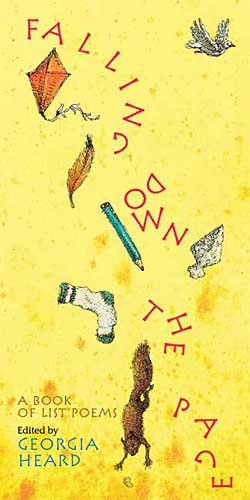
If you’d like to read “Things to do if You Are the Sun,” it can be found in Falling Down the Page: A Book of List Poems (Roaring Brook Press, 2009), edited by Georgia Heard. If you’d like to read other list poems and gather more ideas for using them as mentor texts with children, read Elaine Magliaro’s post at Wild Rose Reader.

SOLC 2014: The Perils and Pleasures of Writing

11454297503_e27946e4ff_h

“…there is nothing more wonderful than a list…”

~ Umberto Eco ~

As this month draws to a close, it seems natural to reflect on what I’ve learned. Lists have been popular this year.  I love lists and have tried a few different formats myself, and thought a compare/contrast style list would work to organize my jumbled thoughts about writing each day for the past 30 days. 

 The Perils of Writing Every Day

  • Chocolate on the computer–I guess as long as it doesn’t work its way into the keyboard or USB port, it really can’t hurt.
  • Almost driving into a snowbank as I watched a bobcat cross the road. (Thankfully, the snow is gone!)
  • Being so tired from reading and writing (not to mention life) that I could hardly see straight, yet when I finally got into bed and closed my eyes, words floated into my brain and I had to get up to write them down.
  • Washing my hair with body soap because I was still tired and distracted by my thoughts.
  • There was something else, but I can’t remember what it was because I didn’t write it down!

woman-writing1

The Pleasures of Writing Every Day

  • Finding exactly the right words to express my thoughts.
  • Reflecting on daily events through writing. This has helped me learn and deepen my understanding about a many topics.
  • Learning about myself as a writer–being conscious of my bad habits and trying to improve my writing.
  • Having the satisfaction of letting go of some self-doubt and accomplishing a goal — sharing an original poem each Friday was scary.
  • Being part of this supportive, nurturing community. Your comments and feedback have encouraged me and made me brave.

I am so grateful to Stacey, Tara, Dana, Anna, Betsy, and Beth for providing this space for us to share our writing, and to everyone on the support team who helped with all the details. I can only imagine the time and effort that have gone into making this month-long challenge a success. Thank you all for your generosity!

Finally, I am in awe of all of you. The writing that you have shared in response to the SOL challenge has been amazing. Your words have moved me to laughter and tears, and have given me new insights and understanding into life. Thank you so much for sharing.

SOLC 2014: Just Three Books?

11454297503_e27946e4ff_h

Last night, NPR aired an interview with Gabrielle Zevin, author of The Storied Life of A.J. Fikery (Algonquin Books, 2014). During the interview, Zevin explained that she wanted to write “a love letter to the joy of reading” and that she believes asking someone what they read “is a much more informative question” than any other question we might ask.

So NPR asked the question. On Thursday, they tweeted:

Screen Shot 2014-03-29 at 12.57.03 PM

This question has been asked of readers on social media many times in recent years, but it’s one that I always have difficulty answering. I believe, as Zevin does, that “We are not quite novels. We are not quite short stories. In the end, we are collected works.”

I have written before about the fact that Charlotte’s Web is the book that made me a reader because I recognized myself in Fern and her world.

If Charlotte’s Web was my mirror, then To Kill A Mockingbird was my first true window: a book that showed me a way of life very different from the one I knew. And yet I understood Scout and her fears. 

               mockingbird           51RRKMW0QNL

I read To Kill A Mockingbird when I was in eighth grade, and after that, my reading was wildly eclectic. I was “trying on” different personalities, trying to figure out who I wanted to be. A book I wish I’d read during those years to help me find an answer is A Tree Grows in Brooklyn. I think I would have loved Francie more then than I do now. I would have loved that she imagined herself “living in a tree” as she read her precious library books each Saturday afternoon. I would have loved the little stories she made up to make arithmetic tolerable. I even would have loved her for lying about her name to get the beautiful doll for which the other girls refused to beg.

Beyond these three books, it is impossible to choose: The Bean Trees, Bel Canto, The Book Thief, Middlemarch, and more. All of these books helped me, as Karen Armstrong writes in A Short History of Myth, “…make a painful rite of passage from one phase of life, one state of mind, to another.” They have taught me “to see the world differently; … how to look into our own hearts and to see our world from a perspective that goes beyond our own self-interest.” (Armstrong, p. 149)

Thank you, as always, to StaceyTaraDanaBetsyAnna, and Beth for hosting the Slice of Life Challenge. Be sure to visit Two Writing Teachers to read more Slice of Life posts.

SOLC 2014/Poetry Friday: The Reward

poetry-friday-1-1    11454297503_e27946e4ff_h

“Sometimes it seems the universe wants to be noticed.”

~ John Green, from The Fault in Our Stars ~

Photo by Wally Pacholka, http://apod.nasa.gov/
Photo by Wally Pacholka,
http://apod.nasa.gov/

The Reward

A sign at the bottom of the trail

promised a view,

so we trudged up the slope

of bare, black rock.

We reached the top and gasped

at the vista suddenly revealed:

soft pillows of fog

filled the crater below.

Ribbons of pink and orange, yellow and green,

arced over the mist.

A fog bow; a bridge to fairyland.

A trillion stars carpeted the sky above,

Mars dazzled, outshone them all.

Such beauty’s otherworldly,

the cosmos puts on quite a show.

© Catherine Flynn, 2014

Be sure to stop by A Year of Reading, where Mary Lee Hahn has the Poetry Friday Round Up.

Thank you, as always, to StaceyTaraDanaBetsyAnna, and Beth for hosting the Slice of Life Challenge. Be sure to visit Two Writing Teachers to read more Slice of Life posts.

SOLC 2014: Plans for National Poetry Month

11454297503_e27946e4ff_h

“Poetry is a language in which man explores his own amazement.”

~ Christopher Fry ~

Every month, I lead our school’s Language Arts Committee meeting. The purpose of this committee is to promote the language arts and ensure that our teaching is based on the latest research. I usually begin the meetings sharing news from our state Department of Education, upcoming conferences and workshops, and information gathered at conferences I’ve attended. Teachers share lessons they’ve had success with and examples of student work. We always have snacks and these meetings are a nice way for teachers to learn about what’s happening at other grade levels. 

I spent much of my afternoon planning tomorrow’s meeting. Since National Poetry Month is just a few days away, I will be sharing poetry resources and have a poetry activity planned. Here’s a preview of what’s on the agenda.

  • Poem in Your Pocket Day is on Thursday, April 24th this year. We’ll actually be in school on this day. For several years, this day has been during our April break.
  • Poet-to-Poet Project is “a multimedia educational project that invites young people in grades 3-12 to write poems in response to those shared by some of the award-winning poets who serve on the Academy of American Poets Board of Chancellors.” The resources for this project are incredible: videos of the poets reading their poems, lesson plans, and more. Students can submit their original poems to poets.org for possible publication on the website in May.
  • Book spine poems are a form of found poetry and are a fun way to ease into poetry. You can read about the basic steps at Kenn Nesbitt’s, our current Children’s Poet Laureate, website, Poetry4kids.com.
  • Poetry Tag Time is an e-book of 30 original poems for children compiled in 2011 by Sylvia Vardell and Janet Wong. A veritable who’s who in children’s poets contributed a poem after being “tagged” by the previous poet. Each poem is connected in some way. I participated in an activity very similar to this several years ago during an online Children’s Literature class, but it was called a poetry “merry-go-round.” The professor posted the first poem, then a student had to post a poem that linked to the original, and so on. I really enjoyed reading the different ways people connected to the poems, and read many wonderful poems I might never have seen. I asked everyone to bring a poem tomorrow so we can play Poetry Tag.
  • Thinking about Poetry Tag reminded me of a incredible project Linda Rief shared at NCTE last November. At the beginning of the year, Rief’s students created Heart Maps, an idea from Georgia Heard’s amazing book, Awakening the Heart: Exploring Poetry in Elementary and Middle School. Rief’s students then read volumes of poetry, gathering poems that spoke to them and exemplified an area of their heart map. Students copied these poems out by hand, and gathered them into a “Heart Book.” Vicki Vinton shared a description of this project on her blog, To Make a Prairie.

This seems like a lot to cover in the 40 minutes or so we have for our meeting! My hope is that everyone leaves the meeting with a collection of poems and at least one new idea to try during National Poetry Month. What are your plans for National Poetry Month?

Thank you, as always, to StaceyTaraDanaBetsyAnna, and Beth for hosting the Slice of Life Challenge. Be sure to visit Two Writing Teachers to read more Slice of Life posts.

SOLC 2014: Book Spine Poetry

11454297503_e27946e4ff_h

April is one of my favorite months for many reasons. We have spring break in April, the forsythia blooms, and it’s National Poetry Month! Today, as I was gathering resources and thinking about ways to celebrate, I had fun creating a few book spine poems.

photo-3

Look! Look! Look!

Outside your Window

The Tree That Time Built


photo-14


Forest Has a Song

Red Sings from Treetops

The Frogs and Toads all Sang

Joyful Noise

photo-4


Splash!

in the swim

Sea Stars

At the Sea Floor Cafe


photo-13

Firefly July

When the Moon is Full

Up North at the Cabin

Toasting Marshmallows

A Stick is an Excellent Thing


photo-12Lemonade

Cookies

Orange Pear Apple Bear

Animal Snackers

Tea Party Rules


Thank you, as always, to StaceyTaraDanaBetsyAnna, and Beth for hosting the Slice of Life Challenge. Be sure to visit Two Writing Teachers to read more Slice of Life posts.
 

SOLC 2014: An Evening in Brooklyn


11454297503_e27946e4ff_h

My son lives in Brooklyn. I love that he has made a life for himself there and am very proud of him. But I don’t get to Brooklyn very often. Usually, he will come home to Connecticut, or we meet in Manhattan. 

Saturday was Michael’s birthday. I was in the city for TCRWP’s Saturday Reunion, so after I left Riverside Church, I got in my car and drove down the West Side Highway and under the East River to have a birthday dinner with Michael and his friends. Everyone wanted to go to a new barbecue place that just opened in the neighborhood. As we walked down the street, I was in awe of how easily he moved through this world, greeting his neighbors and being part of his little community.

The line was out the door when we arrived at the restaurant, but everyone wanted to stay. Michael wanted to show me the view from the waterfront, so his friends got in line, and he and I walked to the water. Suddenly, there was the Statue of Liberty, glowing from across the harbor in the setting sun. Barges were sailing down the channel, heading who knows where. In the distance rose the graceful columns of the Verrazano Narrows Bridge. We stood and soaked in the beauty of early evening.

photo-2

It began to get chilly, so we headed back to the restaurant. The line hadn’t moved very far, but we enjoyed watching the two-year old in front of us trying to drill the wall with his toy drill. We chatted with the people around us about every imaginable subject. A band was playing and we danced while we waited. Time flew and soon it was our turn to order. This homestyle place had every kind of barbecued meat you can imagine on the menu. We got a huge tray with a smattering of everything and proceeded to gorge ourselves. It was a lovely evening.

So many of you have young children and your posts are filled with the joys and tribulations of daily life with babies and toddlers, tweens and teens. I’m always a little nostalgic after reading them. I miss having my boys around every day. But having grown children brings different joys, like those I shared with Michael on Saturday.

Thank you, as always, to StaceyTaraDanaBetsyAnna, and Beth for hosting the Slice of Life Challenge. Be sure to visit Two Writing Teachers to read more Slice of Life posts.
SOLC 2014: It’s Monday! What Are You Reading?

11454297503_e27946e4ff_hIMWAYR

My one little word for 2014 is balance, but over the past week it’s been a challenge to balance work, family, writing, and reading. I’ve read blog posts that are funny and sweet, moving and thought-provoking. But I haven’t really had time to read any books. So when I got home this afternoon, I scanned my shelf and found The Girl with a Brave Heart: A Tale from Tehran (Barefoot Books, 2013), by Rita Jahanforuz and illustrated by Vali Mintzi.

girl.with.a.brave.heart

This is a lovely book. Jahanforuz tells the story of Shiraz, a young girl whose mother died in childbirth. Her father remarries, and his new wife and her young daughter come to live with Shiraz and her father. At first, “the family lived happily together and Shiraz’s stepmother treated her kindly.” But after Shiraz’s father dies, her world is changed. Like Cinderella, she is forced to do all the housework. Shiraz’s life is changed again

When the wind blows Shiraz’s ball of wool into the garden next door, she spends the day helping and caring for the old lady who lives there, with miraculous results. Rendered in a rich, vibrant palette evocative of its Iranian setting, this unforgettable fable has a message that is universal: “When people are sad, they do not always know how to ask for what they need. (from Barefootbooks.com)

Watch Jahanforuz describe how she came to write The Girl with a Brave Heart here:

Don’t miss The Girl with a Brave Heart, a book Pamela Paul, writing in The New York Times called “a heartwarming vindication of good-heartedness.”

Thank you, as always, to StaceyTaraDanaBetsyAnna, and Beth for hosting the Slice of Life Challenge. Be sure to visit Two Writing Teachers to read more Slice of Life posts.
Don’t forget to visit Jen at Teach Mentor Texts and Kellee at Unleashing Readers to find out what other people have been reading lately. Thanks, Jen and Kellee, for hosting!