It’s Monday! What Are You Reading?

IMWAYR

My colleagues and I have been busy teaching and revising informational writing units of study. We’ve been concerned, though, about having enough good mentor texts for our Kindergarten through second grade students to emulate. A traditional five-paragraph essay is NOT our goal, yet an organizational structure is needed so they don’t write pages and pages of random facts. This week I found two informational texts with unique structures that will be inspiring mentor texts for young writers.

Why Do Birds Sing? (Penguin Young Readers, 2004) by Joan Holub and illustrated by Anna DiVito is a question-and-answer book. Holub anticipates any question kids might have about birds, then responds with brief, informative answers. DiVito’s cartoon-like illustrations are paired with color photos that provide close up views of many familiar species.
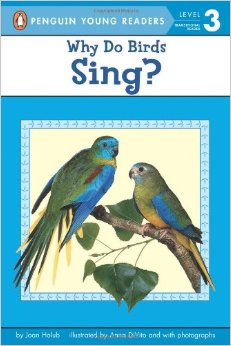
51ghouWrrrL._SY344_BO1,204,203,200_

This book is a terrific mentor text. Children have many questions about subjects they’re interested in, and this question-and-answer structure is a perfect way for them to organize their research findings. Text features in Why Do Birds Sing? are limited to photographs and labels, but the photos have been thoughtfully chosen to illustrate and/or support the information being presented.

Holub and DiVito have also teamed up to create Why Do Dogs Bark?, Why Do Cats Meow?, and others that answer these urgent questions that all kids ask.
51zj0DcTTBL._SX258_BO1,204,203,200_

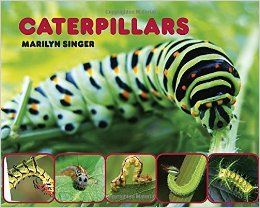
Caterpillars, by Marilyn Singer (EarlyLight Books, 2011) is a fact-filled book lavishly illustrated with close-up color photographs of both familiar and unfamiliar caterpillars. What I really love about this book, though, is its unique structure. Poet Singer (who was recently awarded the National Council of Teachers of English Award for Excellence in Poetry for Children) begins the book with a poem introducing caterpillars. Here is the first stanza:

Caterpillars smooth,

Caterpillars hairy.

Munching in a giant bunch,

Lunching solitary.

The poem is followed by a page devoted to elaborating each line, providing young readers with all sorts of interesting facts. Each page is also filled with gorgeous color photographs showing examples of the species or behavior described in the text. There is also a quiz, a matching game (caterpillar-to-moth/butterfly), glossary, resource list, index, and more.

Caterpillars, which was named a National Science Teachers Association Outstanding Trade Book for Science in 2012, is listed by the publisher as being appropriate for K-2 students. But I think older students would also enjoy Singer’s informative, accessible writing style and have fun creating their own poem to organize their informational writing.

Both of these books are excellent mentors for a whole class book on a single topic, or for individuals writing about a topic of their choice. Best of all, they are engaging nonfiction texts that can be enjoyed as read-alouds or as independent reading by all elementary age students.

Don’t forget to visit Jen at Teach Mentor Texts and Kellee at Unleashing Readers to find out what other people have been reading lately. Thanks, Jen and Kellee, for hosting!
Poetry Friday: A Valentine, Of Sorts

poetry-friday-1-1

In memory of Beth Flynn, my mother-in-law, who taught me much about baking, loving, and life.

It’s snowing again today,

this day that would have been

your 77th birthday.

The weatherman said, “Just a dusting,”

like the recipe

for your favorite chocolate cookies,

sprinkled with confectioner’s sugar.

I would have baked these for you today in celebration.

Can you see the snowflakes?

Feel their icy touch on your nose?

Or are you part of them?

Your soul mixed in their lacy crystals,

blanketing me once more with your love.

© Catherine Flynn, 2015

Please be sure to visit Cathy at Merely Day by Day for the Poetry Friday Round Up.

Poetry Friday: Mary Oliver’s “White Eyes”

poetry-friday-1-1

“White Eyes”

by Mary Oliver

In winter

all the singing is in

the tops of the trees,

where the wind-bird

With its white eyes

shoves and pushes

among the branches.

Like any of us

He wants to go to sleep,

but he’s restless–

he has an idea,

and slowly it unfolds

from under his beating wings

as long as he stays awake.

But his big, round music, after all,

is too breathy to last.

Read the rest of the poem here.

Don’t miss Krista Tippet’s recent interview with Mary Oliver at On Being.

Be sure to visit Liz Steinglass for the Poetry Friday Round Up!

Poetry Friday: What Does A Seashell Know?

poetry-friday-1-1

My grandmother gave me my first seashell when I was about five years old. Since then, these treasures from the sea have fascinated me. My grandmother was not a sentimental person; she endured many hardships, including raising three children through the Depression, during her long life. But she was a generous person, not only with material objects, but also with her time, and especially her knowledge. An eighth-grade graduate, she nevertheless was a storehouse of information which she willingly and often shared with her family. Rachel Carson once said that “if a child is to keep alive his inborn sense of wonder, he needs the companionship of at least one adult who can share it, rediscovering with him the joy, excitement, and mystery of the world we live in.” My grandmother was this person to me.

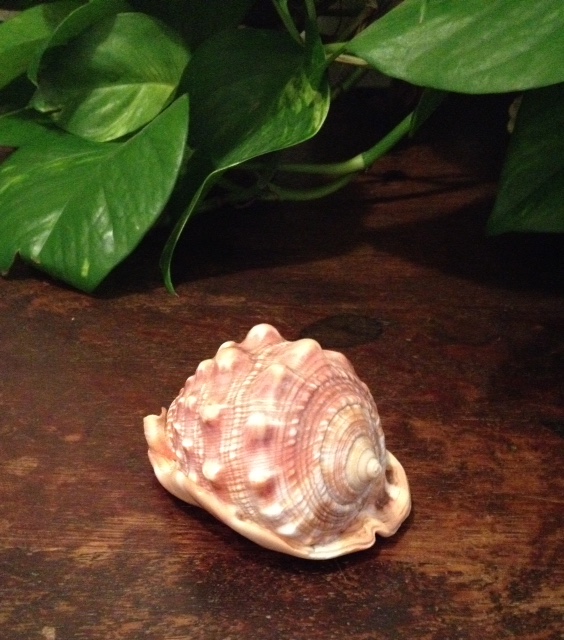
The red helmet shell my grandmother gave me when I was five.

When she became bedridden in her late eighties, my mother, sister, cousins, and I faced the daunting task of emptying her house. Most of the shells that I had loved studying as a child became mine. I’ve shared them with my kids and my students, and I have them scattered throughout my home. An arrangement here, a basket there, a single magnificent conch on a table. I think of my grandmother every time I look at them.

So when Michelle, of Today’s Little Ditty, announced Joyce Sidman’s challenge two weeks ago to write a “Deeper Wisdom” poem, I didn’t even have to think about the subject of my poem. But I had so many ideas, and I really struggled with this. There are many earlier, very different versions. As I worked on this today, I realized that the title really should  be “What Do Mollusks Know?” but that doesn’t have the same appeal, does it?

What Do Seashells Know?

What Do Seashells Know?

To turn their bones inside out,

and spin a swirling castle,

armed with turrets and spikes.

What Do Seashells Know?

To nestle within lustrous walls,

tinged pink, like the sky at dawn,

safe inside their sea-borne home.

© Catherine Flynn, 2015

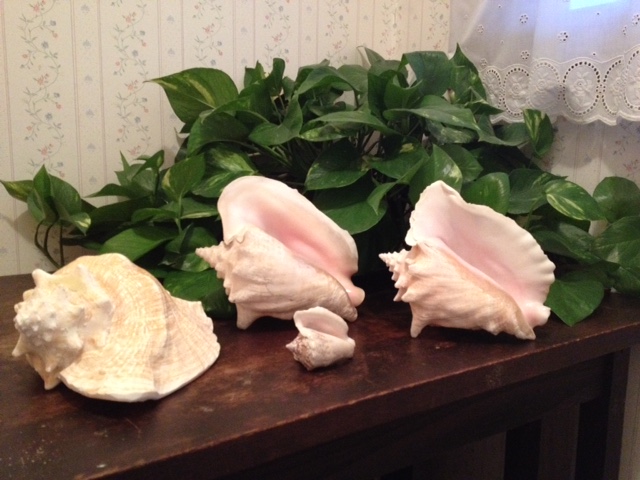
My collection of conchs.

Please be sure to visit Tara at A Teaching Life for the Poetry Friday Round Up!

Poetry Friday: Wacky, Wild, and Wonderful: 50 State Poems by Laura Purdie Salas

poetry-friday-1-1

I first discovered the work of Laura Purdie Salas in 2008 when she wrote a series of poetry books for Capstone Press. Tiny Dreams, Sprouting Tall: Poems About the United States and Lettuce Introduce You: Poems About Food were perfect for two units my colleagues and I were revising. Since that time my students and I have enjoyed Stampede: Poems to Celebrate the Wild Side of School (Clarion, 2009), Bookspeak: Poems About Books (Clarion, 2011), and most recently, A Rock Can Be… (Millbrook, 2015). (A complete list of Laura’s books can be found here.) So last spring, when Laura put out a call for teachers to collaborate with her on her latest poetry project, I jumped at the chance. I was thrilled to be chosen to create activities for Wacky, Wild, and Wonderful: 50 State Poems.

I loved every minute of working with Laura on this project. These poems, rich in imagery and figurative language, inspired many extension and enrichment activities. They celebrate the diversity of our ecosystems and geologic formations, as well as bring our history to life. I learned about landmarks I’d never heard of, and started planning trips to some of them! Laura graciously gave me permission to share some of her wonderful poems from this collection today. I hope you enjoy them as much as I do!

“Indiana: Time to Walk the Dogwood”

Black-Eyed Susan rings the Bluebells—
“Dinnertime! Come eat!”
Sweet William drinks his Milkweed
with a sweet Mayapple treat.
They eat their toast with Buttercups
and have a lovely talk.
Then dinner’s done and they must take
their Dogwood for his walk.
William wears his Dutchman’s Breeches,
white and pressed and neat.
Susan’s Yellow Ladyslippers
snuggle up her feet.
Dogwood chases Cardinals flashing
red and wild and bright.
His Fleabane’s bad, he needs a bath—
another busy night.
It’s time to watch the Shooting Stars
against the darkened sky.
William plants a kiss on Sue—
Another day’s gone by.

© Laura Purdie Salas, all rights reserved, 2015

This poem, with its bouquet of Indiana wildflowers brought to life, begs to be illustrated. My art skills weren’t up to the task, but I’m sure there are plenty of young artists whose are!

Laura used an impressive variety of poetic forms in this collection. “America the Beautiful” is one of my favorite patriotic songs, so I especially loved “Colorado: Pink Lady (A Poem for Two Voices)” I can’t wait to hear our fourth graders performing this poem!

Long hike down through misty clouds,

O beautiful for spacious skies,

A dizzying descent

For amber waves of grain,

Rocks, ravines, and evergreens—

For purple mountain majesties

That clean-scrubbed pine tree scent

Above the fruited plain!

Pikes Peak, the watchman of the west,

America! America!

You rise from plains below

God shed his grace on thee

Rosy granite etched with ice

And crown they good with brotherhood

You wear the sunset’s glow

From sea to shining sea!

America,

America

Land beautiful

and free.

© Laura Purdie Salas, all rights reserved, 2015

Pike's Peak, (Library of Congress, Public domain, via Wikimedia Commons)
Pike’s Peak, (Library of Congress, Public Domain, via Wikimedia Commons)

This is a must-have collection for any classroom learning about the United States. Laura’s engaging poems will make students’ research about the states more meaningful and memorable. Click here for information on how to get your copy of Wacky, Wild, and Wonderful: 50 State Poems.

Thank you, Laura, for letting me share your work here today, and for giving me the opportunity to be part of this terrific poetry collection!

Be sure to visit Irene Latham at Live Your Poem for the Poetry Friday Round Up, and you can read North Carolina’s poem today on Laura’s blog.

Poetry Friday: How I Discovered Poetry

poetry-friday-1-1

Discovery #1 (First in a series in honor of my OLW for 2015: discover.)

How do you decide on which poem to share on Fridays? Does a poem you’ve read during the week resonate so much that it must be shared? Do you write an original poem based on an event or an emotion from the previous week? If you’re like me, the answer is yes and yes. In other words, it depends. But what about those weeks when nothing strikes you, or life in general is so hectic you haven’t had time to sit down and write much of anything that’s worthy of sharing? When this happens to me, as it often does, I head over to Anita Silvey’s excellent blog, The Children’s Book-a-Day Almanac. In a sidebar, Anita offers tidbits such as this: “It’s Bubble Bath Day.” (Now there’s a topic for a poem!) By checking Anita’s blog on Wednesday (you can skip ahead to see what’s coming up), I discovered that today is Connecticut’s birthday. My home state was admitted to the United States on this date in 1788.

Not knowing any poems about Connecticut off the top of my head, I Googled “poems about Connecticut” and quickly learned that Wallace Stevens was an insurance executive who lived in Hartford (surely I knew this and had just forgotten), and that Marilyn Nelson is a professor emeritus of English at the University of Connecticut and was our state’s Poet Laureate from 2001-2006. How had I missed that!?

I have been a fan of Marilyn Nelson’s poetry from many years. Miss Crandall’s Boarding School for Young Ladies and Little Misses of Color, (Wordsong, 2007) cowritten with Elizabeth Alexander, describes an important piece of Connecticut history and is part of our eighth grade’s Civil Rights unit. A Wreath For Emmett Till (Houghton Mifflin, 2005), Nelson’s haunting, magnificent book-length crown sonnet about the murder of Till in 1955 is also included in this unit. On a previous Poetry Friday, I shared Sweethearts of Rhythm (Dial, 2009) the story of “the first integrated all-women swing band in the world.”

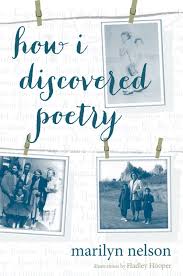
Nelson’s latest book, How I Discovered Poetry, was published last year to universal acclaim and is on many short lists for the upcoming ALA awards. The images Nelson crafts in these poems are stunning and startling. In one poem, she states that “Our leaves/become feathers./With wings we wave good-bye to our cousins.” Another poem is about a birthday party until the very end when, “a jet/made a sonic boom/like a hammer on an iron curtain.”

imgres

In the title poem, Nelson captures that moment when she first glimpsed “the power of words.”

How I Discovered Poetry

It was like soul-kissing, the way the words

filled my mouth as Mrs. Purdy read from her desk.

All the other kids zoned an hour ahead to 3:15,

but Mrs. Purdy and I wandered lonely as clouds borne

by a breeze off Mount Parnassus…

Read the entire poem here.

You can also listen to Ms. Nelson read the poem, as well as several other poems from this lovely book, in an interview that aired last winter on NPR.

Happy Birthday, Connecticut! How lucky we are to count Marilyn Nelson as a citizen of our state!

Be sure to visit Tabatha at The Opposite of Indifference to discover more wonderful poetry.


Poetry Friday: I Dwell in Possibility

poetry-friday-1-1

I dwell in Possibility—

A fairer House than Prose—

More numerous of Windows—

Superior—for Doors—

Of Chambers as the Cedars—

Impregnable of Eye—

And for an Everlasting Roof

The Gambrels of the Sky—

Of Visitors—the fairest—

For Occupation—This—

The spreading wide my narrow Hands

To gather Paradise—

Emily Dickinson

B6RjEeoIMAAGEoi
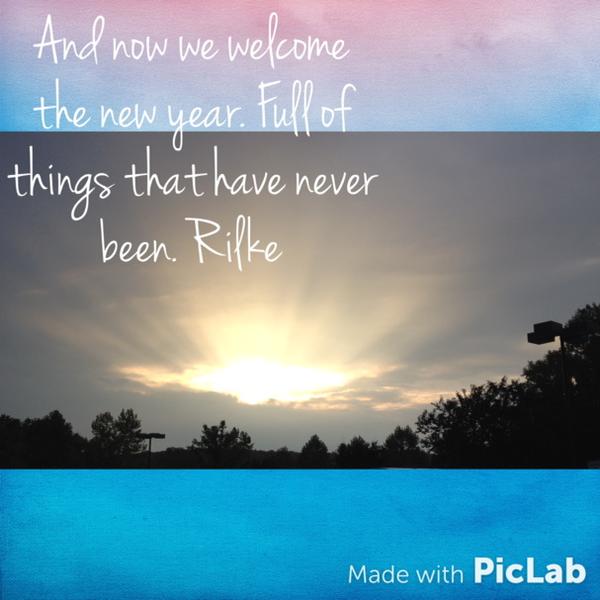
Photo taken by me in the parking lot of the grocery store one morning last September.

This poem seems appropriate for a new year, when anything and everything seems possible. I’m looking forward to sharing a year filled with poetry (and prose!) with all of you. Happy New Year!

Please be sure to visit Tricia at The Miss Rumphius Effect for the first Poetry Friday Round Up of 2015.

Poetry Friday: The Coming of Light

poetry-friday-1-1

The Coming of Light

by Mark Strand

Even this late it happens:

the coming of love, the coming of light.

You wake and the candles are lit as if by themselves,

stars gather, dreams pour into your pillows,

sending up warm bouquets of air.

Read the rest of the poem here.

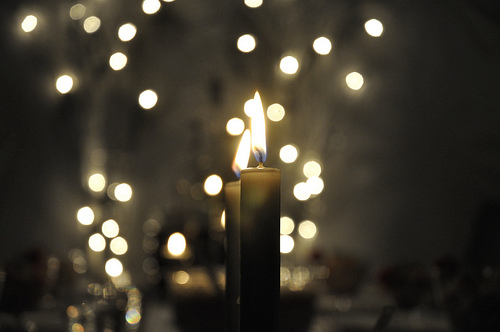
photo credit: johan wieland via photopin cc

Wishing you all love and light and joy this holiday season!

Be sure to visit Buffy Silverman at Buffy’s Blog for the Poetry Friday Roundup.

Poetry Friday: Snowpiaries

poetry-friday-1-1


According to the calendar we still have a week of autumn, but winter has definitely arrived! We had snow for Thanksgiving, and it seems like it’s snowed every day this week. Here are two poems inspired by the recent weather.

i.

After the blizzard,

hydrangeas blanketed in white:

snowpiaries.

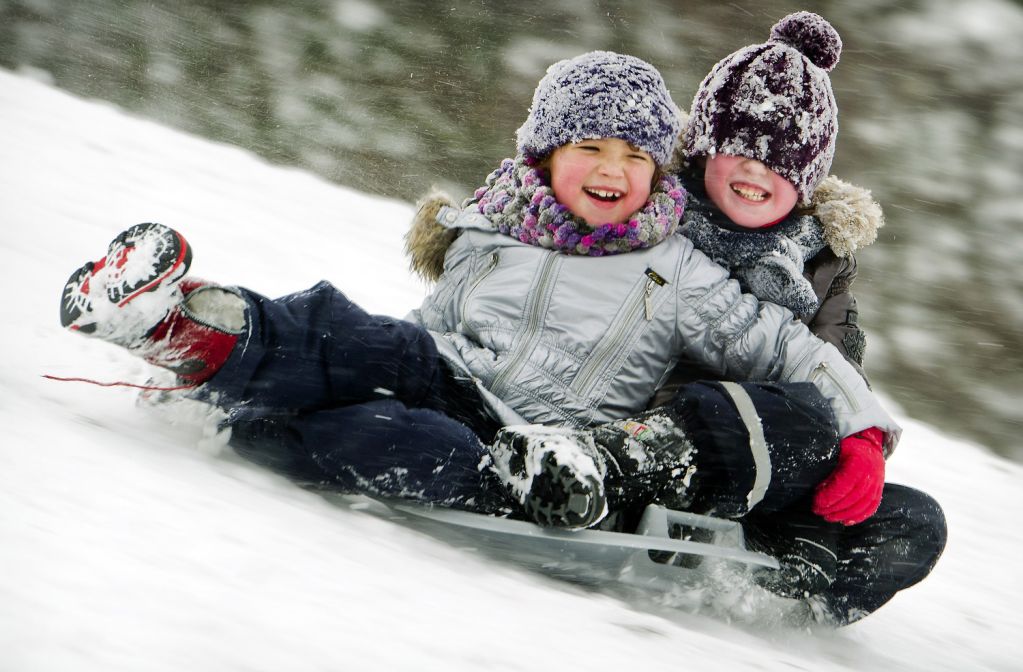
children_sledding_heiloo_netherland_542450141.1024x0
Children sledding, Heiloo, Netherlands, via picc.it

ii.

Giggling, laughing,

Come on, let’s go!

Sliding, gliding,

Through the snow.

Skidding, crashing,

Watch out! Oh, no!

Tumbling, crumbling,

into a heap.

Brushing, rushing,

up we leap.

Giggling, laughing,

Come on, let’s go!

© Catherine Flynn, 2014

Thank you to Paul, for hosting Poetry Friday. Be sure to visit him at These Four Corners for the round up.

A Poem for Autumn

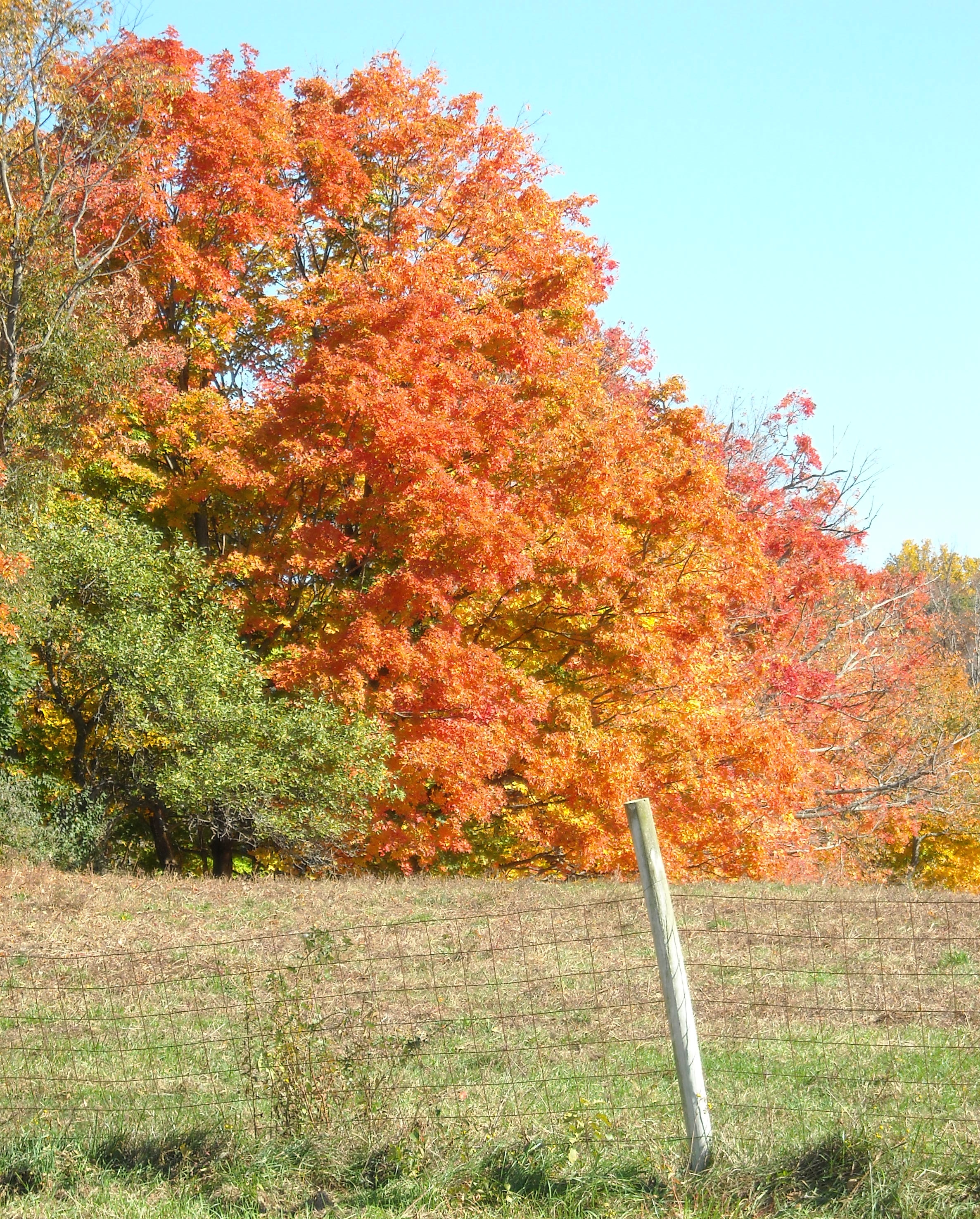
Back in September, the lovely Carol Varsalona created a “Summer Serenity” Gallery, a gorgeous collection of summer poems and photographs. Soon afterwards, Carol, who I was lucky enough to meet at NCTE, announced a “Finding Fall” gallery. Autumn is my favorite season, so I thought writing a poem about its beauty would be pretty straightforward. Alas, I have been scribbling notes and ideas for the better part of two months, but a poem has eluded me. Since winter is almost here, I knew it was time to sit down and “just do it!”

DSCN0025 2

Leaf Globe

I’d like to capture autumn’s glow

inside a globe of glass,

where leaves of red and gold

swirl like confetti in the breeze.

Beneath the fiery trees,

a multicolored carpet,

crackles and rustles

as chipmunks dash and scurry,

gathering nuts and acorns

for their secret cache.

A globe that I can gaze at

on snowy afternoons,

remembering these golden days,

which drift away too soon.

© Catherine Flynn, 2014

Thank you, Carol, for being such an inspiration!