Poetry Friday: The Comfort of Pie

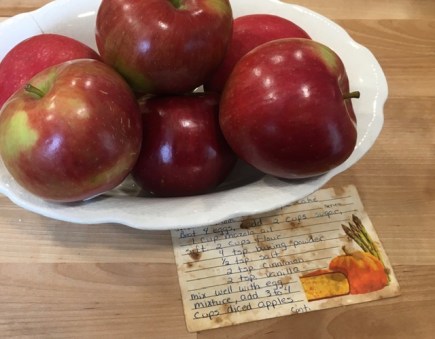
Tomorrow is Pi day (3.14). We were going to celebrate at school today with a smorgasbord of pies. Instead, we are all home, hoping that closing our school will help prevent the spread of the coronavirus. We received word last night, before I made the chocolate cream pie my family loves. I was still too filled with worry and the stress of the week to bake last night. I may make it later this afternoon. After all, a piece of pie seems like a reasonable way to soothe the soul. 

We were also going to write Pi poems with the kids today, so I went ahead and wrote one that I hope I will be able to share with them soon. 

Chocolate
pie,
topped with dollops
of
whipped cream; nestled in
a crust of chocolaty crumbs. Divine.

From House of Nash Eats. Here’s their recipe: https://houseofnasheats.com/chocolate-cream-pie/.

Be well, my friends.

Please be sure to visit Matt Forrest Esenwine at Radio, Rhythm, and Rhyme for the Poetry Friday Roundup.

Here are other Pi day poems I’ve written over the last few years:

2018
2017
2016

Poetry Friday: The Question is Why

I spend my days helping kids learn to read. This is incredibly rewarding, but given the nature of how we learn, it can also be frustrating. Kids may read words with long vowels effortlessly one day, then forget they exist the next. So when one of my students was unable to read the word why (a word she knew the day before) not once, not twice, but three times in a row, I knew she needed a poem starring the word why!

There are at least 100 books of poetry in my classroom. I know I’ve seen a why poem somewhere. But after searching through the most likely volumes, I had nothing. Rather than spend any more time looking, I decided to write one. I quickly jotted down a list of why questions, using words that included a number of different phonics patterns we’ve worked on recently. She read it beautifully and loved it.

Fast forward to Sunday. As I was getting ready to meet with the Sunday Night Swaggers, I realized that our monthly challenge was coming up this week! I didn’t even remember what challenge Margaret had posed. A question poem! What on earth could I write about? I’m embarrassed to admit that it took me a few minutes to realize I’d already written one!

This draft is a more polished version of the poem I wrote for my student. It’s not perfect, but she likes it. And she now knows the word why.

Why?

Why do ships sail on the sea?
Why is the sky so blue?
Why do fish swim in the pond?
How I wish I knew!

Why does the moon shine at night?
Why is the grass so green?
Why do bees buzz in the garden?
Why won’t my room stay clean?

Why do ducks say quack, quack, quack?
Why can’t I answer back?

Draft © 2020, Catherine Flynn

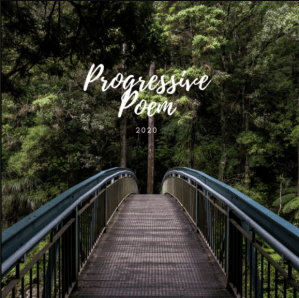
Photo by Jenny Bess on Unsplash

What questions are my fellow swaggers asking? Find out by visiting their blogs:

Molly Hogan at Nix the Comfort Zone
Linda Mitchell at A Word Edgewise
Heidi Mordhorst at My Juicy Little Universe
Margaret Simon at Reflections on the Teche

Then head over to Rebecca Herzog’s blog, Sloth Reads, for the Poetry Friday Roundup.

In case you missed it earlier in the week, there is still time to be entered in my giveaway of David L. Harrison’s new book, After Dark. Read my post about using this book in the classroom here.

After Dark Blog Tour: The Final Stop

Welcome to the final stop on the blog tour celebrating the publication of After Dark: Poems About Nocturnal Animals, David L. Harrison’s 97th book! Congratulations, David! I am honored to be part of the festivities. Be sure to visit the previous stops (links below) on the tour for interviews with David about where he gets his ideas, his creative process, and more.

Over at No Water River, David told Renée LaTulippe that “being fascinated with the universe” is one of the major influences on his poetry. This fascination is contagious and shines brightly on every page of this gorgeous book. 

One sure-fire way to build students’ curiosity is to introduce topics through poetry. Which is why I was so excited to share After Dark with my students. Each of the 21 poems highlights the nocturnal comings and goings of familiar animals. The beauty of sharing these poems is that they are about animals children will recognize, but will extend their knowledge in playful and engaging ways.

David’s masterful poetry builds vocabulary and will foster a love of language in readers of all ages. First graders loved “Owl Rules,” a perfect mentor text for young writers. They will use this poem to organize what they have learned about animals they are studying. David’s categories are full of humor: “Never work for food,” “Eat whatever,” “Who needs a nest?” and “Tease campers.” Children will be able to adapt these categories or create their own.

Eighth grade students I work with are currently reading A Midsummer Night’s Dream. They quickly recognized similarities between Shakespeare’s play and “The Queen,” which is filled with rich and royal vocabulary: regal, ermine, suitors, serene.

“The Queen”
(Luna Moth)

Like regal monarch of the night
or fairy in the airy light,
richly robed in ermine white,
winged in velvet royal green.

Suitors you have never seen
find you here in woods serene.
You’ve much to do before the dawn
so when your fleeting life is gone,
future queens can carry on.

© David L. Harrison, 2020

Examples of poetic techniques also abound in After Dark. The rambunctious “growly, pouncy, bitey games” played by wolf pups in “The Rehearsal” is a great example of creating adjectives and making words rhyme. My students are excited to try this themselves! Other favorites, “Toothy Grin,” “The King,” and “Hear This! Hear This” focus on prominent features of the kit fox, the Mexican red-knee tarantula, and spring peepers, then emphasize them through repetition. This poetic technique is one that young writers can easily imitate. The possibilities are truly endless!

Observation is the best way to learn about an animal’s behavior and get ideas about a behavior to focus on in their poem. If heading outside to explore isn’t an option, critter cams are a great way to bring the hidden world of animals into your classroom and spark student writing. 

Stephanie Laberis’s expressive digital illustrations are filled with details that are perfectly suited to the personality David emphasizes in each poem. There are two pages of additional facts about each animal at the end of the book. Students could use these fascinating facts in their own poems.

Boyds Mills & Kane has generously donated a copy of After Dark to one lucky reader of today’s post. Thank you! To be entered in the drawing, leave a comment by Saturday, March 7th. If I pick your name at random, a copy of this delightful book will soon be on its way to you. Thank you, David, for inviting me to join in the fun, and for all your wonderful poetry!

Previous stops on the After Dark Blog Tour:

Writing and Illustrating

Beyond Literacy Link

Read, Learn, and be Happy

Poetry for Children

Teacher Dance

Michelle Kogan

Salt City Verse

Reflections on the Teche

Simply 7 Interview

No Water River

A Word Edgewise

Radio, Rhythm & Rhyme

Live Your Poem

Poetry Friday: A Terza Rima for the Stars

Last summer, my critique group, aka “The Sunday Night Swaggers,” decided to set a monthly challenge for ourselves. This month it was my turn to come up with our challenge. In a moment of insanity, I thought writing a poem using terza rima would be fun.

Terza rima, which was popularized by Dante in The Divine Comedy, consists of tercets with a rhyme scheme of aba, bcb, cdc, and so on. There is no set number of stanzas, and some poems using a terza rima structure end in a couplet that rhymes with the middle line of the previous stanza. The meter is iambic pentameter or tetrameter. (Read more about this form and several examples here.)

This all sounds fairly straightforward. Unless, of course, iambs are your arch-enemy. Even if they are, you still need a topic. Luckily, Betelgeuse, the red giant in the constellation Orion, has become noticeably dimmer in recent months. I’d been reading about this phenomenon, and decided to write my poem about this.

As often happens when writing, this turned out only to be a starting point. My poem morphed into more of a tour of a few constellations. I’m not entirely happy with this draft, and have now officially given up on iambic pentameter, but this was my idea, so here is my terza rima.

Stargazer

On clear nights, when the sky is ablaze
with fireworks from the Milky Way,
step out into the universe and gaze.

Affixed to a path from which he won’t stray,
bold Orion marches on through the night
holding his foe, wily scorpion, at bay.

Cygnus the swan, in perpetual flight
Through vast distant clouds of brilliant stardust
In search of lost love; his passion burns bright.

Polaris, the star all travelers trust,
Illumines the way to your heart’s true home,
constant ally of those with wanderlust.

Listen. Stars tell stories of those who roam
Under the vault of sky’s glittering dome.

Draft, © 2020 by Catherine Flynn

The constellation Orion. Mouser [CC BY-SA (http://creativecommons.org/licenses/by-sa/3.0/)%5D via Wikipedia
Please visit my fellow Swaggers to read their terza rimas!

Molly Hogan at Nix the Comfort Zone
Linda Mitchell at A Word Edgewise
Heidi Mordhorst at My Juicy Little Universe
Margaret Simon at Reflections on the Teche

And don’t forget to stop by Laura Purdie Salas’s blog for the Poetry Friday Roundup.

Poetry Friday: A Hat for Hazel

My husband and I became grandparents this week! My son and his wife welcomed their daughter, Hazel, to the world on Wednesday afternoon. It’s been an incredible journey, and I can’t quite believe it’s real. I’ve spent most of the past 48 hours staring at the pictures they’ve sent. (Thank goodness for that miracle!) She arrived a week ahead of schedule, so I was still knitting a hat for her. As I finished the final stitches, the shape of the crown set words whirling through my head. This draft is the result of a very happy, but very tired mind.

A Hat for Hazel

On the night you were born,
I knit you a hat.
At the top, stitches disappeared,
whirling, whorling,
spiraling into a singularity:
A galaxy of wool.

Outside, a billion stars whirled
overhead, glittering in celebration.

You stretched ten perfect fingers,
tipped with spiraling whorls
high above your head,
beginning your dance with the world.

Draft © 2020 Catherine Flynn


Please be sure to visit Jone MacCulloch at DeoWriter for the Poetry Friday Roundup.

Welcome to the Poetry Friday Roundup!

“The writer should never be ashamed of staring.
There is nothing that does not require his attention.”
~ Flannery O’Connor ~

Welcome to the Poetry Friday Roundup! I’m so glad you stopped by.
(Learn more about Poetry Friday here.)

I had big plans for hosting today. Alas, I’ve been under the weather this week, doing a lot of staring. Birds, stars, the moon, you name it, I’ve stared at it. But nothing has come together. So I decided to roundup some haiku I shared on Twitter in December for #haikuforhope.

feathery snow angel
reminds me
birds were here first

the moon does not
discriminate; its beauty
is free for all

after the solstice
bluejays and chickadees feast
for a minute more

pen meets page
portal to another world
reveals itself

Photo by Aaron Burden on Unsplash

Now on to the Roundup!

You are invited to the Inlinkz link party!

Click here to enter

https://fresh.inlinkz.com/js/widget/load.js?id=c8cd94ed6d171cb9d89d

Poetry Friday: “Making Peace”

“Making Peace”
by Denise Levertov

A voice from the dark called out,
             ‘The poets must give us
imagination of peace, to oust the intense, familiar
imagination of disaster. Peace, not only
the absence of war.’
                                   But peace, like a poem,
is not there ahead of itself,
can’t be imagined before it is made,
can’t be known except
in the words of its making,
grammar of justice,
syntax of mutual aid.
Read the rest of the poem here.
Please be sure to visit Sally Murphy at her blog for the Poetry Friday Roundup.

Poetry Friday: One Little Word

Happy New Year! My Sunday Night Swaggers group challenge for January (thank you, Heidi, for this particular challenge) is to write about our One Little Word for 2020. I have been on the fence about even choosing a word. But over the past week, I’ve encountered the idea of perspective so often, I took it as a sign to consider this word. Without getting too political, it seems like perspective is in short supply these days. While I can’t change the willingness of others to see issues from a viewpoint other than their own, I can be more vigilant about being open to other perspectives myself.

To chose one word to guide my life over the coming year feels somewhat limiting, so it seems important that this word help me face challenges that will inevitably present themselves in the year ahead. Keeping these events in perspective may not be easy, but it will help me navigate them.

My mother once asked me why I write poetry. She thinks I have enough to do already. I thought about this as I tried to figure out how to write a poem about perspective. How on earth could I do this? The answer presented itself, as it usually does, while I was reading. In her essay, “The Mercies,” (which you can read in This is the Story of a Happy Marriage) Ann Patchett contemplates the life of the nun who taught her to read.  She writes “…when I can manage to see outside the limitations of my own life.” The perfect strike line for a golden shovel.

Be sure to see how my fellow Swaggers tackled this challenge by visiting their blogs.

Heidi at My Juicy Little Universe
Linda at A Word Edgewise
Margaret at Reflections on the Teche
Molly at Nix the Comfort Zone

And don’t forget to visit Carol at Carol’s Corner for the Poetry Friday Roundup.

Poetry Friday: “In the Mid-Midwinter”

“In the Mid-Midwinter”
by Liz Lochhead

after John Donne’s ‘A Nocturnal on St Lucy’s Day’

At midday on the year’s midnight
into my mind came
I saw the new moon late yestreen
wi the auld moon in her airms

though, no,
there is no moon of course –
there’s nothing very much to speak of anything to speak of
in the sky except a gey dreich greyness
rain-laden over Glasgow and today
there is the very least of even this for us to get
but
the light comes back
the light always comes back

and this begins tomorrow with
however many minutes more of sun and serotonin.

Read the rest of the poem here.

Please be sure to visit Buffy Silverman at Buffy’s Blog for the Poetry Friday Roundup.

Wishing you all a holiday season filled with love and joy!

Poetry Friday: Finding Beauty

It’s the first Friday of the month, so it’s time for another Sunday Night Swaggers challenge. This month, Molly Hogan challenged us to “find beauty in the ugly” by reinventing “the world around you (or one aspect of it) by shifting your lens to see the beauty in what at first seems to be ugly or unnoteworthy.”

I had a few ideas, but hadn’t gotten far with any of them before I went to NCTE in Baltimore a few weeks ago. There, I attended Georgia Heard, Rebecca Kai Dotlich, Ralph Fletcher, and Lester Laminack‘s session, “Seeing the World Like a Poet.” During her part of the presentation, Georgia explained that the job of the poet is to take “the film of ordinary off of everyday objects.”

These words were in my mind the next morning while I was waiting in line to check my coat. My eyes were drawn to a building across the street that was glowing in the bright morning sun. Then, as I turned to give my coat to the attendant, I noticed this:

At first glance, this jumble of hangars is decidedly everyday and unnoteworthy. But take a closer look…

A Wedge of Hangers

Like pinioned swans,
captives on a pond,
a wedge of hangers
wait, silent and still.

Soon each will rise,
basking in the embrace
of coats, grateful
for the support
of their plastic wings.

© Catherine Flynn, 2019

During the same session, Ralph Fletcher shared that “photography uncovers surprises” and that we should “follow where they lead.” As I was writing this poem, I was surprised to learn that a wedge is in fact a collective noun for swans. So even though these hangers aren’t exactly wedge-shaped, I think wedge is the perfect word to describe a group of hangers.

Please be sure to visit my fellow swaggers to see where they found beauty this month:

Molly Hogan @ Nix the Comfort Zone 
Linda Mitchell @ A Word Edgewise
Heidi Mordhorst @ My Juicy Little Universe
Margaret Simon @ Reflections on the Teche

Then be sure to visit Tanita at fiction, instead of lies for the Poetry Friday Roundup.