Do you remember having a magic slate when you were a kid? You know, those cardboard tablets with a gray film over a waxy black background that you could draw and/or write on with a stylus. Then you lifted the film and everything was erased and you could start over.
I feel like my summer has had that gray film over it. The illness of a dear family member has colored my every waking moment. I wish I could lift the film and erase the events of the past six weeks. But life isn’t a magic slate. This is our new reality, and we are dealing with it one day at a time.
It has been a challenge for me to write during this time. I’ve had a hard time concentrating, and haven’t written anything I felt was worth sharing. But I’ve missed this community. So although this is a short slice, I just wanted to say hello to you all, and let you know I haven’t forgotten you. I hope you all have a good start to the school year.
Thank you to Stacey, Tara, Dana, Betsy, Anna, and Beth for this space for teachers and others to share their stories each Tuesday. Be sure to visit Two Writing Teachers to read more Slice of Life posts.
Yesterday, Kate kicked off the 2015 season with an invitation to wonder. Kate writes that wondering is where authentic writing starts, that “Wonder is essential for writers, but sometimes, we don’t leave time for it in our daily task-finishing, dinner-making, laundry-sorting lives.” Unfortunately, this is often true in our classrooms, too.
I usually make time for wondering during my drive to work and when I’m walking my dog, so it didn’t take me long to come up with a list, which soon morphed into a poem:
What wonders does the world behold? a chirping robin greeting the dawn a mighty river carving stone a million stars shining in the sky above the ringing of a telephone the warmth of your hand in mine finding a friend in the pages of a book.
Not sure what I would do with this list, I went about my morning. Within an hour, I heard a story on NPR about the NASA’s New Horizons mission to Pluto. Of course I started wondering what discoveries will be made about this most-mysterious non-planet. The similarities between the word “planet” and “Pluto” popped out at me, and I started thinking about how to work this into a poem.
J. Patrick Lewis says that in poetry, like architecture, “form follows function.” My work-in-progress has me thinking a lot about poetic forms. Lately, I’ve been working on a diamante (Which J. Patrick Lewis doesn’t consider a true verse form; read why here.) because it seemed like the form might help me accomplish my purpose for writing. This form also seemed like it might work for a planet/Pluto poem. Here’s a draft:
Planet celestial, spherical orbiting, rotating, reflecting rock, solar system, outcast freezing, wandering, eluding distant, mysterious Pluto
While there are parts of this I like, I wasn’t thrilled with it. Still wondering, I did a little research. Tricia Stohr-Hunt’s blog, The Miss Rumphius Effect is a treasure-trove of poetic resources, so I checked her site for more information. Coincidentally, Tricia’s post yesterday was about cinquains, another short form with a strict pattern. So I decided to try the Pluto poem as a cinquain.
Frozen, rocky mystery wandering at the edge of our solar system; outcast: Pluto
I’m still pondering this one, but playing around with different forms was fun. It also helped me see a new possibility for a poem that’s been challenging to write. In addition, a few implications for teaching became clear as I was writing.
Asking a child, “What are you wondering about?” is such simple act, yet how often do teachers do it? What a gift it would be to ask our students this fundamental question each morning! What a list kids would generate! If we did this, then all the moaning about not knowing what to write about or groaning about making revisions might fall by the wayside. When you’re truly invested in what you’re doing, it doesn’t feel like work. And who knows where their questions will lead?
Thank you Kate, and everyone at Teachers Write! for the inspiration, and thank you to Stacey, Tara, Dana, Betsy, Anna, and Beth for this space for teachers and others to share their stories each Tuesday. Be sure to visit Two Writing Teachers to read more Slice of Life posts.
How to teach poetry? “This has always worked: find the material in your own life.” ~ Naomi Shihab Nye ~
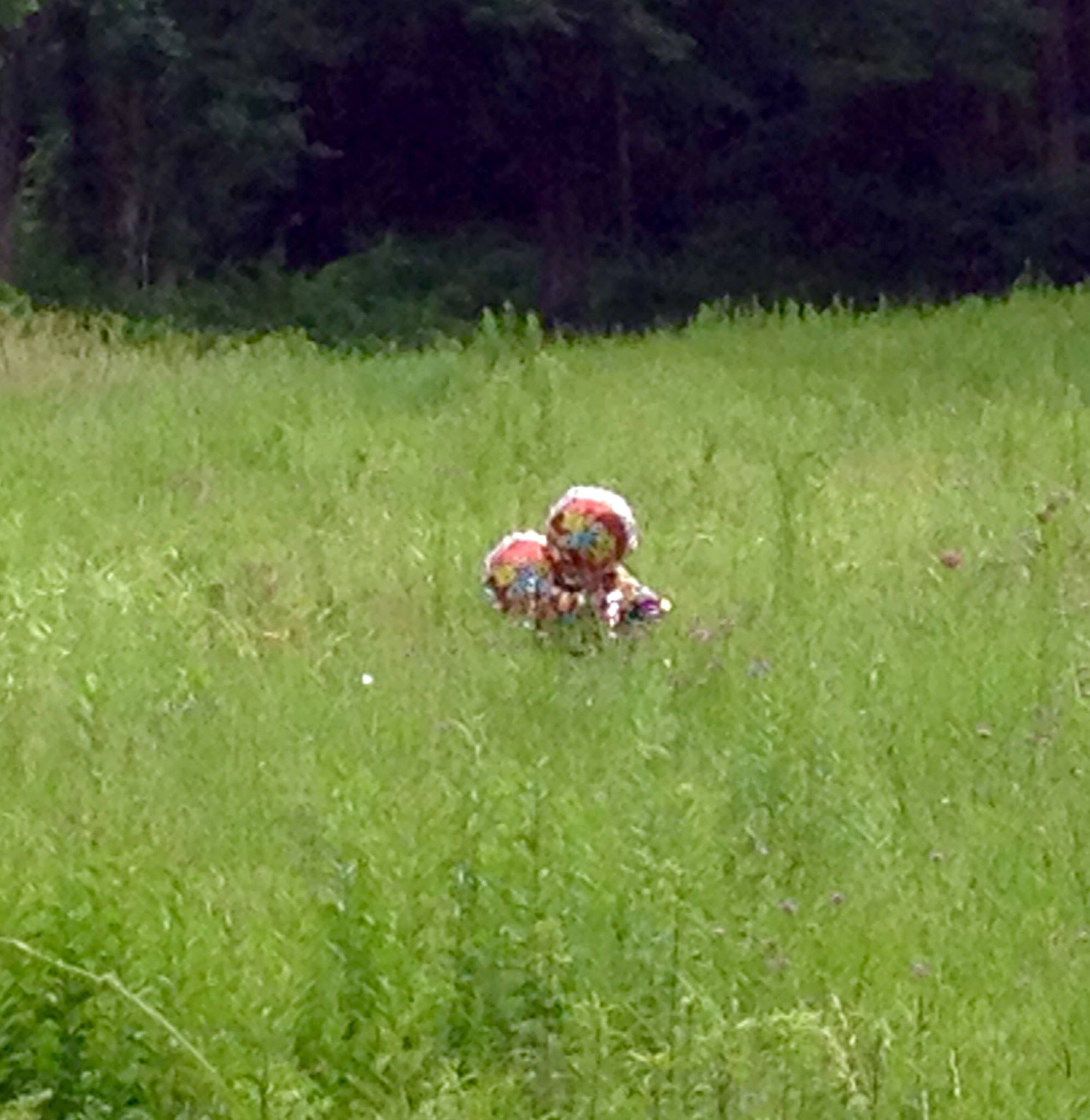
Penny Kittle tweeted this last night from the Boothbay Literacy Retreat, quoting a line from Naomi Shihab Nye, the evening’s “Distinguished Lecturer.” I had been thinking about this very idea earlier in the afternoon after I saw this on my way home:
Needless to say, I did a double take. So I drove home, parked the car, and the dog and I walked back to the field to capture the moment. The camera on my phone really doesn’t do justice to the scene, so I’ll try to paint a picture with words.
A balloon bouquet, astray on a summer breeze, touched down in a sun-drenched meadow to dance with butterflies.
I hope you all have a chance to enjoy a few sun-drenched afternoons this summer!
Thank you to Stacey, Tara, Dana, Betsy, Anna, and Beth for this space for teachers and others to share their stories each Tuesday. Be sure to visit Two Writing Teachers to read more Slice of Life posts.
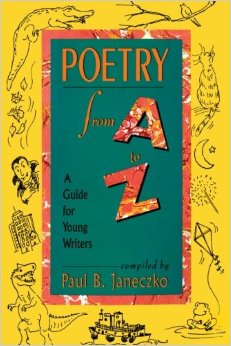
My school is undergoing some renovations this summer and several teachers are moving to new classrooms. Because of this, people were cleaning and weeding like mad during the last few weeks of school. I am not moving, but should have been doing my own weeding. Instead, I couldn’t resist going through other people’s discard piles. Unbelievably, I found a copy of Paul B. Janeczko’s Poetry from A to Z: A Guide for Young Writers (Simon and Schuster, 1994).
I’ve been savoring this anthology, which includes poems by Valerie Worth, Myra Cohn Livingston, Ralph Fletcher, Eve Merriam, and more. Many poems are accompanied by notes of advice and guidance from the poets themselves. My favorite so far is this piece of wisdom from Georgia Heard:
“I write first drafts with only the good angel on my shoulder, the voice that approves of everything I write. This voice doesn’t ask questions like, ‘Is this good? Is this a poem? Are you a poet?’ I keep that voice at a distance, letting only the good angel whisper to me: ‘Trust yourself.’ You can’t worry a poem into existence.”
This is exactly the encouragement I need as I write the first draft of a poetry project I’ve been working on. School demands have been draining and distracting me for the past few months, so I haven’t gotten too far beyond pages of notes. But now that summer is here, I’ll be at my desk every day with that good angel on my shoulder, trying not to worry, trusting myself.
Thank you to Stacey, Tara, Dana, Betsy, Anna, and Beth for this space for teachers and others to share their stories each Tuesday. Be sure to visit Two Writing Teachers to read more Slice of Life posts.
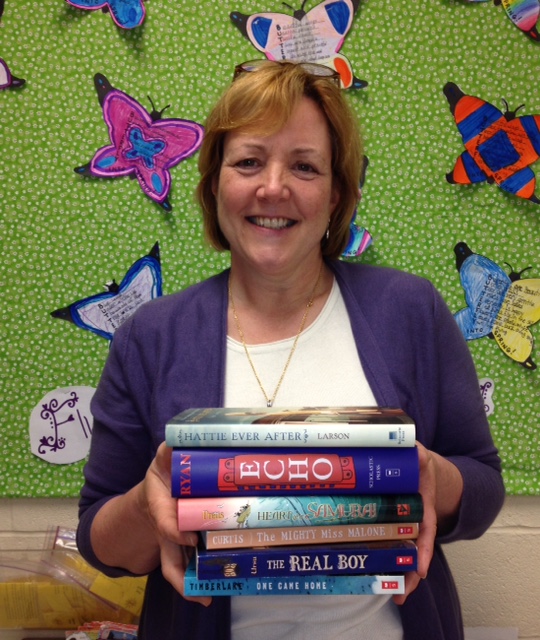
Summer. The very word conjures images of long afternoons with a book. Whether at the beach or stretched out in hammock under a tree, I’m looking forward to reading. A lot. Except for Pam Muñoz Ryan’s Echo, my stack of middle-grade novels is embarrassingly out of date. I’ll be making regular trips to the library to find more recent titles, including The War that Saved My Life by Kimberly Brubaker Bradley andpicture books like Yard Sale by Eve Bunting and Julia Sarcone Roach’s The Bear Ate Your Sandwich.
A small portion of my TBR stack. This was taken last week, and I finished Hattie Ever After over the weekend. I loved it!
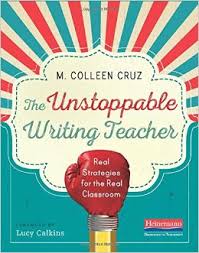
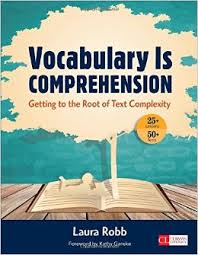
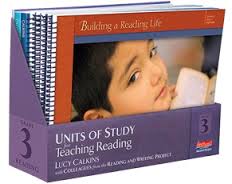
I also have a pile of professional books that includes Colleen Cruz’s The Unstoppable Writing Teacher and Vocabulary Is Comprehension, by Laura Robb. I’m looking forward to having the new Units of Study for Teaching Reading, by Lucy Calkins and her colleagues at the Teachers College Reading and Writing Project sometime in early July.
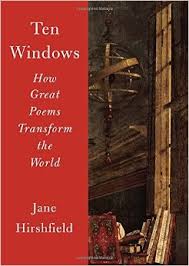
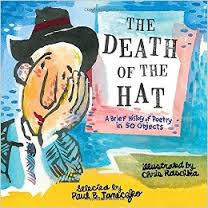
Finally, there are several poetry books I’m looking forward to reading, including Jane Hirshfield’s Ten Windows: How Great Poems Transform the World and The Death of the Hat: A Brief History of Poetry in 50 Objects, selected by Paul B. Janeczko.
This list may change over the weeks ahead. Another joy of summer reading is having time to browse the library stacks or tables at the bookstore and find an undiscovered gem. What will you be reading?
Thank you to Stacey, Tara, Dana, Betsy, Anna, and Beth for this space for teachers and others to share their stories each Tuesday. Be sure to visit Two Writing Teachers to read more Slice of Life posts.
Words sprout from my pen like weeds in my garden,
crowding my thoughts
and obscuring what I really
want to say.
If I keep at it long enough, will I one day know
how to show and not tell
as easily as I can spot
a purple coneflower
hidden among the grasses?
I’ve been gardening for a long time. Some of my earliest memories are of helping my grandmother in her garden. Both of my grandmothers were expert gardeners, and they taught me the names of favorite flowers and the basics of gardening. Many of my peonies, iris, and poppies came from their gardens, and I feel confident when I’m caring for these hardy plants.
My writing is a different story. I didn’t keep notebooks when I was growing up, and I haven’t always wanted to be a writer. In fact, for a while I seriously considered majoring in horticulture. Although I keep at my writing, it’s easy to become frustrated and want to give up. In the garden, I know which weed to pull. In my writing, I go back and forth, changing this word and deleting that one, until all that’s left is an unintelligible pile of gibberish.
And yet, from time to time, I see a glimmer of hope. A turn of phrase that is good, not just one I think is good because I wrote it. I feel something, some awareness or knowledge that I can’t even name, begin to take root in my brain. The gardener in me knows I have to nurture this fragile shoot. It needs watering and feeding. It needs the right amount of sunlight. This nascent writing requires the same kind of attention I give my newly sprouted plants. If I leave them for too long, they’ll be choked out by dandelions and other hardier plants.
In his memoir Practicing: A Musician’s Return to Music, Glen Kurtz writes that practicing is “a process of continual reevaluation, an attempt to bring growth to repetition…that teaches us the sweet, bittersweet joy of development, of growth, of change.” The process of growing and changing isn’t easy, but the rewards are many. So I’ll keep practicing as faithfully as I tend my garden. Who knows what will sprout up?
Thank you to Stacey, Tara, Dana, Betsy, Anna, and Beth for this space for teachers and others to share their stories each Tuesday. Be sure to visit Two Writing Teachers to read more Slice of Life posts.
In Minders of Make: Idealists, Entrepreneurs, and the Shaping of American Children’s Literature (Houghton Mifflin, 2008), Leonard Marcus writes, “To those who worked in the children’s book industry of the early 1940’s, New York could seem as small as a fairy-tale village.” By the 1950’s and early 1960’s, many writers, illustrators, and editors of the children’s book world had moved to my corner of Connecticut, trading one fairy-tale setting for another. Renowned illustrator Leonard Weisgard was among them. Although I didn’t know until Saturday that he had lived nearby, Weisgard’s books were a staple of my childhood.
Weisgard illustrated classics such as The Golden Egg Book and The Golden Bunny. My sister and I loved Pussy Willow so much we wore out several copies. Weisgard won the Caldecott Medal in 1947 for The Little Island, written by Golden MacDonald, a pseudonym for Margaret Wise Brown.
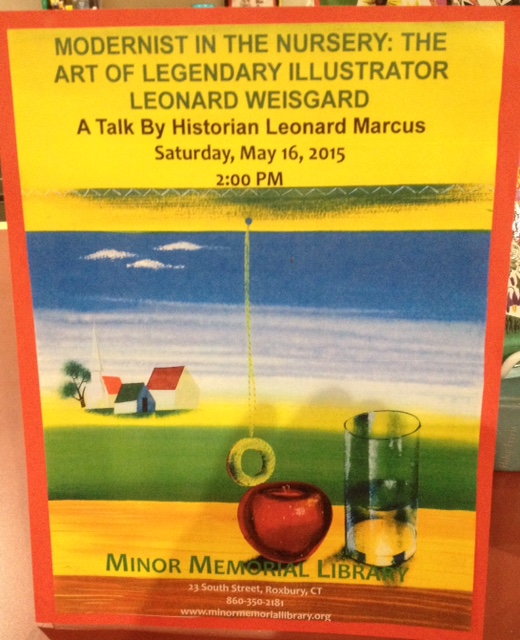
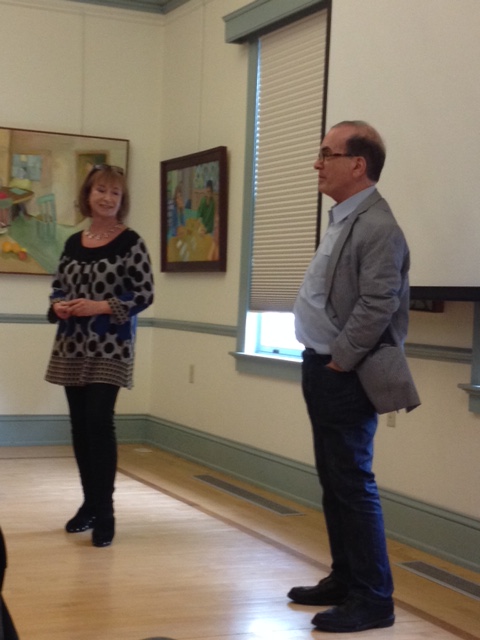
Last Saturday, neighbors, friends, and family gathered for “Modernist in the Nursery: The Art of Legendary Illustrator Leonard Weisgard, a talk by children’s literature historian Leonard Marcus. (Connecticut is still a mecca for the children’s book world; I sat next to Lane Smith!) Marcus talked about Weisgard’s love of color and nature. He discussed Weisgard’s many collaborations with Margaret Wise Brown and how her work at the Bank Street Writers Laboratory influenced his art. Weisgard loved folk art, and Marcus shared several examples of how that love influenced his art.
Weisgard’s daughter, Abby, with Leonard Marcus
When Marcus concluded his remarks, Weisgard’s daughter, Abby, answered questions and shared memories of her father. Neighbors and friends shared recollections of Weisgard’s generosity and humility, then told stories of wonderful meals with Weisgard and his family.
Throughout the afternoon, it was clear from both his art and everyone’s memories that Weisgard respected children and trusted their ability to “see and hear and feel with simple intensity.” In his Caldecott Medal Acceptance Speech, Weisgard said that “books…have always been a source of real magic in this wildly confusing world.” Thank you, Leonard Weisgard, for sharing your singular magic with the world.
Thank you to Stacey, Tara, Dana, Betsy, Anna, and Beth for this space for teachers and others to share their stories each Tuesday. Be sure to visit Two Writing Teachers to read more Slice of Life posts.
This morning there was a story on Marketplace called “Pro Tool.” Host David Brancaccio caught my attention when he referred to a pair of scissors as “dear.” This usage of the word, meaning “high or exorbitant in price” is uncommon these days. As I continued to listen, though, Brancaccio’s use of the word made perfect sense. Hairdresser Lauren Popper was clear that these shears, as calls them, were indeed “highly valued, precious” to her. After all, without the right tools, this hairdresser wouldn’t be able to do her job effectively. My husband, a toolmaker, and my son, a cabinetmaker, both have favorite tools that they would feel lost without. And I have my favorite bowl, knife, etc. in the kitchen. But what about my job? Do I have a tool without which I couldn’t teach?
In fact, I do. I can’t imagine teaching without books. The books I read as a kid instilled a sense of curiosity in me and made me want to learn more. Books have pushed me to be a more compassionate and empathetic person. Then there are books I have depended on to learn this craft of teaching.
Books have helped me be an effective teacher in another way. They’ve helped me build relationships with students and colleagues. Reading a book with a group of students is one of the best ways I know to build a community. Sharing the experiences of characters we come to love brings us together. After crying together when Charlotte dies, or cheering for Auggie during his standing ovation, we are a team. Without the healthy, trusting relationships that books help us forge with our students, we wouldn’t accomplish much.
Some may argue that computers are indispensable to teaching. They do make life much easier (most of the time), and I love how technology has broadened my horizons. But I love the people next to me everyday more. I love that my first grade students are taking off as readers and that the seventh grade writers met their writing goals. I love that when children see me in the hallway, they tell me what book they’re reading. These people and moments are all precious to me. They, and the books we share, are dear.
Thank you to Stacey, Tara, Dana, Betsy, Anna, and Beth for this space for teachers and others to share their stories each Tuesday. Be sure to visit Two Writing Teachers to read more Slice of Life posts.
“It is the supreme art of the teacher to awaken joy in creative expression and knowledge.” Albert Einstein
My sister recently attended the funeral of a friend’s mother who had been a teacher in our town for many years. My sister’s fourth grade teacher was also at this funeral, and when Joanie saw her, she hugged her and told her, “You were my all-time favorite teacher.”
Imagine that. After forty years, to be told you had made so much of an impression and had such an impact on a person’s life. Of course it’s a teacher’s goal to help every child learn every day, but there are some teachers who stand out, who somehow make us feel special. These are the teachers who ignite our joy for learning, who set us on the path to our future. So in honor of Teacher Appreciation Week, I’d like to recognize the teachers who’ve made the most difference to me.
If we’re lucky, our parents are our first and forever teachers. My parents taught me the value of hard work and instilled a curiosity about the world around me. They have always encouraged and supported my dreams, and I am still learning from them.
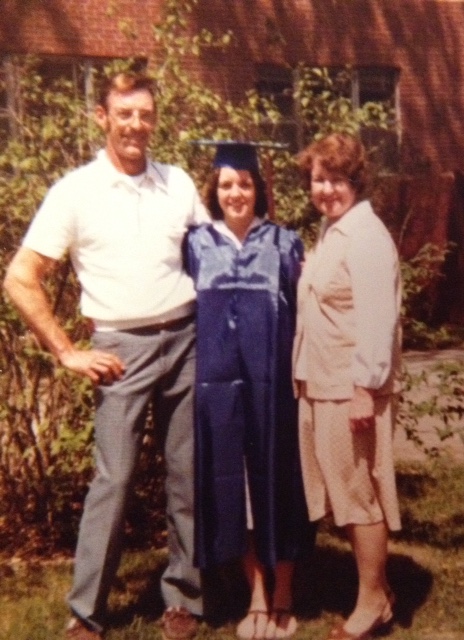
Graduation from University of Maine, 1980
Confession time. I was not always a good student. I was much more interested in talking to my friends than listening to the teacher. Today, I would probably be diagnosed with ADHD. But in the 60s, I was told to be quiet and had my desk moved. Because of this, I didn’t see myself as smart, or even that capable. But there were glimmers of hope.
The first hint of possibility came in fourth grade, when Mrs. Mathews read James and the Giant Peach, Charlie and the Chocolate Factory, and, most importantly, Charlotte’s Web. Thank you, Mrs. Mathews, for introducing me to the book that made me a reader.
Middle school was a long, dry patch. I’m sure I had fine teachers, but none that really stood out. But high school was a different story. Ms. Kazanjian and Mr. Giroux co-taught American history my freshman year, and they opened my eyes in a way that made me want to be a teacher. They also saw something in me that I hadn’t recognized. Their belief in me made me start to believe in myself.
I think I only had Mrs. Bailey for English twice, but she made a lasting impression. I still remember our study of Greek mythology my senior year. Her high expectations and broad knowledge inspired me to dig deeper into subjects, and to keep asking questions.
By the time I was in college, I was fairly confident about my ability as a learner, but there is always more to learn. I was so fortunate to have had three English professors at Western Connecticut State University who expanded my horizons in ways I still feel today. Dr. Jambeck unlocked the mysteries of the English language and entertained us with her peerless Middle English reading of The Canterbury Tales. Judy Sullivan brought passion and joy into the classroom everyday. It makes me smile to think of her, quoting Shakespeare and then grinning and telling us, “See, there’s nothing new under the sun.” Finally, Dr. Pruss, with her probing questions and insights, helped me understand the power of poetry.
We may never know the true impact we have on our students’ lives. But I hope that I bring the same passion and joy to the classroom each day that these fine teachers brought with them. I also hope that I take the time, as they did, to look beyond a klutzy, awkward chatterbox to see the potential beneath the surface, then help her see it too.
Thank you all, for helping me become who I am today.
Thank you to Stacey, Tara, Dana, Betsy, Anna, and Beth for this space for teachers and others to share their stories each Tuesday. You are all teachers I continue to learn from, and appreciate your dedication and generosity. Be sure to visit Two Writing Teachers to read more Slice of Life posts.
Thank you to Stacey, Tara, Dana, Betsy, Anna, and Beth for this space for teachers and others to share their stories each Tuesday. Be sure to visit Two Writing Teachers to read more Slice of Life posts.




![http://www.ForestWander.com [CC BY-SA 3.0 us (http://creativecommons.org/licenses/by-sa/3.0/us/deed.en)], via Wikimedia Commons](https://readingtothecore.com/wp-content/uploads/2015/04/barn-wildflowers-spring-daffodil_-_west_virginia_-_forestwander.jpg)
 Reading to the Core