This poem by Ellen Bass was exactly what I needed to read this week. Maybe it will strike a chord with you, also.
The Thing Is
to love life, to love it even when you have no stomach for it and everything you’ve held dear crumbles like burnt paper in your hands, your throat filled with the silt of it. When grief sits with you, its tropical heat thickening the air, heavy as water more fit for gills than lungs; when grief weights you down like your own flesh only more of it, and obesity of grief, you think, How can a body withstand this?
Happy New Year! The Inklings are kicking off the 2022 with a challenge from Heidi. She suggested that we use the “The Lost Lagoon” by Mohawk poet, Emily Pauline Johnson (d. 1913) “to build your own poem FOR CHILDREN about a treasured place that you return to again and again (geographical or metaphorical).”
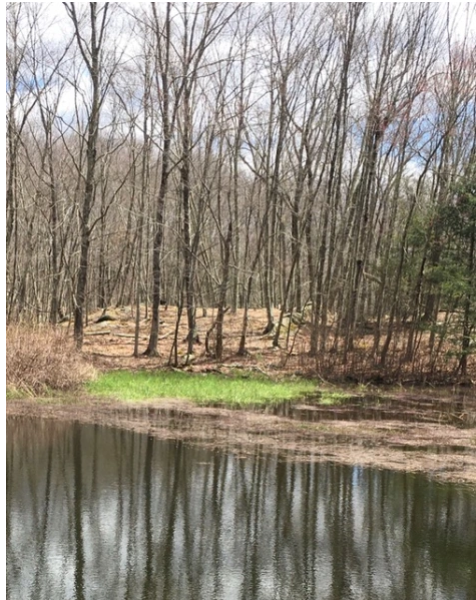
I really didn’t have to think too long about what to write about. There is a pond in the woods behind our house where my family and I have hiked, fished, searched for tadpoles, and skated since we moved here 35 years ago. Johnson included people in her memories of the lost lagoon, but I decided to leave the pond to itself in my poem.
This form was definitely a challenge. Coming up with two rhyming lines per stanza that make sense was hard enough, but THREE? Even though I wrote and rewrote each stanza several times, I’m still not sure everything works, but here is my response to Heidi’s very challenging challenge.
The Forest Pond
It’s spring time at the forest pond. Geese return, led by a starry map, turtles emerge from their winter nap, red-budded maples ooze with sap as nature waves her magic wand.
It’s summer at the forest pond. In mama’s wake, fat goslings trail, while tadpoles lose their legs and tails, over glossy water dragonflies sail, then nature waves her magic wand.
It’s autumn at the forest pond and honking geese fly overhead, beneath the pond, critters make their bed, soon trees are bare and all seems dead, then nature waves her magic wand.
It’s winter at the forest pond. Noisy geese have taken flight, white ice has water tucked in tight, but days grow longer, there is more light as nature waves her magic wand.
The days are beginning to lengthen, but the gloom of this Covid Christmas is hard to ignore. As always, I turn to favorite authors and nature to escape. This week, on her re-christened website, The Marginalia, (formerly Brainpickings) Maria Papova shared excerpts and insights from Antonio Damasio’s book, Feeling and Knowing: Making Minds Conscious. Papova’s essay delves into Damasio’s fascinating theories about the interplay between consciousness and feelings. I was struck by this quote:
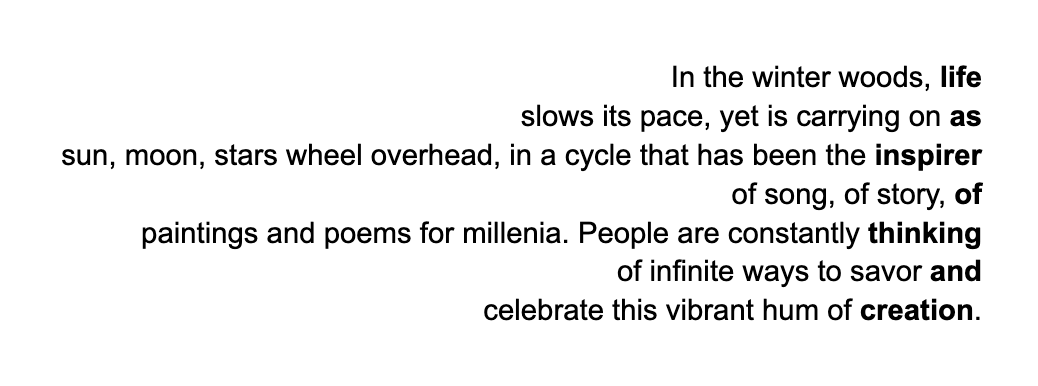
What is more impressive than the entire universe is life, as matter and process, life as inspirer of thinking and creation. Antonio Damasio
I decided that the last few words made a good strike line for a Golden Shovel to ring in the new year.
I wish you all peace, health, and joy and many opportunities to celebrate the vibrant hum of creation in the coming year. Please be sure to visit Carol at Carol’s Corner for the final Poetry Friday Roundup of 2021.
It’s the first Friday of the month, so it’s time for another Inkling challenge. This month, Molly challenged us to “Pick a poetry form you’ve been wanting to try and haven’t, and dive in! Here are a few that I’ve been wanting to play around with:: Clogyrnach and Rondelet (thanks and thanks, Alan!), and Tricube (thanks, Matt!), and Magic 9 , Feel free to choose any form you’d like., or more than one.. No pressure. Just play!”
I decided to play with a Tricube. This form sounds straightforward: three stanzas with three lines, each line with three syllables. As Matt mentioned in his original post, though, the trick is getting “what you’re trying to say in that tiny space!”
After many false starts and playing with many different ideas, this is what I came up with.
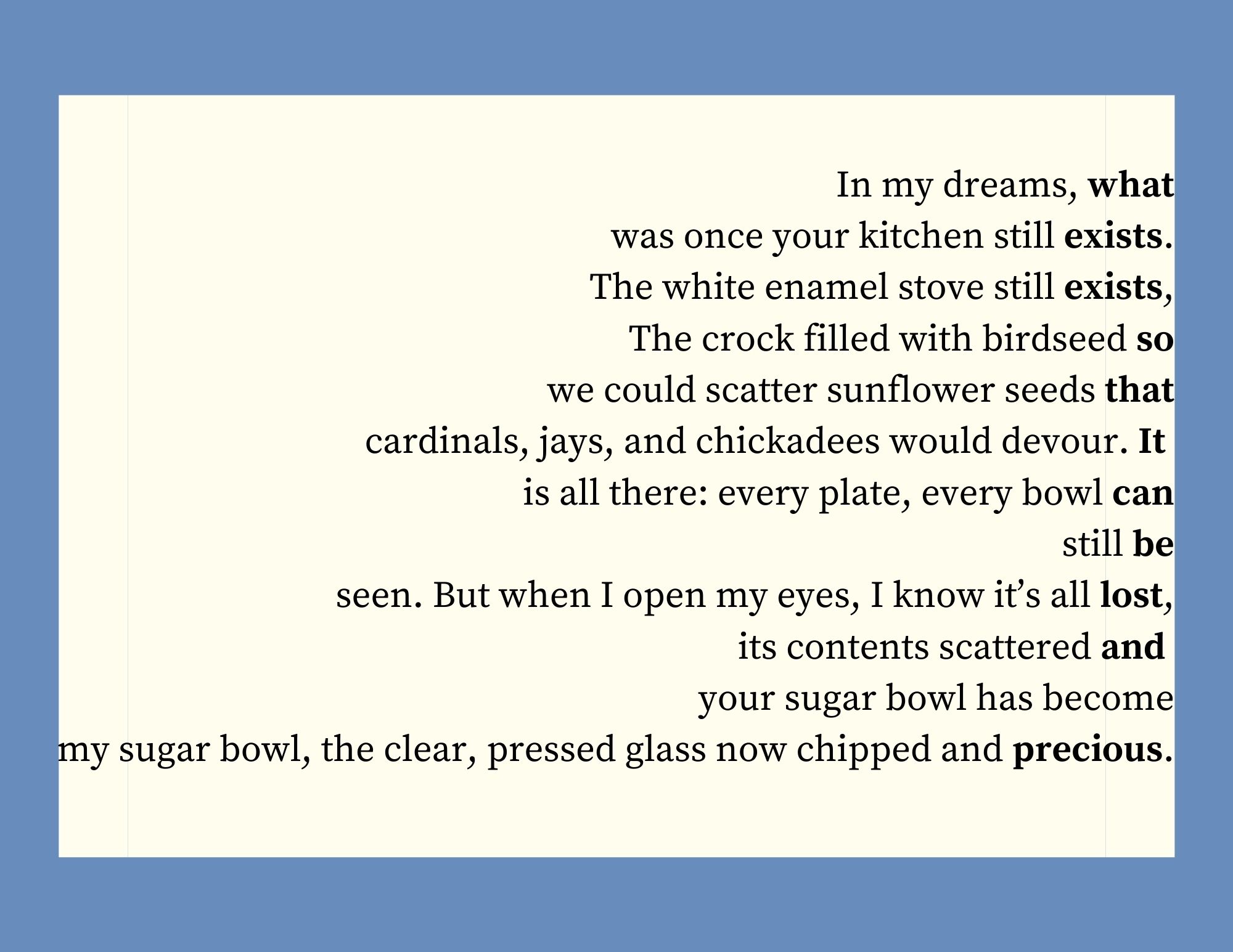
“What exists, exists so that it can be lost and become precious.” ~ Lisel Muller ~
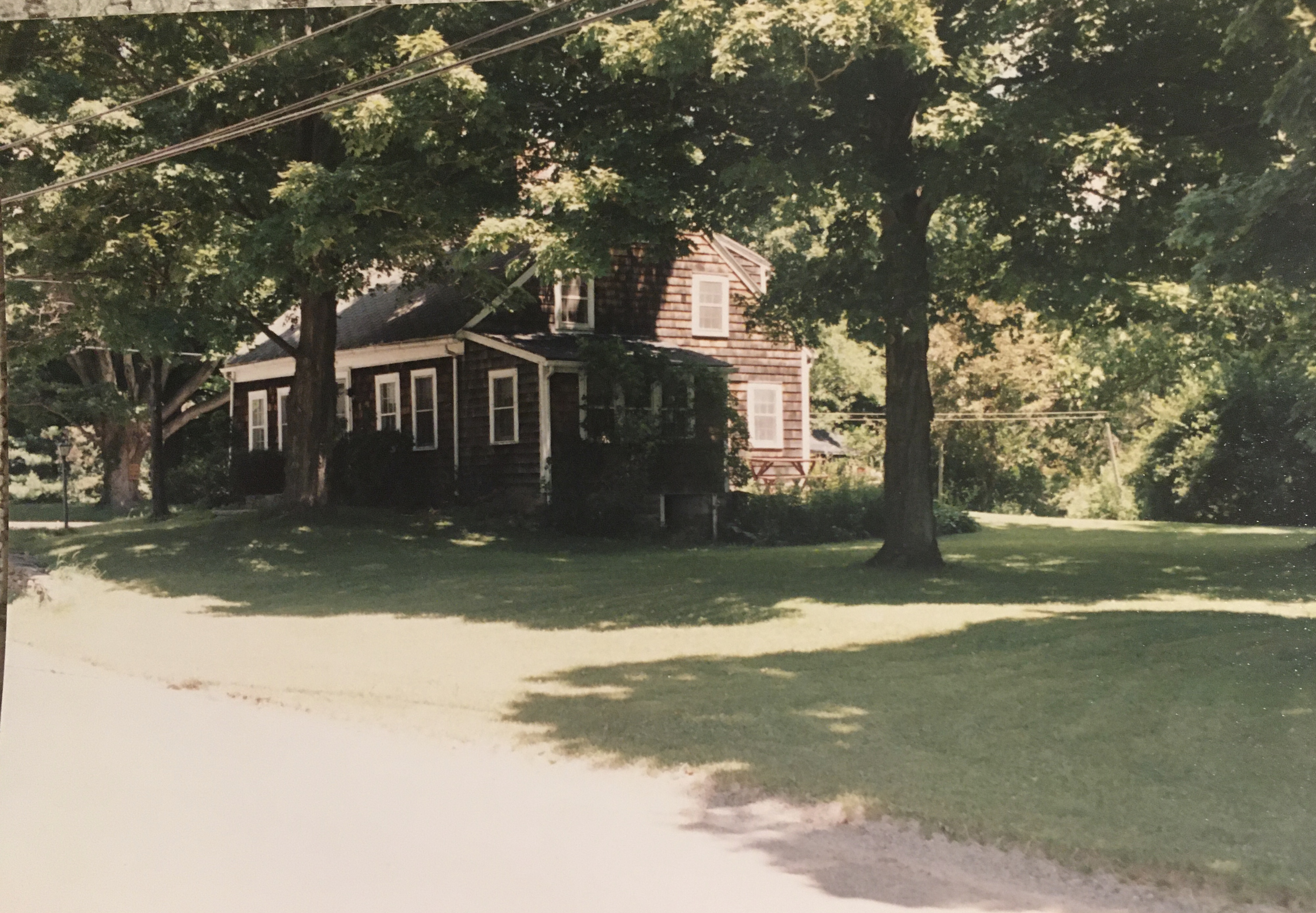
Earlier this week, I found myself standing in the kitchen of my grandmother’s house. I grew up next door to her and spent countless hours with her there. When my grandmother died, her house was sold and the new owners renovated the house. What now stands on that corner is almost unrecognizable, both inside and out. It was a bit surreal to be in a place that was once so familiar but is now utterly foreign. Right after this experience, I came across the above quote on The Marginalia (formerly Brain Pickings) and this Golden Shovel basically wrote itself.
This month, Linda challenged the Inklings to write “write a poem that includes the idea of percentage./percent. Percentages are all around us in recipes, prices, assessments, statistics. Include the idea of percentage in your poem.. In some way.”
During the approximately 1% of my life that I could actually sit down and write last month, I had an idea about writing a series of pi poems–poems using the sequence of pi (3.14159…) for either the word count or syllable count per line. This idea was a bit misguided, as I thought pi was a percentage. In fact, as Mary Lee reminded me, it is a ratio. Math was never my strongest subject.
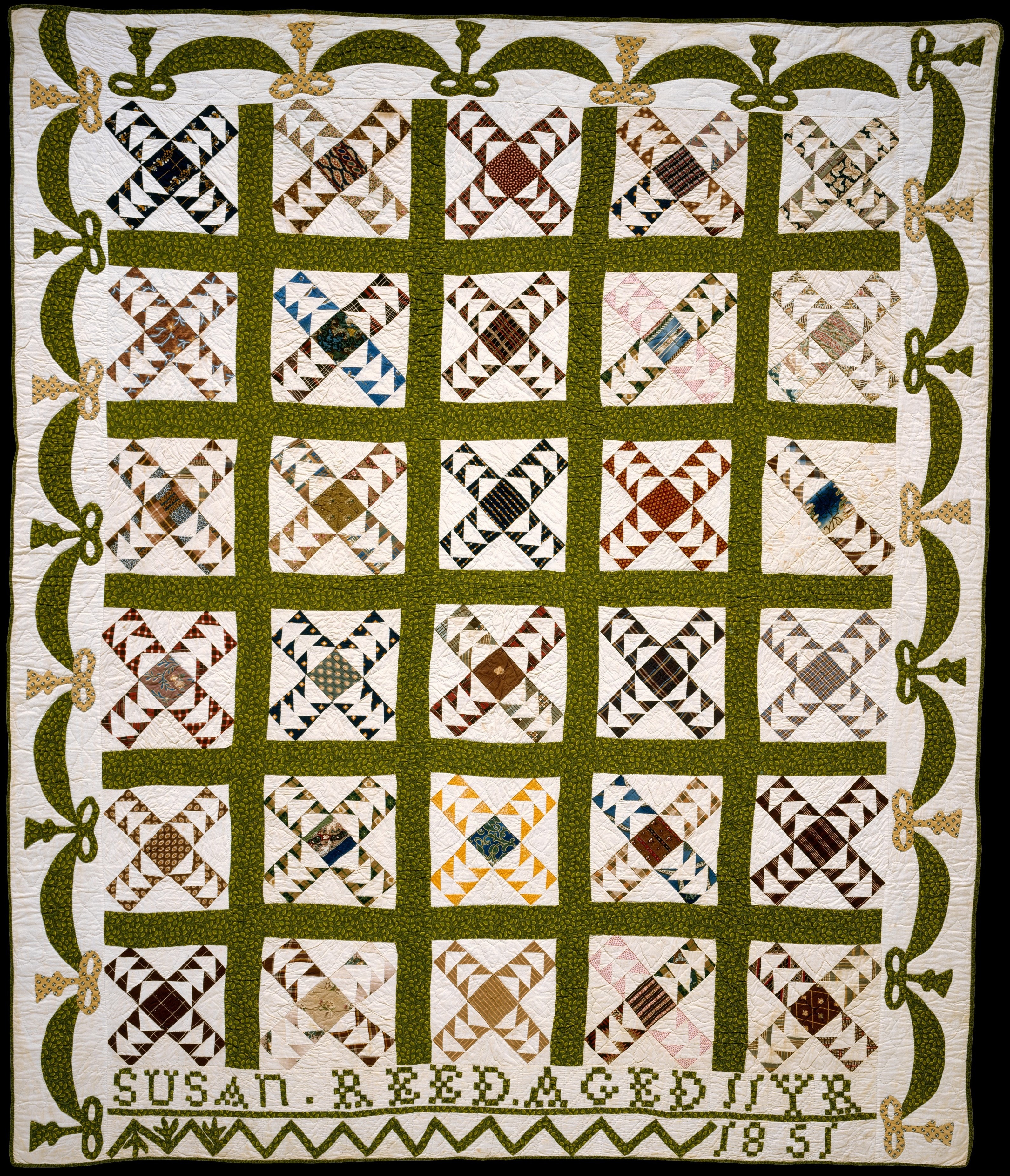
Linda also inspired me with her brilliant idea to write to the #inktober prompts using images she found on Wikiart. There were several similar prompts on Instagram last month, including #theydrawtober and #birdtober, where “Goose” was the bird listed one day. Search results on Wikiart didn’t appeal to me, so I checked Google Arts & Culture, where I found this stunning quilt:
I come from a long line of quilters. Once upon a time, I had grand ambitions of creating my own quilts. Now I write poems instead. (The similarities between the two arts are not lost on me; maybe I’ll write about that one day.) Here is the poem that emerged from this jumble of thoughts.
Fat quarters nestle, forgotten in a dresser drawer hoping to be released, snipped, stitched, flocked, then sent off on a wild goose chase.
To every year the trees grew without us noticing. Hannah Marshall
In the introduction to The Best American Poetry 2021, Tracy K. Smith states that “the best poems of 2020 reached me as offerings of desperately needed hope and endurance.” She goes on to say that “the best poetry to emerge during a bitter year sprang from whatever else was indispensable to sustenance, peace of mind, justice, and healing at the time.”
Indispensable to sustenance.
That we are still in search of “desperately needed hope and endurance” is enough to drive one to despair. And yet.
One of the poems included in this year’s collection is “This Is a Love Poem to Trees,” by Hannah Marshall. I couldn’t find Marshall’s poem online, but I encourage you to seek it out. Trees have sustained me in countless ways, not just over the past twenty months, but throughout my entire life. Here are two haiku, love songs to two of my favorite trees.
late afternoon light leaves dappled amber and gold sips of sustenance
crowned in green cumulus puffs, maple bears witness the world barrels past
Maple in my childhood neighbor’s yard, as seen from the end of our driveway.
Several years ago, a group of Poetry Friday friends began writing a haiku a day as a distraction from the chaos swirling around us. Maybe it’s a good thing we didn’t know then just how chaotic the world would become. I’m still seeking solace in small wonders, what Natalie Babbitt, in The Search for Delicious, described as “those commonplace marvels which [the world] spreads so carelessly before us every day.” Here are two haiku celebrating some marvels I noticed this week.
notes of moonsong stream crickets hum in harmony lost summer’s lament
bountiful harvest a pair of sky blue eggs gleaming suns inside
It feels like the world has gotten very loud over the past few weeks. As if it hadn’t been loud enough already. During these tumultuous days, I have found the possibility present in this poem by Alison Deming, with its “…conversation so quiet/the human world can vanish into it,” very reassuring.
The Web by Alison Hawthorne Deming
Is it possible there is a certain kind of beauty as large as the trees that survive the five-hundred-year fire the fifty-year flood, trees we can’t comprehend even standing beside them with outstretched arms to gauge their span, a certain kind of beauty so strong, so deeply concealed In relationship — black truffle to red-backed vole to spotted owl to Douglas fir, bats and gnats, beetles and moss, flying squirrel and the high-rise of a snag, each needing and feeding the other– a conversation so quiet the human world can vanish into it.
Earlier this summer, my daughter-in-law introduced me to Clint Smith‘s book, How the Word is Passed: A Reckoning with the History of Slavery Across America. I immediately bought a copy, but haven’t started it yet. Then I found the summer issue of Poets & Writers at my local book store, and there was Clint Smith on the cover. What an amazing backstory to how this book came into the world! The article made me curious about Smith’s poetry, which led me to this poem. Sadly, it’s all too appropriate for this week, this month, this year.
When people say, “we have made it through worse before” by Clint Smith
all I hear is the wind slapping against the gravestones of those who did not make it, those who did not survive to see the confetti fall from the sky, those who
did not live to watch the parade roll down the street. I have grown accustomed to a lifetime of aphorisms meant to assuage my fears, pithy sayings meant to
convey that everything ends up fine in the end. There is no solace in rearranging language to make a different word tell the same lie. Sometimes the moral arc of the universe
does not bend in a direction that will comfort us.