Poetry Friday: The Lake Isle of Innisfree

Image

Image
The Lake Isle of Innisfree
Wikipedia Commons Photo by Kenneth Allen

I will arise and go now, and go to Innisfree,

And a small cabin build there, of clay and wattles made:

Nine bean-rows will I have there, a hive for the honey-bee;

And live alone in the bee-loud glade.

And I shall have some peace there, for peace comes dropping slow,

Dropping from the veils of the morning to where the cricket sings;

There midnight’s all a glimmer, and noon a purple glow,

And evening full of the linnet’s wings.

I will arise and go now, for always night and day

I hear lake water lapping with low sounds by the shore;

While I stand on the roadway, or on the pavements grey,

I hear it in the deep heart’s core.

William Butler Yeats

Today is the last day of school before spring break, and for the past couple of days people have been sharing their travel plans for next week. I’m looking forward to a relaxing week at home, but listening to everyone’s talk of flights and cruises got me thinking about vacations spent at my in-laws’ cabin on Beddington Lake in Maine. This poem has alway reminded me of those summers. Sadly, they no longer own the cabin, but I often think of all the fun we had swimming and canoeing there. I often hear its “water lapping [in my] deep heart’s core.”

Listen to Yeats read his poem at Poets.org Be sure to visit Diane at Random Noodling for the round-up of all today’s poetry.

Slice 29 of 31: The Tree that Time Built for Poetry Friday

Image

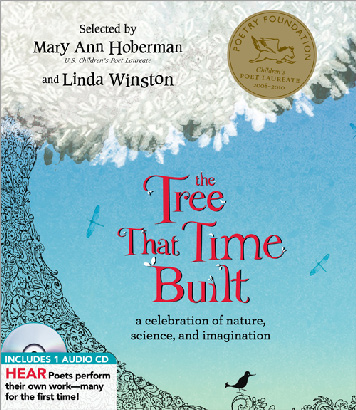
Mary Ann Hoberman is one of my favorite poets. I read A House is a House for Me to my children countless times, and my students love the You Read to Me, I’ ll Read to You series. But somehow I missed The Tree that Time Built (Sourcebooks Jabberwocky, 2009). This anthology, selected by Hoberman and cultural anthropologist Linda Winston, is a “celebration of nature, science, and imagination.” It is a beautiful book: poems are centered on cream-colored pages and line drawings by Barbara Fortin add just the right amount of accent. The poems are organized thematically and notes throughout the book add information about the poets, their craft, and poetic forms. A glossary is included, as well as a list of suggested reading. There is even a CD of selected poems being read by Hoberman, Winston, and others!

Image

I was particularly struck by this poem:

You And I

Only one I in the whole wide world

And millions and millions of you,

But every you is an I to itself

And I am a you to you, too!

But if I am a you and you are an I

And the opposite also is true,

It makes us both the same somehow

Yet splits us each in two.

It’s more and more mysterious,

The more I think it through:

Every you everywhere in the world is an I;

Every I in the world is a you!

by Mary Ann Hoberman

The fifth graders I’ve been working with (more about that here) are fascinated by alliteration. This poem is a perfect example of alliteration’s close cousin, assonance, which they are not familiar with. It also gets to the heart of poetry. When I asked the students the other day why we were reading and studying poetry, I was met by a lot of blank stares. But one brave soul timidly raised her had and said something to the effect of “It let’s us know what people feel.” I told her I agreed with her one hundred percent. “You and I” helps us see that we have more in common than we think, feelings and all.

I wish you all a wonderful Poetry Friday!

Mary Lee (who wrote a much more extensive review of this book here) has the round up at A Year of Reading. Be sure to stop by to read more poetry posts. Thank you also to Stacey and Ruth at Two Writing Teachers for hosting this Slice of Life Challenge!

Slice 22 of 31: Douglas Florian for Poetry Friday

Image

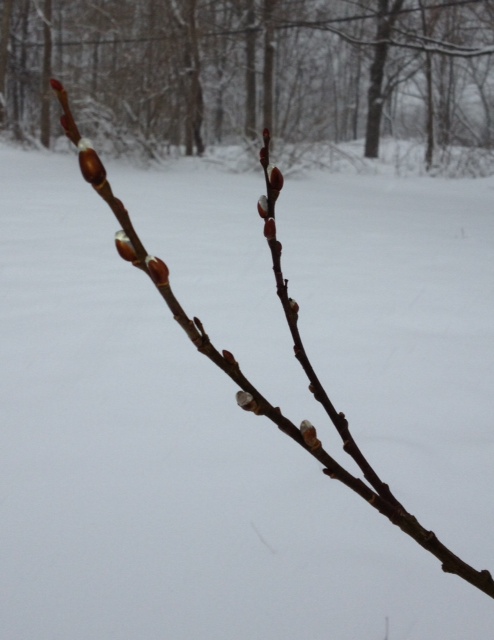
Much of the northeast is still gripped by frigid temperatures and snow is still on the ground. Today is my son’s birthday, and I always use this day as a benchmark for hearing the peepers. I really can’t remember a year we haven’t heard them by now. This year, not a peep.

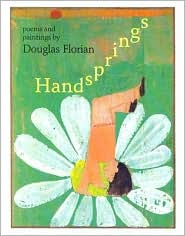
So today seems like a good day to share a poem from Douglas Florian’s Handsprings (Greenwillow, 2006), an exuberant celebration of the season.

Image

Handsprings

Spring is great

For growing grass.

Spring has zing

And spring has sass.

Spring is super.

Spring is spry.

Spring is when

Things start to fly.

Spring is great

For many reasons.

Spring does handsprings

Round the Seasons.

Thank you to Greg Pincus for hosting Poetry Friday today. Don’t miss the fun at GottaBook. As always, thanks to Stacey and Ruth at Two Writing Teachers for hosting this Slice of Life Challenge!

Slice 2013 15 of 31: A Big Sister Poem for Poetry Friday

Image

Earlier in the week I wrote about using Miss Rumphius to address Common Core standard 3.3, which deals with characters, their traits, motivations, feelings, and how their actions contribute to the sequence of events. While there are many picture books and chapter books that can and should be used to address this standard, I wanted to include poetry in the unit we’re developing.

Image

Kristine O’Connell George’s Emma Dilemma: Big Sister Poems (Clarion Books, 2011; illustrated by Nancy Carpenter) is ideally suited for this unit. These short poems are told from the point of view of Emma’s older sister, Jessica. Each poem deals with the daily life of a typical fourth-grader and her feelings about Emma. Taken together, the poems form a loose narrative chronicling Jessica’s evolving feelings toward Emma. An older sister myself, I especially appreciated this poem:

“Role Model”

Emma copies

everything I do

and sometimes

I don’t do

something

I might do

or really

want to do

because

I know

she is

always

watching

every single thing I do.

You can watch the trailer here:


Sylvia Vardell has collected much more information about Kristen O’Connell George, Emma Dilemma, and using this book in the classroom on her blog, Poetry for Children.

By the way, my sister hasn’t copied anything I’ve done for at least 40 years. And now we’re best friends.

Poetry Friday is at Check It Out today. Thanks for hosting!

Thank you to Stacey and Ruth at Two Writing Teachers for hosting this Slice of Life Challenge!

Poetry Friday/Read Across America/Slice of Life Mash Up

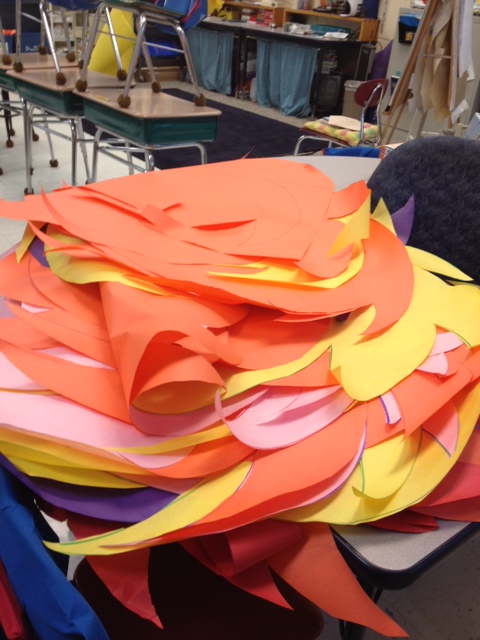
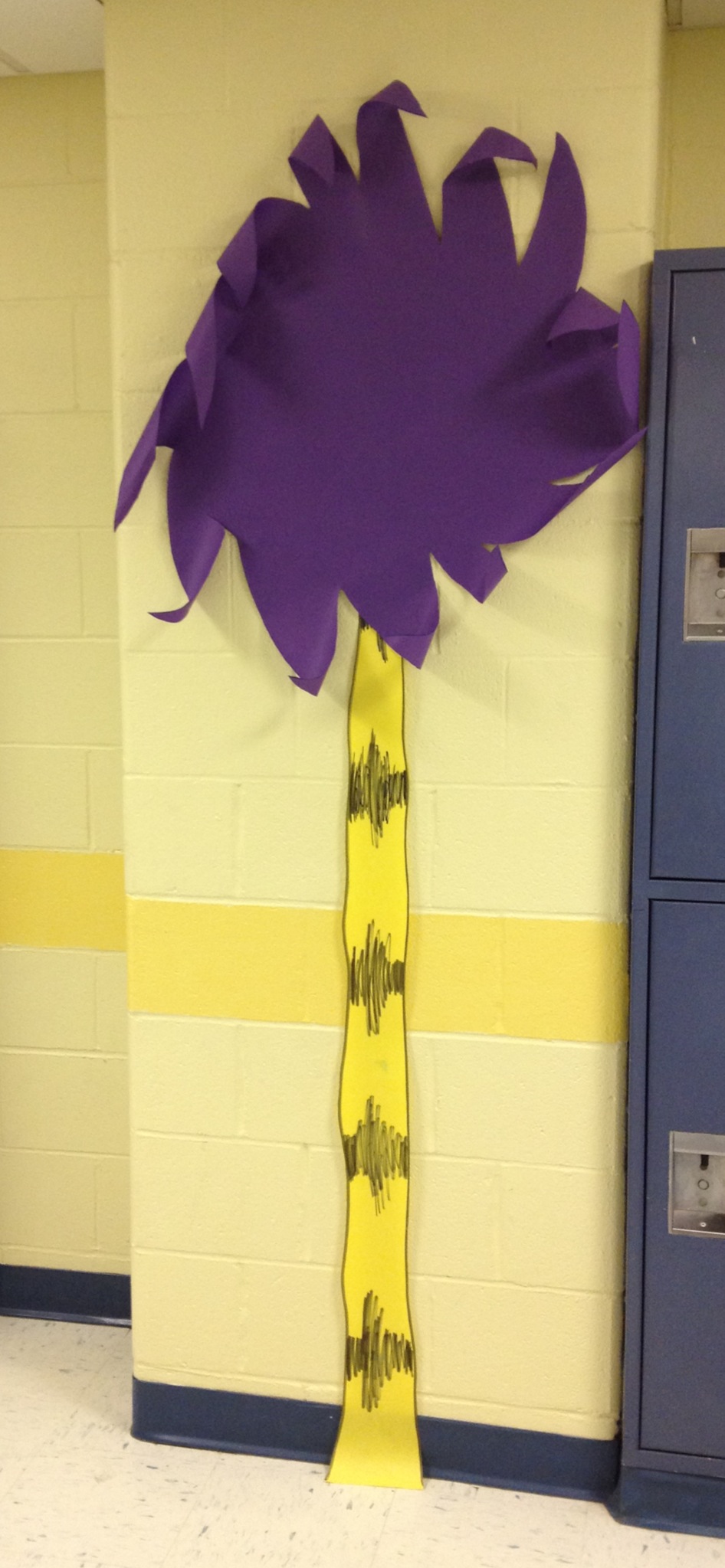
At school today, we kicked off our month-long celebration of Read Across America. Usually we adopt the theme promoted by NEA, Read Across America’s official sponsor. Last year we made truffala trees out of butcher paper to decorate the hallways. Throughout the month, students created book jackets based on books they loved to decorate the trees. We also had a read-a-thon to raise money to purchase a tree in memory of a student who had recently lost her year-long battle with aplastic anemia.

Image
Truffalas waiting to be hung up.
Completed truffala tree

A few years ago, we encouraged everyone to literally read across America and read books from all 50 states. This was harder than you might think. To promote the theme, (Here comes the poetry part of this post!) I wrote a song, with a little help from some students.

See the USA

(Sung to the tune of Dinah Shore’s old Chevrolet commercials)

See the U.S.A., read a book today.

America’s got lots of tales to tell.

From Paul Bunyan’s woods,

to the engine that could

Reading is the way to meet them all.

On a couch or on a chair in the library,

Travel out west,

Meet Ramona the Pest.

To many new sights you will be carried.

So make a date today 

to read the U.S.A.

Pledge to read a book today!

© Catherine Flynn, 2009

It was lots of fun, and we still sing it. Here’s Dinah in an old commercial if you don’t remember the tune.

Which brings us to today. While I love this year’s “Hats off to Dr. Seuss” theme, last October our school accepted Rachel’s Challenge. Rachel Joy Scott was killed in the massacre at Columbine High School in 1999. After her death, her parents decided to share her story and writings to inspire people to prevent bullying. As Rachel said,

“I have this theory that if one person can go out of their way to show compassion, then it will start a chain reaction of the same. People will never know how far a little kindness can go.”

As soon as I heard this, I thought of Auggie and Dr. Wayne Dyer’s precept, “When given the choice between being right or being kind, choose kind.” The dovetailing of these two messages made doing a school-wide read of R.J. Palacio’s Wonder seem like the perfect theme for our Read Across America celebration this year.

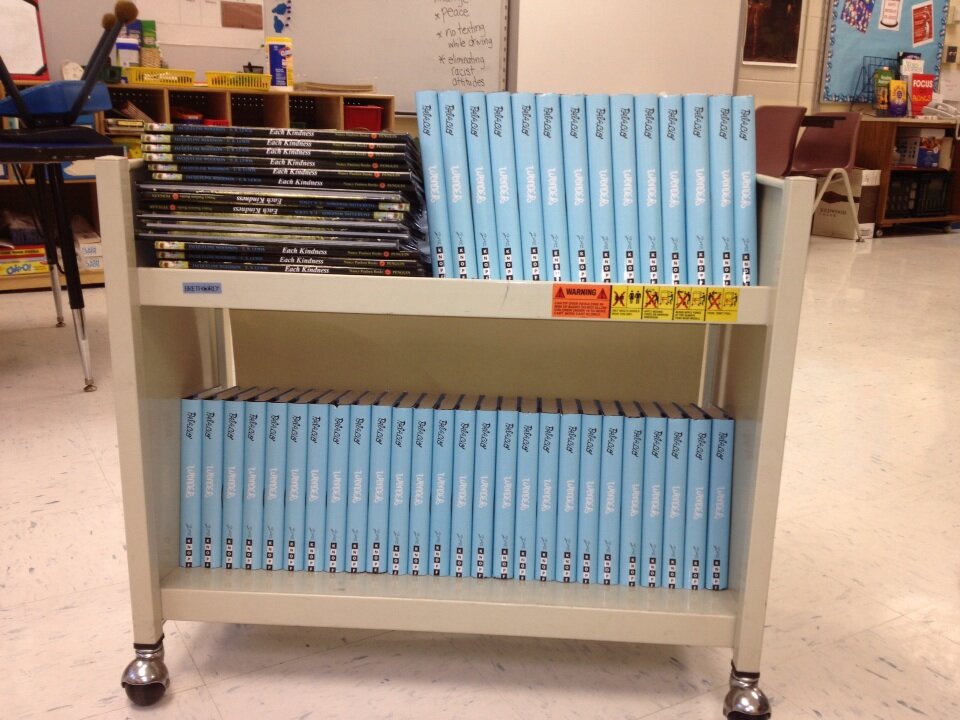
Because we’re a K-8 school, we had to find a related text for the lower grades. Jacqueline Woodson thoughtfully wrote the powerful Each Kindness late last year, which filled that bill perfectly! Our PTO generously funded the purchase of a book for every classroom, and today we kicked off our month-long celebration.

Books waiting to be distributed to teachers

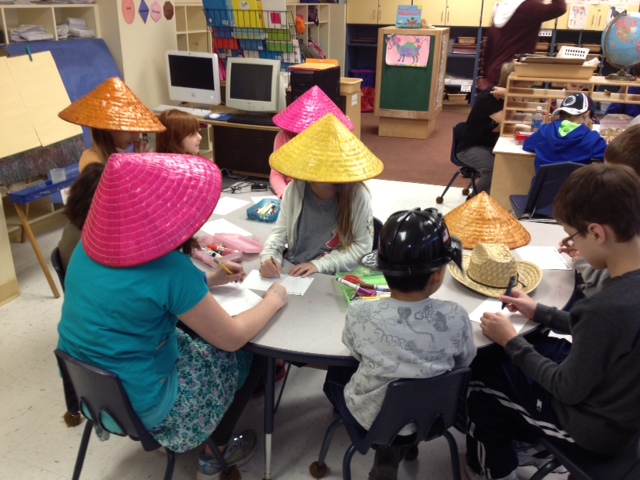
We began the morning with each upper grade homeroom visiting a lower grade classroom. Teachers read Each Kindness aloud, and then the students paired up to create and illustrate Kindness is… statements. These will be displayed on bulletin boards throughout the school. Each homeroom in grades 4-8 will be reading Wonder aloud throughout the month, and the lower grades will be reading other picture books related to the theme of kindness. The whole morning went off without a hitch, and we have many fantastic Kindness is…statements. By the way, we wore hats too!

photo
Sixth graders and Kindergarteners creating Kindness is… statements

Happy Read Across America, everyone!

Poetry Friday: Monumental Verses by J. Patrick Lewis

url

Earlier this week, I took part in Nonfiction 10-for-10, a celebration of nonfiction books for kids. I struggled to narrow my list down to 10 titles, but decided to leave this book off when it occurred to me I could share it today.

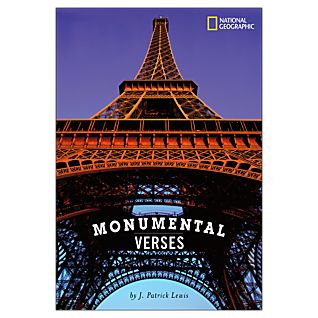
When I was a kid, I loved arranging furniture in my dollhouse. As I got a little older, I filled notebooks with house plans and furniture arrangements. And while I did think about becoming an interior decorator, I never really considered becoming an architect. I’m not sure why, but I suspect it had something to do with my less than stellar math skills. So when I discovered Monumental Verses (2005), by J. Patrick Lewis, the latent architect inside of me was thrilled.

A bow to all who hoist the spirit high

And carve imagination into stone

By fire and forge, thrown hugely to the sky.

Whether they be well-or little-known,

The buildings in this picture book cement

A thought: No matter who the builders were,

They gave to time a timeless monument–

A human star-chitcture signature.

I cannot say what others make of this,

The mystery of Stonehenge, a Taj Mahal,

And yet I know how much the world would miss

Majesty at a glance if they should fall.

This book is for the curious at heart,

Startled at sights they seldom get to see

Or even dream of-science born of art,

Such works of genius these were meant to be.

Fourteen poems and gorgeous photographs celebrate architectural wonders from around the world. Lewis’s uses a number of poetic forms to describe wonders of the Empire State Building, Easter Island, the Arc de Triomphe, and more. Playful shape poems bring the pyramids, the Great Wall of China and Stonehenge to life. Vital statistics regarding when each structure was built, where it’s located, the architect (if known), and an amazing physical fact are included. An Epilogue offers writing advice to budding poets.

We have used this book with 5th graders as a mentor text. Engagement is high because students are fascinated by these incredible feats of design and engineering. After reading, they chose a well-known building or monument that interests them. Research is done, and once they’ve collected their facts, they write their own poetic tributes. A project like this doesn’t have to be terribly time consuming, and it covers a number of CC Standards. Lewis’s rich vocabulary addresses  Reading Literature standard 5.4, “Determine the meaning of words and phrases as they are used in text, including figurative language such as metaphors and similes.” Writing their own poems allows student to “Integrate information from several texts on the same topic in order to write or speak about the subject knowledgeably,” (RI.5.9) as well as “Produce clear and coherent writing in which the development and organizations are appropriate to task, purpose, and audience.” (W.5.4)

A book like this can pique a student’s curiosity about the man-made wonders of the world. It might even inspire them to become an architect!

You can learn more about J. Patrick Lewis on his website and find additional ideas for using Monumental Verses with your students here.

Don’t forget to visit Sheri Doyle’s blog for other Poetry Friday posts!

Poetry Friday on Saturday: Valentine’s Day edition “Paolo and Francesca”

Image

Two of literature’s best known lovers can be found being tossed by tempestuous winds for all eternity in Canto V of Dante’s Inferno. I first read Dante in my survey World Lit class in college. I loved the whole, magnificent poem, but the story of Paolo and Francesca really resonated with me. Maybe the fact that Paolo and Francesca were reading as they were overcome with passion is one reason I was drawn to it. As sad as this story is, it highlights the power of literature to inspire. Indeed, these two ill-fated lovers have inspired paintings, such as Feuerbach’s from 1864, seen above, sculpture and operas over the centuries. Here, from Robert Pinsky’s 1994 translation, is their most famous interpretation.

‘…One day, for pleasure,

We read of Lancelot, by love constrained:

Alone, suspecting nothing, at our leisure.

Sometimes at what we read our glances joined,

Looking from the book each to the other’s eyes,

And then the color in our faces drained.

But one particular moment alone it was

Defeated us: the longed-for smile, it said,

Was kissed by that most noble lover: at this,

This one, who now will never leave my side,

Kissed my mouth, trembling. A Galeotto, that book!

And so was he who wrote it; that day we read

No further.’ All the while the one shade spoke,

The other at her side was weeping; my pity

Overwhelmed me and I felt myself go slack:

Swooning as in death, I fell like a dying body.

Canto V, 112-127

Poetry Friday: STORM

0618023747

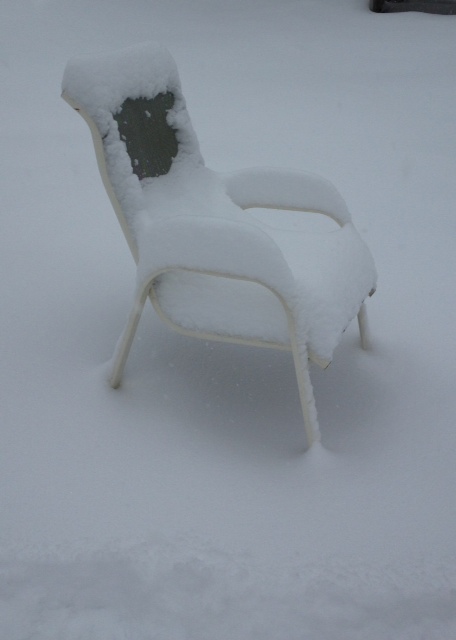
School is closed,

The trains have stopped,

Over two feet of snow cover the

Roads. Nothing

Moves.

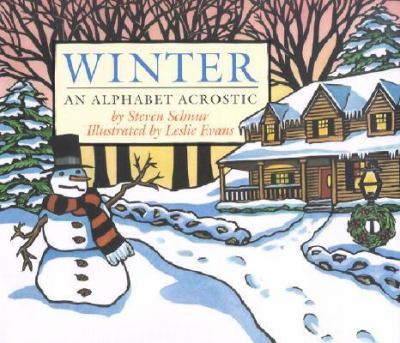
Today’s poem comes from Steven Schnur’s Winter: An Alphabet Acrostic. (Clarion, 2002) This lovely, deceptively simple book examines winter from all angles. Indoors, outdoors, living or not, everything is affected by this harshest time of year. The poems chronicle the unfolding season, from the first hints of ice at the edges of a pond, to the height of the holiday season, until finally, subtle signs of spring begin to appear. Leslie Evans created linoleum-cut illustrations that capture the tone of each poem. Schnur and Evans have a book devoted to each season and each one is worth a look.

I love acrostics because they can free students from being intimidated by poetry. They can be as simple as a list, and they don’t have to rhyme. I have shared this book with first and third graders, and both age groups loved the poems. Use the book as a mentor text so students become familiar with the acrostic form and the idea of focused description. Schnur’s poems never feel forced, although you might have to look up “xyst.” (I did!) They are also fine examples of “how specific word choices shape meaning or tone” (http://www.corestandards.org/ELA-Literacy/CCRA/R), which, according to the CCSS, students should be able to analyze and interpret.

Vocabulary and word choice show up again in CCSS Language Anchor standard five. Again, reading Schnur’s acrostics, as well as those by other poets, are a natural way to develop vocabulary and help students be conscious of word choice. The standard calls for students to “Demonstrate understanding of figurative language, word relationships, and nuances in word meanings.” (http://www.corestandards.org/ELA-Literacy/CCRA/L) First graders are expected to “distinguish shades of meaning among verbs differing in manner…and adjectives differing in intensity.” (L.1.5.d) Writing their own acrostic poems and creating a class book is a natural extension of reading this book. This is an authentic way to introduce the idea of precision of word choice and allows for exactly the kind of work expected by CCSS. In addition, composing their own poems and searching for just the right word is a much more natural way to develop vocabulary than with mindless worksheets or computer games. Students can choose everyday objects or events that they associate with the season, or any other topic, really. Giving students the opportunity to choose their own subject ensures they’ll be engaged in work that’s meaningful to them.

Be sure to stop in over at A Teaching Life for other Poetry Friday posts. Thanks, Tara, for hosting! Hope you all stay safe and warm over the next few days. Happy reading!

Reflections on One Year of Blogging

Image

Today is Reading to the Core’s first birthday! Although my posts have been sporadic at best, I’ve learned a lot over the past year. Since birthdays and anniversaries are always a good time to look back and reflect, here, in no particular order, are my thoughts on becoming a blogger.

The blogosphere is filled with friendly, supportive and generous people. While this may not be true of all corners of cyberspace, this describes the kidlitosphere in spades. I’ve been inspired by you all! Kate Messner’s Teacher’s Write summer camp prodded me to write more. While not everything I wrote in response to her prompts ended up here (trust me, that’s a good thing!), she and all the writers who joined in encouraged me to stretch myself and take risks. Thanks, Kate!

It’s Monday, What Are Your Reading (Book Journey), Tuesday’s Slice of Life (Two Writing Teachers) and Poetry Friday (various hosts, but you can always find the line up at A Year of Reading) have also been especially motivating. Thank you to all you equally busy bloggers who’ve found your way here via one of these memes.

I’m also thankful for the kind words people have left in their comments. I especially appreciate my loyal commenters Colette, Betsy, and Elizabeth. Some people may despair that the internet is changing the world as we know it, but I am incredibly grateful that it allows me to connect with faraway friends so easily.

One of the most eye-opening realizations I’ve had from blogging is just how difficult it is to sit down and compose a half-way intelligible piece of writing. Not one of these posts has been completed in less than an hour, and they have usually been rolling around in my head for a day or two before I begin writing. Why we think our students should be able to sit down and hammer out a fluent story or essay in 45 minutes is beyond me. They should have at least an hour! Seriously, without regular, sustained writing practice, it simply isn’t fair to subject our students to the kind of writing assessments that dominate today’s instructional landscape. As a result of this insight, I have been more mindful of my own writing instruction and my support of teachers implementing writing workshop this year.

Over the next year I’m really going to make a concerted effort to post at least once a week. I have lots left to say about books, teaching, and life in general. Which brings me to the name of this blog. In one sense, the “Core” of the title refers to the Common Core. I think about the implications of the CCSS on instruction almost all the time. (Sad, I know.) And yet, much of what I wrote about over the past year had nothing to do with these standards. They were more about what’s at the core of me: curiosity about the world around us and a passion to help all kids find their own true self, to find their own true core.