Slice of Life: From My Grandmother’s Kitchen

11454297503_e27946e4ff_h

Why do we save things? To remind us of momentous occasions, memorable moments, times we had fun? I suppose for all these reasons and more. We say things have sentimental value, but it’s sometimes hard to articulate exactly why. And though I’ve never been sorry I held onto an object, I’ve often regretted getting rid of something, usually within a week or two.

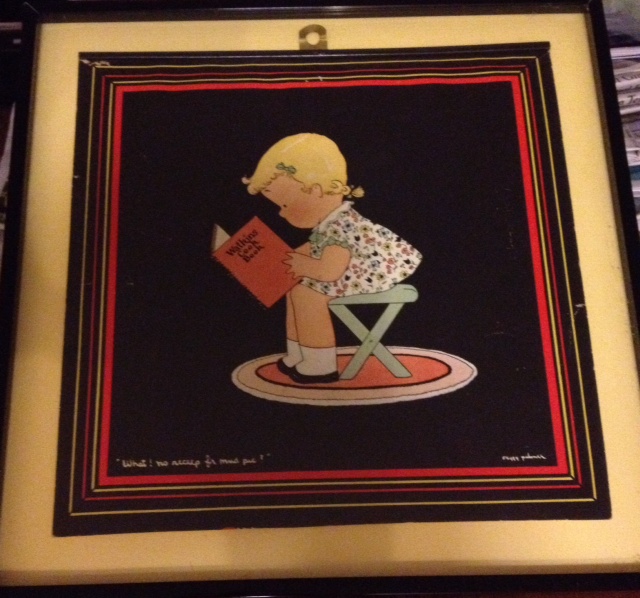
When I get frustrated about my inability to throw things away (usually because a stack of papers or pile of pictures has just collapsed), I think of my grandmother and tell myself it’s genetic. She had a Depression-era mentality of saving everything. When we cleaned out her house, we found bank statements from the 1950s! But we also found many treasures. One was an illustration from a 1930s calendar of a little girl reading a Watkins Cook Book. The caption reads: “What! No recipe for mud pie?” As soon as I saw it, I thought of my mother-in-law. She loved to bake and made delicious whoopie pies. I knew she had to have this picture.

photo

I took it to a shop to have it matted and framed, and gave it to my mother-in-law for Christmas that year. She loved it, and it hung by her stove for the rest of her life. After she died, I told my sister-in-law that this picture was the only possession of my mother-in-law’s I really wanted. She said she’d put it aside for me and that I could get it the next time I was in Pennsylvania.

Except I couldn’t. My sister-in-law had put it aside so well she couldn’t find it. I’ve done this myself, so I figured it would turn up eventually. Except it didn’t. Then the house was sold and emptied. Still no picture. I tried not to be too disappointed. After all, I had plenty of memories of cooking with my mother-in-law in that kitchen, and all the happy meals our family had shared there.

This past weekend my sister-in-law visited, and when she arrived at our house, she handed me a box. “It was in a corner of my attic,” she explained. I opened the lid, and there it was, right on top. A piece of ephemera my grandmother had saved almost 80 years ago, that hung in another kitchen for ten years, will now be at home in my kitchen, linking it to other kitchens, other times. 

This whole episode reminded me of Susan Vreeland’s lovely book, Girl in Hyacinth Blue. Through a series of stories, Vreeland links the owners of a (fictional) painting by Vermeer across the centuries. She creates a vivid depiction of each time period and owner, charting their motivations and desires. These remain remarkably similar over the centuries. At one point, a character realizes that “love builds itself unconsciously… out of the momentous ordinary.”

I think this is why we save things. To have reminders of those unconscious, ordinary moments that add up to a life filled with love.

Thank you, as always, to StaceyTaraDanaBetsyAnna, and Beth for hosting Slice of Life each Tuesday. Be sure to visit Two Writing Teachers to read more Slice of Life posts.

Poetry Friday: The Falling Star

poetry-friday-1-1


“The Falling Star”

by Sara Teasdale

I saw a star slide down the sky,

Blinding the north as it went by,

Too burning and too quick to hold,

Too lovely to be bought or sold,

Good only to make wishes on

And then forever to be gone.

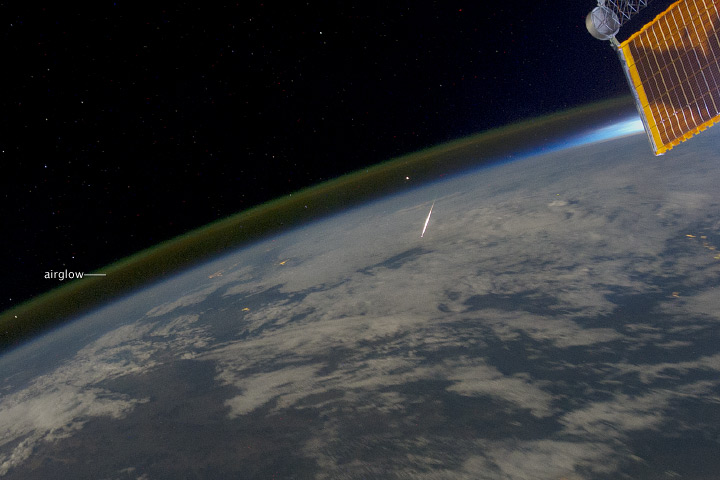
Earth Science and Remote Sensing Unit, NASA-Johnson Space Center. "The Gateway to Astronaut Photography of Earth." 09/26/2014 13:08:13.
Earth Science and Remote Sensing Unit, NASA-Johnson Space Center. “The Gateway to Astronaut Photography of Earth.” <http://eol.jsc.nasa.gov/scripts/sseop/photo.pl?mission=ISS028&roll=E&frame=24847>09/26/2014 13:08:13.

I haven’t seen a shooting star in a long time, but last night when I let the dog out I looked up at just the right moment. After a long, busy day, the blaze of that meteor was a gift; a reminder to take a deep breath and enjoy the beauty of the night sky. Teasdale describes the sight perfectly in “The Falling Star,” a poem I discovered years ago in Nancy Larrick’s anthology, Piping Down the Valleys Wild.

Laura Purdie Salas is hosting the Poetry Friday Round Up on her blog today. Be sure to stop by to find out about her wonderful new project, 30 Painless Classroom Poems: What’s Inside? Poems to Explore the Park.

Slice of Life: Between the Words

11454297503_e27946e4ff_h

“What we learn with pleasure we never forget.”

Alfred Mercier

When I was 7 or 8, my grandparents took me to a performance of the U.S. Navy Band. This was a huge thrill, as I’d never been to a live concert before. I can remember sitting in the audience, being mesmerized by the music. I was amazed that the sounds I was hearing were being created by the people and the instruments on the stage before me.

The memory of that night came back to me as I listened to Krista Tippett interview Yo-Yo Ma on her radio program, “On Being” over the weekend. During their discussion, Mr. Ma explained his “philosophy of curiosity about life and of performance as hospitality.” As I listened to this wise and generous man, it occurred to me that many of his ideas about music applied to education, and that infusing our teaching with them would make our classrooms better places.

Mr. Ma talked about the necessity of being flexible with plans. “The plan is always going to change. And you need to make sure that the audience is always the most important person in the room.” Such simple advice. It’s one of the most essential lessons I learned as a beginning teacher. Yet, in the day-to-day deluge of SLO’s, standards, testing, etc., I sometimes have to remind myself that the children at the heart of my plans are the most important people in the room.

Earlier this year, Mr. Ma was honored with the Fred Rogers Legacy Award. When asked about this, he recalled a conversation with Fred Rogers: “…do you know what a present that is, when you play something for somebody? It’s just like giving them a present.” To me, this captures what is at the heart of the interaction between teacher and student—I want to share this precious gift with you. Everything we share with our students should be selected with the care and thoughtfulness we put into choosing gifts. For, as Mr. Ma also said, “When you receive something that’s living, that goes inside you, because it becomes your own.” I want my students to own the stories we share and the lessons they learn when we’re together.

When Ms. Tippet asked him to describe his idea about beauty, Mr. Ma explained that he thinks of beauty as “an encapsulation of a lot of different things in a certain moment” and  “…when that encapsulated form is received, there’s a moment of reception and cognition of the thing that is, in some ways, startling.” This was the feeling I had sitting in that auditorium so many years ago, listening to the “music between the notes.” The wonder and joy within me at “that moment when something [was] transferred…a transfer of life,” seemed like a miracle to me. I’ve seen this same joy on a child’s face at that moment when she realizes that she has read a word or a sentence or a book. When she discovers the magic between those words. These are the moments of beauty that I strive for each day.

Thank you, as always, to StaceyTaraDanaBetsyAnna, and Beth for hosting Slice of Life each Tuesday. Be sure to visit Two Writing Teachers to read more Slice of Life posts.

Poetry Friday: Whispers

poetry-friday-1-1

The third week of school is coming to an end. Routines are falling into place, schedules have been ironed out, and most of the tears have dried up. Throughout these hectic weeks, it’s been challenging for me to get my act together at home and find time for writing. I’ve been jotting notes like mad, and keep telling myself that I’ll have time today, I’ll get up early…. You know how that goes!

This Myra Cohn Livingston poem captures the feeling I’ve had as thoughts and ideas keep whispering to me.

Whispers

Whispers

tickle through you ear

telling things you like to hear.

Whispers

are as soft as skin

letting little worlds curl in.

Whispers

come so they can blow

secrets others never know.

This would be a perfect poem to share with young writers as they also settle into the routine of writing every day and learn to keep their eyes and ears open for ideas waiting to be put into words.

Be sure to visit Renee at No Water River for today’s Poetry Friday Round Up.

Searching for a Slice

11454297503_e27946e4ff_h

All day, I’ve been searching for a slice to share.

My search began as I stood at the kitchen sink this morning,

slicing plump, juicy strawberries to stir into my yogurt.

I thought I’d found one when, walking to my car, I glanced up

and saw flock of birds wheeling and diving, their wings

flecks of gold in the morning sun.

But no. They flew away.

At work, possibilities crossed my path at lightning speed.

Third grade lesson— Edgar Badger’s Balloon Day.

Fourth grade read aloud—Three Good Deeds

Concepts of Print assessment—“Show me the word was.

On into the afternoon, ideas came and went.

I despaired of ever finding one.

Then, driving home from Open House,

weary from this long day,

I rounded a corner, and there before me

hung the full moon.

Suddenly I saw the ordinary events of my day

as pearls on a string, luminous in the moon’s glow.

I’d been building my slice all day.

I just couldn’t see it until I had the right light.

Thank you, as always, to StaceyTaraDanaBetsyAnna, and Beth for hosting Slice of Life each Tuesday. Be sure to visit Two Writing Teachers to read more Slice of Life posts.

Is Test Prep the Mint of Education?

Close reading has been my mind a lot lately. I recently read What Readers Really Do, by Dorothy Barnhouse and Vicki Vinton. I revisited Notice and Note: Strategies for Close Reading, by Kylene Beers and Robert Probst as well as Falling in Love With Close Reading, by Christopher Lehman and Kate Roberts. Yesterday, Tara Smith’s excellent post on reading journals gave me more to think about. This is important work. Work that will help our students “grow and develop new ideas and insights.” (Barnhouse & Vinton, pg. 152) I need time to process all this wisdom and work with my colleagues to determine how we’ll integrate these ideas into our teaching. I’ll be sharing more about this in the weeks to come. In the meantime, I want to share a post from 2013 that still holds true today.

Thank you, as always, to StaceyTaraDanaBetsyAnna, and Beth for hosting Slice of Life each Tuesday. Be sure to visit Two Writing Teachers to read more Slice of Life posts.

Catherine Flynn's avatarReading to the Core

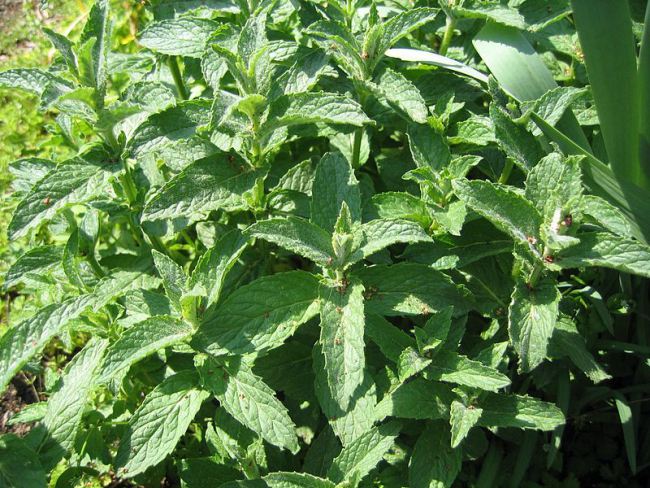
Image via Wikimedia Commons

This morning as I was weeding my garden, it occurred to me that the mint that had overrun my herb garden was like standardized test prep. As schools across the country do their best to prepare students for the new CCSS-aligned assessments, test prep is running rampant. Just as the mint in my garden has choked out the basil and parsley, test prep, and the tests themselves, threaten to take over the school day, leaving no time to savor novels, delve into a character’s motivation, or write a deeply personal narrative.

I grow a variety of herbs in my garden because each herb has its own distinct flavor and use. The amount of the herb I use depends on what I’m cooking. The same is true for teaching. We have a wide variety of instructional resources and strategies available. As professionals, we take great care to make…

View original post 202 more words

Poetry Friday: “Headline”

poetry-friday-1-1

“Make poetry out of every moment.”

~ Cid Corman ~

The weather has been beautiful in Connecticut this summer, but several recent cool nights signal a change is on the way. Poets love to celebrate the seasons, and many wonderful poems sing the praises of autumn. Today I’m sharing a poem from Firefly July, (Candlewick Press, 2014), Paul B. Janeczko and Melissa Sweet’s gorgeous new anthology.

“Headline”

A leaf on

the doorstep—

dont even

have to pick

it up to

know the news.

by Cid Corman

photo-3

There are several wonderful poetry collections for children specifically about fall. My favorites include Autumnblings, (HaperCollins, 2003) by Douglas Florian, and Autumn: An Alphabet Acrostic (Houghton Mifflin Harcourt) by Steven Schnur. Both books are perfect to use as mentor texts for young poets.

         autumnblings181    images

Be sure to visit Jone at Check It Out! for the Poetry Friday Round Up.
Slice of Life: This Post Is Not Perfect!

11454297503_e27946e4ff_h

I thought about starting a blog for at least two years before I finally took the plunge with Reading to the Core. Many questions plagued me before I started. What would I write about? Would anyone read my ramblings? But the loudest and most persistent question was this: What if it’s not perfect?

Perfection paralysis (not my phrase, but I can’t remember where I first read it), I’ve since discovered, is quite common among writers and bloggers. And it seems that teachers with blogs are the most seriously afflicted. Many teachers are perfectionists to begin with, and the thought of sharing a piece of writing that might not be perfect with the whole world is sometimes more than we can take.

Here’s the thing about perfection paralysis, though. Paralysis is not a good thing. We are meant to move and learn and grow. This lesson has played out in my life a number of times over the last year, most recently during my week at the TCRWP Reading Institute.

Last week I shared the story of my trek over the Brooklyn Bridge with Dayna Wells. When I got back to my hotel that night, it occurred to me that our adventure was an apt metaphor for the situation many teachers find themselves in these days. Neither of Dayna or I had ever been to the Brooklyn Bridge, and the windy, rainy weather was less than perfect. But we ventured out anyway.

We took a risk that paid off not because we were lucky, but because we set ourselves up for success. First of all, we were together, supporting each other along the way. We had several tools at our disposal, namely the apps on our phones. We did head off in the wrong direction at the start, but our instincts helped us realize our mistake and we quickly turned around. And finally, we had a positive attitude, and set off ready to succeed.

Today, teachers around the country are at the foot of the bridge into the future. We have many tools and resources at our disposal to help us on this journey. We have instincts and knowledge to help us know when we veer off the right path. It’s up to us to bring a positive attitude to this challenge; one that will help us when we get discouraged. It’s critical, though, that we support one another along the way. In her keynote that kicked off the Institute, Lucy Calkins urged us all “to lift up the level of the people” we work with. We have to help one another improve our teaching so our students can learn and grow at higher levels.

Starting my blog and becoming part of the amazing community of teacher-bloggers on Two Writing Teachers, Poetry Friday, Twitter, and more has lifted the level of my teaching in ways I could never have imagined two years ago. So as we begin a new school year, if you have perfection paralysis about joining Twitter, starting a blog, or even trying a new unit, let it go. You may have a false start, and there will be bumps along the way. But the view from the top of the bridge is spectacular!

Photo via everystockphoto.com

Thank you, as always, to StaceyTaraDanaBetsyAnna, and Beth for hosting Slice of Life each Tuesday. Be sure to visit Two Writing Teachers to read more Slice of Life posts.

Poetry Friday: Notes on the Art of Poetry

poetry-friday-1-1

“When we read together…we are taken out of our aloneness. Together, we see the world. Together, we see one another. We connect. And when we connect, we are changed.”

Kate DiCamillo

Kathy Collins reiterated this message in her closing keynote at TCRWP’s Reading Institute last Friday when urged hundreds of teachers to “make this the year of the story in your classroom.”

Unfortunately, many children arrive at school without a sense of the importance of stories. So it is up to us, their teachers, to instill a love of stories and reading in our students, to turn the children in our classrooms into readers. As we get ready to welcome our new students (or reflect on the first weeks of school), here’s a poem celebrating the power of story to enrich and change our lives.

Notes on the Art of Poetry

by Dylan Thomas

I could never have dreamt that there were such goings-on

in the world between the covers of books,

such sandstorms and ice blasts of words,,,

such staggering peace, such enormous laughter,

such and so many blinding bright lights,, ,

splashing all over the pages

in a million bits and pieces

all of which were words, words, words,

and each of which were alive forever

in its own delight and glory and oddity and light.

Please be sure to visit Laura at Live Your Poem for the Poetry Friday Round Up.
Slice of Life: Over the Brooklyn Bridge

11454297503_e27946e4ff_h

One of the things I miss the most about having a class of my own is the chance to talk with the kids each morning about what they did the night before. I loved hearing about their soccer games, ballet lessons, or time spent with their family. This kind of talk is essential to creating relationships and developing friendships.

Unfortunately, in our busy lives, it’s sometimes hard to find time to maintain relationships and friendships we already have, let alone make new ones. But that’s exactly what happened last week when I was in New York for the TCRWP Reading Institute.

Fellow slicer and tweep Julieanne knew I was going to be at the Institute and told her friend, Dayna, to look me up. Miraculously, she found me as we were leaving Riverside Church after Lucy Calkins’ inspiring keynote. We agreed to meet at the end of the day and make plans for dinner.

We hit it off immediately, and decided to meet again after our sessions on Tuesday. That morning, my section leader, Annie Taranto, mentioned that one of her favorite things to do in the city was walking over the Brooklyn Bridge. This idea appealed to me immediately, and I hoped Dayna would want to come along.

She loved the idea. So even though it was windy and threatening to rain, we set off, armed with the apps on our phones and our sense of adventure.

We got off the subway at the City Hall station, and proceeded to walk a block in the wrong direction. We soon realized our mistake, turned around, and found the entrance to the pedestrian walkway leading from Manhattan to Brooklyn. Despite the weather, many people were out enjoying the views. The Empire State Building towered over the city to the north.  To the south, the Statue of Liberty came into view.

Then there was the bridge itself. The distinctive gothic arches of the towers and the web-like steel cables give the bridge a graceful beauty. We peered down onto the cars and trucks below and agreed we were glad not to be sitting in the tangle of traffic beneath us.

Without a doubt, though, the best part of the whole evening was spending time with Dayna and getting to know her. We talked about our families, our histories, and our jobs. We shared ideas from the sessions we’d been in that day and talked about books we love. It felt like we were long-lost friends.

On the bridge with Dayna, wind-blown but having a great time.

By the time we arrived back in Manhattan, it had started to rain and it was getting late. We found a pub not far from City Hall and continued to talk through dinner. It was much easier to find our way back to the subway, and soon we were headed back uptown to our hotels, tired and happy from our trek to Brooklyn and back. Happy to have found a new friend along the way.

Thank you, as always, to StaceyTaraDanaBetsyAnna, and Beth for hosting Slice of Life each Tuesday. Be sure to visit Two Writing Teachers to read more Slice of Life posts.