Slice of Life 19: The Cult of the Cooking Channel

This poem, which is partially true, evolved from a story idea I found in my journal. This cheesecake is delicious and has become a holiday tradition in my family. You can find the recipe here.

The Cult of the Cooking Channel

She “got” cooking like
some people “get” religion.
The lure of pristine,
well-stocked kitchens was
impossible to resist.

Her favorite high priestess extolled
the virtues of butter,
so tubs of margarine
were tossed in favor
of sticks of unsalted butter.
Garlic was now purchased in bulbs,
not bottles.

She found herself at the mall,
clutching a recipe for cheesecake
searching for the kitchen supply store.
The saleswoman showed her how
to use a springform pan,
Located the “perfect microplane”
For zesting lemons.

At her next stop, she found
red currant jelly, something
she’d never heard of,
tucked away on the top shelf,
filled her cart with cream cheese,
sour cream, and eggs.

Assembling the batter was
surprisingly easy; she just
followed the recipe,
step by careful step.

After the pan was filled
and safely in the oven,
she ran her finger along
the rim of the bowl and licked.
She’d never tasted anything
so delicious.

Baking this luscious concoction
was tedious, but she never
deviated from her mentor’s
instructions.

When her creation was cool
and topped with raspberries tossed
in the warm melted jelly,
she offered it to her family.

Their mouths dropped open.
They regarded her with new eyes.
Who was this woman who had such
hidden talents?

An acolyte of the cooking channel,
eager to discover new recipes,
new truths about herself.

© Catherine Flynn, 2019

Thank you to StaceyBetsyBethKathleenDebKelseyMelanie, and Lanny for creating this community and providing this space for teachers and others to share their stories every day in March and each Tuesday throughout the year. Be sure to visit Two Writing Teachers to read more Slice of Life posts.

Slice of Life 19: By the Book

For the past two years, I’ve done a post modeled on the “By the Book” that runs each week in The New York Times Book Review. This column, subtitled “Writers on literature and the literary life,” interviews authors about what they’re currently reading, which books they love, and other interesting questions related to their reading. The column asks about a dozen questions, but my favorite is always the first: “What books are on your nightstand?”

I always have at least a dozen stacked by my bed and a dozen more by my desk. At the moment Sharon Creech’s new middle grade novel, Saving Winslow is at the top. Creech’s Newbery Award winning Walk Two Moons is one of my favorite books of all time, so I’m really looking forward to reading about “a sickly newborn mini donkey.”

I picked up Meg, Jo, Beth, Amy: The Story of Little Women and Why It Still Matters by Anne Boyd Rioux at the library last week. I’m only on the first chapter, but this book is already full of fascinating information about one of the most influential books in American literature.

A Primer for Poets and Readers of Poetry by Gregory Orr, who is a professor of English at the University of Virginia, is next. This book is pushing my writing and thinking about poetry in unexpected directions.

There is always at least one book that I’m embarrassed to admit I’ve never read. This year, it’s Opening Minds: Using Language to Change Lives by Peter H. Johnston. Johnston’s message, that through our language, we “construct the classroom worlds for our students and ourselves” and that “the worlds we construct offer opportunities and constraints” is a powerful one. If you haven’t read this book, find it and read it as soon as you can.

What books are on your nightstand?

Thank you to StaceyBetsyBethKathleenDebKelseyMelanie, and Lanny for creating this community and providing this space for teachers and others to share their stories every day in March and each Tuesday throughout the year. Be sure to visit Two Writing Teachers to read more Slice of Life posts.

Slice of Life 19: Pumpkin Bread

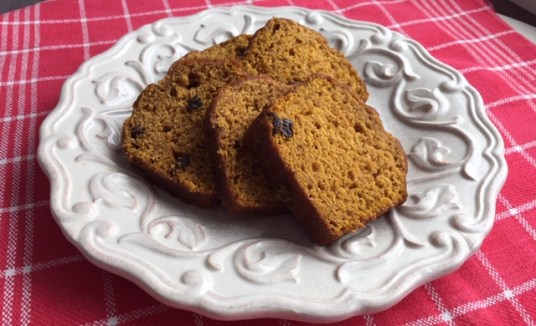
Yesterday, I wrote about the importance of choice. Sometimes that choice is within a broader topic. This poem is an example of that kind of choice. This month I am also participating in Laura Shovan’s “February” Poetry Project. (Why we’re doing it in March is a long story.) The theme this year is food, and yesterday Laura shared a picture of sourdough bread as a prompt. She also offered the alternative to write about a “bread of your choosing.” Since I don’t have much experience with sourdough bread, and have been baking pumpkin bread every year for almost forty years, this was an obvious substitution. Like the goal of writing a daily slice of life, the goal of Laura’s project “is to practice the habit of writing regularly…so that we can focus on generating ideas.” I may return to this poem to rework the ending, or I may not. I did enjoy the process of writing, and the piece of pumpkin bread (from a loaf hidden in the freezer) I ate to help me write it!

Pumpkin Bread

In November,
After the geese have flown south
And only brown oak leaves
Still cling to tree limbs,
It’s time to make pumpkin bread.

The cookbook falls open
To the recipe,
Spattered and stained
From thirty years of use.
The heady scent of cinnamon
And cloves fills the kitchen
As ingredients mix and meld
Into honey-colored batter.

I fill the pans, like a bee
Filling honeycombs.
Then into the oven, where
The golden glop transforms
Into loaves of amber sweetness
That we will devour
When they cool.

© Catherine Flynn, 2019

Thank you to StaceyBetsyBethKathleenDebKelseyMelanie, and Lanny for creating this community and providing this space for teachers and others to share their stories every day in March and each Tuesday throughout the year. Be sure to visit Two Writing Teachers to read more Slice of Life posts.

Slice of Life 19: Thoughts About My Writing Life

For the past three days, I have been part of a team of teachers visiting a neighboring district to learn more about this district’s English/Language Arts curriculum and its implementation. This was an incredibly rewarding experience, and I will be thinking about everything I learned there for days and weeks to come.

One of the questions we asked the teachers we visited was “What is the writing life of a student here?” I’ve been thinking about how I would answer this question for students in my district, as well as how I would answer it for myself. This seemed like a good place to begin the 12th annual Slice of Life Challenge.

I can honestly say that I owe my current writing life to the Slice of Life challenge. Late one Friday night seven years ago, I wrote my first slice more on a whim than anything else. That post led to more posts, and eventually I began attending conferences, meeting authors, and ultimately, publishing poems of my own and of my students.

So what is it about Slice of Life that enabled me to build a rich, rewarding writing life? Being part of a community of supportive writers is perhaps the most important thing slicing has given me. From the beginning, the encouraging comments and feedback have nurtured me as a writer and given me the confidence to continue writing. I think about this every day when I confer with my students about their writing.

Another critical quality of slicing is that, in terms of what to write about, the sky is the limit. Writers are free to write about whatever they want, using whatever genre or format that suits their topic. Just as I appreciate being able to make my own choices, I know students want this freedom also. That being said, I also appreciate the suggestions the Two Writing Teacher team members provide throughout the month. Sometimes it’s just hard to face a blank page without any guidelines. This is true for our students as well.

I also appreciate the many mentor texts shared by all slicers. Whether its a line of text that launches a dive into childhood memories, or a poem that provides a structure for a poem of my own, mentor texts are an essential component of any writing life.

These are just my initial thoughts about this question, but I’ll be returning to it over the course of the month. As John Ciardi said, “a good question is never answered. It is not a bolt to be tightened into place but a seed to be planted and to bear more seed toward the hope of greening the landscape of ideas.”  I look forward to watching the “greening of the landscape” with you.

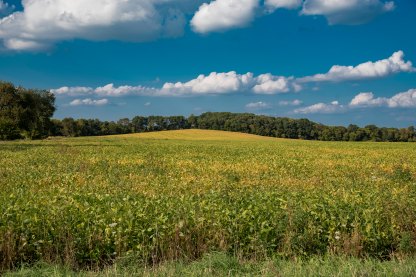
Photo by Good Free Photos on Unsplash

Thank you to StaceyBetsyBethKathleenDebKelseyMelanie, and Lanny for creating this community and providing this space for teachers and others to share their stories every Tuesday. Be sure to visit Two Writing Teachers to read more Slice of Life posts.

Poetry Friday: Robins


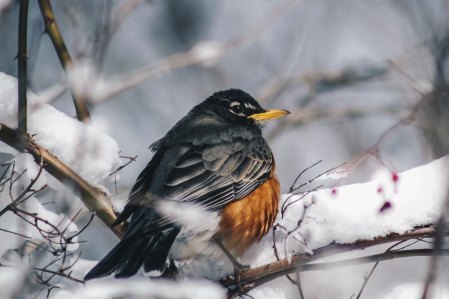
As I left school one afternoon last week, snow had just started falling and an icy wind was picking up. Suddenly, six or seven robins flew across the parking lot, landing in a tree at the edge of the playground. The sight filled me with hope that spring will be here soon.  Here is a poem those robins inspired.

Robins,
plump and ruffled
against the snow,
swoop,
perch;
a maple tree
bursts into bloom.

© Catherine Flynn, 2019

Valerie Worth’s poem, “Robins,” also expresses the delight of the return of these harbingers of spring.

Look how
Last year’s
Leaves, faded
So gray
And brown,

Blunder
Along
Like flimsy
Flightless
Birds,

Stumbling
Beak over
Tail
Before
The wind.

But no,
Wait:
Today
They right
Themselves,

And turn
To the
Stout slate
And ruddy
Rust

Of robins,
Running
On steady
Stems across
The ground.


Photo by Jedidiah Church on Unsplash

Don’t forget that next Friday, March 8th, is International Women’s Day. I’ll be hosting the Roundup that day and would love it if people help to celebrate the day by sharing poems that honor women. You can read more here.  Please be sure to visit Linda at Teacher Dance for the Poetry Friday Roundup.

Poetry Friday: “For You”

Like many of you, I was deeply saddened to learn of Paul B. Janeczko’s death earlier this week. Although I never met Mr. Janeczko, I feel like he was an old friend. His books have been a staple in my classroom since I began teaching and have guided and inspired my own writing. Last night, I spent the evening poring over favorite titles, trying to decide what would be a fitting tribute. In the end, I chose “For You,” by Karla Kuskin, which is included in Poetry From A to Z: A Guide for Young Writers (Simon & Schuster, 1994). This poem is especially poignant for me because my sweet orange cat Noodles passed away just a few weeks ago.

For You
by Karla Kuskin

Here is a building
I have built for you.
The bricks are butter yellow.
Every window shines.
And at each an orange cat is curled,
lulled by summer sun.
The door invites you in.
The mat is warm.
Inside there is a chair
so soft and blue
the pillows look like sky.
In all the world
no one but you
may sit in that cloud chair.
I’ll sit near by.

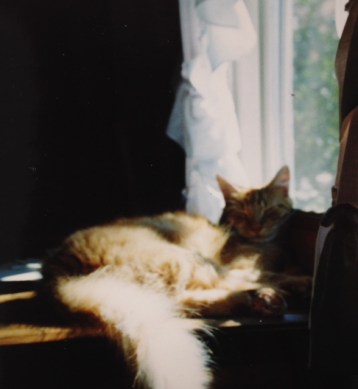
Noodles “lulled by the summer sun.”

There are just two more weeks until March 8th, International Women’s Day. I’ll be hosting the Roundup that day and would love it if people help to celebrate the day by sharing poems that honor women. You can read more here. In the meantime, please be sure to visit Robyn Hood Black at Life on the Deckle Edge for the Poetry Friday Roundup.

Poetry Friday: A Harbinger of Hope


As seen on my drive to work earlier this week:

a ribbon of rainbow
peeks through gray clouds
a harbinger of hope

© Catherine Flynn, 2019

Laura Purdie Salas is hosting the Poetry Friday Roundup today at Writing the World for Kids. Be sure to stop by to read more poetry and to help Laura celebrate the publication of her new book, Snowman – Cold = Puddle. And although this may be a little obvious, my haiku could easily be transformed into an equation poem:

showers + sunbeams = rainbow

Photo by Karen Cantú Q on Unsplash

Poetry Friday: My Grandmother Making Breakfast

Last week, I shared some gleanings from poet and teacher Gregory Orr’s book A Primer for Poets and Readers of Poetry, specifically his thoughts about the distinction between lyric and narrative poetry. Orr acknowledges that these two poetic forms occur along a continuum, with very few poems being purely one or the other. He also observes that while “most poetry readers and writers have shifted toward lyric,

The narrative impulse is still powerfully present in all of us as a fundamental way of organizing experience into meaning.”

Orr includes an exercise at the end of this chapter, challenging his readers to write a narrative poem. He suggests writers “choose a figure who is known to you…then imagine that figure in a context.” Once you have these basic elements, “add yourself to the situation” and keep asking “what happens next?”

This poem is my response to the exercise. As with any prompt, I bent the rules a little, but kept true to Orr’s direction to “narrow the focus.”

My Grandmother Making Breakfast

She stands at the stove
in the center of her kitchen,
cracking eggs
into a cast iron frying pan.

I sit at her drop-front desk
in the corner by the window,
perched on a yellow stool,
trying to shuffle cards
in a collapsing arch,
the way my father does.

She stirs the eggs,
their sunflower yolks blooming
into the black pan.

My attention is on the cards,
my ten-year old hands
not quite dexterous enough
to manage the trick
of mingling and
mixing them.

Meanwhile, my grandmother
adds salt and pepper to the eggs,
now coalescing into fluffy mounds
and the warmth of the stove radiates
throughout the kitchen.

Soon, she will spoon our breakfast
onto flowered plates.
The cards will be scattered
on the desk, forgotten for now.

We will sit and eat.
She will sip her coffee;
I will sip Hi-C  from a glass
that once held shrimp cocktail.

But for now,
we are both focused
on the task at hand,
lost in our thoughts,
content to be alone
together.

© Catherine Flynn, 2019

Please be sure to visit Tabatha Yeatts at The Opposite of Indifference for the Poetry Friday Roundup.

Just a reminder about the Roundup on International Women’s Day (March 8th). I’m hosting that day thought it would be appropriate to celebrate the day by sharing poems that honor women. These could be original poems or poems written by others. They could be poems about an important woman in your life who deserves to be celebrated, someone famous, an unsung woman of historical significance, or a poem by your favorite female poet. The choice is yours. So please feel free to participate (or not) in any way that feels right to you. 

Poetry Friday: “Daybreak”


Over the past few weeks, I’ve been reading A Primer for Poets and Readers of Poetry, by Gregory Orr. In the Preface, Orr describes the book as “one poet’s informal exploration of language and self in relation to the impulse to write lyric poetry.” The book includes in-depth analysis of poems through different lenses, as well as prompts and exercises. I found the chapter “Lyric and Narrative: Two Fundamental Ordering Impulses” especially thought-provoking. Orr offers this fundamental distinction between the two:

The narrative poem is searching for something and won’t be happy (complete, unified) until it has found it. By contrast, the lyric poem has a different shape. It constellates around a single center. (p. 82)

Orr goes on to describe the shape a lyric poem as “that of a snowflake or crystal–an intense geometric concentration around a center.”

Isn’t that a wonderful image? As often happens, while searching for one poem, I found another. Although I’ve read and loved “Daybreak” by Galway Kinnell many times, this week I read it with a new appreciation for how Kinnell’s words “constellate around a single center.”

“Daybreak”
by Galway Kinnell

On the tidal mud, just before sunset,
dozens of starfishes
were creeping. It was
as though the mud were a sky
and enormous, imperfect stars
moved across it slowly
as the actual stars cross heaven.
All at once they stopped,
and as if they had simply
increased their receptivity
to gravity they sank down
into the mud; they faded down
into it and lay still; and by the time
pink of sunset broke across them
they were as invisible
as the true stars at daybreak.


Please be sure to visit Tara Smith at Going to Walden for the Poetry Friday Roundup.

Poetry Friday: “Instructions For A Life”

Today I’m joining millions of people in mourning the passing of poet Mary Oliver. Oliver’s poems, essays, and interviews comprise a master class not only in being a poet, but in being a better human. She taught us to live with our eyes, ears, and hearts always open to the multitudes of wonders and possibilities present in the world.  It would be impossible for me to choose a favorite poem or even passage. So instead, I’ve taken the seven magically simple words that make up “Instructions For A Life” and created a Golden Shovel:

“Pay attention. Be astonished. Tell about it.”
Mary Oliver
1935-2019


Someone’s not-so-hidden entrance in this ancient rock wall in the woods behind my house.

Thank you, Mary Oliver, for so generously sharing your poetry, wisdom and love of our magnificent world. You will be missed. Please be sure to visit Tricia Stohr-Hunt at The Miss Rumphius Effect for the Poetry Friday Roundup.