Slice of Life: Pickles, Owl Moon, and the Hard Work of Revision

sols_6Last spring, during a poetry writing unit, a 5th grade student asked me to read a poem she had written. “I’d love to,” I told her as she handed me her notebook with pride. I knew this girl to be a good student and a strong reader, so I was quite surprised to read what she had written.  It was mostly about pickles, but her poem was full of forced rhymes and then no rhymes. I told her that her love of pickles was coming through loud and clear. Then I asked her about some of the more questionable rhymes.

“What do smelly feet have to do with sweet pickles?” I wondered

“Nothing, but sweet and feet rhyme,” she said matter-of-factly.

“I wonder if  there are any other words that rhyme with sweet that have more to do with pickles than feet.”

“Probably, but today I just feel silly and want to write a silly poem.”

“Fair enough. Let’s look at it again tomorrow and see if you still feel that way. Writers often see their work differently after a day or two,” I said.

She wasn’t convinced, and she didn’t change the poem.

Over the years, I’ve had plenty of students who were unwilling to revise their writing. It seems as if getting anything down on paper is torture enough. Then to have to make changes is just insulting. Part of me empathizes with them. I know it’s hard to get our thoughts down in the first place. But I also know how much better writing can be after the second or third revision.

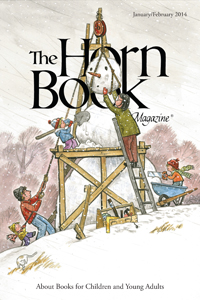
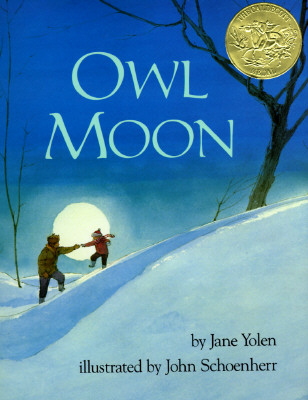
january2014cover_FAKE_200x300I wish I’d had Jane Yolen’s article from the current issue of The Horn Book to share with my reluctant reviser. In it, Yolen muses over different forms her Caldecott-Award winning picture book, Owl Moon, might have taken. A sonnet? No, too short. What about as a rap? Definitely not. She states that “a writer has to make choices [about] how to tell a story. But when a writer finds the right voice, everything comes together.” (pg. 46)

OwlMoon1

Writers do make choices. But I feel that our students don’t really understand that this means more that just thinking of words that rhyme. As Yolen goes on to say, finding this voice for our writing takes “hard work, inspiration, even perspiration.” (pg. 50)

So why did my young poet short-change herself and her poem? In this case, I think she just needed more time. Time to build the habit of writing every day so being asked to write didn’t feel like punishment. Time to experience the joy of finding just the right word, the perfect expression of her feeling. Time to play with different versions of her poem to find out if silly really was the right tone. Sometimes we may get lucky and stumble onto the right form on our first try, as Yolen feels she did with Owl Moon. But in most cases, we need to sweat over our writing before sharing it. Only then can we sit back and have a pickle.

Thank you to everyone at Two Writing Teachers for hosting the Slice of Life every Tuesday. Be sure to stop by to read the hard work of many devoted writers.

Slice of Life: Getting From Point A to Point B

sols_6

About a month ago, I found myself driving in an unfamiliar city at dusk. As I exited the highway into rush hour traffic, my GPS informed me that it had lost its satellite connection. After my initial panic, I took a deep breath and, because I had looked at a map before I left home and had the map feature open on my phone, was able to navigate to my hotel without a wrong turn.

Being able to read a map is an important skill. It provides us with a bird’s-eye view of where we’re going. Some people may argue that not knowing is what keeps life interesting, but I like having an idea of what lies ahead.

In teaching, our curriculum calendars and lesson plans are like maps in that they lay out a predictable path that will lead us from point A to point B. But like a driver encountering a roadblock, or me when my GPS failed, we need to possess the skills to help us adjust our teaching in a way that addresses the roadblock but still gets us, and more importantly, our students, to point B.

The school where I did my student teaching used a scripted math program that spiraled through concepts at a fairly quick pace. When we taught long division according to the program’s sequence, the kids were stumped. They just didn’t get it. They were frustrated and I was practically in tears. My cooperating teacher, however, believed in being responsive to the needs of students, not being a slave to the script. We worked together to use lessons from the old basal math program and other resources to give our students the time and support they needed to practice the steps of long division until they understood it well and were able to apply them independently. Without his guidance and support, I would have soldiered on and the kids wouldn’t have learned much about division.

I’ve been very fortunate in my career to have worked in a district where we’ve never had a scripted curriculum. The administrators have always trusted us. They’ve given us the autonomy and flexibility to make decisions about lesson plan and materials that we felt met the needs of our students. I worry that if teachers are never allowed to use anything other than a scripted curriculum, or are admonished or punished for deviating from this script, they will never know how to deal with the roadblocks our students present us with daily.

World of Ptolemy as shown By Johannes de Armsshein, Ulm, 1482 [Public domain], via Wikimedia Commons
Medieval cartographers labeled areas beyond their ken “Here there be dragons.” In other words, venture here at your peril. And yet, intrepid explorers ventured across unknown oceans. They trusted their knowledge, skills and instincts to carry them safely to shore. Teachers do this every day. We draw upon our past experiences, skills and knowledge as we interact with students. We aren’t always sure if our students are going to learn a skill or concept exactly they way we plan for them to, but we have a pretty good idea of what to do when we encounter a roadblock.

Just as drivers shouldn’t become dependent on their GPS, which might stop working at a critical juncture, teachers shouldn’t be held to scripts or curriculums that don’t meet the needs of our students. We have to have the flexibility to veer off course if needed, but still reach our destination. Anything less is a disservice  to our students.

Poetry Friday: Aurora Borealis

Yesterday, I was thrilled at the possibility of northern lights being visible in Connecticut. I have vivid memories of the handful of times I have witnessed this display of dancing light, but it’s been ages since I saw them last. These mysterious lights must have been terrifying to people throughout history without our knowledge of solar flares and ions bumping into Earth’s atmosphere. Fortunately, knowing this doesn’t diminish their beauty or their ability to inspire.

I don’t share my own poetry very often, but I couldn’t find a poem that matched my memories or feelings about the auroras I’ve seen. So here is a very rough draft of a poem inspired by watching northern lights with my boys in March of 1989.

By Xander [CC-BY-2.0 (http://creativecommons.org/licenses/by/2.0)], via Wikimedia Commons
By Xander [CC-BY-2.0 (http://creativecommons.org/licenses/by/2.0)%5D, via Wikimedia Commons
“Aurora Borealis”

Do you remember

that spring night, long ago,

when we stood on the lawn,

transfixed?

We gazed up in awe

as curtains of shimmering light

danced across the sky,

wrapping the big dipper

in veils of glowing green.

Your eyes grew wide

when a burst of red

flared and rippled,

casting an eerie glow

over the countryside.

“What is it, Mommy?”

you wanted to know.

“Magic,” I replied.

© Catherine Flynn, 2014

Gaze at the world through the eyes of a four-year old today and be amazed. And, for plenty of amazing poetry, be sure to stop by Mainely Write, where Donna has the Poetry Friday roundup.

Spreading Some Sunshine

my-only-sunshine-wallpaper-nature-picture-spring-images It is a rainy, dreary Monday here in Connecticut. What better day to spread a little sunshine? I felt incredibly honored to be nominated for the Sunshine Award by four bloggers: Amy Rudd of The “Rudd”er, Michelle Haseltine of One Grateful Teacher, Vicki Vinton of To Make A Prairie, and Julieanne Harmatz of To Read To Write To Be. The mission of the Sunshine Awards is to recognize bloggers who inspire.

The specifics are:

1.  Acknowledge the nominating blogger(s).

2.  Share 11 random facts about yourself.

3.  Answer the 11 questions the nominating blogger created for you.

4.  List 11 bloggers who inspire you.

5.  Post 11 questions for the bloggers you nominate to answer and let all the bloggers know they’ve been nominated.  Don’t nominate a blogger who has nominated you.

Eleven random facts about me:

  • I have rafted down the Colorado River through the Grand Canyon twice. (You can read more about these adventures here and here.)
  • I won an award for cursive handwriting in 6th grade. photo-2
  • I have a stationary fetish. I love going into stationary stores (those that still exist) and buying beautiful notecards.
  • I love musicals; Funny Girl is my favorite.
  • I went to the prom with the inventor of LeapPad.
  • I live in the town where I grew up in a house built on land my great-grandfather bought in 1910.
  • I have a tendency to procrastinate. I also want things to be perfect. This is not a good combination.
  • I have never been a good speller. My spelling has improved significantly since I started teaching phonics.
  • I am a serial collector. Throughout my life, I have collected seashells, stamps, antique bottles, kitchen collectibles and McCoy pottery.
  • I am an excellent Trivial Pursuit/Jeopardy player. Collecting stamps helped me acquire a lot of facts about a wide variety of topics.
  • I love to knit.
A sweater I made for my great-nephew a few years ago.

Like other bloggers who were nominated by more than one person, I’ve chosen 3 questions from each person.

Vicki’s Questions:

1.What book would you want with you if you were stranded on a deserted island? In Search of Lost Time, by Marcel Proust. I think it would me take a while, and it’s a book I’ve always wanted to read.

2. What did you learn from your mother? How to bake an apple pie, how to hem a skirt, and how to be a loving and generous person. She also taught me how to spell “mountain.” (see random fact #8 above)

3. Where do you find joy in your classroom or work? I work closely with struggling readers, so watching a child use a strategy to decode for the first time and realize that they’ve read the words and understood them is like watching a lock pop open. It’s an amazing sight.

Michelle’s Questions:

4. What’s your favorite quote? Why? “I have no special talents. I am only passionately curious.” Albert Einstein. I love this quote because it is the epitome of what Carol Dweck refers to as a “growth mindset;” that if you cultivate your passion and curiosity, anything is possible.

5. If you had a weekend (and money was no object), what would you do? Who would be with you? I would go to Florence, Italy and climb to the top of Brunilleschi’s dome at the Basilica di Santa Maria del Fiore and soak in the beauty of the Tuscan countryside. I should take my husband with me, but my friend Colette and I have talked about taking this trip for years.

By sailko via Wikimedia Commons

6. What book are you reading right now? I typically have at least three books going at once. At the moment, my adult read is 11/22/63, by Stephen King, my mg/ya book is Rose Under Fire, by Elizabeth Wein, and my professional book is The Common Core Grammar Toolkit: Using Mentor Texts to Teach the Language Standards in Grades 3-5, by Sean Ruday.

Amy’s Questions:

7. What’s your most favorite children’s book ever? Charlotte’s Web, by E.B. White. This is the book that made me a reader. I wrote more about my experience with this book here.

8. What is your favorite young adult novel? At the moment, The Book Thiefby Markus Zusak is my favorite YA book. 

9. How do you prefer to read books, paper or electronic? I have a Nook and an iPad with a Kindle app that I use once in a while. I love the convenience of being able to get a book at odd hours and not having to lug a heavy book around when I’m travelling, but paper is still my preference.

Julieanne’s Questions:

10. Name one guilty pleasure. Chocolate, in any form at any time.

11. What motivated you to start blogging? I began blogging because I learn so much from the blogs I read, and I love the idea of being part of a community where I can share ideas and learn from others. This experience has been more rewarding that I ever imagined.

12. What is your next challenge? An ongoing challenge for me is working with teachers to update our writing curriculum. We’re making some headway, but sometimes the scope of this work overwhelms me.

Eleven bloggers who inspire me: (Just eleven!? There are so many amazing bloggers, creating this list was almost as much of a challenge as answering the questions!)

  1. Colette Bennett of Used Books in Class
  2. Melanie Meehan of Two Reflective Teachers
  3. Cathy Mere of Reflect & Refine
  4. Jama Rattigan of Jama’s Alphabet Soup
  5. Tricia Stohr-Hunt of Miss Rumphius Effect
  6. Kate Roberts and Maggie Beattie Roberts of Indent
  7. Elaine Magliaro of Wild Rose Reader
  8. Kristi Mraz of Kinderconfidential
  9. Margaret Simon of Reflections on the Teche
  10. Kate Messner of Teachers Write! fame
  11. Gae Polisner of The Wee Bit Heap

My eleven questions:

1. Is there a “classic” book that you are embarrassed to admit you haven’t read?

2. What are your reading now?

3. What is the most important lesson you’ve ever learned from a student?

4. Do you listen to podcasts? Which is your favorite?

5. If you hadn’t become a teacher, what would you have been?

6. Who is your favorite children’s book author?

7. What’s the funniest thing a student ever said to you?

8. Tell something about the grandparent who meant a lot to you.

9. Where do you write?

10. Do you have a quote that inspires you?

11. What book would you want with you if you were stranded on a deserted island?

The sun is trying to poke through the clouds now. I guess sharing this sunshine chased the clouds away!

It’s Monday! What Are You Reading?

IMWAYR

I brought a stack of books home with me from NCTE, and I’ve had fun making my way through those over the past few weeks. Today I’m highlighting two of my favorites.

Although I was overwhelmed by the Exhibition Hall at the Hynes center, this immediately caught my eye at the Clarion booth:

Clarion, 2013

I love teaching with wordless picture books because they are accessible to all students, and David Wiesner is a genius of the form. The level of sophistication in his wordless picture books make them especially appealing to older students. Mr. Wuffles (Clarion, 2013) is one of his best. At first I was surprised by the slightly cartoony quality of the cover. But, after reading the first few pages, my notion that this might be a departure from Wiesner’s usual photographic style was gone.

Mr. Wuffles can’t be bothered with the many toys his human has tried to lure him with. Nestled in amongst the stuffed mice and jingle balls is what at first glance might be a tea infuser or some other forgotten mid-20th century kitchen gadget. Mr. Wuffles ignores this too, until something about this curious little silver ball catches his attention. Then the fun begins. Priceless facial expressions tell much of the story, and Wiesner plays with point of view throughout the book. Rich with details, Mr. Wuffles is a treat for picture book lovers of all ages.

Meet the model for Mr. Wuffles and learn more about Wiesner’s creative process in the book trailer:

Another highlight of my visit to the Exhibition Hall was meeting Gae Polisner and getting a signed ARC of The Summer of Letting Go. (Algonquin, publication date: March 18, 2014) Gae is one of the forces behind Teachers Write! and her kind and generous feedback about my writing was a real boost to me last summer. This may make me biased, but if I hadn’t liked this book, I just wouldn’t have written about it.

16068979

And actually I didn’t like it. I loved it. I wish my 14 or 15 year old self could have read this book. It would have been such a relief to know that other girls were insecure about their looks or felt like they couldn’t do anything right. Francesca, aka Frankie, worries about all this and more. She feels responsible for the drowning death of her younger brother four years earlier, and she worries about her parents, who are each coping with this tragedy in their own way. The Summer of Letting Go is the story of Frankie’s journey to forgiveness and acceptance; to understanding that “not even the ocean can drown our souls.”

Be sure to visit Jen at Teach Mentor Texts and Kellee at Unleashing Readers to find out what other people have been reading lately. Thanks, Jen and Kellee, for hosting!

Poetry Friday: Georgia Heard, Roque Dalton, and Unlocking the Door to Poetry

Poetry_Friday_Button-210

Poetry filled the air last weekend at the NCTE Convention in Boston. One of the highlights for me was hearing Georgia Heard, Tom Romano, and Linda Rief speak about the importance of “Keeping Poetry at Our Core.”

georgiaheard

Georgia Heard began the session by pointing out that “poetry is in every single strand of the CCSS.” She urged us to grow poetry slowly, not to wait until April, but to make a place for poetry in our classrooms every day. “Poetry changes us,” she said, “it changes our writing and our living.”

With these thoughts about the importance of poetry in mind, Heard went on to give us steps to guide our work. The first step is to “choose poems that are accessible, non-threatening, and relevant” to our students. Once we’ve done this, the next crucial step is to help students connect with a poem by guiding them “toward finding themselves and their lives inside the poem.”

Heard also shared that we have to give our students the tools they need to analyze and interpret poetry. Through close reading and asking questions such as “How does this poem relate to your life?” and “What is the impact of this poem on your life?” students can “unlock the door of a poem.” Then they will be able to analyze the meaning and craft of a poem for other layers of meaning.

Heard inspired me to be even more mindful about helping my colleagues share poetry with students when she closed her part of the session with the wisdom of Matthew Fox:

“The Celtic peoples…insisted that only the poets could be teachers. Why? I think it is because knowledge that is not passed through the heart is dangerous.”

This quote can also be found in Georgia’s book, Awakening the Heart (Heinemann, 1999, pg. 118). As I revisited my copy of this classic, I rediscovered this poem by Roque Dalton, another reminder that poetry is for everyone.

“Like You ”

Like you I

love love, life, the sweet smell

of things, the sky-blue

landscape of January days.

And my blood boils up

and I laugh through eyes

that have known the buds of tears.

I believe the world is beautiful

and that poetry, like bread, is for everyone.

And that my veins don’t end in me

but in the unanimous blood

of those who struggle for life,

love,

little things,

landscape and bread,

the poetry of everyone.

(translated by Jack Hirschman)

Tom Romano and Linda Rief were just as eloquent and inspiring, so, in the weeks to come, they will each have their own well-deserved post. For more inspiring poetry posts, NCTE-related and otherwise, be sure to visit Carol’s Corner, for the Poetry Friday Round Up.

Slice of Life: NCTE Edition

sols_6  logo-higher-logic

“The universe is made of stories, not atoms.”

 ~Muriel Rukeyser~

I arrived at the Hynes Convention Center in Boston on Thursday evening for my first NCTE Convention filled with anticipation about the upcoming three days. To say my expectations were fulfilled is an understatement! From meeting authors Jane Yolen, Gae Polisner, and Kate Messner, to having breakfast with fellow Slicers, to learning so much from all the amazing presenters, it was a weekend I will long remember.

My head is still filled with the wise words shared not only by the teachers, authors, and poets in front of the conference rooms, but with everyone I chatted with throughout the day. How to share all these thoughts swirling around my brain, like the leaves on the streets of Boston Sunday morning? As I pored over my notes, a pattern of recurring words and phrases began to emerge, and I “found” this poem:

Open the door…

welcome to this safe space.

A space to share our voices,

and tell our stories,

through poetry,

movement,

and art.

A place to explore,

imagine,

speculate,

and connect.

A space to find surprises,

insights,

knowledge,

and trust.

This place is a source of joy.

It has the power to change us; to

help us discover what’s in our heart.

It gives us the courage

to take our message

out into the world.

Thank you to Judy Blume, Nancie Atwell, Helene Coffin, Georgia Heard, Linda Rief, Tom Romano, Chris Leheman, Kate Roberts, Maggie Beattie Roberts, Joyce Sidman, Jane Yolen, Jerry Spinelli, Glenda Funk, Cherylann Schmidt, Kate Messner, Gae Polisner, Jo Knowles, Jen Vincent, Brian Wyzlic, Sara Egan, Brian Fizer, Sean Ruday, and Miriam Kopelow for so generously sharing these words, your experiences and your insights with teachers; for giving us the knowledge and the courage and the power to change our students’ lives.

Please visit Two Writing Teachers, where many wonderful and courageous teachers share their stories each week.

It’s Monday! What Are You Reading?

IMWAYR

I love going to conferences and workshops. They’re so invigorating. Sometimes an idea I have is confirmed, or I’m reminded of a strategy or activity I haven’t used in a while. But the best sessions are those where I learn something new that I can immediately use in my teaching and moves my thinking about a topic forward.

This happened on Saturday at the Teachers College Reading and Writing Project Saturday Reunion. Carl Anderson’s session on analyzing informational texts for teaching points to support student writing caused a noticeable shift in my thinking about these books.

Anderson, author of the classic book on conferring, How’s It Going? (Heinemann, 2000), opened his talk by reminding us that using mentor texts is essential if we want our students to write well in any genre. They have to “imagine the shape of their drafts.” In order to do this, they’ll need lots of exposure to models of the genre before they write.

Teachers should look at possible mentor texts through several lenses, including meaning, structure, details, voice, and conventions. Anderson’s words came back to me a few hours later while I was browsing the shelves at Bank St. Book Store. Astronomy has always fascinated me, so Jessie Hartland’s new book, How the Meteorite Got to the Museum (Blue Apple Books, 2013), caught my eye. As I flipped through the pages, I realized I was reading the book differently that I would have just the day before. Many elements of the book’s structure and style popped out and grabbed my attention.

9781609052522

Told as a cumulative story in the tradition of “The House that Jack Built,” How the Meteorite Got to the Museum combines scientific facts with the daily lives of the people whose path the meteor crossed, making the story more interesting and engaging to readers. Hartland infuses the story with humor with lines like “Your car was in an interstellar collision!”

The Peekskill Meteorite’s descent to Earth is described with vivid details that include all the senses. Witnesses’ reactions are chronicled with a variety of verbs each time they’re mentioned, as is the meteorite’s journey itself. Hartland’s colorful, engaging illustrations, which remind me of Maira Kalman’s work, include diagrams, maps and other typical of non-fiction features.

All of these touches give this book a depth that will draw kids back to it again and again, a depth I might have missed if not for Carl Anderson’s ideas about analyzing mentor texts. How the Meteorite Got to the Museum is an ideal mentor text for 3rd or 4th grade students who’ve been writing informational text for a few years and are ready to stretch their writing wings and try a new text structure. And they’ll learn a few facts about meteorites along the way.

Be sure to visit Jen at Teach Mentor Texts and Kellee at Unleashing Readers to find out what other people have been reading lately. Thanks, Jen and Kellee, for hosting!

Slice of Life: A Visit with Author Sarah Weeks

sols_6

Last week, Sarah Weeks, author of the novels Pie and So B. It as well as many picture books, including Oh My Gosh, Mrs. McNosh and Ella, Of Course, visited our school. There is nothing like an author visit to excite students about reading and writing, and Sarah’s visit was a huge hit.

pie-cover1       So_B._It_by_Sarah_Weeks

In words and pictures, Sarah shared her earliest writing and how she became a published author. She talked about finding ideas for stories everywhere and the importance of being observant. The kids loved Sarah’s honesty about tackling sensitive topics such as divorce and mentally challenged people in her books. Best of all, every topic Sarah discussed was infused with humor.

mCNCNVWEZiL0T9XGwoCDLDA      9780060088583_p0_v1_s260x420

Often students are reluctant to revise their first drafts. Sarah was clear that this just isn’t an option. My colleagues and I practically cheered when she told the kids that “no editor has ever said [your manuscript] is perfect, you don’t have to change a word.”

After reading all of Sarah’s books about Mrs. McNosh, our Kindergarten and first grade students created their own adventures for this wacky character.

photo-4

photo-5

Almost a week later, students throughout the school are still stopping me in the hall to ask “Do you have any more books by Sarah Weeks?” A successful author visit inspires students to stretch themselves as readers and writers. Sarah Weeks did just that.

Thank you to Stacey and all her new co-bloggers at Two Writing Teachers for hosting Slice of Life Tuesdays.

Slice of Life: The 4th Grade Readers’ Choice Awards

Image

Last week, on the sixth day of school, my fourth grade colleagues kicked off the year in style with their annual “Readers’ Choice Awards.” Wanting to make summer reading assignments more purposeful, Bernadette and Kim came up with a plan that also energized their students about reading.

Each student was encouraged to nominate one of their summer reading selections (all chosen from a list of suggested titles, but students could chose a book not on the list) for the best book in one of the following categories: Best Character, Best Setting, and Best Plot. Students wrote their nominations, hoping to persuade their classmates to vote for their book. Once all the nominations were shared, the children voted for a book in each category.

ImageMost fourth-graders arrived at school on Friday dressed to the nines for the awards ceremony, which included a red carpet, golden statues, and lots of applause. After a quick thank-you to the parents from Kim and Bernadette, the Masters of Ceremonies were introduced, and the nominees for the first category were announced. Students were called up to the podium to share the book they nominated, and the runner-up was announced. Then the emcee opened the envelope containing the name of the winner. To heighten the excitement, students in the audience provided a drum-roll on their laps. A statue was presented to the student who nominated the winning book before he or she read a short thank-you speech.

   Image   Image

Once all the awards had been handed out, students mingled with their parents and other guests and posed for photos. All the nominations were displayed for visitors to read, and there were even Hollywood-like stars on the floor leading into the cafeteria.

ImageAlthough this ceremony lasted only half-an-hour, it’s impact will be felt for the rest of the year. By being sensitive to including as many students as possible in the ceremony, Kim and Bernadette created a supportive tone in their classrooms and sense of community that often takes much longer to establish. Even students whose books weren’t chosen had the opportunity to share the title of their book. Parents loved seeing their children celebrate their summer reading in a meaningful way, and the students started the year off with style, excited about reading and sharing books with their friends.

Thank you to Stacey at Two Writing Teachers for hosting Slice of Life Tuesdays!