Poetry Friday: Puzzling Through the Possibilities

Image

Puzzling Through the Possibilities

The clue seemed so simple:

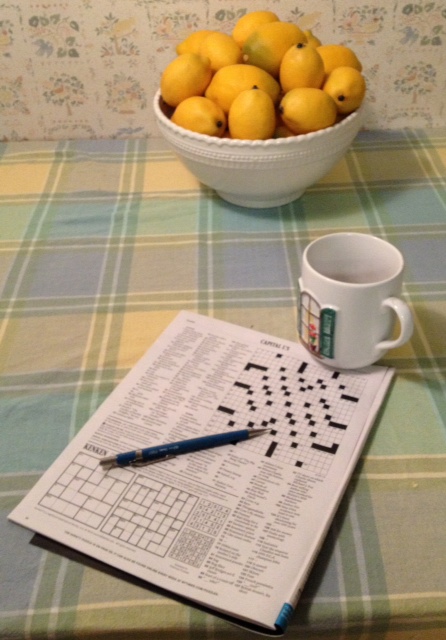
“Rossini’s William Tell and others”

Overtures even fit.

But the crosses didn’t work.

What word meaning “unprepared” begins with “nu?”

As I puzzled through the possibilities,

it occurred to me that

a writer feels this same frustration

as she reaches for the right word,

the clearest meaning,

so often just beyond her grasp.

Aren’t we all really just searching for that missing piece?

The one that clicks into place?

When we find it, it’s often a surprise.

And better than we ever dreamt.

© Catherine Flynn, 2013

Poetry_Friday_Button-210

The idea for this poem came from a journal entry I wrote in response to one of Corbett Harrison’s “Sacred Writing Time” prompts. When my colleagues and I were working on our writing curriculum, we began each day by writing for ten minutes. On this particular day, the slide stated that “dreamt” is the only word in the English language that ends with “mt.” As a Scrabble player and crossword puzzle lover, this intrigued me. So I wrote about filing this tidbit away, thinking it would come in handy as I was “puzzling through the possibilities” when solving a puzzle. Right away, I noticed this phrase. I loved the alliteration and the potential it contained. So I began playing with ideas. I’m still puzzling over this draft; I’m not sure the middle flows as well as it could, but I’ve had fun working on it.

By the way, the Rossini clue is from the New York Times Sunday puzzle from August 25, 2013, constructed by Victor Barocas.

Be sure to visit Laura at Author Amok for the Poetry Friday Round Up.

It’s Monday! What Are You Reading?

IMWAYR

Nowadays, it seems that Labor Day is more about the last official summer holiday and sales, not about the workers it honors. So today it seems appropriate to share books about the everyday heroes who took tremendous risks and made many sacrifices to help shape the labor laws we have today.

Image

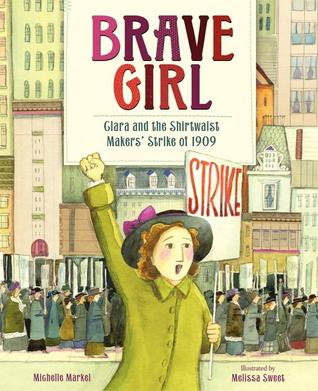
Brave Girl: Clara and the Shirtwaist Maker’s Strike of 1909, by Michelle Markel (Blazer + Bray, 2013; illustrated by Melissa Sweet) tells the true story of Clara Lemlich, who immigrated with her family from the Ukraine when she was 17 years old. Her father was unable to find work, so Clara went to work in one of the many shirtwaist factories on the lower east side of Manhattan in the early 20th century. Clara soon discovers the harsh realities of the garment industry, and helps organize the famous 1909 strike.

Melissa Sweet’s illustrations are always appealing, and here they provide a glimpse into the conditions of the tenements and factories of the time. Using her signature collage, Sweet incorporates fabric, stitching, and patterns to recreate Clara’s world. In an interview with Julie Danielson at Seven Impossible Things Before Breakfast, Sweet explains that this “felt like a fitting way to honor these brave seamstresses.”

The picture book format of Brave Girl shouldn’t discourage teachers of upper elementary grades from sharing this book with their students. In fact, Markel’s text is an ideal introduction to this important chapter of our history. Once students’ curiosity has been piqued, there are many other excellent books available to extend their learning.

Image

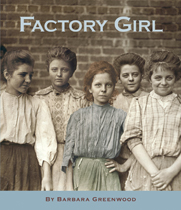
In Factory Girl, by Barbara Greenwood (Kids Can Press, 2007), combines fiction and non-fiction to bring the world of the garment and textile mills of New York and New England at the turn of the 20th century to life. Archival photos, many by Lewis Hine, reveal the terrible working conditions these children endured. This book also includes a timeline of the labor movement in the United States.

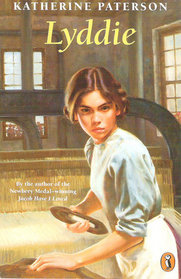
Katherine Patterson has written two novels that vividly depict the experience of young workers in New England textile mills. Lyddie (Dutton, 1991) takes place much earlier than the events in Factory Girl, but the situation is very similar. Lyddie arrives at a textile mill in Lowell, Massachusetts in the 1840s, just as several of the women are organizing to demand 10-hour working days. Patterson expertly weaves other aspects of life for these “factory girls” into the story. Facts like the “company” requirement of regular church attendance and the numerous restrictions on the girls’ after-work activities will be sure to provoke many heated discussions and are natural springboards for opinion and argument writing.

Image       Image

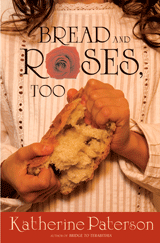
Bread and Roses, Too (Clarion Books, 2006) takes place in Lawrence, Massachusetts during the Bread and Roses strike of 1912. Sadly, the mill workers in this novel are still confronted with many of the issues Lyddie struggles against over half a century before.

Image

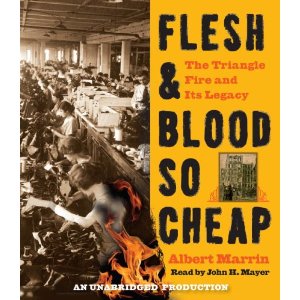
As is often the case, it took a tragedy before these conditions changed in any meaningful way. The 1911 fire at the Triangle Waist Company led to the deaths of 146 workers who were locked into the factory so they couldn’t leave early. Albert Marin has written a riveting account of the tragedy in Flesh and Blood So Cheap: The Triangle Fire and Its Legacy (Alfred A. Knopf, 2011). Marin sets the stage by telling the story of why so many Europeans were desperate to come to America in the first place. Incorporating archival photos and eyewitness accounts, this book is an important resource for students and teachers alike.

While children in the United States today are protected by child labor laws thanks to the efforts of Clara Lemlich and countless others, the same cannot be said for children around the world. These books open the door for students to conduct research and gain new insights into child labor around the world. The New York Times Learning Network has a lesson plan and resources related to the factory collapse in Pakistan earlier this year, and Teachers College Reading and Writing Project has an extensive collection of links to articles and videos available on-line, as well as books that address both the history of child labor and examples of child labor as it exists today.

There are many other fine books about other leaders of the Labor Movement, as well as fictional accounts of its many unsung heroes. I’d love to know which books are your favorites.

Be sure to visit Jen at Teach Mentor Texts and Kellee at Unleashing Readers to find out what other people have been reading lately. Thanks, Jen and Kellee, for hosting!

Slice of Life: More Thoughts on Writing

sols_6

“Quantity produces quality. If you only write a few things, you’re doomed.” –Ray Bradbury

800px-Парное-взаимное_обучение-в.Германии-080423-12
via Wikimedia Commons

To say that I have been obsessed with writing lately would be an understatement. The curriculum work I wrote about last week has me very excited about our school year. As I’ve prepared for school over the past week, though, I realized I left out at least one critical element of writing instruction: time.

In his 2008 book Outliers, Malcom Gladwell popularized the idea that it takes 10,000 hours of practice to become a master at any given task. Recently, some have questioned this notion, and Gladwell responded with a clarification on The Atlantic Wire by pointing out that this rule applies to “cognitively demanding activities that need significant thought.” Writing is certainly a cognitively demanding endeavor.

As Ronald T. Kellogg points out, writing “poses significant challenges to our cognitive systems for memory and thinking.” Researchers Flower and Hayes developed a Cognitive Process Model of Composition which illustrates that “most of the composing process is complex, multi-layered and recursive, so that many of those processes can be operating at once, and information can flow back and forth among boxes in several directions at once.”

For students to become even proficient writers, they need time every day to write. Students need ample time to generate ideas. They need time to play with language so they develop a richer vocabulary and deeper understanding of language structures. They need time to develop confidence and their writing voice.

Time is a four letter word for most of us. We never have enough, are always running out of it. But time is exactly what our students need if they are to come anywhere close to mastery of writing. We will never make more time, but teachers are creative problem solvers. By closely examining long standing routines and our priorities, we can find more time in our schedule for this skill that is so critical to learning.

At our meeting to kick off the year yesterday, all of the speakers shared a personal story about their experience in education. Our students have their own stories that they want to share. They deserve the opportunity to tell them. After all, caring about each others’ stories is what makes us human.

Thank you, as always, to Stacey and Ruth at Two Writing Teachers for hosting the Slice of Life Challenge and providing a space for us to become better writers by telling our stories.

It’s Monday! What Are You Reading? Compost, Worms, & Chickens

IMWAYR

Without trying to be thematic, I read three books this weekend that all related to taking better care of the Earth and all the creatures we share our planet with.

Image

Compost Stew: An A to Z Recipe for the Earth by Mary McKenna Siddals (Tricycle Press, 2010; illustrated by Ashley Wolff) is a clever rhyming alphabet book that explains how and what to compost, as well as why composting is important. Ashley Wolff’s collage illustrations are a study in recycling themselves. The main character’s apron is made out of pages from the Farmer’s Almanac, beautiful papers are used for goose feathers, and found objects add depth to every page.

Years ago, we made composting columns out of soda bottles so kids could observe this process. This was a great project, although some kids were grossed our by the worms! Now, I would add a writing component to this unit, using the experience to model writing a how-to book. Instructions for how to construct these columns can be found here: http://www.learner.org/courses/essential/life/bottlebio/ecocol/build.html Marty McGuire Digs Worms by Kate Messner (Scholastic Press, 2012; illustrated by Brian Floca) is a natural read aloud choice for a unit like this.

Image

Denise Fleming is a favorite of early-childhood teachers everywhere. In underGround (Beach Lane Books, 2012), Fleming has created cut-away illustrations of the ground beneath our feet using pulp painting, “a papermaking technique using colored cotton fiber poured through hand-cut stencils.” (from a note included on copyright page) Animals, plants, rocks, and minerals are all shown with details sure to fascinate the youngest naturalists. Humorous touches are everywhere, making the book a kind of I-spy of buried treasures.  Two pages of facts about the critters who inhabit the book supplement the simple rhyming text.

Image

City Chickens (Houghton Mifflin Books for Children, 2012), by Christine Heppermann, is a non-fiction book for kids in second grade and up about Chicken Run Rescue, a shelter for rescued hens and roosters in Minneapolis. Heppermann includes a wealth of information about Mary and Bert Clouse’s efforts to care and find new homes for abandoned chickens. The reasons such a shelter is needed are explained, as is the responsibility of caring for these birds. You will have a different view of them after reading this book and seeing Heppermann’s gorgeous photographs. Notes include information for educators and a source list. This book could be used as a springboard for opinion writing about keeping chickens as pets. Teacher’s College Reading and Writing Project has a digital text set of additional resources on pets in the classroom here. More information about City Chickens is available on this website.

I grew up across the street from a working dairy farm. The rhythms of the farm were the rhythms of life. It makes me sad to know so many children are only able to experience nature from a distance, but these books will ignite the curiosity of children about the wonders that surround them.

Be sure to visit Jen at Teach Mentor Texts and Kellee at Unleashing Readers to find out what other people have been reading lately. Thanks, Jen and Kellee, for hosting!

Slice of Life: Thoughts About Writing

sols_6

For the past six days, I’ve worked with an amazing group of teachers making revisions to our writing curriculum. The dedication and passion these men and women brought to this work made my job of facilitating much easier. I feel good about what we accomplished and know that these teachers all feel prepared to launch the writing workshop in their classrooms next week.

We still have so much work to do, but thanks to the Units of Study developed by Lucy Calkins and her colleagues at the Teachers College Reading and Writing Project, we have a good grasp of the process and new expectations. Everyone is excited for school to start so we can begin working with students and help them become capable, confident writers.

Teachers often ask me about the purpose of the writer’s notebook. They are uncomfortable with the idea of letting kids write about a self-selected topic. They want to know what they’re supposed to do with this writing. Do they grade it? Does it have to become a story or some other kind of a polished piece. I always explain that no, this writing is not graded. It doesn’t necessarily have to become something else.

Because of these questions and the discomfort some of them have with writing itself, I began our work days by giving the teachers time to write. Some days I offered a photograph or piece of art; some days I shared one of Corbett Harrison’s Sacred Writing Time slides. It was interesting to watch how the teachers reacted to the prompts and how they worked. (I did write, also.) But the real revelations came when the teachers shared their writing.

Everyone had approached the task from a different angle, an angle that was meaningful to them. Some were surprised by the direction their writing took. Others were grateful for the opportunity to sit quietly and be reflective after a hectic morning trying to get to school by eight o’clock. We talked about the importance of giving our students choices about their writing and about the importance of feeling comfortable enough to share our work. We all agreed that going through this process ourselves would help us as we guide our students in the weeks to come.

The most valuable insight for me came from what I wrote this morning. Harrison’s slides always include whatever “National” day it is. Today happened to be National Radio Day. This made me remember a record album of old time radio programs that my mother used to listen to when I was little. Like links in a chain, this thought led to other ideas, which led me to an insight about a character in a story I’ve been writing this summer. This cascade of memories reminded me of one of my favorite scenes from Ratatouille, when Anton Ego takes his first bite of the dish Remy and Colette have lovingly prepared for him.

Why wouldn’t we want our students to have this same kind of opportunity to see where their writing takes them? Who knows what they might discover about themselves?

Thank you, as always, to Stacey and Ruth at Two Writing Teachers for hosting the Slice of Life Challenge.

It’s Monday! What Are You Reading?

Image

More Jane Yolen, of course! After highlighting just 10 (well, maybe a few more than 10) picture books by one of the most prolific authors ever for Picture Book 10 for 10, I can’t stop reading (and rereading) books by Yolen.

Image

One of her more recent volumes is a book of poetry, co-written with Rebecca Kai Dotlich. In Grumbles from the Forest: Fairy-Tale Voices with a Twist (Wordsong, An Imprint of Highlights, 2013; illustrated by Matt Mahurin), Yolen and Dotlich use fifteen well-known fairy tales as a spring board for pairs of poems that let the characters speak for themselves. Snow White has her say, as do Gretel and Goldilocks. There are also poems that give voice to supporting characters, such as the the Wicked Fairy from Sleeping Beauty, who admits she “should’ve read/that page on tips.” While some of the poems do have a humorous tone, others reveal the dark side of the fairy tale. Beauty’s isolation is tinged with sadness as she wonders “what sounds children/might have made/running across the marble halls…”

These poems are naturals for reading after reading the original tale. Anchor Standard 9 of the CCSS states that students will  “analyze how two or more texts address similar themes or topics in order to compare the approaches the authors take.” At many grade levels, students are expected to use fairy tales, myths, and legends for this purpose.

In a note to their readers, Yolen and Dotlich also urge their audience to “try writing a fairy tale poem yourself [and] make a little magic.” By “juggling different perspectives,” students will develop a deeper understanding of characters who, in many retellings, are often no more than stereotypes.

Image       Image

Of course, there are numerous versions of these tales that do adopt the point of view of a character who doesn’t usually have a voice. Since the huge success of The True Story of the Three Little Pigs, by Jon Scieszka (Viking Press, 1989; illustrated by Lane Smith) these “fractured fairy-tales” have become their own sub-genre. There are also other poets who have given a voice to favorite fairy tale characters. Marilyn Singer has written two books of reversos, pairs of poems which use the same words in reversed order to present the perspective of two different characters. Singer’s poems in Mirror, Mirror (Duttons Children’s Books, 2010; illustrated by Josee Masse) and Follow, Follow (Dial Books, 2013; also illustrated by Josee Masse) are similar to Yolen and Dotlich’s as they have humor but don’t shy away from the hard lessons these characters have learned. Masse amazingly repeats this feat in her illustrations.

Image    Image    Image

Grumbles from the Forest and both of Singer’s books will be best understood by students in third grade and up. Why should they have all the fun? Mary Ann Hoberman’s You Read to Me, I’ll Read to You series has a collection devoted to fairly tales, Mother Goose, and Aesop’s fables that are perfect for sharing with younger readers.

Sadly, I’m no longer surprised when students arrive at school not knowing these classic stories. My library, though, is well-stocked with classic versions of these stories, as well as many of the fractured variety. I share them with students every chance I get. I believe Yolen is absolutely correct when she wrote in Touch Magic: Fantasy, Faerie and Folklore in the Literature of Childhood, (August House, 2000) “that culture begins in the cradle…to do without tales and stories and books is to lose humanity’s past, is to have no map for our future.”

Be sure to visit Jen at Teach Mentor Texts and Kellee at Unleashing Readers to find out what other people have been reading lately. Thanks, Jen and Kellee, for hosting!

Picture Book 10 for 10: Picture Books by Jane Yolen

Image

Picture Book 10 for 10 is the brainchild of Cathy Mere of Reflect & Refine: Building a Learning Community and Mandy Robeck of Enjoy and Embrace Learning. During this annual event, now in its fourth year, teachers, librarians, and book lovers create lists of 10 essential picture books. Cathy and Mandy collect and share these lists, and everyone is richer because of their efforts. Be sure to visit their blogs to see their lists, and check out links to other lists. Thank you, Cathy and Mandy, for organizing this celebration of children’s literature!

Jane Yolen, who has been called the Hans Christian Anderson of our time, is one of my favorite authors and I’ve always used her books in my classroom. Her books are filled with humor, compassion, and a deep desire to ensure that children continue to have quality literature that preserves our cultural heritage. She has written over 300 books, including fantasy and fairy tales, historical fiction, poetry, rhyming picture books, non-fiction picture books, novels and more. Needless to say, trying to choose just ten of her books turned out to be quite a challenge! I tried to include one book from each genre Yolen has written in and I admit my choices are very subjective. Many of these are older works that I read to my children when they were small. These, of course, are my favorites.

Photo by Jason Stemple, via wired.com

One of the most generous and inspiring writers working today, Yolen speaks at conferences of teachers and writers often, sharing her wisdom about books and writing. I have been fortunate to hear her speak twice, and a smarter, funnier, kinder advocate for children’s literature is not to be found. Yolen’s website is a treasure-trove of information about anything to do with her life and work.

                             Image       Image

Commander Toad in Space (CowardMcCann, 1980; illustrated by Bruce Degen) On her website, Jane explains that she got the idea for this series (which are really early readers) when she read an article in her local newspaper about a boy whose frog, “Star Warts”… “had just won a jumping frog contest.” Yolen goes on to point out that “every book is riddled with puns,” which today’s beginning readers are certain to understand, given the popularity of Star Wars. Not all the puns are related to Star Wars, though. Commander Toad and the Planet of the Grapes (CowardMcCann, 1982) gives a nod to another Hollywood classic, and Mr. Hop is suspiciously Spock-like. Even if they don’t get all the allusions, these books (there are seven titles altogether) are tried and true favorites of first and second grade readers.

encounter

Encounter (Harcourt Brace, 1992; illustrated by David Shannon) Kirkus described this book as “a poignent account of Columbus’s landfall in the Americas, from a Taino’s point of view.” An important counterpoint to “In 1492, Columbus sailed the ocean blue…” this book belongs in every classroom. Yolen’s subtle prose and Shannon’s luminous illustrations ensure that this vanished culture won’t be forgotten.

Image

I love of all of Jane’s poetry, so it was difficult to choose a single book. She and her son, Jason Stemple, have teamed up to create a number of books like Fine Feathered Friends (Boyds Mills, 2004). Yolen uses Stemple’s stunning “photographs as a jumping off place for poetry.” (About.com interview) A masterful poet, Yolen’s poems are full of imagery, humor, and facts about each bird. Haikus, quatrains, and other forms are paired with facts about each bird, including its genus, species, and habitat.

122075

The Girl in the Golden Bower (Little Brown, 1994; illustrated by Jane Dyer) is an original fairy tale that my third graders always loved. Indeed, Book List states that “the lyrical language Yolen employs makes this an excellent choice for reading aloud.” The story contains many elements for the genre, including an evil sorceress, magical objects, spells, and people who are who are transformed into animals.

Image

Here’s a Little Poem: A Very First Book of Poetry (Candlewick and Walker UK; with Andrew Fusek Peters; illustrated by Polly Dunbar) Jane edited this anthology with British author Andrew Fusek Peters. It is one of my favorite collections, full of poems about the everyday lives of young children. My favorite poem in this collection will always and forever be “The No-No Bird,” by Peters. It begins “I’m the no-no bird/that’s right, that’s me/I live up in/the Tantrum Tree.” One year I had a student who said no to everything I tried to read with him until we got to this. I think he suddenly realized that he wasn’t alone in his negativity! He still remembers this poem, and he’s now a passionate reader who’s about to start fifth grade.

Image

How Do Dinosaurs Say Good Night? (Scholastic, 2000; illustrated by Mark Teague) This rhyming picture book is probably one of Ms. Yolen’s best known recent works. It has won numerous awards and is the first book in a series which now includes seven titles. These dinosaurs have daily lives exactly like those of their young fans. And while not always the models of appropriate behavior, in the end, they do what’s right and turn out the light. (Sorry, I’ve read this too many times today!)

DSC03855

Letting Swift River Go (Little Brown, 1992; illustrated by Barbara Cooney) My grandmother grew up in Athol, one of the towns near the Quabbin Reservoir, so I was immediately drawn to this book when it was published. It tells the story of how four towns along the Swift River in central Massachusetts were flooded to create a source of drinking water for Boston. Yolen’s text explains this process in a child-friendly way. Indeed, the Los Angeles Times Book Review wrote that “…the words convey the poignancy of change, as well as the healing effects of accepting change and moving on.”  Both the town where I live and the town where I teach are bordered by lakes that were created by flooding sections of our river communities.  I have shared this book with students many times to give them a better understanding of our towns’ history.

Image

Off We Go! (Little Brown, 2000; illustrated by Laurel Molk) In this rhyming picture book for the preschool set, all the animals are off to Grandma’s house. Told in quatrains, each animal’s stanza begins with an action: the mouse goes “tip-toe, tippity toe,” while the frog goes “hip-hop, hippity hop.” I can envision students acting out these stanzas as the story is read.

Image

Perhaps Ms. Yolen’s best known book, Owl Moon (Philomel, 1987) was awarded the Caldecott Medal for John Schoenherr’s gorgeous illustrations. This story of a little girl going owling with her father was a particular favorite of my adventurous boys when they were little. They took great delight in finding the woodland animals Schoenherr hid in the shadows of his woodland scenes. The Horn Book called the text “quiet and reflective,” (Vol. 62, No. 6, p. 790) and Yolen herself considers the text “an unrhymed picture book poem.”

Image   ImageImage

Piggins (Harcourt, 1987; illustrated by Jane Dyer) is the story of Piggins, a very proper British butler, who keeps everything running smoothly at 47 The Meadows, the very proper Edwardian home of Mr. and Mrs. Reynard. Small mishaps have happened around the house, and Mrs. Reynard’s cursed diamond lavalier is blamed. The Reynards invite their close friends to a dinner party, hoping that they will be able to sell the necklace. A mystery ensues and Piggins saves the day. Humorous allusions abound and although the original readers (i.e. parents) found similarities to Upstairs, Downstairs, today’s parents are more likely to be reminded of Gosford Park. The fun continues in Picnic with Piggins (Harcourt Brace, 1988) and Piggins and the Royal Wedding (Harcourt Brace, 1988). Both are also illustrated with Jane Dyer’s charming watercolors.

I could go on and on, and shudder to think of some of the books I left off this list. What is your favorite Jane Yolen picture book?

Thank you, Ms. Yolen, for your tireless efforts to create this wonderful body of work that will continue to enrich the lives of children and adults alike for years to come.

Poetry Friday: The Sand Beneath Our Feet

Image                  Image

TeachersWrite, the summer writing camp for teachers organized by Kate Messner, Gae Polisner, Jo Knowles, and Jen Vincent, ends Monday. While I’m sad that the structured lessons, quick-writes, and feedback opportunities will be ending, I’m very excited about the writing I’ve done this summer. I’ve learned so much and can’t wait to get back to school to share these insights with my colleagues and students.

Image
Sand, magnified 250x via Science is Awesome
http://24.media.tumblr.com/tumblr_m0rvfs8x3j1qbwfjko1_500.jpg

Today’s poem was inspired by this photo, which a friend shared on Facebook a few weeks ago. I was amazed by the uniqueness of each individual grain, and it got me thinking. This is the current draft of the resulting poem:

Sometimes in our busy lives,

we brush others aside

as carelessly as we brush

the sand off our feet

after a day at the beach.

But what if we stopped,

took a moment

for a closer look?

What wonders might be revealed to us?

The geologist, turning

her microscope to those few

grains of sand,

is rewarded with

an astonishing menagerie:

a crystal jack, broken in half

translucent beads, flecked with whirls of milky white

ivory sea urchins

golden honeycombs

a swirl of pink cotton candy

amber snails, spiraling ever inward

a puffer fish, gaping up out of the darkness.

Shaped by forces beyond our ken,

each one as different from the other

as you and I.

What pressures shaped you?

What winds and rains buffeted you about?

What marvels have been forged

within your heart?

© Catherine Flynn, 2013

Many, many thanks to Kate, Gae, Jo, and Jen, for a wonderful, rewarding summer of writing. I’m looking forward to being back next summer! (And maybe meeting some of you at NCTE in Boston?)

There are more incredible photos of magnified sand at InspirationGreen. I think this would be a perfect quick-write to share with students of any age.

Thanks also to Renee at No Water River for hosting the Poetry Friday Round Up. Be sure to visit her and all the other Poetry Friday folks.

Slice of Life: Why Do Children’s Books Matter?

Image

“There are no good books which are only for children.” W.H. Auden

It’s no secret to anyone who knows me or reads this blog that I love children’s literature. I have always loved to read, but it wasn’t until my first son was born that I truly understood the importance of sharing books and reading with children. I’ve written about this before, but I’ve been thinking about it again after visiting the outstanding exhibit at the New York Public Library, The ABC of It: Why Children’s Books Matter, curated by Leonard S. Marcus, one of the most respected scholars of children’s literature today.

Image

When I was little, people cared about me enough to read to me and to see that I had books to read to myself. How sad it was for me to realize that this is not true for every child. My love of books and my passion to share them with children is what led me to teaching and is what drives me still.

And yet, there are always new discoveries to be made. Earlier this summer I was at a local library’s book sale. I love going to these sales; they’re like treasure hunts to me. What unappreciated book has someone casually discarded? What long lost favorite of childhood is waiting for me to discover it among the many copies of yesterday’s fad? Among other treasures, I found The Quiet Noisy Book, by Margaret Wise Brown and illustrated by Leonard Weisgard. The bright, bold illustrations are distinctly mid-century, but I was captivated by Brown’s text.

ImageIt was a very quiet noise.

Such a quiet noise.

As quiet as quietness.

It was a very quiet noise.

As quiet as someone eating currant jelly.

As quiet as a little kitten lapping milk.

The teacher in me was very excited at all the possibilities for using this as a mentor text for writing. In an instant, this book was in my bag and I felt a rush of excitement that I had rescued it from oblivion. I also had a new Margaret Wise Brown book to add to my collection.

So last Saturday at the New York Public Library, I was surprised to see this in the section of the exhibit devoted to Lucy Sprague Mitchell, the Bank Street Writers Laboratory and it’s impact on children’s literature.

Image

I recognized the style of the illustration right away, but didn’t think it was the same book. When I got home, I checked on-line and discovered that Brown and Weisgard had created a series of Noisy books. How had I never heard of them?

Another section of the exhibit highlighted Alice in Wonderland. Among the items on display here are a photo of Alice Liddell, her own copy of Carroll’s book, and a charming carving of Tweedledee and Tweedledum that was used as a parasol handle. The highlight for me, though, was this Alice, whose neck would lengthen and then shrink back to it’s normal size.

Image

How fitting that her neck was made of books! To me, Alice’s extended neck represents the endless possibilities to be found in books. One book leads to another, which leads to the next, and on and on forever. It also represents how books connect us, one to another, each one leaving a piece of itself within us. Why do children’s books matter? Because, in the lovely words of  Julius Lester, they “link our souls like pearls on a string, bringing us together in a shared and luminous humanity.”

Thank you, as always, to Stacey and Ruth at Two Writing Teachers for hosting the Slice of Life Challenge.

Slice of Life: The Birth of Sunset’s Kittens

Image

“Our abilities are limited only by our perceptions.”

~ Debbie Millman~

On her blog, Read, Write, Reflect, Katherine Sokolowski recently wrote about her childhood impression that authors were a “chosen few” who “lived in magical worlds.”

This got me thinking about my experience with authors as a child. The town where I grew up (and am lucky enough to still live) is only about an hour and a half from New York City. When I was a kid in the sixties there were at least 10 working farms in town (3 on my road alone) and there was exactly one “development.” Needless to say, it was a pretty peaceful place. The perfect place for writers to get away from the hustle and bustle of the city, yet close enough to go in when they had to.

Because the mother of one of my classmates was a writer, I was lucky enough to know a “real” author. I remember Mrs. Stevens bringing Where the Wild Things Are into school one day. It was still in great big sheets, just as it had come off the printing press, and she showed us how it was cut and assembled into a book. In 1969, her book, The Birth of Sunset’s Kittens, was published. I loved this book and I checked it out of the library many times. To me, Mrs. Stevens was very sophisticated and glamorous, and reading her book made me feel that way, too.

Image

Imagine my delight, then, when I found a copy of this book at a local book sale! I scooped up this precious find and reread it on the spot. It is longer than I remember, and includes more details than I imagine our librarian was comfortable reading to us, but it’s as charming as ever. (And it smells like it’s been in a library for 35 years! Heavenly!)

This isn’t the first time I’ve found a book written by Mrs. Stevens at a book sale. One year I found a copy of Catch a Cricket, a title I wasn’t familiar with. And I’ve found several copies of Anna, Grandpa, and the Big Storm over the years, all of which are now in my book collection.

Image          Image

My husband thinks I’m nuts to keep all these books. He doesn’t understand that I keep  them because of what they represent: a portal to my childhood and the person I was. I look back on that awkward, self-conscious nine-year-old and am grateful beyond words to Mrs. Stevens for writing these books, and for being such a great role model. Her books helped fan the flames of my passion for reading. A passion that helped me become the person I am today.

Thank you, as always, to Stacey and Ruth at Two Writing Teachers for hosting the Slice of Life Challenge.