A Slice of Life for Poetry Friday: Quilting a Garden

                         11454297503_e27946e4ff_h   poetry-friday-1-1

I had good intentions when I decided to participate in Laura Shovan’s Found Object Poetry Project last month. Sadly, about halfway through the month, life intervened and writing a poem every day just wasn’t possible. I kept hoping to catch up though, so I downloaded Laura’s photos and jotted notes.

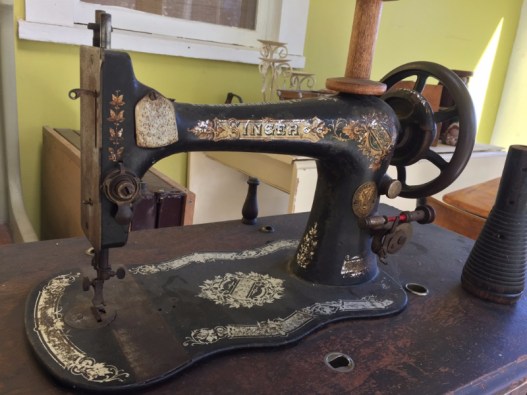
All of the photos were intriguing, but some spoke to me more than others. And although her sewing machine was much more utilitarian, this reminded me of my grandmother.

Photo by Matt Forrest Esenwine

My grandmother raised three children during the Depression, so most of her sewing was out of necessity. But she also made gorgeous quilts out of feed bag fabric for my mother and my aunt that are still treasured family possessions.

I thought this poem might be a villanelle, but oh my, what a mess that was! So I took the lines I liked the best, rearranged them a little, kept some of the rhyme, and came up with this draft.

“Quilting a Garden”

After she finishes chores and demands,
a young woman cuts precise patches,
arrays them in patterns,
harmonious and grand.

Coarse cotton brightens hard times gloom
A young woman sews with a patient hand,
quilts a garden into bloom.

Stitch after stitch, thread becomes plume,
weaving her story strand by strand,
quilting a garden into bloom.

© Catherine Flynn, 2016

Please be sure to visit Linda Baie at TeacherDance for the Poetry Friday Roundup.

Thank you to StaceyTaraDanaBetsyAnnaBeth, Kathleen, and Deb for this space for teachers and others to share their stories each Tuesday throughout the year and every day during the month of March. Be sure to visit Two Writing Teachers to read more Slice of Life posts.

Slice of Life: Comfort Food

11454297503_e27946e4ff_h

It’s been a long week. I wasn’t feeling well yesterday, so when I got home I crawled into bed and slept for over an hour. When I woke up I felt refreshed and hungry, but didn’t have any idea what to make for supper. Searching through my cabinets, I realized I had all the ingredients for corn chowder. The recipe I use was my grandmother’s and it’s always been one of my family’s favorite soups.

As I began chopping the onions, I felt some of my stress begin to fade. There’s something about the rhythmic motion of the knife that calms me. Stirring in the corn and milk, my shoulders began to drop. By the time I had the potatoes peeled and diced, the kitchen was filled with a delicious aroma, and I was much more at peace with the issues that have been on my mind.

Cooking isn’t always so soothing, but last night, creating this nourishing, homemade meal was the epitome of comfort food.

 Thank you to StaceyTaraDanaBetsyAnnaBeth, Kathleen, and Deb for this space for teachers and others to share their stories each Tuesday throughout the year and every day during the month of March. Be sure to visit Two Writing Teachers to read more Slice of Life posts.
Slice of Life: My Morning View

11454297503_e27946e4ff_h

On the way home yesterday I listened to Scott Kelly, the astronaut who just returned to Earth after a year on the ISS, being interviewed on NPR. When asked how he kept himself going day after day, Kelly replied that “focusing on the small milestones along the way…helped break up a very long duration flight.”

Artists of every type know this is just as true here on Earth. Routines can dull our senses to the beauty of the world around us. We have to be on the lookout for the extraordinary everywhere. As Mary Oliver says, “the world offers itself to your imagination.”

Here’s a snapshot of what the world offered to my imagination this morning:

This blustery winter day
an apple tree,
the lone remnant of an orchard,
it’s limbs leafless and craggy,
is adorned by birds.
Blue jays, raucous and loud,
dressed for a party with jaunty crests
and black collars,
their wings,
folded like intricately patterned fans,
create a mosaic of vibrant blues
against the morning sky.

© Catherine Flynn, 2016

 Thank you to StaceyTaraDanaBetsyAnnaBeth, Kathleen, and Deb for this space for teachers and others to share their stories each Tuesday throughout the year and every day during the month of March. Be sure to visit Two Writing Teachers to read more Slice of Life posts.
Slice of Life: Evolution of a Writer

11454297503_e27946e4ff_h

“Write. Rewrite. When not writing or rewriting, read. I know of no shortcuts.”
Larry L. King

A year and a half ago, I started writing a middle grade novel, or maybe it’s an early chapter book. It hasn’t let me know which it wants to be yet. But I really started writing it more than ten years ago, when I wrote a picture book manuscript about a girl and her grandmother. That manuscript was much too long to be a picture book, so I rewrote it. I rewrote it so many times and cut so many details that I no longer recognized my story.

Or maybe I started writing that novel ten years before that when I began teaching third grade. Working with those young writers and reading books about writing inspired me pick up my own pen after too many years of not writing.

During those years of not writing I was reading. I was reading Shakespeare and Faulkner, poets and playwrights, E.B. White and Gary Paulsen, Barbara Kingsolver and Louise Erdrich. I soaked  up their words and the rhythms of their sentences like dry earth soaks up the spring rain.

Then again, that book might have started ten years before that when, after reading stack after stack of picture books to my children, I remembered an idea I’d had in high school about writing children’s books. Toddlers are very entertaining. To a young mother every silly thing they did was the stuff of the next Caldecott winner.

Maybe that story began when I was in fifth grade and wrote a story about aliens landing in a pond near my house. I remember this story only because my father liked it and told me it was good. High praise from a man of few words.

Who knows when that story really began. One of my earliest memories is of sitting at a little formica-topped table in my bedroom scribbling across a drawing pad, pretending I was writing. I knew then that I had a story to tell. I’ve been writing it ever since.

Thank you to StaceyTaraDanaBetsyAnnaBeth, Kathleen, and Deb for this space for teachers and others to share their stories each Tuesday. Be sure to visit Two Writing Teachers to read more Slice of Life posts.
Poetry Friday: Penelope’s Ditty

poetry-friday-1-1

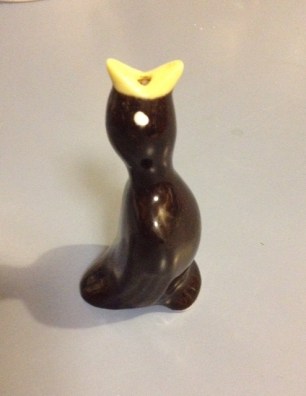
Each month, Michelle Heidenrich Barnes of Today’s Little Ditty shines the spotlight on a noted children’s poet. February’s featured poet, David L. Harrison, left readers with a challenge to compose a poem inspired by the word “ditty.” David explained that “I’m always entertained by how many poems come spinning out of the same word, and they arrive in all sorts of packaging.”

My brain started spinning and something made me remember this stuffed parrot, a baby gift from a friend for my oldest son:

618128b2-02c9-45ce-828d-4e89e44af964

I named her Penelope and hung her over Brian’s changing table. I made up stories about her and used to sing “Penelope the parrot is such a pretty girl…” to him as I dressed and changed him. He used to laugh and eventually sang along with me. After almost thirty years in the attic, she’s a little worse for the wear. She used to have black button eyes, and her colors aren’t quite as vibrant as they once were, but here she is, ready for her updated ditty.

“Penelope’s Ditty”

A parrot named Penelope
grew restless, bored, and fluttery.

She longed to soar over the ocean blue,
not sit in a cage like a stuffed statue.

Spreading her silky feathers wide,
she caught the breeze and began to glide.

Above an island, volcanic and steamy,
she met her mate, oh so dreamy!

Now nestled on her balcony
in the lush rainforest canopy,

she primps, she preens and looks so pretty,
visits with friends, is charming and witty.

Happy to be footloose and free,
Always singing her sweet little ditty!

© Catherine Flynn, 2016

Please be sure to visit Elizabeth Steinglass for the Poetry Friday Roundup.

Slice of Life: Being a Witness to the World

11454297503_e27946e4ff_h

There is a pond in the woods behind our house where we spent many hours exploring when my boys were growing up. They fished there in the summer and we skated in winter, but I hardly ever go back there anymore.

Sunday was a beautiful winter day here in Connecticut. There wasn’t any wind and the sky was a clear, brilliant blue, so I decided to walk down the hill to say hello to the pond. I quickly discovered that my plan wouldn’t be an easy one to carry out. The path was quite overgrown with pricker bushes that kept catching on my coat and hat. I forged ahead, but came around a bend and saw that a tree had fallen across the trail. Vines had grown up over it, making it look like a trellis or bower guarding a secret garden, a garden that I wasn’t going to be able to enter.

As I trudged back up the hill, I realized the overgrown path was like my writing brain. It’s been mostly ignored and untended for the past six months. Every time I sit down to write I feel like I have to fight my way through an overgrown thicket of brambles.

Over the past couple of weeks, though, I’ve been writing more and more and I’ve noticed that I can actually feel my brain become more flexible and limber when I sit down to write. I’m definitely more responsive to the world around me.

This got me thinking about our students, and what happens when they don’t have opportunities to write every day, or chances to sit and contemplate an idea or an image. In her book Writing Toward Home: Tales and Lessons to Find Your Way (Heinemann, 1995), Georgia Heard recommends writing “ten observational sketches” every day for a week, writing everything you notice and hear. “The more accurately you can observe your world and capture it in words,” Heard writes, “the more concrete your writing will become.” It might be a challenge to get kids to write ten sketches each day, but three or four seems reasonable. Think of the writing stamina they would build!

I’m looking forward to spring and getting that path cleared so I can go check on the pond. After all, as Georgia Heard also so wisely points out, “It is a writer’s job to act as witness to the world, to remind us all to stay awake.”

256839_1741317813642_3247017_o
Brian and Michael at the edge of the pond.

Thank you to StaceyTaraDanaBetsyAnnaBeth, Kathleen, and Deb for this space for teachers and others to share their stories each Tuesday. Be sure to visit Two Writing Teachers to read more Slice of Life posts.
Still Blogging After Four Years

“To pay attention, this is our endless and proper work.”
Mary Oliver

Packed away somewhere in my attic is a small green glass pitcher with “Mineloa Fair” embossed in gold letters on the front. My grandmother gave this pitcher to me years ago, telling me that on the day she got it, in 1908 when she was four years old, she saw an airplane for the first time.

More than a century later, I spent a week in Northern Virginia at my son’s house, which is directly under the flight path for planes landing at Dulles Airport. It was late April and spring was in full bloom, so I went for a walk to enjoy the weeping cherry and magnolia trees. As I headed back toward my son’s house, I realized that the number of planes flying over had increased dramatically. Curious, I started counting. Soon ten planes had passed over in a very short period of time. I started timing them. There seemed to be as little as thirty seconds in between planes. By the time I was back to the house, I’d counted at least forty planes. What miracle had occurred in just over the one hundred years between the time my grandmother was awed by a biplane on the meadows of central Long Island and that spring morning when dozens of jets flew over my head in a matter of minutes?

I haven’t flown a lot in my lifetime. But over the past year, it seems as if I’ve been on a plane at least once a month. Now that I’m more comfortable with the routine of flying, I hate to look like I don’t know what I’m doing, especially if I’m alone. So, not long ago, I settled into my seat and waited for takeoff, trying to seem blasé about the whole thing. Then I remembered my grandmother at that fair all those years ago. What wonder she must have felt! How could she even imagine flying in an airplane! I glanced around at my fellow passengers and saw people sending off last minute emails or reading intently. Some were already asleep. The miracle of flight had definitely become commonplace to them. I decided to find the extraordinary in what has become for many an ordinary experience.

I decided to be present for this marvelous feat of human ingenuity. Here I was, sitting in a metal tube that was about to hurl itself into the sky, defy gravity, and take me halfway across the country in about the same amount of time it took my grandmother and her family to travel from their home in Little Neck to Mineola and back. I watched as the labyrinth of runways and hangars whisked past. And I felt that indescribable moment when the wheels of the plane left the ground, that microsecond of disequilibrium as the earth fell away and the plane climbed into the astral blue sky.

Today is Reading to the Core’s fourth anniversary. Not a particularly noteworthy milestone, but one which I wanted to acknowledge and reflect upon. Much has changed in education and in our country over the past four years. The demands on teachers are greater than ever, and it’s often a challenge to keep the human face of our students in front of us as we try to meet those demands. But that is what we must do. And we must find ways to help our students find the extraordinary in the ordinary, to be present for the day-to-day wonders that surround us, just like my grandmother was all those years ago. This is my ongoing challenge.

I’m not sure what my expectations were that snowy Saturday four years ago when I finally gathered up the courage to hit the “publish” button. Whatever they were, I know my wildest dreams have been exceeded. I’ve met people and become friends with teachers and writers from around the world. I’ve discovered things about myself, both as a teacher and a person, and have grown in countless ways. Most importantly, I’m much better at paying attention to the world and the people around me.

Thank you for being part of this journey with me. I look forward to many more years of wonder and discovery with you.

Photo by Arnold Lee, via Unsplash

Slice of Life: Not Failing

11454297503_e27946e4ff_h

Yesterday, I summoned up all my courage and submitted a collection of poems to a writing contest. Then I came home and worked on a poem for Laura Shovan’s annual daily writing prompt project. This year’s theme is Found Objects. Here is the object for February 1st:

Photo by Robyn Hood Black

Laura posted this photo on Friday. On Sunday I’d written a draft—which is the object of this month-long writing adventure—then went about the many other tasks on my list for the day.

After a busy day at school, errands, and grocery shopping, I sat down to take a quick look at my draft before I posted it on Laura’s website. As I read, I had a sinking feeling. I convinced myself that my poem was terrible and not worth sharing.

Fast forward 24 hours. I spent the day watching my students take risks reading words they didn’t know, explaining their thinking about the theme of the book they were reading, and drafting nonfiction books. I marveled at their persistence and courage. They inspired me to come home and share this poem:

Nested within
the musty confines of
this worn pine box,
rubbed smooth
from years of use,
a cache of pencils
wait in silence.

Inside their graphite
filaments,
a cacophony of words,
some sweet, some sour,
are poised,
eager to escape.

© Catherine Flynn, 2016

After all, in the words of Ray Bradbury, “You only fail if you stop writing.”

Thank you to StaceyTaraDanaBetsyAnnaBeth, Kathleen, and Deb for this space for teachers and others to share their stories each Tuesday. Be sure to visit Two Writing Teachers to read more Slice of Life posts.
Poetry Friday: A Poem Full of Nothing

poetry-friday-1-1

Each month, Michelle Heidenrich Barnes interviews a children’s poet and asks them to leave readers a poetry challenge. This month, Douglas Florian challenged readers “to write a poem about nothing.” 

When Michelle posted this challenge, I was just finishing physicist Lisa Randall‘s new book, Dark Matter and the Dinosaurs (Ecco/HarperCollins, 2015). Some of the science was over my head, but Randall’s theory, that the demise of dinosaurs was caused by “a comet that was dislodged from its orbit as the Solar System passed through a disk of dark matter,” is fascinating. To set the stage for the big event, Randall gives a brief history of the universe and the truly cosmic question of how, or if, our universe arose from nothing. Her statement that “A cause implies there must be something” was swirling in my head as I thought about and drafted this poem.

“Full of Nothing”

An empty pot is full of nothing
but space for chicken soup,
bubbling and warm.

An empty box is full of nothing
but the opportunity for a gift,
adored and cherished.

An empty page is full of nothing
but possibilities for your poem,
honest and true.

An empty hand is full of nothing
but room to hold yours,
calm and reassuring.

An empty heart is full of nothing
but potential for love,
a treasure beyond measure.

© Catherine Flynn, 2016

Please be sure to visit Tara Smith at A Teaching Life for the Poetry Friday Round Up.


Slice of Life: On My Desk

11454297503_e27946e4ff_h

Despite having the past three days off, and despite the fact that I actually spent a fair amount of time reading and writing, I am at a loss for a slice. Wait. That’s not entirely true. I have at least three slice ideas. But each requires more time and energy than I have at the moment.

So I’m stealing an idea from Grace Lin, author of The Year of the Dog, the Newbery Honor book Where the Mountain Meets the Moon, and many other wonderful books for kids. On her blog, Grace occasionally posts about what’s on her desk. Since I spent a good part of the morning sorting through the piles that had accumulated on my desk over the holidays, this seemed like a good idea.

FullSizeRender-1

At the top of the pile is my notebook. After I got my desk into shape, I worked on a poem inspired by a trip to watch bald eagles at a local hydroelectric dam. I was hoping this would be my slice for today, but it’s just not ready.

Like many of you, I’ve been thinking about Matt de la Peña’s picture book, Last Stop on Market Street since it won the Newbery Medal last week. I have drafted the beginnings of a post about this lovely book.

Finally, Irene Latham’s new poetry picture book, When the Sun Shines on Antarctica, is coming out on February 2nd. Check back here next Friday for more information about that!

What’s on your desk?

Thank you to StaceyTaraDanaBetsyAnnaBeth, Kathleen, and Deb for this space for teachers and others to share their stories each Tuesday. Be sure to visit Two Writing Teachers to read more Slice of Life posts.