Kate DiCamillo, the National Ambassador for Young People’s Literature, claims
“When we read together…we are taken out of our aloneness. Together, we see the world. Together, we see one another. We connect.”
We typically think of stories being in the pages of a book. But they also come in the form of letters. One of my aunts was a great letter writer. This, of course, was pre-email and texting, even before free long distance was ubiquitous. My grandmother always looked forward to her sister’s letters, and she loved sharing them with my mother as soon as they arrived. Thinking of her now, sitting at her kitchen table, reading and commenting on my aunt’s news, has suddenly overwhelmed me with longing.
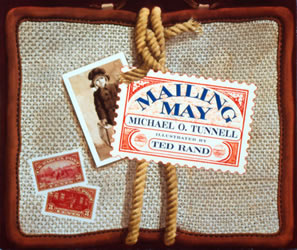
Charlotte May Pierstorff also longed for her grandmother, who lived “a million miles away through the rough old Idaho mountains.” Her parents had promised her a visit, but when the time came, there was no money for a train ticket.
The solution to May’s problem is told in the 1997 book, Mailing May (Greenwillow), by Michael O. Tunnell and illustrated by Ted Rand. With the help of a cousin who works for the railroad, May’s parents decide to mail her to her grandmother via parcel post. After having fifty-three cents worth of stamps and a mailing label attached to the back of her coat, May boards the train for Lewiston and is off on her adventure.
Tunnell lets May tell her own story, which really conveys May’s excitement about her trip. She describes hanging “on the edge of mountainsides” and crawling “through tunnels.” The story ends with May’s joyous reunion with her grandmother, “with a little help from the U.S. Post Office!”
I knew the minute I read Mailing May that it was perfect for my third grade students. May’s experience was so far removed from anything they could imagine, I wanted to immerse them in this book. We turned it into a springboard for a day’s worth of learning. We discussed the theme of the book, and made personal connections about visiting grandparents far away.
But we also wrote letters to grandparents, even if they lived down the street. We studied a map of Idaho and learned about its geography. In the book, Tunnell describes how the postmaster weighs May, then calculates the cost of mailing her. We were piloting a new math program at the time, and there was a lesson about calculating shipping costs for packages. So I brought in my bathroom scale and weighed each child so they could calculate how much it would cost to ship themselves to Florida (where many grandparents did indeed live).
Each year I looked forward to our Mailing May day. The kids were amazed by May’s story and loved her sense of adventure. And while I can’t say they all loved writing the letters, they all had a new appreciation for our quick and easy communication abilities. More importantly, they also gained an understanding and appreciation of how stories, whether in books or letters, connect us all across distances of space and time.
Thank you, as always, to Stacey, Tara, Dana, Betsy, Anna, and Beth for hosting the Slice of Life Challenge and creating this space for us to share our stories. Be sure to visit Two Writing Teachers to read more Slice of Life posts.
Yesterday, Margaret Simon, at Reflections on the Teche wrote about “Ten Things Right Now,” an idea from Mandy Robeck that Stacey shared last week. Thanks, everyone, for sharing this inspiring idea! I have adapted it slightly because it’s getting late and I still have a couple of projects to work on this evening.
Last night, I stayed up way past my bedtime, yet I couldn’t stop reading all the fabulous slices people shared yesterday. I actually feel a little intimidated now about sharing my writing in the same space, but I’m also energized by everyone’s writing.
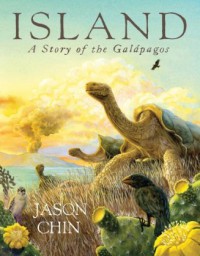
Spending time with thoughtful third graders. I love sharing books with kids and watching them as they react to and have ideas about the text. Yesterday, I read Island: A Story of the Galapagos by Jason Chin as an example of a nonfiction text organized in a sequence. Chin’s writing is rich and descriptive, and his illustrations bring these mysterious islands to life. The kids were fascinated by the story of these islands. Today, they began planning a how-to book using a sequence structure.
Collaborating with Kindergarten teachers to refine our informational writing rubric. We had a very productive discussion about whether or not our wording is clear and helps the teachers make instructional decisions.
Taking the time this afternoon to go to yoga class. This class is offered at school for teachers at the end of the day. It makes for a late day, but it’s absolutely worth it. I love how I feel after class.
Pancakes and bacon for dinner. Delicious, and the perfect choice for this cold, rainy day.
It’s Monday, and this slice is once again doing double-duty for It’s Monday! What Are You Reading? Be sure to visit Jen at Teach Mentor Texts and Kellee at Unleashing Readers to find out what other people have been reading lately. Thanks, Jen and Kellee, for hosting!
Reading Anchor Standard nine of the CCSS states that students will “analyze how two or more texts address similar themes or topics in order to build knowledge or to compare the approaches the authors take.” At each grade level, this standard has a different specificity. In fourth grade, students are expected to “compare and contrast the treatment of similar themes and topics (e.g., opposition of good and evil) and patterns of events (e.g. the quest) in stories, myths, and traditional literature from different cultures.”
By the time they reach eighth grade, this expectation has become more complex. Now students must “analyze how a modern work of fiction draws on themes, patterns of events, or character types from myths, traditional stories, or religious works such as the Bible, including describing how the material is rendered new.”
I’m focusing on this standard in particular because it is such a shift from the previous expectation in the Connecticut ELA standards. They emphasized text-to-self connections, and there was no particular emphasis on folk tales, fairy talks, or myths. I’m glad these stories have been given more attention in the standards. Many of them are so ubiquitous in our culture we don’t even recognize them as myths. Worse, they aren’t recognized because readers lack the knowledge of the original story.
So, one of my goals this year has been to find materials that help us meet these expectations. I’ve always had a copy of the classic D’Aulaires’ Book of Greek Myths in my classroom, but there are many other excellent resources available. Here are two of the many books I’ve found.
Charlotte Craft’s retelling of King Midas and the Golden Touch (HarperCollins, 1999) is based on a version of the story told by Nathaniel Hawthorne in A Wonder-Book for Girls and Boys. The original story is thought to be based on an 8th-century BC king of Phrygia, in what is now central Turkey.In a note, illustrator K.Y Craft explains that she chose to set the tale in the more-recent Middle Ages of Europe to convey the truly timeless nature of this story. In Craft’s version, Midas receives the golden touch as a reward for entertaining a stranger, for he believes that “the golden touch will bring me all the happiness I need.” Craft’s retelling is rich in imagery, characterization, and language. Last week, I shared the story with two fourth grade classes. Both groups had rich discussions about the decisions Midas made, key turning points in the story, and the theme. Some students had recently finished reading The Chocolate Touch, by Patrick Skene Catling. It was so much fun to see the lightbulbs going off as they made connections between the two books.
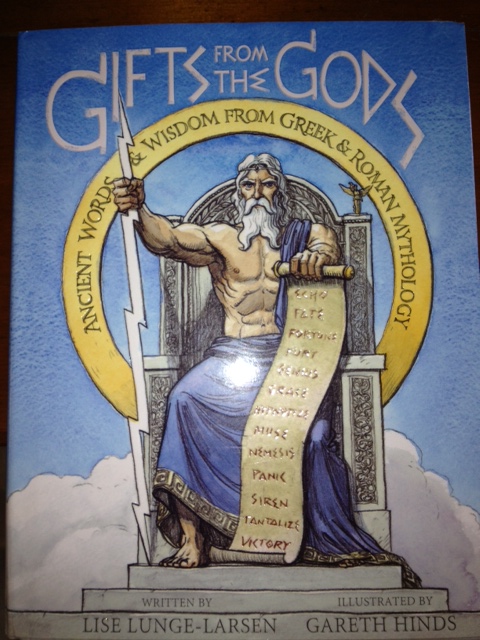
Gifts from the Gods: Ancient Words of Wisdom from Greek & Roman Mythology, (Houghton Mifflin Harcourt, 2011) by Lise Lunge-Larsen and illustrated by Gareth Hinds. Lunge-Larsen has chosen seventeen myths that “illuminate and explain words” that English speakers use all the time. (RL.4.4: Determine the meaning of words and phrases as they are used in a text, including those that allude to significant characters found in mythology (e.g., Huerculean).) She has also included an excerpt from a modern story as an example. This is from Norma Howe’s Blue Avenger Cracks the Code:
Like all those classical heroes down through the ages, Blue Avenger is not invulnerable; like them, he has a weakness. Superman feared kryptonite, Achilles had his heel. For Blue Avenger, it’s lemon meringue pie. (p. 1)
At the end of each myth, Lunge-Larsen also includes the meaning of other words related to the story. After reading the story of the Three Fates, we learn that the goddess who cut the thread was named Morta by the Romans. “Her name means ‘death’ and lives on in mortal and mortality, words we use about things that one day will die. The gods, who will never die are immortal.” (p. 22) Hinds, who is best known for his graphic novel versions of Beowulf and The Odyssey uses a similar style in this richly illustrated volume.
There are countless retellings of Greek and Roman myths, plus many from other cultures around the world. More about those another day.
When Ruth Ayers began her Celebrations link up on her blog Ruth Ayers Writes last fall, I thought it was a terrific idea. After all, it’s very easy to get bogged down in our exhaustion at the end of the week. Why not look for joy in ordinary moments and celebrate them? As Ruth put it, “We can wallow or we can celebrate.”
I liked the idea, but was still so caught up in the swirl of CCSS, SBAC, SEED, and more that I didn’t participate. I enjoyed reading about what other people were celebrating, but that was it.
Fast forward to March. Slice of Life Challenge month. A post everyday. Although I had made a plan, none of those ideas resonated with me this morning. As I thought back over the week, my mind automatically went to unfinished projects. But then I started thinking about moments during the week when I had laughed or smiled. There were many. So instead of wallowing in the stacks of paperwork surrounding me, this morning I’m celebrating the growth of one of my students.
I’ve been working with this first-grade girl for the past three months or so. She is very sweet, but reading has been a real challenge for her. When we began working together, she didn’t know short vowel sounds and even some consonants were still tricky for her. Her progress has been of the one step forward, two steps back variety. She likes to guess based on the illustration in a book and doesn’t like to reread if a sentence doesn’t make sense.
This week, though, she had a bit of a breakthrough. Suddenly, she was able to blend and segment words quickly and, for the most part, accurately. Best of all, she is beginning to transfer this skill to her reading. She’s becoming more fluent and more confident. You should have seen her beaming smile after she finished reading a challenging book on Thursday.
We still have a long way to go, but, for the first time, I sense a shift in this girl and her skills. Things are starting to click for her. She is becoming a reader.
Over the weekend, I was listening to a Radio Lab podcast as I was cleaning up the kitchen. The show, “The Times They Are a-Changin’” was about the recent discovery that a year might have been longer than 365 days in the very distant past. (You’ll have to listen to the show to find out more.) While this was all fascinating, what really caught my attention was the mention of Emily Graslie, Chief Curiosity Officer at the Field Museum of Natural History in Chicago. Now that’s a job I would love!
It turns out Emily also has her own YouTube channel, “The Brain Scoop.” Recent episodes include an explanation of meteorites, ant romance, and answers to viewers questions. One person wanted to know “What is the most important thing museums and their collections have to offer people in education and in their lives?” Emily’s response, that “museums offer a better understanding of our world and hopefully inspire a deeper appreciation for all the rocks and plant and animals and people within it,” made me realize that, in many ways, I’m already a Chief Curiosity Officer.
Over the entire course of my teaching career, my goal has been to help students gain the skills they need to develop “a better understanding of our world.” From teaching short vowel sounds, long vowel sounds and every sound in between, to making musical instruments to investigate sound, I’ve helped my students expand their knowledge of and curiosity about their world.
At school tomorrow, I’ll work hard to “inspire a deeper appreciation” in my students for all the wonders of the world, just as I always have. But from now on, I’m the Chief Curiosity Office of Room 222.
Like many of you, I feel overwhelmed at the prospect of writing a blog post every day for the entire month of March. Last year, I began the Slice of Life Challenge more or less on a whim. I really didn’t think I’d ever be able to post every day. About half way into the Challenge, I decided I couldn’t stop. This year, I’m totally committed to completing the Challenge, but I need a plan. We encourage our students to make writing plans, to have a notebook where they collect ideas. When he spoke at the Connecticut Reading Conference last year, Lester Laminack referred to a writer’s notebook as “the junk drawer for your ideas,” full of all sorts of odds and ends. Some of these snippets become longer pieces of writing; others stay in the drawer just in case they’re needed some day.
My junk drawer is full today, but my brain doesn’t feel up to the task of sorting through the ideas I’ve accumulated over the past day 24 hours from reading blog posts, books and articles, so I’m going to write them here so they won’t be forgotten.
Yesterday, Fran wrote about memories of home and her grandmother. This got me thinking of some pieces I’ve written about my own grandmother. Maybe I’ll reread them and polish one so it’s ready to share.
A colleague had a baby girl yesterday, and I’m thinking about what to knit for her. I don’t have the yarn I need, and this makes me think that choosing the right yarn for a knitting project is like choosing the right words for our writing. I once taught a lesson on word choice exactly this way. I even brought in different types of yarn to help the kids visualize the analogy!
Finally, I read Tricia’s post on her lovely blog, The Miss Rumphius Effect, about her new dog. She shared “Dog in Bed”, by Joyce Sidman, and that got me thinking about my own dog (and cat) and what I could write about them.
So, I have much to think about, but also many other obligations to take care of this evening. The good news is that I have a plan, and these thoughts will be waiting here for me when I’m ready to write more.
Today’s post is doing double duty as my contribution to the Slice of Life Challenge at Two Writing Teachers.
We’ve all heard of a school of fish and a flock of birds. But what about an ostentation of peacocks?
Collective nouns, those words that turn a group of people, animals, or things into a singular noun, are words that children often learn intuitively as they acquire language as toddlers and preschoolers. The CCSS calls for collective nouns to be formally introduced to students in second grade.
If the goal of teaching these words to young writers is to have them use them in their writing, they need to have “read that language, to have heard it in [their] mind, so that [they] can hear it again in order to compose it.” (NCTE Beliefs About the Teaching of Writing) Although the styles of these books are very different, each one would be a good choice for introducing the concept of collective nouns.
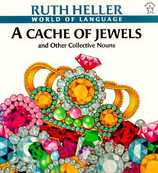
Ruth Heller’s A Cache of Jewels (Grosset & Dunlap, 1987) is an old favorite, one I read to my third graders when I began teaching almost twenty years ago. This brightly illustrated book is still a good model for using collective nouns. Heller includes collective nouns of all kinds, not just those that describe groups of animals.
I’ve found some new books students will enjoy as they learn more of these words. My favorite is A Zeal of Zebras: An Alphabet of Collective Nouns (Chronicle Books, 2011). Woop Studios, a London-based collective (honestly, that’s what the book says!) of four artists, have created “a visual safari through the animal kingdom” (back cover). This oversized picture book is filled with stunning illustrations, unique collective nouns and facts about each group of animals. Some, “an implausibility of gnus,” for example, seemed so improbable that I looked it up. (It’s true, and you can find an extensive list of collective nouns for groups of animals here.) Others are so appropriate: of course it’s “a galaxy of starfish.” Some of the longer words will be a challenge for second graders, but these are the kinds of words kids love learning and trying to use.
One Sheep, Two Sheep: A Book of Collective Nouns, (Little Hare Books, 2010), by Patricia Byers and illustrated by Tamsin Ainslie develops the concept of collective nouns being a group of three or more. Each two-page spread follows the same pattern: “One sheep, two sheep, a flock of sheep.” Charming illustrations provide visual support for the growing numbers in the group described by each collective noun.
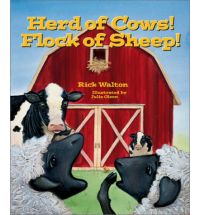
Finally, silliness ensues in Rick Walton’s Herd of Cows! Flock of Sheep! (Gibbs Smith, 2002, 2011; illustrated by Julie Olson). This book incorporates the collective nouns into the story of how Farmer Bob’s animals jump into action to save him after his bed is swept away in a flood.
I don’t know if there’s a collective noun for a group of bloggers, but Stacey, Tara, Dana, Betsy, Anna, and Beth are the best around! Thank you for hosting the Slice of Life Challenge. Be sure to visit Two Writing Teachers to read more Slice of Life posts.
I’ve been thinking a lot about writing rubrics lately. All year, we’ve been continuing to incorporate the CCSS into our writing instruction and part of this work has been creating new rubrics. My school purchased the Units of Study by Lucy Calkins and her colleagues at the Teachers College Reading and Writing Project last spring, and we’ve made some minor changes to the rubrics in those units for grades K-5. However, the middle school rubrics have been a bit more of a challenge. Connecticut is part of the Smarter Balanced Assessment Consortium, and they have published rubrics that we’ve used as a guide to create documents that work for us. We found the Smarter Balanced documents cumbersome, so we’ve used the language from Smarter Balanced with the Units of Study format to draft rubrics for grades 6-8.
There has been some disagreement among the teachers, however, about how many categories were needed on the rubric. Ultimately, we felt that everything on the SBAC rubric should be included on ours, but there is concern that the document has become unwieldy.
The challenge is to create a document that includes the standards being taught and assessed, but isn’t so lengthy that teachers don’t use it as a formative assessment tool to determine what our students are learning. As Clare Landrigan and Tammy Mulligan, authors of Assessment in Perspective, have pointed out on their blog, “Assessment, formal and informal, is the window into knowing our students.” Using the information gathered through these assessments to guide instruction is essential if our students are going to grow as writers.
One option is to use the whole rubric for pre- and post-assessments. Then, once learning needs are identified, relevant sections of the rubric can be used as an interim assessment tool to monitor the students’ progress toward their learning goals. Some teachers have found that this works for them; others are not yet convinced.
I know many of you have grappled with this same issue. I’d love to hear if anyone has any other solutions.
Last Sunday, the New York Times Book Review featured Al Gore’s review of Elizabeth Kolbert’s new book, The Sixth Extinction: An Unnatural History (Henry Holt, 2014), an examination of “what biologists call the sixth mass extinction.” Gore states that Kolbert “makes it clear that doing what is right means accelerating our transition to a more sustainable world.”
It seems to me that educating our kids about the wonders of the natural world is one way to accomplish this transition. Children are naturally curious and amazed, and we should do everything we can to build on this sense of wonder. One natural way to do that by sharing books, beautiful nonfiction picture books that celebrate “The World Around Us.”
Sing of the Earth and Sky,
sing of our lovely planet,
sing of the low and high,
of fossils locked in granite.
Sing of the strange, the known,
the secrets that surround us,
sing of the wonders shown,
and wonders still around us.
Aileen Fisher
Each one of the books shared below open a window onto nature, and will help inspire awe and wonder about our world in children of all ages.
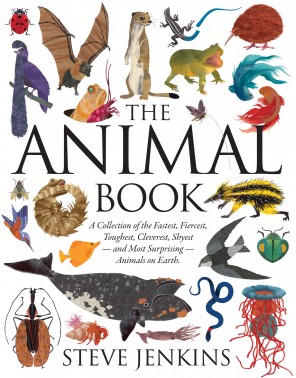
The Animal Book: A Collection of the Fastest, Fiercest, Toughest, Cleverest, Shyest–and Most Surprising–Animals on Earth, by Steve Jenkins(Houghton Mifflin, 2013)
This book is chock full of fascinating facts about animals of every kind, a book to savor and pore over. The stunning illustrations of each animal are carefully crafted in Jenkins’ signature collage technique. Jenkins provides a thorough explanation of his process in the book and in this video:
Island: A Story of the Galápagos, by Jason Chin (grades 2-4, Roaring Brook Press, 2012)
Jason Chin has created a richly detailed account of the creation of the Galápagos and how they came to be populated by so many species found only on these volcanic islands. The book ends with the arrival of Charles Darwin on the HMS Beagle and provides a brief explanation of how Darwin developed his theory of evolution based on his observations of animals during his visit to the islands.
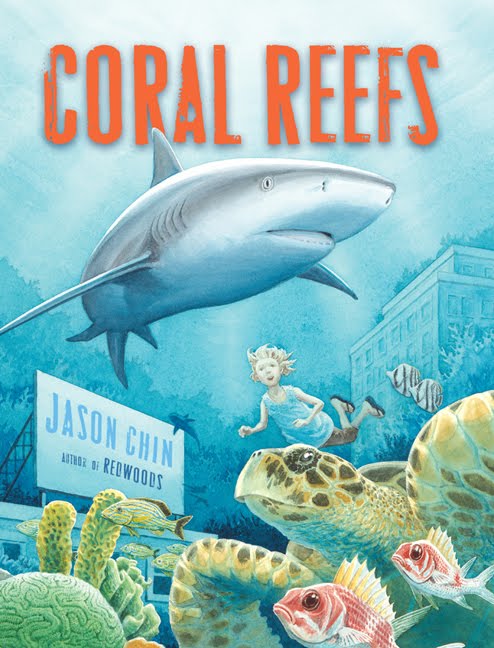
Coral Reefs, by Jason Chin (grades K-4, Roaring Brook Press, 2011)
Coral Reef begins with a girl taking Coral Reef down from a shelf in the Rose Main Reading Room of the New York Public Library. As the main character becomes immersed in her book, coral begins to appear, and soon the library is transformed into a magnificent coral reef. Chin’s text and illustrations are perfectly matched as the structure of the reef and the relationships of the animals who live in and around it are explained. An Author’s Note briefly explains the threat to coral reefs from global warming and offers suggestions for how readers can help slow this process. Chin also explains how he researched coral reefs and offers some additional resources.
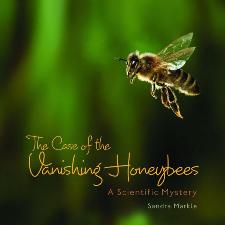
The Case of the Vanishing Honeybees: A Scientific Mystery, by Sandra Markle (grades 4-8, Millbrook Press, 2013)
Recommended by the National Science Teachers Association, Sandra Markle’s meticulously researched book explains in detail the essential role honeybees play in nature. Gorgeous photographs are clearly labeled and include explanatory captions. Markle raises the many questions scientists have about the cause of Colony Collapse Disorder and is realistic in her conclusion that honeybees are not out of danger. Suggestions for how to help honeybees are included, as well as a list of additional resources, a glossary, and index.
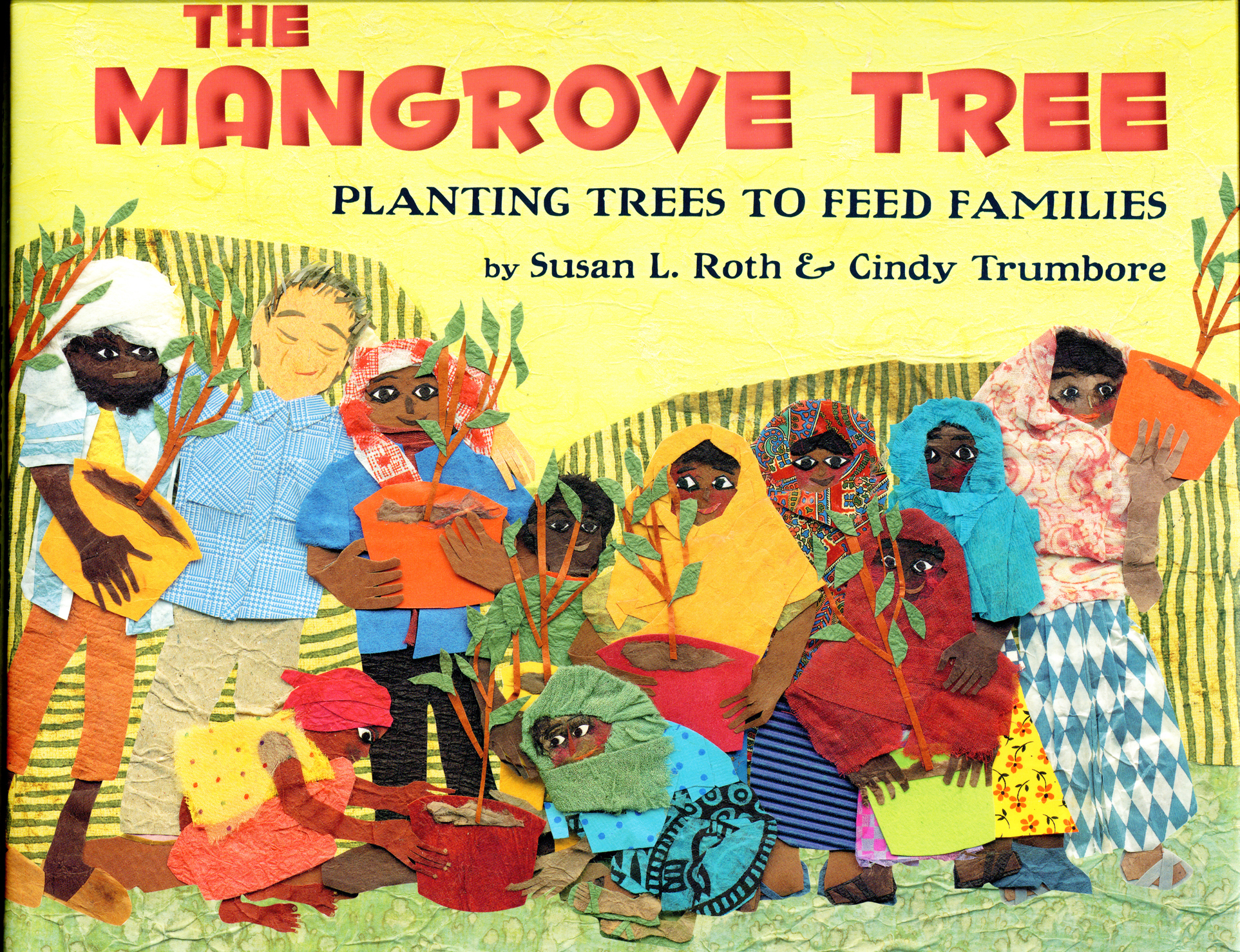
The Mangrove Tree: Planting Trees to Feed Families, by Susan L. Roth & Cindy Trumbore; collages by Susan L. Roth (grades 1 and up, Lee & Low Books, Inc., 2011)
Created by the same team behind Parrots Over Puerto Rico, winner of the 2014 Sibert Medal for the most distinguished information book published in the United States, The Mangrove Tree: Planting Trees to Feed Families describes the effort of Dr. Gordon Sato to ease the poverty and lack of food in the African country of Eritrea. The story is told in layers, the simplest of which is a cumulative rhyme a la “The Hose that Jack Built.” Sidebars explain Dr. Sato’s project in more detail, and an Afterword provides even more details as well as photographs of Dr. Sato, the mangrove trees, and the Eritreans who worked to make the project a success. A glossary, websites, and sources are also included.
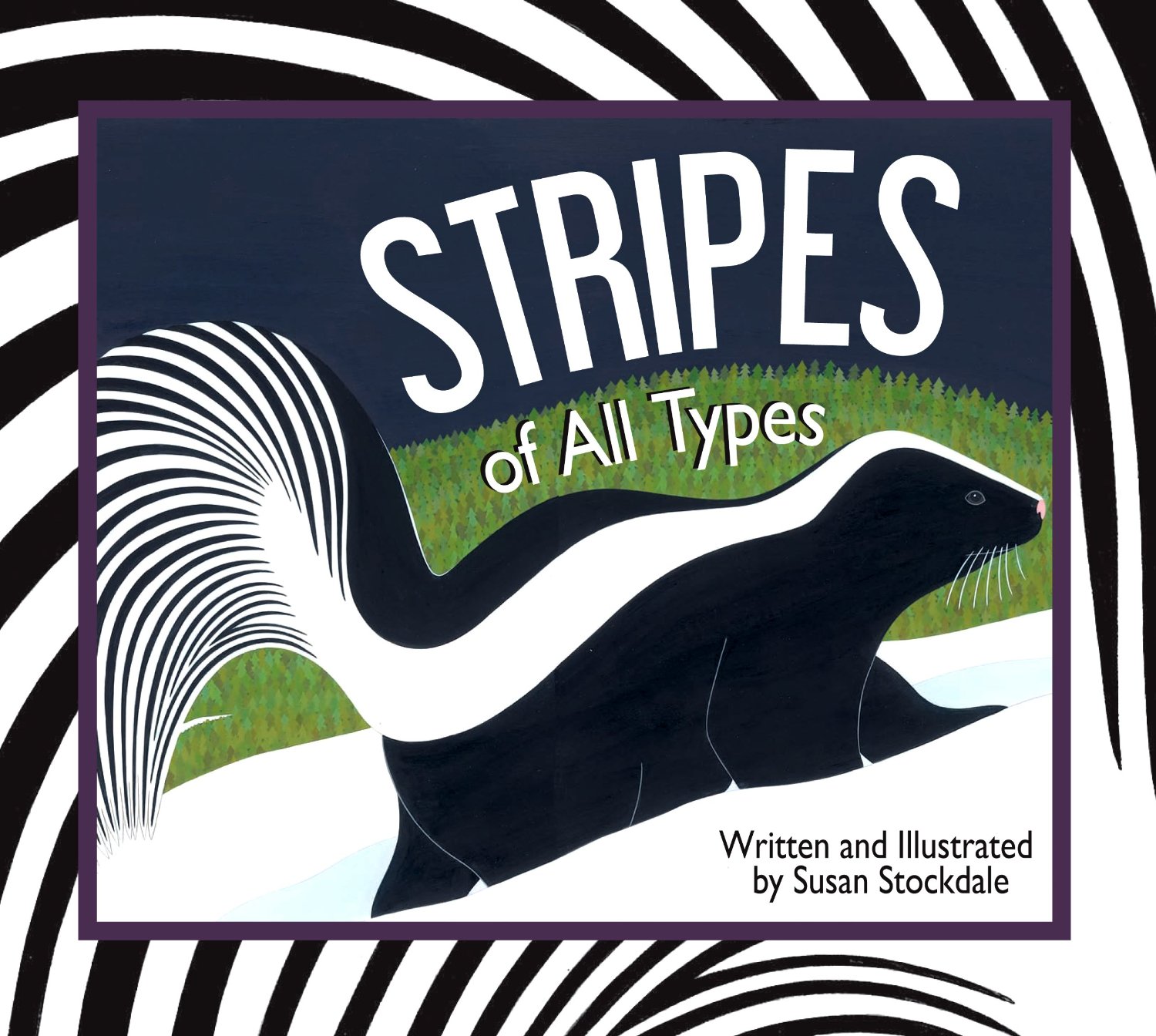
Stripes of All Types, by Susan Stockdale (Preschool-grade 1, Peachtree, 2013)
This simple rhyming text introduces young readers to a wide variety of animals whose stripes help them survive in different habitats. Stockdale’s writing is full of vivid language, and is perfect for building vocabulary. Additional information about each animal is provided at the end of the book.
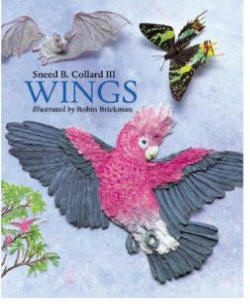
Wings, by Sneed B. Collard III; illustrated by Robin Brickman (grades 2-3, Charlesbridge, 2008)
Collard’s rich, descriptive language and Brickman’s stunning collages present readers with a surprising range of information about wings found all over the world, from “steamy rain forests to the frigid North Pole.” Details illuminate the wide variety of styles of wings, how many wings particular animals have, even the various purposes for wings. A list of both print and digital resources is included, as is a glossary and a brief description of Brickman’s paper collages.
Pointy, Long, or Round: A Book About Animal Shapes, by Patricia M. Stockland; illustrated by Todd Ouren (Kindergarten-grade 3, Picture Window Books, 2005)
Here’s another book organized around a trait many different animals have in common. Stockland’s text is simple yet descriptive, and provides details about how these animals use their shape for protection or survival. Additional details related to each animal’s shape can be found in side bars, which are cleverly incorporated into the illustrations.
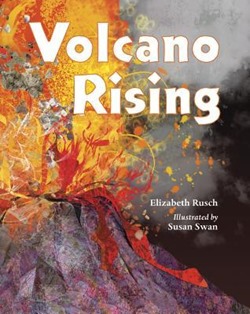
Volcano Rising, by Elizabeth Rusch; illustrated by Susan Swan (grades 1-4) Charlesbridge, 2013)
Volcano Rising explains what volcanoes are, how they work, and that “volcanoes are not just destructive. Much more often, volcanoes are creative.” This overview is told using one font style. Specific examples of each type of volcano, such as the creation of Paricutín, a volcano in Mexico that grew to a height of 1,300 feet in just nine years, are provided in a different font. Back matter includes a glossary, resources the author used, and books for further reading.
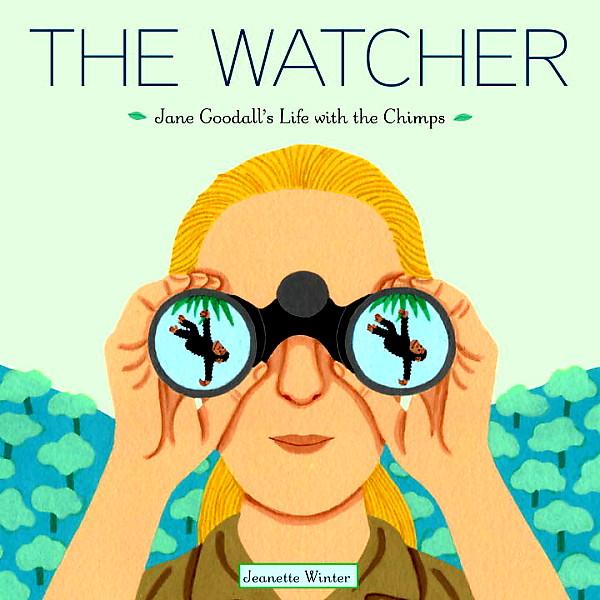
The Watcher: Jane Goodall’s Life with the Chimps, by Jeanette Winter (Preschool-grade 3, Schwartz + Wade Books, 2011)
When Jane Goodall first went to Africa, she “wanted to learn things that no one else knew, uncover secrets…” She did just that during her years studying the chimps of Gombe. Winter writes in language that is both simple and accessible, yet evokes Jane’s sense of wonder in all that she sees. She ends her account of Goodall’s inspiring life story with these words: “Jane carried with her the peace of the forest…and opened a window for us to the world of chimpanzees.”
Nonfiction Picture Book 10 for 10 is a “celebration of nonfiction picture books” organized by Julie Balen, Cathy Mere, and Mandy Robek. Many bloggers shared lists of their favorite nonfiction picture books on Wednesday, and a list of their posts can be found on Julie’s blog. My post is a little late because of internet issues, so I decided to combine it with Poetry Friday. Be sure to visit Karen Edmisten for the Poetry Friday Round Up. Thank you to all these ladies for devoting their time to make cyberspace a rich and inspiring place to visit.
Intrepid isn’t a word I would use to describe myself. And yet, I feel intrepid this week. As I write this, I’m sitting in a hotel room in New York City watching the snow. From this height, I can’t see the street, but I can hear the traffic rushing by on Broadway. I still can’t quite believe I’m here.
I feel incredibly lucky because this week I’m attending the Teachers College Reading and Writing Project Mini Institute on Content Area Literacy. After just one day, everything I learned yesterday is swirling around in my brain like the snow outside my window.
Harvey “Smokey” Daniels opened the Institute yesterday morning with an inspiring keynote on what’s missing from the CCSS. “Where’s engagement? Where’s curiosity and creativity? Choice and responsibility? Social justice? Where’s the fun?” he wanted to know.
I’ve often wondered that myself. Daniels suggested that our curriculum should be inquiry based. Turning the curriculum into questions the kids “can’t resist answering,” and creating opportunities for them to do authentic, purposeful work would go a long way toward ramping up the level of engagement AND achievement.
Daniels also questioned the omission of writing as a thinking tool, or “writing to learn.” He stressed the importance of giving our students opportunities to put their thoughts and ideas into words every single day. Teachers can engage students with this work by having “written conversations.” These can be between students or between the students and teacher or other adults. Writing letters is one way to give students an opportunity to express their feelings and develop their voice.
After Harvey’s session, the day was filled with more learning from the incredible staff developers at TCRWP. Amanda Hartman shared strategies for combining reading and writing units with content area teaching. From Lauren Kolbeck I learned more strategies that use literacy skills to support the work of young scientists. And finally, Alexis Czerterko shared ways to incorporating literacy in a unit of study on the American Revolution.
At the end of the day, I felt empowered by everything I had learned. I was energized to begin applying the strategies shared throughout the day to my own teaching. But I’m also excited to learn more. I’m excited about stretching myself as an educator so I can help my students be curious and passionate about their learning. I want to support them as they take risks and follow their dreams. I want them to be intrepid.
Don’t forget to head over to Two Writing Teachers today for more Slice of Life stories.











 Reading to the Core