Poetry Friday: NCTE Poetry Rock Stars

poetry-friday-1-1

“Poetry is about loving the world and showing that love through words.”

Irene Latham

I’m still basking in the glow of NCTE. Many of the sessions I attended were about integrating poetry into the curriculum. I feel fortunate that I’ve gotten to know many of the poets and teachers who presented during these sessions through blogging on Poetry Friday. Meeting them face-to-face was a highlight of my weekend at the Gaylord. Their wisdom, humor and generosity have made me a better writer and a better teacher. I use their books with students every day.

During her portion of the CLA Master Class, Poetry Across the Curriculum, Heidi Mordhorst described her vision of integrating the curriculum as synergy. The definition she provided, “the interaction or cooperation of two or more organizations, substances, or other agents to produce a combined effect greater than the sum of their separate effects” not only characterizes what happens when we share poetry with our students. It embodies the spirit of the Poetry Friday community, a community I am so thankful for.

So many wonderful poems were shared during these sessions (thank you, Janet & Sylvia, for all the postcards!), I couldn’t choose just one to share today. I also wanted to express how grateful I am to these women. So I’ve stitched together a thank you of sorts using their own words.

What is beauty?

Whatever you believe it to be. (1)

To listen, to look,

to think, and to learn. (2)

Opening your heart and sharing your feelings, (3)

with plenty of space to dream. (4)

I’m glad you are my secret friend. (5)

We’re just a link away. (6)

You fold the memory

into your hearts, (7)

turn outside to inside

stranger to friend, (8)

and look inside yourself to find

the good I see in you. (9)

I’m a piece of the sky

in a circle of sun, (10)

But none of it would matter much

without the likes of you. (11)

Thank you to all the poets whose work inspired this poem!

1: Tricia Stohr-Hunt, whose blog, The Miss Rumphius Effect, was one of the first I ever read, continues to be an incredible resource for poetry. These lines are from Tricia’s poem, “Beauty”.

2: Janet Wong, co-creator with Sylvia Vardell, of The Poetry Friday Anthologies. These books are amazing resources. Janet’s poem, “Liberty” provided these lines.

3: Irene Latham‘s newest book, Dear Wandering Wildebeest and Other Poems from the Watering Hole (Millbrook Press, 2014) has quickly become a favorite with my students. These lines are from an acrostic Irene shared during the session “Poem As Storyteller: Collaborating With Authors to Write Narrative Poetry.”

4. Sara Holbrook and Michael Salinger‘s session, “Writing to Increase Literacy and Learning Across the Curriculum” was full of practical suggestions for incorporating poetry into the school day. This line is from her poem, “On Becoming Proficient,” which can be found in Zombies Evacuate the School (WordSong, 2010).

5. Heidi Mordhorst is a teacher, poet, and blogger whose work I have only recently become familiar with, but I’m looking forward to reading and sharing more of Heidi’s poetry. This line can be found in Heidi’s poem, “Funday, Imaginary 1st”.

6. The poetry of Laura Purdie Salas is a staple of my classroom. I’ve been sharing her poetry with students for years and was thrilled to meet her at NCTE! This line is from Laura’s poem, “Just Like That”.

7. Georgia Heard is another rock star of poetry I was excited to meet. Georgia’s books about Awakening the Heart and For the Good of the Sun and the Earth have had a profound influence on my teaching. This line is from her poem “Ars Poetica”, which can be found in The Poetry Friday Anthology for Middle School.

8. Amy Ludwig VanDerwater’s blog, The Poem Farm, is a treasure-trove of resources for teachers and poets. This line is from “First Practice”, one of Amy’s contributions to the The Poetry Friday Anthology for Middle School.

9. I have long been a fan of Eileen Spinelli‘s picture book, Sophie’s MasterpieceBut I was less familiar with her poetry. These lines are from Eileen’s powerful “Poem for a Bully” which can be found in The Poetry Friday AnthologyK-5 edition.

10. I met Rebecca Kai Dotlich at NCTE almost by accident. We were each waiting for a friend, and, without having any idea who she was, I introduced myself. She was very friendly and introduced herself as Rebecca. We chatted, and through the course of the conversation I realized that I was casually talking with the author of some of my favorite poems for children. These lines are from an all-time favorite, “A Circle of Sun”.

11. Mary Lee Hahn‘s blog, A Year of Reading, is another inspirational resource. She and Franki Sibberson have set the standard for excellence in blogs by teachers. Mary Lee’s passion for teaching and poetic skills continue to amaze me. Mary Lee’s poem “Our Wonderful World” is the source of these lines.

Thank you again to every one of you! Thank you also to Anastasia Suen for hosting the Poetry Friday Round Up!

Poetry Friday: A Writing Kind of Day

poetry-friday-1-1

It was raining yesterday morning when I arrived at the the Connecticut Reading Conference. But Ralph Fletcher’s inspiring keynote address and break-out session about the importance of narratives and mentor texts quickly drove away the day’s dreariness.

Fletcher told the ballroom full of teachers that “mentor texts breathe new life into the classroom; they expand kids’ vision of what’s possible.” He demonstrated this by asking us to use his poem, “The Good Old Days,” as a model for our own writing. A hush came over the room as everyone wrote feverishly about childhood memories. If anyone in the room doubted the importance of giving writers choices about their writing, this activity dispelled that notion.

He encouraged us to share powerful mentor texts with students so they can be “showered by the pixie dust” that comes off these books and poems and write their own powerful texts. He urged us to leave room in our curriculum for personal narratives so our students can learn to write with voice. “Kids find their stride as writers by writing about themselves,” he said.

After his session, Ralph graciously stayed to sign books and answer questions. When he signed my copy of his poetry collection, A Writing Kind of Day: Poems for Young Poets (WordSong, 2005) he told me his favorite poem in this book is “Squished Squirrel Poem.” I love it, too. I can picture a student (or two) of mine who would be inspired by this poem. This is a poem they could go into and find exactly “what they need” to create a poem of their own.

He also gave me permission to share this poem from the collection, the perfect poem for a rainy autumn day.

“A Writing Kind of Day”

It is raining today,

a writing kind of day.

Each word hits the page

like a drop in a puddle,

creating a tiny circle

of trembling feeling

that ripples out

and gathers strength

ringing toward the stars

Then it hit me,

Ma was my first word.

As if the word swam back

to where it all began.

I want my students to think every day is a writing kind of day. Thank you, Ralph Fletcher, for sharing your wisdom with teachers and inspiring us to create classrooms that will encourage our students to create “tiny circle[s] of trembling feeling.”

Please be sure to visit Cathy Mere at Merely Day By Day for the Poetry Friday Round Up. Thanks for hosting, Cathy!

Poetry Friday: Mutability

poetry-friday-1-1

“Invention consists in the capacity of seizing on the capabilities of a subject, and in the power of molding and fashioning ideas suggested to it.”

~ Mary Shelly ~

My book group is reading Frankenstein this month in honor of Halloween. I read Mary Shelley’s classic gothic tale as an undergraduate many years ago, but don’t think I truly appreciated what a remarkable achievement this novel was for a twenty-year old woman.

In her introduction to the 1831 edition, Shelley explains that she came to write Frankenstein during the “wet, ungenial summer” she and her husband, Percy Bysshe Shelley spent in Switzerland. Their neighbor, Lord Byron, decided they should write ghost stories to occupy themselves while they were “confined…for days to the house.” (I was fascinated to read that scientists now think that the 1815 eruption of Mount Tambora caused that rainy summer in Europe the following year.) She describes in detail how the idea for the story came to her after listening to discussions between Byron and Shelley about “the nature of the principle of life.”

About halfway through the novel, just before Victor confronts his creation high in the Alps outside Geneva, Shelley quotes this poem by her husband, a bittersweet reminder about the fleeting nature of our joys and sorrows.

Mutability
by Percy Bysshe Shelley
                                         I.
We are as clouds that veil the midnight moon;
    How restlessly they speed and gleam and quiver,
Streaking the darkness radiantly! yet soon
Night closes round, and they are lost for ever:—
                                         II.
Or like forgotten lyres whose dissonant strings
    Give various response to each varying blast,
To whose frail frame no second motion brings
    One mood or modulation like the last.
                                        III.
We rest—a dream  has power to poison sleep;
    We rise—one wandering thought pollutes the day;
We feel, conceive or reason, laugh or weep,
Embrace fond woe, or cast our cares away:—
                                       IV.
It is the same!—For, be it joy or sorrow,
    The path of its departure still is free;
Man’s yesterday may ne’er be like his morrow;
    Nought may endure but Mutability.

 Be sure to visit Michelle at Today’s Little Ditty for the Poetry Friday Round Up.

Slice of Life: Writing Zenos

11454297503_e27946e4ff_h


A couple of weeks ago, Michelle Heidenrich Barnes featured an interview with poet J. Patrick Lewis on her blog. Lewis challenged Michelle’s readers to write a “zeno,” a poetic form he invented. Inspired by the mathematical “hailstone sequence,” a zeno, is “a 10-line poem with 8,4,2,1,4,2,1,4,2,1 syllables that rhyme abcdefdghd.”

I think students will have fun with this form, so I spent some time playing with zenos today. They are quite a challenge! Here’s the example I came up with to share with my students before they try their own:

In October apples ripen,

orchards are full.

Fruit hangs

thick.

Plump, juicy macs,

winesaps,

slick

with morning dew.

Fun to

pick!

© Catherine Flynn, 2014

Winslow Homer, 1878 [Public domain], via Wikimedia Commons
Thank you to Michelle and J. Patrick Lewis for this challenge! And thank you StaceyTaraDanaBetsyAnna, and Beth for hosting Slice of Life each Tuesday. Be sure to visit Two Writing Teachers to read more Slice of Life posts.

Poetry Friday: Poem Without End

poetry-friday-1-1


For the past week or so, I’ve been gathering ideas for Carol Varsalona’s “Finding Fall” poetry project. I’ve gone for walks, taken photos, and gathered many ideas. Early in the week, an idea had taken hold, and I started jotting some words and phrases, but that’s as far as I went. Then, a day or two ago, a poet whose work I love and admire posted a poem on the same topic. Sigh. How could I write a poem about this subject now? Any poem I wrote wouldn’t be nearly as good or clever as hers.

Fast forward to Poetry Friday. As I was searching The Poetry Foundation website, I found this article by Jessica Greenbaum. In it, she wonders if there is room for new poems on old subjects. In essence, Greenbaum decides how can we not write our new poems? She goes on to share several poems she feels “cover all the territory of my particular sense of the human condition.” I was struck by this one in particular, by Yehuda Aichai and translated by Chana Bloch.

“Poem Without End”

Inside the brand-new museum

there’s an old synagogue.

Inside the synagogue

is me.

Inside me

my heart.

Read the rest of the poem here.

We have to, no, we must create our own response to our experiences. How can ideas not be transformed into something new and unique during their journey through our hearts?

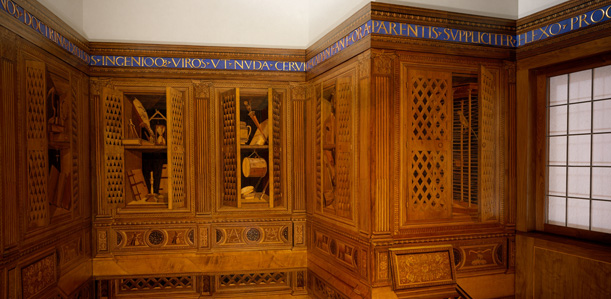
Studiolo from the Ducal Palace in Gubbio Designed by Francesco di Giorgio Martini (Italian, Siena 1439–1501 Siena), Metropolitan Museum of Art
Studiolo from the Ducal Palace in Gubbio
Designed by Francesco di Giorgio Martini (Italian, Siena 1439–1501 Siena), Metropolitan Museum of Art. Aichai’s poem brought this beautiful room, one of my favorite installations at the Met, to mind.

Be sure to visit Tricia at The Miss Rumphius Effect for the Poetry Friday Round Up.


Poetry Friday: Happy Birthday, Marilyn Singer!

poetry-friday-1-1

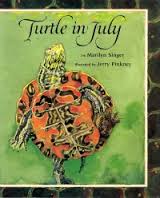
I have been a fan of Marilyn Singer’s work for many years. Her first book of poetry, Turtle in July (Simon & Schuster, 1989) has been a staple in my classroom since I started teaching. Written in the voice of a variety of woodland animals, Singer’s poems and Jerry Pinkey’s realistic illustrations are an irresistible combination.

imgres-2

Over the years, I’ve collected many of Marilyn’s poetry and picture books. And, because I’m fortunate enough to live near her home in Connecticut, I’ve had the pleasure of meeting Marilyn on several occasions at our local bookstore. She is always gracious, full of good cheer, and interested to know how I’m using her poems in the classroom.

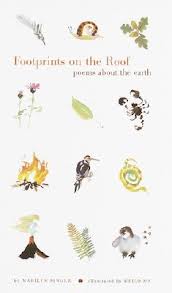
Footprints on the Earth (Alfred A. Knopf, 2002) is a favorite of third graders. As they learn about rocks, continents, and land forms, these “poems about the earth” offer a different perspective on our world. Filled with a sense of wonder and lyrical, often playful language, children love to listen to and read these poems over and over again.

“Burrows”

Out in the country I walk across towns

I’ll never see:

mazy metropolises

under the earth

where rabbits hide from foxes

foxes hide from dogs

full-bellied snakes sleep snugly…

Read the rest of the poem here.

        imgres-1      imgres

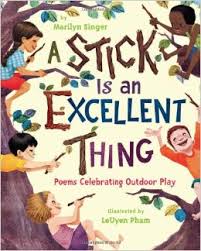
First graders (and my inner 6-year old) love the exuberance of the poems in A Stick Is An Excellent Thing (Houghton Mifflin Harcourt, 2012). Favorite childhood activities like jumping rope, swinging to the sky, and blowing bubbles are celebrated in this collection. LeUyen Pham’s realistic illustrations are the perfect pairing for these poems that capture the joy of being a kid outside on a summer day.

“A Stick Is An Excellent Thing”

A stick is an excellent thing.

If you find the perfect one,

it’s a scepter for a king.

A stick is an excellent thing.

It’s a magic wand. It’s yours to fling,

to strum a fence, to draw the sun.

A stick is an excellent thing.

If you find the perfect one.

I hope you have a perfect birthday, Marilyn! Thank you for “paying attention to the world around you” and sharing your words of discovery!

Be sure to visit Jama at Jama’s Alphabet Soup for the Poetry Friday Round Up.

Poetry Friday: The Falling Star

poetry-friday-1-1


“The Falling Star”

by Sara Teasdale

I saw a star slide down the sky,

Blinding the north as it went by,

Too burning and too quick to hold,

Too lovely to be bought or sold,

Good only to make wishes on

And then forever to be gone.

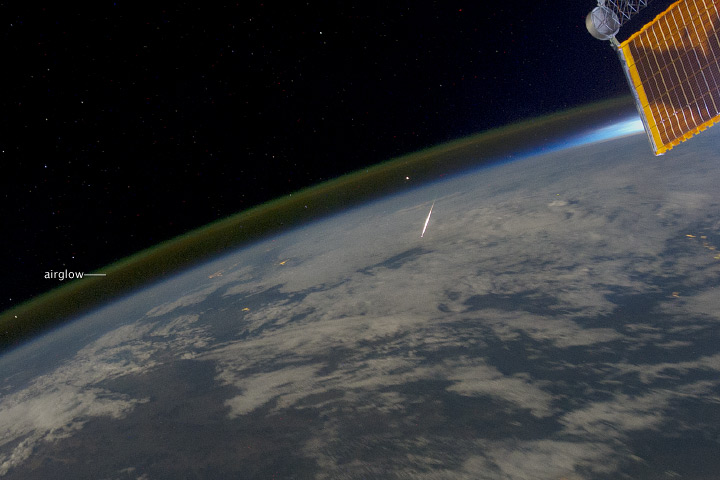
Earth Science and Remote Sensing Unit, NASA-Johnson Space Center. "The Gateway to Astronaut Photography of Earth." 09/26/2014 13:08:13.
Earth Science and Remote Sensing Unit, NASA-Johnson Space Center. “The Gateway to Astronaut Photography of Earth.” <http://eol.jsc.nasa.gov/scripts/sseop/photo.pl?mission=ISS028&roll=E&frame=24847>09/26/2014 13:08:13.

I haven’t seen a shooting star in a long time, but last night when I let the dog out I looked up at just the right moment. After a long, busy day, the blaze of that meteor was a gift; a reminder to take a deep breath and enjoy the beauty of the night sky. Teasdale describes the sight perfectly in “The Falling Star,” a poem I discovered years ago in Nancy Larrick’s anthology, Piping Down the Valleys Wild.

Laura Purdie Salas is hosting the Poetry Friday Round Up on her blog today. Be sure to stop by to find out about her wonderful new project, 30 Painless Classroom Poems: What’s Inside? Poems to Explore the Park.

Poetry Friday: Whispers

poetry-friday-1-1

The third week of school is coming to an end. Routines are falling into place, schedules have been ironed out, and most of the tears have dried up. Throughout these hectic weeks, it’s been challenging for me to get my act together at home and find time for writing. I’ve been jotting notes like mad, and keep telling myself that I’ll have time today, I’ll get up early…. You know how that goes!

This Myra Cohn Livingston poem captures the feeling I’ve had as thoughts and ideas keep whispering to me.

Whispers

Whispers

tickle through you ear

telling things you like to hear.

Whispers

are as soft as skin

letting little worlds curl in.

Whispers

come so they can blow

secrets others never know.

This would be a perfect poem to share with young writers as they also settle into the routine of writing every day and learn to keep their eyes and ears open for ideas waiting to be put into words.

Be sure to visit Renee at No Water River for today’s Poetry Friday Round Up.

Searching for a Slice

11454297503_e27946e4ff_h

All day, I’ve been searching for a slice to share.

My search began as I stood at the kitchen sink this morning,

slicing plump, juicy strawberries to stir into my yogurt.

I thought I’d found one when, walking to my car, I glanced up

and saw flock of birds wheeling and diving, their wings

flecks of gold in the morning sun.

But no. They flew away.

At work, possibilities crossed my path at lightning speed.

Third grade lesson— Edgar Badger’s Balloon Day.

Fourth grade read aloud—Three Good Deeds

Concepts of Print assessment—“Show me the word was.

On into the afternoon, ideas came and went.

I despaired of ever finding one.

Then, driving home from Open House,

weary from this long day,

I rounded a corner, and there before me

hung the full moon.

Suddenly I saw the ordinary events of my day

as pearls on a string, luminous in the moon’s glow.

I’d been building my slice all day.

I just couldn’t see it until I had the right light.

Thank you, as always, to StaceyTaraDanaBetsyAnna, and Beth for hosting Slice of Life each Tuesday. Be sure to visit Two Writing Teachers to read more Slice of Life posts.

Poetry Friday: “Headline”

poetry-friday-1-1

“Make poetry out of every moment.”

~ Cid Corman ~

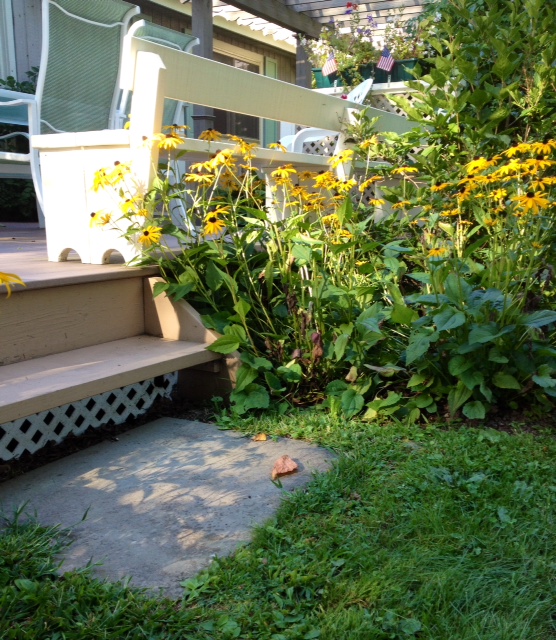
The weather has been beautiful in Connecticut this summer, but several recent cool nights signal a change is on the way. Poets love to celebrate the seasons, and many wonderful poems sing the praises of autumn. Today I’m sharing a poem from Firefly July, (Candlewick Press, 2014), Paul B. Janeczko and Melissa Sweet’s gorgeous new anthology.

“Headline”

A leaf on

the doorstep—

dont even

have to pick

it up to

know the news.

by Cid Corman

photo-3

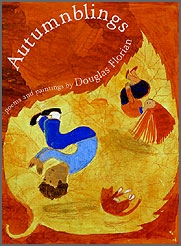
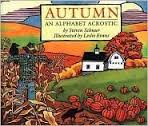
There are several wonderful poetry collections for children specifically about fall. My favorites include Autumnblings, (HaperCollins, 2003) by Douglas Florian, and Autumn: An Alphabet Acrostic (Houghton Mifflin Harcourt) by Steven Schnur. Both books are perfect to use as mentor texts for young poets.

         autumnblings181    images

Be sure to visit Jone at Check It Out! for the Poetry Friday Round Up.