Is Test Prep the Mint of Education?

Image
via Wikimedia Commons

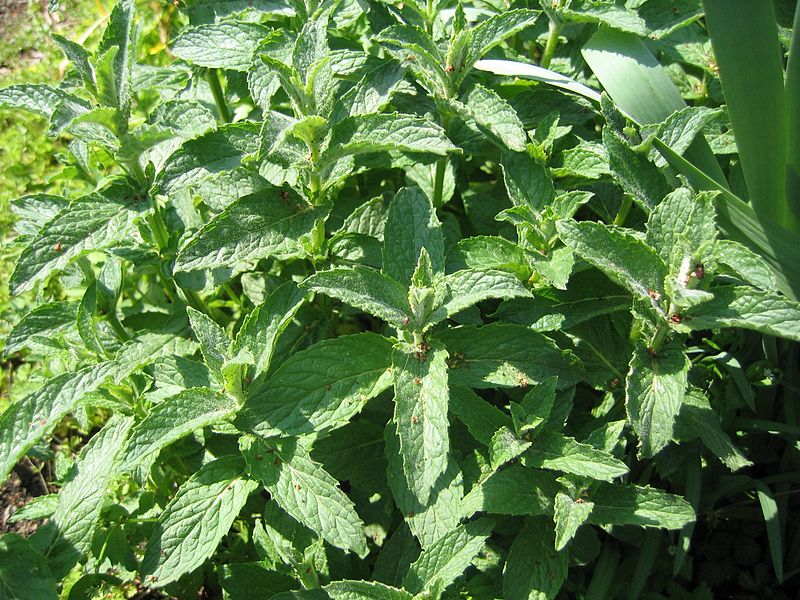
This morning as I was weeding my garden, it occurred to me that the mint that had overrun my herb garden was like standardized test prep. As schools across the country do their best to prepare students for the new CCSS-aligned assessments, test prep is running rampant. Just as the mint in my garden has choked out the basil and parsley, test prep, and the tests themselves, threaten to take over the school day, leaving no time to savor novels, delve into a character’s motivation, or write a deeply personal narrative.

I grow a variety of herbs in my garden because each herb has its own distinct flavor and use. The amount of the herb I use depends on what I’m cooking. The same is true for teaching. We have a wide variety of instructional resources and strategies available. As professionals, we take great care to make thoughtful decisions about which resource or strategy will best meet the needs of our students.

We have to nurture our students so they’ll become independent thinkers and problem solvers. If they are going “build strong content knowledge,” “comprehend as well as critique,” and “value evidence,” all specific goals named in the Common Core State Standards, they have to read and write all kinds of literature and informational texts. As Grant Wiggins wisely points out, “the test is not what you should be practicing; meeting the standards is what you should be practicing.” Providing students with a steady diet of random passages and multiple-choice questions, like those shared by Vicki Vinton on her blog, To Make a Prairie, will do nothing to encourage a student’s curiosity or creativity. We can only do that by providing our students with the rich, robust learning opportunities they deserve.

The mint from my garden adds wonderful notes of flavor to many dishes when I use it appropriately and judiciously. But a steady diet of mint where it doesn’t belong will turn anyone off to its delights. Let’s not turn our students off to the joys of a literate life by overwhelming them with test prep.
Poetry Friday: “Poet’s Checklist”

Poetry_Friday_Button-210

An acrostic poem, according to Poetry4kids, is “a poem in which the first letters of each line spell out a word or phrase.” The word can be anything; colors, animals, names, and more. Acrostic poems have been around since antiquity, and they are still popular today in schools. (I wrote more about sharing acrostics with students and how they support the CCSS here.)

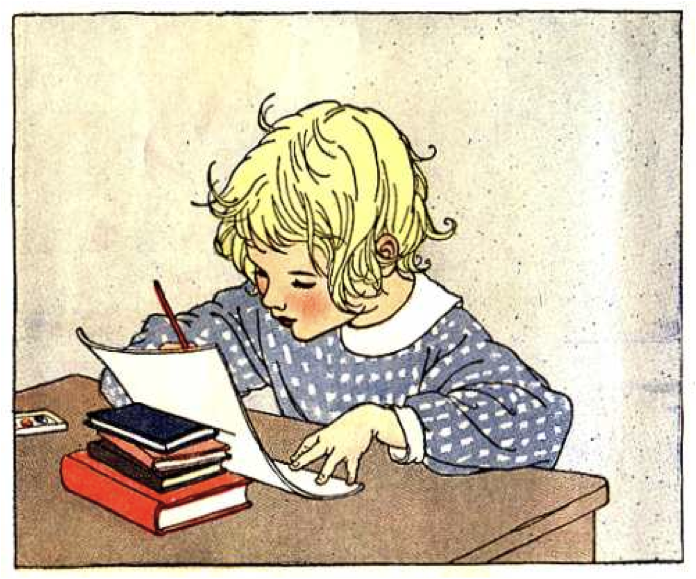
On this last Poetry Friday of National Poetry Month, I want to share one of my favorite acrostics. This poem, by Patricia Hubbard, appeared in the May, 2003 issue of The Reading Teacher (Vol. 56, No.8). I think Hubbard perfectly captures the process of writing a poem.

child-writing-picture

Poet’s Checklist

Always start with ideas that sing in your heart.

Choose sharp, juicy, whistling words.

Rhyme is fine, but it must shine.

Over and over and over–write, read, revise.

See, touch, taste smell, listen to your poem.

Too sloppy? Recopy.

Ideas dance on the polished page.

Celebrate–you are a poet. Share, speak, sing.

by Patricia Hubbard

Please visit Laurie Salas Purdie at Writing the World for Kids for the Poetry Friday Roundup!

Poetry Friday: Apple Blossom

Image

“Find something you love, and write a poem to celebrate it.”  X.J. Kennedy

Image
Blossoms 3 by Liz West, via Wikimedia Creative Commons

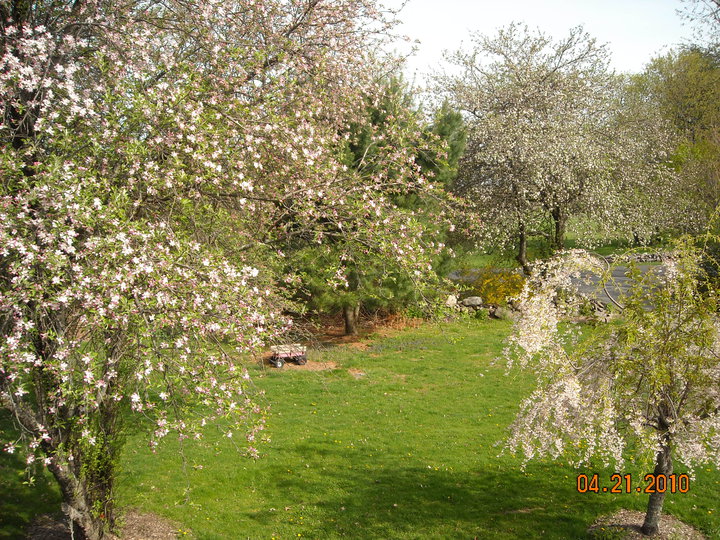
Usually at this time of year, the apple trees in my yard are loaded with blossoms. This picture was taken in 2010:

Image
My yard, as seen from my office window.

Because of the cold weather this spring and damage to the trees during Hurricane Sandy, they are still bare.

I love these apple trees and the masses of blossoms they produce each year. We don’t harvest the apples; they’re small and bitter.  The neighborhood deer, however, have quite a feast in October! I look forward each year to their beauty and promise.  I’m waiting patiently for them to bloom, but in the meantime, I followed Kennedy’s advice and wrote a tanka to celebrate something I love.

soft rosy petals

cover tree branches like snow

gossamer petals

dance in a soft gentle breeze

delicious promise of fruit

© Catherine Flynn, 2013

Be sure to stop by Live Your Poem for the round up of poems. Thank you to Irene Latham for hosting today!

Slice of Life: Why I Stay

Image

“This job is who I am and I am proud to be a teacher.” Cindy Minnich

Last Friday, Beth Shaum posted a video on her blog that showed dozens of teachers from around the country sharing their reasons for staying in education. Since then, a number of other teachers have written about their reasons for remaining in the classroom, despite changes in curriculum because of CCSS, new testing, and new evaluations that are being imposed on educators. (Did I leave anything out?)

My first thoughts were about my own reasons for continuing to teach. Honestly, after 18 years, I don’t know what else I would do. Teaching has woven itself into my very being. Like many of you, I wake up in the night thinking about students and rehearse lesson plans in my mind while showering. Once I even got an idea for a math workstation at the local pizza parlor while waiting for our dinner to be served, and it was July! (My husband wasn’t pleased.) But there are so many other reasons.

I stay because I love it when kids come up to me in the hallway or cafeteria and say, “Mrs. Flynn, I’m reading The Hobbit!” or “I just finished The One and Only Ivan. Did you read it?” I love when students stop at my door to examine my book recommendations.

I stay because I love it when a parent thanks me for helping their child become a reader.

I stay because I love when former students write to me, thanking me for helping them become better writers. Better yet, I love it that a former student is now a colleague, grown into a passionate educator herself.

I stay because I love working with my colleagues to find just the right resource, just the right book, just the right solution to a problem.

I stay because I know the work I do matters. Today at Two Writing Teachers, Stacey shared LeAnn Carpenter’s poem, “Writers at Work.” It could easily be called “Teachers at Work.” The last line is “writers create.” That’s what teachers do: we create caring, compassionate, literate citizens. Helping students learn to read and write and think is the most important work teachers do.

I debated about whether or not I should write this today. So many smart, articulate people have said all this and more already. But then I decided that’s exactly why I should write this. I want to add my OUTSIDE VOICE to all the others, shouting loud and clear: I AM A TEACHER. I AM A PROFESSIONAL. I KNOW IN MY HEART I AM GIVING MY STUDENTS THE BEST I CAN GIVE. THEY DESERVE NOTHING LESS.

Thank you to Stacey and Ruth at Two Writing Teachers for hosting this weekly Slice of Life Challenge!

Slice of Life: Cake, Anyone?

Image

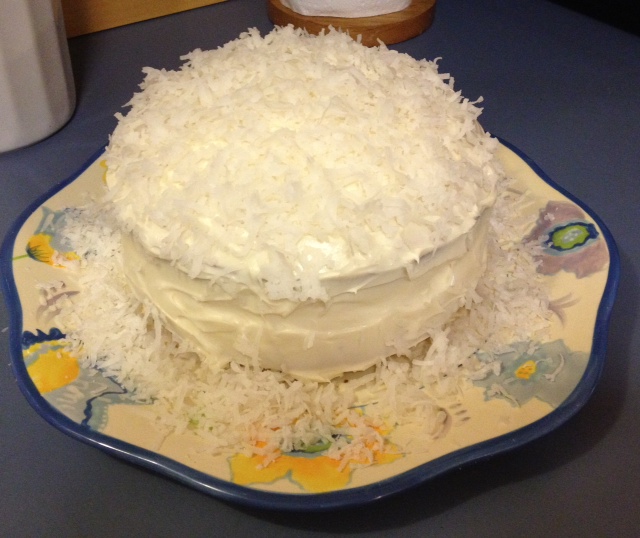
Last night, I baked a cake for a luncheon we had at school today. I’ve been baking for almost as long as I can remember. When I was growing up we lived next door to my Grandmother, and I spent a lot of time at her house. When she baked pies, she always sprinkled the scraps of dough with cinnamon and sugar, added a few raisins and butter, then rolled them up and baked them. I don’t remember if she had a name for these little treats, but they were delicious.

Image
Coconut cake with raspberry filling

When my own children were little, we baked all the time. So I was quite surprised when I started teaching and discovered how many of my students had never baked anything. Children’s books are filled with inspiration for heading to the kitchen. So we started baking.

Image

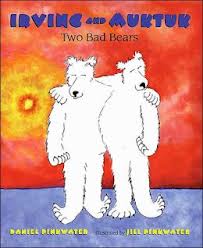
After reading Daniel Pinkwater’s Irving & Muktuk: Two Bad Bears (Houghton Mifflin Harcourt 2001), the story of two blueberry muffin loving polar bears, we made blueberry muffins.

Image

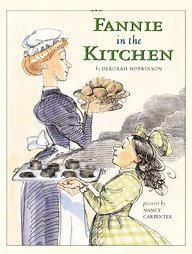
We read Deborah Hopkinson’s Fanny in the Kitchen (Atheneum Books for Young Readers, 2001) and made griddle cakes (pancakes).

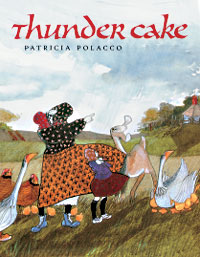
ImageThird graders love Patricia Polacco books and Thunder Cake (Philomel, 1990) was one of our favorites. So was the cake!

Image

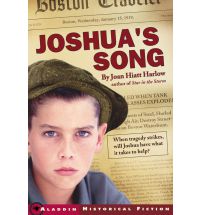
When fifth graders were reading Joshua’s Song, by Joan Hiatt Harlow (Simon & Schuster, 2002), a novel that culminates in the historic explosion of a molasses storage tank in Boston in 1919, many had never heard of molasses! Molasses cookies were whipped up in short order.

Cooking and baking with students may seem like a luxury in this time of Common Core Standards and high-stakes testing. But there are actually many benefits for mixing up some literature-related recipes.

  • At Teacher’s College Reading and Writing Project Saturday Reunion last month, Elizabeth Moore shared ways to use class experiments and demonstrations in science as a springboard to writing. (Read more about that session here.) Shared experiences in the kitchen could also be the basis for how-to books and cookbooks.  (Writing Anchor standard 2)
  • In a recent blog post, James Paul Gee reminds readers that “Humans learn through experiences in the world (using their minds, bodies…and interactions with others…)” All sorts of skills are learned through cooking, including reading recipes and doing the math to double or triple ingredient amounts.
  • First hand experience with different foods provides students critical background knowledge they need to successfully meet many of the Common Core reading standards. Knowing what molasses is will make learning it easier to learn about triangle trade in history class.

Cooking with students is nothing new. What is new is the pressure teachers feel to teach earlier, teach faster, teach more. Let’s remember to teach what’s important in meaningful ways. Adding a little spice to our lessons increases the chances our students will actually learn.

Thank you to Stacey and Ruth at Two Writing Teachers for hosting this weekly Slice of Life Challenge!

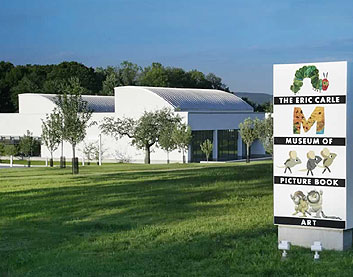
A Slice of Life: A Visit to the Eric Carle Museum of Picture Book Art

sols_6Now that the month-long Slice of Life challenge has ended, I’m hoping to continue sharing slices every Tuesday. Be sure to visit Stacey and Ruth at Two Writing Teachers to read more amazing writing. Thank you for hosting this weekly Slice of Life Challenge!

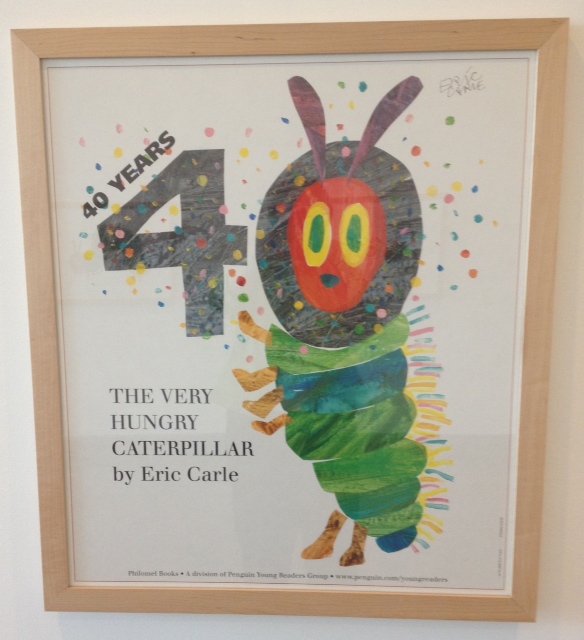
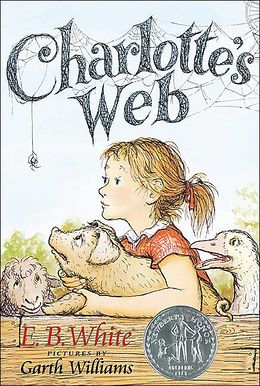
Last Friday, a friend and I hopped in the car and drove to Amherst, MA and the Eric Carle Museum of Picture Book Art to see their celebration of Garth Williams’s beloved illustrations of Charlotte’s Web.

Image

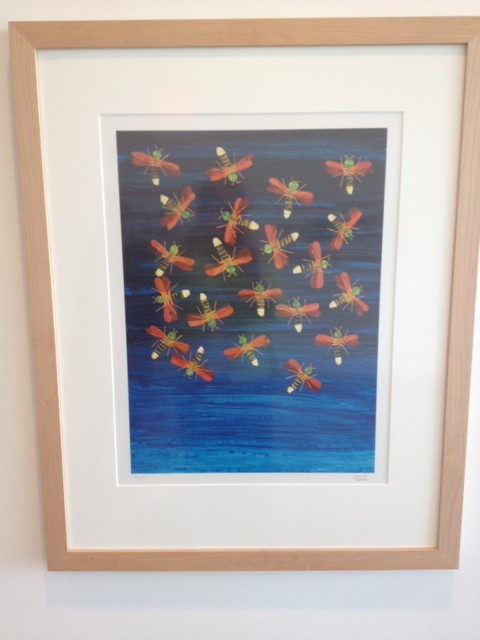
Going to The Carle is one of my favorite day trips. When you arrive, you’re greeted by this bug:

Image

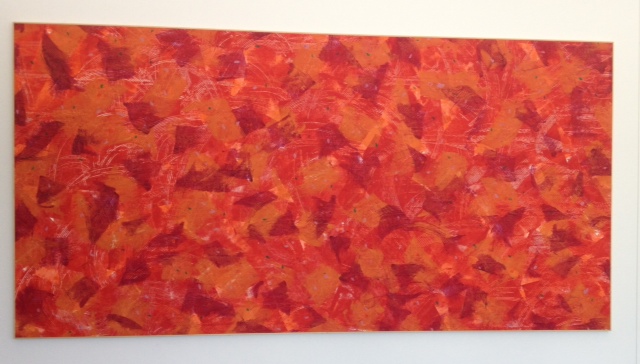
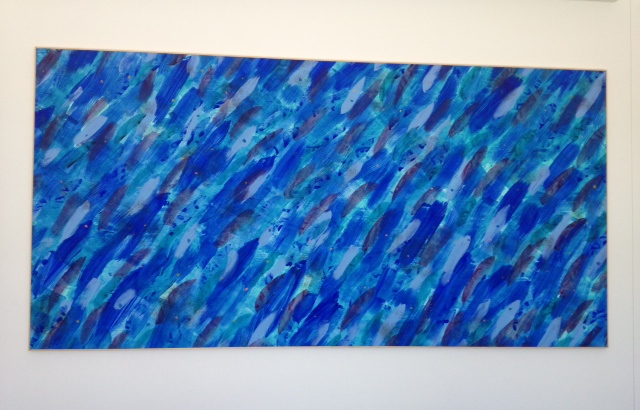
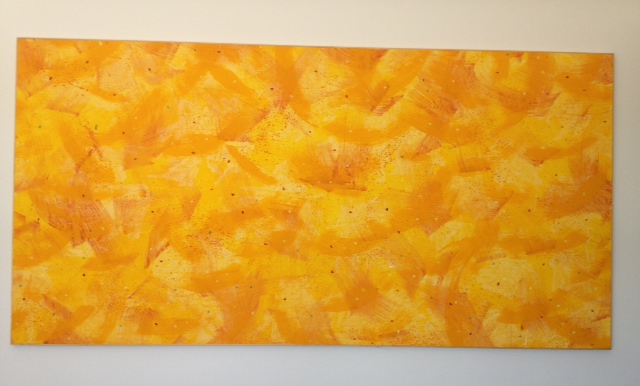
As you enter the museum, you step into by a large space filled with light and color. Panels of bright primary colors adorn one long wall of the Great Hall. My friend and I spent some time trying to decide what each panel reminded us of, and which one we liked best.

Image
Fire or autumn leaves?
544416_4770520581818_1197692579_n
A field of waving grass?
Image
The ocean or fish, or both?
Image
Warm summer sunshine!
Image
A cozy spot to sit and read.

There are auditoriums for lectures and films, as well as an art studio where kids can make their own colorful creations. I’ve always wanted to go in and make some art myself, but it’s really for the kids. More of Eric Carle’s whimsical art is hung in this hallway.

      Image  Image

The West Gallery is devoted to Carle’s work, but the theme shifts on a regular basis. The current show, Feathers, Fins, and Fur, features penguins, cardinals, and more. In addition, there are two galleries for special exhibits. The larger East Gallery has had shows featuring the work of Tomi dePaola, Virginia Lee Burton, and illustrations from various editions of The Wizard of Oz, to name just a few. On display until June 9th is Latino Folk Tales: Cuentos Populares-Art by Latino Artists. The vivid colors and styles of these artists bring the tradition of magical realism to life.

The exhibit in the smaller Central Gallery was the main reason for our visit.

Image

Some Book, Some Art showcased Garth Williams’s classic illustrations for Charlotte’s Web. It was fascinating to see the early ideas Williams had for the cover of the book and his process of going from rough sketch to finished art. There were also early studies of what Charlotte herself would look like. In one draft, she bore quite a resemblance to the Mona Lisa! This small, humble, gallery is currently filled with radiant, terrific art.

An unexpected treasure of the exhibit was this poem, written by E.B White to his wife, Katherine, just before they were married.

“Natural History”

The spider, dropping down from twig,

Unwinds a thread of his devising;

A thin, premeditated rig,

To use in rising.

And all the journey down through space

In cool descent, and loyal-hearted,

He builds a ladder to the place

From which he started.

Thus I, gone forth, as spiders do,

In spider’s web a truth discerning,

Attach one silken strand to you

For my returning.

I will return the The Carle again and again, just as I return to Charlotte’s Web from time to time. I love the beauty contained within both.

Slice 31 of 31: Thresholds

Image

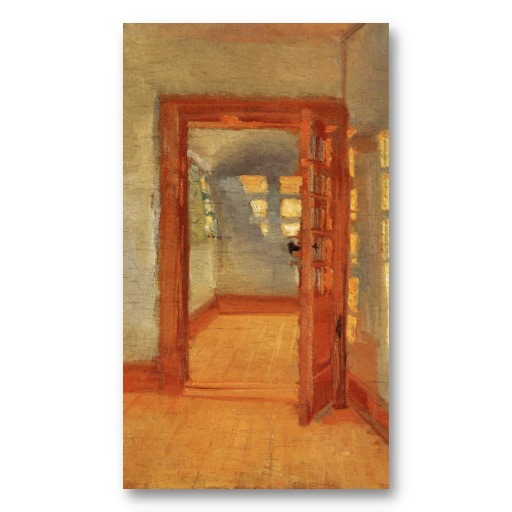
When I was in college, I had an English professor who always talked about thresholds. Literally, “the plank, stone, or piece of timber that lies under a door,” threshold is also described as the END; BOUNDARY, “the place or point of entering or beginning.” (Merriam-Webster Online Dictionary) I’m pretty sure it was that contrast that appealed to her: how can it be the end and the point of entering at the same time? It’s really all about the perspective we choose to take.

Brondum's Annex by Anna Ancher
Brondum’s Annex by Anna Ancher

So I’m thinking of today as a threshold, not as the end. This month has lived up to the term “challenge.” I had to let go of my paralyzing fear of posting something that was less than perfect. Because I did, I was free write some things I might not have ever written.

The welcoming community of writers also made it possible for me to learn and grow. So much amazing writing has been done this month! And the comments of praise and encouragement were more helpful than you can ever know. I appreciate each and every one of them.

But, as I said, this is not the end. Rather, it is the beginning of a new writing life for me. One in which I’m more attuned to keeping my eyes open for new ideas and insights. One in which I make time every day to write.

Because we’re on the threshold of National Poetry Month, I’d like to leave you with this poem by Rita Dove. I think it applies to writing as well:

The First Book

Open it.

Go ahead, it won’t bite.

Well…maybe a little.

More a nip, like. A tingle.

It’s pleasurable, really.

You see, it keeps on opening.

You may fall in.

Sure, it’s hard to get started:

remember learning to use

knife and fork? Dig in:

You’ll never reach bottom.

It’s not like it’s the end of the world–

just the world as you think

you know it.

Thank you so much to Stacey and Ruth at Two Writing Teachers for hosting this Slice of Life Challenge!

Slice 30 of 31: The Miracle of Charlotte’s Web

Image

As this month-long Slice of Life Challenge draws to a close, I’d like to take a look back at what brought me here.

One day in 1969 or 1970, I became a reader. It wasn’t that I hadn’t been reading and enjoying books before that; I had. But on that distant, seemingly ordinary day, a reader was born. How did this miracle occur? For whatever reason, my fourth grade teacher, Mrs. Matthews began reading Charlotte’s Web aloud to our class.

Image

I was instantly drawn into the story. I recognized myself in Fern. I lived across the street from a farm, so the setting was familiar, even comforting. I wished I could raise a baby pig, although I’m sure I would have changed my mind quickly after a day or so. I guess the why of all this doesn’t matter. What does matter is that the right book was presented to me at the right time and it all clicked.

When I started teaching third grade I knew I wanted to begin the year reading Charlotte’s Web to my students. It became a tradition, and third grade teachers at my school still begin the year reading Charlotte’s Web to their students. There really isn’t any better place to start.

Katherine Paterson says that “a book can give a child a way to learn to value herself, which is at the start of the process of growing a great soul.” (pg. 32, The Invisible Child) E.B. White’s masterpiece did this for me.

Esme Raji Codell feels that “if a book helps to build an empathetic imagination, it succeeds.” (On Point interview, July 2, 2010) What better way to help a child with this than to show them Fern’s devotion to Wilbur? Or the truly selfless acts of Charlotte on behalf of Wilbur? Or the dedication of Wilbur to Charlotte’s children and grandchildren?

The book is also a celebration of the miracles of nature all around us that we fail to notice. When Mrs. Arable is worried about Fern’s obsession with Wilbur and the animals at the barn, she visits Dr. Dorian to discuss this.

She asks him “Do you understand how there could be any writing in a spider’s web?”

“Oh no,” said Dr. Dorian. “I don’t understand it. But for that matter I don’t understand how a spider learned to spin a web in the first place. When the words appeared, everyone said they were a miracle. But nobody pointed out that the web itself is a miracle.” (p. 108-109)

E.B. White appreciated miracles. And he created one with Charlotte’s Web.

Thank you to Stacey and Ruth at Two Writing Teachers for hosting this Slice of Life Challenge!

Slice 29 of 31: The Tree that Time Built for Poetry Friday

Image

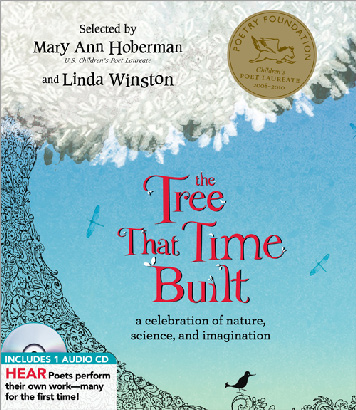
Mary Ann Hoberman is one of my favorite poets. I read A House is a House for Me to my children countless times, and my students love the You Read to Me, I’ ll Read to You series. But somehow I missed The Tree that Time Built (Sourcebooks Jabberwocky, 2009). This anthology, selected by Hoberman and cultural anthropologist Linda Winston, is a “celebration of nature, science, and imagination.” It is a beautiful book: poems are centered on cream-colored pages and line drawings by Barbara Fortin add just the right amount of accent. The poems are organized thematically and notes throughout the book add information about the poets, their craft, and poetic forms. A glossary is included, as well as a list of suggested reading. There is even a CD of selected poems being read by Hoberman, Winston, and others!

Image

I was particularly struck by this poem:

You And I

Only one I in the whole wide world

And millions and millions of you,

But every you is an I to itself

And I am a you to you, too!

But if I am a you and you are an I

And the opposite also is true,

It makes us both the same somehow

Yet splits us each in two.

It’s more and more mysterious,

The more I think it through:

Every you everywhere in the world is an I;

Every I in the world is a you!

by Mary Ann Hoberman

The fifth graders I’ve been working with (more about that here) are fascinated by alliteration. This poem is a perfect example of alliteration’s close cousin, assonance, which they are not familiar with. It also gets to the heart of poetry. When I asked the students the other day why we were reading and studying poetry, I was met by a lot of blank stares. But one brave soul timidly raised her had and said something to the effect of “It let’s us know what people feel.” I told her I agreed with her one hundred percent. “You and I” helps us see that we have more in common than we think, feelings and all.

I wish you all a wonderful Poetry Friday!

Mary Lee (who wrote a much more extensive review of this book here) has the round up at A Year of Reading. Be sure to stop by to read more poetry posts. Thank you also to Stacey and Ruth at Two Writing Teachers for hosting this Slice of Life Challenge!