Slice of Life: Pink Tulle and Ping Pong

11454297503_e27946e4ff_h

Yesterday on her blog, Paula Bourque, aka LitCoachLady, recalled a conversation she’d had with Lynda Mullaly Hunt about “ideas being everywhere.” Paula went on to say, “I think Shakespeare had something there…

‘All the world’s a stage, and all the men and women merely players:
they have their exits and their entrances; and one man in his time plays
many parts.’

What scenes can we script from the players we observe?”

This sparked a memory of waiting for a friend in Bryant Park one gorgeous afternoon last fall. I was doing exactly what Paula and Lynda were talking about. My journal reads:

“As I sit here in Bryant Park, the whole world is walking by.”

I was on the northwest side of the park, close to where two ping-pong tables are set up. Intense games were in progress and I enjoyed watching the players’ faces and body language as they scored points or lost games. The balls were neon orange and yellow, I guess so they’d be easier to find as they bounced off the table and into the crowd.

One ball kept getting away and finally settled in the groove between the paving stones. Just at that moment, a little girl, who was probably three or four, came along with her mother. The mother was hurrying somewhere, maybe trying to get her daughter to a birthday party. The girl appeared to be dressed for a party, looking like a ballerina in her a pink tulle skirt and black Mary Janes. She was captivated by the ball in her path. At first, her shiny black shoe gave the ball a gentle nudge. Emboldened by the fact that no one was trying to take the ball from her, she rested her foot on it. Suddenly, the ball shattered. The crack was swallowed up by the noise of midtown, but she was clearly startled and hurried to catch up to her mother.

This whole scene probably played out in a less than a minute. But I wondered about her intentions. Did she mean to crush the ball under her diminutive foot? Granted, I haven’t been around four year olds in a long time, but such an intentional act of destruction seemed completely at odds with her appearance. Or did she just press down harder than she meant to, wanting only to stop the ball and claim it as her own? I will never know. But remembering her and reading the details I captured in my journal have given me at least two ideas for a story I’ve been working on, and maybe one poem.

Thank you, Paula, for reminding me of this. You and Lynda are right: Ideas are everywhere.

Thank you to StaceyTaraDanaBetsyAnnaBeth, Kathleen, and Deb for this space for teachers and others to share their stories each Tuesday throughout the year and every day during the month of March. Be sure to visit Two Writing Teachers to read more Slice of Life posts.
Slice of Life: “Breakfast of the Birds”

11454297503_e27946e4ff_h    poetry-friday-1-1

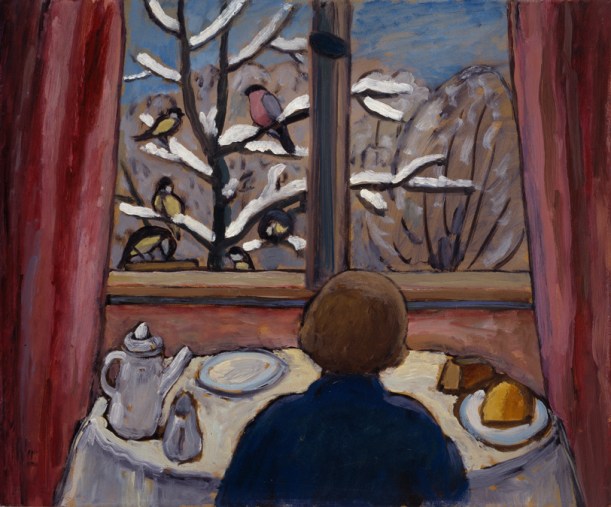
Earlier this week, Tricia Stohr-Hunt posted this painting, by Gabriele Münter, on her blog, The Miss Rumphius Effect:

Gabriele Münter, Breakfast of the Birds, 1934; © 2012 Artists Rights Society (ARS), New York / VG Bild-Kunst, Bonn - See more at: http://nmwa.org/works/breakfast-birds#sthash.eKbv2uZn.dpuf
Gabriele Münter, Breakfast of the Birds, 1934; © 2012 Artists Rights Society (ARS), New York / VG Bild-Kunst, Bonn – See more at: http://nmwa.org/works/breakfast-birds#sthash.eKbv2uZn.dpuf

Tricia invited her readers to write an ekphrastic poem to go along with this painting. I was intrigued by the contrast between the birds socializing outside and the woman sitting down by herself inside. Here is my response:

This morning our old
chestnut tree,
the one you planted
all those years ago,
is wrapped in a cloak
of fine white snow.

Goldfinches and robins,
like confetti scattered in
celebration of the coming spring,
brighten its branches
as they serenade me:
“cheer-up, cheer-up, cheer-up.”

How do they know
that some days are worse than others,
and that this morning,
I miss you more than ever?

© Catherine Flynn, 2016

Thank you to StaceyTaraDanaBetsyAnnaBeth, Kathleen, and Deb for this space for teachers and others to share their stories each Tuesday throughout the year and every day during the month of March. Be sure to visit Two Writing Teachers to read more Slice of Life posts. Also, be sure to visit Robyn Hood Black at Life on the Deckle Edge for the Poetry Friday Roundup.

Slice of Life: Time to Read

11454297503_e27946e4ff_h

“The greatest part of a writer’s time is spent in reading, in order to write;
a man will turn over half a library to make one book.”
~ Samuel Johnson ~

I thought of this quote when I read “Unbalanced Literacy: Reflections on the Common Core” by Thomas Newkirk in the March issue of Language Arts yesterday. If you have access to this journal, I highly recommend reading this piece. Newkirk includes this quote from Michel de Montaigne, which I love:

“Bees ransack flowers here and flowers there: but then they make their own honey, which is entirely theirs and no longer thyme or marjoram. Similarly the boy will transform his borrowings; he will confound their forms so that the end-product is entirely his.”

Newkirk included this quote to support his view of reading as a “transaction between reader and text,” but it applies to writing also.

Halfway through this month-long challenge, I feel desperate for time to just sit and read, for time to “ransack” a book, to borrow words and transform them into something entirely mine. My morning waiting for the furnace repairman yesterday made me crave this even more. When you have a taste of something delicious, you want more! (Furnace is working again, by the way.) The slices I’ve been reading are amazing and full of inspiration, but I miss having time to read a book. What to do? Write a quick slice about what I’m reading, then go read.

I usually have three or four books going at the same time. Here’s what’s on my nightstand today:

Silver People: Voices from the Panama Canal, by Margarita Engle (Houghton Mifflin Harcourt, 2014)

61P3a50eg6L._SX341_BO1,204,203,200_

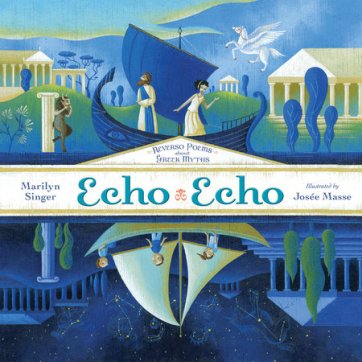
Echo, Echo: Reverso Poems about Greek Myths, by Marilyn Singer (Dial Books for Young Readers, 2016)

9780803739925

The Poetry Home Repair Manual: Practical Advice for Beginning Poets, by Ted Kooser (University of Nebraska Press, 2007)

51U0fnAsTLL._SX309_BO1,204,203,200_

What book(s) is/are on your nightstand? Happy ransacking (reading), everyone!

Thank you to StaceyTaraDanaBetsyAnnaBeth, Kathleen, and Deb for this space for teachers and others to share their stories each Tuesday throughout the year and every day during the month of March. Be sure to visit Two Writing Teachers to read more Slice of Life posts.
Slice of Life: Finding the Silver Lining

11454297503_e27946e4ff_h

When we woke up this  morning, there was a distinct chill in the air. For the past few days it’s been cold and rainy, last week’s spring preview long gone. Still, it shouldn’t have been this cold.

The dog and I headed downstairs for our morning routine. First stop: the thermostat. Sixty-six degrees. Not so bad, I thought. I pressed the button to fire up the furnace and take the chill out of the house. No response. I pushed it up another notch. Still no rumbling from the basement. Thinking that maybe the thermostat was just confused, (it was still pretty early!) I lowered the setting, then started raising it again. Silence.

I went back upstairs to tell my husband. He went to the basement to see what was going on. When he came back the furnace was still silent. “For some reason, the burner isn’t getting any oil. It’s not something I can fix.” We agree that I’ll go to work for the 7:45 meeting I can’t miss, then call the oil company.

So now I’m home, sitting in my sunny but chilly kitchen waiting for the repairman. Hopefully he’ll be here soon and the repair won’t be a major one. In the meantime, I’ve made some phone calls, paid a few bills, and had a second cup of coffee. Now I have some unexpected time to read and write. This cloud does have a silver lining!

Thank you to StaceyTaraDanaBetsyAnnaBeth, Kathleen, and Deb for this space for teachers and others to share their stories each Tuesday throughout the year and every day during the month of March. Be sure to visit Two Writing Teachers to read more Slice of Life posts.

Slice of Life: A Found Poem

11454297503_e27946e4ff_h

I was really stuck for an idea of what to write about today, so I visited the “Writing Prompts” page on the Poets & Writers website. There are prompts for creative nonfiction, fiction, and poetry. This poetry prompt appealed to me:

Begin at the End 
posted 2.23.16

“If you’re having trouble starting a poem, begin at the end. Take a single collection of poems and make a list of the last two words from each poem. Then write your own poem using only these words. Be vigilant at first utilizing just the vocabulary from the list. After a couple of drafts, stray from the limited words to help bring the poem to its full realization.”

Inspired by Amy Ludwig VanDerwater’s challenge to write a poem about small object, I’ve been rereading and studying Valerie Worth’s All the Small Poems and Fourteen More, so I turned to the first set of small poems for my list of words. Here they are:

among friends
she stops
like zinnias
to rest
and purr
worth something
and stay
is managed
set stone
brown grasshopper
of mice
loose skin
to us
slithering gold
poor clock
to keep
passing here
is cooked
of gold
find it
the beehive
for sleep
fences forever
whispers alone

Here is my first draft. The words and letters in bold were not on the original list.

She stops
among friends,
like zinnias
of gold,
fences set in stone,
and brown grasshoppers,
to sleep
and purr
and dream
of cooked mice…

To us, it is
worth something
not to be managed
by the clock;
to keep
passing here alone
and,
hearing whispers,
find it,
the beehive,
slithering gold,
and stay
for rest.

This was a fun exercise, despite the fact I have three unused words: poor, loose, and skin. Maybe I can work those into my next draft. The second stanza makes me happy because it reminds me of “The Lake Isle of Inisfree,” by William Butler Yeats, one of my all-time favorite poems.

I’d like to try this with students. It would be a great way to build vocabulary and would also help reinforce grammar skills like subject-verb agreement, tense, and more. Maybe I’ll save it for National Poetry Month.

 Thank you to StaceyTaraDanaBetsyAnnaBeth, Kathleen, and Deb for this space for teachers and others to share their stories each Tuesday throughout the year and every day during the month of March. Be sure to visit Two Writing Teachers to read more Slice of Life posts.

Slice of Life: A Poem for Pi Day

11454297503_e27946e4ff_h

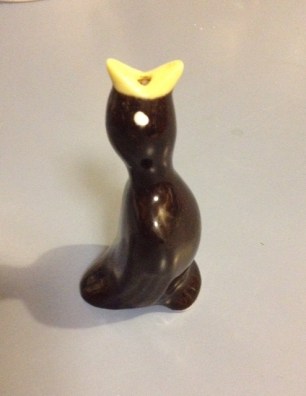
This pie bird is another small object from my kitchen. (I wrote more about these objects here.) He’s been baked into more apple pies than I could ever count. He seemed like a worthy subject of a poem this Pi day.

FullSizeRender

The Pie Bird

No squawks or caws
from this blackbird,
nestled in a puddle
of fruit and spice.
But the swirls of steam
escaping the “o”
of his yellow mouth
send out the signal
loud and clear:

Pie is ready!
Deliciousness awaits!

© Catherine Flynn, 2016

 Thank you to StaceyTaraDanaBetsyAnnaBeth, Kathleen, and Deb for this space for teachers and others to share their stories each Tuesday throughout the year and every day during the month of March. Be sure to visit Two Writing Teachers to read more Slice of Life posts.
Slice of Life: A Sunday Morning Photo Essay

11454297503_e27946e4ff_h

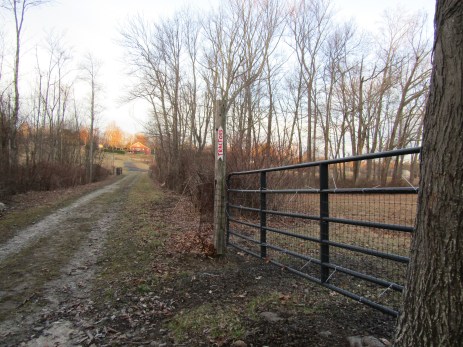
Sunday mornings at my house have a very different pace from the rest of the week. Here is a peek into my morning. (I tried to put some of these pictures side-by-side, but was having too many formatting issues!)

IMG_0067

On my way to walk with my friend Colette, of Used Books in Class fame. We walk together every weekend as long as it’s not below 20 degrees, raining, or snowing.

IMG_0069
Colette’s dog, Chaucer, always joins us. He’s ready to go!
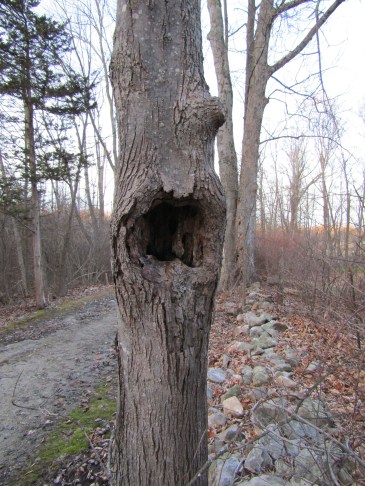
This knot hole intrigued me. I get all sorts of ideas when I walk.
Our walk takes us through the fairgrounds of the annual Fireman's fair.
Our walk takes us through the fairgrounds of the annual Fireman’s fair.
IMG_0077
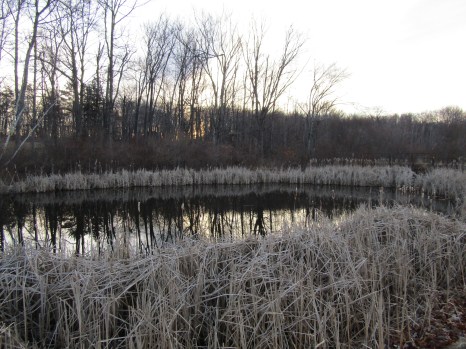
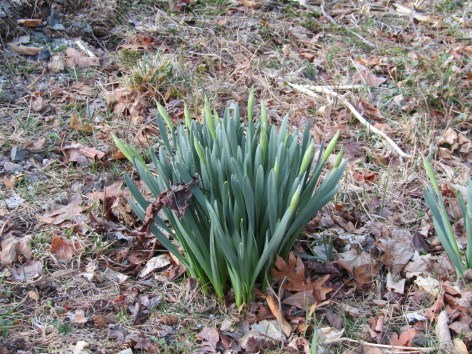
Spring is here!
Soon this pond will be full of tadpoles.
This tree was full of singing chickadees who didn't want their picture taken.
This tree was full of singing chickadees who didn’t want their picture taken.
Another sign of spring.
Back home and ready to work on the crossword puzzle.
Back home, ready to work on the crossword puzzle.
Off to breakfast.
Off to breakfast.
Breakfast's over. Time to write my slice, work on my WIP, and read.
Breakfast’s was delicious! Now it’s time to write my slice, work on my WIP, and read. Happy Sunday, everyone!


Thank you to StaceyTaraDanaBetsyAnnaBeth, Kathleen, and Deb for this space for teachers and others to share their stories each Tuesday throughout the year and every day during the month of March. Be sure to visit Two Writing Teachers to read more Slice of Life posts.



Slice of Life: War & Peace

11454297503_e27946e4ff_h

What would you do if a fourth grader brought in War & Peace for their independent reading book?

This happened yesterday, and A.’s teacher came to me for advice.

“Well, we can’t tell her she can’t read it, so let’s help her see that it’s not a good fit for her,” I suggested.

I sat down with A. and asked her about her book choice. “All the other books in the town library are boring,” she said.

“Did you look at the Nutmeg (Connecticut’s state book award) nominees? I know there are some good books on the list.”

“They didn’t have any of those books, so the librarian told me I could look in the Young Adult section and my mom said it was okay.”

Since when is War & Peace kept in the Young Adult section, I thought to myself.

“We’ve talked about ways to choose a ‘just right’ book for a couple of years,” I reminded her. “Why don’t you read the first page to me so we can make sure you can read most of the words.” The five-finger rule is introduced in first grade.

She skipped past the introduction and two pages listing “Principle Characters” before she arrived at Chapter One. Where the first paragraph was written in French. She gave a little laugh and said, “I’ll skip that part.” She then went on to valiantly attempt the maze of Russian surnames.

At the bottom of the page she smiled at me and said, “I could read most of the words that weren’t in French.” She had missed six words, but at this point, it really wasn’t about counting miscues.

“What was happening on this page?” I asked her.

“Well, in the first paragraph, the lady has a cough, but I’m not really sure what was going on in the second paragraph,” she explained.

“A.,” I explained gently, “I’m so proud of you that you want to challenge yourself as a reader, and War & Peace is a challenging book.” Thinking of Teri Lesesne’s Reading Ladders, I continued, “But maybe it should be a book you work toward reading. Why be frustrated reading it now when we can find books that you like that will get you ready to read War & Peace someday.”

She agreed this might be a better idea. I wanted this to feel like her decision, though, so I suggested that she read more of the book over the weekend and that we could talk again on Monday.

I really don’t want to tell her she can’t read this book. But I also don’t want her to miss all the wonderful books that she should be reading in fourth grade. I want her to, in the words of Frank Serafini, assume “an identity as a reader” by reading books like Echo, by Pam Muñoz Ryan, or The War that Saved My Life, by Kimberly Brubaker Bradley. Both of these books are much better choices for her, and they both have plenty of war and peace.

518_001
A.Nikolaev

Thank you to StaceyTaraDanaBetsyAnnaBeth, Kathleen, and Deb for this space for teachers and others to share their stories each Tuesday throughout the year and every day during the month of March. Be sure to visit Two Writing Teachers to read more Slice of Life posts.
A Poetry Friday Slice of Life

11454297503_e27946e4ff_h         poetry-friday-1-1

There are collections of one sort or another in every room in my house. The tops of the kitchen cabinets are filled with antique and vintage crocks and kitchen wares. Baskets filled with seashells are everywhere. Bottles, books, McCoy pottery line bookcases and shelves. Is there a word for serial collectors?

Some of these items are quite small, and as I dusted a shelf in my kitchen yesterday, I started thinking about Amy Ludwig VanDerwater’s challenge to readers of Michelle Heidenrich Barnes’s blog, Today’s Little Ditty, to “write a poem about something small, an animal or object you see every day and do not usually give much thought.”

I’ve been working on a poem for this challenge for most of the week and had hoped to share it today but it’s not ready. However, the objects on this shelf made me wonder if I’d chosen the right subject for my poem. Then I realized that it didn’t matter. I could write more than one poem if I wanted to. I certainly have enough small objects to write about!

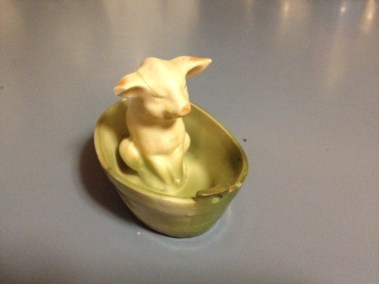
Here’s a draft inspired by a ceramic figurine that sits on a shelf in my kitchen.

“Pig”

A ceramic pig
sits in a shiny
green wash tub,
his ears and nose
the pale pink
of a winter sunrise.

Like Wilbur
as he licked
the buttermilk
trickling
into his mouth,
a blissful smile
spreads across his face.

© Catherine Flynn, 2016

IMG_3756

Thank you to StaceyTaraDanaBetsyAnnaBeth, Kathleen, and Deb for this space for teachers and others to share their stories each Tuesday throughout the year and every day during the month of March. Be sure to visit Two Writing Teachers to read more Slice of Life posts. And don’t forget to stop by Irene Latham’s lovely blog, Live Your Poem, for the Poetry Friday Roundup.

Slice of Life: Patience

11454297503_e27946e4ff_h

“I don’t want to,” she said.

A familiar petulant look, downcast eyes and protruding lower lip, came over her face. She began pulling her hair over her forehead, trying to hide.

I sighed, trying to retain my patience. I’ve been working with this student since the fall when she was diagnosed with dyslexia. In an effort to expedite her progress, she has two intervention sessions on most days. She sees the special education teacher every day and I see her at least three times a week to practice and reinforce what she is learning in special ed. She reads poems and books on topics that interest her. She’s written poems and short paragraphs about  ballet, her passion. She’s been making nice progress.

Yesterday she was working on an acrostic poem for the word “ballet.” She didn’t have any trouble coming up with single words for each letter. But then I reminded her that poets use descriptive words to express their feelings and create images. “Let’s think of ways to describe the barre,” I suggested.

“I like it the way it is.”

I counted to ten. I knew I wouldn’t accomplish anything by engaging in a power struggle with this student, but one of our objectives is to help her learn to be more open-minded and persistent.

I tried one more time. “Let’s look at a poem in your folder and see how Irene Latham describes the “Farm Fresh Eggs.”

Tears began to well up in her eyes. That was my cue that we were finished. As I walked her back to her classroom, I was calm and said we’d take another look at the poem tomorrow. She shrugged, but said goodbye as she went back to her class.

She isn’t this uncooperative too often, but it has happened often enough to know that we might not achieve the goals we set for her at her PPT in October. Her parents and their advocate were insistent that we say what reading level she would achieve by her annual review next fall. We tried to explain that our goal was to have her catch up to grade level expectations as quickly as possible, but there were too many variables to make any kind of prediction about how long it would take to get her there. They were skeptical, but gave us the benefit of the doubt.

As a parent, I understand their worry and desire to have her performing at grade level sooner rather than later. But I also understand that pushing her too hard won’t help her reach this goal. It could undermine our efforts. Everyone is doing everything they can to support this student, providing her with appropriate instruction, modifications, and accommodations. We should be celebrating her every accomplishment, no matter how insignificant it may seem. She will get there in the end. It may just take a little longer for her. Things take the time they take.

Thank you to StaceyTaraDanaBetsyAnnaBeth, Kathleen, and Deb for this space for teachers and others to share their stories each Tuesday throughout the year and every day during the month of March. Be sure to visit Two Writing Teachers to read more Slice of Life posts.