Slice of Life: NCTE Edition

sols_6  logo-higher-logic

“The universe is made of stories, not atoms.”

 ~Muriel Rukeyser~

I arrived at the Hynes Convention Center in Boston on Thursday evening for my first NCTE Convention filled with anticipation about the upcoming three days. To say my expectations were fulfilled is an understatement! From meeting authors Jane Yolen, Gae Polisner, and Kate Messner, to having breakfast with fellow Slicers, to learning so much from all the amazing presenters, it was a weekend I will long remember.

My head is still filled with the wise words shared not only by the teachers, authors, and poets in front of the conference rooms, but with everyone I chatted with throughout the day. How to share all these thoughts swirling around my brain, like the leaves on the streets of Boston Sunday morning? As I pored over my notes, a pattern of recurring words and phrases began to emerge, and I “found” this poem:

Open the door…

welcome to this safe space.

A space to share our voices,

and tell our stories,

through poetry,

movement,

and art.

A place to explore,

imagine,

speculate,

and connect.

A space to find surprises,

insights,

knowledge,

and trust.

This place is a source of joy.

It has the power to change us; to

help us discover what’s in our heart.

It gives us the courage

to take our message

out into the world.

Thank you to Judy Blume, Nancie Atwell, Helene Coffin, Georgia Heard, Linda Rief, Tom Romano, Chris Leheman, Kate Roberts, Maggie Beattie Roberts, Joyce Sidman, Jane Yolen, Jerry Spinelli, Glenda Funk, Cherylann Schmidt, Kate Messner, Gae Polisner, Jo Knowles, Jen Vincent, Brian Wyzlic, Sara Egan, Brian Fizer, Sean Ruday, and Miriam Kopelow for so generously sharing these words, your experiences and your insights with teachers; for giving us the knowledge and the courage and the power to change our students’ lives.

Please visit Two Writing Teachers, where many wonderful and courageous teachers share their stories each week.
Slice of Life: Code Name Verity

sols_6

“Tell all the truth but tell it slant…”

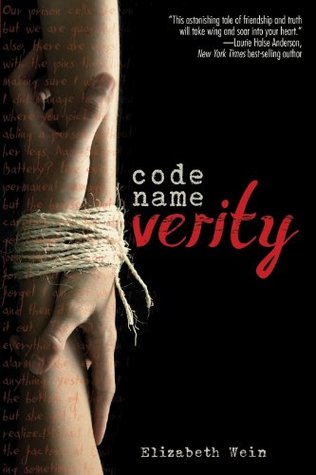
Emily Dickinson’s words came to mind as I reread Code Name Verity, by Elizabeth Wein, over the weekend. When I originally read Wein’s tale of intrigue and suspense, I was caught up in the story of the two heroines. This time, I was more aware of Wein’s craft: her masterful use of foreshadowing and literary allusions that deepen the reader’s understanding of the characters.

Hyperion, 2012
Hyperion, 2012

But even as I noticed subtleties and connections I hadn’t on my first read, I was worried that my book group might not share my feelings about this title. Recommending a book you love to a friend is one thing. Suggesting it to your discussion group is another. A friend can always say she hasn’t gotten around to reading the book yet. In a group, though, it can be very awkward if everyone doesn’t love a book as much as the person who said, “Let’s read this!”

I needn’t have worried. Everyone liked Code Name Verity, even if some of the details were disturbing. The “YA” sticker on the book’s spine didn’t matter to anyone. The story drew them in, and held on to them until the end.

This is a great book for discussion. There aren’t any unresolved plot lines, but there are plenty of questions. Each person had their own unique interpretations and brought up ideas others hadn’t thought of. Listening to one another added layers to our insight and understanding of this powerful book.

Our diverse little group came together because we love books. We’ve developed a camaraderie over the years, sharing the ups and downs of our lives as we share our latest reading. I’m grateful for this community where I feel free to share my thoughts and ideas about books that I love. Books like Code Name Verity, where the truth lies waiting, even if the stories are made up.

Thank you to everyone at Two Writing Teachers for creating this wonderful community!

Poetry Friday: Wynken, Blynken, and Nod

“Children are made readers on the laps of their parents.”

— Emilie Buchwald

Poetry_Friday_Button-210

Parents often ask me how they can help their children become readers. I tell them to read to them early and often. There is an extensive research base supporting this advice. (Reach Out & Read and Reading Rockets have thorough summaries.) The National Center for Family Literacy and The Yale Reading Center are just two of the many websites with resources for parents and teachers. And the variety and quality of children’s books being published today is astounding.

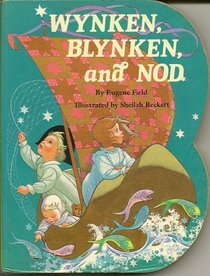
Poetry is especially well suited for little ones. They love the rhythm, rhyme and word play found in nursery rhymes and poems. When my boys were little, we all looked forward to our ritual bedtime reading. We had many Mother Goose collections and rhyming books, and this was one of our favorites.

Image

“Wynken, Blynken, and Nod”

by Eugene Field

Wynken, Blynken, and Nod one night

Sailed off in a wooden shoe–

Sailed on a river of crystal light,

Into a sea of dew.

“Where are you going, and what do you wish?”

The old moon asked of the three.

“We have come to fish for the herring fish

That live in this beautiful sea;

Nets of silver and gold have we!”

Said Wynken,

Blynken,

And Nod.

The old moon laughed and sang a song,

As they rocked in the wooden shoe,

And the wind that sped them all night long

Ruffled the waves of dew.

The little stars were the herring fish

That lived in that beautiful sea–

“Now cast your nets wherever you wish–

Never afeard are we!”

So cried the stars to the fishermen three:

Wynken,

Blynken,

And Nod.

All night long their nets they threw

To the stars in the twinkling foam–

Then down from the skies came the wooden shoe,

Bringing the fishermen home;

‘Twas all so pretty a sail it seemed

As if it could not be,

And some folks thought ‘twas a dream they’d dreamed

Of sailing that beautiful sea—

But I shall name you the fisherman three:

Wynken,

Blynken,

And Nod.

Wynken and Blynken are two little eyes,

And Nod is a little head,

And the wooden shoe that sailed the skies

Is a wee one’s trundle-bed.

So shut your eyes while mother sings

Of wonderful sights that be,

And you shall see the beautiful things

As you rock in the misty sea,

Where the old shoe rocked the fishermen three:

Wynken,

Blynken,

And Nod.

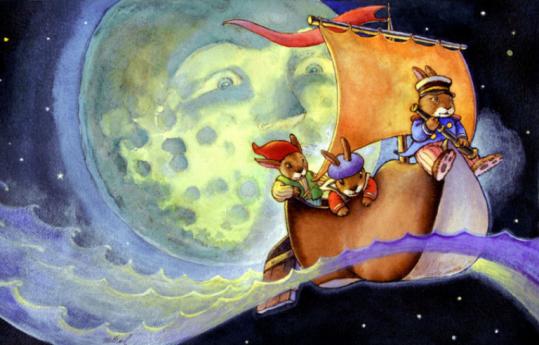
 illustration by David McPhail, from ''Wynken, Blynken, and Nod,'
Illustration by David McPhail, from ”Wynken, Blynken, and Nod”

Be sure to visit Irene Latham at Live Your Poem… for the Poetry Friday Round Up.

It’s Monday! What Are You Reading?

IMWAYR

I love going to conferences and workshops. They’re so invigorating. Sometimes an idea I have is confirmed, or I’m reminded of a strategy or activity I haven’t used in a while. But the best sessions are those where I learn something new that I can immediately use in my teaching and moves my thinking about a topic forward.

This happened on Saturday at the Teachers College Reading and Writing Project Saturday Reunion. Carl Anderson’s session on analyzing informational texts for teaching points to support student writing caused a noticeable shift in my thinking about these books.

Anderson, author of the classic book on conferring, How’s It Going? (Heinemann, 2000), opened his talk by reminding us that using mentor texts is essential if we want our students to write well in any genre. They have to “imagine the shape of their drafts.” In order to do this, they’ll need lots of exposure to models of the genre before they write.

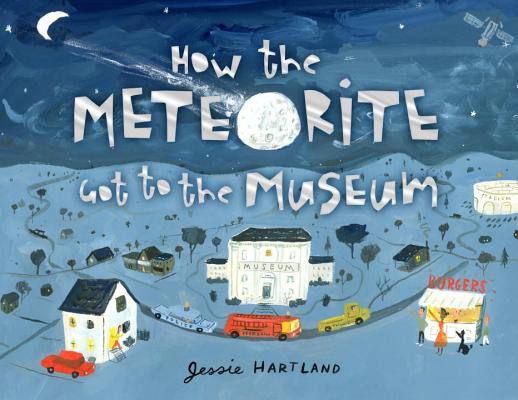
Teachers should look at possible mentor texts through several lenses, including meaning, structure, details, voice, and conventions. Anderson’s words came back to me a few hours later while I was browsing the shelves at Bank St. Book Store. Astronomy has always fascinated me, so Jessie Hartland’s new book, How the Meteorite Got to the Museum (Blue Apple Books, 2013), caught my eye. As I flipped through the pages, I realized I was reading the book differently that I would have just the day before. Many elements of the book’s structure and style popped out and grabbed my attention.

9781609052522

Told as a cumulative story in the tradition of “The House that Jack Built,” How the Meteorite Got to the Museum combines scientific facts with the daily lives of the people whose path the meteor crossed, making the story more interesting and engaging to readers. Hartland infuses the story with humor with lines like “Your car was in an interstellar collision!”

The Peekskill Meteorite’s descent to Earth is described with vivid details that include all the senses. Witnesses’ reactions are chronicled with a variety of verbs each time they’re mentioned, as is the meteorite’s journey itself. Hartland’s colorful, engaging illustrations, which remind me of Maira Kalman’s work, include diagrams, maps and other typical of non-fiction features.

All of these touches give this book a depth that will draw kids back to it again and again, a depth I might have missed if not for Carl Anderson’s ideas about analyzing mentor texts. How the Meteorite Got to the Museum is an ideal mentor text for 3rd or 4th grade students who’ve been writing informational text for a few years and are ready to stretch their writing wings and try a new text structure. And they’ll learn a few facts about meteorites along the way.

Be sure to visit Jen at Teach Mentor Texts and Kellee at Unleashing Readers to find out what other people have been reading lately. Thanks, Jen and Kellee, for hosting!

It’s Monday! What Are You Reading?

IMWAYR

My colleagues and I have been thinking about how we are going to adapt our instruction to meet CCSS Reading Literature standard Nine (Analyze how two or more texts address similar themes or topics in order to build knowledge or to compare the approaches authors take.) I have always tried to link texts thematically whenever possible, but in Connecticut, our state test has had an inordinate emphasis on text-to-self connections for years. So this standard is causing us to rethink some of our curriculum.

I think this is a very good thing, as there is plenty of evidence that reading multiple texts on the same topic and pairing fiction and nonfiction texts helps students build a stronger knowledge base. So we’ve been creating text sets to support our reading units of study. For example, we’ve  selected a variety of titles around the main theme of each unit so students have an independent reading book of their choice that has a similar theme to the short story or novel being read in class. For the past week or so, I’ve been reading and rereading several books we’re thinking about adding to our collection.

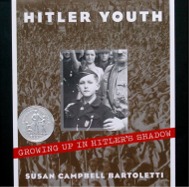
HITLERYOUTH2-1

In the spring, the 8th grade will study the Holocaust in social studies and English/language arts. In the past, students have read the play, The Diary of Anne Frank. We haven’t made all of our choices yet, but so far have added The Book Thief to this unit. We want to include nonfiction as well, so last weekend I read Hitler Youth: Growing Up in Hitler’s Shadow, by Susan Campbell Bartoletti. (Scholastic Nonfiction, 2005) This is a powerful book. Parts of it were difficult to read, but Bartoletti does an excellent job of creating a clear picture of how Hitler manipulated the young people of Germany to his purposes. Using extensive primary sources and photographs, readers experience life in Germany from the rise of the Nazis in the early 1930s to the end of the war and beyond. Bartoletti also includes the story of several teens who realized the Nazi leaders were lying to the German people. They tried to warn others, but were arrested and executed.  An epilogue tells readers what happened to the young people whose stories are told throughout the book after the war, and there is an extensive bibliography. In 2006, Hitler Youth: Growing Up in Hitler’s Shadow was named a Newbery Honor Book, a Siebert Honor Book, and an Orbis Pictus Honor book for Outstanding Nonfiction for Children.

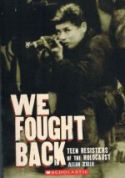
we_fought_back

Bands of partisans fought against Hitler throughout Europe, and many of these brave men and women were teenagers. Allan Zullo has collected their stories in We Fought Back: Teen Resisters of the Holocaust. (Scholastic, 2012) This book has many gripping accounts of the harsh conditions the partisans endured, especially during the winter, and the dangerous missions they undertook in their attempts to break the Nazi war machine. There are notes about the lives of these resisters after the war, as well as recommendations for reading more about each individual.

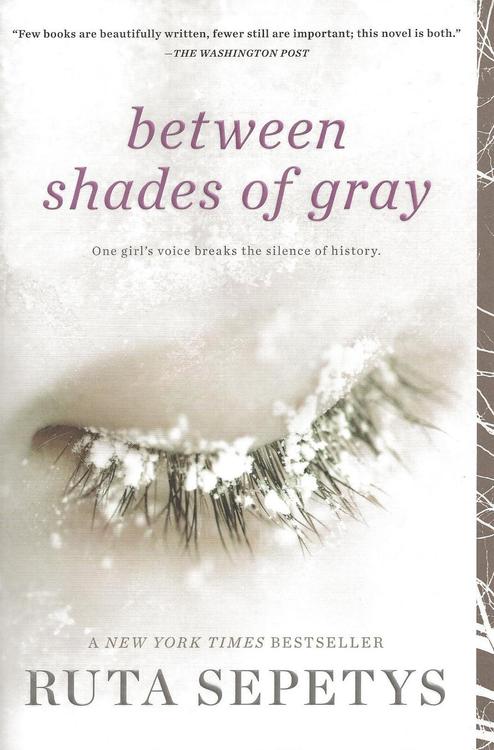
Between-Shades-of-Gray-paperback

Although it isn’t about the Nazis, we will probably include Ruth Sepetys’s Between Shades of Gray in this unit, as there are so many similarities between Lina’s story of persecution and deportation in Soviet Russia under Stalin during World War II and what was happening in Germany and much of Europe at the time. If you haven’t read this amazing book, add it to your list today. In the meantime, you can learn more about it here.

It’s not easy to have the courage to stand up for what you believe in, for what what you know is right. We Fought Back: Teen Resisters of the Holocaust and Between Shades of Gray offer readers inspiring portraits of young people who fought against governments who denied their basic humanity. Reading these books in conjunction with Hitler Youth  will give readers plenty of opportunities to build their knowledge and discuss this terrifying time in world history.

There are many other excellent books that would fit in a unit on the Holocaust. What titles do you include in similar units? How are you addressing standard nine?

Be sure to visit Jen at Teach Mentor Texts and Kellee at Unleashing Readers to find out what other people have been reading lately. Thanks, Jen and Kellee, for hosting!

Slice of Life: The 4th Grade Readers’ Choice Awards

Image

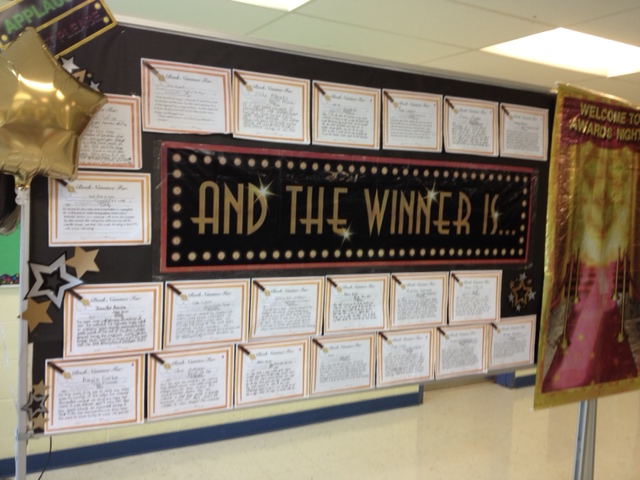
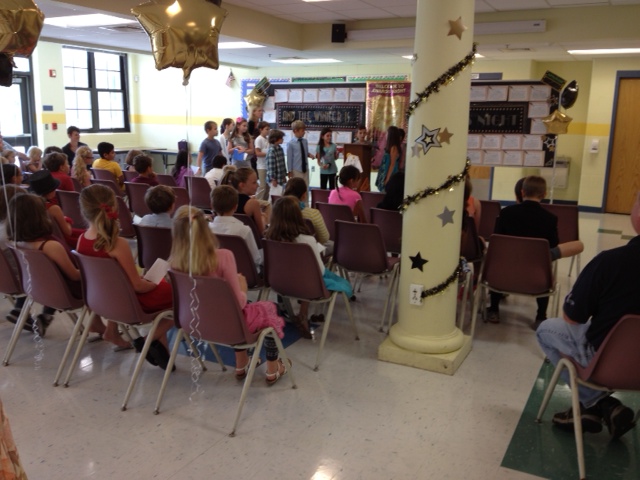
Last week, on the sixth day of school, my fourth grade colleagues kicked off the year in style with their annual “Readers’ Choice Awards.” Wanting to make summer reading assignments more purposeful, Bernadette and Kim came up with a plan that also energized their students about reading.

Each student was encouraged to nominate one of their summer reading selections (all chosen from a list of suggested titles, but students could chose a book not on the list) for the best book in one of the following categories: Best Character, Best Setting, and Best Plot. Students wrote their nominations, hoping to persuade their classmates to vote for their book. Once all the nominations were shared, the children voted for a book in each category.

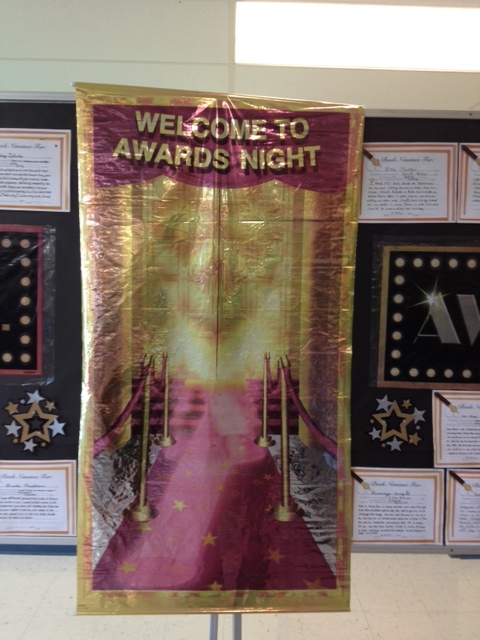
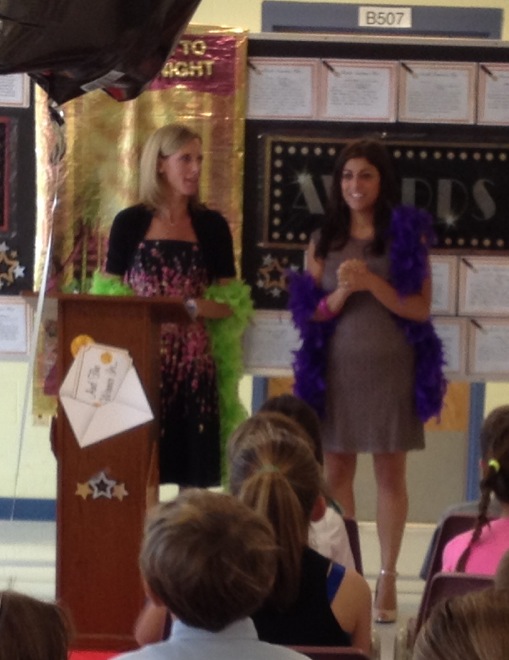
ImageMost fourth-graders arrived at school on Friday dressed to the nines for the awards ceremony, which included a red carpet, golden statues, and lots of applause. After a quick thank-you to the parents from Kim and Bernadette, the Masters of Ceremonies were introduced, and the nominees for the first category were announced. Students were called up to the podium to share the book they nominated, and the runner-up was announced. Then the emcee opened the envelope containing the name of the winner. To heighten the excitement, students in the audience provided a drum-roll on their laps. A statue was presented to the student who nominated the winning book before he or she read a short thank-you speech.

   Image   Image

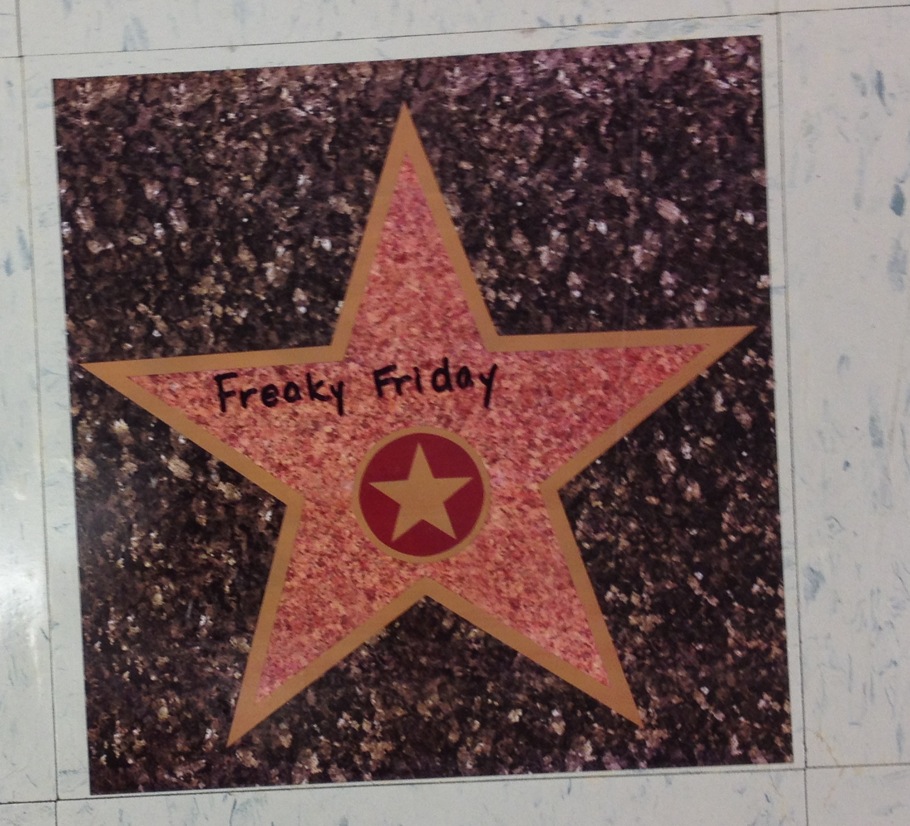
Once all the awards had been handed out, students mingled with their parents and other guests and posed for photos. All the nominations were displayed for visitors to read, and there were even Hollywood-like stars on the floor leading into the cafeteria.

ImageAlthough this ceremony lasted only half-an-hour, it’s impact will be felt for the rest of the year. By being sensitive to including as many students as possible in the ceremony, Kim and Bernadette created a supportive tone in their classrooms and sense of community that often takes much longer to establish. Even students whose books weren’t chosen had the opportunity to share the title of their book. Parents loved seeing their children celebrate their summer reading in a meaningful way, and the students started the year off with style, excited about reading and sharing books with their friends.

Thank you to Stacey at Two Writing Teachers for hosting Slice of Life Tuesdays!

It’s Monday! What Are You Reading?

IMWAYR

With the beginning of a new school year upon us, teachers around the country are making plans for a year that is sure to be filled with challenges. But right now, we aren’t thinking about those hurdles. We’re thinking about possibilities. Teachers are pros at seeing the possibilities and potential in children. We are tireless in our effort to find ways to bring out the very best in our students. One of the most important ways we do this is by sharing books that help our students see the possibilities and potential within themselves.

Artist and writer Debbie Millman recently told graduates at San Jose State University that success has nothing to do with luck. Rather, “it is really all about the strength of IMAGINATION.” This is an important message for students of all ages. Last week I came across several picture books that can help our students understand the importance of keeping their imaginations open to the wonders and possibilities all around them.

Image

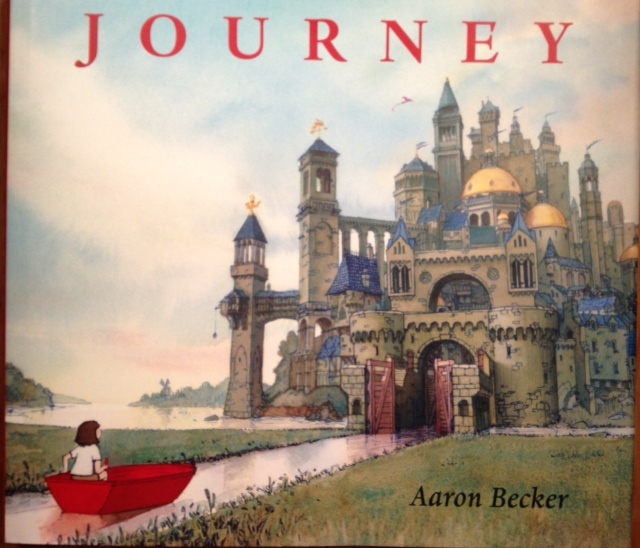
Journey (Candlewick Press, 2013) by Aaron Becker is a stunning book. It will remind readers of Harold and the Purple Crayon immediately, but Becker’s full color illustrations give this book a magical quality. There is an exotic mysteriousness to Journey that will lead to many questions and rich discussions about just exactly where the girl with the red crayon has gone. If you haven’t seen this book yet, the trailer will give you an idea of the riches within.

Image

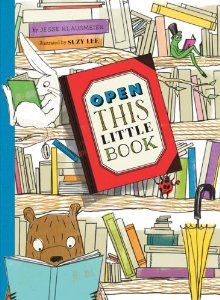
Jesse Klausmeier’s Open This Little Book (Chronicle Books, 2013; illustrated by Suzy Lee) is a book I would have adored when I was little. This is a book within a book within a book and so on. The story follows one pattern to the middle of the book, then follows another pattern to the next to the last page, when the pattern changes and readers are rewarded with Lee’s charming illustration depicting the endless possibilities in books. The cover of each little book hints at the animal featured within. This is just one of the clever details that will have young readers examining the illustrations over and over again.

Image

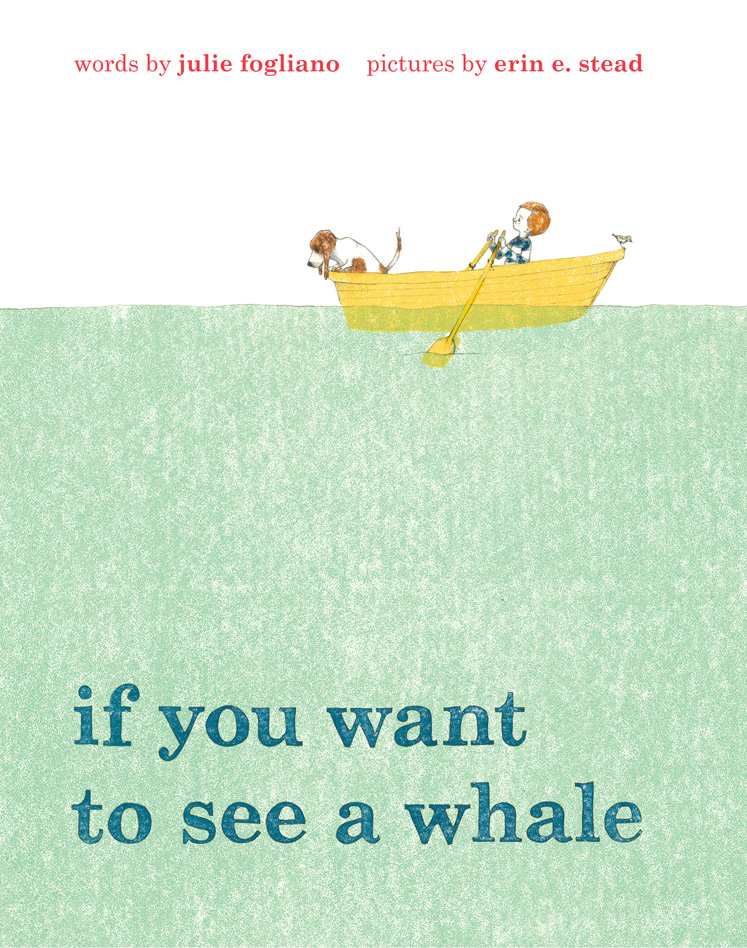
If you want to see a whale (A Neal Porter Book, Roaring Book Press, 2013; illustrated by Erin E. Stead) by Julie Fogliano is a lovely, quiet book. According to Fogliano, in order to see a whale, “you will need…time for waiting and time for looking and time for wondering…” This is an important reminder to children (and their parents!) in today’s busy world.

Yesterday, Donalyn Miller asked readers of the Nerdy Book Club blog what books they were looking forward to sharing with students this year. These are three titles I will be sharing with children again and again to encourage them to unleash the power of their imaginations.

Be sure to visit Jen at Teach Mentor Texts and Kellee at Unleashing Readers to find out what other people have been reading lately. Thanks, Jen and Kellee, for hosting!

Slice of Life: The Birth of Sunset’s Kittens

Image

“Our abilities are limited only by our perceptions.”

~ Debbie Millman~

On her blog, Read, Write, Reflect, Katherine Sokolowski recently wrote about her childhood impression that authors were a “chosen few” who “lived in magical worlds.”

This got me thinking about my experience with authors as a child. The town where I grew up (and am lucky enough to still live) is only about an hour and a half from New York City. When I was a kid in the sixties there were at least 10 working farms in town (3 on my road alone) and there was exactly one “development.” Needless to say, it was a pretty peaceful place. The perfect place for writers to get away from the hustle and bustle of the city, yet close enough to go in when they had to.

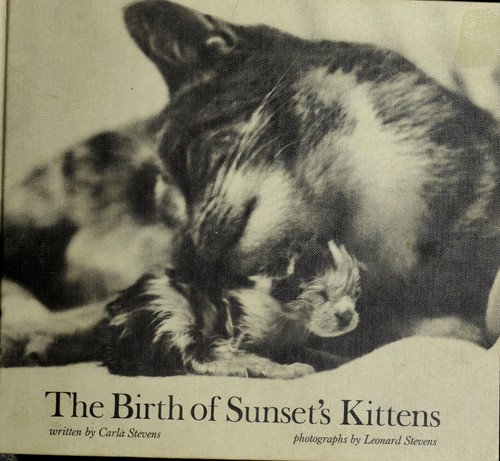
Because the mother of one of my classmates was a writer, I was lucky enough to know a “real” author. I remember Mrs. Stevens bringing Where the Wild Things Are into school one day. It was still in great big sheets, just as it had come off the printing press, and she showed us how it was cut and assembled into a book. In 1969, her book, The Birth of Sunset’s Kittens, was published. I loved this book and I checked it out of the library many times. To me, Mrs. Stevens was very sophisticated and glamorous, and reading her book made me feel that way, too.

Image

Imagine my delight, then, when I found a copy of this book at a local book sale! I scooped up this precious find and reread it on the spot. It is longer than I remember, and includes more details than I imagine our librarian was comfortable reading to us, but it’s as charming as ever. (And it smells like it’s been in a library for 35 years! Heavenly!)

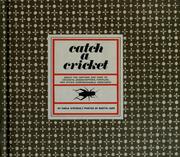
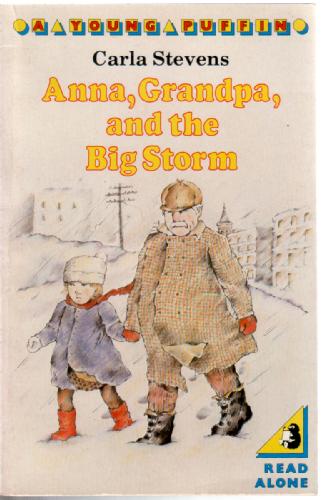
This isn’t the first time I’ve found a book written by Mrs. Stevens at a book sale. One year I found a copy of Catch a Cricket, a title I wasn’t familiar with. And I’ve found several copies of Anna, Grandpa, and the Big Storm over the years, all of which are now in my book collection.

Image          Image

My husband thinks I’m nuts to keep all these books. He doesn’t understand that I keep  them because of what they represent: a portal to my childhood and the person I was. I look back on that awkward, self-conscious nine-year-old and am grateful beyond words to Mrs. Stevens for writing these books, and for being such a great role model. Her books helped fan the flames of my passion for reading. A passion that helped me become the person I am today.

Thank you, as always, to Stacey and Ruth at Two Writing Teachers for hosting the Slice of Life Challenge.

Poetry Friday: A Splot, Buildings, and A Windmill

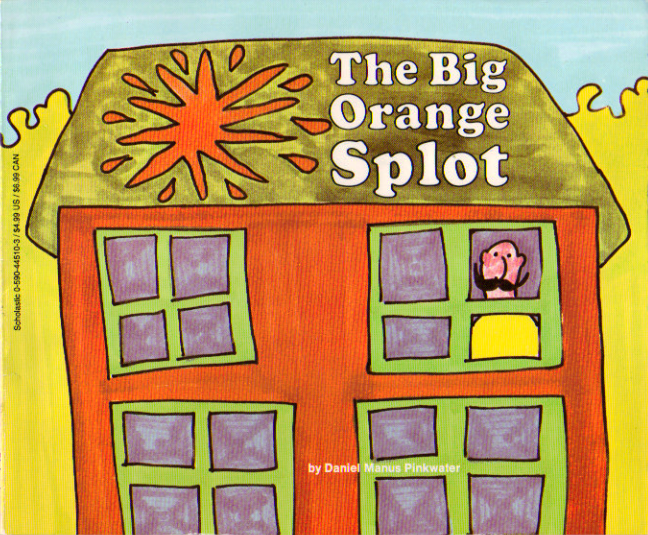
When I taught third grade, The Big Orange Splot, by Daniel Pinkwater, was always a favorite. This is the improbable story of what happens after an errant seagull flies over Mr. Plumbean’s house and drops a can of orange paint on the roof. Because “all the houses were the same” on their “neat street,” the neighbors assume that Mr. Plumbean will get right to work repainting his house. But he waits a little while. He thinks about the splot. When he finally does paint his house, it’s not at all what the neighbors had in mind. When asked what he has done, Mr. Plumbean simply replies, “My house is me and I am it. It looks like all my dreams.” At first the neighborhood thinks he’s nuts, but after a while they start to see the wisdom of Mr. Plumbean’s mantra. Eventually the houses aren’t the same at all and Mr. Plumbean’s neighbors dreams are revealed through their houses.

The_Big_Orange_Splot

Kids loved the wackiness of Mr. Plumbean and his house, and were intrigued by the other houses in the neighborhood. I began collecting photos of unusual houses and buildings to display on a bulletin board when we read this story.  Then I found this poem, the perfect complement to the pictures.

Buildings

by Myra Cohn Livingston

Buildings are a great surprise,

Everyone’s a different size

Offices grow long and high

Tall enough to touch the sky.

Houses seem more like a box

Made of glue and building blocks

Every time you look, you see

Buildings shaped quite differently

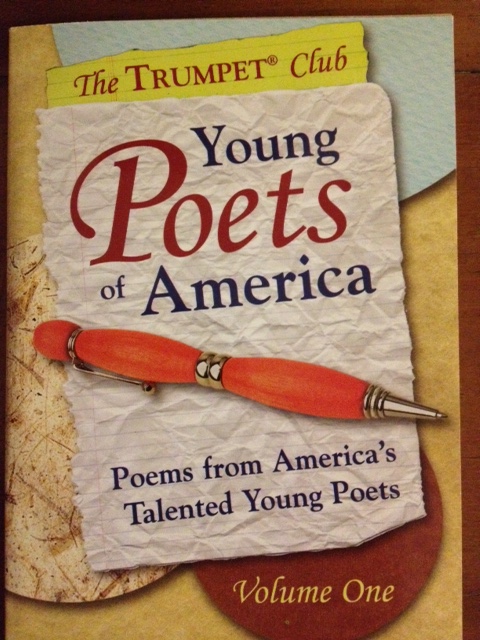
One year during this unit, a poetry contest was announced in the Trumpet Book Club order. (Trumpet either was or became part of Scholastic.) We had been reading and writing poetry since the start of school, so I shared this with my students and encouraged them to enter. I don’t remember specifically telling anyone to write a poem about a building, but the bulletin board did inspire some of them. Several students did submit poems to the contest and we were all thrilled when Allie’s poem was chosen to be included in this anthology:

photo-2

A Windmill

by Allie Mandeville

Windmill dancing in the breeze,

With a swift, turning ease.

The windmill makes a squeaky sound

As it’s turning round and round.

Spinning once, spinning twice,

The sound of spinning

Sounds so nice.

And as the wind makes it turn,

The windmill looks so very stern.

The windmill looks so beautiful.

The windmill looks so nice.

But don’t you think

It must be full of mice?

(Thank you, Allie, for permission to share your poem.)

Image
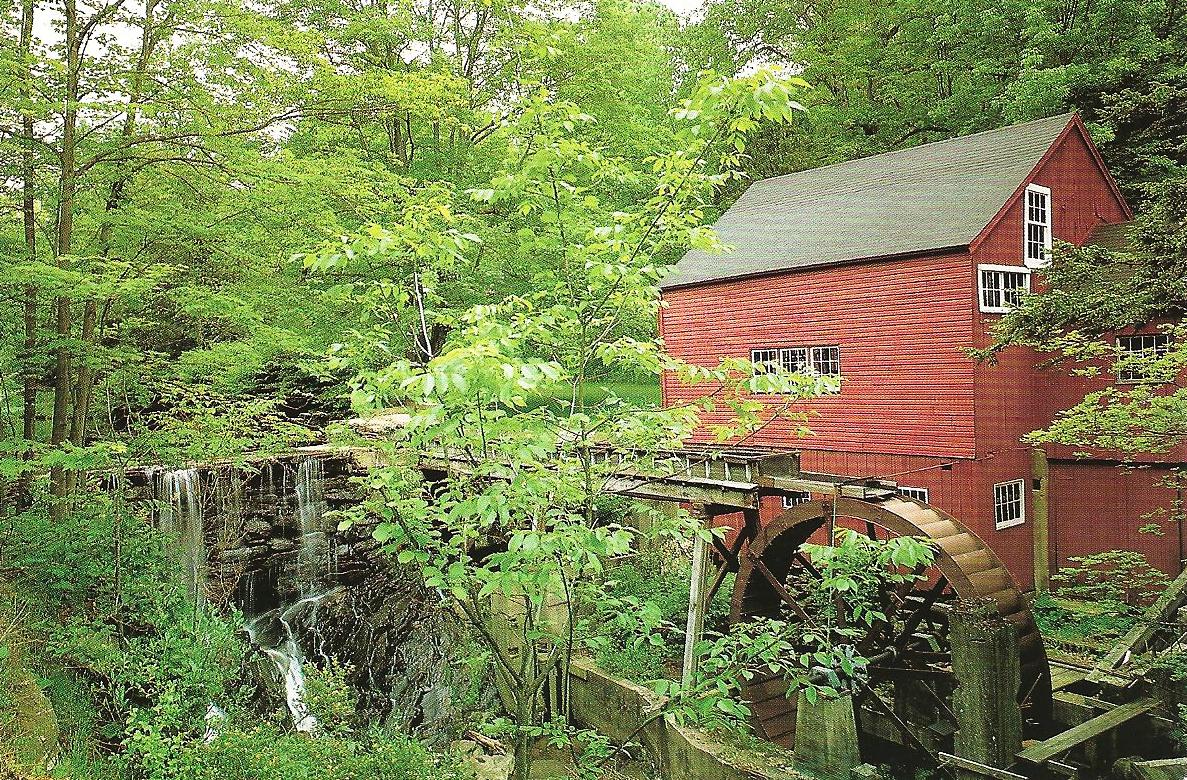
The picture that inspired Allie’s poem. Photo by Brad Stanton

I was reminded of all this recently when I found a copy of the anthology at a local book sale. I’m sure that if I were teaching third grade today I would still put up bulletin boards of interesting photos related to what we were reading and learning about. I know I would still be teaching writing using a workshop model. I would allow students to choose topics and subjects that interested them, not limit them to prompts provided by the state or some other distant textbook publisher. 

I would do all this and more to help them understand that the world is full of possibilities. I would do this so they could write poems that are full of all their dreams.

Be sure to visit Sherry at Semicolon or Matt at Radio, Rhythm & Rhyme for the Poetry Friday Round Up.

It’s Monday! What Are You Reading? The Cat Who Went to Heaven

IMWAYR

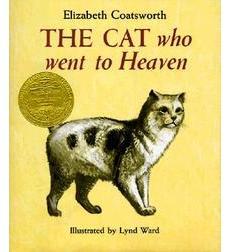
Last weekend Newtown’s C.H. Booth Library held their annual book sale. This sale is well-stocked, well-organized, and never disappoints. I always find a treasure or two, as well as more standard fare to restock our classroom libraries. One purchase I was especially pleased with this year was a paperback copy of The Cat Who Went to Heaven for fifty cents. This 1931 Newbery Medal winner by Elizabeth Coatsworth is a gem of a book. Many, if not all, of the CCSS literature standards could be addressed through a shared reading of this book. Certain passages are ideal for close reading.

 Image

The Cat Who Went to Heaven is an excellent example of a complex text, a text that Fisher, Frey, and Lapp describe as one that “often require[s] the reader’s attention and invite[s] the reader back to think more deeply about the meaning of the text.” (Text Complexity: Raising Rigor in Reading, IRA, 2012, p. 106) Shared reading of this story will help students develop the skills necessary to “readily undertake the close, attentive reading that is at the heart of understanding and enjoying complex works of literature,” a stated goal of the CCSS.

The story of a poor Japanese artist, The Cat Who Went to Heaven begins when the artist’s housekeeper returns from the market with a cat instead of dinner. The artist is  furious that she has spent his precious pennies on a “goblin…[who will] suck our blood at night!” The housekeeper convinces him that “there are many good cats, too.” The artist relents, and the cat, whom they name “Good Fortune,” becomes part of their household.

Soon, fortune does indeed smile on the artist, for he is asked by the local temple to paint a mural of the death of the Buddha. The rest of the story unfolds as a series of events in the Buddha’s life, each one revealing an important aspect of his character and the personal qualities at the heart of Buddhism.

This structure makes this book an ideal choice for meeting standard RL.6.3: “Describe how a particular story’s or drama’s plot unfolds in a series of episodes as well as how the characters respond or change as the plot moves toward a resolution.” The theme of the story is also well developed and students will be able to explain “how it is conveyed through particular details” (RL.6.2) These elements, along with Coatsworth’s rich use of vocabulary, should generate many thought-provoking questions and discussions.

I will share this book with my sixth grade colleagues, as China and Buddhism are part of the sixth grade social studies curriculum. The depiction of the beliefs and practices of Buddhism are conveyed throughout this story and would reinforce the social studies content.

Jazz vocalist and composer Nancy Harrow has adapted this book as a series of 16 songs, which are available on CD. These have been performed as classic Japanese puppet theater. Although I couldn’t find a full performance of the puppet theater, you can watch a short scene here:

An interview with Harrow, in which she describes the process of writing the songs, can be seen here:

Sharing Harrow’s work with students after reading The Cat Who Went to Heaven would also allow students to work on standard RL.6.7: “Compare and contrast the experience of reading a story, drama, or poem to listening to or viewing an audio, video or live version of the text, including contrasting what they ‘see’ and ‘hear’ when reading the text to what they perceive when they listen or watch.”

Teachers around the country are concerned about having the materials needed to meet the demands of the CCSS. Rather than spending money on new materials, many of questionable quality, we should invest in time to revisit materials we already have but may not be using to full advantage. The Cat Who Went to Heaven is the perfect example of just such a book.

Be sure to visit Jen at Teach Mentor Texts and Kellee at Unleashing Readers to find out what other people have been reading lately. Thanks, Jen and Kellee, for hosting!