Picture Book 10 for 10: Picture Books by Jane Yolen

Image

Picture Book 10 for 10 is the brainchild of Cathy Mere of Reflect & Refine: Building a Learning Community and Mandy Robeck of Enjoy and Embrace Learning. During this annual event, now in its fourth year, teachers, librarians, and book lovers create lists of 10 essential picture books. Cathy and Mandy collect and share these lists, and everyone is richer because of their efforts. Be sure to visit their blogs to see their lists, and check out links to other lists. Thank you, Cathy and Mandy, for organizing this celebration of children’s literature!

Jane Yolen, who has been called the Hans Christian Anderson of our time, is one of my favorite authors and I’ve always used her books in my classroom. Her books are filled with humor, compassion, and a deep desire to ensure that children continue to have quality literature that preserves our cultural heritage. She has written over 300 books, including fantasy and fairy tales, historical fiction, poetry, rhyming picture books, non-fiction picture books, novels and more. Needless to say, trying to choose just ten of her books turned out to be quite a challenge! I tried to include one book from each genre Yolen has written in and I admit my choices are very subjective. Many of these are older works that I read to my children when they were small. These, of course, are my favorites.
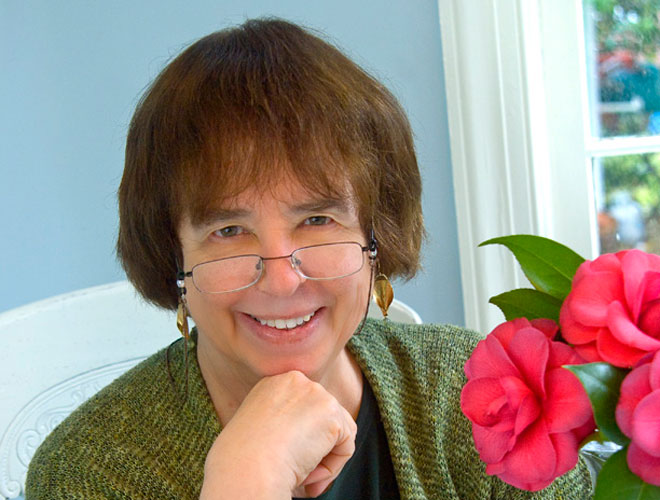
Photo by Jason Stemple, via wired.com

One of the most generous and inspiring writers working today, Yolen speaks at conferences of teachers and writers often, sharing her wisdom about books and writing. I have been fortunate to hear her speak twice, and a smarter, funnier, kinder advocate for children’s literature is not to be found. Yolen’s website is a treasure-trove of information about anything to do with her life and work.
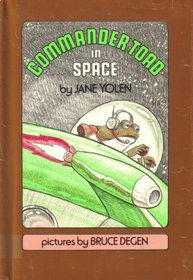
                             Image       Image

Commander Toad in Space (CowardMcCann, 1980; illustrated by Bruce Degen) On her website, Jane explains that she got the idea for this series (which are really early readers) when she read an article in her local newspaper about a boy whose frog, “Star Warts”… “had just won a jumping frog contest.” Yolen goes on to point out that “every book is riddled with puns,” which today’s beginning readers are certain to understand, given the popularity of Star Wars. Not all the puns are related to Star Wars, though. Commander Toad and the Planet of the Grapes (CowardMcCann, 1982) gives a nod to another Hollywood classic, and Mr. Hop is suspiciously Spock-like. Even if they don’t get all the allusions, these books (there are seven titles altogether) are tried and true favorites of first and second grade readers.
encounter

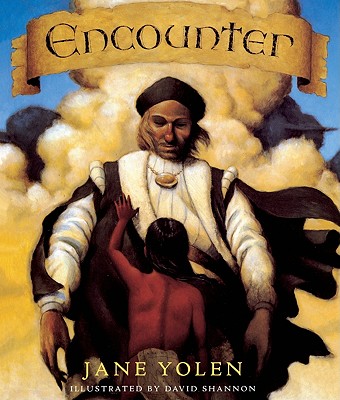
Encounter (Harcourt Brace, 1992; illustrated by David Shannon) Kirkus described this book as “a poignent account of Columbus’s landfall in the Americas, from a Taino’s point of view.” An important counterpoint to “In 1492, Columbus sailed the ocean blue…” this book belongs in every classroom. Yolen’s subtle prose and Shannon’s luminous illustrations ensure that this vanished culture won’t be forgotten.
Image

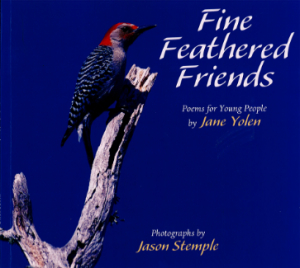
I love of all of Jane’s poetry, so it was difficult to choose a single book. She and her son, Jason Stemple, have teamed up to create a number of books like Fine Feathered Friends (Boyds Mills, 2004). Yolen uses Stemple’s stunning “photographs as a jumping off place for poetry.” (About.com interview) A masterful poet, Yolen’s poems are full of imagery, humor, and facts about each bird. Haikus, quatrains, and other forms are paired with facts about each bird, including its genus, species, and habitat.
122075

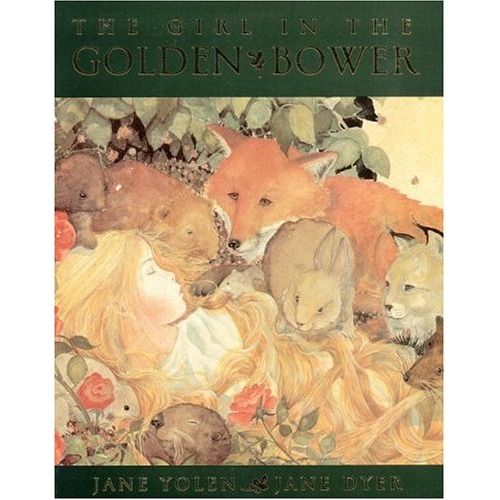
The Girl in the Golden Bower (Little Brown, 1994; illustrated by Jane Dyer) is an original fairy tale that my third graders always loved. Indeed, Book List states that “the lyrical language Yolen employs makes this an excellent choice for reading aloud.” The story contains many elements for the genre, including an evil sorceress, magical objects, spells, and people who are who are transformed into animals.
Image

Here’s a Little Poem: A Very First Book of Poetry (Candlewick and Walker UK; with Andrew Fusek Peters; illustrated by Polly Dunbar) Jane edited this anthology with British author Andrew Fusek Peters. It is one of my favorite collections, full of poems about the everyday lives of young children. My favorite poem in this collection will always and forever be “The No-No Bird,” by Peters. It begins “I’m the no-no bird/that’s right, that’s me/I live up in/the Tantrum Tree.” One year I had a student who said no to everything I tried to read with him until we got to this. I think he suddenly realized that he wasn’t alone in his negativity! He still remembers this poem, and he’s now a passionate reader who’s about to start fifth grade.
Image

How Do Dinosaurs Say Good Night? (Scholastic, 2000; illustrated by Mark Teague) This rhyming picture book is probably one of Ms. Yolen’s best known recent works. It has won numerous awards and is the first book in a series which now includes seven titles. These dinosaurs have daily lives exactly like those of their young fans. And while not always the models of appropriate behavior, in the end, they do what’s right and turn out the light. (Sorry, I’ve read this too many times today!)
DSC03855

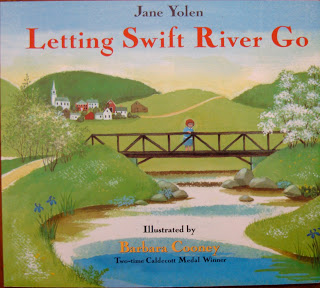
Letting Swift River Go (Little Brown, 1992; illustrated by Barbara Cooney) My grandmother grew up in Athol, one of the towns near the Quabbin Reservoir, so I was immediately drawn to this book when it was published. It tells the story of how four towns along the Swift River in central Massachusetts were flooded to create a source of drinking water for Boston. Yolen’s text explains this process in a child-friendly way. Indeed, the Los Angeles Times Book Review wrote that “…the words convey the poignancy of change, as well as the healing effects of accepting change and moving on.”  Both the town where I live and the town where I teach are bordered by lakes that were created by flooding sections of our river communities.  I have shared this book with students many times to give them a better understanding of our towns’ history.
Image

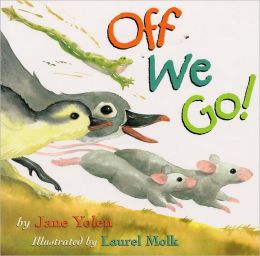
Off We Go! (Little Brown, 2000; illustrated by Laurel Molk) In this rhyming picture book for the preschool set, all the animals are off to Grandma’s house. Told in quatrains, each animal’s stanza begins with an action: the mouse goes “tip-toe, tippity toe,” while the frog goes “hip-hop, hippity hop.” I can envision students acting out these stanzas as the story is read.
Image

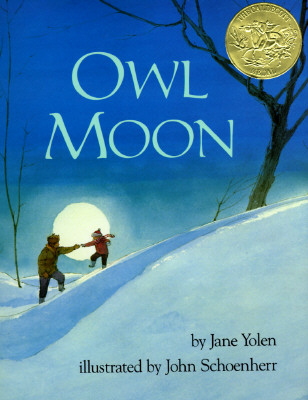
Perhaps Ms. Yolen’s best known book, Owl Moon (Philomel, 1987) was awarded the Caldecott Medal for John Schoenherr’s gorgeous illustrations. This story of a little girl going owling with her father was a particular favorite of my adventurous boys when they were little. They took great delight in finding the woodland animals Schoenherr hid in the shadows of his woodland scenes. The Horn Book called the text “quiet and reflective,” (Vol. 62, No. 6, p. 790) and Yolen herself considers the text “an unrhymed picture book poem.”
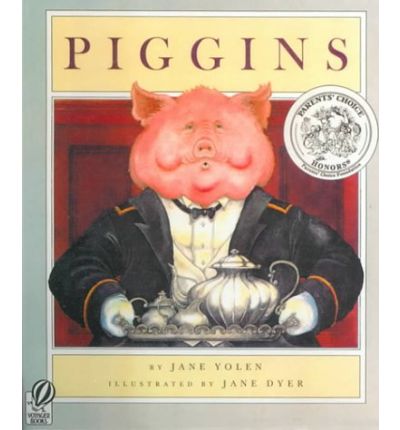
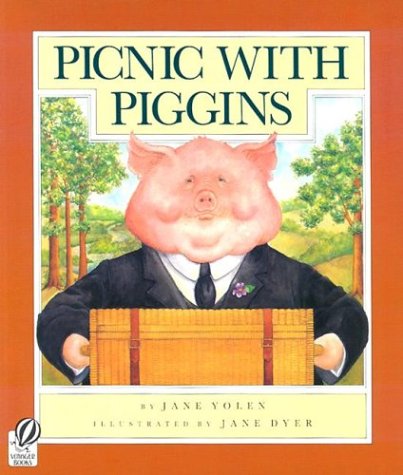
Image   ImageImage

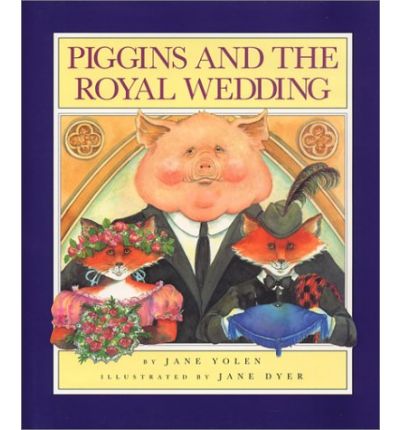
Piggins (Harcourt, 1987; illustrated by Jane Dyer) is the story of Piggins, a very proper British butler, who keeps everything running smoothly at 47 The Meadows, the very proper Edwardian home of Mr. and Mrs. Reynard. Small mishaps have happened around the house, and Mrs. Reynard’s cursed diamond lavalier is blamed. The Reynards invite their close friends to a dinner party, hoping that they will be able to sell the necklace. A mystery ensues and Piggins saves the day. Humorous allusions abound and although the original readers (i.e. parents) found similarities to Upstairs, Downstairs, today’s parents are more likely to be reminded of Gosford Park. The fun continues in Picnic with Piggins (Harcourt Brace, 1988) and Piggins and the Royal Wedding (Harcourt Brace, 1988). Both are also illustrated with Jane Dyer’s charming watercolors.

I could go on and on, and shudder to think of some of the books I left off this list. What is your favorite Jane Yolen picture book?

Thank you, Ms. Yolen, for your tireless efforts to create this wonderful body of work that will continue to enrich the lives of children and adults alike for years to come.

Poetry Friday: The Sand Beneath Our Feet

Image                  Image

TeachersWrite, the summer writing camp for teachers organized by Kate Messner, Gae Polisner, Jo Knowles, and Jen Vincent, ends Monday. While I’m sad that the structured lessons, quick-writes, and feedback opportunities will be ending, I’m very excited about the writing I’ve done this summer. I’ve learned so much and can’t wait to get back to school to share these insights with my colleagues and students.

Image
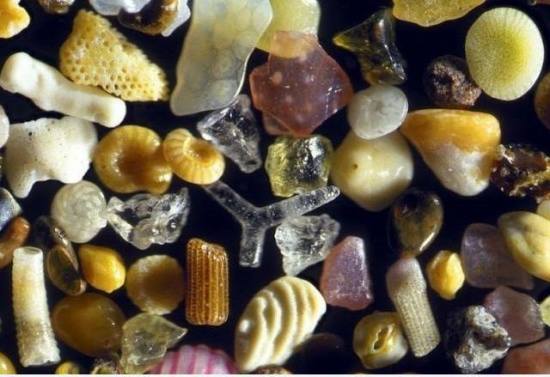
Sand, magnified 250x via Science is Awesome
http://24.media.tumblr.com/tumblr_m0rvfs8x3j1qbwfjko1_500.jpg

Today’s poem was inspired by this photo, which a friend shared on Facebook a few weeks ago. I was amazed by the uniqueness of each individual grain, and it got me thinking. This is the current draft of the resulting poem:

Sometimes in our busy lives,

we brush others aside

as carelessly as we brush

the sand off our feet

after a day at the beach.

But what if we stopped,

took a moment

for a closer look?

What wonders might be revealed to us?

The geologist, turning

her microscope to those few

grains of sand,

is rewarded with

an astonishing menagerie:

a crystal jack, broken in half

translucent beads, flecked with whirls of milky white

ivory sea urchins

golden honeycombs

a swirl of pink cotton candy

amber snails, spiraling ever inward

a puffer fish, gaping up out of the darkness.

Shaped by forces beyond our ken,

each one as different from the other

as you and I.

What pressures shaped you?

What winds and rains buffeted you about?

What marvels have been forged

within your heart?

© Catherine Flynn, 2013

Many, many thanks to Kate, Gae, Jo, and Jen, for a wonderful, rewarding summer of writing. I’m looking forward to being back next summer! (And maybe meeting some of you at NCTE in Boston?)

There are more incredible photos of magnified sand at InspirationGreen. I think this would be a perfect quick-write to share with students of any age.

Thanks also to Renee at No Water River for hosting the Poetry Friday Round Up. Be sure to visit her and all the other Poetry Friday folks.

Poetry Friday: A Splot, Buildings, and A Windmill

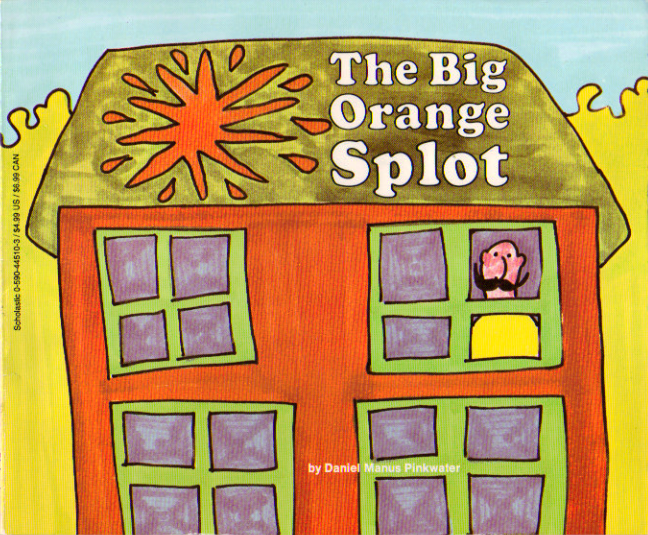
When I taught third grade, The Big Orange Splot, by Daniel Pinkwater, was always a favorite. This is the improbable story of what happens after an errant seagull flies over Mr. Plumbean’s house and drops a can of orange paint on the roof. Because “all the houses were the same” on their “neat street,” the neighbors assume that Mr. Plumbean will get right to work repainting his house. But he waits a little while. He thinks about the splot. When he finally does paint his house, it’s not at all what the neighbors had in mind. When asked what he has done, Mr. Plumbean simply replies, “My house is me and I am it. It looks like all my dreams.” At first the neighborhood thinks he’s nuts, but after a while they start to see the wisdom of Mr. Plumbean’s mantra. Eventually the houses aren’t the same at all and Mr. Plumbean’s neighbors dreams are revealed through their houses.

The_Big_Orange_Splot

Kids loved the wackiness of Mr. Plumbean and his house, and were intrigued by the other houses in the neighborhood. I began collecting photos of unusual houses and buildings to display on a bulletin board when we read this story.  Then I found this poem, the perfect complement to the pictures.

Buildings

by Myra Cohn Livingston

Buildings are a great surprise,

Everyone’s a different size

Offices grow long and high

Tall enough to touch the sky.

Houses seem more like a box

Made of glue and building blocks

Every time you look, you see

Buildings shaped quite differently

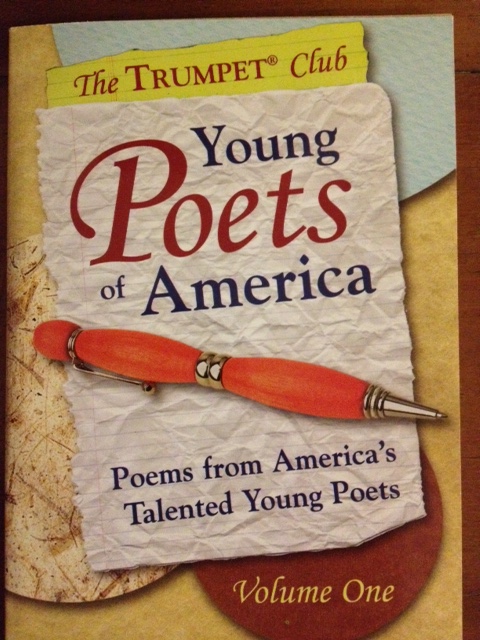
One year during this unit, a poetry contest was announced in the Trumpet Book Club order. (Trumpet either was or became part of Scholastic.) We had been reading and writing poetry since the start of school, so I shared this with my students and encouraged them to enter. I don’t remember specifically telling anyone to write a poem about a building, but the bulletin board did inspire some of them. Several students did submit poems to the contest and we were all thrilled when Allie’s poem was chosen to be included in this anthology:

photo-2

A Windmill

by Allie Mandeville

Windmill dancing in the breeze,

With a swift, turning ease.

The windmill makes a squeaky sound

As it’s turning round and round.

Spinning once, spinning twice,

The sound of spinning

Sounds so nice.

And as the wind makes it turn,

The windmill looks so very stern.

The windmill looks so beautiful.

The windmill looks so nice.

But don’t you think

It must be full of mice?

(Thank you, Allie, for permission to share your poem.)

Image
The picture that inspired Allie’s poem. Photo by Brad Stanton

I was reminded of all this recently when I found a copy of the anthology at a local book sale. I’m sure that if I were teaching third grade today I would still put up bulletin boards of interesting photos related to what we were reading and learning about. I know I would still be teaching writing using a workshop model. I would allow students to choose topics and subjects that interested them, not limit them to prompts provided by the state or some other distant textbook publisher. 

I would do all this and more to help them understand that the world is full of possibilities. I would do this so they could write poems that are full of all their dreams.

Be sure to visit Sherry at Semicolon or Matt at Radio, Rhythm & Rhyme for the Poetry Friday Round Up.

Poetry Friday: When You Are Old

Image

When You Are Old

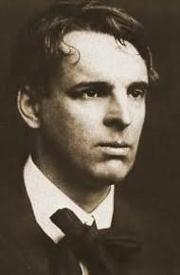
by William Butler Yeats

When you are old and gray and full of sleep,

And nodding by the fire, take down this book,

And slowly read, and dream of the soft look

Your eyes once had, and of their shadows deep.

How many loved your moments of glad grace,

And loved your beauty with love false or true,

But one man loved the pilgrim soul in you,

And loved the sorrows of your changing face;

And bending down beside the glowing bars,

Murmur, a little sadly, how love fled

And paced upon the mountains overhead

And hid his face amid a crowd of stars.

William Butler Yeats
Image
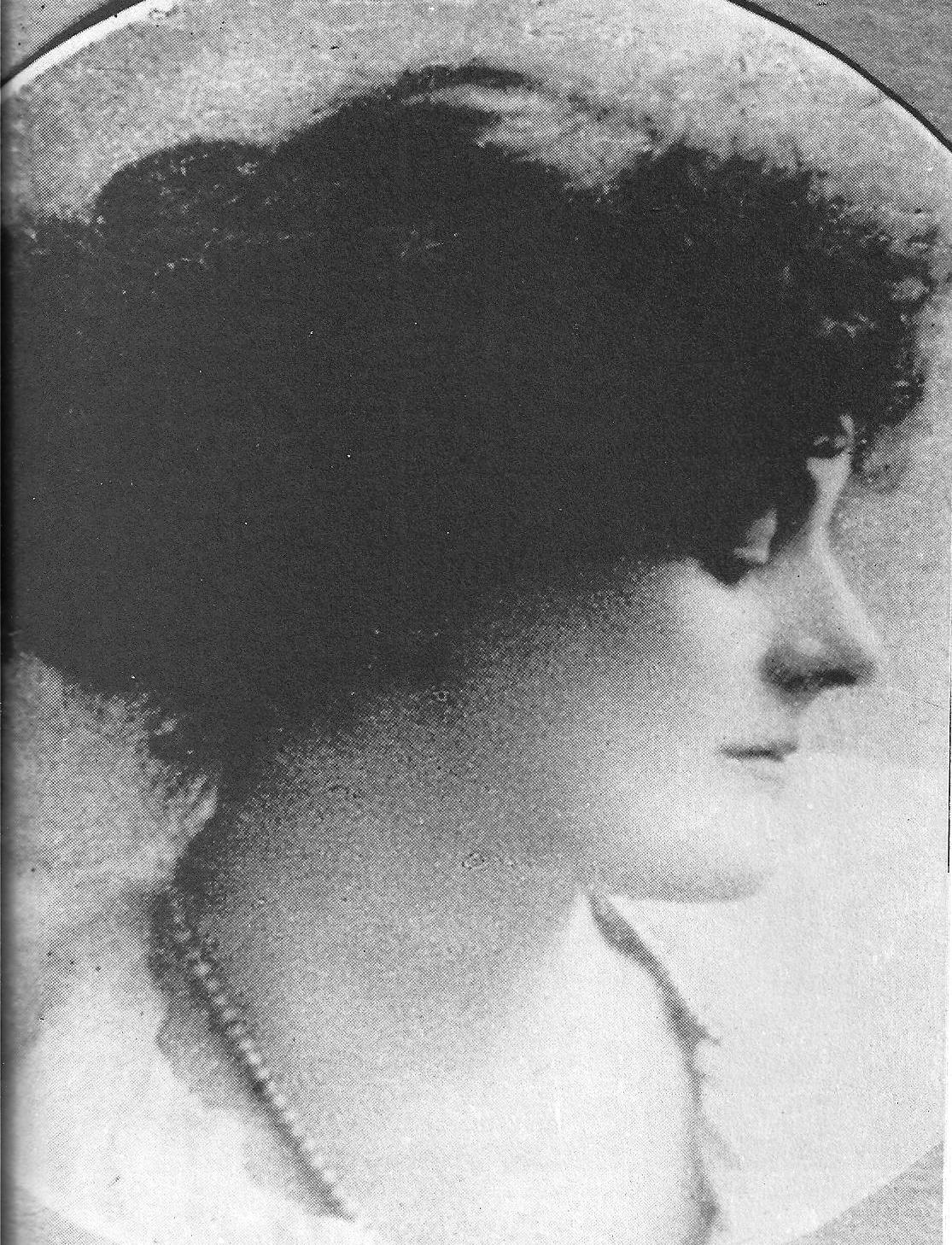
Maud Gonne, photo from All the Olympians, by Ulick O’Connor

This poem always stirs up nostalgic feelings in me. In just a few words, Yeats evokes the  beauty of the muse of his youth, Maud Gonne. And yet, “Love fled…and hid his face amid a crowd of stars.” Happy endings are not always possible, but our memories are with us always.

I sometimes think that I’m too nostalgic, but there was an article in the New York Times earlier this week about the positive aspects of nostalgia. Researcher Constantine Sedikides and his colleagues have found that “Nostalgia has been shown to counteract loneliness, boredom, and anxiety” as well as “make people more generous to strangers and more tolerant of outsiders.” Once again, poets know intuitively what it takes scientists years to figure out.

Be sure to visit Michelle at Today’s Little Ditty for the Poetry Friday Round Up.

Poetry Friday: The Cities Inside Us

Image

I’m participating in Teachers Write! this summer, so I’ve been thinking about writing a lot this week. (If you haven’t heard about  this fabulous online summer writing camp for teachers and librarians, you can learn more on Kate Messner’s blog.) With all these thoughts whirling around in my head, it seems appropriate today to share a poem that speaks to the writer in all of us.

“The Cities Inside Us”

by Alberto Rios

We live in secret cities

And we traveled unmapped roads.

We speak words between us that we recognize

But which cannot be looked up.

They are our words.

They come from very far inside our mouths.

You and I, we are the secret citizens of the city

Inside us…

Read the rest of the poem here.

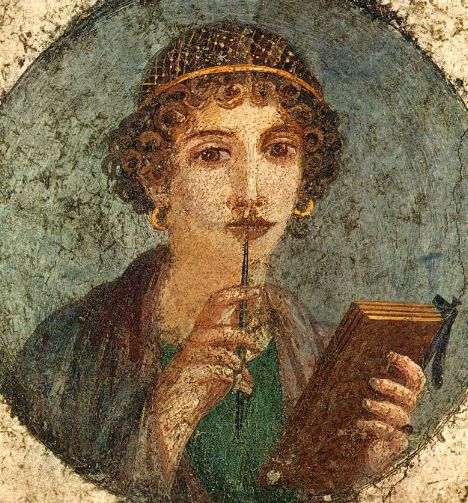
By Herkulaneischer Meister  via Wikimedia Commons
By Herkulaneischer Meister via Wikimedia Commons

Be sure to visit Amy Ludwig VanDerwater’s Poem Farm for today’s poetry round up.

Poetry Friday: “Think Like a Tree”

Image

At the beginning of Betty Smith’s A Tree Grows in Brooklyn, Francie Nolan gazes at the tree in her yard and recalls lines of poetry learned in school:

This is the forest primeval. The murmuring pines and the hemlocks,

Bearded with moss, and in garments green, indistinct in the twilight,

Stand like the Druids of old… (From H.W. Longfellow’s Introduction to Evangeline)

To Francie, her tree is hope, for “no matter where its seed fell, it made a tree which struggled to reach the sky.”

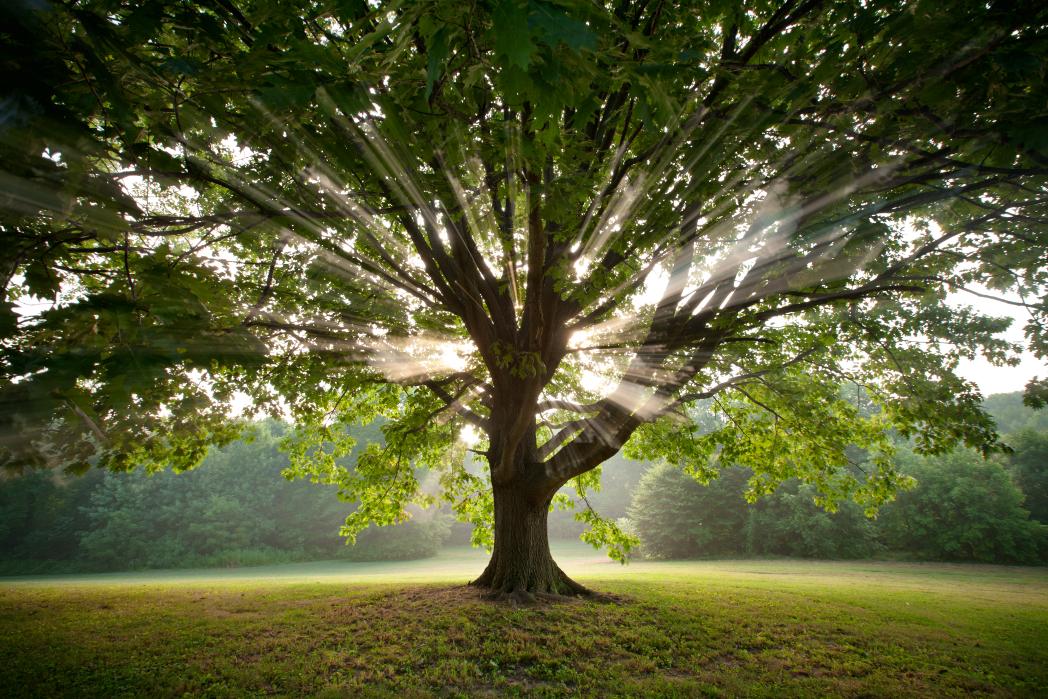
I’ve been thinking about trees, and the hope they represent, this week. This might be because a piece of land I pass on my drive to work each day is being cleared and the most amazing tree has been revealed, not twenty feet from the road. It has a huge limb that grows almost perpendicular to the trunk before it arches up toward the sky, creating an inviting perch. Every day I want to stop my car and climb onto that seat.

I loved to climb trees when I was a kid. I loved being enfolded in their branches. My mother used to have a fit that I was too high, that I would fall and break my neck. I never did fall. Somewhere along the way I grew too old for climbing trees. But I’ve never stopped admiring their beauty, their resilience.

Trees nurture us in countless ways. They provide shade in summer and shelter in winter. Our air is purified by their leaves. They produce fruit and harbor bees and their honey. It’s no wonder that cultures throughout history have considered trees sacred and have worshiped them.

“Think Like a Tree,” by Karen I. Shragg captures the beauty and magic of trees and reminds us of their wisdom.

Soak up the sun

Affirm life’s magic

Be graceful in the wind

Stand tall after a storm…

Read the rest of this poem here.

Writers and poets have been celebrating trees for millennia. What is your favorite tree poem?

Be sure to visit Anastasia Suen’s Poetry Blog for today’s round up of poems.

Poetry Friday: Picture-Books in Winter

Image

In case you haven’t heard, May is Get Caught Reading month. Sponsored by the Association of American Publishers since 1999, Get Caught Reading month is “a nationwide campaign to remind people of all ages how much fun it is to read.” You can find out more, including how to order the celebrity posters, here.

ImageTo celebrate, here is Robert Louis Stevenson’s “Picture-Books in Winter,”  a reminder that books allow us to experience any adventure imaginable, no matter what the season.

Picture-Books In Winter

Summer fading, winter comes–

Frosty mornings, tingling thumbs,

Window robins, winter rooks,

And the picture story-books.

Water now is turned to stone

Nurse and I can walk upon;

Still we find the flowing brooks

In the picture story-books.

All the pretty things put by,

Wait upon the children’s eye,

Sheep and shepherds, trees and crooks,

In the picture story-books.

We may see how all things are

Seas and cities, near and far,

And the flying fairies looks,

In the picture story-books.

How am I to sing your praise,

Happy chimney-corner days,

Sitting safe in nursery nooks,

Reading picture story-books?

by Robert Louis Stevenson

Pick up a book and have an adventure today!

You can learn more about Robert Louis Stevenson and read other poems from A Child’s Garden of Verses at Poets.org. Also, be sure to visit Liz Steinglass at her lovely blog for the round up of poems.

Poem in Your Pocket Day!

Image

Today is Poem in Your Pocket Day. This celebration of poetry began in 2003 in New York City. The American Academy of Poets and other organizations have been promoting this day nationally since 2008. The idea is simple. Keep a poem in you pocket, then share it with others throughout the day.

My school is closed for spring break this week, so we will have our own Poem in Your Pocket day next week. But I couldn’t let the day go by without sharing a poem. Here is one of my favorites.

“Wish”

For someone to read a poem

again, and again, and then,

having lifted it from page

to brain–the easy part–

cradle it on the longer trek

from brain all the way to heart.

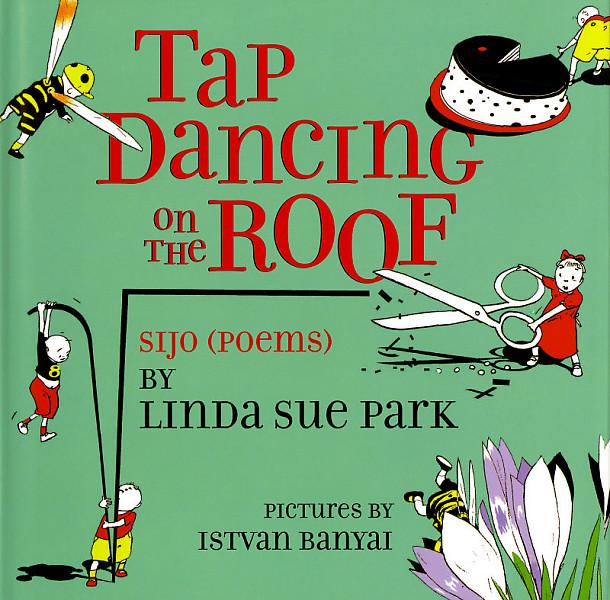
by Linda Sue Park

Image

(from Tap Dancing on the Roof: Sijo Poems, illustrated by Istvan Banyai, Clarion Books, 2007)

Keep a poem in you pocket today; keep poetry in your heart every day.

A Slice of Life: A Visit to the Eric Carle Museum of Picture Book Art

sols_6Now that the month-long Slice of Life challenge has ended, I’m hoping to continue sharing slices every Tuesday. Be sure to visit Stacey and Ruth at Two Writing Teachers to read more amazing writing. Thank you for hosting this weekly Slice of Life Challenge!

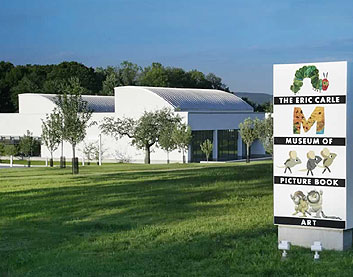
Last Friday, a friend and I hopped in the car and drove to Amherst, MA and the Eric Carle Museum of Picture Book Art to see their celebration of Garth Williams’s beloved illustrations of Charlotte’s Web.

Image

Going to The Carle is one of my favorite day trips. When you arrive, you’re greeted by this bug:

Image

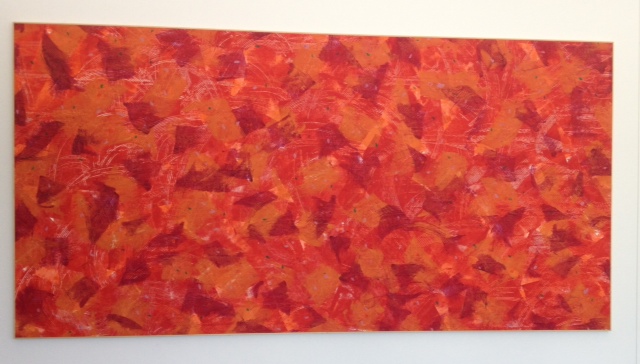
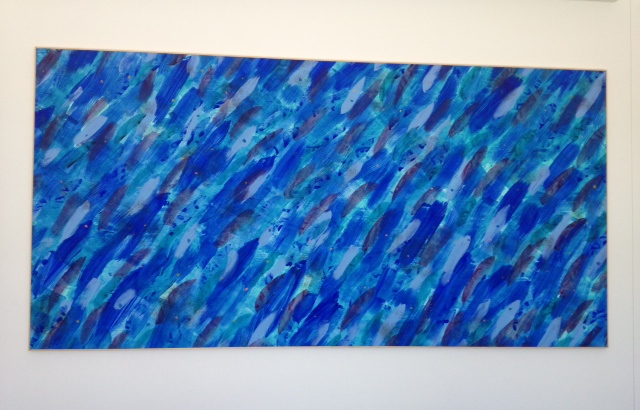
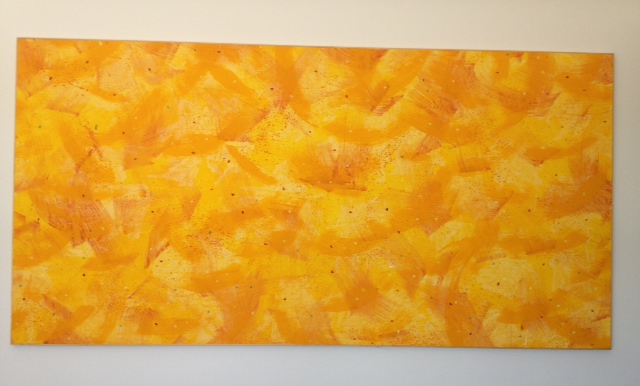
As you enter the museum, you step into by a large space filled with light and color. Panels of bright primary colors adorn one long wall of the Great Hall. My friend and I spent some time trying to decide what each panel reminded us of, and which one we liked best.

Image
Fire or autumn leaves?
544416_4770520581818_1197692579_n
A field of waving grass?
Image
The ocean or fish, or both?
Image
Warm summer sunshine!
Image
A cozy spot to sit and read.

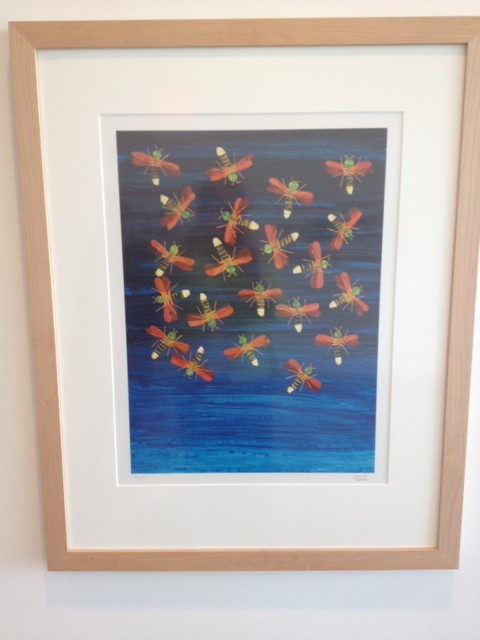
There are auditoriums for lectures and films, as well as an art studio where kids can make their own colorful creations. I’ve always wanted to go in and make some art myself, but it’s really for the kids. More of Eric Carle’s whimsical art is hung in this hallway.

      Image  Image

The West Gallery is devoted to Carle’s work, but the theme shifts on a regular basis. The current show, Feathers, Fins, and Fur, features penguins, cardinals, and more. In addition, there are two galleries for special exhibits. The larger East Gallery has had shows featuring the work of Tomi dePaola, Virginia Lee Burton, and illustrations from various editions of The Wizard of Oz, to name just a few. On display until June 9th is Latino Folk Tales: Cuentos Populares-Art by Latino Artists. The vivid colors and styles of these artists bring the tradition of magical realism to life.

The exhibit in the smaller Central Gallery was the main reason for our visit.

Image

Some Book, Some Art showcased Garth Williams’s classic illustrations for Charlotte’s Web. It was fascinating to see the early ideas Williams had for the cover of the book and his process of going from rough sketch to finished art. There were also early studies of what Charlotte herself would look like. In one draft, she bore quite a resemblance to the Mona Lisa! This small, humble, gallery is currently filled with radiant, terrific art.

An unexpected treasure of the exhibit was this poem, written by E.B White to his wife, Katherine, just before they were married.

“Natural History”

The spider, dropping down from twig,

Unwinds a thread of his devising;

A thin, premeditated rig,

To use in rising.

And all the journey down through space

In cool descent, and loyal-hearted,

He builds a ladder to the place

From which he started.

Thus I, gone forth, as spiders do,

In spider’s web a truth discerning,

Attach one silken strand to you

For my returning.

I will return the The Carle again and again, just as I return to Charlotte’s Web from time to time. I love the beauty contained within both.

It’s Monday! What Are You Reading?

Image

Poetry, of course! Today is the first day of National Poetry Month! Check out what others are reading today by visiting Jen and Kellee at Teach Mentor Texts.

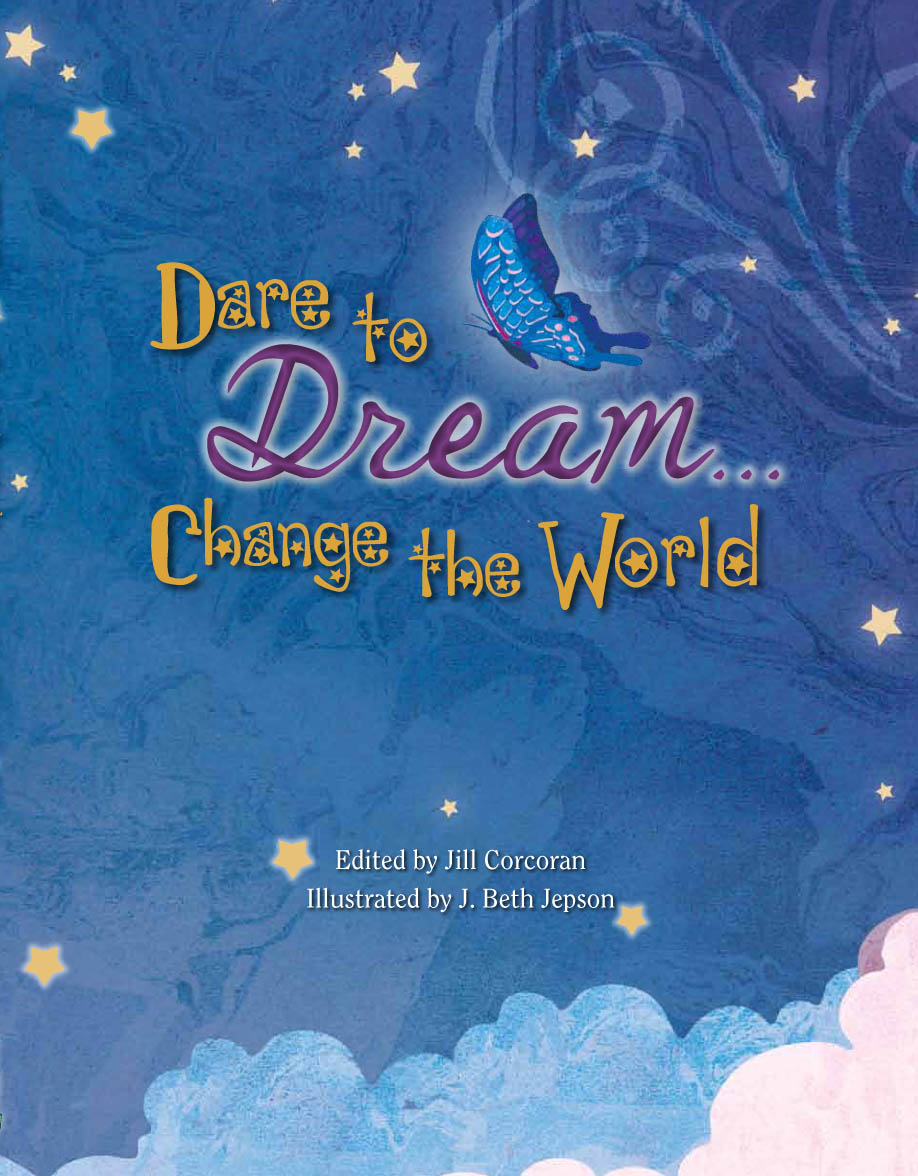
Dare to Dream…Change the World edited by Jill Corcoran, illustrated by J. Beth Jepson (Kane Miller, 2012) is an anthology of poem that celebrates people who have followed their dreams and, as a result, made the world a better place. A short note at the beginning of the book explains that Jill Corcoran was inspired to create this anthology while listening to a story on NPR about the uprisings in Egypt. Her dream was to “share the spirit of dreaming + action = change and that each one of us can make the world just a little better.”

Image

This is a beautiful book. J. Beth Jepson has created stunning, vivid illustrations that are perfectly suited to pairs of poems. These pay tribute to people who have made contributions to civil rights, music, medicine, sports, and more. One poem is biographical, the second is a response to the person’s accomplishment. Brief biographies of each individual are included. An all-star line up of poets contributed to this collection, and information about them is also included, as well as links to their websites.

When I first read this book, my mind instantly began thinking of all the possibilities for using it in the classroom, and a curriculum guide is available on the book’s website. The publishers are sponsoring a poetry contest for students in grades 3-8, which you can find out about here.

Jama Rattigan has a much more extensive review of Dare to Dream at her lovely blog, Jama’s Alphabet Soup.

My school is finishing up a school-wide read of Wonder. Before we began reading R.J. Palacio’s incredible novel, we all read Each Kindness, by Jacqueline Woodson. The final poem in the collection, is the perfect bookend to that story, a reminder that our actions have a lasting impact.

Ripples

No one acts in isolation

And no act leaves the world the same.

Words and gestures ripple outward,

What shores they reach we cannot name.

All our lives end in a riddle–

A mystery without an answer,

For even gone we ripple on,

Like a dance without a dancer.

Did you extend a friendly hand?

Did you lift a battered spirit?

The one you helped helped someone else

Ah! Now we’re getting near it.

That second someone dropped despair

Did not give in, instead revived

To teach, to love, to fight, to dare,

And what you’ve done lived on, survived.

On and out the circle widens,

Past all hope of comprehending.

The slightest touch can change the world

Healing, helping, lifting, mending.

Actions last for generations

Our father’s mothers mold our hearts.

We in turn shape all that follows;

Each time we act, a ripple starts.

by Bruce Coville

Where will your ripples go today?