It’s Monday! What Are You Reading?

IMWAYR

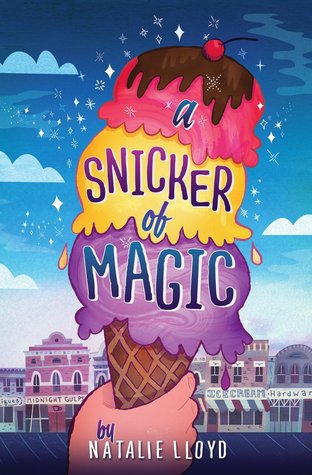
I feel like I’m late to the party for A Snicker of Magic (Scholastic, 2014), Natalie Lloyd’s debut middle-grade novel. Even though it’s only been out for a little over a month, A Snicker of Magic has gotten oodles of love on Twitter and kid lit blogs. This love is well deserved. 
18222556

A Snicker of Magic is one of those “good stories” that “take your heart someplace else.” Felicity Pickle, a 12 year old who “sees words everywhere,” is the heart of Lloyd’s story. After years of being “sweet gypsies,” Felicity, her mother, and sister arrive in the tiny town of Midnight Gulch, Tennessee. Tired from years of wandering, Felicity is ready to stay, but fears her mother will become restless and want to leave again at any moment. Midnight Gulch “used to be a secret place… because the people who lived there had magic in their veins.” But the magic is gone. Felicity is curious about why it left and where it went. With the help of her new friend, Jonah, and a colorful cast of characters, she does her best to find the magic and return it to the town. 

Felicity is a poet who knows that she holds “the finest magic, words worth spinning, stories worth telling.” Hope has perched in her soul, and she uses her gift with words to heal the pain caused by a century of anger and misunderstanding. Lloyd has spun a story filled with magic, a story well worth telling. A Snicker of Magic is a good choice for a read aloud in fourth or fifth grade and will likely inspire many students to become word collectors and poets themselves.
el-april14-left

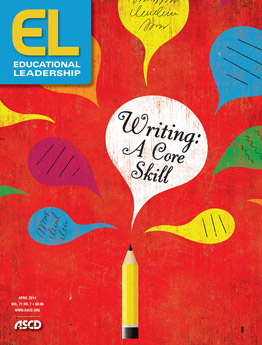
Educational Leadership, the monthly journal published by ASCD, always has timely articles by leading researchers, and the April issue is no exception. Devoted to “Writing: A Core Skill,” contributors include Carol Jago, Mary Ehrenworth, Kelly Gallagher, Penny Kittle, and more. I’m still reading, but can see already that this issue is a valuable resource. The articles I’ve read offer a succinct introduction to many elements of good writing instruction, including using mentor texts, teaching craft rather than formulas, types of writing, and more. I plan on sharing Jeff Anderson’s contribution, “What Writing Is & Isn’t,” with my colleagues. This article is the perfect springboard for a discussion about our understanding of writing instruction.

Don’t forget to visit Jen at Teach Mentor Texts and Kellee at Unleashing Readers to find out what other people have been reading lately. Thanks, Jen and Kellee, for hosting!

SOLC 2014: It’s Monday! What Are You Reading?

11454297503_e27946e4ff_hIMWAYR

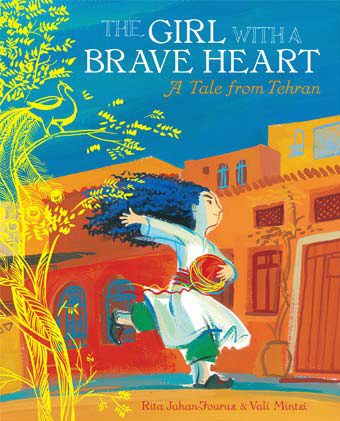
My one little word for 2014 is balance, but over the past week it’s been a challenge to balance work, family, writing, and reading. I’ve read blog posts that are funny and sweet, moving and thought-provoking. But I haven’t really had time to read any books. So when I got home this afternoon, I scanned my shelf and found The Girl with a Brave Heart: A Tale from Tehran (Barefoot Books, 2013), by Rita Jahanforuz and illustrated by Vali Mintzi.

girl.with.a.brave.heart

This is a lovely book. Jahanforuz tells the story of Shiraz, a young girl whose mother died in childbirth. Her father remarries, and his new wife and her young daughter come to live with Shiraz and her father. At first, “the family lived happily together and Shiraz’s stepmother treated her kindly.” But after Shiraz’s father dies, her world is changed. Like Cinderella, she is forced to do all the housework. Shiraz’s life is changed again

When the wind blows Shiraz’s ball of wool into the garden next door, she spends the day helping and caring for the old lady who lives there, with miraculous results. Rendered in a rich, vibrant palette evocative of its Iranian setting, this unforgettable fable has a message that is universal: “When people are sad, they do not always know how to ask for what they need. (from Barefootbooks.com)

Watch Jahanforuz describe how she came to write The Girl with a Brave Heart here:

Don’t miss The Girl with a Brave Heart, a book Pamela Paul, writing in The New York Times called “a heartwarming vindication of good-heartedness.”

Thank you, as always, to StaceyTaraDanaBetsyAnna, and Beth for hosting the Slice of Life Challenge. Be sure to visit Two Writing Teachers to read more Slice of Life posts.

Don’t forget to visit Jen at Teach Mentor Texts and Kellee at Unleashing Readers to find out what other people have been reading lately. Thanks, Jen and Kellee, for hosting!
SOLC 2014: It’s Monday! What Are You Reading?

11454297503_e27946e4ff_h     IMWAYR

Another double-duty Slice for It’s Monday! What Are You Reading?

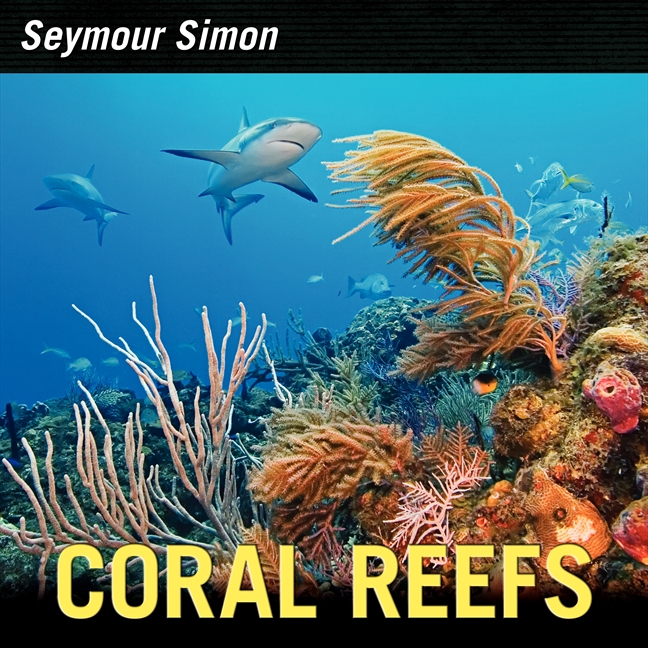
Coral Reefs, by Seymour Simon (Harper, 2013)

9780061914959

This is a gorgeous book, filled with stunning photographs of one of the earth’s most fragile ecosystems. Coral Reefs gives young readers a thorough overview of the “gigantic communities of living things.” (pg. 6) Simon describes the different types of coral, what they eat, and where they’re found in the world. The “many different kinds of citizens” of a coral reef are also described.

The close-up photographs are captivating and kids will want to pore over them for hours. An index is included, as are a glossary and links to websites with additional information. This book would make a nice companion to the more fanciful but just as informative Coral Reefs by Jason Chin.

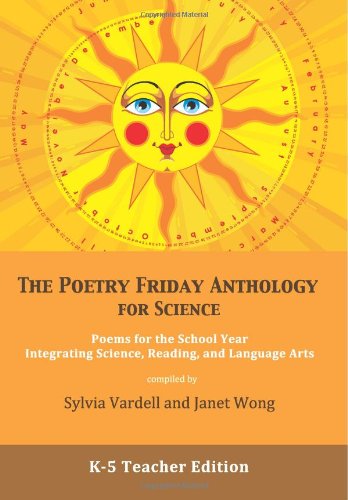
I’ve also been enjoying the poems collected by Sylvia Vardell and Janet Wong in The Poetry Friday Anthology for Science (Pomelo Books, 2014). Dozens of the best poets writing for children today have contributed to this volume. The poems cover a broad range of scientific topics, from scientific practices and lab safety to famous scientists and future challenges, and everything in between. (Although there wasn’t one specifically about a coral reef.)

51c5QVogNwL

Wong and Vardell begin their informative introduction with the question “Why poetry with science?” To make their case, they quote legendary author and educator Bernice Cullinan:

 “Scientists observe with a clear eye, record their observations in precise, descriptive language, and craft their expressions. Poets do the same thing.”

Also included are tips for sharing the poems and connections to the Next Generation Science Standards. In addition, the following resources are included:

  • a bibliography of poetry books for science
  • links to websites and blogs, for both poetry and science
  • a list of professional resources
  • a “mini-glossary of science terms”
  • title, poet, and subject indexes

This book is a must-have resource elementary teachers working to integrate literacy into their science instruction. Student editions are available by grade level and include bonus poems.

Several poems from the anthology have been shared on blogs over the past week. Jone at Check It Out has “Sound Waves” by Amy Ludwig VanDerwater:

If you have ever seen the ocean

throwing cold waves from her hand

pulling shells from mighty depths

tossing each upon wet sand,

you can understand how sound waves

move like water through dry air.      

(Read the rest of the poem here)

You can also read poems from each grade level at Irene Latham’s blog, Live Your Poem…

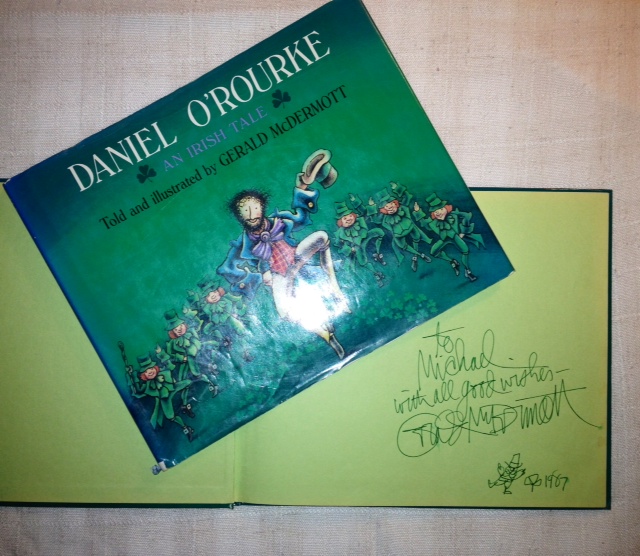
Finally, because it’s St. Patrick’s Day, I have to give a shout-out to my favorite book to share on this day, Daniel O’Rourke (Viking Kestrel, 1986), by Gerald McDermott. Sadly, it seems that this tale of Daniel O’Rourke’s misadventures at the hands of three mischievous leprechauns is out of print. My own children loved this story when they were small, and dozens of my classes over the years have laughed along as Daniel is taken on a wild ride by the legendary pooka.

Our copy, signed by the author to my youngest son.

Thank you, as always, to StaceyTaraDanaBetsyAnna, and Beth for hosting the Slice of Life Challenge. Be sure to visit Two Writing Teachers to read more Slice of Life posts.

Don’t forget to visit Jen at Teach Mentor Texts and Kellee at Unleashing Readers to find out what other people have been reading lately. Thanks, Jen and Kellee, for hosting!
SOLC 2014: Greek Myths, Retold

IMWAYR    11454297503_e27946e4ff_h

It’s Monday, and this slice is once again doing double-duty for It’s Monday! What Are You Reading? Be sure to visit Jen at Teach Mentor Texts and Kellee at Unleashing Readers to find out what other people have been reading lately. Thanks, Jen and Kellee, for hosting!
Reading Anchor Standard nine of the CCSS states that students will “analyze how two or more texts address similar themes or topics in order to build knowledge or to compare the approaches the authors take.” At each grade level, this standard has a different specificity. In fourth grade, students are expected to “compare and contrast the treatment of similar themes and topics (e.g., opposition of good and evil) and patterns of events (e.g. the quest) in stories, myths, and traditional literature from different cultures.”

By the time they reach eighth grade, this expectation has become more complex. Now students must “analyze how a modern work of fiction draws on themes, patterns of events, or character types from myths, traditional stories, or religious works such as the Bible, including describing how the material is rendered new.”

I’m focusing on this standard in particular because it is such a shift from the previous expectation in the Connecticut ELA standards. They emphasized text-to-self connections, and there was no particular emphasis on folk tales, fairy talks, or myths. I’m glad these stories have been given more attention in the standards. Many of them are so ubiquitous in our culture we don’t even recognize them as myths. Worse, they aren’t recognized because readers lack the knowledge of the original story.

1492

So, one of my goals this year has been to find materials that help us meet these expectations. I’ve always had a copy of the classic D’Aulaires’ Book of Greek Myths in my classroom, but there are many other excellent resources available. Here are two of the many books I’ve found.

king-midas-and-the-golden-touch-retold-by-charlotte-craft-paperback-800x800

Charlotte Craft’s retelling of King Midas and the Golden Touch (HarperCollins, 1999) is based on a version of the story told by Nathaniel Hawthorne in A Wonder-Book for Girls and Boys. The original story is thought to be based on an 8th-century BC king of Phrygia, in what is now central Turkey. In a note, illustrator K.Y Craft explains that she chose to set the tale in the more-recent Middle Ages of Europe to convey the truly timeless nature of this story. In Craft’s version, Midas receives the golden touch as a reward for entertaining a stranger, for he believes that “the golden touch will bring me all the happiness I need.” Craft’s retelling is rich in imagery, characterization, and language. Last week, I shared the story with two fourth grade classes. Both groups had rich discussions about the decisions Midas made, key turning points in the story, and the theme. Some students had recently finished reading The Chocolate Touch, by Patrick Skene Catling. It was so much fun to see the lightbulbs going off as they made connections between the two books.

photo-1

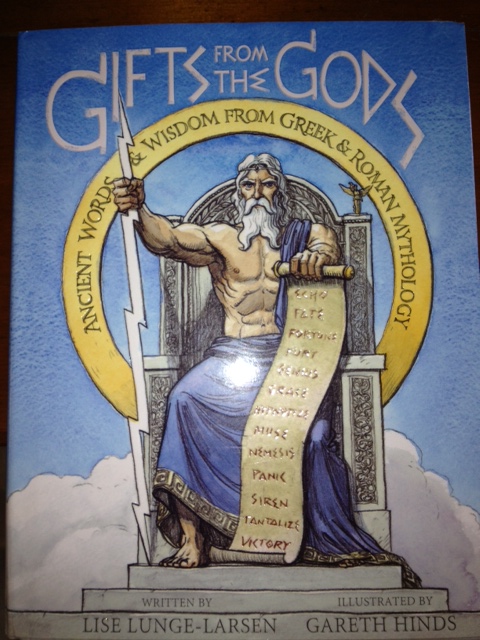
Gifts from the Gods: Ancient Words of Wisdom from Greek & Roman Mythology, (Houghton Mifflin Harcourt, 2011) by Lise Lunge-Larsen and illustrated by Gareth Hinds. Lunge-Larsen has chosen seventeen myths that “illuminate and explain words” that English speakers use all the time. (RL.4.4: Determine the meaning of words and phrases as they are used in a text, including those that allude to significant characters found in mythology (e.g., Huerculean).) She has also included an excerpt from a modern story as an example. This is from Norma Howe’s Blue Avenger Cracks the Code:

Like all those classical heroes down through the ages, Blue Avenger is not invulnerable; like them, he has a weakness. Superman feared kryptonite, Achilles had his heel. For Blue Avenger, it’s lemon meringue pie. (p. 1)

At the end of each myth, Lunge-Larsen also includes the meaning of other words related to the story. After reading the story of the Three Fates, we learn that the goddess who cut the thread was named Morta by the Romans. “Her name means ‘death’ and lives on in mortal and mortality, words we use about things that one day will die. The gods, who will never die are immortal.” (p. 22) Hinds, who is best known for his graphic novel versions of Beowulf  and The Odyssey uses a similar style in this richly illustrated volume.

There are countless retellings of Greek and Roman myths, plus many from other cultures around the world. More about those another day.

Thank you, as always, to StaceyTaraDanaBetsyAnna, and Beth for hosting the Slice of Life Challenge. Be sure to visit Two Writing Teachers to read more Slice of Life posts.

SOLC 2014: It’s Monday! What Are You Reading?

IMWAYR      11454297503_e27946e4ff_h

Today’s post is doing double duty as my contribution to the Slice of Life Challenge at Two Writing Teachers.

We’ve all heard of a school of fish and a flock of birds. But what about an ostentation of peacocks?

Collective nouns, those words that turn a group of people, animals, or things into a singular noun, are words that children often learn intuitively as they acquire language as toddlers and preschoolers. The CCSS calls for collective nouns to be formally introduced to students in second grade.

If the goal of teaching these words to young writers is to have them use them in their writing, they need to have “read that language, to have heard it in [their] mind, so that [they] can hear it again in order to compose it.” (NCTE Beliefs About the Teaching of Writing) Although the styles of these books are very different, each one would be a good choice for introducing the concept of collective nouns.

0698113543_l

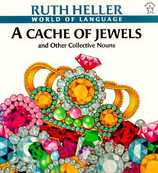
Ruth Heller’s A Cache of Jewels (Grosset & Dunlap, 1987) is an old favorite, one I read to my third graders when I began teaching almost twenty years ago. This brightly illustrated book is still a good model for using collective nouns. Heller includes collective nouns of all kinds, not just those that describe groups of animals.

I’ve found some new books students will enjoy as they learn more of these words. My favorite is A Zeal of Zebras: An Alphabet of Collective Nouns (Chronicle Books, 2011). Woop Studios, a London-based collective (honestly, that’s what the book says!) of four artists, have created “a visual safari through the animal kingdom” (back cover). This oversized picture book is filled with stunning illustrations, unique collective nouns and facts about each group of animals. Some, “an implausibility of gnus,” for example, seemed so improbable that I looked it up. (It’s true, and you can find an extensive list of collective nouns for groups of animals here.) Others are so appropriate: of course it’s “a galaxy of starfish.” Some of the longer words will be a challenge for second graders, but these are the kinds of words kids love learning and trying to use.

zeal of zebras    one-sheep-two-sheep

One Sheep, Two Sheep: A Book of Collective Nouns, (Little Hare Books, 2010), by Patricia Byers and illustrated by Tamsin Ainslie develops the concept of collective nouns being a group of three or more. Each two-page spread follows the same pattern: “One sheep, two sheep, a flock of sheep.” Charming illustrations provide visual support for the growing numbers in the group described by each collective noun.

9781586851538

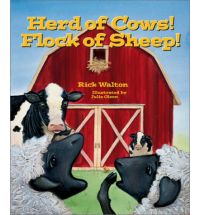
Finally, silliness ensues in Rick Walton’s Herd of Cows! Flock of Sheep! (Gibbs Smith, 2002, 2011; illustrated by Julie Olson). This book incorporates the collective nouns into the story of how Farmer Bob’s animals jump into action to save him after his bed is swept away in a flood.

I don’t know if there’s a collective noun for a group of bloggers, but StaceyTaraDanaBetsyAnna, and Beth are the best around! Thank you for hosting the Slice of Life Challenge. Be sure to visit Two Writing Teachers to read more Slice of Life posts.

It’s Monday! What Are You Reading?

IMWAYR

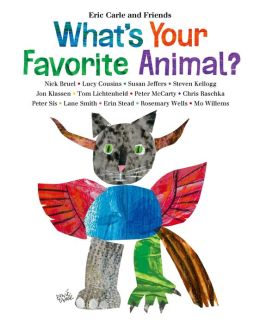
Take a five year-old’s favorite question, add Eric Carle’s joyous spirit and thirteen of the most accomplished illustrators working in children’s literature today and you have What’s Your Favorite Animal? (Henry Holt, 2014). This book is a glorious celebration of animals and art. Each artist responded to this important question with a short piece of writing and an illustration. The writing ranges from heartfelt recollections of childhood pets to whimsical imaginary pets. Nick Bruel’s Bad Kitty even gets to add her two cents.

9780805096415_p0_v2_s260x420

The writing that accompanies each illustration is rich with description and rationale. Peter Sís describes “…many families coming with their carps to the river and blue fish swimming toward the ocean. This gave us all hope!” Chris Raschka’s keen observation of the lowly snail gives readers a new appreciation of an animal who’s often overlooked: “But all her life she works her craft, adding to it day by day, until, when she dies, she leaves us something of great beauty.”

These words could describe the work of these artists, who have given the world so much beauty through their books. It seems fitting, then, that proceeds from What’s Your Favorite Animal? are being donated to The Eric Carle Museum of Picture Book Art. The Carle, dedicated to inspiring “a love of art and reading through picture books,” is one of my favorite museums. (Read more about my last visit here.)

What’s Your Favorite Animal? is a perfect mentor text for young writers making their first attempt at opinion writing. The CCSS calls for both Kindergarten and first grade writers to “write opinion pieces.” What better topic than animals, something every child has an opinion about?

I also found this book on my most recent trip to the bookstore:

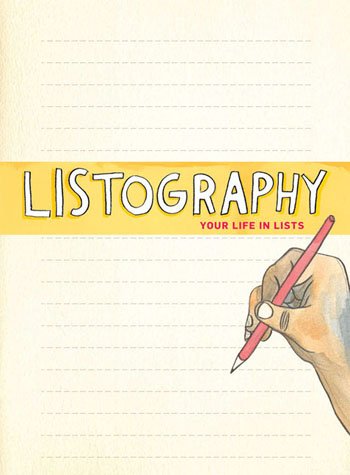
listography350
Listography: Your Life in Lists
Chronicle Books, 2007

Lisa Nola, creator of this book/journal explains in a note that the book “is designed to help you create your autobiography.” But I was drawn to Listography for a different reason. It’s ideal for using with kids when they complain, “But I don’t know what to write about.” WARNING! Don’t just hand this book to students; adults are definitely the target audience. Rather, choose an appropriate page and write the topic on the board. Like What’s Your Favorite Animal?, everyone has favorite toys, games, and songs.

This book appealed to me on another level, though. I don’t usually need lists like this for ideas of what to write about. Rather, I can see using this book and these list ideas to get to know my own characters better. I have seen many writing exercises that do just this. But the idea of having this whole volume filled with these lists really appeals to me. I’m hoping they’ll help me find, to use Ray Bradbury’s perfect metaphor, what’s “hidden under the trapdoor on the top of my skull.” Or, in this case, my character’s skull.

Be sure to visit Jen at Teach Mentor Texts and Kellee at Unleashing Readers to find out what other people have been reading lately. Thanks, Jen and Kellee, for hosting!
It’s Monday! What Are You Reading?

IMWAYR

I brought a stack of books home with me from NCTE, and I’ve had fun making my way through those over the past few weeks. Today I’m highlighting two of my favorites.

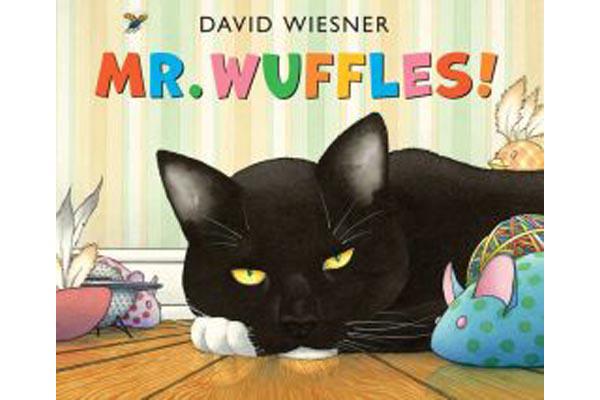
Although I was overwhelmed by the Exhibition Hall at the Hynes center, this immediately caught my eye at the Clarion booth:

Clarion, 2013

I love teaching with wordless picture books because they are accessible to all students, and David Wiesner is a genius of the form. The level of sophistication in his wordless picture books make them especially appealing to older students. Mr. Wuffles (Clarion, 2013) is one of his best. At first I was surprised by the slightly cartoony quality of the cover. But, after reading the first few pages, my notion that this might be a departure from Wiesner’s usual photographic style was gone.

Mr. Wuffles can’t be bothered with the many toys his human has tried to lure him with. Nestled in amongst the stuffed mice and jingle balls is what at first glance might be a tea infuser or some other forgotten mid-20th century kitchen gadget. Mr. Wuffles ignores this too, until something about this curious little silver ball catches his attention. Then the fun begins. Priceless facial expressions tell much of the story, and Wiesner plays with point of view throughout the book. Rich with details, Mr. Wuffles is a treat for picture book lovers of all ages.

Meet the model for Mr. Wuffles and learn more about Wiesner’s creative process in the book trailer:

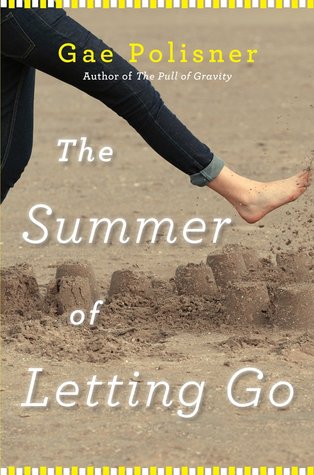
Another highlight of my visit to the Exhibition Hall was meeting Gae Polisner and getting a signed ARC of The Summer of Letting Go. (Algonquin, publication date: March 18, 2014) Gae is one of the forces behind Teachers Write! and her kind and generous feedback about my writing was a real boost to me last summer. This may make me biased, but if I hadn’t liked this book, I just wouldn’t have written about it.

16068979

And actually I didn’t like it. I loved it. I wish my 14 or 15 year old self could have read this book. It would have been such a relief to know that other girls were insecure about their looks or felt like they couldn’t do anything right. Francesca, aka Frankie, worries about all this and more. She feels responsible for the drowning death of her younger brother four years earlier, and she worries about her parents, who are each coping with this tragedy in their own way. The Summer of Letting Go is the story of Frankie’s journey to forgiveness and acceptance; to understanding that “not even the ocean can drown our souls.”

Be sure to visit Jen at Teach Mentor Texts and Kellee at Unleashing Readers to find out what other people have been reading lately. Thanks, Jen and Kellee, for hosting!
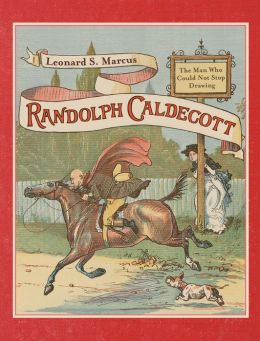
It’s Monday! What Are You Reading? Randolph Caldecott: The Man Who Could Not Stop Drawing

IMWAYR

When I was a kid, I always sought out the picture books with the shiny gold and silver stickers on the cover. I had no idea what these stood for, but like a magpie searching for glittering baubles, I was drawn to them for the magical illustrations they contained.

I learned soon enough what these stickers represented, but still only had a vague sense of who Randolph Caldecott was. Thanks to Leonard S. Marcus’s wonderful new book, Randolph Caldecott: The Man Who Could Not Stop Drawing (Farrar Straus Giroux, 2013) I know much more about this pioneer of picture books for children.

9781466852907_p0_v2_s260x420

Oversized and printed on heavy, creamy paper, Randolph Caldecott: The Man Who Could Not Stop Drawing follows Caldecott from his birth in 1846 to his early death at the age of 39 in 1886. Caldecott found joy in nature and humor in everything. He went to work as a bank clerk at the age of 15, but spent most of his free time sketching. He was soon selling illustrations to newspapers and on his way to becoming the inventor of the modern picture book.

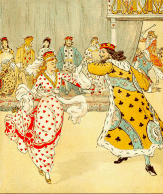
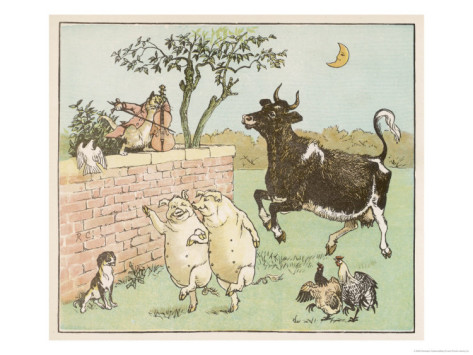
KingHeartsrandolph-caldecott-the-cow-jumped-over-the-moon

This book is lavishly illustrated. Scenes from Caldecott’s sketch books are interspersed with both black and white and color illustrations published throughout his lifetime. Caldecott’s drawings are filled with humor and energy.  He wrote of his art, “Please say that my line is to make to smile the lunatic who has shown no sign of mirth for many months.” (p. 36) And an 1883 illustration from The Fox Jumps Over the Parson’s Gate shows hounds racing through a graveyard with headstones for Peter Piper, Mary, and Thomas Blowhorn.

As I read this book, I thought of Artist to Artist: 23 Major Illustrators Talk to Children about Their Art. Published in 2007, Artist to Artist is a collection of essays by picture book artists, many of them Caldecott Medal and Honor winners, telling the story of their careers with young readers. It’s so important for students to learn about the often long and arduous path so many artists take on their way to success. Learning about their creative process can take the mystery out of becoming an artist and make it seem within reach. Sharing these stories with our students can inspire them to pursue their own passions and create their own art, because, as Caldecott himself reminded a young fan, “there are so many beautiful things waiting to be drawn.”

Be sure to visit Jen at Teach Mentor Texts and Kellee at Unleashing Readers to find out what other people have been reading lately. Thanks, Jen and Kellee, for hosting! And thank you, Colette, for giving me this lovely book.

It’s Monday! What Are You Reading?

IMWAYR

I love going to conferences and workshops. They’re so invigorating. Sometimes an idea I have is confirmed, or I’m reminded of a strategy or activity I haven’t used in a while. But the best sessions are those where I learn something new that I can immediately use in my teaching and moves my thinking about a topic forward.

This happened on Saturday at the Teachers College Reading and Writing Project Saturday Reunion. Carl Anderson’s session on analyzing informational texts for teaching points to support student writing caused a noticeable shift in my thinking about these books.

Anderson, author of the classic book on conferring, How’s It Going? (Heinemann, 2000), opened his talk by reminding us that using mentor texts is essential if we want our students to write well in any genre. They have to “imagine the shape of their drafts.” In order to do this, they’ll need lots of exposure to models of the genre before they write.

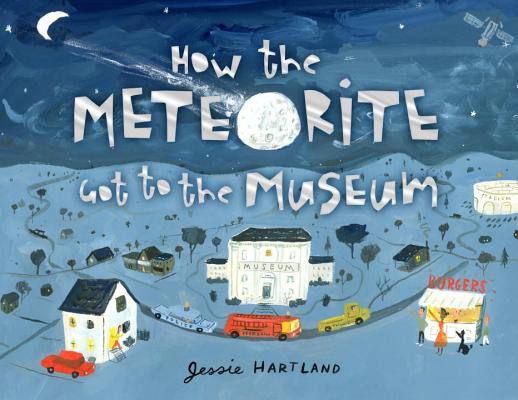
Teachers should look at possible mentor texts through several lenses, including meaning, structure, details, voice, and conventions. Anderson’s words came back to me a few hours later while I was browsing the shelves at Bank St. Book Store. Astronomy has always fascinated me, so Jessie Hartland’s new book, How the Meteorite Got to the Museum (Blue Apple Books, 2013), caught my eye. As I flipped through the pages, I realized I was reading the book differently that I would have just the day before. Many elements of the book’s structure and style popped out and grabbed my attention.

9781609052522

Told as a cumulative story in the tradition of “The House that Jack Built,” How the Meteorite Got to the Museum combines scientific facts with the daily lives of the people whose path the meteor crossed, making the story more interesting and engaging to readers. Hartland infuses the story with humor with lines like “Your car was in an interstellar collision!”

The Peekskill Meteorite’s descent to Earth is described with vivid details that include all the senses. Witnesses’ reactions are chronicled with a variety of verbs each time they’re mentioned, as is the meteorite’s journey itself. Hartland’s colorful, engaging illustrations, which remind me of Maira Kalman’s work, include diagrams, maps and other typical of non-fiction features.

All of these touches give this book a depth that will draw kids back to it again and again, a depth I might have missed if not for Carl Anderson’s ideas about analyzing mentor texts. How the Meteorite Got to the Museum is an ideal mentor text for 3rd or 4th grade students who’ve been writing informational text for a few years and are ready to stretch their writing wings and try a new text structure. And they’ll learn a few facts about meteorites along the way.

Be sure to visit Jen at Teach Mentor Texts and Kellee at Unleashing Readers to find out what other people have been reading lately. Thanks, Jen and Kellee, for hosting!

It’s Monday! What Are You Reading?

IMWAYR

You know how Garrison Keillor begins his monologues with “It’s been a quiet week in Lake Woebegone?” I want to steal his line but change it: “It’s been a hectic week in my hometown.” Better yet, it’s been a hectic MONTH! I’ve missed several weeks of IMWAYR because I haven’t had much time to read and I haven’t had that much time to blog about what I have read.

Thanks to Columbus sailing the ocean blue all those years ago, however, this weekend I was able to sit down with a few picture books and just read.

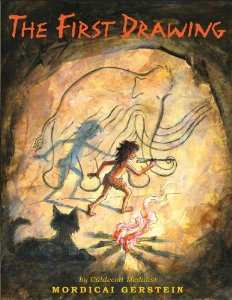
ImageFirst up was The First Drawing, by Mordicai Gerstein (Little, Brown; 2013). This book is a great example of a writer reading something in the news and asking “What if…?” Gerstein imagines an 8 year old boy living 30,000 years ago who encounters a wooly mammoth while out with his father. When he sees the mammoth in the shadows on the wall of the cave where he lives, he tries to describe it to his family. Frustrated by their inability to see his vision, he grabs a stick from the fire and begins to draw, and the mammoth comes to life for all to see.

I love that this book begins with the word “Imagine” and ends with “magic.” Capturing the often elusive images and thoughts that float through our minds through drawing is magic indeed!

11051230

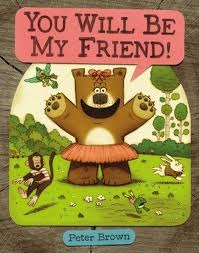
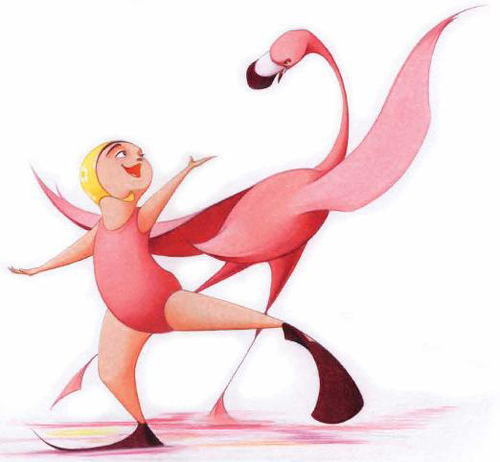
By pure coincidence, two Peter Brown titles were in my pile. YOU WILL BE MY FRIEND!  (Little, Brown) was published in 2011 and got lots of good press, but somehow I never got around to reading it. Desperate for a friend, Lucy sets out one morning determined to find one. Despite her good intentions, her day doesn’t go as planned and she’s feels “hopeless.” Just then, a flamingo wearing a bow-tie spots Lucy in her despair and asks Lucy to be his friend. On the last two pages, Lucy and her new friend take great delight in doing everything Lucy imagined she and her friend would: swimming, climbing trees, doing cartwheels, having a picnic, then a dance party.

Kids will enjoy Brown’s humorous illustrations of Lucy’s missteps along the way to finding her friend. This book would be a great mentor text for a book about making friends. On a side note, I couldn’t help noticing a resemblance between Lucy and her friend and another pair of friends 🙂

Flora-Image-31

61Y3IrTwQ-L._SY300_

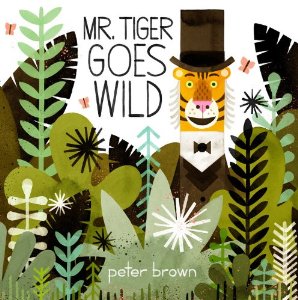
The cover of Brown’s latest offering, Mr. Tiger Goes Wild (Little, Brown; 2013) is reminiscent of the jungle landscapes of  Henri Rousseau. After a lifetime of “always being so proper,” Mr. Tiger decides he’s had enough and follows his instincts to the wilderness where he goes “completely wild!” Kids will love this about Mr. Tiger. Parents and teachers will appreciate that Mr. Tiger comes back to civilization with his individuality in tact and his wildness in check.

Be sure to visit Jen at Teach Mentor Texts and Kellee at Unleashing Readers to find out what other people have been reading lately. Thanks, Jen and Kellee, for hosting!