It’s Monday! What Are You Reading? The Cat Who Went to Heaven

IMWAYR

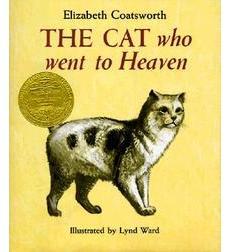
Last weekend Newtown’s C.H. Booth Library held their annual book sale. This sale is well-stocked, well-organized, and never disappoints. I always find a treasure or two, as well as more standard fare to restock our classroom libraries. One purchase I was especially pleased with this year was a paperback copy of The Cat Who Went to Heaven for fifty cents. This 1931 Newbery Medal winner by Elizabeth Coatsworth is a gem of a book. Many, if not all, of the CCSS literature standards could be addressed through a shared reading of this book. Certain passages are ideal for close reading.
 Image

The Cat Who Went to Heaven is an excellent example of a complex text, a text that Fisher, Frey, and Lapp describe as one that “often require[s] the reader’s attention and invite[s] the reader back to think more deeply about the meaning of the text.” (Text Complexity: Raising Rigor in Reading, IRA, 2012, p. 106) Shared reading of this story will help students develop the skills necessary to “readily undertake the close, attentive reading that is at the heart of understanding and enjoying complex works of literature,” a stated goal of the CCSS.

The story of a poor Japanese artist, The Cat Who Went to Heaven begins when the artist’s housekeeper returns from the market with a cat instead of dinner. The artist is  furious that she has spent his precious pennies on a “goblin…[who will] suck our blood at night!” The housekeeper convinces him that “there are many good cats, too.” The artist relents, and the cat, whom they name “Good Fortune,” becomes part of their household.

Soon, fortune does indeed smile on the artist, for he is asked by the local temple to paint a mural of the death of the Buddha. The rest of the story unfolds as a series of events in the Buddha’s life, each one revealing an important aspect of his character and the personal qualities at the heart of Buddhism.

This structure makes this book an ideal choice for meeting standard RL.6.3: “Describe how a particular story’s or drama’s plot unfolds in a series of episodes as well as how the characters respond or change as the plot moves toward a resolution.” The theme of the story is also well developed and students will be able to explain “how it is conveyed through particular details” (RL.6.2) These elements, along with Coatsworth’s rich use of vocabulary, should generate many thought-provoking questions and discussions.

I will share this book with my sixth grade colleagues, as China and Buddhism are part of the sixth grade social studies curriculum. The depiction of the beliefs and practices of Buddhism are conveyed throughout this story and would reinforce the social studies content.

Jazz vocalist and composer Nancy Harrow has adapted this book as a series of 16 songs, which are available on CD. These have been performed as classic Japanese puppet theater. Although I couldn’t find a full performance of the puppet theater, you can watch a short scene here:

An interview with Harrow, in which she describes the process of writing the songs, can be seen here:

Sharing Harrow’s work with students after reading The Cat Who Went to Heaven would also allow students to work on standard RL.6.7: “Compare and contrast the experience of reading a story, drama, or poem to listening to or viewing an audio, video or live version of the text, including contrasting what they ‘see’ and ‘hear’ when reading the text to what they perceive when they listen or watch.”

Teachers around the country are concerned about having the materials needed to meet the demands of the CCSS. Rather than spending money on new materials, many of questionable quality, we should invest in time to revisit materials we already have but may not be using to full advantage. The Cat Who Went to Heaven is the perfect example of just such a book.

Be sure to visit Jen at Teach Mentor Texts and Kellee at Unleashing Readers to find out what other people have been reading lately. Thanks, Jen and Kellee, for hosting!
Slice of Life: Ripe Blackberries

Image

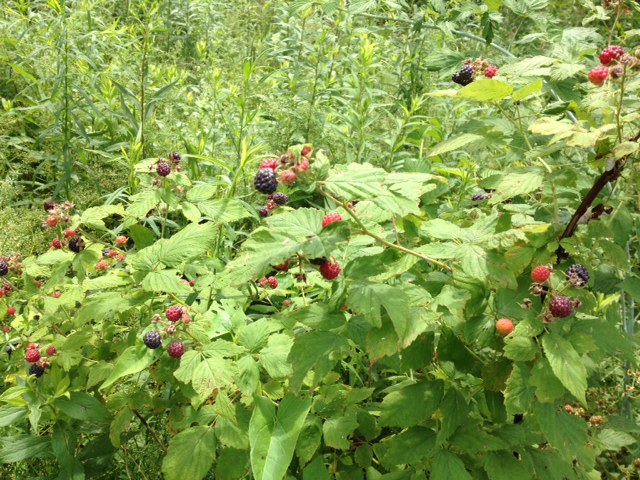
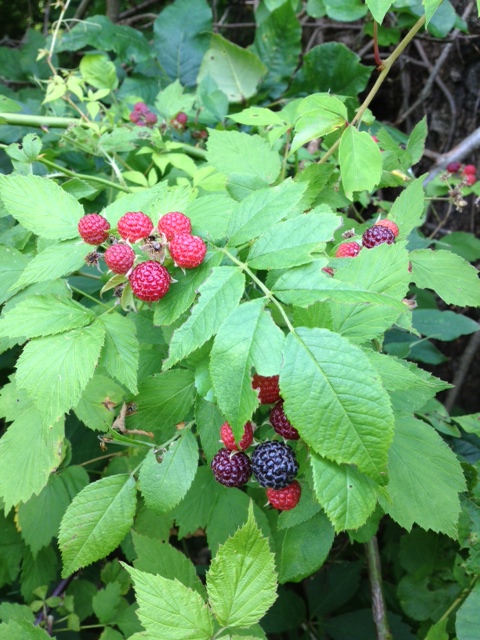
Over the past week or so, I’ve been watching the blackberry bushes that grow wild along the edge of my road. Each morning as I walk my dog, I notice that some of the fruit is deep black, as ripe as it’s going to get, while others still have just a hint of red. Why such variation on one bush? Each blackberry has gotten the same amount of rain and sun. Each one has the same genetic make up. So why are some ripening faster than others?

Image

If you’ve ever gardened, or even gone blueberry picking, you know this is true of other fruits and vegetables. It’s probably true of all plants. There is variation in nature. This is an accepted fact.

So why have we forgotten this when it comes to our students? Within every classroom, there will be a variety of strengths, abilities, and weakness. Students will arrive at school with a vastly different amounts of background knowledge and interests. Despite these differences, in the hands of a caring, knowledgable teacher in a supportive, nurturing environment, almost all children will learn and grow. Not at the same pace, and not to the same degree, but they will learn, just as most of the berries on those bushes will eventually ripen.

ImageThe advent of the Common Core State Standards, coupled with new teacher evaluation plans being adopted across the country, however, threatens this process. Teachers are expected to teach more to their students sooner than ever before. Why would anyone think it a good idea for Kindergarten students to “associate the long and short sounds with common spellings and graphemes for the five major vowels?” (RF.K.3b) Rigor is the buzzword of the moment.

I am not against rigor, nor am I against providing children with opportunities to challenge themselves. I am against having to teach to standards that ignore years of research regarding best instructional practices, practices that have been shown to meet the needs of all learners. I am also against having to teach to standards that are, in many instances, developmentally inappropriate.

Teachers know how to nurture their students and create classroom environments where children flourish. They know how to balance high expectations with respect for all students. They know how to differentiate to make lessons accessible to students who need more time, a different text, or a different way to demonstrate their learning. Teachers should be held accountable for providing these optimal conditions for learning.

Variation is everywhere in nature. Some stars shine brighter. Some berries ripen faster. Nothing will ever change that.

Is Test Prep the Mint of Education?

Image
via Wikimedia Commons

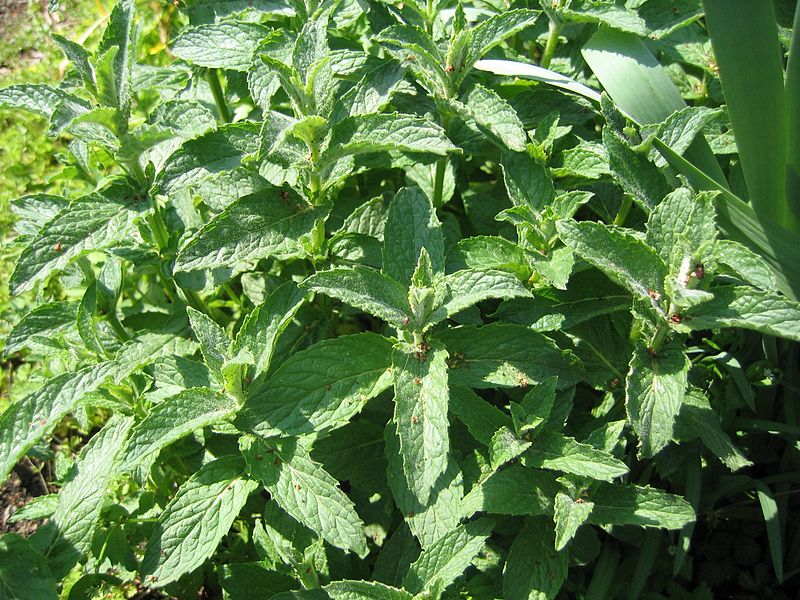
This morning as I was weeding my garden, it occurred to me that the mint that had overrun my herb garden was like standardized test prep. As schools across the country do their best to prepare students for the new CCSS-aligned assessments, test prep is running rampant. Just as the mint in my garden has choked out the basil and parsley, test prep, and the tests themselves, threaten to take over the school day, leaving no time to savor novels, delve into a character’s motivation, or write a deeply personal narrative.

I grow a variety of herbs in my garden because each herb has its own distinct flavor and use. The amount of the herb I use depends on what I’m cooking. The same is true for teaching. We have a wide variety of instructional resources and strategies available. As professionals, we take great care to make thoughtful decisions about which resource or strategy will best meet the needs of our students.

We have to nurture our students so they’ll become independent thinkers and problem solvers. If they are going “build strong content knowledge,” “comprehend as well as critique,” and “value evidence,” all specific goals named in the Common Core State Standards, they have to read and write all kinds of literature and informational texts. As Grant Wiggins wisely points out, “the test is not what you should be practicing; meeting the standards is what you should be practicing.” Providing students with a steady diet of random passages and multiple-choice questions, like those shared by Vicki Vinton on her blog, To Make a Prairie, will do nothing to encourage a student’s curiosity or creativity. We can only do that by providing our students with the rich, robust learning opportunities they deserve.

The mint from my garden adds wonderful notes of flavor to many dishes when I use it appropriately and judiciously. But a steady diet of mint where it doesn’t belong will turn anyone off to its delights. Let’s not turn our students off to the joys of a literate life by overwhelming them with test prep.

SOLC: Dakota Dugout

sols_6

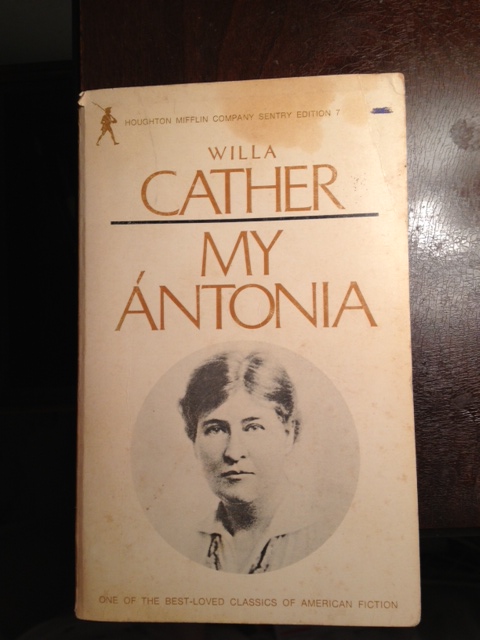
Sunday’s New York Times Book Review featured Tom Perrotta’s review of The Selected Letters of Willa Cather on the front page. Cather’s Death Comes for the Archbishop is one of my favorites, so I was interested right away. Perrotta quotes an irresistible line from one of Cather’s letters describing the prairie: “The whole great wheat country fairly glows, and you can smell the ripe wheat as if it were bread baking” As soon as I finished reading the review, I was off the couch and heading for the bookcase where I knew my copy of My Antonia waited. Although I’d had it for ages, I’d never read this book. No time like the present.

Image

I was immediately drawn into the story of Antonia’s immigrant family as told by her friend and neighbor, Jim Burden. Everything about the prairie is new to Jim, and Cather’s language transports us there. “The light air about me told me that the world ended here: only the ground and sun and sky were left,” Jim declares as he explores his new home for the first time.

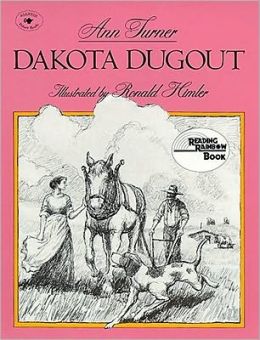
As I read, another book came whispering to me on that prairie wind. Ann Turner’s Dakota Dugout (Macmillan, 1985) is the story of a young couple trying to build a life in a sod home near the end of the 19th century. Told as a flashback from the wife’s point of view, Turner’s poetic text gives the reader an insight into a way of life few of us today can imagine. At the end of the book, the narrator tells her listener “talking brings it near again, the sweet taste of new bread in a Dakota dugout, how the grass whispered like an old friend, how the earth kept us warm.” The echoes of Cather’s letter are striking, aren’t they?

Image

I have used Dakota Dugout with fourth graders in the past to teach a number of reading strategies. It is a challenging text, but a worthy choice, as it is rich with details about a region of the country most of the students in my New England community have never experienced. Thinking about this book in light of the CCSS, the possibilities seem endless.

Reading Literature standards 1-3 could easily be taught using Dakota Dugout. Turner’s language makes this book a good choice for addressing the Language standards related to vocabulary (4-6) as well as Reading Literature standard 4, “Determine the meaning of words and phrases as they are used in a text…”

Teaching with primary sources isn’t something we’ve done a lot of in fourth grade, but because there are so many pioneer letters and diaries available, it makes sense to pair some of these with Dakota Dugout.  Reading Informational Text standard 6 states that students should “Compare and contrast a firsthand and secondhand account of the same event or topic; describe the differences in focus and the information provided.” The Library of Congress has a remarkable collection, Prairie Settlement: Nebraska Letters & Family Photographsthat are a perfect complement to this book. There is even a Standards alignment chart available.  The National Museum of American History also has resources to use with Dakota Dugout, including an online sod house building simulation.

The pioneers who settled the Great Plains are gone. But their spirit lives on in Willa Cather’s novels, scores of letters and diaries, and in books like Dakota Dugout. Through them we can “Tell you about the prairie years? I’ll tell you, child, how it was.”

Thank you to Stacey and Ruth at Two Writing Teachers for hosting this weekly Slice of Life Challenge!

It’s Monday! What Are You Reading?

Mon Reading Button PB to YA

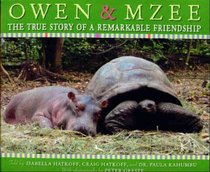
Have you ever gone looking for a book and found a different book, one you haven’t thought about in a while, instead? That happened to me the other day when I came across Owen & Mzee: The True Story of a Remarkable Friendship, by Isabella Hatkoff, Craig Hatkoff, and Dr. Paula Kahumbu, with amazing photographs by Peter Greste (Scholastic, 2006).

9780439927802

This book tells the story of Owen, a baby hippo, who was left stranded on a coral reef off the coast of Kenya after the 2004 tsunami. Separated from his pod, Owen was too young to be released into the wild on his own, and wouldn’t be accepted by another pod. Arrangements were made for him to be taken to Haller Park, a wildlife sanctuary near Mombasa. Almost immediately after he arrived, Owen began to follow a 130-year old Aldabra tortoise named Mzee. Mzee had a reputation for being a loner, and everyone at the park was sure he’ll rebuff Owen. But, to the amazement of everyone, Mzee accepted Owen, and the two became inseparable. There are a number of other books that recount the story of Owen and Mzee, but this is my favorite.

This story of a most unlikely friendship made me think of another tale of two very different creatures becoming devoted friends. Amos & Boris, by William Steig (Farrar, Straus & Giroux,1971) was one of the first picture books I read as an adult that opened my eyes to the power and depth of children’s literature. Children enjoy listening to the mouse Amos’s efforts to build and supply his boat, the Rodent. But events soon get serious, and a happy adventure turns into a matter of life and death in an instant.

9780374302788_xlg

Rescued by Boris, a kind whale, Amos professes his thanks and pledges to help Boris anyway he can, whenever necessary. Boris laughs at the thought of a tiny mouse being able to help a huge whale, but he accepts the offer. Of course, years later, Amos’s help is needed, and is gratefully accepted.

Both of these books offer children a picture of pure generosity. There is never a “what’s in it for me” thought; never a hesitation to help a soul in need. This alone is a good reason to share these books with children. There are others though, including the fact that these books both address a number of CCSS objectives. (Amos & Boris is listed as an exemplar text in Appendix B, but that is not why I love it.) Anchor standards 1-3 in both Literature and Informational text are easily met, and pairing these books seems like an obvious choice for anchor standard 9, “Analyze how two or more texts address similar themes or topics in order to build knowledge or to compare the approaches the authors take.” There are also plenty of opportunities to develop vocabulary (Literacy Anchor standard 4 and Language Anchor standards 4-6). Steig’s writing is filled with rich, descriptive language, as one of my favorite lines from the book shows:

“One night, in a phosphorescent sea, [Amos] marveled at the sight of some whales spouting luminous water…”

Owen and Mzee have their own website, and video clips of them are available.

Sharing short informational video segments on any of the animals in these books before or after reading would help teachers meet Literacy Anchor standard 7, “Integrate and evaluate content presented in diverse media and formats, including visually and quantitatively, as well as in words.”

Lucy Calkins recently stated that teachers have a responsibility to build our knowledge base and to be wary of packaged programs. Revisiting books already in our libraries, as well as staying abreast with all the wonderful books currently being published is one way to do this. Teachers working in the classroom have better ideas about how to use books with their students than textbook publishers do.

Be sure to visit Jen and Kellee at Teach Mentor Texts to find out what others are reading today.

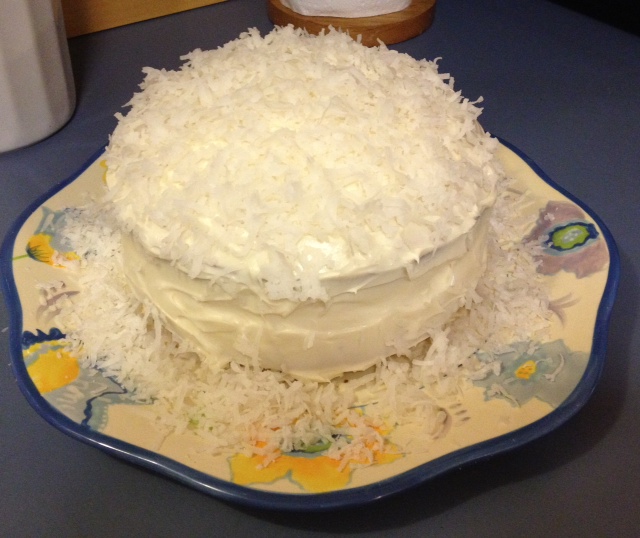
Slice of Life: Cake, Anyone?

Image

Last night, I baked a cake for a luncheon we had at school today. I’ve been baking for almost as long as I can remember. When I was growing up we lived next door to my Grandmother, and I spent a lot of time at her house. When she baked pies, she always sprinkled the scraps of dough with cinnamon and sugar, added a few raisins and butter, then rolled them up and baked them. I don’t remember if she had a name for these little treats, but they were delicious.

Image
Coconut cake with raspberry filling

When my own children were little, we baked all the time. So I was quite surprised when I started teaching and discovered how many of my students had never baked anything. Children’s books are filled with inspiration for heading to the kitchen. So we started baking.

Image

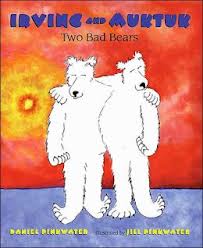
After reading Daniel Pinkwater’s Irving & Muktuk: Two Bad Bears (Houghton Mifflin Harcourt 2001), the story of two blueberry muffin loving polar bears, we made blueberry muffins.

Image

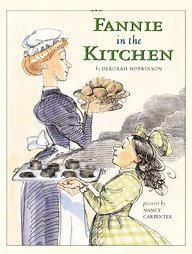
We read Deborah Hopkinson’s Fanny in the Kitchen (Atheneum Books for Young Readers, 2001) and made griddle cakes (pancakes).

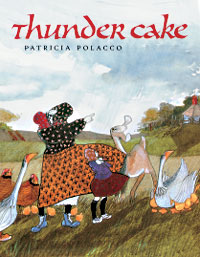
ImageThird graders love Patricia Polacco books and Thunder Cake (Philomel, 1990) was one of our favorites. So was the cake!

Image

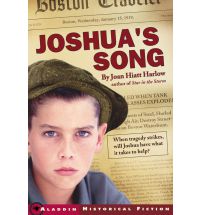
When fifth graders were reading Joshua’s Song, by Joan Hiatt Harlow (Simon & Schuster, 2002), a novel that culminates in the historic explosion of a molasses storage tank in Boston in 1919, many had never heard of molasses! Molasses cookies were whipped up in short order.

Cooking and baking with students may seem like a luxury in this time of Common Core Standards and high-stakes testing. But there are actually many benefits for mixing up some literature-related recipes.

  • At Teacher’s College Reading and Writing Project Saturday Reunion last month, Elizabeth Moore shared ways to use class experiments and demonstrations in science as a springboard to writing. (Read more about that session here.) Shared experiences in the kitchen could also be the basis for how-to books and cookbooks.  (Writing Anchor standard 2)
  • In a recent blog post, James Paul Gee reminds readers that “Humans learn through experiences in the world (using their minds, bodies…and interactions with others…)” All sorts of skills are learned through cooking, including reading recipes and doing the math to double or triple ingredient amounts.
  • First hand experience with different foods provides students critical background knowledge they need to successfully meet many of the Common Core reading standards. Knowing what molasses is will make learning it easier to learn about triangle trade in history class.

Cooking with students is nothing new. What is new is the pressure teachers feel to teach earlier, teach faster, teach more. Let’s remember to teach what’s important in meaningful ways. Adding a little spice to our lessons increases the chances our students will actually learn.

Thank you to Stacey and Ruth at Two Writing Teachers for hosting this weekly Slice of Life Challenge!

Slice 27 of 31: The Search for Delicious

Image

We got new laptops last spring and changes were made to the way we save and access old files on our server. This transition has been fairly smooth, but today I went looking for an old file that wasn’t showing up in my document folder. I found it eventually, after I uncovered some real treasures.

9780590129312
Farrar, Straus and Giroux, 1969

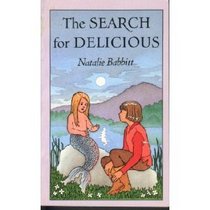
Early during my first year of teaching, I got a terrible head cold and stayed home one day to rest. For some reason, I picked up a copy of Natalie Babbitt’s The Search for Delicious that had been sitting on my shelf for ages. From the moment I began reading, I knew I had to read this book to my third graders. Here was a magical tale, rich with descriptive language. The final sentence of the prologue, which foreshadows everything to come, is a perfect example:

“Nobody believed [mermaids, dwarves, and woldwellers] were real any more except for an occasional child or even more occasional worker of evil, these being the only ones with imagination enough to admit to the possibility of something even more amazing in the world than those commonplace marvels which it spreads so carelessly before us every day.” (p. 10)

Isn’t that lovely?

Babbitt’s story is that of Galen, son of Prime Minister DeCree, who is writing a dictionary for the King. Everything is going well until he gets to the word “delicious.” No one in the palace is satisfied with “Delicious is fried fish,” so Galen sets out to ask everyone in the kingdom their choice for delicious. Galen’s is a classic quest; he encounters friends, foes, and discovers much more than the elusive definition of delicious.

At the time, my students were struggling with adding descriptive details to their writing. I decided to have them write their own straight-forward definition of delicious, using Babbitt’s example as a starting point. Then they added details describing what made their choice so delicious. We wrote these in the computer lab and illustrated their definitions using KidPix so they could practice their computer skills as well. Here are some of their creations, long-buried in a folder on our school’s server:

Screen Shot 2013-03-27 at 9.33.14 PM
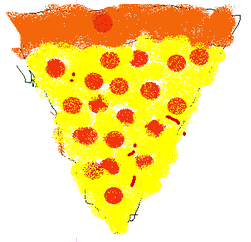
Delicious is one piece of hot pizza shaped like a pyramid covered with lots of tasty cheese, pepperoni, and tomato sauce.
Screen Shot 2013-03-27 at 9.35.11 PM
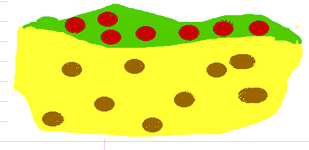
Delicious is six tacos with crunchy layers of cheese, meat, lettuce, and tomatoes.
Screen Shot 2013-03-27 at 9.38.36 PM
Delicious is a big plate of hot, freshly baked,chewy brownies with about 1,000 chocolate chips inside.
Screen Shot 2013-03-27 at 9.41.11 PM
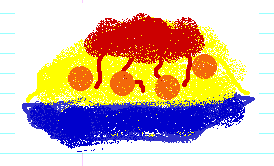
Delicious is a steaming hot heaping mountain of spaghetti dripping with dark red tomato sauce, slippery, curly noodles and huge meatballs cooked just right.

The Search for Delicious is listed on CCSS Appendix A list of text exemplars as a read aloud for grades 2-3, but that’s not why you should read this book. You should read this book because it is, well, delicious.

Thank you to Stacey and Ruth at Two Writing Teachers for hosting this Slice of Life Challenge!

Slice 25 of 31: It’s Monday! What Are You Reading?

ImageMon Reading Button PB to YA

Like many of my fellow participants in the month-long Slice of Life Challenge going on over at Two Writing Teachers, I spent much of my free time this weekend reading other slices. The caliber of the writing is incredible, and there’s such variety! I read many heart-felt remembrances of friends and family that moved me to tears. Observations about the trials and tribulations of daily life, both in and out of the classroom, had me laughing until I cried again. As the month is almost over (how is that possible?), many Slicers reflected on the lessons learned from writing every day and what they had learned about themselves as a writer. In addition, my sister was visiting from Rhode Island, so I spent lots of time with her. Needless to say, I didn’t make much of a dent in my TBR pile.

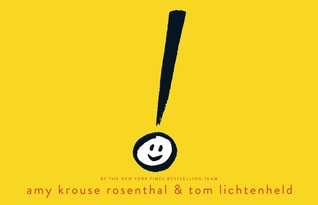
The one book I did get to, however, is priceless. Exclamation Mark (Scholastic Press, 2013), by Amy Krouse Rosenthal and Tom Lichtenheld, is the clever tale of a punctuation mark who knows he’s different from all the periods surrounding him. He tries to fit in, but nothing feels right. Then he meets a question mark, and he “discover[s] a world of endless possibilities.”

Image

The possibilities for using this book in the classroom also seem endless. Reading it for the fun of it is where I’d begin. I love the fact that the pages look like the lined paper familiar to Kindergarteners and first graders everywhere, and the word play is a riot.

With deceptively simple language, Exclamation Mark, is the perfect mentor text for asking questions and using “end punctuation in sentences.” (CCSS L.1.2.b) Exclamation Mark’s facial expressions perfectly match every word, and the word choice itself lends this book to addressing CCSS Language standard 5.d for first grade, “Distinguish shades of meaning among verbs differing in manner (e.g., look, peek, glance, stare, scowl) and adjectives differing in intensity (e.g., large, gigantic) by defining or choosing them or by acting out the meanings.” You can get a glimpse of all the fun by watching the book trailer:

Whatever else you do this week, get this book!

Thank you to Stacey and Ruth at Two Writing Teachers for hosting this Slice of Life Challenge!

Slice 21 of 31: A Book Spine Poem

Image

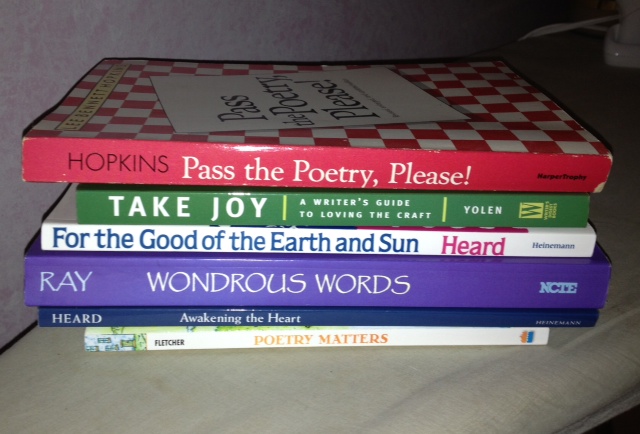
National Poetry Month is just around the corner, and although I teach and use poetry all year, I do make a fuss about all things poetical in April. This book spine poem really wrote itself as I revisited some of my favorite resources:

Image

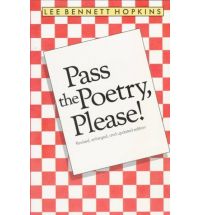
Pass the Poetry, Please!

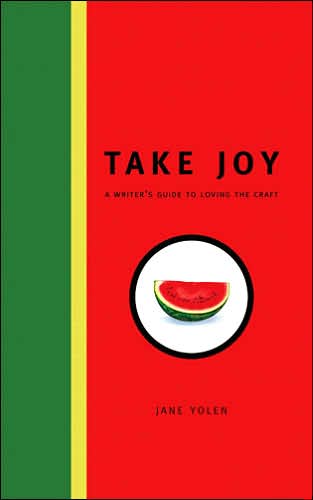
Take Joy

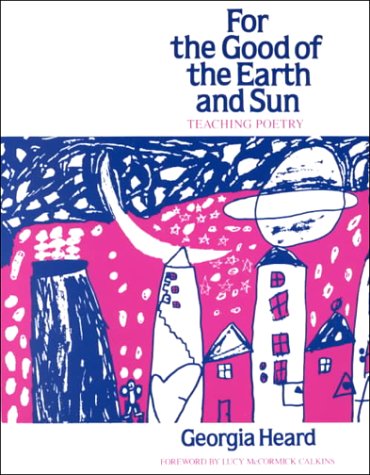
For the Good of the Earth and the Sun

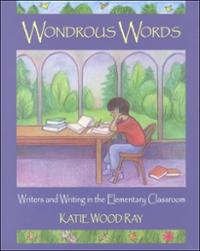
Wondrous Words

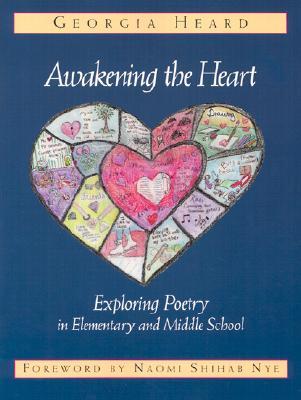
Awakening the Heart

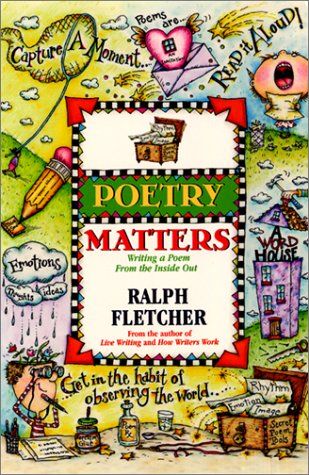
Poetry Matters

I’ve written before about using poetry with students (here, here  and here) and I know I’ll be writing about it again. For now, here’s a snippit of the wisdom contained within each of these excellent resources.

9780064460620Originally published in 1972, Lee Bennett Hopkins’ book is a classic resource for sharing and teaching poetry. Here is a comment he shares from poet David McCord:

“Poetry is so many things besides the shiver down the spine.” (p. 7)

Take-Joy

Jane Yolen is one of my all-time favorite authors. In Take Joy: A Writers Guide to Loving the Craft (Writers Digest Books, 2006), her wisdom and passion for writing permeate every page.

“…poetry, at it’s most basic, is a short, lyrical response to the world. It is emotion under extreme pressure or recollection in a small space. It is the coal of experience so compressed it becomes a diamond.” (p. 87)

043508495X

For the Good of the Earth and the Sun: Teaching Poetry (Heinemann, 1989), by Georgia Heard, is filled with practical advice and inspiration. In chapter 5, “Language:  The Poet’s Paint,”  she offers this:

“Sometimes I pretend a word is like a geode: rough and ordinary on the outside, hiding a whole world of sparkling beauty inside. My job as a poet is to crack the words open to find that inner treasure.” (p. 74)

wondrous-words-writers-writing-in-elementary-classroom-katie-wood-ray-paperback-cover-art

Wondrous Words: Writers and Writing in the Elementary Classroom (NCTE, 1999), by Katie Wood Ray, was a revelation to me. Here were the answers I’d been looking for about how to teach writing. Ray’s thoughts about read aloud confirm what we know in our hearts:

“Our students need to be…fortunate enough to be read to every single day by someone who values wondrous words and knows how to bring the sounds of those words to life in the listening writer’s ears and mind and heart.” (p. 69)

27041

Georgia Heard offers more thoughts about teaching poetry in Awakening the Heart: Exploring Poetry in Elementary and Middle School (Heinemann, 1999).

“One of the most important life lessons that writing and reading poetry can teach our students is to help them reach into their well of feelings–their emotional lives–like no other form of writing can.” (p. xvii)

poetry%20matters

Ralph Fletcher wrote Poetry Matters: Writing a Poem From the Inside Out (HarperTrophy, 2002) for kids, but it’s one of my favorite books about the craft of poetry. Speaking directly to children, he advises them

“There is poetry everywhere. [Write] What you wonder about. In my book A Writer’s Notebook, I wrote a chapter on ‘fierce wonderings’ and ‘bottomless questions.’ These are the kinds of haunting questions you can live and ponder but never really answer. Not surprisingly, these ‘wonderfull’ questions provide great grist for poems.” (p. 51)

Thank you to Stacey and Ruth at Two Writing Teachers for hosting this Slice of Life Challenge!

Slice 19 of 31: Play, Bill Harley and the CCSS

Image

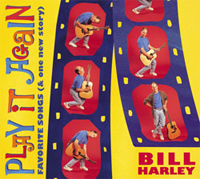
Yesterday I spent an hour with Kindergarteners. I love going into Kindergarten classrooms. The energy and enthusiasm of 5 and 6 year olds is contagious. Our celebration of kindness continued with a lesson built around storyteller/singer/songwriter/ Bill Harley’s “Sitting Down to Eat.” A variation of the folktale, “The Mitten,” the narrator is continually interrupted as he’s trying to eat, yet he always manages to find room for one more.

ImageI love using non-print resources to help kids learn important comprehension strategies. Taking away the print removes a layer of difficulty for struggling readers, but also allows developing readers to engage with material they aren’t ready to read but are certainly ready to comprehend. We do this all the time with read-alouds.

Maybe I shouldn’t be surprised that some kids don’t automatically visualize, given the amount of time they spend in front of screens. Poetry and songs are a perfect choice for developing this critical comprehension skill. I always begin this kind of lesson by demonstrating how to visualize. I have a few tried-and-true favorites, but any brief, descriptive poem will work. Then I tell them I’m going to play a song. Their job is to close their eyes and listen for words in the song they can use to make a picture in their head. Most of the kids are very serious and tightly scrunch their eyes; others are skeptical and leave their eyes half open. When the song is over, I have the students share what they were visualizing with a partner.  Usually, we listen to the song at least two more times as students create an illustration to match their visualization.

Harley’s song is made for movement. So after listening once, the kids were on their feet, dancing and gesturing knocking on the door. They all joined in on the chorus and had great fun acting out the ending. By the time they were sitting down on the rug again, they were able to work together to put pictures of the animals in the order they knocked on the door, match the names of the animals to the correct picture, and talk about the importance of sharing. Each child also created a page for a class book about who they like to share with.

This lesson strives to incorporate the CCSS (Kindergarten RL standards 1, 2 & 3) in a way that preserves “play, imagination and discovery” which, as Deborah Kenny in a recent Washington Post op-ed states, “are how kindergarteners learn.”

For more of Bill Harley’s brilliance, watch his TEDx talk:

Thank you to Stacey and Ruth at Two Writing Teachers for hosting this Slice of Life Challenge!