National Poetry Month: Wander

In Rooted, Lyanda Lynn Haupt recommends wandering. She writes, “Wandering brings mind and movement into a healing congruity.” (p. 64) Wandering is something we could all use more of.

This poem began as an acrostic of wander. Technically, it still is, but like most writing, it had a mind of its own and wandered off in another direction.

Wake to whispering trees
Awash in the surging green of
Nascent leaves and petals, still
Dappled with last night’s rain,
Eager to burst open and host
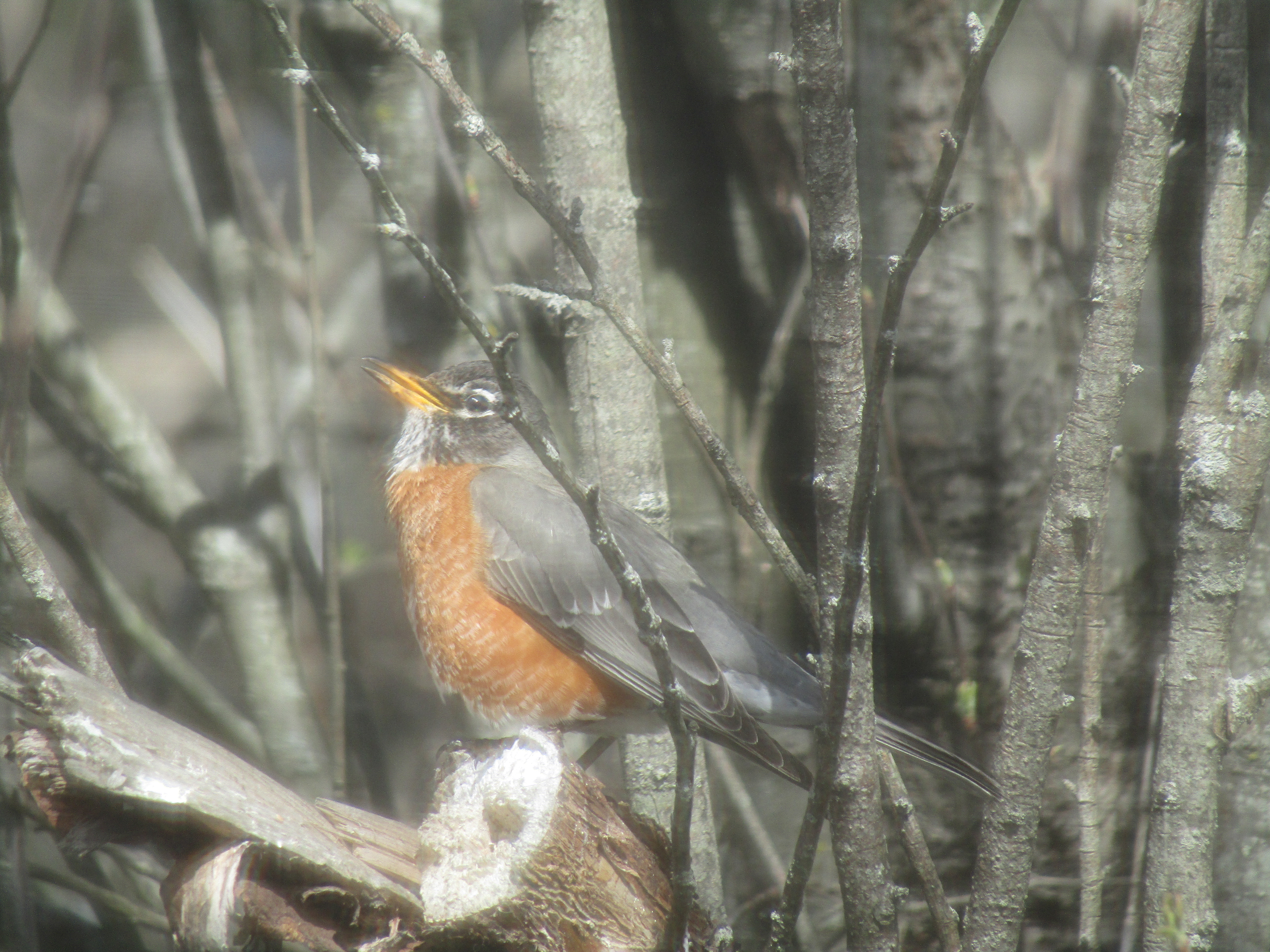
Robin’s reveille

The robin in charge
of reveille in my yard

Previous NPM Posts:

Day 5: For the Good of the Earth
Day 4: Enchantment and Wonder
Day 3: Reciprocity
Day 2: Kith and Kin
Day 1: The Thing Is
National Poetry Month: For the Good of the Earth

My National Poetry Month Project has gone off the rails. Instead of writing poetry this week I’ve been changing the diapers of my 3-week old grandson, reading and singing to him and his 2-year old sister, and helping their parents transition to life with 2 kids. 

Early in April, I read an article in The New York Times about microplastics hitching a ride on marine snow to the bottom of the ocean. Scientists fear that this will disrupt the food webs throughout the world’s oceans. This has gnawed at me ever since, but I couldn’t figure out how to write a poem about it. Then I found this quote by Wendell Berry. The last line felt like a perfect strike line for a Golden Shovel: 

Here’s my very drafty draft:

How can we pretend to know
with certainty the
ripple effects of our inventions on the world?
Tons of plastic, that miracle convenience*, floats and
swirls through our oceans. Now we learn
that this “indestructible” scourge breaks down, that microplastics have infiltrated what
were once thought pristine, unreachable depths. Is
no place safe from the blizzard of debris we’ve unleashed on the Earth? What good
is all our technology if we can’t protect our only home for
our grandchildren, for all of nature? They deserve it.

Draft © Catherine Flynn, 2022

* See this article to find out how plastic was marketed to our parents in the 1960s. There are many, many articles online about ways to reduce our plastic use. Here’s one with an extensive list of ideas.

Please be sure to visit Matt Forrest Esenwine at Radio, Rhythm & Rhyme for a terrific interview with Leslie Bulion and the Poetry Friday Roundup!

Previous NPM Posts:

Day 4: Enchantment and Wonder
Day 3: Reciprocity
Day 2: Kith and Kin
Day 1: The Thing Is
National Poetry Month: Enchantment and Wonder

This month I will be writing poems in response to the ideas, connections and echoes between All We Can Save: Truth, Courage, and Solutions for the Climate Crisis, edited by Ayana Elizabeth Johnson and Katharine K. Wilkinson and Rooted: Life at the Crossroads of Science, Nature, and Spirit, by Lyanda Lynn Haupt.

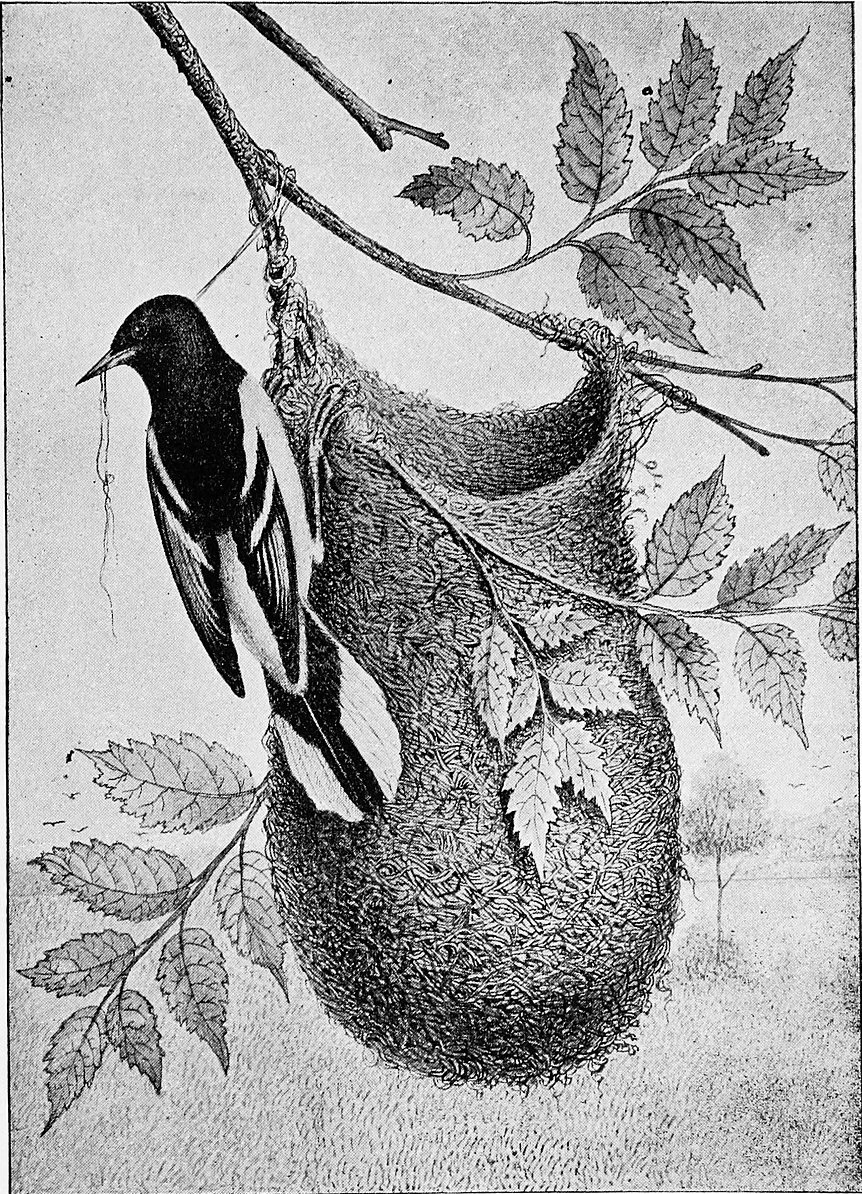
Lyanda Lynn Haupt includes “Enchantment and Wonder” among the tenets of Rootedness. She explains that the word wonder “derives from the Old English wundrian – to be astonished by the presence of the wondrous.” (p. 27) She also explains that we humans, so preoccupied with our busyness, have to be open to the “visitations” of the wondrous. Sometimes I can be a bit too open to wonder. Although I haven’t driven off the road while gazing at some bird, cloud, or tree yet, I’ve come close. That is what happened one day last November. Driving to work one morning, I noticed something hanging from a tree near the road. As I got closer, I slowed almost to a stop. (So I wouldn’t drive into the tree!) Wonder of wonders, it was a Baltimore oriole’s nest! Sadly, it was too far off the ground to get a good look at, but I’ve been marveling at that nest all winter long. Late last week when I drove by, I was enraged to see that the tree had been cut down! I hope whoever cut it down noticed the sock-sized miracle they destroyed. I decided to write a tanka-ish poem in its honor.

hidden since last spring
among dense, sheltering leaves,
an oriole’s nest,
a beak-woven wonder,
survived the winter

but not humans.

Draft, © Catherine Flynn 2022

From Nests and Eggs of North American Birds, by Oliver Davie, 1900
Internet Archive Book Images, No restrictions, via Wikimedia Commons

Previous NPM Posts:

Day 3: Reciprocity
Day 2: Kith and Kin
Day 1: The Thing Is
National Poetry Month: Reciprocity

This month I am writing poems in response to the ideas, connections and echoes between All We Can Save: Truth, Courage, and Solutions for the Climate Crisis, edited by Ayana Elizabeth Johnson and Katharine K. Wilkinson and Rooted: Life at the Crossroads of Science, Nature, and Spirit, by Lyanda Lynn Haupt.

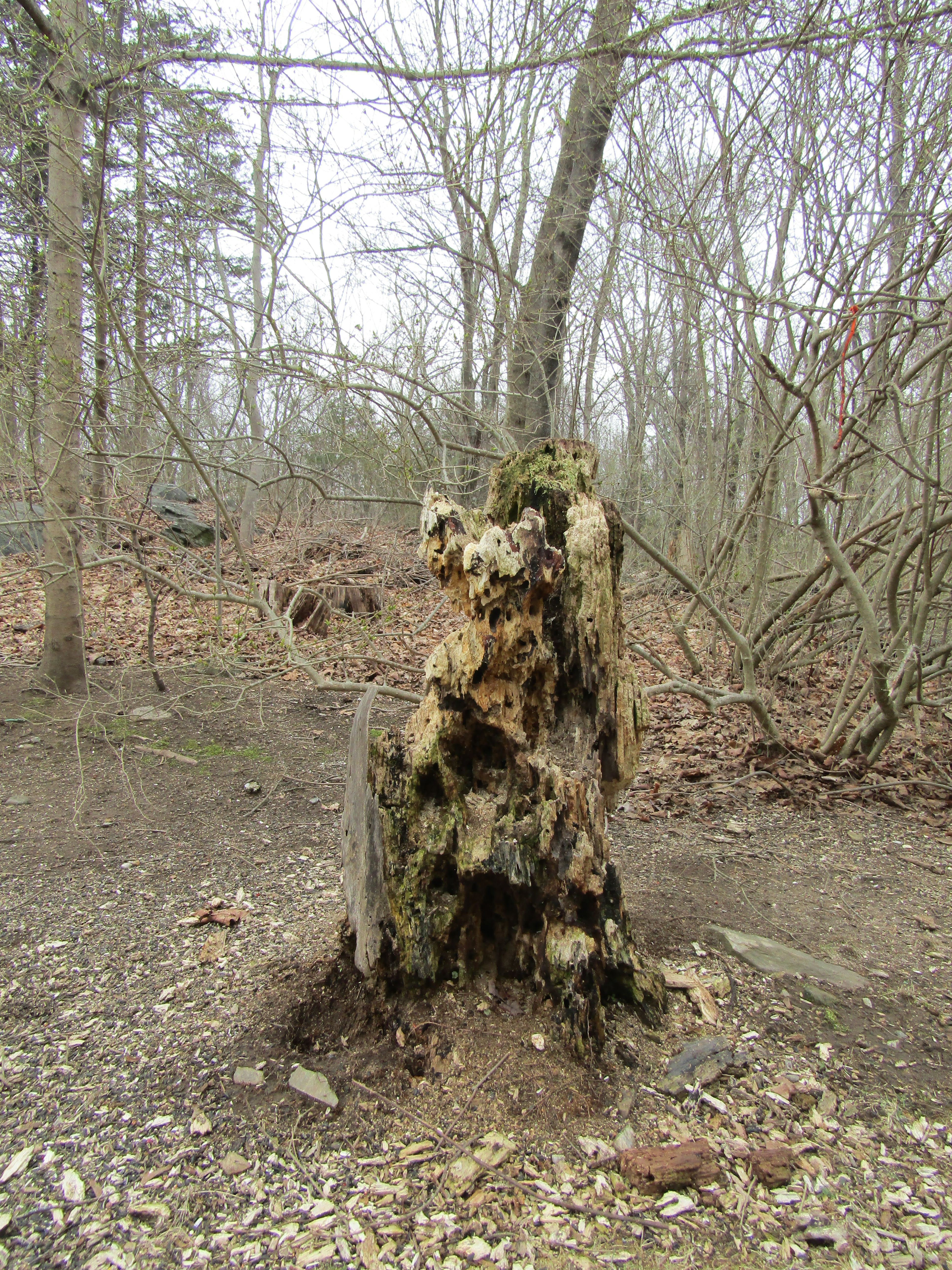
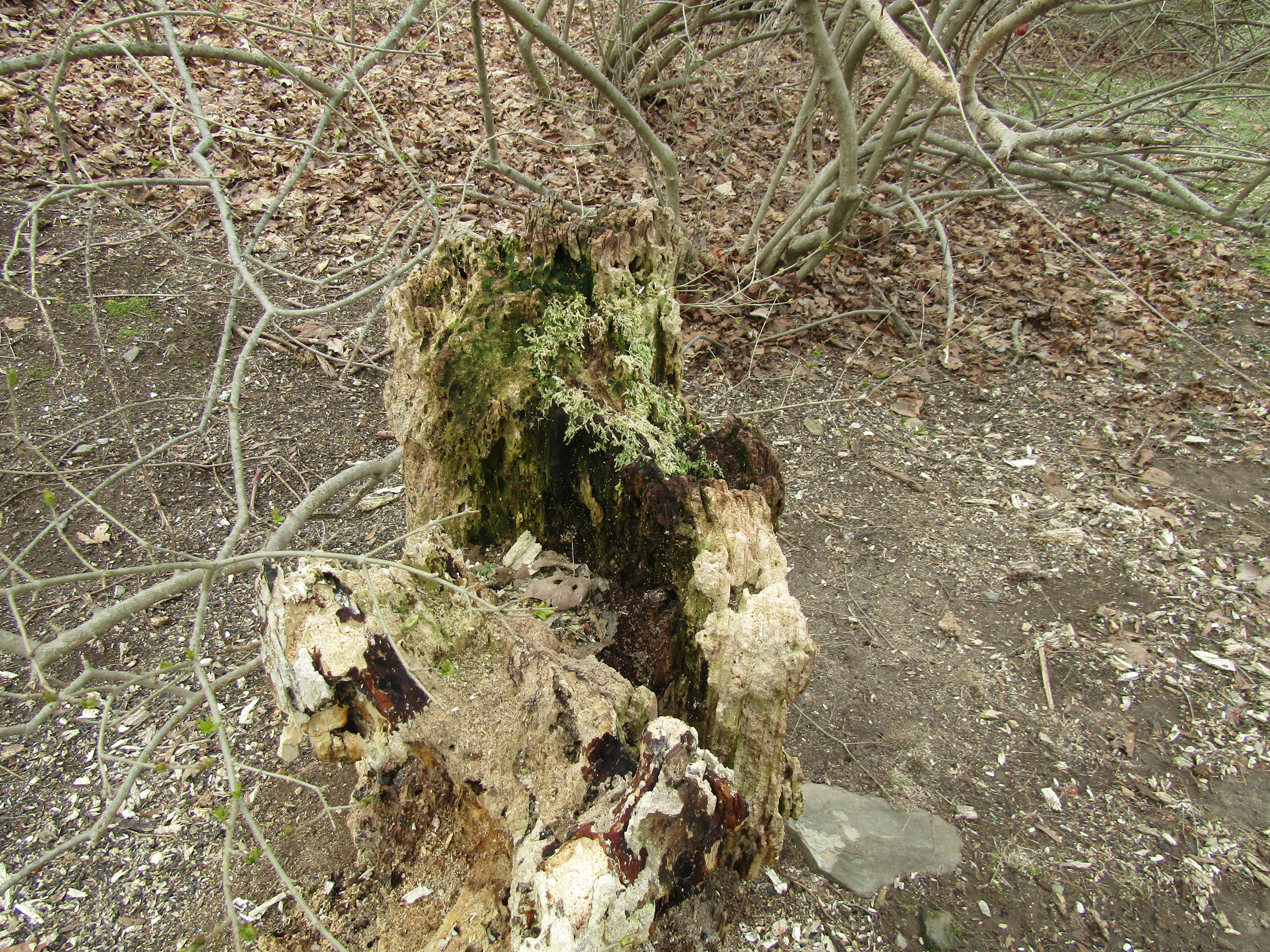
At its heart, reciprocity is the idea that all beings, plant and animal, “facilitate one another in beneficial ways,” Janine Benyus writes in her essay “Reciprocity” (All We Can Save, p. 9). For several years, we have been witnessing reciprocity in action outside our kitchen window. The stump pictured below is all that’s left of a beech tree that died. Worried that it could fall on our house, my husband and son cut it down, but never got around to digging out the stump. I’m glad they left it to finish its natural cycle.

Reciprocity

Red-crested pileated woodpeckers
Excavate the stump of an old beech,
Carving cavities, feasting on
Insects who’ve settled inside the
Pitted, pulpy wood, all that
Remains of a towering tree, where a multitude of
Organisms still thrive, a
Community 
Inextricably intertwined, supporting,
Tending, nourishing one another for
Years to come.

Draft © Catherine Flynn, 2022

Previous NPM posts:

Day 2: Kith and Kin
Day 1: The Thing Is
National Poetry Month: The Progressive Poem is Here!

The Progressive Poem has become a beloved tradition during National Poetry Month. Irene Latham began this annual event in 2012 and organized its creation until 2020, when Margaret Simon took over.

I confess, I sat on the sidelines for several years. I felt coming up with a line to match the tone and timber of the work of so many talented poets was too much pressure! A few years ago, I decided to join in the fun.

This year, Irene got the ball rolling with a line from Emily Winfield Martin’s magical book, The Imaginaries. Yesterday, Donna added the possibility that this could be a poem for two voices. The invitation to adventure in Irene’s line was too much for me to pass up, so I chose a line from The Wind in the Willows that could be a response to Bilbo’s unwillingness to leave his cozy Hobbit home.

Where they were going, there were no maps; (Irene L.)

“Sorry! I don’t want any adventures, thank you. Not today.” (Donna S.)

“Take the adventure, heed the call, now ere the irrevocable moment passes!” (Catherine F.)

Over to you, Mary Lee.

Here are the sources for the poem’s lines so far:

The Imaginaries: Little Scraps of Larger Stories, by Emily Winfield Martin
The Hobbit, by J. R. R. Tolkien
The Wind in the Willows, by Kenneth Grahame

Be sure to follow the progress of our poem each day!

1 April 1 Irene at Live Your Poem
2 Donna Smith at Mainly Write
3 Catherine Flynn at Reading to the Core
4 Mary Lee at A(nother) Year of Reading
5 Buffy at Buffy Silverman
6 Molly at Nix the Comfort Zone
7 Kim Johnson at Common Threads
8 Rose Cappelli at Imagine the Possibilities
9 Carol Varsalona at Beyond Literacy Link
10 Linda Baie at Teacher Dance
11 Janet Fagel at Reflections on the Teche
12 Jone at Jone Rush MacCulloch
13 Karin Fisher-Golton at Still in Awe
14 Denise Krebs at Dare to Care
15 Carol Labuzzetta @ The Apples in my Orchard
16 Heidi Mordhorst at My Juicy Little Universe
17 Ruth at There is no such thing as a God-forsaken Town
18 Patricia at Reverie
19 Christie at Wondering and Wandering
20 Robyn Hood Black at Life on the Deckle Edge
21 Kevin at Dog Trax
22 Margaret at Reflections on the Teche
23 Leigh Anne at A Day in the Life
24 Marcie Atkins
25 Marilyn Garcia
26 JoAnn Early Macken
27 Janice at Salt City Verse
28 Tabatha at The Opposite of Indifference
29 Karen Eastlund at Karen’s Got a Blog
30 Michelle Kogan Painting, Illustration, & Writing

National Poetry Month: Kith & Kin

One of the first essays in All We Can Save is “Indigenous Prophecy and Mother Earth,” by Sherri Mitchell. Mitchell writes that “everything is interrelated and recognized for its sacred place within the web of life.” (p. 20) This understanding is central to kincentric awareness, the understanding that “life in any environment is viable only when humans view the life surrounding them as kin.” Lyanda Lynn Haupt includes kith and kin as two of the fundamental tenets of “rootedness” in her book Rooted. She explains “where kin are relations of kind, kith is relationship built on knowledge of place–the close landscape…Kithship enlivens kinship.” (p.26)

Our house is built on land that was once part of my great-grandfather’s farm. I feel deeply connected to this land, although I never knew this was really meant by the word “kith.” I also know that before European settlers lived here, people of the Schaghticoke and Paugussett nations lived on this land. We have tried to be good stewards and remember that we share this land with others.

Some of you know that we have a new grandson. I know his parents will help him understand that “each element within creation (including humans) has the right and the responsibility to respectfully coexist as coequals within the larger system of life.” (Mitchell, p. 19) Today’s poem is dedicated to Eamonn.

Kith and kin

On the night you were born,
the moon bathed you in its silvery light,
welcoming you into the world.

Deep in the woods,
a chorus of peepers sang
out in jubilation, celebrating
your arrival.

And sap coursed through
trees and plants
swelling buds,
greening the earth,
greeting you, their brother.

Draft © Catherine Flynn, 2022

National Poetry Month, Day 1

Poetry Friday: Welcome, National Poetry Month!

What a happy coincidence that National Poetry Month begins on a Friday this year! And, because the Inkling challenge is the first Friday of each month, today is a trifecta of poetry goodness. This month, Mary Lee challenged us to “Use “The Thing Is” by Ellen Bass as a mentor text. Keep the title, but choose a theme/message either from your own life or from current events.” Bass’s poem is full of the pain and contradictions of life, asks questions, and reaches a resolution.

Today is also the first day of my month-long poetry project. For the past two years, I’ve explored the natural world through poetry. Two years ago, my poems were about News from the Natural World. Last year’s project was inspired by Kathryn Aalto’s Writing Wild: Women Poets, Ramblers, and Mavericks Who Shape How We See the Natural World. That journey was such an incredible learning experience that I wanted to do something similar this year. My friend and fellow Inkling, Heidi Mordhorst (who is also hosting today’s Roundup), suggested reading All We Can Save: Truth, Courage, and Solutions for the Climate Crisis, edited by Ayana Elizabeth Johnson and Katharine K. Wilkinson. But I also recently discovered Rooted: Life at the Crossroads of Science, Nature, and Spirit, by Lyanda Lynn Haupt. At the risk of being indecisive, I’m not going to commit to one book or the other. Rather, I envision this month’s writing to be a response to the connections between these two books. Who knows where that will lead?

So, using “The Thing Is” as a starting point, this month’s journey begins with a walk in the woods.

The thing is

I have so many
questions,
so many 
things I. Don’t. Understand.

But I know
a walk
in the woods
on a cold day
in late March, 
will hold surprises.

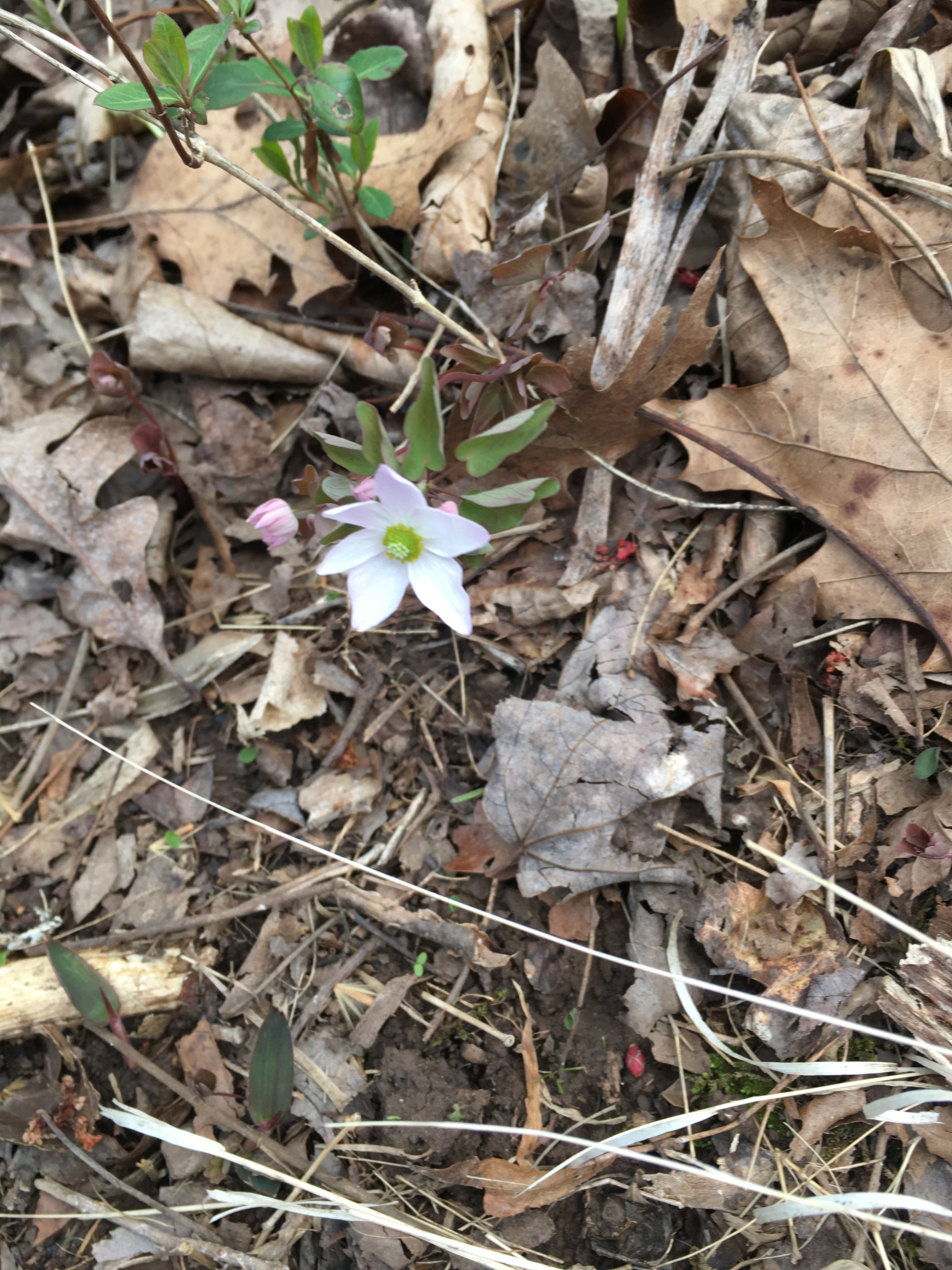
Maybe sharp-lobed hepatica 
are erupting from leaf litter,
scattered beside the trail, 
their pale pink petals
streaked like the morning sky,
each flower with a 
a dazzling supernova
of stamens at the center.

Or a lone antler
rests at the base
of a scarred oak,
or a jumble
of hawk feathers
lay in a heap
by a fallen log.

As I study 
the remains 
of this fierce predator,
my need for answers
becomes urgent.

I realize, though, I don’t know 
who to ask.

Draft © Catherine Flynn, 2022

Please visit my fellow Inklings to read their responses to Mary Lee’s challenge, and the Poetry Friday Round up at Heidi’s blog.

Heidi Mordhorst @ My Juicy Little Universe
Linda Mitchell @ A Word Edgewise
Margaret Simon @ Reflections on the Teche
Mary Lee Hahn @ A(nother) Year of Reading
Molly Hogan @ Nix the Comfort Zone

Poetry Friday: Chasing Rainbows

One of my favorite collections to share with children is Elaine Magliaro‘s Things To Do (Chronicle Books, 2017). Magliaro imagines all sorts of animals, familiar elements of nature (sun, rain, sky), and everyday objects like erasers and scissors. Writing a “things to do” poem is a great way to get children looking at familiar sights in new ways. This can also stretch their vocabulary, as they strive to find that just right word to describe an image.

I was recently inspired to write a few “things to do” poems myself. This is one of my favorites (although the last line still needs work.)

Draft, © Catherine Flynn, 2022

Please be sure to visit Amy Ludwig VanDerwater at The Poem Farm for the Poetry Friday Roundup.

Poetry Friday: A Riot of Robins

We’re on the cusp of spring, but winter has been reluctant to loosen its grip. In typical New England fashion, the weather has been vacillating between blustery snow and teasing breezes. Last week I was able to sneak in a late afternoon walk. I wasn’t the only one out enjoying the sunshine.

A Riot of Robins

Grace is a leafless maple
ablaze with glowing
amber lanterns:
a riot of robins
welcoming spring.

Draft © Catherine Flynn, 2022

Photo by Trac Vu via Unsplash

Please be sure to visit Ruth at There Is No Such Thing as a God-Forsaken Town for the Poetry Friday Roundup.

Poetry Friday: Rabbit Holes & Eggs

A few weeks ago I wrote about finding a short article by Jane Yolen about her correspondence with Nancy Willard. That led me to seek out more of Willard’s poetry, which led me to A Nancy Willard Reader, which led me to this magical poem by Linda Pastan.

The Egg

In this kingdom
the sun never sets;
under the pale oval
of the sky
there seems no way in
or out,
and though there is a sea here
there is no tide.

Read the rest of the poem here.

Photo by Hanna Balan via Unsplash

The Poetry Friday Roundup is happening at Poetry For Children. Please visit Sylvia Vardell and Janet Wong as they lay out a veritable smorgasbord of poetry to help celebrate their latest anthology, Things We Eat.