Poetry Friday/Read Across America/Slice of Life Mash Up

At school today, we kicked off our month-long celebration of Read Across America. Usually we adopt the theme promoted by NEA, Read Across America’s official sponsor. Last year we made truffala trees out of butcher paper to decorate the hallways. Throughout the month, students created book jackets based on books they loved to decorate the trees. We also had a read-a-thon to raise money to purchase a tree in memory of a student who had recently lost her year-long battle with aplastic anemia.

Image
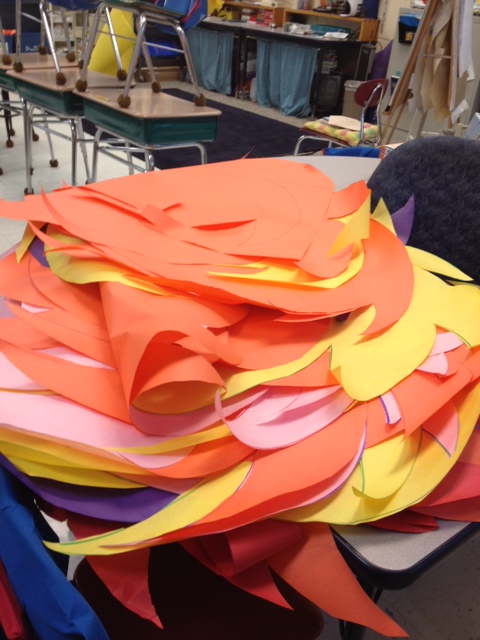
Truffalas waiting to be hung up.
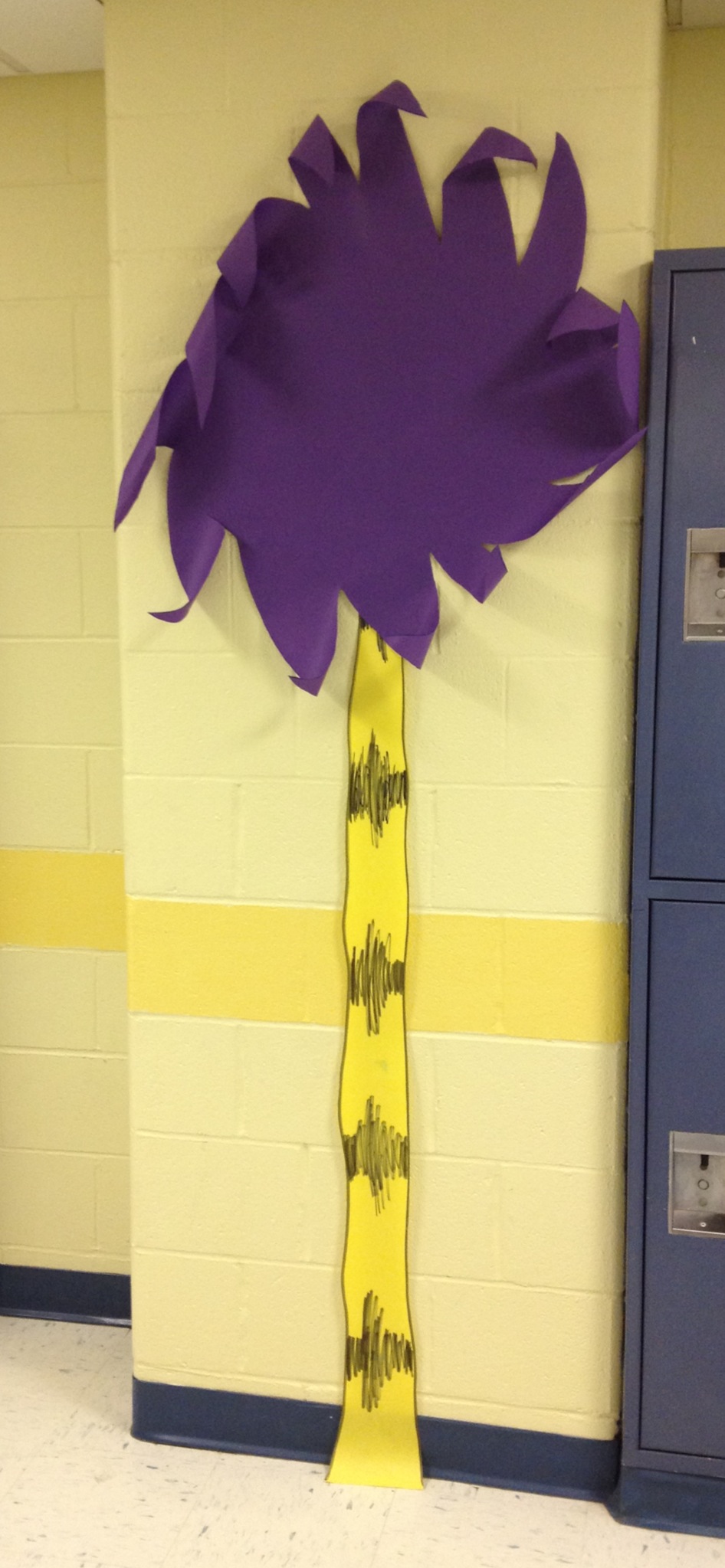
Completed truffala tree

A few years ago, we encouraged everyone to literally read across America and read books from all 50 states. This was harder than you might think. To promote the theme, (Here comes the poetry part of this post!) I wrote a song, with a little help from some students.

See the USA

(Sung to the tune of Dinah Shore’s old Chevrolet commercials)

See the U.S.A., read a book today.

America’s got lots of tales to tell.

From Paul Bunyan’s woods,

to the engine that could

Reading is the way to meet them all.

On a couch or on a chair in the library,

Travel out west,

Meet Ramona the Pest.

To many new sights you will be carried.

So make a date today 

to read the U.S.A.

Pledge to read a book today!

© Catherine Flynn, 2009

It was lots of fun, and we still sing it. Here’s Dinah in an old commercial if you don’t remember the tune.

Which brings us to today. While I love this year’s “Hats off to Dr. Seuss” theme, last October our school accepted Rachel’s Challenge. Rachel Joy Scott was killed in the massacre at Columbine High School in 1999. After her death, her parents decided to share her story and writings to inspire people to prevent bullying. As Rachel said,

“I have this theory that if one person can go out of their way to show compassion, then it will start a chain reaction of the same. People will never know how far a little kindness can go.”

As soon as I heard this, I thought of Auggie and Dr. Wayne Dyer’s precept, “When given the choice between being right or being kind, choose kind.” The dovetailing of these two messages made doing a school-wide read of R.J. Palacio’s Wonder seem like the perfect theme for our Read Across America celebration this year.

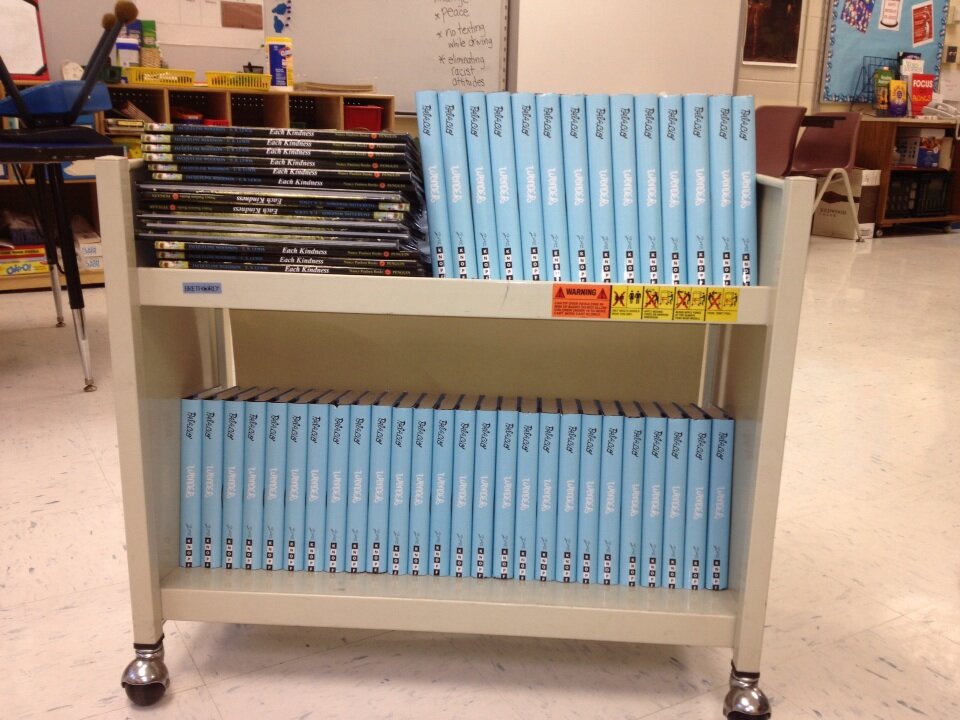
Because we’re a K-8 school, we had to find a related text for the lower grades. Jacqueline Woodson thoughtfully wrote the powerful Each Kindness late last year, which filled that bill perfectly! Our PTO generously funded the purchase of a book for every classroom, and today we kicked off our month-long celebration.

Books waiting to be distributed to teachers

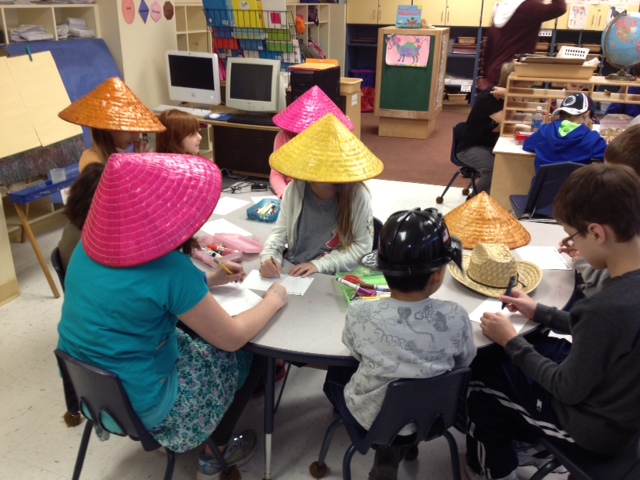
We began the morning with each upper grade homeroom visiting a lower grade classroom. Teachers read Each Kindness aloud, and then the students paired up to create and illustrate Kindness is… statements. These will be displayed on bulletin boards throughout the school. Each homeroom in grades 4-8 will be reading Wonder aloud throughout the month, and the lower grades will be reading other picture books related to the theme of kindness. The whole morning went off without a hitch, and we have many fantastic Kindness is…statements. By the way, we wore hats too!

photo
Sixth graders and Kindergarteners creating Kindness is… statements

Happy Read Across America, everyone!

World Read Aloud Day Blogger Challenge

World Read Aloud Day Blogger Challenge

Image

Now & Then

Reading aloud to kids (anyone, for that matter) is one of my favorite things to do. So of course I’ll be celebrating World Read Aloud Day on March 6th. To help get ready, here are some of my thoughts about reading, now, and when I was ten.

1. I think everyone in the world should read…

When I was 10: Charlotte’s Web was the first chapter book I read on my own and I was sure everyone would love it as much as I did. (I still do!)

Now: It’s so difficult to narrow this down, so I’ll try categories.

Adult fiction: Bel Canto by Ann Patchett

YA fiction: The Book Thief by Marcus Zusak

Middle Grade fiction: The Birchbark House by Louise Erdrich

Picture Book: Amos & Boris by William Steig

2. If I could listen to anyone in the world read aloud to me it would be…

When I was 10:  The elementary school I went to didn’t have a library, but the town library was right next door. So every week we walked there to check out books. After we arrived, we’d sit with a friend in one of the window seats and listen to Mrs. Rothschild read to us. Mrs. Rothschild was a tiny woman with a steel gray bun who, I found out later, was a former teacher and author. All I knew then was that I loved listening to her read to us every week. 

Now: Over the past 6 months or so, I’ve listened to all of L.A. Meyer’s Bloody Jack books, narrated by Katherine Kellgren. Kellgren does an incredible job differentiating the voices with subtleties in accents and tone. She also has a beautiful singing voice.

3. When I read aloud, my favorite character to impersonate is…

When I was 10: I sang much more than I read when I was 10. Funny Girl was my favorite soundtrack, so I’d have to say Fanny Brice!

Now: Daniel in Daniel O’Rourke by Gerald McDermott. I love his lilting Irish brogue.

4. The genre that takes up the most room on my bookshelf (or e-reader) is…

When I was 10: No contest, I loved fiction. 

Now: Nothing has changed. Fiction still dominates my TBR pile.

5. The last book I wish I’d written or inspired me to write my own story is…

When I was 10: A poster for The Hobbit inspired the first story I remember writing, a science fiction story about a spaceship crashing in a swamp near my house.

Now: “Paolo and Francesca” from Dante’s Inferno. This is something I’m actually working on. 

This was last week’s challenge, so I’ll be back later in the week with a snapshot of my reading life. Happy Reading!

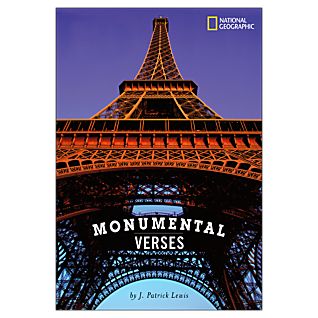
Poetry Friday: Monumental Verses by J. Patrick Lewis

url

Earlier this week, I took part in Nonfiction 10-for-10, a celebration of nonfiction books for kids. I struggled to narrow my list down to 10 titles, but decided to leave this book off when it occurred to me I could share it today.

When I was a kid, I loved arranging furniture in my dollhouse. As I got a little older, I filled notebooks with house plans and furniture arrangements. And while I did think about becoming an interior decorator, I never really considered becoming an architect. I’m not sure why, but I suspect it had something to do with my less than stellar math skills. So when I discovered Monumental Verses (2005), by J. Patrick Lewis, the latent architect inside of me was thrilled.

A bow to all who hoist the spirit high

And carve imagination into stone

By fire and forge, thrown hugely to the sky.

Whether they be well-or little-known,

The buildings in this picture book cement

A thought: No matter who the builders were,

They gave to time a timeless monument–

A human star-chitcture signature.

I cannot say what others make of this,

The mystery of Stonehenge, a Taj Mahal,

And yet I know how much the world would miss

Majesty at a glance if they should fall.

This book is for the curious at heart,

Startled at sights they seldom get to see

Or even dream of-science born of art,

Such works of genius these were meant to be.

Fourteen poems and gorgeous photographs celebrate architectural wonders from around the world. Lewis’s uses a number of poetic forms to describe wonders of the Empire State Building, Easter Island, the Arc de Triomphe, and more. Playful shape poems bring the pyramids, the Great Wall of China and Stonehenge to life. Vital statistics regarding when each structure was built, where it’s located, the architect (if known), and an amazing physical fact are included. An Epilogue offers writing advice to budding poets.

We have used this book with 5th graders as a mentor text. Engagement is high because students are fascinated by these incredible feats of design and engineering. After reading, they chose a well-known building or monument that interests them. Research is done, and once they’ve collected their facts, they write their own poetic tributes. A project like this doesn’t have to be terribly time consuming, and it covers a number of CC Standards. Lewis’s rich vocabulary addresses  Reading Literature standard 5.4, “Determine the meaning of words and phrases as they are used in text, including figurative language such as metaphors and similes.” Writing their own poems allows student to “Integrate information from several texts on the same topic in order to write or speak about the subject knowledgeably,” (RI.5.9) as well as “Produce clear and coherent writing in which the development and organizations are appropriate to task, purpose, and audience.” (W.5.4)

A book like this can pique a student’s curiosity about the man-made wonders of the world. It might even inspire them to become an architect!

You can learn more about J. Patrick Lewis on his website and find additional ideas for using Monumental Verses with your students here.

Don’t forget to visit Sheri Doyle’s blog for other Poetry Friday posts!

10 for 10 Nonfiction Books

Screen Shot 2013-02-04 at 11.55.24 PM

“I have no special talents. I am only passionately curious.” Albert Einstein

When Cathy, Mandy, and Julie announced this Nonfiction 10 for 10, I started thinking about what would be on my list. It quickly became apparent that I could come up with 20 for 20 or more. Hard choices would have to be made. I decided pretty quickly to focus on picture books because they have such a broad appeal. As I looked through my collection, I began to notice a trend. These books were mostly about people who came up with some pretty interesting ideas. These people, like Einstein, were curious. They were passionate about something and used that passion to create and innovate. I love sharing these stories with students, encouraging and fostering their curiosity.

url-3

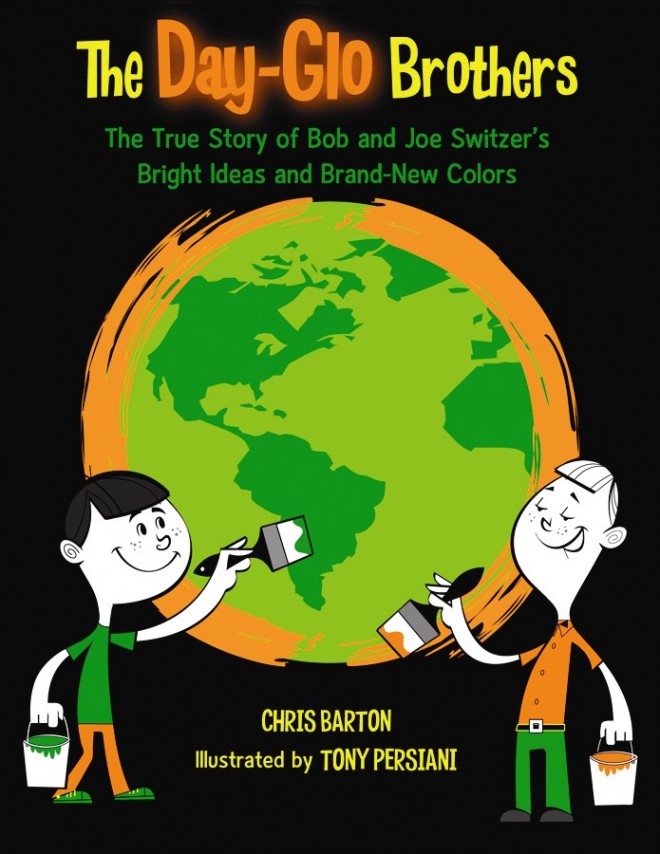
The Day-Glo Brothers: The True Story of Bob and Joe Switzer’s Bright Ideas and Brand-New Colors (2009) by Chris Barton, illustrated by Tony Persiani. The Switzer brothers each had plans for their futures, but their serendipitous discovery of day-glo paint changed everything.

url-1

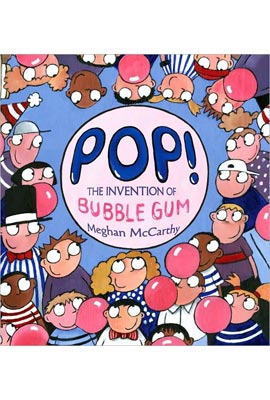
Pop! The Invention of Bubble Gum (2010) by Meghan McCarthy. Kids love this engaging picture book about how bubble gum was invented. (And why it’s pink!)

url-5

The Man Who Walked Between the Towers (2003) by Mordicai Gerstein. Phillipe Petit’s daring adventure comes alive in this beautifully illustrated Caldecott Award winner.

url-2

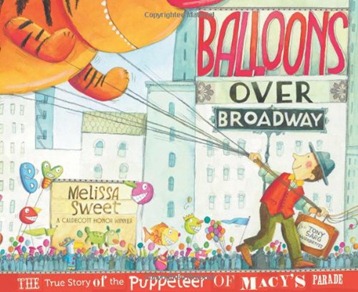
Balloons Over Broadway: The True Story of the Puppeteer of Macy’s Parade (2011) by Melissa Sweet.  Tony Sarg’s creativity is expertly conveyed through Sweet’s appealing combination of words, drawings, collage and photographs of handmade toys.

url

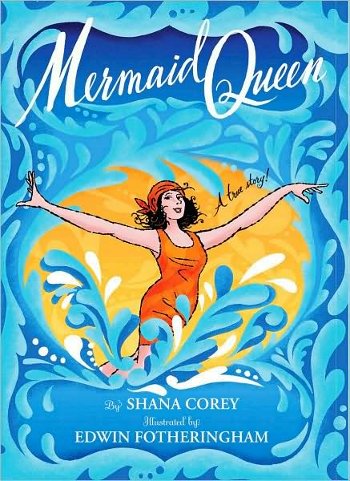
Mermaid Queen: The Spectacular True Story of Annette Kellerman, Who Swam Her Way to Fame, Fortune & Swimsuit History! (2009) by Shana Corey, illustrated by Edwin Fotheringham. Annette Kellerman overcame physical challenges, only to confront the challenges faced by all women at the turn of the twentieth century. Making lots of waves, she worked to overcome them.

6a00d83451af1569e201157156ce40970c-800wi

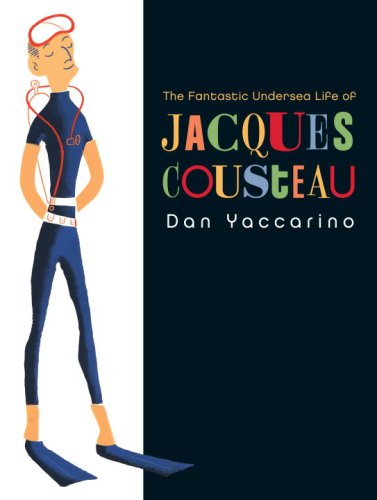
The Fantastic Undersea Life of Jacques Cousteau (2009) by Dan Yaccarino. Talk about making waves! Jacques Cousteau fell in love with the sea as a boy, and he devoted his life to learning all he could about the mysteries of the deep.

imgres

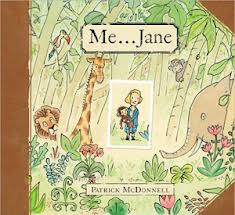
Me, Jane (2011) by Patrick McDonnell. Jane Goodall decided at an early age that Africa was the place for her and her love of animals. This beautifully illustrated book tells her story.

url-4

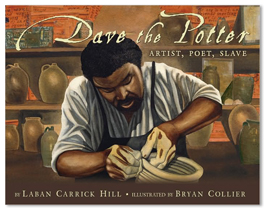
Dave the Potter: Artist, Poet, Slave (2010) by Laban Carrick Hill, illustrated by Bryan Collier. The craftsmanship and skill of a man known only by his first name shines in this tribute to an amazing artist.

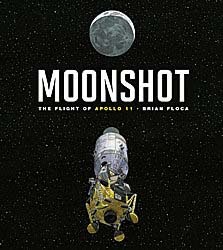
Moonshot_TheFlightofApollo11

Moonshot: The Flight of Apollo 11 (2009) by Brian Floca. Most of the books on this list are about the accomplishments of an individual pursuing a dream. This inspiring story   demonstrates the power of a group of smart, creative people working together toward a common goal.

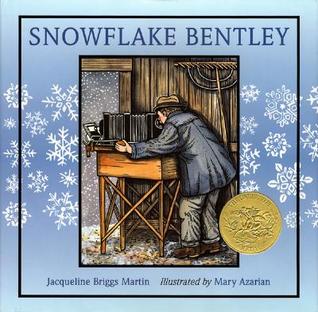
348489

Snowflake Bentley (1998) by Jacqueline Briggs Martin, illustrated by Mary Azarian. The unexplored has always fascinated human beings. And, as the stories in these books, and countless others, prove, we are persistent and innovative in our pursuit of the unknown. Wilson Bentley was the quintessential dreamer. Fascinated with the snow that surrounded him, he devoted his life to exploring the microscopic beauty of nature.

Compiling this list was a huge challenge. There are so many books I wanted to include. Hopefully others have included them on their list. Better yet, readers will be inspired to explore and discover other wonderful nonfiction books to share with their students.

(If you haven’t already, check out Google‘s doodle today. It’s Nicolaus Copernicus’ 540th birthday, a very fitting date for a list like this. Happy exploring!)

It’s Monday! What Are You Reading?

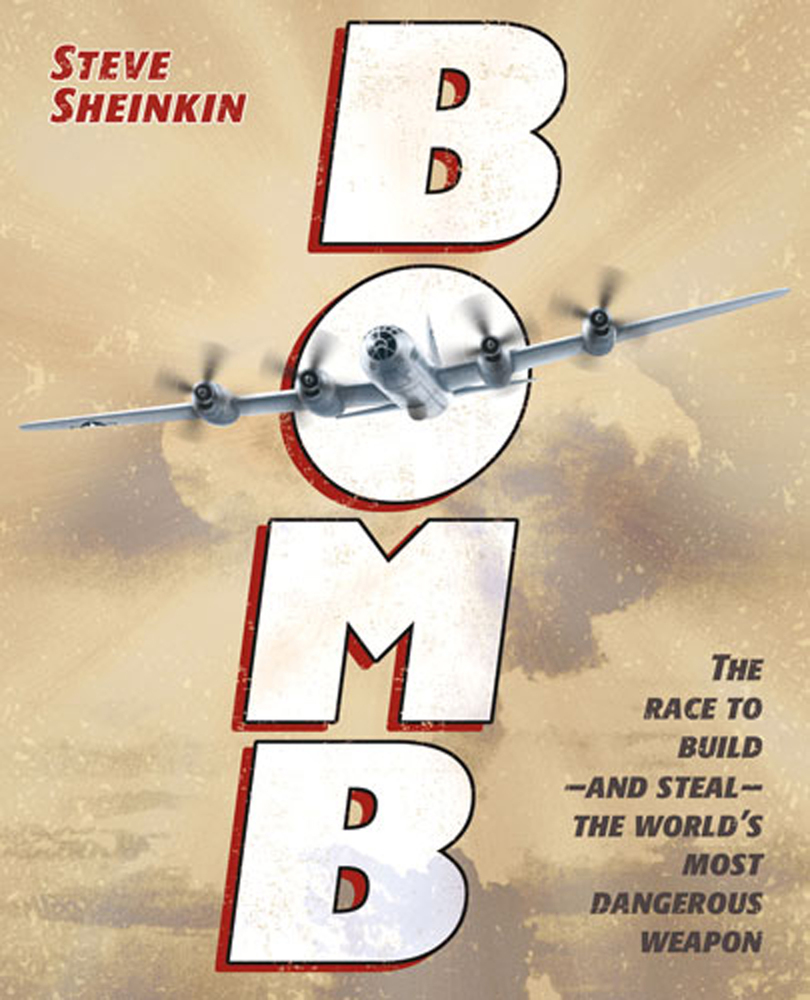
Image

Yesterday I finished reading Bomb: The Race to Build–and Steal–the World’s Most Dangerous Weapon, by Steve Sheinkin, so now I’ve read all of this year’s Newbery books. Talk about a diverse selection! Each book is so different from the others, it’s difficult to say which I enjoyed the most. All of the novels would be excellent read-alouds. Splendors & Glooms has a lot of possibility for vocabulary and symbolism, and Clara’s family name Wintermute has to be one of the best charactonyms ever! I would certainly promote them for independent reading.

Bomb, however, is a different story altogether. Sheinkin, a former textbook writer, stated in an interview here that “history is just stories about people and dramatic events, so there’s nothing inherently boring about it.” He proves this in Bomb. This is the kind of book you could build an entire curriculum around. Science, history, math, it has everything. There are at least three separate story lines, and the narrative shifts back and forth between them, building suspense for readers who probably don’t have a lot of background knowledge about this subject. So many CC standards could be addressed through this text, especially Literacy anchor standard 3: “Analyze how and why individuals, events, or ideas develop and interact over the course of a text.”

The story of the heavy water plant in Norway is a thrilling adventure all on its own. My first thought was, how has this not been made into a movie? (Of course it has, once in 1948 and again in the 1960s.) Nova produced an episode devoted to these events in 2005. Surviving members of the team are interviewed, clips from the 1948 movie are included, and present-day footage of the area give viewers an even greater appreciation for what the commandoes accomplished. Incorporating clips from this episode while reading Bomb would allow students to “Integrate and evaluate content presented in diverse media and formats, including visually and quantitatively, as well as in words.” (CC anchor standard 7)

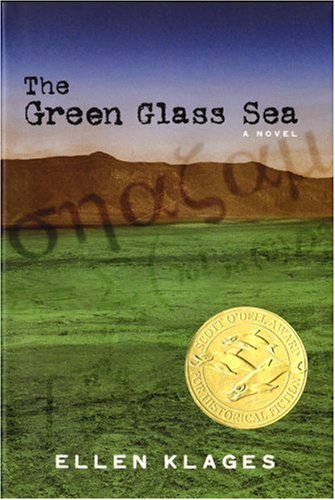
Image

The Green Glass Sea, by Ellen Klages, is a great work of fiction to pair with Bomb. This 2007 winner of the Scott O’Dell Award for Historical Fiction centers on the life of Dewey Kerrigan, a bright 11-year old, whose father is involved with the work at Los Alamos. Historical figures, such as Robert Oppenheimer and Richard Feynman, make brief appearances in the story. Klages’ depiction of daily life at Los Alamos adds a depth of understanding and reality to the events described in Bomb. Feynman’s use of codes is mentioned in both books, and Dewey’s father writes to her in code. Watching the Trinity test, the children’s impromptu parade at the end of war and other events mentioned in both books would allow students to “Compare and contrast a fictional portrayal of a time, place, or character and a historical account of the same period as a means of understanding how authors of fiction use or alter history.” (RL.7.9)

In addition, both Bomb and The Green Glass Sea bring up the misgivings of many of the scientists, including Oppenheimer, about the use of atomic bombs after their use on Hiroshima and Nagasaki. This debate, as Sheinkin, states at the end of his book, are ongoing to this day. It is a natural topic for research and argument writing as spelled in Writing Anchor Standards 1,7, 8, and 9.

Bomb makes history exciting and engaging. It is exactly the kind of book we should be using in our classrooms to spark the imagination of our students and open doors to further study.

Be sure to stop by Teach Mentor Texts to see what other fabulous books people are reading today.

Poetry Friday on Saturday: Valentine’s Day edition “Paolo and Francesca”

Image

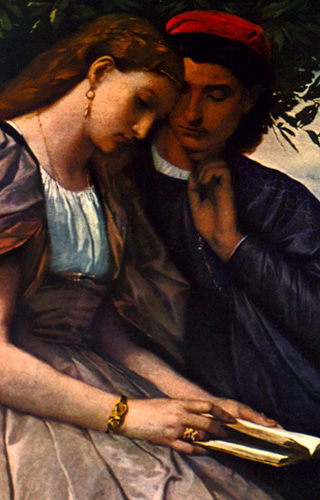
Two of literature’s best known lovers can be found being tossed by tempestuous winds for all eternity in Canto V of Dante’s Inferno. I first read Dante in my survey World Lit class in college. I loved the whole, magnificent poem, but the story of Paolo and Francesca really resonated with me. Maybe the fact that Paolo and Francesca were reading as they were overcome with passion is one reason I was drawn to it. As sad as this story is, it highlights the power of literature to inspire. Indeed, these two ill-fated lovers have inspired paintings, such as Feuerbach’s from 1864, seen above, sculpture and operas over the centuries. Here, from Robert Pinsky’s 1994 translation, is their most famous interpretation.

‘…One day, for pleasure,

We read of Lancelot, by love constrained:

Alone, suspecting nothing, at our leisure.

Sometimes at what we read our glances joined,

Looking from the book each to the other’s eyes,

And then the color in our faces drained.

But one particular moment alone it was

Defeated us: the longed-for smile, it said,

Was kissed by that most noble lover: at this,

This one, who now will never leave my side,

Kissed my mouth, trembling. A Galeotto, that book!

And so was he who wrote it; that day we read

No further.’ All the while the one shade spoke,

The other at her side was weeping; my pity

Overwhelmed me and I felt myself go slack:

Swooning as in death, I fell like a dying body.

Canto V, 112-127

Poetry Friday: STORM

0618023747

School is closed,

The trains have stopped,

Over two feet of snow cover the

Roads. Nothing

Moves.

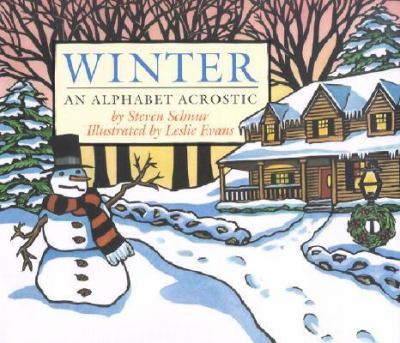
Today’s poem comes from Steven Schnur’s Winter: An Alphabet Acrostic. (Clarion, 2002) This lovely, deceptively simple book examines winter from all angles. Indoors, outdoors, living or not, everything is affected by this harshest time of year. The poems chronicle the unfolding season, from the first hints of ice at the edges of a pond, to the height of the holiday season, until finally, subtle signs of spring begin to appear. Leslie Evans created linoleum-cut illustrations that capture the tone of each poem. Schnur and Evans have a book devoted to each season and each one is worth a look.

I love acrostics because they can free students from being intimidated by poetry. They can be as simple as a list, and they don’t have to rhyme. I have shared this book with first and third graders, and both age groups loved the poems. Use the book as a mentor text so students become familiar with the acrostic form and the idea of focused description. Schnur’s poems never feel forced, although you might have to look up “xyst.” (I did!) They are also fine examples of “how specific word choices shape meaning or tone” (http://www.corestandards.org/ELA-Literacy/CCRA/R), which, according to the CCSS, students should be able to analyze and interpret.

Vocabulary and word choice show up again in CCSS Language Anchor standard five. Again, reading Schnur’s acrostics, as well as those by other poets, are a natural way to develop vocabulary and help students be conscious of word choice. The standard calls for students to “Demonstrate understanding of figurative language, word relationships, and nuances in word meanings.” (http://www.corestandards.org/ELA-Literacy/CCRA/L) First graders are expected to “distinguish shades of meaning among verbs differing in manner…and adjectives differing in intensity.” (L.1.5.d) Writing their own acrostic poems and creating a class book is a natural extension of reading this book. This is an authentic way to introduce the idea of precision of word choice and allows for exactly the kind of work expected by CCSS. In addition, composing their own poems and searching for just the right word is a much more natural way to develop vocabulary than with mindless worksheets or computer games. Students can choose everyday objects or events that they associate with the season, or any other topic, really. Giving students the opportunity to choose their own subject ensures they’ll be engaged in work that’s meaningful to them.

Be sure to stop in over at A Teaching Life for other Poetry Friday posts. Thanks, Tara, for hosting! Hope you all stay safe and warm over the next few days. Happy reading!

Reflections on One Year of Blogging

Image

Today is Reading to the Core’s first birthday! Although my posts have been sporadic at best, I’ve learned a lot over the past year. Since birthdays and anniversaries are always a good time to look back and reflect, here, in no particular order, are my thoughts on becoming a blogger.

The blogosphere is filled with friendly, supportive and generous people. While this may not be true of all corners of cyberspace, this describes the kidlitosphere in spades. I’ve been inspired by you all! Kate Messner’s Teacher’s Write summer camp prodded me to write more. While not everything I wrote in response to her prompts ended up here (trust me, that’s a good thing!), she and all the writers who joined in encouraged me to stretch myself and take risks. Thanks, Kate!

It’s Monday, What Are Your Reading (Book Journey), Tuesday’s Slice of Life (Two Writing Teachers) and Poetry Friday (various hosts, but you can always find the line up at A Year of Reading) have also been especially motivating. Thank you to all you equally busy bloggers who’ve found your way here via one of these memes.

I’m also thankful for the kind words people have left in their comments. I especially appreciate my loyal commenters Colette, Betsy, and Elizabeth. Some people may despair that the internet is changing the world as we know it, but I am incredibly grateful that it allows me to connect with faraway friends so easily.

One of the most eye-opening realizations I’ve had from blogging is just how difficult it is to sit down and compose a half-way intelligible piece of writing. Not one of these posts has been completed in less than an hour, and they have usually been rolling around in my head for a day or two before I begin writing. Why we think our students should be able to sit down and hammer out a fluent story or essay in 45 minutes is beyond me. They should have at least an hour! Seriously, without regular, sustained writing practice, it simply isn’t fair to subject our students to the kind of writing assessments that dominate today’s instructional landscape. As a result of this insight, I have been more mindful of my own writing instruction and my support of teachers implementing writing workshop this year.

Over the next year I’m really going to make a concerted effort to post at least once a week. I have lots left to say about books, teaching, and life in general. Which brings me to the name of this blog. In one sense, the “Core” of the title refers to the Common Core. I think about the implications of the CCSS on instruction almost all the time. (Sad, I know.) And yet, much of what I wrote about over the past year had nothing to do with these standards. They were more about what’s at the core of me: curiosity about the world around us and a passion to help all kids find their own true self, to find their own true core.

Poetry Friday: Mindfulness and the Poet Joyce Sidman

Mindfulness, according to Jon Kabat-Zinn, “means paying attention in a particular way; On purpose, in the present moment, and nonjudgmentally.” Much easier said than done.  Author/illustrator Bryan Collier once asked an audience if they had caught the color of the day that morning when they left the house. In other words, were they being mindful.

Winter has a reputation for being drab and gray. Sometimes a pristine blanket of white brightens the landscape, but too quickly it becomes trampled and dirty. Earlier this week, while driving to work (the one time of day I remember to be mindful), I was treated to a glorious pink sky. Joyce Sidman’s award-winning Red Sings from Treetops: A Year in Colors immediately came to mind. She writes

“In the WINTER dawn

Pink blooms

powder-soft

over pastel hills.”

Isn’t that lovely? Pamela Zagarenski’s Caldecott-Honor winning illustrations perfectly complement Sidman’s beautifully crafted images.

Image

Sidman’s mindfulness, her keen observation, is evident in every poem. Colors are personified as they change from season to season. Sidman’s imagery seems effortless, yet creates a sense of wonder that makes readers want to rush outside and drink in the beauty that surrounds them.

Teachers across the country have many questions about the place of poetry as they implement the CCSS. Can they even still teach poetry? Of course they can! Reading Literature Standard 4 states that students will “Interpret words and phrases as they are used in a text, including determining technical, connotative, and figurative meanings, and analyze how specific word choices shape meaning and tone.” This begs to be addressed through poetry. Joyce Sidman’s work is a perfect place to start. Not only can students examine her figurative language and word choice, they can follow her example of mindfulness. Teaching students to view the world with awareness so they can gather their own ideas, seeds of writing to come, is just as critical as any skill listed in the standards.

Joyce Sidman’s work deserves a place in all classrooms. Indeed, the National Council of Teachers of English just named her the 2013 winner of the NCTE Award for Excellence in Poetry for Children. Read more about Red Sings from the Treetops and Sidman’s other books here. Congratulations, Joyce, and thank you for creating poems that remind us to always pay close attention to the world around us.

Auld Lang Syne–An Old Friend Not Forgotten

Halloween 1978I graduated from high school in 1978. This was the era of that old perfume commercial with the song: “I can bring home the bacon; fry it up in a pan.” When I arrived on the Orono campus of the University of Maine in September of that year, this was the very hazy vision I had of my future. And that is, for the most part, how it’s turned out. The route certainly hasn’t been direct, but 35 years later, here I am with my family and career.

That hazy vision of the future led me to the first friend I made at UMO (as we called it then). My favorite posters had made the journey from Connecticut with me, but any way to secure these to the walls had not. Fortunately, the girl across the hall had a little kit full of thumbtacks, nails, and other odds and ends. By another stroke of good fortune, she was kind, friendly, and generous, and shared her thumbtacks with me.

Over the next two years, we shared much more, and she was a bridesmaid in my wedding. When my first son was born, she was one of the first people I called. And despite the distance between Maine and Connecticut, her career-track life vs. my detour  at home with my kids, and the fact that telephones and snail mail were the only means of communication, we stayed close for the next ten years or so.

I last saw my friend in 1990 or 1991, when I met her in Boston for a Monet exhibit. Nothing in that visit led me to believe it would be our last. Even though our lives were very different, we spent the afternoon talking about our lives, and laughing at memories of our younger selves. We said goodbye as if we’d see each other again in a year or so, but would be in touch by phone or letter long before that.

And then, before, I knew it, more than a year had passed since I heard from her. My Christmas card was returned, the forwarding order expired. I called a mutual friend to see if she had a current address. She hadn’t had any recent contact either. I even tried locating her parents, but it seemed they had moved also.

More years passed with no word to anyone she had known at UMO. By now, the internet was ubiquitous, but somehow it never occurred to me to search for her. After 9/11, I scanned the New York Times daily for her name. Boston had been the last place I knew she lived, after all. Thankfully, her name wasn’t there, but it was as if she had vanished into thin air.

When my high school class was organizing our 25th reunion, I volunteered to locate addresses. As I sat at my computer one afternoon, it occurred to me to try and find my long-lost friend. Suddenly, there she was. A Very Important Person at a Very Important Company. There was even a picture! I was overjoyed. I wanted to phone her immediately. Because it was Sunday, I didn’t, but I did write her a letter and sent it to her work address. I didn’t expect a response immediately, but I did think she would respond.    Months went by. I even asked my cousin, who also works at a Very Important Company, if I’d breached some rule of etiquette. She didn’t think I had.

Friends come in and out of our lives every day. I know this. But somehow, my loss of this friend seems more personal. I’ve always had a nagging suspicion that my choice to stay home when my children were little or to be a teacher were unworthy, that I wasn’t good enough for her glamorous life. These thoughts come from my own insecurities and are completely unfair to her, but there they are.

I often I think of my friend at this time of year. Because any and all information is available every minute of they day, sometimes I Google her for the heck of it. She’s still at the same company, where she’s now an even more Important Person. But I haven’t tried to contact her again. Nor will I. I have my memories of the many happy times we spent together, and those are enough.