SLOC 2014: Downtime

11454297503_e27946e4ff_h

Not long ago, I found a link to a Today Show interview with clinical psychologist and parenting expert Wendy Mogel and teacher and writer Jessica Lahey about how to help children be creative. Mogel and Lahey both talked about how important it is for kids to have downtime and opportunities for unstructured play. Mogel stated that we “need to encourage our kids to really embrace creativity” and that “the best teachers of creativity are free time, nature, and mess.” Lahey, who blogs at Coming of Age in the Middle, followed Mogel’s advice with ways that her family tries to accomplish this. She shared that on the weekends they have two hours of “nap time, quiet time” when the devices are turned off and “everyone has to find something to do and be quiet doing it.”

Today, I took this advice to heart. After the breakfast dishes were cleared away and the laundry started, I curled up with Malcolm Gladwell’s Outliers: The Story of Success. I have heard of Gladwell’s work and have read a few of his articles in The New Yorker, but somehow this is the first book of his I’ve read. It’s well-written and fascinating, and I was completely absorbed by the stories Gladwell told to support his theory.

I only feel slightly guilty for spending most of the day reading. I have plenty of professional books (not to mention other Slices!) I should have read, plenty of paperwork I should have done. It’s all waiting for me on my desk. It will be there tomorrow, and, thanks to today’s downtime, I’ll be ready to tackle anything.

Thank you, as always, to StaceyTaraDanaBetsyAnna, and Beth for hosting the Slice of Life Challenge. Be sure to visit Two Writing Teachers to read more Slice of Life posts.

SOLC 2014: Celebrating Success

11454297503_e27946e4ff_h

When Ruth Ayers began her Celebrations link up on her blog Ruth Ayers Writes last fall, I thought it was a terrific idea. After all, it’s very easy to get bogged down in our exhaustion at the end of the week. Why not look for joy in ordinary moments and celebrate them? As Ruth put it, “We can wallow or we can celebrate.”

I liked the idea, but was still so caught up in the swirl of CCSS, SBAC, SEED, and more that I didn’t participate. I enjoyed reading about what other people were celebrating, but that was it.

Fast forward to March. Slice of Life Challenge month. A post everyday. Although I had made a plan, none of those ideas resonated with me this morning. As I thought back over the week, my mind automatically went to unfinished projects. But then I started thinking about moments during the week when I had laughed or smiled. There were many. So instead of wallowing in the stacks of paperwork surrounding me, this morning I’m celebrating the growth of one of my students.

I’ve been working with this first-grade girl for the past three months or so. She is very sweet, but reading has been a real challenge for her. When we began working together, she didn’t know short vowel sounds and even some consonants were still tricky for her. Her progress has been of the one step forward, two steps back variety. She likes to guess based on the illustration in a book and doesn’t like to reread if a sentence doesn’t make sense.

This week, though, she had a bit of a breakthrough. Suddenly, she was able to blend and segment words quickly and, for the most part, accurately. Best of all, she is beginning to transfer this skill to her reading. She’s becoming more fluent and more confident. You should have seen her beaming smile after she finished reading a challenging book on Thursday.

We still have a long way to go, but, for the first time, I sense a shift in this girl and her skills. Things are starting to click for her. She is becoming a reader.

Thank you, as always, to StaceyTaraDanaBetsyAnna, and Beth for hosting the Slice of Life Challenge. Be sure to visit Two Writing Teachers to read more Slice of Life posts.

SOLC 2014: Poetry Friday

11454297503_e27946e4ff_h     poetry-friday-1-1

I grew up next door to my grandmother and have many happy memories of hours spent at her house. Many of those hours were spent in her kitchen watching and helping her cook. So in January, when Mary Lee Hahn shared her poem “Recipe,” I was inspired to write a poem about my grandmother and her kitchen. A list of words and phrases grew, but I couldn’t seem to find a way to organize them.

A few days later, Tricia Stohr-Hunt challenged readers to write a pantoum in her Monday Poetry Stretch. As I read about the structure of pantoums, I began to see possibilities for a poem about my grandmother. Then Fran McVeigh shared memories of her grandmother for her Slice of Life Challenge post earlier this week, and her slice prompted me to go back and revise this poem.

These Recipes

These recipes you knew by heart,

kept safe within a wooden box:

Aunt Ella’s spice cake, Boston baked beans.

Written in your careful hand.

Kept safe within a wooden box,

the recipes of our lives,

written in your careful hand,

tell the story of a time gone by.

The recipes of our lives:

fresh peach jam for morning toast.

The story of a time gone by.

Holidays and birthdays, picnics on the lawn.

Fresh peach jam for morning toast,

Aunt Ella’s spice cake, Boston baked beans.

Holidays and birthdays, picnics on the lawn.

These recipes you knew by heart.

© Catherine Flynn, 2014

Thank you, as always, to StaceyTaraDanaBetsyAnna, and Beth for hosting the Slice of Life Challenge. Be sure to visit Two Writing Teachers to read more Slice of Life posts.
UPDATED: My apologies to Margaret at Reflections on the Teche for not thanking her for hosting the Poetry Friday Round Up yesterday. It’s not too late to visit her and read all the wonderful poems shared there.

SOLC 2014: A Trip to the Bookstore

11454297503_e27946e4ff_h

“When I have a little money, I buy books; and if I have any left, I buy food and clothes.”

~ Erasmus ~

I had no business going to the bookstore this afternoon. The number of yet-to-be-read books in my house is embarrassing. But, I had to have a copy of Fancy Nancy, by Jane O’Connor, for our PTO’s Silent Auction Saturday evening. (A colleague and I host a Fancy Nancy tea party for the winner.) So I tidied my desk quickly so I could get to the store before closing time.

Once I found Fancy Nancy, I had a few minutes to browse. After all, who can go into a bookstore and buy just one book? This is what I brought home:

photo-1

  • My Life in Middlemarch (Crown, 2014) by Rebecca Mead. I love Middlemarch, George Eliot’s depiction of 19th-century English provincial life, which Virginia Woolf described as a “magnificent book which, with all it’s imperfections, is one of the few English novels written for grown-up people.” When I heard about Mead’s new “lively meditation on Middlemarch” (Adelle Waldman), I knew I had to have a copy.
  • A Family of Readers: The Book Lover’s Guide to Children’s and Young Adult Literature (Candlewick Press, 2010) by Roger Sutton and Martha V. Parravano. Publisher’s Weekly described A Family of Readers as a “collection of essays and interviews designed to help parents foster a love of reading in children, while providing insight into the craft of children’s bookmaking.” I have wanted this book since it was published, and there it was on the shelf, as if it was waiting just for me this afternoon.
  • Outliers: The Story of Success (Little, Brown, 2008) by Malcolm Gladwell. My adult book group is reading this book this month. Usually I pick up each month’s book at the library, but I wanted my own copy of Gladwell’s acclaimed book so I could “mull over its inventive theories for days afterward” (David Leonhardt, writing in The New York Times).

Happy reading, everyone!

Thank you, as always, to StaceyTaraDanaBetsyAnna, and Beth for hosting the Slice of Life Challenge. Be sure to visit Two Writing Teachers to read more Slice of Life posts.
SOLC 2014: Chief Curiosity Officer

11454297503_e27946e4ff_h

Over the weekend, I was listening to a Radio Lab podcast as I was cleaning up the kitchen. The show, “The Times They Are a-Changin’” was about the recent discovery that a year might have been longer than 365 days in the very distant past. (You’ll have to listen to the show to find out more.) While this was all fascinating, what really caught my attention was the mention of Emily Graslie, Chief Curiosity Officer at the Field Museum of Natural History in Chicago. Now that’s a job I would love!

It turns out Emily also has her own YouTube channel, “The Brain Scoop.” Recent episodes include an explanation of meteorites, ant romance, and answers to viewers questions.  One person wanted to know “What is the most important thing museums and their collections have to offer people in education and in their lives?” Emily’s response, that “museums offer a better understanding of our world and hopefully inspire a deeper appreciation for all the rocks and plant and animals and people within it,” made me realize that, in many ways, I’m already a Chief Curiosity Officer.

Over the entire course of my teaching career, my goal has been to help students gain the skills they need to develop “a better understanding of our world.” From teaching short vowel sounds, long vowel sounds and every sound in between, to making musical instruments to investigate sound, I’ve helped my students expand their knowledge of and curiosity about their world.

At school tomorrow, I’ll work hard to “inspire a deeper appreciation” in my students for all the wonders of the world, just as I always have. But from now on, I’m the Chief Curiosity Office of Room 222.

Thank you, as always, to StaceyTaraDanaBetsyAnna, and Beth for hosting the Slice of Life Challenge. Be sure to visit Two Writing Teachers to read more Slice of Life posts.
SOLC 2014: Making Plans

11454297503_e27946e4ff_h

Like many of you, I feel overwhelmed at the prospect of writing a blog post every day for the entire month of March. Last year, I began the Slice of Life Challenge more or less on a whim. I really didn’t think I’d ever be able to post every day. About half way into the Challenge, I decided I couldn’t stop. This year, I’m totally committed to completing the Challenge, but I need a plan. We encourage our students to make writing plans, to have a notebook where they collect ideas. When he spoke at the Connecticut Reading Conference last year, Lester Laminack referred to a writer’s notebook as “the junk drawer for your ideas,” full of all sorts of odds and ends. Some of these snippets become longer pieces of writing; others stay in the drawer just in case they’re needed some day.

comp-notebook-300x221

My junk drawer is full today, but my brain doesn’t feel up to the task of sorting through the ideas I’ve accumulated over the past day 24 hours from reading blog posts, books and articles, so I’m going to write them here so they won’t be forgotten.

Yesterday, Fran wrote about memories of home and her grandmother. This got me thinking of some pieces I’ve written about my own grandmother. Maybe I’ll reread them and polish one so it’s ready to share.

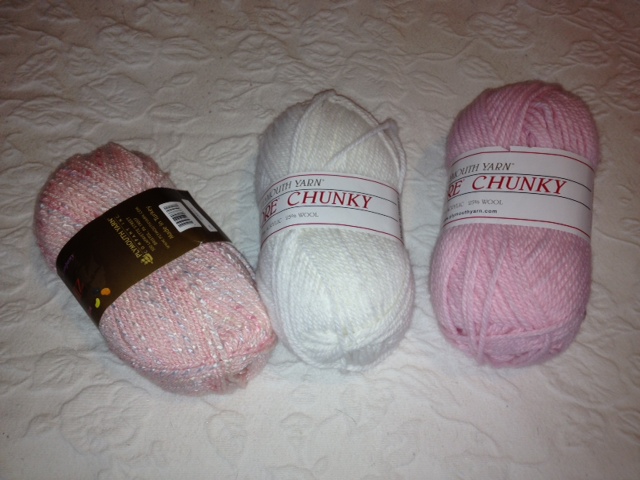
A colleague had a baby girl yesterday, and I’m thinking about what to knit for her. I don’t have the yarn I need, and this makes me think that choosing the right yarn for a knitting project is like choosing the right words for our writing. I once taught a lesson on word choice exactly this way. I even brought in different types of yarn to help the kids visualize the analogy!

Finally, I read Tricia’s post on her lovely blog, The Miss Rumphius Effect, about her new dog. She shared “Dog in Bed”, by Joyce Sidman, and that got me thinking about my own dog (and cat) and what I could write about them.

So, I have much to think about, but also many other obligations to take care of this evening. The good news is that I have a plan, and these thoughts will be waiting here for me when I’m ready to write more.

Thank you, as always, to StaceyTaraDanaBetsyAnna, and Beth for hosting the Slice of Life Challenge. Be sure to visit Two Writing Teachers to read more Slice of Life posts.
SOLC 2014: It’s Monday! What Are You Reading?

IMWAYR      11454297503_e27946e4ff_h

Today’s post is doing double duty as my contribution to the Slice of Life Challenge at Two Writing Teachers.

We’ve all heard of a school of fish and a flock of birds. But what about an ostentation of peacocks?

Collective nouns, those words that turn a group of people, animals, or things into a singular noun, are words that children often learn intuitively as they acquire language as toddlers and preschoolers. The CCSS calls for collective nouns to be formally introduced to students in second grade.

If the goal of teaching these words to young writers is to have them use them in their writing, they need to have “read that language, to have heard it in [their] mind, so that [they] can hear it again in order to compose it.” (NCTE Beliefs About the Teaching of Writing) Although the styles of these books are very different, each one would be a good choice for introducing the concept of collective nouns.

0698113543_l

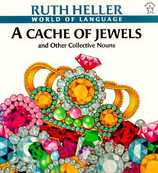
Ruth Heller’s A Cache of Jewels (Grosset & Dunlap, 1987) is an old favorite, one I read to my third graders when I began teaching almost twenty years ago. This brightly illustrated book is still a good model for using collective nouns. Heller includes collective nouns of all kinds, not just those that describe groups of animals.

I’ve found some new books students will enjoy as they learn more of these words. My favorite is A Zeal of Zebras: An Alphabet of Collective Nouns (Chronicle Books, 2011). Woop Studios, a London-based collective (honestly, that’s what the book says!) of four artists, have created “a visual safari through the animal kingdom” (back cover). This oversized picture book is filled with stunning illustrations, unique collective nouns and facts about each group of animals. Some, “an implausibility of gnus,” for example, seemed so improbable that I looked it up. (It’s true, and you can find an extensive list of collective nouns for groups of animals here.) Others are so appropriate: of course it’s “a galaxy of starfish.” Some of the longer words will be a challenge for second graders, but these are the kinds of words kids love learning and trying to use.

zeal of zebras    one-sheep-two-sheep

One Sheep, Two Sheep: A Book of Collective Nouns, (Little Hare Books, 2010), by Patricia Byers and illustrated by Tamsin Ainslie develops the concept of collective nouns being a group of three or more. Each two-page spread follows the same pattern: “One sheep, two sheep, a flock of sheep.” Charming illustrations provide visual support for the growing numbers in the group described by each collective noun.

9781586851538

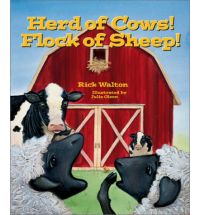
Finally, silliness ensues in Rick Walton’s Herd of Cows! Flock of Sheep! (Gibbs Smith, 2002, 2011; illustrated by Julie Olson). This book incorporates the collective nouns into the story of how Farmer Bob’s animals jump into action to save him after his bed is swept away in a flood.

I don’t know if there’s a collective noun for a group of bloggers, but StaceyTaraDanaBetsyAnna, and Beth are the best around! Thank you for hosting the Slice of Life Challenge. Be sure to visit Two Writing Teachers to read more Slice of Life posts.

SOLC 2014: Guiding Writing Instruction

11454297503_e27946e4ff_h

I’ve been thinking a lot about writing rubrics lately. All year, we’ve been continuing to incorporate the CCSS into our writing instruction and part of this work has been creating new rubrics. My school purchased the Units of Study by Lucy Calkins and her colleagues at the Teachers College Reading and Writing Project last spring, and we’ve made some minor changes to the rubrics in those units for grades K-5. However, the middle school rubrics have been a bit more of a challenge. Connecticut is part of the Smarter Balanced Assessment Consortium, and they have published rubrics that we’ve used as a guide to create documents that work for us. We found the Smarter Balanced documents cumbersome, so we’ve used the language from Smarter Balanced with the Units of Study format to draft rubrics for grades 6-8.

rubric-clip-art

There has been some disagreement among the teachers, however, about how many categories were needed on the rubric. Ultimately, we felt that everything on the SBAC rubric should be included on ours, but there is concern that the document has become unwieldy.

The challenge is to create a document that includes the standards being taught and assessed, but isn’t so lengthy that teachers don’t use it as a formative assessment tool to determine what our students are learning. As Clare Landrigan and Tammy Mulligan, authors of Assessment in Perspective, have pointed out on their blog, “Assessment, formal and informal, is the window into knowing our students.” Using the information gathered through these assessments to guide instruction is essential if our students are going to grow as writers.

One option is to use the whole rubric for pre- and post-assessments. Then, once learning needs are identified, relevant sections of the rubric can be used as an interim assessment tool to monitor the students’ progress toward their learning goals. Some teachers have found that this works for them; others are not yet convinced.

I know many of you have grappled with this same issue. I’d love to hear if anyone has any other solutions.

Thank you to StaceyTaraDanaBetsyAnna, and Beth for hosting the Slice of Life Challenge. Be sure to visit Two Writing Teachers to read more Slice of Life posts.
SOLC 2014: Building Habits of Mind, One Stamp at a Time

11454297503_e27946e4ff_h

“What do you call the stamp guys? Philatelists or something?

Well, whatever it is, it’s some Greek or Latin root meaning ‘complete nerd.’”

~ Chris M. Keating ~

Jeopardy! is one of my favorite shows. In fact, it’s the one show I rarely miss. I always shout out the answers, and my husband always looks at me and wonders how I know some obscure response.

The truth is I don’t know how I know some of these things. Like everyone, I just learned them somewhere along the way. But yesterday afternoon, when I stopped at the Post Office to mail some packages, I had a flashback. As I stood in line, I remembered being there as a kid, excited about buying the newest commemorative for my stamp collection. Although it’s been relegated to the far recesses of my mind for at least 35 years, there was a time when I was obsessed with stamp collecting.

This passion began when I was about ten. I don’t even remember what got me started. But at some point in the early seventies, I became the proud owner of an H.E. Harris Pioneer stamp album. Friends and neighbors gave me stamps torn from their mail, and I began saving my allowance so I could order assortments of tiny treasures packaged in curious little glassine envelopes. I used to stay up late on Friday nights, licking stamp hinges and adding my latest acquisitions to my album.

HarrisPioneerWorld-Wide$_35

As my collection grew, I upgraded to a Traveler album. Like the Pioneer, all the countries of the world were arranged alphabetically, but my new album had statistical information about each country. When I had a stamp to add from a particular country, I read each one of these, apparently storing bits of trivia for some future Jeopardy! appearance.

I learned a lot about world culture from my collection. I loved the glossy, miniature reproductions of Renaissance paintings the best. Some of my favorite stamps were from the old Soviet block countries. Astronauts and animals were popular, too. U.S. stamps taught me a lot of names and dates from American history, and famous scientists, authors, and explorers have all had stamps issued in their honor.

But, as one of my English professors loved to ask, so what? What difference does it make? Well, collecting stamps piqued my curiousity. Why did some Austrian stamps have big black letters stamped across the face of some deposed monarch? And where was Bulgaria, exactly? Without knowing it, I was developing the habits of mind that are so highly valued these days. Persistence, independent and flexible thinking, gathering data, I was doing it all. Best of all, I was doing it because I wanted to; no one was pressuring me.

By the time I was in high school, my stamp collecting days were behind me. There were too many other interesting things to do. But the lessons I learned at my dining room table on those long ago Friday nights have served me well over the years. Even if I never make it onto Jeopardy!

Thank you to Stacey, Tara, Dana, Betsy, Anna, and Beth at Two Writing Teachers for hosting the Slice of Life Challenge.  Your hard work is truly appreciated! Thank you also to the support team, who are helping out to make this month-long Slice of Life Challenge possible. I can’t wait to see where our journey leads!

Slice of Life: The Art of Losing

11454297503_e27946e4ff_h

I don’t usually lose things. My office, my desk, my closet may look disheveled and disorganized, but I know where everything is. So this morning when I opened the drawer in my dressing table where I keep my pins, I stopped short when I realized the pin I wanted wasn’t in its usual spot. It wasn’t anywhere in the drawer. I looked quickly in the other drawers, but I knew I wouldn’t find it. The realization that this pin was missing knocked the wind out of me and brought tears to my eyes. Elizabeth Bishop’s words filled my head: “Lose something every day…their loss is no disaster.”

But this was a disaster. It wasn’t just any pin that was missing. This piece is precious to me because it was made from the insignia on the cap worn by an ancestor during the First Battle of Bull Run, or so the story goes. He was killed in the battle, and his daughter, my great-great aunt, left it to my grandmother, who left it to me.

photo-2

I felt like I had betrayed my grandmother. The pain and sadness I felt at her death washed over me once again. I searched one more time. But now I was rushing and probably wouldn’t have found it even if it had been there.

It was getting late, and I had to leave for work. I tried not to let my distress ruin my day, but I didn’t get much accomplished. And, because I was already upset, little incidents upset me more that they would have otherwise. Finally, after a mandatory faculty meeting, it was time to head home. As I drove, I wracked my brain trying to remember when I had worn it last, which sweater it might still be pinned to. Maybe I had missed it in a pocket in my suitcase the last time I unpacked.

As soon as I was in the house, I hurried upstairs. I went through the drawer one more time, then moved onto my closet. Sweater after sweater was unfolded and tossed aside. No pin. I moved onto blazers and jackets. One after the other and still no pin. Finally, on the next to last blazer, there it was. Just like that; problem solved.

I felt a little foolish. After all, it was just a pin. My family was safe and healthy, my home intact and warm. I know people deal with much more serious problems and losses everyday. So tonight, although I’m very thankful my pin is back where it belongs, I’m more thankful for my many blessings. The art of losing isn’t one I want to master.

Don’t forget to head over to Two Writing Teachers today for more Slice of Life stories.