“When we read together…we are taken out of our aloneness. Together, we see the world. Together, we see one another. We connect. And when we connect, we are changed.”
Kate DiCamillo
Kathy Collins reiterated this message in her closing keynote at TCRWP’s Reading Institute last Friday when urged hundreds of teachers to “make this the year of the story in your classroom.”
Unfortunately, many children arrive at school without a sense of the importance of stories. So it is up to us, their teachers, to instill a love of stories and reading in our students, to turn the children in our classrooms into readers. As we get ready to welcome our new students (or reflect on the first weeks of school), here’s a poem celebrating the power of story to enrich and change our lives.
Notes on the Art of Poetry
by Dylan Thomas
I could never have dreamt that there were such goings-on
in the world between the covers of books,
such sandstorms and ice blasts of words,,,
such staggering peace, such enormous laughter,
such and so many blinding bright lights,, ,
splashing all over the pages
in a million bits and pieces
all of which were words, words, words,
and each of which were alive forever
in its own delight and glory and oddity and light.
Please be sure to visit Laura at Live Your Poem for the Poetry Friday Round Up.
One of the things I miss the most about having a class of my own is the chance to talk with the kids each morning about what they did the night before. I loved hearing about their soccer games, ballet lessons, or time spent with their family. This kind of talk is essential to creating relationships and developing friendships.
Unfortunately, in our busy lives, it’s sometimes hard to find time to maintain relationships and friendships we already have, let alone make new ones. But that’s exactly what happened last week when I was in New York for the TCRWP Reading Institute.
Fellow slicer and tweep Julieanne knew I was going to be at the Institute and told her friend, Dayna, to look me up. Miraculously, she found me as we were leaving Riverside Church after Lucy Calkins’ inspiring keynote. We agreed to meet at the end of the day and make plans for dinner.
We hit it off immediately, and decided to meet again after our sessions on Tuesday. That morning, my section leader, Annie Taranto, mentioned that one of her favorite things to do in the city was walking over the Brooklyn Bridge. This idea appealed to me immediately, and I hoped Dayna would want to come along.
She loved the idea. So even though it was windy and threatening to rain, we set off, armed with the apps on our phones and our sense of adventure.
We got off the subway at the City Hall station, and proceeded to walk a block in the wrong direction. We soon realized our mistake, turned around, and found the entrance to the pedestrian walkway leading from Manhattan to Brooklyn. Despite the weather, many people were out enjoying the views. The Empire State Building towered over the city to the north. To the south, the Statue of Liberty came into view.
Then there was the bridge itself. The distinctive gothic arches of the towers and the web-like steel cables give the bridge a graceful beauty. We peered down onto the cars and trucks below and agreed we were glad not to be sitting in the tangle of traffic beneath us.
Without a doubt, though, the best part of the whole evening was spending time with Dayna and getting to know her. We talked about our families, our histories, and our jobs. We shared ideas from the sessions we’d been in that day and talked about books we love. It felt like we were long-lost friends.
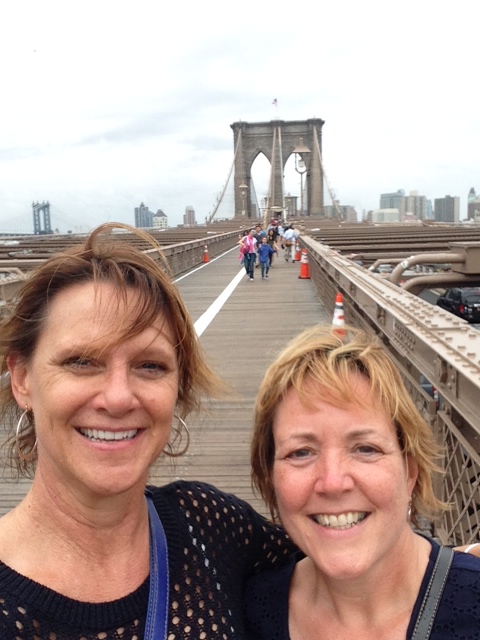
On the bridge with Dayna, wind-blown but having a great time.
By the time we arrived back in Manhattan, it had started to rain and it was getting late. We found a pub not far from City Hall and continued to talk through dinner. It was much easier to find our way back to the subway, and soon we were headed back uptown to our hotels, tired and happy from our trek to Brooklyn and back. Happy to have found a new friend along the way.
Some of my most productive thinking is done while I’m walking my dog, Lucy. She was up to her usual tricks as we walked along this morning, taking her time to sniff what seemed like every inch of our route. Her pokiness made me think of this post from very early in my blogging life. So I decided to repost it for Throwback Thursday. Hope you make time to let your mind meander today!
It occurred to me recently as I was urging my dog on for a brisk, calorie-burning walk that she had no desire to burn any calories. Her purpose, utterly opposed to mine, was to meander along in a general forward direction, stopping whenever she felt like it to examine and savor a scent left behind by some creature. As I had this thought, I also realized that if I continued to pull her along, I would spoil a glorious morning by rushing through it. So I let Lucy wander along and sniff, pausing while she was rooting around in a particularly delectable odor. During these breaks in the action, so to speak, I began to think that what she was doing was exactly what I want my students to do: become so thoroughly engaged in the text that they lose sight of everything around them, that they focus on one…
Last week, I spent two days working with middle school teachers on curriculum revisions. We got a lot accomplished and had some very productive discussions. But on Monday, one teacher commented about how sorry she was that she couldn’t do any creative writing anymore. This surprised me, because in my mind, creative writing and narrative writing go hand-in-hand.
When I asked her why she felt this way, she had difficulty explaining. “It’s just not the same. We just don’t have time.” She went on to explain a project that she had done in the past, but skipped this year. In previous years, she had displayed an assortment of pictures she’d gathered from magazines. Each kid chose one that intrigued him or her, then wrote a story to go along with the picture. The finished story was shared with the class, and the students had to guess which photo inspired the story.
This really upset me. This is exactly the kind of writing kids should be doing more of, not less! So the next morning, I rounded up a collection of post cards from art museums and clippings from magazines and newspapers. These were laid out on the table when the teachers arrived. The teacher laughed when she saw them because she knew exactly what I was thinking.
Everyone chose a picture and wrote for ten minutes, telling the story they imagined their picture contained. We each got right to work and stayed completely engaged with our writing the entire time. In fact, I think everyone could have kept writing.
We shared, complimenting specific writing moves others had tried. The variety of techniques was impressive, considering the size of our small group.
After this, I read the CCSS narrative writing standards for grade 8. Our work touched on them all except “Provide a conclusion that follows from and reflects on the narrated experiences or events,” and that was because we had only worked for a short time. I pointed out that we now had writing that could also be used to address the language and vocabulary standards.
My colleague still didn’t seem convinced. “This will take too long,” she said.
“This only took about 15 minutes,” I said.
“Why don’t you start class with this? You know, do it as a warm up,” another teacher suggested.
“They don’t have to finish it, it doesn’t have to become a polished piece,” added a third teacher.
Those were the words she needed to hear. The words that helped her realize that any writing time is better than no writing time. Her students could return to these pieces if they choose to, or not.
Coincidentally, Vicki Vinton had just written a lovely tribute to Maxine Greene, “a champion of the imagination and the arts in education,” on her blog To Make a Prairie. In it she, shared these wise words of Greene’s:
“Opening ourselves to encounters with the arts awakens us, prepares us for deeper living because our imagination is at work, and with imagination, a possibility of our transformation.”
I shared these words with my colleagues when we finished our writing. Everyone agreed that their imagination had been sparked in some unexpected way, and that this was an activity they would turn to again and again. The possibilities are endless.
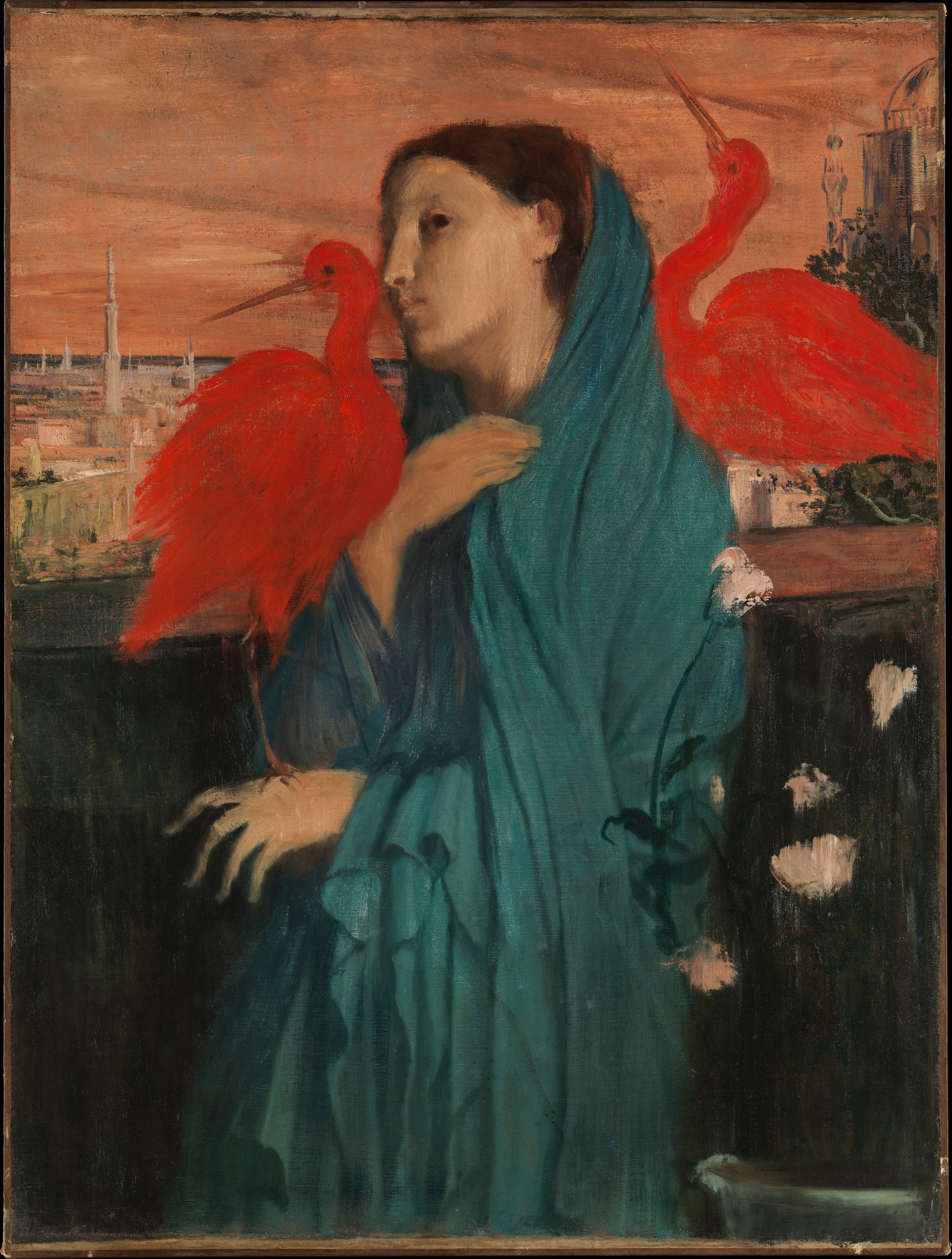
Young Woman with Ibis, by Edgar Degas Metropolitan Museum of Art
This is the painting I chose to write about. I want to know why this woman looks so wistful, and I want to know more about the birds by her side. Whatever the answers turn out to be, I know my life will be richer because I opened myself to these questions.
Please be sure to visit the Two Writing Teachers blog to read more Slices of Life. (This is my first attempt to post by phone. My apologies for any errors.)
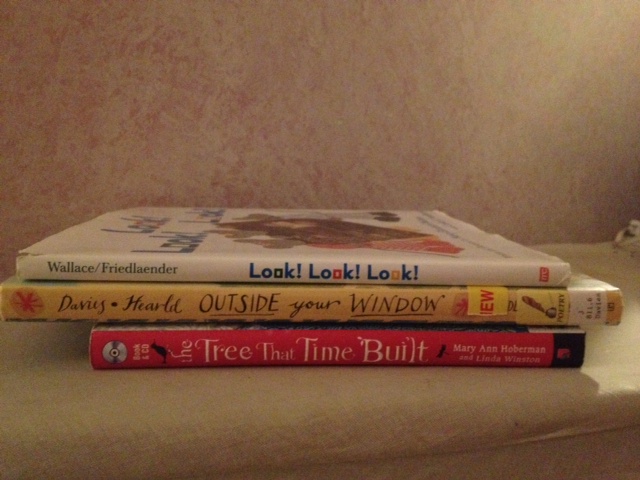
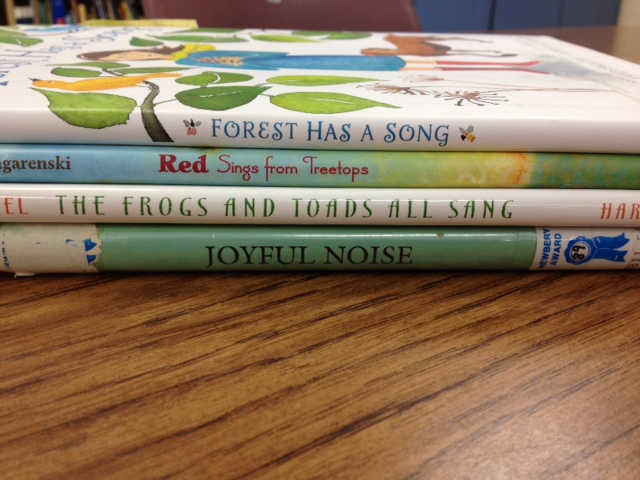
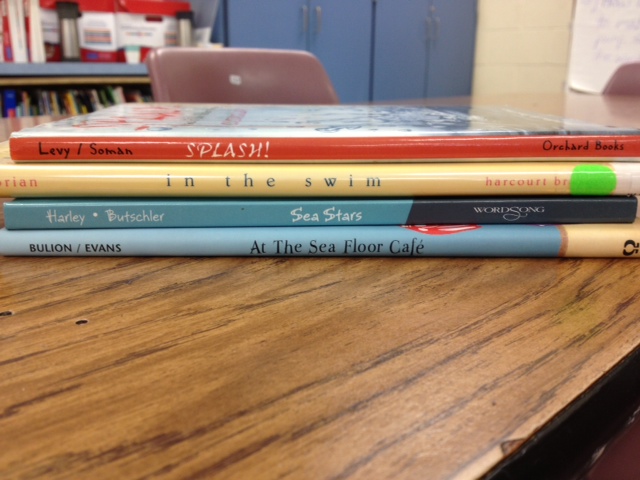
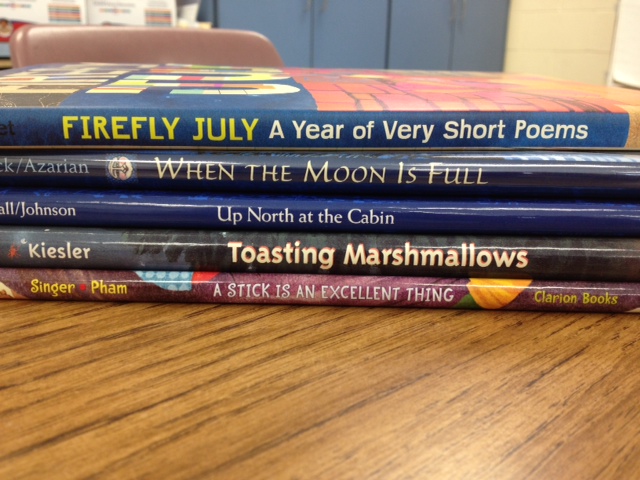
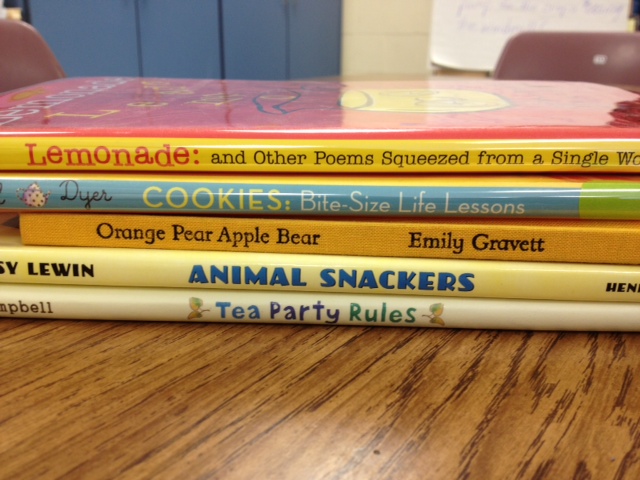
April is one of my favorite months for many reasons. We have spring break in April, the forsythia blooms, and it’s National Poetry Month! Today, as I was gathering resources and thinking about ways to celebrate, I had fun creating a few book spine poems.
My son lives in Brooklyn. I love that he has made a life for himself there and am very proud of him. But I don’t get to Brooklyn very often. Usually, he will come home to Connecticut, or we meet in Manhattan.
Saturday was Michael’s birthday. I was in the city for TCRWP’s Saturday Reunion, so after I left Riverside Church, I got in my car and drove down the West Side Highway and under the East River to have a birthday dinner with Michael and his friends. Everyone wanted to go to a new barbecue place that just opened in the neighborhood. As we walked down the street, I was in awe of how easily he moved through this world, greeting his neighbors and being part of his little community.
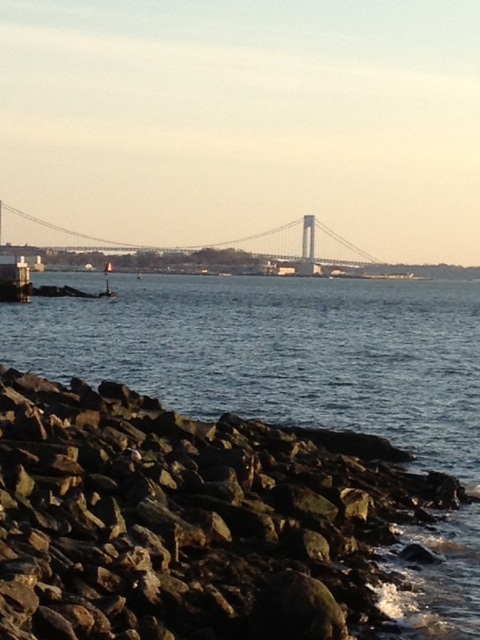
The line was out the door when we arrived at the restaurant, but everyone wanted to stay. Michael wanted to show me the view from the waterfront, so his friends got in line, and he and I walked to the water. Suddenly, there was the Statue of Liberty, glowing from across the harbor in the setting sun. Barges were sailing down the channel, heading who knows where. In the distance rose the graceful columns of the Verrazano Narrows Bridge. We stood and soaked in the beauty of early evening.
It began to get chilly, so we headed back to the restaurant. The line hadn’t moved very far, but we enjoyed watching the two-year old in front of us trying to drill the wall with his toy drill. We chatted with the people around us about every imaginable subject. A band was playing and we danced while we waited. Time flew and soon it was our turn to order. This homestyle place had every kind of barbecued meat you can imagine on the menu. We got a huge tray with a smattering of everything and proceeded to gorge ourselves. It was a lovely evening.
So many of you have young children and your posts are filled with the joys and tribulations of daily life with babies and toddlers, tweens and teens. I’m always a little nostalgic after reading them. I miss having my boys around every day. But having grown children brings different joys, like those I shared with Michael on Saturday.
I’ve been haunted by Tara Smith’s moving, beautifully written post since I read it on Sunday. Tara spoke eloquently about the importance of compassion, empathy, and recognizing our “fellow human being(s).”
These words flew into my thoughts as I drove home this afternoon. Winter has just started to loosen its grip in my corner of Connecticut, and a cold rain was falling when I passed him. I have no idea who he is, and yet he is a fixture of my commute. I don’t see him every day. Sometimes I pass him in the morning; sometimes it’s afternoon. He walks with a slight limp and it’s impossible to guess his age. He could be 40 or 60.
Now in many places around the world, this gentleman would be just another busy person on his way to or from work. But in this case, he stands out. There are no other people walking on this road; there are no sidewalks, for that matter. It’s rumored, though, that there’s a small settlement of homeless people not far from where I usually see him. Does he live there? To assume he’s fallen on hard times seems to judge him unfairly.
And yet. What is this man’s story? He usually has a plastic grocery bag with him. His hair is always neatly combed and he’s clean-shaven. A small smile gives him a cheerful air. But why does he trudge back and forth on this busy road in all kinds of weather? I marvel at his fortitude at the same time I’m ashamed of myself for making an assumption about someone I know nothing about.
So I make another. This man, for whatever reason, walks each day, probably to the bus stop that’s at least half a mile from the spot where I saw him today. I’ve seen him in the morning and in the evening, coming and going, so he probably has a job that he cares about.
Ultimately, it doesn’t matter if I ever know the particulars of his story. What matters is that when I see him, I look at him. I recognize him as a fellow human being who has a story, a fellow human being who deserves my compassion.
On Sunday, I wrote about the importance of downtime and my day of reading. Unstructured time for play was also mentioned by Wendy Mogel as a way to nurture creativity. I don’t really remember the last time I played anything. I guess for adults our hobbies should be considered our time to play.
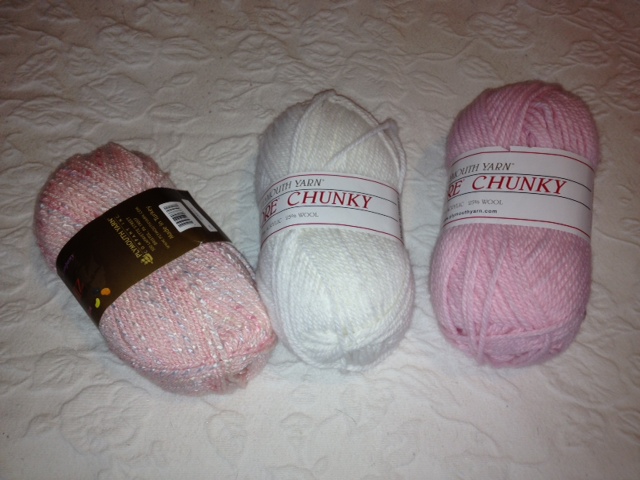
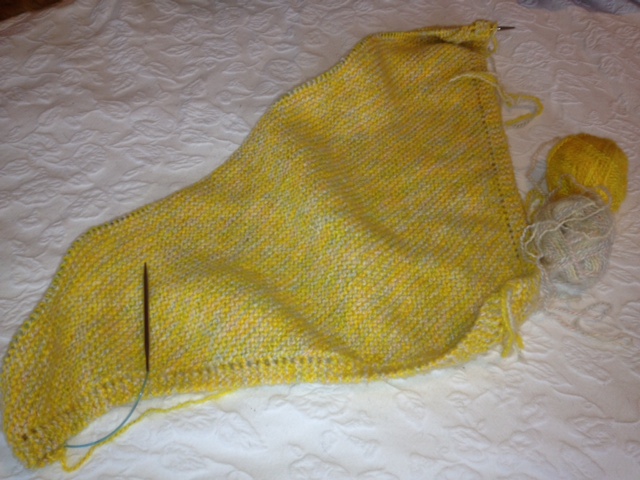
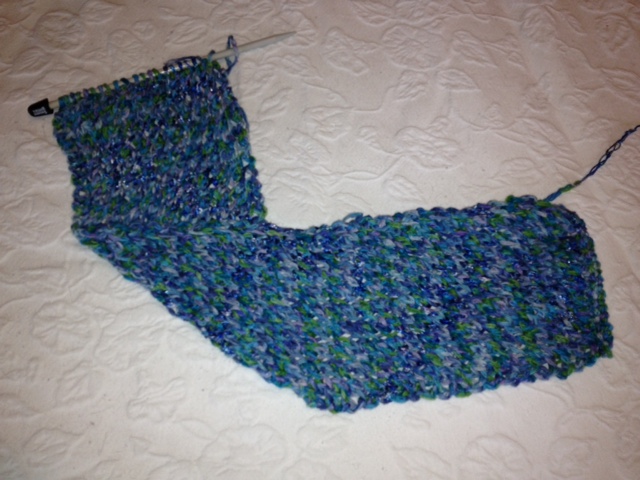
Knitting is one of my favorite hobbies. Unlike gardening, I can do it all year. It’s portable and quiet. Best of all, when a project is finished, I have a beautiful hat or scarf or sweater. Here’s a mini-photo essay of what I’ve been working on over the past few days.
Yarn choices for a gift for a friend’s new baby.Baby blanket in progress.This scarf in progress is for a friend’s birthday.
“What do you call the stamp guys? Philatelists or something?
Well, whatever it is, it’s some Greek or Latin root meaning ‘complete nerd.’”
~ Chris M. Keating ~
Jeopardy! is one of my favorite shows. In fact, it’s the one show I rarely miss. I always shout out the answers, and my husband always looks at me and wonders how I know some obscure response.
The truth is I don’t know how I know some of these things. Like everyone, I just learned them somewhere along the way. But yesterday afternoon, when I stopped at the Post Office to mail some packages, I had a flashback. As I stood in line, I remembered being there as a kid, excited about buying the newest commemorative for my stamp collection. Although it’s been relegated to the far recesses of my mind for at least 35 years, there was a time when I was obsessed with stamp collecting.
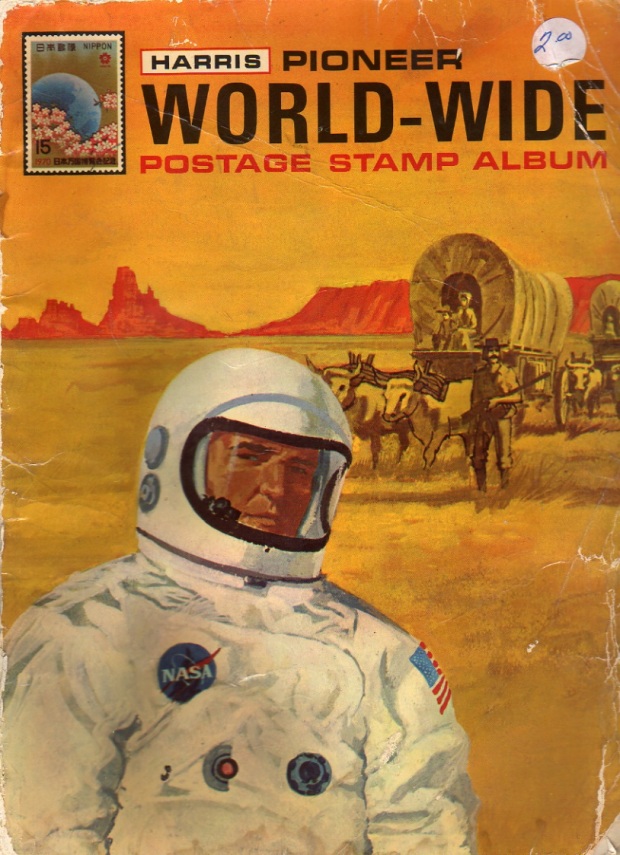
This passion began when I was about ten. I don’t even remember what got me started. But at some point in the early seventies, I became the proud owner of an H.E. Harris Pioneer stamp album. Friends and neighbors gave me stamps torn from their mail, and I began saving my allowance so I could order assortments of tiny treasures packaged in curious little glassine envelopes. I used to stay up late on Friday nights, licking stamp hinges and adding my latest acquisitions to my album.
As my collection grew, I upgraded to a Traveler album. Like the Pioneer, all the countries of the world were arranged alphabetically, but my new album had statistical information about each country. When I had a stamp to add from a particular country, I read each one of these, apparently storing bits of trivia for some future Jeopardy! appearance.
I learned a lot about world culture from my collection. I loved the glossy, miniature reproductions of Renaissance paintings the best. Some of my favorite stamps were from the old Soviet block countries. Astronauts and animals were popular, too. U.S. stamps taught me a lot of names and dates from American history, and famous scientists, authors, and explorers have all had stamps issued in their honor.
But, as one of my English professors loved to ask, so what? What difference does it make? Well, collecting stamps piqued my curiousity. Why did some Austrian stamps have big black letters stamped across the face of some deposed monarch? And where was Bulgaria, exactly? Without knowing it, I was developing the habits of mind that are so highly valued these days. Persistence, independent and flexible thinking, gathering data, I was doing it all. Best of all, I was doing it because I wanted to; no one was pressuring me.
By the time I was in high school, my stamp collecting days were behind me. There were too many other interesting things to do. But the lessons I learned at my dining room table on those long ago Friday nights have served me well over the years. Even if I never make it onto Jeopardy!
Thank you to Stacey, Tara, Dana, Betsy, Anna, and Beth at Two Writing Teachers for hosting the Slice of Life Challenge. Your hard work is truly appreciated! Thank you also to the support team, who are helping out to make this month-long Slice of Life Challenge possible. I can’t wait to see where our journey leads!
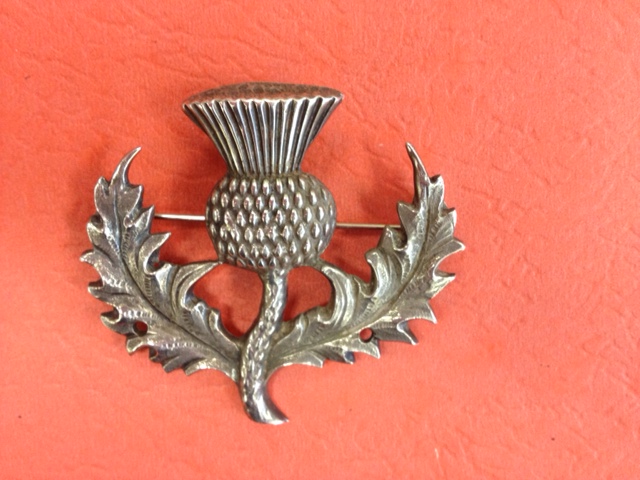
I don’t usually lose things. My office, my desk, my closet may look disheveled and disorganized, but I know where everything is. So this morning when I opened the drawer in my dressing table where I keep my pins, I stopped short when I realized the pin I wanted wasn’t in its usual spot. It wasn’t anywhere in the drawer. I looked quickly in the other drawers, but I knew I wouldn’t find it. The realization that this pin was missing knocked the wind out of me and brought tears to my eyes. Elizabeth Bishop’s words filled my head: “Lose something every day…their loss is no disaster.”
But this was a disaster. It wasn’t just any pin that was missing. This piece is precious to me because it was made from the insignia on the cap worn by an ancestor during the First Battle of Bull Run, or so the story goes. He was killed in the battle, and his daughter, my great-great aunt, left it to my grandmother, who left it to me.
I felt like I had betrayed my grandmother. The pain and sadness I felt at her death washed over me once again. I searched one more time. But now I was rushing and probably wouldn’t have found it even if it had been there.
It was getting late, and I had to leave for work. I tried not to let my distress ruin my day, but I didn’t get much accomplished. And, because I was already upset, little incidents upset me more that they would have otherwise. Finally, after a mandatory faculty meeting, it was time to head home. As I drove, I wracked my brain trying to remember when I had worn it last, which sweater it might still be pinned to. Maybe I had missed it in a pocket in my suitcase the last time I unpacked.
As soon as I was in the house, I hurried upstairs. I went through the drawer one more time, then moved onto my closet. Sweater after sweater was unfolded and tossed aside. No pin. I moved onto blazers and jackets. One after the other and still no pin. Finally, on the next to last blazer, there it was. Just like that; problem solved.
I felt a little foolish. After all, it was just a pin. My family was safe and healthy, my home intact and warm. I know people deal with much more serious problems and losses everyday. So tonight, although I’m very thankful my pin is back where it belongs, I’m more thankful for my many blessings. The art of losing isn’t one I want to master.
Don’t forget to head over to Two Writing Teachers today for more Slice of Life stories.




 Reading to the Core