SOL 17 & DigiLit Sunday: Blended Learning


This post is also part of “DigiLit Sunday,” hosted by Margaret Simon at Reflections on the Teche. This week’s topic is Blended Learning. Please be sure to visit Margaret’s blog to read more Digilit Sunday contributions.

“A human must turn information into intelligence.”
~ Grace Hopper ~

On an ordinary day in 1972, something very extraordinary appeared in the Resource Center of my elementary school. Two teletype computer terminals were installed, connecting our little school to the mainframe computer at the local university. A telephone receiver had to be positioned in an acoustic coupler (aka modem) to make the connection. After typing in a series of commands, the mainframe computer “ran” our program, and the result (usually a image of an animal created with Xs) was printed on yellow paper. Welcome to the computer age!

I would never, even in my wildest imaginings, have predicted that forty-five years later I would be able to sit at my kitchen table, pull up images of that miraculous machine, type these words, and then, with a single keystroke, send them instantly out into the wide world.

But here we are. And for all the news of hacking and worries about keeping our data secure, computers and technology have enhanced education in countless positive ways, and the possibilities for its use are endless.

As a literacy leader in my school, it’s essential that I keep up to date on developments in the world of literacy education. Blended learning is the most effective way for me to accomplish this. Attending a conference in real life is energizing. It’s always a thrill to meet one of my literacy heroes, and I love the being able to talk with other educators about their experiences face-to-face. But conferences are expensive and not always available.
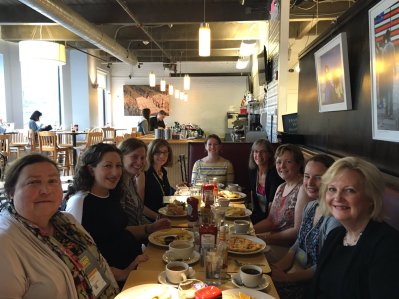
With Slice of Life friends at ILA last summer.

However, thanks to the advent of webinars, YouTube, and TED Talks, I can attend a conference in my living room. I can usually replay key points for better understanding. Best of all, I can share with my colleagues and we can learn together. Follow up discussions often yield more insights and new ideas for application. Reading books and articles related to these topics only leads to deeper understanding.

Twitter and blogging is another key component of my blended learning life. Joining Twitter chats lets me have real-time conversations about a particular topic with other teachers. Through blogging, I’ve made connections and become friends with educators from around the world. These brilliant people enhance my learning and my teaching practice every day.

My experiences with blended learning have been essential to my growth as an educator. They have also been critical in helping teachers plan similar opportunities for their students. Opportunities that will nourish their curiosity and imagination, and give them the skills to prepare for a future we can hardly imagine.

Favorite Professional Learning Resources

  • Heinemann: A wealth of samples, webinars, podcasts, and more are available on this website
  • Stenhouse Publishers: Previews of new books, study guides, a newsletter and more are available here.
  • The Educator Collaborative: Led by Chris Lehman and many other rock star educators, this group, among other services, hosts an online Study Group series for a small fee that brings focused, topical PD into your school. (Or living room!)
  • The Two Writing Teachers Blog: In addition to hosting the March Slice of Life challenge, this blog and the incredible women and man who run it consistently post high-quality content for writing teachers at all levels.
  • Teachers College Reading and Writing Project: From weekly Twitter chats to week-long Summer Institutes and free Saturday Reunions, TCRWP is a goldmine of information and knowledge.
  • Good to Great Twitter chats are held every Thursday evening. Dr. Mary Howard and friends always have thought-provoking guests to spark the conversation.

This is just a short list of the resources available for online learning. What are your favorites?

Thank you to StaceyBetsyBeth, KathleenDeb, MelanieLisa and Lanny for creating this community and providing this space for teachers and others to share their stories every day in March and on Tuesdays throughout the year. Be sure to visit Two Writing Teachers to read more Slice of Life posts.
SOL 17: A Milestone

This is my 500th post. Quite a milestone!

Last fall I realized that, if I planned carefully and stuck to my plan, Reading to the Core’s 5th birthday, February 4th, and its 500th post could coincide. I liked the symmetry of this. The only problem was that Thanksgiving and Christmas lay between my realization and the big day.

It’s now March 11th, so I clearly didn’t reach my goal. Sometime during the week between Christmas and New Year, I had to admit that I’d never make it, and I became okay with that. Because even if the two milestones didn’t occur on the same day, both still marked a personal accomplishment.  And aren’t the numbers we attach to these milestones somewhat arbitrary anyway?

Still, I was curious about the significance of 500, so I did a little research. From Numbermatics, I learned that “500 is an even composite number composed of two prime numbers multiplied together.” It is also a Harshad number. This, according to Wolfram MathWorld, is “a positive integer which is divisible by the sum of its digits.”

This wasn’t exactly what I had in mind, so I dug a little deeper. At Riding the Beast, I learned that, among other symbolic meanings, 500 “symbolize[s] the infinity for Irish.” I couldn’t find any confirmation for this, and it seems unlikely, given that “the Celts believed that everything happens in threes.” But the idea appealed to me, since one branch of my family emigrated from Ireland sometime in the 1800s.

My searching also led me to this information about the Triskele, pre-Celtic design that “stands for unity of the three” and “symbolizes the eternal life, the flow of nature, and spiritual growth.” It is also “believed to represent a tale of forward motion to reach understanding.” This is a much better symbol for what Reading to the Core is all about.

In my first post, my goal for blogging was “to have a conversation with literacy professionals around the country about reading and writing instruction today.”  After one year, I realized that my writing focused more on my “curiosity about the world around us and my passion to help all kids find their own true self, to find their own true core.” 

There’s no way to know exactly what I’ll be writing about next year at this time, or even what I’ll be writing about next week. What is certain is that it will be, in the words of E.L. Doctorow, “an exploration [where] you start from nothing and learn as you go.”

And thank you to StaceyBetsyBeth, KathleenDeb, MelanieLisa and Lanny for creating this community and providing this space for teachers and others to share their stories every day in March and on Tuesdays throughout the year. Be sure to visit Two Writing Teachers to read more Slice of Life posts.

SOL 17: Life Lessons

Last weekend, like many of you, I was heartbroken to read Amy Krouse Rosenthal’s devastating essay in the New York Times, “You May Want to Marry My Husband.” Amy is dying of ovarian cancer, and this essay is a love letter to her husband and her wish for his future.

I am a longtime fan of Rosenthal’s wildly creative and imaginative picture books, including Duck, Rabbit and Exclamation Mark (!). Amy’s wisdom and humor are on full display in her TED talks and short videos. I love them all, but I think “Book-Filled House” and “Kindness Thought Bubble” are my favorites.

In “Thought Bubble: Kindness,” Amy asks viewers, “What have you filled the world with?” She reminds us that “more positive human interactions is central to a meaningful life.” It’s a reminder worth repeating and sharing.

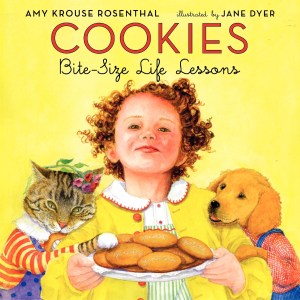
With these words in my mind, I went searching for my copy of the completely charming Cookies: Bite-Size Life Lessons (HarperCollins, 2006). These lessons arise out of the steps of making and sharing a batch of cookies. Every negative impulse is balanced by a positive response, and in the end readers are filled up with love and wisdom.

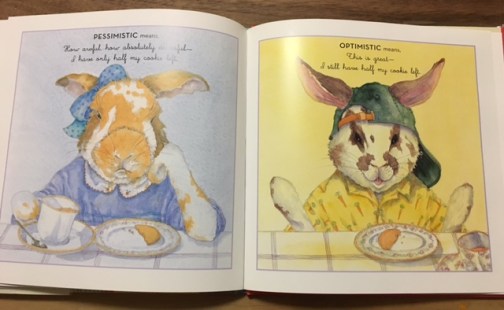
And so it was that this book was sitting on my desk this morning when a first grade student arrived in my room with a very long face. He has struggled and made slow progress since the beginning of the year. “What’s wrong?” I asked. He explained that he’d had a run in with another student during P.E, and had gotten in trouble. I knew my lesson would be wasted if I just went ahead. So I pulled out Cookies and began reading. By the time we got to this page, he was smiling and agreed it would be better to be optimistic than pessimistic.

We finished the book and he was ready to learn. He worked hard and had fun reading the poem and book I had chosen for the day. A serving of kindness was just what he needed.

Thank you, Amy Krouse Rosenthal, for this and all your lovely book, and thank you for filling the world with your love and light.

Thank you to StaceyBetsyBeth, KathleenDeb, MelanieLisa and Lanny for creating this community and providing this space for teachers and others to share their stories every day in March and on Tuesdays throughout the year. Be sure to visit Two Writing Teachers to read more Slice of Life posts.

SOL 17 & IMWAYR: If You Were the Moon

                    11454297503_e27946e4ff_h          IMWAYR 2015

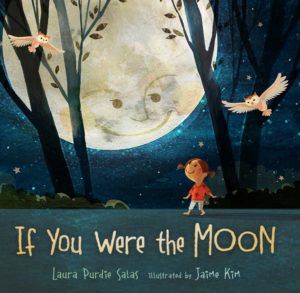
What does the moon do all day and all night? Laura Purdie Salas answers this question in her enchanting new picture book, If You Were the Moon. Cheerfully personified, the moon, spends its days and nights engaged in many familiar activities of childhood and displays many familiar moods. A spirited moon plays “dodgeball with space rocks” and peak-a-boo with Earth. The moon is helpful when it “lights a pathway to the sea” for sea turtle hatchlings. Salas also casts the moon as joyous, inspiring, and loving. When the moon sings “Earth a silver lullaby,” children will want to climb into bed to hear its song.

moon-cover_lores-300x293
Millbrook Press, 2017

Jaime Kim’s whimsical illustrations capture these different moods by creating a wonderfully expressive moon. The magical quality of the book is enhanced by a scattering of what could be stardust over every page.

For all its playfulness, If You Were the Moon is grounded in facts. On each page, Salas included informational paragraphs, written in clear, child-friendly language to describe the moon’s phases and tidal effects, theories about how the moon was formed, and more. There is a brief glossary, as well as suggestions for further reading.

This book is a must-have for any PreK or early elementary classroom. The spare, poetic text is a perfect mentor for children’s writing, and the factual portions of the book will generate many questions. A comprehensive Educators Guide is available here, and a treasure-trove of other goodies can be found hereIf You Were the Moon will spark the imaginations of all who read it.

Thank you to StaceyBetsyBeth, KathleenDeb, MelanieLisa and Lanny for creating this community and providing this space for teachers and others to share their stories every day in March and on Tuesdays throughout the year. Be sure to visit Two Writing Teachers to read more Slice of Life posts. Also, please be sure to visit Jen Vincent at Teach Mentor Texts and Kellee Moye of Unleashing Readers for more book recommendations.
SOL 17: Becoming Smart

11454297503_e27946e4ff_h

“Now is the time to understand more, so we may fear less.”
Marie Curie

I was seven when I bought my first book with money I earned. My mother gave me a quarter every week for making my bed and picking my toys up each day. This precious coin always burned a hole in my pocket. I could hardly wait until our next trip to Hart’s Five and Dime.

This store was a mecca for me when I was a kid. I loved the bell that jingled when you opened the door. The air had a distinctive scent which might have been dust mingled with the comings and goings of a few shoppers. It was never crowded. The shelves were stocked with an eclectic assortment of household necessities: light bulbs, extension cords, dish towels, and soap. One aisle was devoted to yarn and needlework supplies. There was a candy aisle. And of course, a toy aisle. My sister always made a bee line for the Breyer horse models. I always went right to the books.

Near the back of the store, among rows of Nancy Drew and Hardy Boys, was a rack of Junior Golden Guides. These little books were almost square, about the size of a slice of bread. There was a Junior Golden Guide for what seemed to me like every imaginable subject. The first one I paid for with my hard-earned allowance was Seashells.

As soon as I got home, I raced to my room and assembled my collection of shells so I could use my prized new book to identify each specimen. I must have read that book a hundred times. Eventually I bought other titles from the series. Cats and Coins are the two that stand out in my memory. And so my life-long book buying spree began. I go through phases when I swear I’m not going to buy another book, ever, because I’ll never read all the books I already have. But then a favorite author publishes a new novel, or a new professional book comes out that I must read.

By Jessie Willcox Smith [Public domain], via Wikimedia Commons

This trip down memory lane began because of a statement made by Katie Wood Ray at the New England Reading Association’s conference last spring. I have always been a huge fan of Ray’s work. Her book, Wondrous Words: Writers and Writing in the Elementary Classroom changed my teaching. Her words have been front and center in my thinking ever since:

“We have to make ourselves as smart as we can be about our work so
we can be articulate about our beliefs.”

There are many ways we can “make ourselves smart.” Being observant and reflective as we spend our days with children is critical. So is reading the latest research from respected leaders in education, people like Katie Wood Ray and Vicki Vinton, Kylene Beers and Bob Probst. Reading the blogs of teachers from around the country, including many of us taking part in this writing challenge, is also key. These posts give us insight into how other teachers handle and react to the problems and issues we face in our own classrooms. When we realize we are not alone in our dilemmas, when we gather ideas and suggestions from other experienced educators, we feel more empowered to deal with the challenges confronting us.

Identifying my shells in my treasured Junior Golden Guide may not have been a milestone in world history, but it laid a cornerstone for a life of trying to make myself smart, a life of seeking to understand so I can do my part to make the world a better place.

Thank you to StaceyBetsyBeth, KathleenDeb, MelanieLisa and Lanny for creating this community and providing this space for teachers and others to share their stories every day in March and on Tuesdays throughout the year. Be sure to visit Two Writing Teachers to read more Slice of Life posts.
Slice of Life: The Woman Citizen

11454297503_e27946e4ff_h

When I was a sophomore in high school, my social studies teacher was an engaging, charismatic young woman named Carla Kazanjian. She was also a feminist. Really the first one I had ever known. (My strong, independent grandmothers and mother would not have considered themselves feminists). In the sleepy, conservative corner of Connecticut where I grew up, Ms. Kazanjian was laughed at by some, and considered by a few to be downright dangerous.

I didn’t care what anyone thought of her, though. I loved her. She taught me about the history of the women’s movement and its heroes: Elizabeth Cady Stanton, Susan B. Anthony, Victoria Woodhull, and so many more. She opened my eyes to injustice, but she also taught me to have confidence and believe that anything was possible. Most importantly, she inspired me to push myself and to never give up.

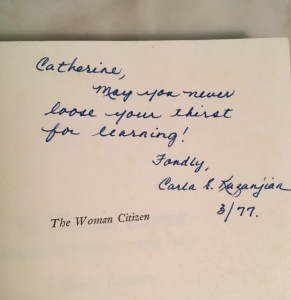
In the spring of my junior year, Ms. Kazanjian gave me a book that still has a place on my bookshelf. In The Woman Citizen: Social Feminism in the 1920s (University of Illinois Press, 1973), by J. Stanley Lemons describes how “various women and organizations worked for a broad reform movement to civilize, democratize, and humanize the American system, as they worked for progressive reform they advanced the status of American women. And as they fought for women’s rights, they pushed progressivism along in a decade of waning reformist impact.”

                       fullsizerender-1      fullsizerender

This sounds eerily familiar. Although I read this book forty years (!) ago, this passage from the book’s Preface makes me think I need to reread and rediscover how “social feminists held the progressive faith longer than most.” Many of the causes these women fought for, “…conservation…pensions, municipal improvements, educational reform, pure food and drug laws…social justice, and peace” are our causes still. As unbelievable and discouraging as that may sound, it also strengthens my resolve not to give up on the issues I believe in. Issues I know in my heart are worth fighting for.

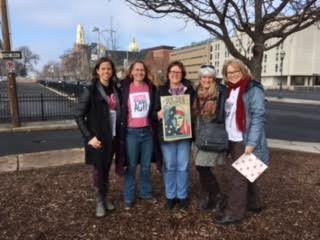
As I stood on the lawn of the capitol in Hartford on Saturday, I thought of Ms. Kazanjian. I wondered if she was there among the crowd of 10,000 women and men of all ages and races. I knew I was there, in part, because of her.

unnamed

  Thank you to StaceyDanaBetsyBeth, KathleenDeb, Melanie, and Lisa for creating this community and providing this space for teachers and others to share their stories each Tuesday. Be sure to visit Two Writing Teachers to read more Slice of Life posts.
DigiLit Sunday: Real Vs. Fake News

slide11

This post is part of “DigiLit Sunday,” hosted by Margaret Simon at Reflections on the Teche. This week’s topic is Real V. Fake News. Please be sure to visit Margaret’s blog to read more Digilit Sunday contributions.

When I taught third grade, learning about our solar system was part of the curriculum. My students researched a planet to learn about its distance from the sun, length of year, etc. It wasn’t very sophisticated according to Blooms Taxonomy or Webb’s DOK, but at that time, it was the first “academic” experience my students had with research. I remember they were surprised to discover discrepancies in information. One book (yes, in the late 1990s, we used mostly books) said X, another said Y, and a third said Z. This was a good introduction for them into the importance of checking multiple resources and using trusted sources.

In my current role as Literacy Specialist, I spend most of my time with first graders who are finding it hard to remember the difference between short i and short e, so the topic of fake news hasn’t come up too much.

But the other part of my job does involve working with teachers to develop and improve curriculum. The Common Core State Standards clearly addresses the issue of valid and accurate sources:

CCSS.ELA-LITERACY.CCRA.R.8

Delineate and evaluate the argument and specific claims in a text, including the validity of
the reasoning as well as the relevance and sufficiency of the evidence.

CCSS.ELA-LITERACY.CCRA.W.8

Gather relevant information from multiple print and digital sources, assess the credibility
and accuracy of each source, and integrate the information while avoiding plagiarism.

Which means that being alert to “fake news” has been embedded into our curriculum for a number of years, and was even before the CCSS came out with these explicit standards.

But, as Thomas Friedman points out in his column, “Online and Scared,” we have reached a “tipping point” where “a critical mass of our interactions have moved to a realm where we’re all connected but no one’s in charge.”

Wow. That is scary. Friedman goes on to quote Alan S. Cohen calling for a “new social compact”  that will help reign in the wild west feel to cyberspace. Freidman states “work on that compact has to start with every school teaching children digital civics.” Not only do students “need to bring skepticism and critical thinking to everything they read,” a “basic civic decency” has to underlie “everything they write.”

This is a huge responsibility, but really not so different from how the school where I teach has operated for many years. Still, I feel I need more information and additional resources. A Google search for “teaching the difference between real and fake news” yielded “about 58,600,000 results (0.36 seconds).”

Where to begin? Right away, I started to filter these links using what I know about the “credibility of each source.” An NPR story from November about students’ inability to tell the difference between real and fake news was the top story, and the page included links to articles from PBS and the Wall Street Journal.

The New York Times Learning Network published “Skills and Strategies | Fake News vs. Real News: Determining the Reliability of Sources” in October 2015, which underscores the fact that this problem isn’t unique to 2016. 

Stony Brook University School of Journalism’s Center for News Literacy’s website has extensive resources, including articles on News Literacy, a Digital Resource Center, and an online course. Both of these resources, and more like them, are worth investigating.

The concept of fake news isn’t new. Clearly, its more pervasive and we are more aware of it. For these reasons, we have to be vigilant that our students have the tools they need to be informed consumers of news and information.

Back to those first graders. I’m not going to start incorporating information about real and fake news into my lessons. I do, however think it’s important to help children develop a sense of perspective, which is related to this issue, as early as possible. To help them with this, I am going to share Brendan Wenzel’s brilliant They All Saw a Cat (Chronicle Books, 2016). Helping them understand that everyone sees things just a little differently doesn’t mean that a person is wrong. There is a difference between making stories up (otherwise known as fiction) and looking at an issue from many points of view.  In fact, being open to the experiences of others makes our own view of the world richer. There’s nothing fake about that.

IMWAYR: Reading Resolutions

IMWAYR 2015

“Outgrow yourself as a reader.”
~ Lucy Calkins ~

Last January, a colleague and I decided to challenge our students to make Reading Resolutions. A few other teachers in our building adopted our idea. Although I don’t have statistics about our outcomes, getting kids to talk about and read books they wouldn’t have otherwise considered can be counted as a success. (By the way, I finished the Very Famous Book last February.)

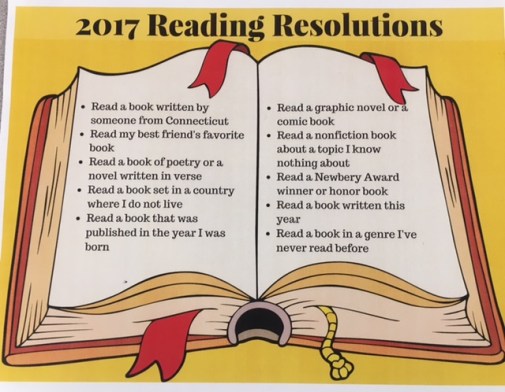
We are making Reading Resolutions again this year. Here are our suggested reading resolutions for 2017, adapted from Scholastic’s “100 New Year’s Reading Resolutions”.

fullsizerender-1

We’re encouraging kids to pick books from at least two categories, but there are so many books I want to read, I didn’t have any trouble choosing a book for each category.

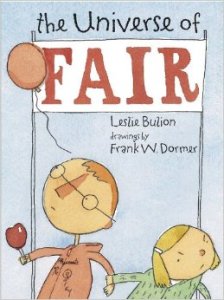
  • A book written by someone from Connecticut–Connecticut author and poet Leslie Bulion’s The Universe of Fair (Peachtree, 2012)—Leslie visited our school last fall and gave us a copy of this book, which was inspired by the Durham Fair. Other teachers have read it to their students, but I haven’t gotten ahold of it yet.

                                                  516cy2xhfsl-_sy344_bo1204203200_     220px-thesnowgoose

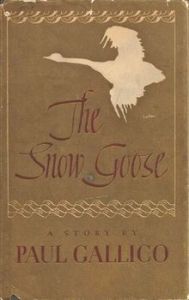
  • Best friend’s favorite book— This was hard. My dearest friend and I read many of the same books, and I’ve already read her very favorite book, Little Women. While we were talking about something else, she mentioned The Snow Goose: A Story of Dunkirk, by Paul Gallico. Anything about World War II is always interesting to me, so this was an easy choice.
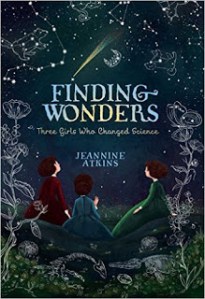
  • A book of poetry/novel in verse—I will probably read dozens of books in this category this year. I finished Jeannine Atkins lovely Finding Wonders: Three Girls Who Changed Science yesterday, and have One Last Word (Bloomsbury, 2017), by Nikki Grimes on my desk. Maybe I should modify this to be one book from this category every week.
  •                                   finding-wonders-cover   51rt-8brnul-_sx330_bo1204203200_
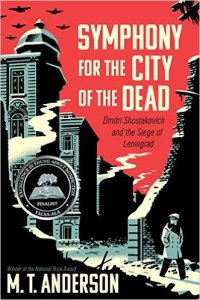
  • A book set in a country where I do not live—There are so many possibilities for this category. I haven’t read Symphony for the City of the Dead, (Candlewick, 2015) M.T. Anderson’s book about Dimitri Shostakovich and the Siege of Leningrad. Given my penchant for books about WWII, this seems like a good choice.
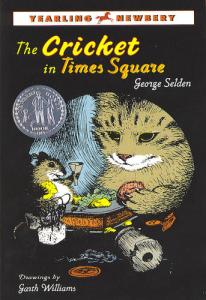
  • A book published the year I was born—Somehow I never read The Cricket in Times Square, written by George Selden and illustrated by Garth Williams, even though I still have the copy I bought at the book fair when I was in 4th grade!

    the_cricket_in_times_square_cover
  • A graphic novel or comic book—Another category with so many worthy choices. I love Matt Phelan’s work, and his reimagining of Snow White (Candlewick, 2016) set in Manhattan during the Depression intrigues me.
  • A nonfiction book about a topic I know nothing about—Last summer I heard Ed Yong speak about his book I Contain Multitudes: The Microbes Within Us and a Grander View of Life (Ecco, 2016). I read about half the book in August, but was distracted once school started. I resolve to get back to it and finish it.
  • Newbery Award or honor book—I’ve read all the recent medal winners, but there are many honor books I’d like to read. I will definitely read whatever wins this year if I haven’t already. Stay tuned.
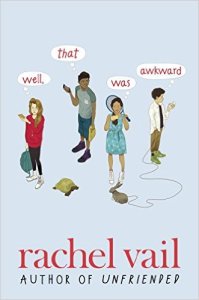
  • A book written this year—As I skimmed through the January/February issue of The Horn Book, I quickly came up with at least half a dozen titles for this category. I want to read Isaac the Alchemist: Secrets of Isaac Newton, Reveal’d  (Candlewick) by Mary Losure, coming out in Feburary. Then there’s Rachel Vail’s Well, That Was Awkward (Viking), or Me and Marvin Gardens (Levine/Scholastic), which are both also out in February.
    41f9lkuulrl-_sx329_bo1204203200_   51ggnimw74l
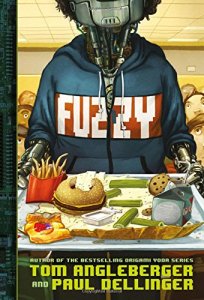
  • A book in a genre I’ve never read before—How about a genre I don’t like? Horror is probably my least favorite genre, but I don’t read too much science fiction either. I have an ARC of Fuzzy, by Tom Angleberger and Paul Dellinger, so for now, that’s my choice.

What books are you resolving to read this year? Please be sure to visit Jen Vincent at Teach Mentor Texts and Kellee Moye of Unleashing Readers for more book recommendations.

IMWAYR: Celebrating Friendship

IMWAYR 2015

At the risk of being late to the party for these books about love and kindness, I want to share them here because, let’s face it, the world needs all love and kindness we can give.

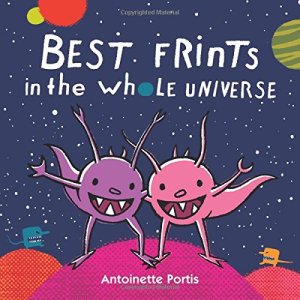
Last August I had a terrible time choosing a theme for my Picture Book 10 for 10 list. I had two or three ideas, and over thirty books to choose from. One that didn’t make my list of books that feed our imaginations was Best Frints in the Whole Universe (Roaring Brook Press) by Antoinette Portis. This book is on Betsy Bird’s list of “The Best Picture Books of 2016” and was chosen as a Kirkus Reviews Best Picture Book of 2016. Last summer their reviewer called it “cosmically delightful” and I whole-heartedly agree.

51ig6tj0hdl

“Yelfred and Omek have been best frints since they were little blobbies.” But, as anyone who’s ever had a best frint knows, the course of true friendship, like love, never does run smooth. Of course Yelfred and Omek work out their difficulties and discover that “best frints are the best thing of all.”

Portis’s joyfully wacky planet Boborp language will entertain all PreK-first grade readers, but why should they have all the fun? I’d share this book with second grade and beyond both for pure enjoyment and for the theme.

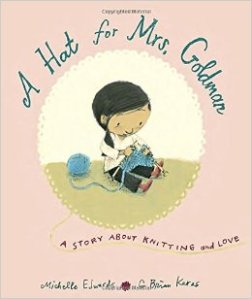
A Hat for Mrs. Goldman: A Story About Knitting and Love (Schwartz & Wade, 2016) by Michelle Edwards and illustrated by G. Brian Karas stole my heart. This book is also on Betsy Bird’s list, and I would have included this on the list of knitting books I shared early in December, except I hadn’t read it yet. Mrs. Goldman knits hats for “the tiniest babies” and  “Hats for small, medium, and large friends and neighbors.” Her young friend Sophia makes pom-poms for all of these hats. One day, while they’re walking Mrs. Goldman’s dog, Sophia notices and worries about Mrs. Goldman’s bare head. She decides to “make Mrs. Goldman the most special hat in the world.” What follows is as much a story of perseverance and inspiration as it about love and friendship.

51fjz-6wg9l-_sx258_bo1204203200_

This story of intergenerational friendship reminded me of Eileen Spinelli’s Sophie’s Masterpiece and A Gift for Tia Rosa, by Karen T. Taha. Be warned that reading Edwards’s heartwarming tale may inspire young knitters to try their hand at creating their own “Sophia Hat”. Thankfully, Edwards and knitter Theresa Gaffney have teamed up to design a pattern that novice knitters should be able to knit without too much trouble.

Please be sure to visit Jen Vincent at Teach Mentor Texts and Kellee Moye of Unleashing Readers for more book recommendations.

Gratitude

Over a month ago, my friend, Margaret Simon, asked her #DigiLit Sunday compatriots to write about gratitude. This is my response.

gratitude

“You’ll never know everything about anything, especially something you love.”
~ Julia Child ~

Baking is one of my passions. I have a repertoire of favorite desserts that family and friends have come to expect at holidays and get-togethers. Cooking shows are just about the only TV programs I will actually sit and watch. So Tejal Rao’s review of The Great American Baking Show in the paper last week caught my eye. The review was mixed, but these words struck a chord with me:

Maybe it’s because, with any ambition, there is often a gap between what
you want to do and what you actually achieve. A miserable, insurmountable
abyss in some cases. I admire the way the American bakers will dust off their
apron and walk up to the judging table where [the judges] are waiting, even on
a bad day, with a wonky, toppling, broken, undercooked thing. And they stand
by their work and invite criticism.

Yes, there is a gap.  With any ambition. Including, or maybe especially, writing. Writing stories or essays or poems is hard. I cringe to think of how many years I didn’t write because of my fear of falling into that “insurmountable abyss.”

Yet, thanks to the Internet, I found Two Writing Teachers and Poetry Friday. These communities of amazing, smart, talented educators and writers welcomed me, no questions asked. No one laughed at my “wonky, toppling, broken, undercooked thing.” In fact, the opposite occurred. Everyone offered support, encouragement, and praise. Kind words made me brave. They gave me the courage to try anything, even if I had no idea what I was doing.

Over the years, like ripples in a pond, my circle of online writing friends has grown. I’ve been lucky to meet many of you in person. Through all of this, I have learned so much. Thanks to all of you, I am a better writer and a better teacher. For that I am forever grateful.

I’m looking forward to another year of writing and learning with you all. Happy New Year.