A Slice of Life: A Visit to the Eric Carle Museum of Picture Book Art

sols_6Now that the month-long Slice of Life challenge has ended, I’m hoping to continue sharing slices every Tuesday. Be sure to visit Stacey and Ruth at Two Writing Teachers to read more amazing writing. Thank you for hosting this weekly Slice of Life Challenge!

Last Friday, a friend and I hopped in the car and drove to Amherst, MA and the Eric Carle Museum of Picture Book Art to see their celebration of Garth Williams’s beloved illustrations of Charlotte’s Web.
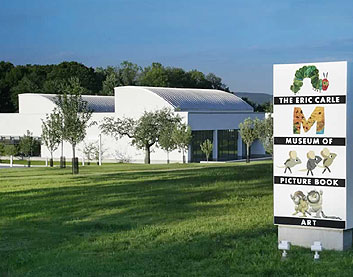
Image

Going to The Carle is one of my favorite day trips. When you arrive, you’re greeted by this bug:

Image

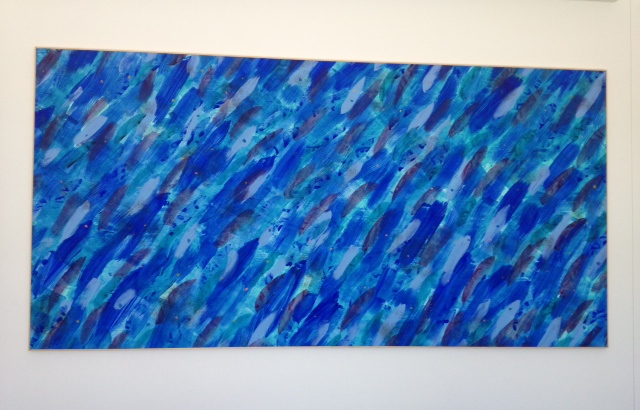
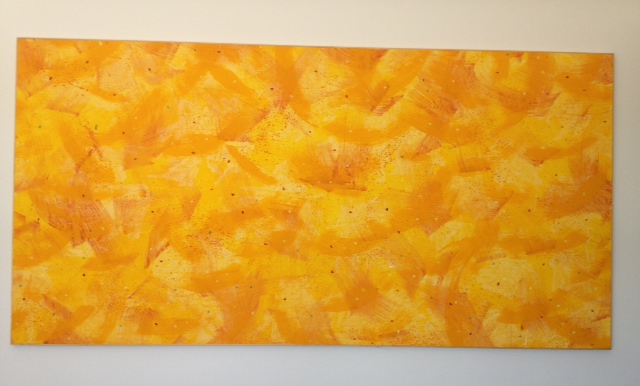
As you enter the museum, you step into by a large space filled with light and color. Panels of bright primary colors adorn one long wall of the Great Hall. My friend and I spent some time trying to decide what each panel reminded us of, and which one we liked best.
Image
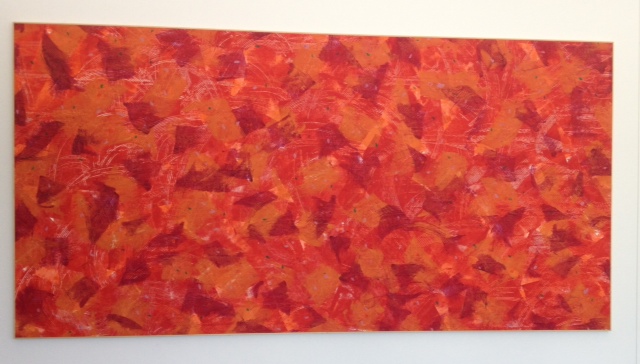
Fire or autumn leaves?
544416_4770520581818_1197692579_n
A field of waving grass?
Image
The ocean or fish, or both?
Image
Warm summer sunshine!
Image
A cozy spot to sit and read.

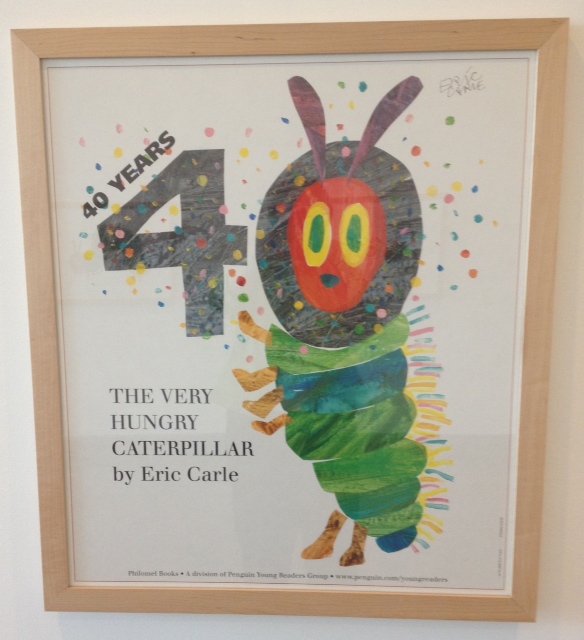
There are auditoriums for lectures and films, as well as an art studio where kids can make their own colorful creations. I’ve always wanted to go in and make some art myself, but it’s really for the kids. More of Eric Carle’s whimsical art is hung in this hallway.
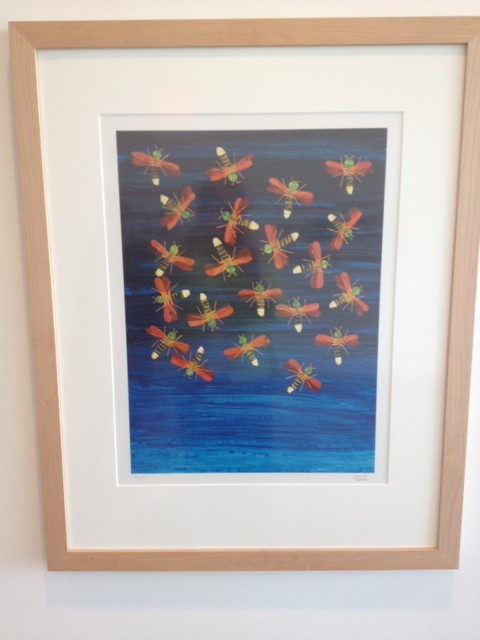
      Image  Image

The West Gallery is devoted to Carle’s work, but the theme shifts on a regular basis. The current show, Feathers, Fins, and Fur, features penguins, cardinals, and more. In addition, there are two galleries for special exhibits. The larger East Gallery has had shows featuring the work of Tomi dePaola, Virginia Lee Burton, and illustrations from various editions of The Wizard of Oz, to name just a few. On display until June 9th is Latino Folk Tales: Cuentos Populares-Art by Latino Artists. The vivid colors and styles of these artists bring the tradition of magical realism to life.

The exhibit in the smaller Central Gallery was the main reason for our visit.

Image

Some Book, Some Art showcased Garth Williams’s classic illustrations for Charlotte’s Web. It was fascinating to see the early ideas Williams had for the cover of the book and his process of going from rough sketch to finished art. There were also early studies of what Charlotte herself would look like. In one draft, she bore quite a resemblance to the Mona Lisa! This small, humble, gallery is currently filled with radiant, terrific art.

An unexpected treasure of the exhibit was this poem, written by E.B White to his wife, Katherine, just before they were married.

“Natural History”

The spider, dropping down from twig,

Unwinds a thread of his devising;

A thin, premeditated rig,

To use in rising.

And all the journey down through space

In cool descent, and loyal-hearted,

He builds a ladder to the place

From which he started.

Thus I, gone forth, as spiders do,

In spider’s web a truth discerning,

Attach one silken strand to you

For my returning.

I will return the The Carle again and again, just as I return to Charlotte’s Web from time to time. I love the beauty contained within both.
It’s Monday! What Are You Reading?

Image

Poetry, of course! Today is the first day of National Poetry Month! Check out what others are reading today by visiting Jen and Kellee at Teach Mentor Texts.

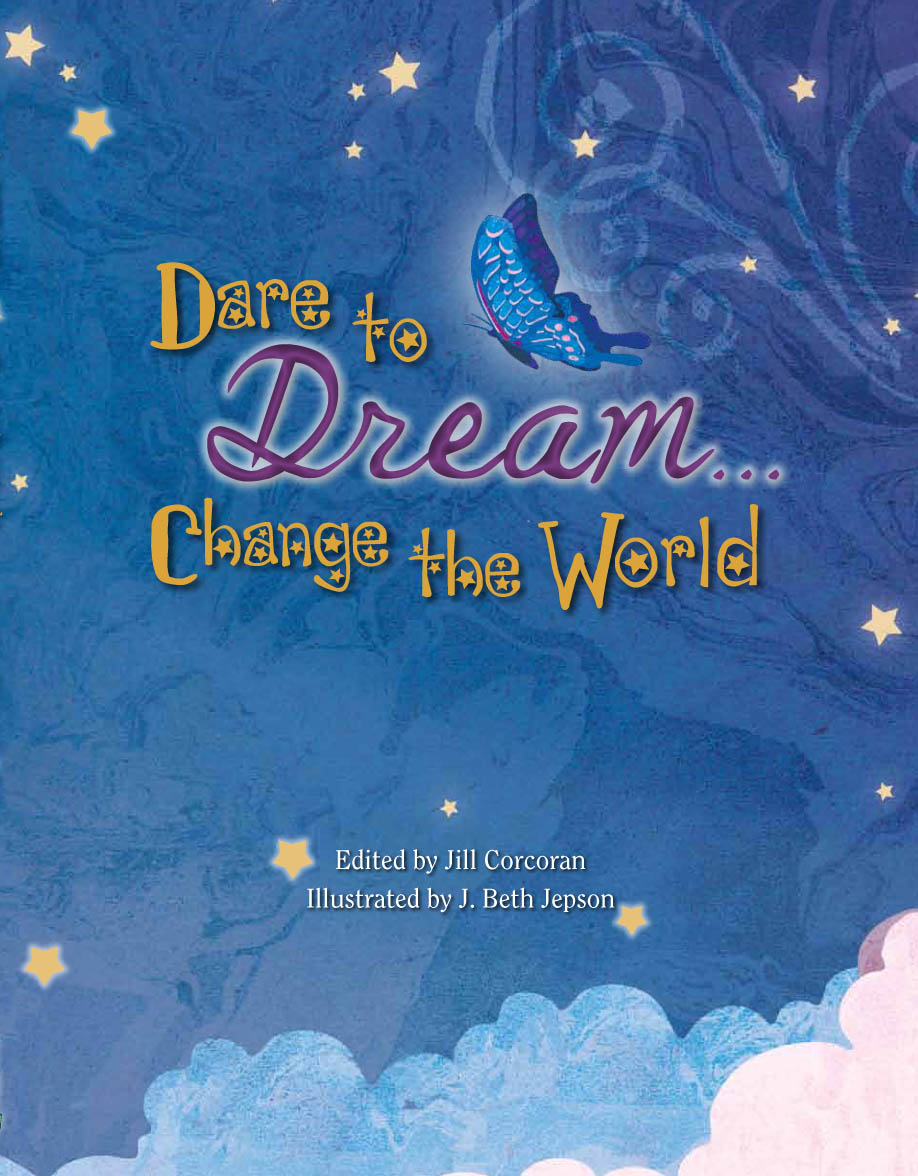
Dare to Dream…Change the World edited by Jill Corcoran, illustrated by J. Beth Jepson (Kane Miller, 2012) is an anthology of poem that celebrates people who have followed their dreams and, as a result, made the world a better place. A short note at the beginning of the book explains that Jill Corcoran was inspired to create this anthology while listening to a story on NPR about the uprisings in Egypt. Her dream was to “share the spirit of dreaming + action = change and that each one of us can make the world just a little better.”

Image

This is a beautiful book. J. Beth Jepson has created stunning, vivid illustrations that are perfectly suited to pairs of poems. These pay tribute to people who have made contributions to civil rights, music, medicine, sports, and more. One poem is biographical, the second is a response to the person’s accomplishment. Brief biographies of each individual are included. An all-star line up of poets contributed to this collection, and information about them is also included, as well as links to their websites.

When I first read this book, my mind instantly began thinking of all the possibilities for using it in the classroom, and a curriculum guide is available on the book’s website. The publishers are sponsoring a poetry contest for students in grades 3-8, which you can find out about here.

Jama Rattigan has a much more extensive review of Dare to Dream at her lovely blog, Jama’s Alphabet Soup.

My school is finishing up a school-wide read of Wonder. Before we began reading R.J. Palacio’s incredible novel, we all read Each Kindness, by Jacqueline Woodson. The final poem in the collection, is the perfect bookend to that story, a reminder that our actions have a lasting impact.

Ripples

No one acts in isolation

And no act leaves the world the same.

Words and gestures ripple outward,

What shores they reach we cannot name.

All our lives end in a riddle–

A mystery without an answer,

For even gone we ripple on,

Like a dance without a dancer.

Did you extend a friendly hand?

Did you lift a battered spirit?

The one you helped helped someone else

Ah! Now we’re getting near it.

That second someone dropped despair

Did not give in, instead revived

To teach, to love, to fight, to dare,

And what you’ve done lived on, survived.

On and out the circle widens,

Past all hope of comprehending.

The slightest touch can change the world

Healing, helping, lifting, mending.

Actions last for generations

Our father’s mothers mold our hearts.

We in turn shape all that follows;

Each time we act, a ripple starts.

by Bruce Coville

Where will your ripples go today?

Slice 31 of 31: Thresholds

Image

When I was in college, I had an English professor who always talked about thresholds. Literally, “the plank, stone, or piece of timber that lies under a door,” threshold is also described as the END; BOUNDARY, “the place or point of entering or beginning.” (Merriam-Webster Online Dictionary) I’m pretty sure it was that contrast that appealed to her: how can it be the end and the point of entering at the same time? It’s really all about the perspective we choose to take.

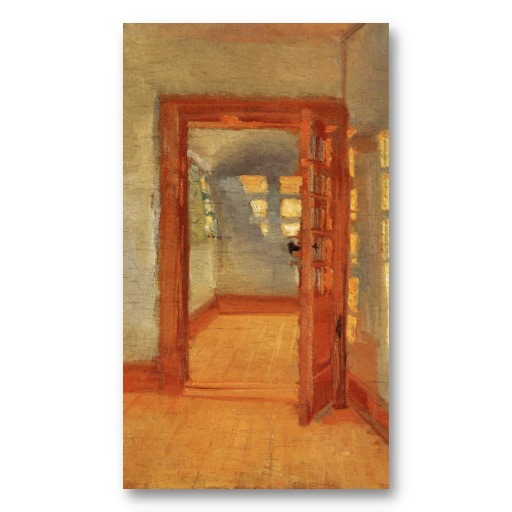
Brondum's Annex by Anna Ancher
Brondum’s Annex by Anna Ancher

So I’m thinking of today as a threshold, not as the end. This month has lived up to the term “challenge.” I had to let go of my paralyzing fear of posting something that was less than perfect. Because I did, I was free write some things I might not have ever written.

The welcoming community of writers also made it possible for me to learn and grow. So much amazing writing has been done this month! And the comments of praise and encouragement were more helpful than you can ever know. I appreciate each and every one of them.

But, as I said, this is not the end. Rather, it is the beginning of a new writing life for me. One in which I’m more attuned to keeping my eyes open for new ideas and insights. One in which I make time every day to write.

Because we’re on the threshold of National Poetry Month, I’d like to leave you with this poem by Rita Dove. I think it applies to writing as well:

The First Book

Open it.

Go ahead, it won’t bite.

Well…maybe a little.

More a nip, like. A tingle.

It’s pleasurable, really.

You see, it keeps on opening.

You may fall in.

Sure, it’s hard to get started:

remember learning to use

knife and fork? Dig in:

You’ll never reach bottom.

It’s not like it’s the end of the world–

just the world as you think

you know it.

Thank you so much to Stacey and Ruth at Two Writing Teachers for hosting this Slice of Life Challenge!

Slice 30 of 31: The Miracle of Charlotte’s Web

Image

As this month-long Slice of Life Challenge draws to a close, I’d like to take a look back at what brought me here.

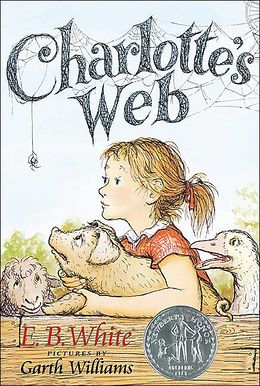
One day in 1969 or 1970, I became a reader. It wasn’t that I hadn’t been reading and enjoying books before that; I had. But on that distant, seemingly ordinary day, a reader was born. How did this miracle occur? For whatever reason, my fourth grade teacher, Mrs. Matthews began reading Charlotte’s Web aloud to our class.

Image

I was instantly drawn into the story. I recognized myself in Fern. I lived across the street from a farm, so the setting was familiar, even comforting. I wished I could raise a baby pig, although I’m sure I would have changed my mind quickly after a day or so. I guess the why of all this doesn’t matter. What does matter is that the right book was presented to me at the right time and it all clicked.

When I started teaching third grade I knew I wanted to begin the year reading Charlotte’s Web to my students. It became a tradition, and third grade teachers at my school still begin the year reading Charlotte’s Web to their students. There really isn’t any better place to start.

Katherine Paterson says that “a book can give a child a way to learn to value herself, which is at the start of the process of growing a great soul.” (pg. 32, The Invisible Child) E.B. White’s masterpiece did this for me.

Esme Raji Codell feels that “if a book helps to build an empathetic imagination, it succeeds.” (On Point interview, July 2, 2010) What better way to help a child with this than to show them Fern’s devotion to Wilbur? Or the truly selfless acts of Charlotte on behalf of Wilbur? Or the dedication of Wilbur to Charlotte’s children and grandchildren?

The book is also a celebration of the miracles of nature all around us that we fail to notice. When Mrs. Arable is worried about Fern’s obsession with Wilbur and the animals at the barn, she visits Dr. Dorian to discuss this.

She asks him “Do you understand how there could be any writing in a spider’s web?”

“Oh no,” said Dr. Dorian. “I don’t understand it. But for that matter I don’t understand how a spider learned to spin a web in the first place. When the words appeared, everyone said they were a miracle. But nobody pointed out that the web itself is a miracle.” (p. 108-109)

E.B. White appreciated miracles. And he created one with Charlotte’s Web.

Thank you to Stacey and Ruth at Two Writing Teachers for hosting this Slice of Life Challenge!

Slice 29 of 31: The Tree that Time Built for Poetry Friday

Image

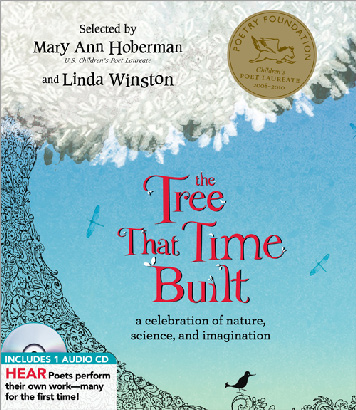
Mary Ann Hoberman is one of my favorite poets. I read A House is a House for Me to my children countless times, and my students love the You Read to Me, I’ ll Read to You series. But somehow I missed The Tree that Time Built (Sourcebooks Jabberwocky, 2009). This anthology, selected by Hoberman and cultural anthropologist Linda Winston, is a “celebration of nature, science, and imagination.” It is a beautiful book: poems are centered on cream-colored pages and line drawings by Barbara Fortin add just the right amount of accent. The poems are organized thematically and notes throughout the book add information about the poets, their craft, and poetic forms. A glossary is included, as well as a list of suggested reading. There is even a CD of selected poems being read by Hoberman, Winston, and others!

Image

I was particularly struck by this poem:

You And I

Only one I in the whole wide world

And millions and millions of you,

But every you is an I to itself

And I am a you to you, too!

But if I am a you and you are an I

And the opposite also is true,

It makes us both the same somehow

Yet splits us each in two.

It’s more and more mysterious,

The more I think it through:

Every you everywhere in the world is an I;

Every I in the world is a you!

by Mary Ann Hoberman

The fifth graders I’ve been working with (more about that here) are fascinated by alliteration. This poem is a perfect example of alliteration’s close cousin, assonance, which they are not familiar with. It also gets to the heart of poetry. When I asked the students the other day why we were reading and studying poetry, I was met by a lot of blank stares. But one brave soul timidly raised her had and said something to the effect of “It let’s us know what people feel.” I told her I agreed with her one hundred percent. “You and I” helps us see that we have more in common than we think, feelings and all.

I wish you all a wonderful Poetry Friday!

Mary Lee (who wrote a much more extensive review of this book here) has the round up at A Year of Reading. Be sure to stop by to read more poetry posts. Thank you also to Stacey and Ruth at Two Writing Teachers for hosting this Slice of Life Challenge!

Slice 28 of 31: Unpacking Poetry

Image

Earlier this month, I attended the TCRWP’s Saturday Reunion in New York City. One of the sessions I went to was “To Lift the Level of Writing, We Need to Lift the Level of Rehearsal and Revision: Mentor Texts Can Teach Not Just Qualities of Good Writing, But Process,” presented by Brooke Geller. The session began with Geller stating that kids need to see the big picture before they begin writing. Knowing what the finished product will look like is the first step in engagement. Geller described the following process to immerse students in the genre being studied, in this case, a research-based argument essay.

Unpacking a Text

  • could be a published text, student work, or your own writing.
  • students should spend time with the text, reading and rereading
  • ask “What are you noticing?”
  • put kids in groups of 3-4, give them a piece of writing in the middle of a big sheet of paper
  • have them mark up the text with their observations and the evidence
  • students should use their prior knowledge about genre– “What do you know about essays?”
  • read first, then read with the eyes of a writer
  • teacher should go from group to group and add her own thoughts
  • come back together–create list of what they think are characteristics of the genre
  • charts can be used as teaching tools

At my school, the fifth grade teachers were getting reading to begin a unit on poetry. We’ve been talking about ways to increase student engagement and the quality of their writing, and I suggested that unpacking poems would be a great way to begin.

The teachers and I selected five poems and mounted them on sheets of butcher paper. At the start of class the next day, the classroom teacher and I modeled the process for the students. We discussed the importance of reading the poem aloud and rereading it several times. Then gave each group their poem and a marker. As they began working, the room was filled with the hum of their reading. The classroom teacher and I moved from group to group, talking and rereading along with the kids. Certain poetic elements were easier to spot; the poem either rhymed or it didn’t. Some students could describe what they noticed, but didn’t know what it was called.  It occurred to me that this activity was also an excellent form of pre-assessment. The teachers and I had a concrete list of what the students knew about poetry.

mentor text  photo-1

photo-3
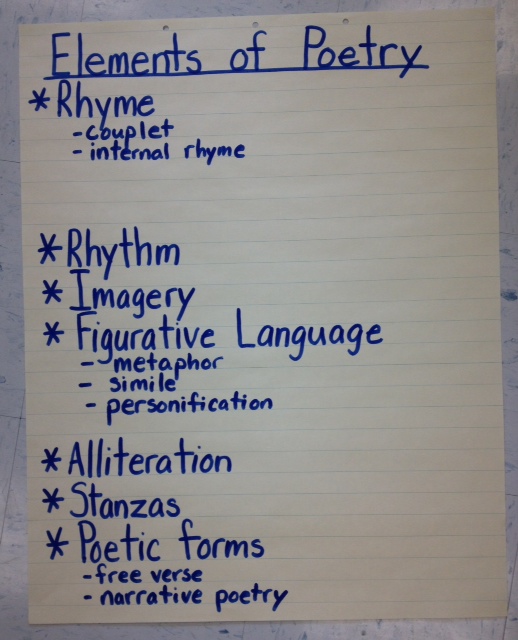
We left empty space so we can add more elements as they’re introduced.

After school, the classroom teacher and I created this chart to use throughout the unit.

photo-2

As students find examples of these poetic elements, they will be added to the appropriate column. These examples will support them when they begin writing their own poems. We will also add columns to the chart as we teach more poetic elements and devices.

A variation on this process suggested by Geller would be to put the same piece of writing on sheets of paper, but have a different focus question on each sheet.

Possible questions include:

  • What makes this text (poetry, essay, etc)?
  • How is this text set up? Why is this important?
  • What is the purpose? How do you know this?
  • How does the author show the heart of the story?

Students could rotate around room, rereading the text in light of each question.

As we reflected on the work of our students, we noticed that engagement had been high and all students participated in the discussions. We also noted that no one had mentioned anything about repetition of words, or the word choices the poets made. And while most students could spot a simile, metaphors were more difficult. Over the next few weeks, we will be crafting mini-lessons to teach these elements.  We will continue to use the wonderful ideas Brooke Geller shared at TCRWP throughout the unit. I’ll let you know how it goes.

Thank you to Stacey and Ruth at Two Writing Teachers for hosting this Slice of Life Challenge!

Slice 27 of 31: The Search for Delicious

Image

We got new laptops last spring and changes were made to the way we save and access old files on our server. This transition has been fairly smooth, but today I went looking for an old file that wasn’t showing up in my document folder. I found it eventually, after I uncovered some real treasures.

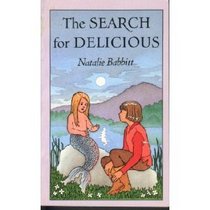
9780590129312
Farrar, Straus and Giroux, 1969

Early during my first year of teaching, I got a terrible head cold and stayed home one day to rest. For some reason, I picked up a copy of Natalie Babbitt’s The Search for Delicious that had been sitting on my shelf for ages. From the moment I began reading, I knew I had to read this book to my third graders. Here was a magical tale, rich with descriptive language. The final sentence of the prologue, which foreshadows everything to come, is a perfect example:

“Nobody believed [mermaids, dwarves, and woldwellers] were real any more except for an occasional child or even more occasional worker of evil, these being the only ones with imagination enough to admit to the possibility of something even more amazing in the world than those commonplace marvels which it spreads so carelessly before us every day.” (p. 10)

Isn’t that lovely?

Babbitt’s story is that of Galen, son of Prime Minister DeCree, who is writing a dictionary for the King. Everything is going well until he gets to the word “delicious.” No one in the palace is satisfied with “Delicious is fried fish,” so Galen sets out to ask everyone in the kingdom their choice for delicious. Galen’s is a classic quest; he encounters friends, foes, and discovers much more than the elusive definition of delicious.

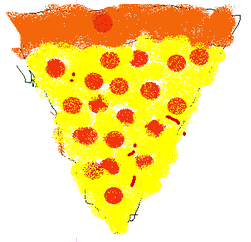
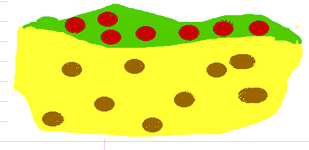
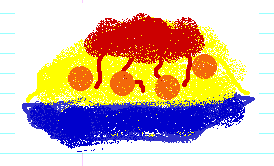
At the time, my students were struggling with adding descriptive details to their writing. I decided to have them write their own straight-forward definition of delicious, using Babbitt’s example as a starting point. Then they added details describing what made their choice so delicious. We wrote these in the computer lab and illustrated their definitions using KidPix so they could practice their computer skills as well. Here are some of their creations, long-buried in a folder on our school’s server:

Screen Shot 2013-03-27 at 9.33.14 PM
Delicious is one piece of hot pizza shaped like a pyramid covered with lots of tasty cheese, pepperoni, and tomato sauce.
Screen Shot 2013-03-27 at 9.35.11 PM
Delicious is six tacos with crunchy layers of cheese, meat, lettuce, and tomatoes.
Screen Shot 2013-03-27 at 9.38.36 PM
Delicious is a big plate of hot, freshly baked,chewy brownies with about 1,000 chocolate chips inside.
Screen Shot 2013-03-27 at 9.41.11 PM
Delicious is a steaming hot heaping mountain of spaghetti dripping with dark red tomato sauce, slippery, curly noodles and huge meatballs cooked just right.

The Search for Delicious is listed on CCSS Appendix A list of text exemplars as a read aloud for grades 2-3, but that’s not why you should read this book. You should read this book because it is, well, delicious.

Thank you to Stacey and Ruth at Two Writing Teachers for hosting this Slice of Life Challenge!

Slice 26 of 31: The Power of Observation

Image

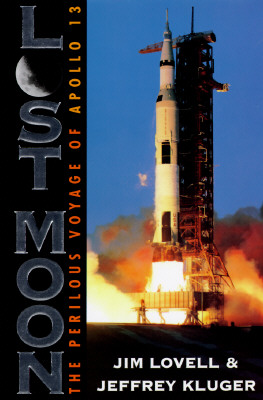
In Lost Moon: The Perilous Voyage of Apollo 13, Jim Lovell’s memoir of the “successful failure” of Apollo 13, Lovell and his co-writer, Jeffrey Kluger, describe the moments after the explosion of the oxygen tank. Gauges were reading zero at Mission Control, but not on the spacecraft, and the best engineers in the world were sure it was a “sick sensor-type problem.” (p.99) As his frustration mounted, Lovell’s instinct kicked in:

“The Commander let go of the attitude controller, punched open his seat buckle, and floated up to the left-hand window to see if he could determine what was going on out there. It was the oldest pilot’s instinct in the world…what Lovell really needed was a simple walk-around, a chance to make one slow, 360-degree circuit of his ship, to eyeball the exterior, kick the tires, look for damage, sniff for leaks, and then tell the folks on the ground if anything was really wrong and just what had to be done to fix it. However, he had to settle for a look out the side windows…The odds of diagnosing the ship’s illness this way were long, but…they paid off instantly. As soon as Lovell pressed his nose to the glass, his eye caught a thin, white, gassy cloud surrounding his craft…”(p. 101)

Even with millions of dollars of computers, equipment, and engineers, the source of the problem wasn’t identified until someone looked out the window.

Image
Lost Moon: The Perilous Voyage of Apollo 13. Boston, New York: Houghton Mifflin, 1994.

I thought of this scene as I administered a DRA2 (Developmental Reading Assessment, Joetta M. Beaver, Celebration Press. 2006) to a student the other day. I watched this student carefully as he negotiated the challenges that a level 10 benchmark book presented. Could he decode the long vowel words? Check. Was he strategic when he came to other unknown words? Check. Did he monitor for meaning when he read an unfamiliar word? Check. Did he read fluently and with expression? No.

This boy, who has worked so hard this year and has made so much progress, did not meet the criteria established by the publisher to be considered “Independent” at this level. Does that mean I’ll tell his parents at conferences this week that their son is a “deficient reader?” Absolutely not. I will tell them that their son is a reader who knows what to do when he gets to a word he doesn’t know. That he’s a reader who goes back and rereads when something doesn’t make sense. That he’s a reader who is starting to read in longer phrases. That he gets tired as he reads and should read more at home to build up his stamina so he’ll be able to keep up as the books he reads get longer.

Presenting his parents with his oral reading fluency score of 10 out of 16 would be meaningless to them, just as meaningless as the data on Mission Control’s computers as they tried to figure out what to do after Apollo 13’s oxygen tank exploded. It took the trained mind of a pilot to make sense of those numbers. Just as it takes an expert teacher, who knows her students because she has spent countless hours with them, observing them, to know that her students are more than a number. To know they are people who have strengths to build on, and with her help, will overcome their challenges.

Thank you to Stacey and Ruth at Two Writing Teachers for hosting this Slice of Life Challenge!

Slice 25 of 31: It’s Monday! What Are You Reading?

ImageMon Reading Button PB to YA

Like many of my fellow participants in the month-long Slice of Life Challenge going on over at Two Writing Teachers, I spent much of my free time this weekend reading other slices. The caliber of the writing is incredible, and there’s such variety! I read many heart-felt remembrances of friends and family that moved me to tears. Observations about the trials and tribulations of daily life, both in and out of the classroom, had me laughing until I cried again. As the month is almost over (how is that possible?), many Slicers reflected on the lessons learned from writing every day and what they had learned about themselves as a writer. In addition, my sister was visiting from Rhode Island, so I spent lots of time with her. Needless to say, I didn’t make much of a dent in my TBR pile.

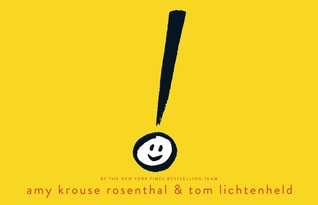
The one book I did get to, however, is priceless. Exclamation Mark (Scholastic Press, 2013), by Amy Krouse Rosenthal and Tom Lichtenheld, is the clever tale of a punctuation mark who knows he’s different from all the periods surrounding him. He tries to fit in, but nothing feels right. Then he meets a question mark, and he “discover[s] a world of endless possibilities.”

Image

The possibilities for using this book in the classroom also seem endless. Reading it for the fun of it is where I’d begin. I love the fact that the pages look like the lined paper familiar to Kindergarteners and first graders everywhere, and the word play is a riot.

With deceptively simple language, Exclamation Mark, is the perfect mentor text for asking questions and using “end punctuation in sentences.” (CCSS L.1.2.b) Exclamation Mark’s facial expressions perfectly match every word, and the word choice itself lends this book to addressing CCSS Language standard 5.d for first grade, “Distinguish shades of meaning among verbs differing in manner (e.g., look, peek, glance, stare, scowl) and adjectives differing in intensity (e.g., large, gigantic) by defining or choosing them or by acting out the meanings.” You can get a glimpse of all the fun by watching the book trailer:

Whatever else you do this week, get this book!

Thank you to Stacey and Ruth at Two Writing Teachers for hosting this Slice of Life Challenge!

Slice 24 of 31: Serendipity

Yesterday, I wrote about books I would want to have with me if I were stranded on a desert isle. There were so many books I left off the list I created for my cousin. And although I truly love the books I picked, my choices were influenced by what I know of her reading tastes. For a different reader, I’d make different choices.

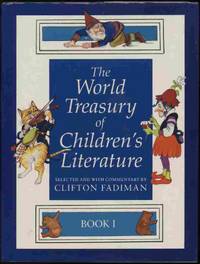
Something I didn’t to consider for my cousin, but that would definitely be high on my list, is Clifton Fadiman‘s Treasury of Children’s Literature (Little, Brown, 1984).

Image

When my children were small, we didn’t have lots of money, so we made frequent trips to the library. But I did indulge my passion for books by belonging to the Book-of-the-Month Club. Every month a little newsletter came in the mail, tempting me with the latest titles. I usually returned the card indicating I didn’t want that month’s selection on time, but sometimes I forgot. That is how the gift of Clifton Fadiman’s treasury arrived at my door.

Serendipity. I love this word. Wikipedia defines it as “a happy accident” and “the accident of finding something good or useful while not specifically looking for it.” Merriam-Webster’s Word Central defines serendipity as “the gift of finding valuable or agreeable things not looked for.”

What a gift this two-volume treasury was! For the first time, my eyes were really opened to the breadth of children’s literature. Picture books from my childhood were Little Golden and Wonder Books: The Pokey Little Puppy, The Surprise Doll, and books based on Walt Disney movies. But here was Amos & Boris by William Steig, a chapter from Mr. Popper’s Penguins (had I really never read this as a child?), Millions of Cats, And to Think that I Saw it on Mulberry Street, the list goes on. My kids and I spent countless hours reading this two-volume treasure trove. As we worked our way through the stories and poems, favorites emerged, and were read over and over again. My dedication to sharing the richness of this world with children began when I first read this book.

This collection is a must-have for anyone who is serious about children’s literature. Although it’s out of print, many copies are available online. A third volume was published in 1985, which I have never seen, but I’m sure it’s worth a look.

In his introduction, Fadiman quotes Louise Fitzhugh’s Harriet the Spy: “How I love to read…The whole world gets bigger.” Thank you, Clifton Fadiman, for making my world a much bigger place.

Thank you to Stacey and Ruth at Two Writing Teachers for hosting this Slice of Life Challenge!