It’s Monday! What Are You Reading?

Image

I feel like I’ve been trying to catch up with a backlog of journal articles, blogs, and newspapers all week. But I did manage to squeeze in a few books for fun.

Steam Train, Dream Train (Chronicle Books, 2013) is a lovely bedtime story by Sherri Duskey Rinker and Tom Lichtenheld. A menagerie of zoo animals meet a steam train as it pulls into the station. They get right to work, loading the train with paint, sand, food and just about every toy imaginable. Once the train is loaded, the animals “settle in, and tuck in tight.” After it leaves the station, the final pages show a sleeping child with a toy train at the foot of the bed. Outside the window is a billowing cloud that looks suspiciously like a plume of smoke from a train. Although this is clearly aimed at the preschool set, I know a few Kindergarten and 1st grade boys who will love this book.

Watch the trailer here:

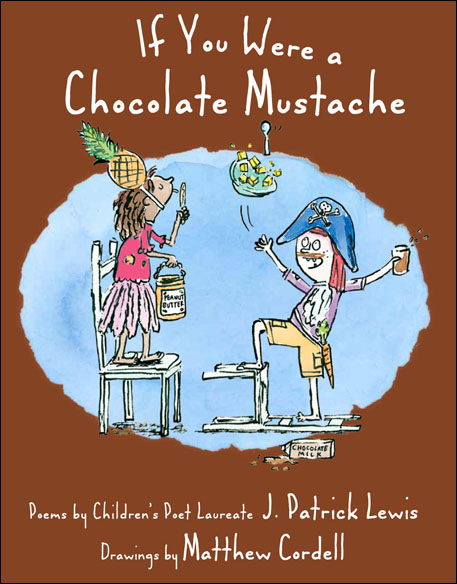
In If You Were a Chocolate Mustache (Wordsong/Boyds Mills Press, 2012), J. Patrick Lewis serves up more of his singular humor. Long poems, short poems, concrete poems, riddle poems, this collection has something for everyone. Matthew Cordell’s pen-and-ink drawings are the perfect complement for these madcap poems. This book is a must-have for elementary and middle grade classrooms.

Image

Be sure to visit Jen and Kellee at Teach Mentor Texts to find out what others are reading today.

Poetry Friday: “Think Like a Tree”

Image

At the beginning of Betty Smith’s A Tree Grows in Brooklyn, Francie Nolan gazes at the tree in her yard and recalls lines of poetry learned in school:

This is the forest primeval. The murmuring pines and the hemlocks,

Bearded with moss, and in garments green, indistinct in the twilight,

Stand like the Druids of old… (From H.W. Longfellow’s Introduction to Evangeline)

To Francie, her tree is hope, for “no matter where its seed fell, it made a tree which struggled to reach the sky.”

I’ve been thinking about trees, and the hope they represent, this week. This might be because a piece of land I pass on my drive to work each day is being cleared and the most amazing tree has been revealed, not twenty feet from the road. It has a huge limb that grows almost perpendicular to the trunk before it arches up toward the sky, creating an inviting perch. Every day I want to stop my car and climb onto that seat.

I loved to climb trees when I was a kid. I loved being enfolded in their branches. My mother used to have a fit that I was too high, that I would fall and break my neck. I never did fall. Somewhere along the way I grew too old for climbing trees. But I’ve never stopped admiring their beauty, their resilience.

Trees nurture us in countless ways. They provide shade in summer and shelter in winter. Our air is purified by their leaves. They produce fruit and harbor bees and their honey. It’s no wonder that cultures throughout history have considered trees sacred and have worshiped them.

“Think Like a Tree,” by Karen I. Shragg captures the beauty and magic of trees and reminds us of their wisdom.

Soak up the sun

Affirm life’s magic

Be graceful in the wind

Stand tall after a storm…

Read the rest of this poem here.

Writers and poets have been celebrating trees for millennia. What is your favorite tree poem?

Be sure to visit Anastasia Suen’s Poetry Blog for today’s round up of poems.

Poetry Friday: Picture-Books in Winter

Image

In case you haven’t heard, May is Get Caught Reading month. Sponsored by the Association of American Publishers since 1999, Get Caught Reading month is “a nationwide campaign to remind people of all ages how much fun it is to read.” You can find out more, including how to order the celebrity posters, here.

ImageTo celebrate, here is Robert Louis Stevenson’s “Picture-Books in Winter,”  a reminder that books allow us to experience any adventure imaginable, no matter what the season.

Picture-Books In Winter

Summer fading, winter comes–

Frosty mornings, tingling thumbs,

Window robins, winter rooks,

And the picture story-books.

Water now is turned to stone

Nurse and I can walk upon;

Still we find the flowing brooks

In the picture story-books.

All the pretty things put by,

Wait upon the children’s eye,

Sheep and shepherds, trees and crooks,

In the picture story-books.

We may see how all things are

Seas and cities, near and far,

And the flying fairies looks,

In the picture story-books.

How am I to sing your praise,

Happy chimney-corner days,

Sitting safe in nursery nooks,

Reading picture story-books?

by Robert Louis Stevenson

Pick up a book and have an adventure today!

You can learn more about Robert Louis Stevenson and read other poems from A Child’s Garden of Verses at Poets.org. Also, be sure to visit Liz Steinglass at her lovely blog for the round up of poems.

SOLC: Dakota Dugout

sols_6

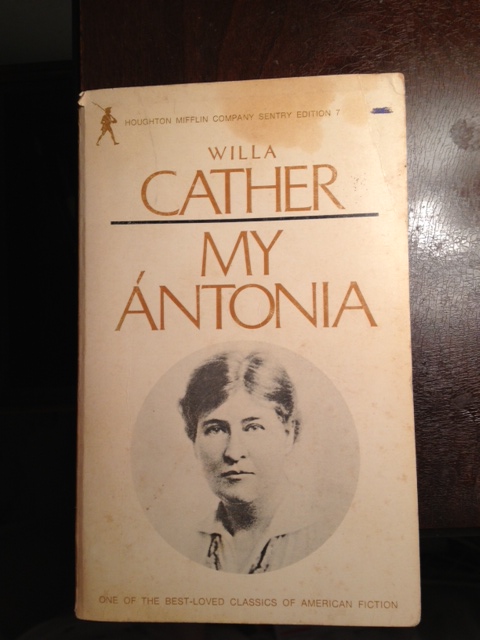
Sunday’s New York Times Book Review featured Tom Perrotta’s review of The Selected Letters of Willa Cather on the front page. Cather’s Death Comes for the Archbishop is one of my favorites, so I was interested right away. Perrotta quotes an irresistible line from one of Cather’s letters describing the prairie: “The whole great wheat country fairly glows, and you can smell the ripe wheat as if it were bread baking” As soon as I finished reading the review, I was off the couch and heading for the bookcase where I knew my copy of My Antonia waited. Although I’d had it for ages, I’d never read this book. No time like the present.

Image

I was immediately drawn into the story of Antonia’s immigrant family as told by her friend and neighbor, Jim Burden. Everything about the prairie is new to Jim, and Cather’s language transports us there. “The light air about me told me that the world ended here: only the ground and sun and sky were left,” Jim declares as he explores his new home for the first time.

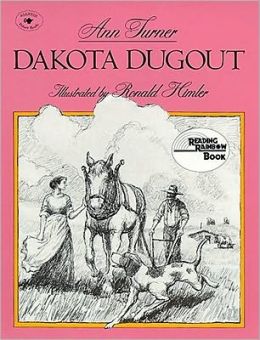
As I read, another book came whispering to me on that prairie wind. Ann Turner’s Dakota Dugout (Macmillan, 1985) is the story of a young couple trying to build a life in a sod home near the end of the 19th century. Told as a flashback from the wife’s point of view, Turner’s poetic text gives the reader an insight into a way of life few of us today can imagine. At the end of the book, the narrator tells her listener “talking brings it near again, the sweet taste of new bread in a Dakota dugout, how the grass whispered like an old friend, how the earth kept us warm.” The echoes of Cather’s letter are striking, aren’t they?

Image

I have used Dakota Dugout with fourth graders in the past to teach a number of reading strategies. It is a challenging text, but a worthy choice, as it is rich with details about a region of the country most of the students in my New England community have never experienced. Thinking about this book in light of the CCSS, the possibilities seem endless.

Reading Literature standards 1-3 could easily be taught using Dakota Dugout. Turner’s language makes this book a good choice for addressing the Language standards related to vocabulary (4-6) as well as Reading Literature standard 4, “Determine the meaning of words and phrases as they are used in a text…”

Teaching with primary sources isn’t something we’ve done a lot of in fourth grade, but because there are so many pioneer letters and diaries available, it makes sense to pair some of these with Dakota Dugout.  Reading Informational Text standard 6 states that students should “Compare and contrast a firsthand and secondhand account of the same event or topic; describe the differences in focus and the information provided.” The Library of Congress has a remarkable collection, Prairie Settlement: Nebraska Letters & Family Photographsthat are a perfect complement to this book. There is even a Standards alignment chart available.  The National Museum of American History also has resources to use with Dakota Dugout, including an online sod house building simulation.

The pioneers who settled the Great Plains are gone. But their spirit lives on in Willa Cather’s novels, scores of letters and diaries, and in books like Dakota Dugout. Through them we can “Tell you about the prairie years? I’ll tell you, child, how it was.”

Thank you to Stacey and Ruth at Two Writing Teachers for hosting this weekly Slice of Life Challenge!

It’s Monday! What Are You Reading?

Mon Reading Button PB to YA

We had a family visiting from out of town this weekend, so I didn’t have time to read too much. After everyone left yesterday afternoon, I did manage a to read some of the paper before I fell asleep for a lovely nap. The review of The Selected Letters of Willa Cather made me find my copy of My Antonia (more about that tomorrow) and I read Sean F. Reardon’s piece, “No Rich Child Left Behind” with dismay.

Hands down, the best part of my reading weekend was reading The Monster at the End of this Book to an almost 2 1/2 year old who’d never seen the book before. His year old brother enjoyed it too, but C’s reaction was priceless.

Image

He recognized Grover right away, and was excited for me to get started reading. Of course I put everything I had into it. Voice raised at the appropriate time, whispering at the fine print, adding exaggerated facial expressions. He was mesmerized. And so serious. He kept looking up at me with big, sincere eyes, not sure if he wanted me to turn the page, yet trusting me that it would be okay.

C. and I had quite an audience for this story time, but he was so engrossed in the book he didn’t pay any attention them, and I ignored them because I didn’t want to break the spell. When we got to the last page, he laughed and clapped and wanted me to read it again. Which I did.

So much has been written about the importance of reading to children from an early age. Reach Out and Read’s website states that “reading aloud builds sound awareness in children.”  NAEYC (The National Association for the Education of Young Children) recommends reading aloud to children from infancy. In “Reading Aloud With Children of All Ages,” Derry Koralek points out that reading aloud helps children “build their vocabularies with words they can understand and use.”

I could go on and on about the research. But C didn’t care about any of that. He cared that we shared a silly story, laughed and made crazy faces. For him, the best reason for reading aloud was that it was fun.

Be sure to visit Jen and Kellee at Teach Mentor Texts to find out what others are reading today.

Poem in Your Pocket Day!

Image

Today is Poem in Your Pocket Day. This celebration of poetry began in 2003 in New York City. The American Academy of Poets and other organizations have been promoting this day nationally since 2008. The idea is simple. Keep a poem in you pocket, then share it with others throughout the day.

My school is closed for spring break this week, so we will have our own Poem in Your Pocket day next week. But I couldn’t let the day go by without sharing a poem. Here is one of my favorites.

“Wish”

For someone to read a poem

again, and again, and then,

having lifted it from page

to brain–the easy part–

cradle it on the longer trek

from brain all the way to heart.

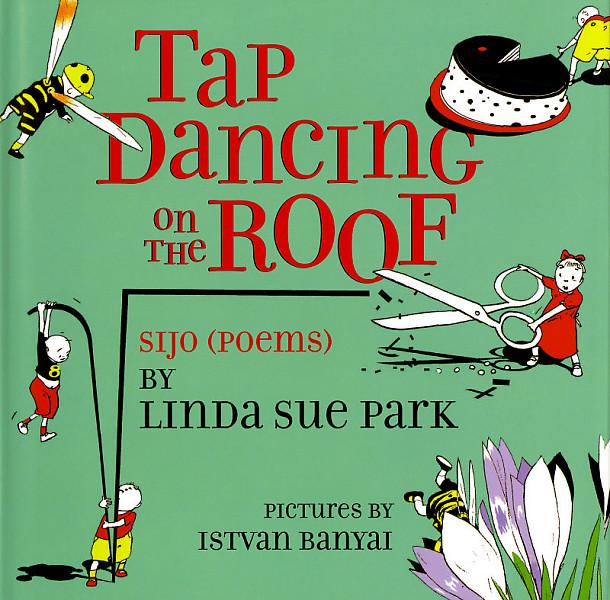
by Linda Sue Park

Image

(from Tap Dancing on the Roof: Sijo Poems, illustrated by Istvan Banyai, Clarion Books, 2007)

Keep a poem in you pocket today; keep poetry in your heart every day.

Slice of Life: Why I Stay

Image

“This job is who I am and I am proud to be a teacher.” Cindy Minnich

Last Friday, Beth Shaum posted a video on her blog that showed dozens of teachers from around the country sharing their reasons for staying in education. Since then, a number of other teachers have written about their reasons for remaining in the classroom, despite changes in curriculum because of CCSS, new testing, and new evaluations that are being imposed on educators. (Did I leave anything out?)

My first thoughts were about my own reasons for continuing to teach. Honestly, after 18 years, I don’t know what else I would do. Teaching has woven itself into my very being. Like many of you, I wake up in the night thinking about students and rehearse lesson plans in my mind while showering. Once I even got an idea for a math workstation at the local pizza parlor while waiting for our dinner to be served, and it was July! (My husband wasn’t pleased.) But there are so many other reasons.

I stay because I love it when kids come up to me in the hallway or cafeteria and say, “Mrs. Flynn, I’m reading The Hobbit!” or “I just finished The One and Only Ivan. Did you read it?” I love when students stop at my door to examine my book recommendations.

I stay because I love it when a parent thanks me for helping their child become a reader.

I stay because I love when former students write to me, thanking me for helping them become better writers. Better yet, I love it that a former student is now a colleague, grown into a passionate educator herself.

I stay because I love working with my colleagues to find just the right resource, just the right book, just the right solution to a problem.

I stay because I know the work I do matters. Today at Two Writing Teachers, Stacey shared LeAnn Carpenter’s poem, “Writers at Work.” It could easily be called “Teachers at Work.” The last line is “writers create.” That’s what teachers do: we create caring, compassionate, literate citizens. Helping students learn to read and write and think is the most important work teachers do.

I debated about whether or not I should write this today. So many smart, articulate people have said all this and more already. But then I decided that’s exactly why I should write this. I want to add my OUTSIDE VOICE to all the others, shouting loud and clear: I AM A TEACHER. I AM A PROFESSIONAL. I KNOW IN MY HEART I AM GIVING MY STUDENTS THE BEST I CAN GIVE. THEY DESERVE NOTHING LESS.

Thank you to Stacey and Ruth at Two Writing Teachers for hosting this weekly Slice of Life Challenge!

It’s Monday! What Are You Reading?

Mon Reading Button PB to YA

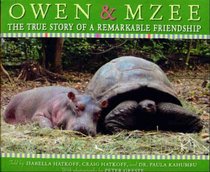
Have you ever gone looking for a book and found a different book, one you haven’t thought about in a while, instead? That happened to me the other day when I came across Owen & Mzee: The True Story of a Remarkable Friendship, by Isabella Hatkoff, Craig Hatkoff, and Dr. Paula Kahumbu, with amazing photographs by Peter Greste (Scholastic, 2006).
9780439927802

This book tells the story of Owen, a baby hippo, who was left stranded on a coral reef off the coast of Kenya after the 2004 tsunami. Separated from his pod, Owen was too young to be released into the wild on his own, and wouldn’t be accepted by another pod. Arrangements were made for him to be taken to Haller Park, a wildlife sanctuary near Mombasa. Almost immediately after he arrived, Owen began to follow a 130-year old Aldabra tortoise named Mzee. Mzee had a reputation for being a loner, and everyone at the park was sure he’ll rebuff Owen. But, to the amazement of everyone, Mzee accepted Owen, and the two became inseparable. There are a number of other books that recount the story of Owen and Mzee, but this is my favorite.

This story of a most unlikely friendship made me think of another tale of two very different creatures becoming devoted friends. Amos & Boris, by William Steig (Farrar, Straus & Giroux,1971) was one of the first picture books I read as an adult that opened my eyes to the power and depth of children’s literature. Children enjoy listening to the mouse Amos’s efforts to build and supply his boat, the Rodent. But events soon get serious, and a happy adventure turns into a matter of life and death in an instant.

9780374302788_xlg

Rescued by Boris, a kind whale, Amos professes his thanks and pledges to help Boris anyway he can, whenever necessary. Boris laughs at the thought of a tiny mouse being able to help a huge whale, but he accepts the offer. Of course, years later, Amos’s help is needed, and is gratefully accepted.

Both of these books offer children a picture of pure generosity. There is never a “what’s in it for me” thought; never a hesitation to help a soul in need. This alone is a good reason to share these books with children. There are others though, including the fact that these books both address a number of CCSS objectives. (Amos & Boris is listed as an exemplar text in Appendix B, but that is not why I love it.) Anchor standards 1-3 in both Literature and Informational text are easily met, and pairing these books seems like an obvious choice for anchor standard 9, “Analyze how two or more texts address similar themes or topics in order to build knowledge or to compare the approaches the authors take.” There are also plenty of opportunities to develop vocabulary (Literacy Anchor standard 4 and Language Anchor standards 4-6). Steig’s writing is filled with rich, descriptive language, as one of my favorite lines from the book shows:

“One night, in a phosphorescent sea, [Amos] marveled at the sight of some whales spouting luminous water…”

Owen and Mzee have their own website, and video clips of them are available.

Sharing short informational video segments on any of the animals in these books before or after reading would help teachers meet Literacy Anchor standard 7, “Integrate and evaluate content presented in diverse media and formats, including visually and quantitatively, as well as in words.”

Lucy Calkins recently stated that teachers have a responsibility to build our knowledge base and to be wary of packaged programs. Revisiting books already in our libraries, as well as staying abreast with all the wonderful books currently being published is one way to do this. Teachers working in the classroom have better ideas about how to use books with their students than textbook publishers do.

Be sure to visit Jen and Kellee at Teach Mentor Texts to find out what others are reading today.

Slice of Life: Cake, Anyone?

Image

Last night, I baked a cake for a luncheon we had at school today. I’ve been baking for almost as long as I can remember. When I was growing up we lived next door to my Grandmother, and I spent a lot of time at her house. When she baked pies, she always sprinkled the scraps of dough with cinnamon and sugar, added a few raisins and butter, then rolled them up and baked them. I don’t remember if she had a name for these little treats, but they were delicious.

Image
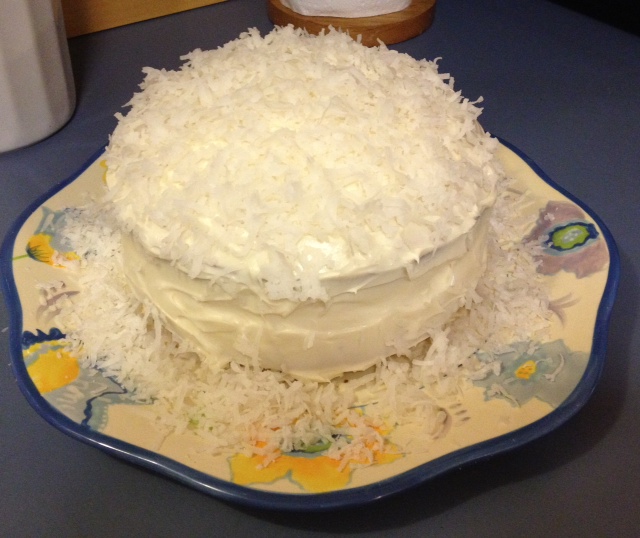
Coconut cake with raspberry filling

When my own children were little, we baked all the time. So I was quite surprised when I started teaching and discovered how many of my students had never baked anything. Children’s books are filled with inspiration for heading to the kitchen. So we started baking.

Image

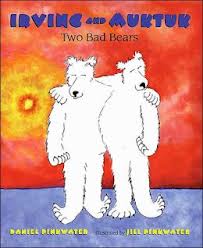
After reading Daniel Pinkwater’s Irving & Muktuk: Two Bad Bears (Houghton Mifflin Harcourt 2001), the story of two blueberry muffin loving polar bears, we made blueberry muffins.

Image

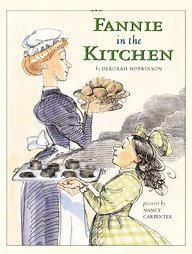
We read Deborah Hopkinson’s Fanny in the Kitchen (Atheneum Books for Young Readers, 2001) and made griddle cakes (pancakes).

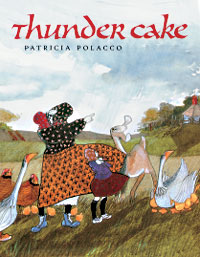
ImageThird graders love Patricia Polacco books and Thunder Cake (Philomel, 1990) was one of our favorites. So was the cake!

Image

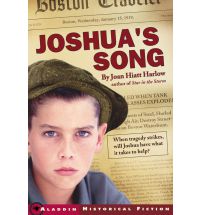
When fifth graders were reading Joshua’s Song, by Joan Hiatt Harlow (Simon & Schuster, 2002), a novel that culminates in the historic explosion of a molasses storage tank in Boston in 1919, many had never heard of molasses! Molasses cookies were whipped up in short order.

Cooking and baking with students may seem like a luxury in this time of Common Core Standards and high-stakes testing. But there are actually many benefits for mixing up some literature-related recipes.

  • At Teacher’s College Reading and Writing Project Saturday Reunion last month, Elizabeth Moore shared ways to use class experiments and demonstrations in science as a springboard to writing. (Read more about that session here.) Shared experiences in the kitchen could also be the basis for how-to books and cookbooks.  (Writing Anchor standard 2)
  • In a recent blog post, James Paul Gee reminds readers that “Humans learn through experiences in the world (using their minds, bodies…and interactions with others…)” All sorts of skills are learned through cooking, including reading recipes and doing the math to double or triple ingredient amounts.
  • First hand experience with different foods provides students critical background knowledge they need to successfully meet many of the Common Core reading standards. Knowing what molasses is will make learning it easier to learn about triangle trade in history class.

Cooking with students is nothing new. What is new is the pressure teachers feel to teach earlier, teach faster, teach more. Let’s remember to teach what’s important in meaningful ways. Adding a little spice to our lessons increases the chances our students will actually learn.

Thank you to Stacey and Ruth at Two Writing Teachers for hosting this weekly Slice of Life Challenge!

It’s Monday! What Are You Reading?

Image

Yesterday, Donalyn Miller, in a post on the Nerdy Book Club blog, confessed that she was in a reading slump. She stated that she loses interest after she starts a book and has even chosen to watch TV over reading! I read all this with relief, realizing I’m not alone. When I went back to her post later in the evening, there were ninety comments! Ninety! Almost all of them were from teachers who were also feeling overwhelmed by their other commitments and hadn’t had the time or energy to read much lately.

I bring all this up because, even though I have stacks of books everywhere, many of the books I tried to read last week have a bookmark after the first or second chapter. I’m afraid my computer is going to crash because I have so many tabs open to blogs I haven’t had time to read. Don’t even get me started on the newspaper!

My solution to this situation? A trip to the library. I know this seems ridiculous: Why bring in more books if you can’t finish the ones you have? Because my library has all the latest picture books and early readers. If they can’t pull me out of a slump, nothing can.

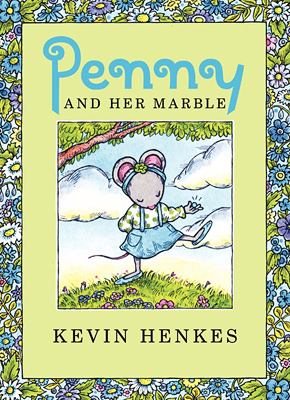
My favorite book from this visit was Penny and Her Marble (Greenwillow Books, 2013), by Kevin Henkes. It is impossible for me to overstate how much I love Kevin Henkes’s books. And Penny is the latest in a long line of lovable characters created by Henkes.

ImageOne of Penny’s most endearing traits is that she is self-reliant. Her problems are hers, and she solves them on her own. In Penny and Her Marble, she sees a beautiful blue marble, which seems to belong to no one, on her neighbor’s lawn and she picks it up and puts it in her pocket. Once she gets home, however, her conscience gets the better of her and she is haunted by the marble.

Penny never mentions any of her worries to her parents, yet they sense that something is bothering Penny. They support her in subtle ways, such as offering to bake her favorite cookies. Penny does the right thing in the end, and is rewarded for her honesty, but not in a preachy, LEARN THIS LESSON kind of way. Did I mention I am in awe of Kevin Henkes?  How does he accomplish this? He never hits a wrong note and he completely understands children and how their minds operate.

When I began this blog, I did intend to write about how I would use certain books to meet the Common Core State Standards, and I do this often enough. And although this book could be used to address several first grade standards, I would read it aloud to kids just because I love it. I would read it aloud to them because Penny is an imaginative, creative character I’d want for a friend. And I’d read it to them because they will recognize themselves in Penny.

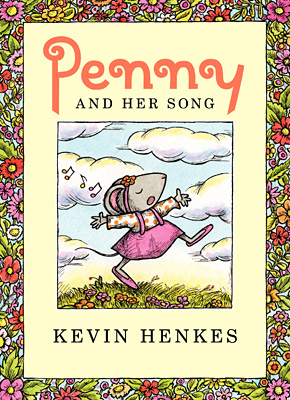
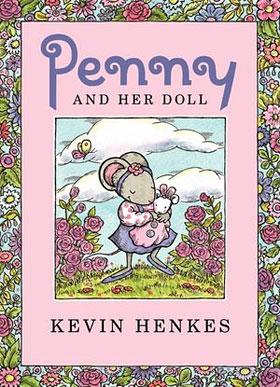
Don’t miss Penny’s other adventures in Penny and Her Song (2012) and Penny and Her Doll (2012). They are the perfect anecdote to any reading slump.

Image     Image

Dont’ forget to find out what others are reading today by visiting Jen and Kellee at Teach Mentor Texts.