Poetry Friday: Love after Love

Poetry_Friday_Button-210

Kate Roberts and Chris Lehman have just written a new book, Falling in Love With Close Reading. For the past seven weeks, they have been hosting a blog-a-thon to celebrate their book’s publication. Last week, Kate’s contribution on her blog, Indent, was about closely reading her life. She shared a few the insights and revelations she gained by spending one day being truly observant of her actions and reactions. One of her statements resonated with me:

“Chris and I believe that the skill of reading our world closely allows us to live richer, more beautiful lives.”

This line made me think of an episode of Krista Tippett’s On Being which featured an interview with Jon Kabat-Zinn about the science of mindfulness. At the end of the interview, Zinn shared this poem.

“Love after Love”

by Derek Walcott

The time will come

when, with elation,

you will greet yourself arriving

at your own door, in your own mirror,

and each will smile at the other’s

welcome,

and say, sit here. Eat.

You will love again the stranger who was

your self.

Give wine. Give bread. Give back your heart

to itself, to the stranger who has loved you

all your life…

Read the rest of the poem and learn more about Jon Kabat-Zinn here.

Only through knowing ourselves can we be open to the love of others and fully love them in return. Thank you, Kate and Chris, for reminding me of this. Thank you for helping me find my way back to this poem. For poetry is all about reading our world closely. Poetry allows us to live richer, more beautiful lives.

Be sure to visit Cathy Mere at Merely Day by Day for more enriching poetry.

It’s Monday! What Are You Reading?

IMWAYR

You know how Garrison Keillor begins his monologues with “It’s been a quiet week in Lake Woebegone?” I want to steal his line but change it: “It’s been a hectic week in my hometown.” Better yet, it’s been a hectic MONTH! I’ve missed several weeks of IMWAYR because I haven’t had much time to read and I haven’t had that much time to blog about what I have read.

Thanks to Columbus sailing the ocean blue all those years ago, however, this weekend I was able to sit down with a few picture books and just read.

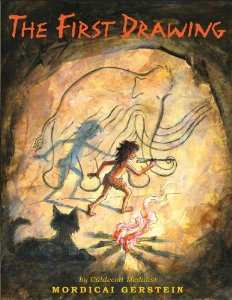
ImageFirst up was The First Drawing, by Mordicai Gerstein (Little, Brown; 2013). This book is a great example of a writer reading something in the news and asking “What if…?” Gerstein imagines an 8 year old boy living 30,000 years ago who encounters a wooly mammoth while out with his father. When he sees the mammoth in the shadows on the wall of the cave where he lives, he tries to describe it to his family. Frustrated by their inability to see his vision, he grabs a stick from the fire and begins to draw, and the mammoth comes to life for all to see.

I love that this book begins with the word “Imagine” and ends with “magic.” Capturing the often elusive images and thoughts that float through our minds through drawing is magic indeed!

11051230

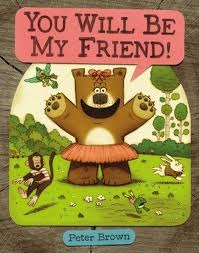
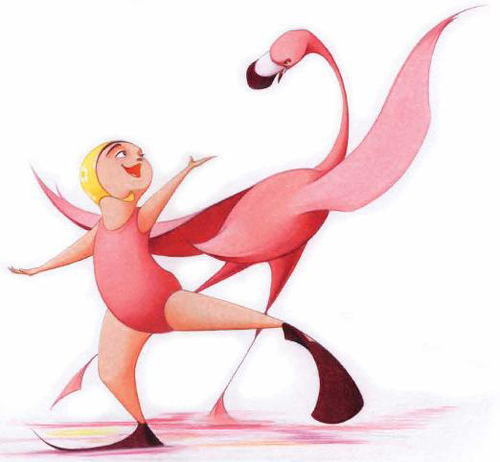
By pure coincidence, two Peter Brown titles were in my pile. YOU WILL BE MY FRIEND!  (Little, Brown) was published in 2011 and got lots of good press, but somehow I never got around to reading it. Desperate for a friend, Lucy sets out one morning determined to find one. Despite her good intentions, her day doesn’t go as planned and she’s feels “hopeless.” Just then, a flamingo wearing a bow-tie spots Lucy in her despair and asks Lucy to be his friend. On the last two pages, Lucy and her new friend take great delight in doing everything Lucy imagined she and her friend would: swimming, climbing trees, doing cartwheels, having a picnic, then a dance party.

Kids will enjoy Brown’s humorous illustrations of Lucy’s missteps along the way to finding her friend. This book would be a great mentor text for a book about making friends. On a side note, I couldn’t help noticing a resemblance between Lucy and her friend and another pair of friends 🙂

Flora-Image-31

61Y3IrTwQ-L._SY300_

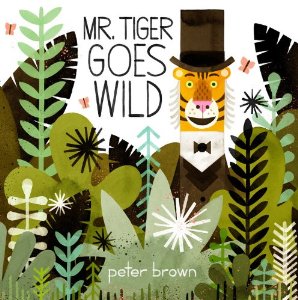
The cover of Brown’s latest offering, Mr. Tiger Goes Wild (Little, Brown; 2013) is reminiscent of the jungle landscapes of  Henri Rousseau. After a lifetime of “always being so proper,” Mr. Tiger decides he’s had enough and follows his instincts to the wilderness where he goes “completely wild!” Kids will love this about Mr. Tiger. Parents and teachers will appreciate that Mr. Tiger comes back to civilization with his individuality in tact and his wildness in check.

Be sure to visit Jen at Teach Mentor Texts and Kellee at Unleashing Readers to find out what other people have been reading lately. Thanks, Jen and Kellee, for hosting!

Poetry Friday: Happy Birthday, First Lady of the World

Poetry_Friday_Button-210

“We must cherish and honor the word free or it will cease to apply to us.”

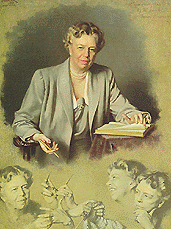
Eleanor Roosevelt was born on this day in 1884 and the United Nations has declared October 11 International Day of the Girl. No date could be more appropriate. After an unhappy childhood, Eleanor Roosevelt became a passionate, dedicated advocate for human rights around the world.

Image
public domain image from http://www.whitehouse.gov

J. Patrick Lewis honored Roosevelt and her spirit in this poem, from his 2005 collection, Vherses: A Celebration of Outstanding Women (Creative Editions).

You Learn by Living

for Eleanor Roosevelt

Who showed the world the world itself

Was awkward, shy and plain.

A high-born leader in a long,

Low decade full of pain.

A lady first, the great first lady

Looked fear in the face,

And said, There is no room for fear

When courage take its place

Read the entire poem here.

Many books have been written about Eleanor and her remarkable life. Russell Freedman’s Eleanor Roosevelt: A Life of Discovery is featured today at Anita Silvey’s Children’s Book-a-Day AlmanacEleanor, Quiet No More: The Life of Eleanor Roosevelt (Disney/Hyperion Books, 2009) is Doreen Rappaport’s picture book biography for younger readers. A list of more titles about Eleanor is available at Through the Looking Glass.

Roosevelt once said “It is better to light candles than curse the darkness.” Eleanor Roosevelt’s inspiring life story is certain to spark the imagination of readers everywhere.

Don’t forget to visit Laurie Purdie Salas at Writing the World for Kids for the weekly round up. Happy Friday, everyone!

Slice of Life: A Visit with Author Sarah Weeks

sols_6

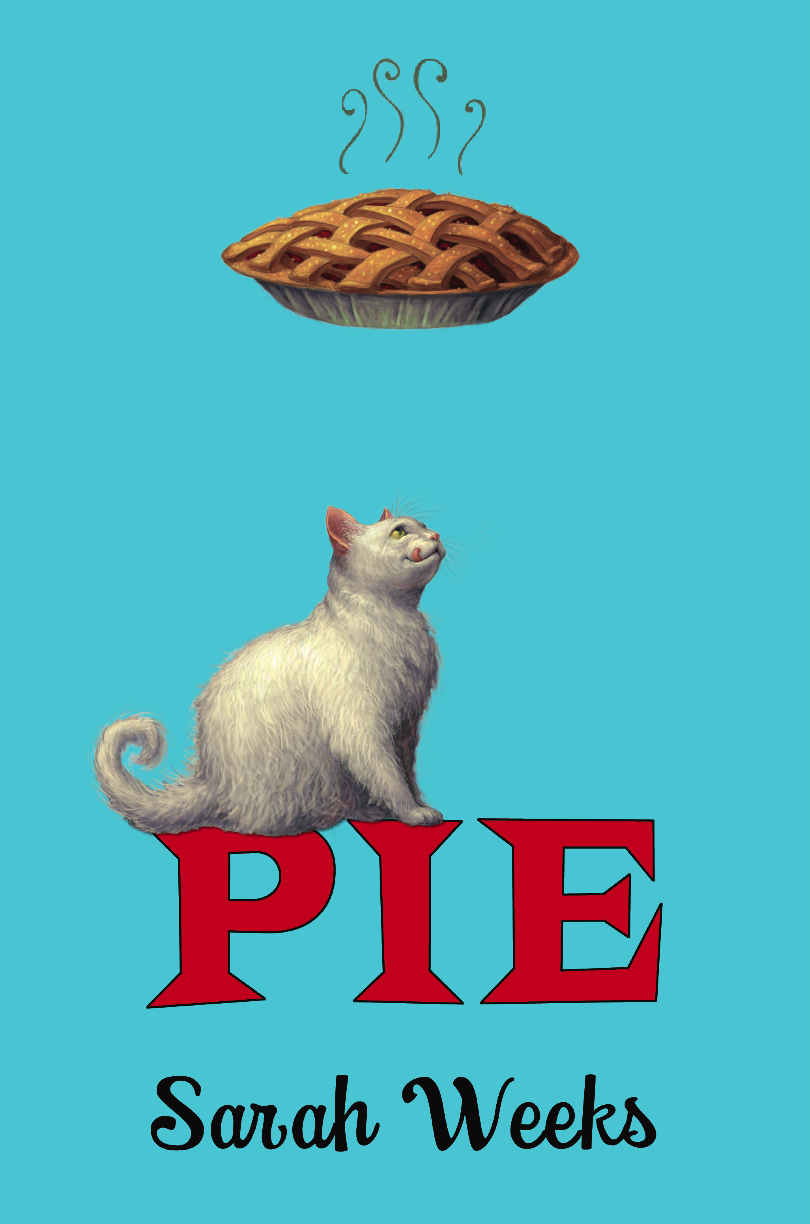
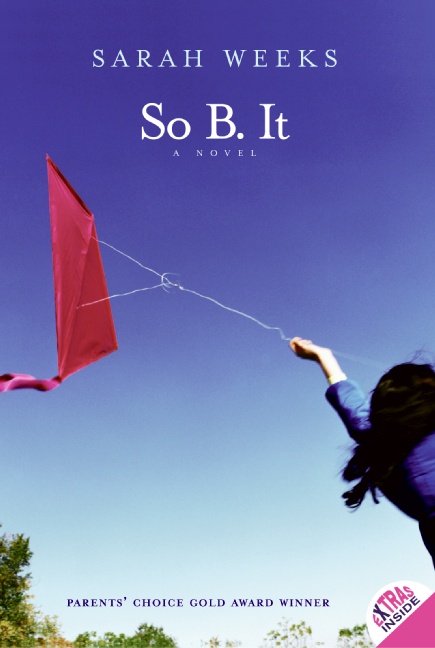
Last week, Sarah Weeks, author of the novels Pie and So B. It as well as many picture books, including Oh My Gosh, Mrs. McNosh and Ella, Of Course, visited our school. There is nothing like an author visit to excite students about reading and writing, and Sarah’s visit was a huge hit.

pie-cover1       So_B._It_by_Sarah_Weeks

In words and pictures, Sarah shared her earliest writing and how she became a published author. She talked about finding ideas for stories everywhere and the importance of being observant. The kids loved Sarah’s honesty about tackling sensitive topics such as divorce and mentally challenged people in her books. Best of all, every topic Sarah discussed was infused with humor.

mCNCNVWEZiL0T9XGwoCDLDA      9780060088583_p0_v1_s260x420

Often students are reluctant to revise their first drafts. Sarah was clear that this just isn’t an option. My colleagues and I practically cheered when she told the kids that “no editor has ever said [your manuscript] is perfect, you don’t have to change a word.”

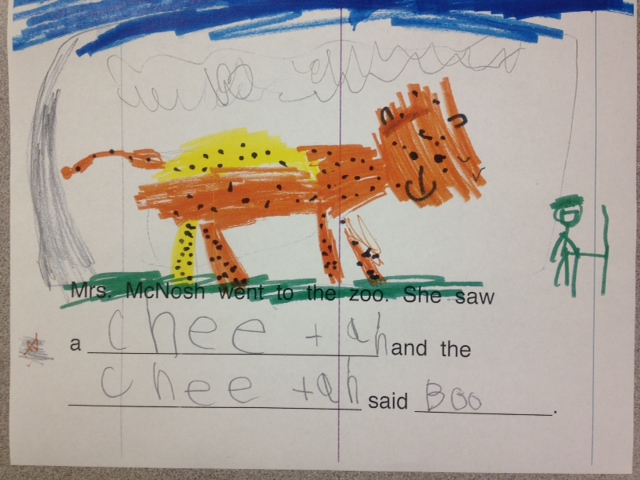
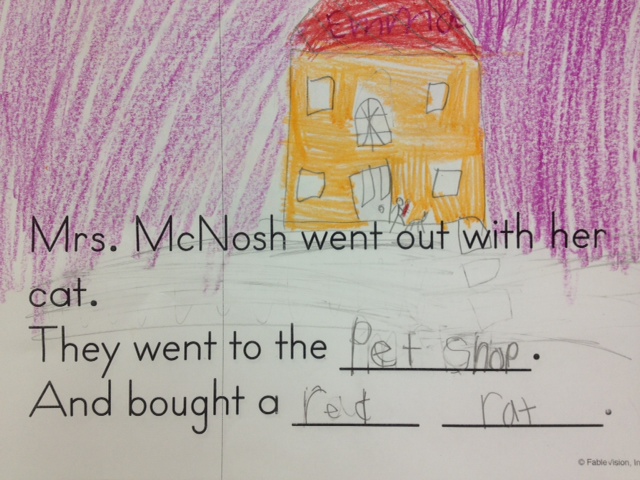
After reading all of Sarah’s books about Mrs. McNosh, our Kindergarten and first grade students created their own adventures for this wacky character.

photo-4

photo-5

Almost a week later, students throughout the school are still stopping me in the hall to ask “Do you have any more books by Sarah Weeks?” A successful author visit inspires students to stretch themselves as readers and writers. Sarah Weeks did just that.

Thank you to Stacey and all her new co-bloggers at Two Writing Teachers for hosting Slice of Life Tuesdays.

Poetry Friday: Shel Silvertein’s “Sick”

Poetry_Friday_Button-210

Beloved children’s poet Shel Silverstein would have celebrated his 83rd birthday earlier this week. Born on Sept. 25, 1930, Silverstein is best known for his poetry collections Where the Sidewalk Ends and A Light in the Attic. But did you know he began his career as a cartoonist for Playboy?

My favorite Silverstein poem is “Sick”

sick

“I cannot go to school today,”

Said little Peggy Ann McKay.

“I have the measles and the mumps,

A gash, a rash, and purple bumps.

My mouth is wet, my throat is dry,

I’m going blind in my right eye.

My tonsils are as big as rocks,

I’ve counted sixteen chicken pox…”

Read the rest of the poem here.

Be sure to visit Amy at The Poetry Farm for the weekly round up. Happy Friday, everyone!

It’s Monday! What Are You Reading?

IMWAYR

My colleagues and I have been thinking about how we are going to adapt our instruction to meet CCSS Reading Literature standard Nine (Analyze how two or more texts address similar themes or topics in order to build knowledge or to compare the approaches authors take.) I have always tried to link texts thematically whenever possible, but in Connecticut, our state test has had an inordinate emphasis on text-to-self connections for years. So this standard is causing us to rethink some of our curriculum.

I think this is a very good thing, as there is plenty of evidence that reading multiple texts on the same topic and pairing fiction and nonfiction texts helps students build a stronger knowledge base. So we’ve been creating text sets to support our reading units of study. For example, we’ve  selected a variety of titles around the main theme of each unit so students have an independent reading book of their choice that has a similar theme to the short story or novel being read in class. For the past week or so, I’ve been reading and rereading several books we’re thinking about adding to our collection.

HITLERYOUTH2-1

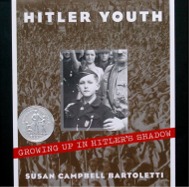
In the spring, the 8th grade will study the Holocaust in social studies and English/language arts. In the past, students have read the play, The Diary of Anne Frank. We haven’t made all of our choices yet, but so far have added The Book Thief to this unit. We want to include nonfiction as well, so last weekend I read Hitler Youth: Growing Up in Hitler’s Shadow, by Susan Campbell Bartoletti. (Scholastic Nonfiction, 2005) This is a powerful book. Parts of it were difficult to read, but Bartoletti does an excellent job of creating a clear picture of how Hitler manipulated the young people of Germany to his purposes. Using extensive primary sources and photographs, readers experience life in Germany from the rise of the Nazis in the early 1930s to the end of the war and beyond. Bartoletti also includes the story of several teens who realized the Nazi leaders were lying to the German people. They tried to warn others, but were arrested and executed.  An epilogue tells readers what happened to the young people whose stories are told throughout the book after the war, and there is an extensive bibliography. In 2006, Hitler Youth: Growing Up in Hitler’s Shadow was named a Newbery Honor Book, a Siebert Honor Book, and an Orbis Pictus Honor book for Outstanding Nonfiction for Children.

we_fought_back

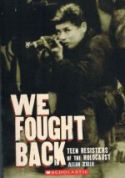
Bands of partisans fought against Hitler throughout Europe, and many of these brave men and women were teenagers. Allan Zullo has collected their stories in We Fought Back: Teen Resisters of the Holocaust. (Scholastic, 2012) This book has many gripping accounts of the harsh conditions the partisans endured, especially during the winter, and the dangerous missions they undertook in their attempts to break the Nazi war machine. There are notes about the lives of these resisters after the war, as well as recommendations for reading more about each individual.

Between-Shades-of-Gray-paperback

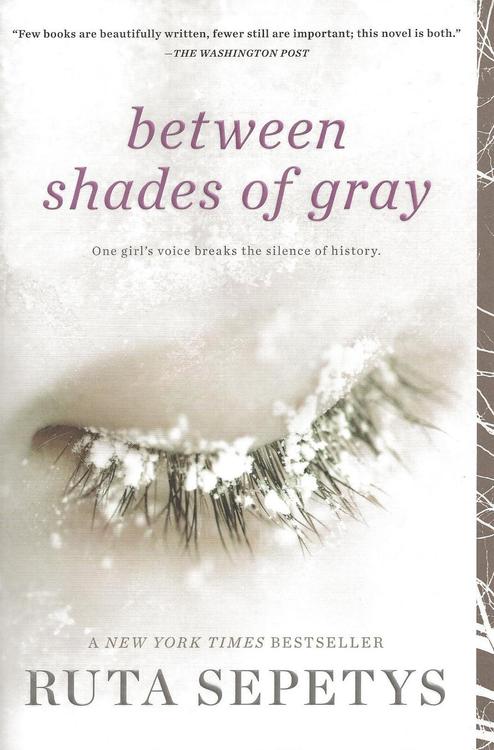
Although it isn’t about the Nazis, we will probably include Ruth Sepetys’s Between Shades of Gray in this unit, as there are so many similarities between Lina’s story of persecution and deportation in Soviet Russia under Stalin during World War II and what was happening in Germany and much of Europe at the time. If you haven’t read this amazing book, add it to your list today. In the meantime, you can learn more about it here.

It’s not easy to have the courage to stand up for what you believe in, for what what you know is right. We Fought Back: Teen Resisters of the Holocaust and Between Shades of Gray offer readers inspiring portraits of young people who fought against governments who denied their basic humanity. Reading these books in conjunction with Hitler Youth  will give readers plenty of opportunities to build their knowledge and discuss this terrifying time in world history.

There are many other excellent books that would fit in a unit on the Holocaust. What titles do you include in similar units? How are you addressing standard nine?

Be sure to visit Jen at Teach Mentor Texts and Kellee at Unleashing Readers to find out what other people have been reading lately. Thanks, Jen and Kellee, for hosting!

Slice of Life: The 4th Grade Readers’ Choice Awards

Image

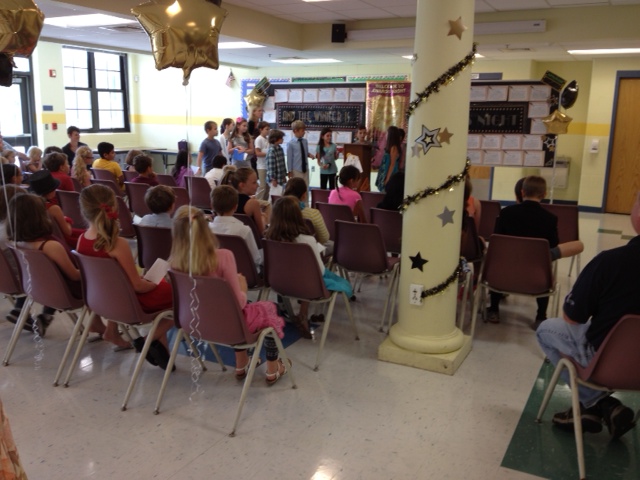
Last week, on the sixth day of school, my fourth grade colleagues kicked off the year in style with their annual “Readers’ Choice Awards.” Wanting to make summer reading assignments more purposeful, Bernadette and Kim came up with a plan that also energized their students about reading.

Each student was encouraged to nominate one of their summer reading selections (all chosen from a list of suggested titles, but students could chose a book not on the list) for the best book in one of the following categories: Best Character, Best Setting, and Best Plot. Students wrote their nominations, hoping to persuade their classmates to vote for their book. Once all the nominations were shared, the children voted for a book in each category.

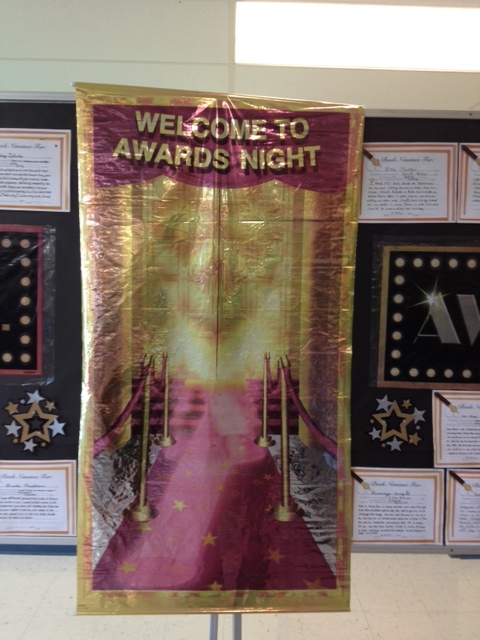
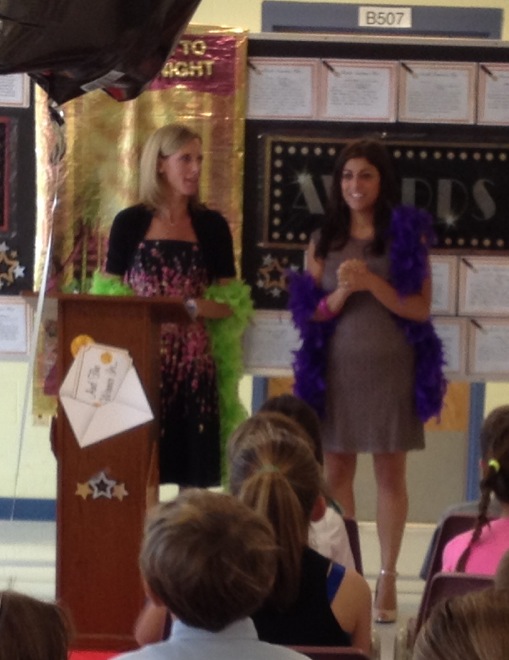
ImageMost fourth-graders arrived at school on Friday dressed to the nines for the awards ceremony, which included a red carpet, golden statues, and lots of applause. After a quick thank-you to the parents from Kim and Bernadette, the Masters of Ceremonies were introduced, and the nominees for the first category were announced. Students were called up to the podium to share the book they nominated, and the runner-up was announced. Then the emcee opened the envelope containing the name of the winner. To heighten the excitement, students in the audience provided a drum-roll on their laps. A statue was presented to the student who nominated the winning book before he or she read a short thank-you speech.

   Image   Image

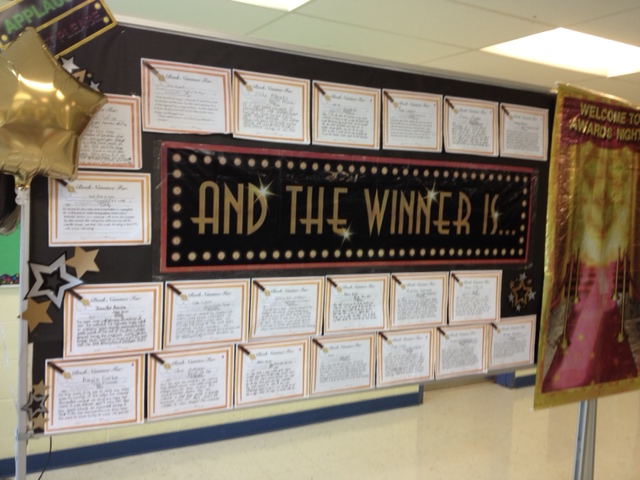
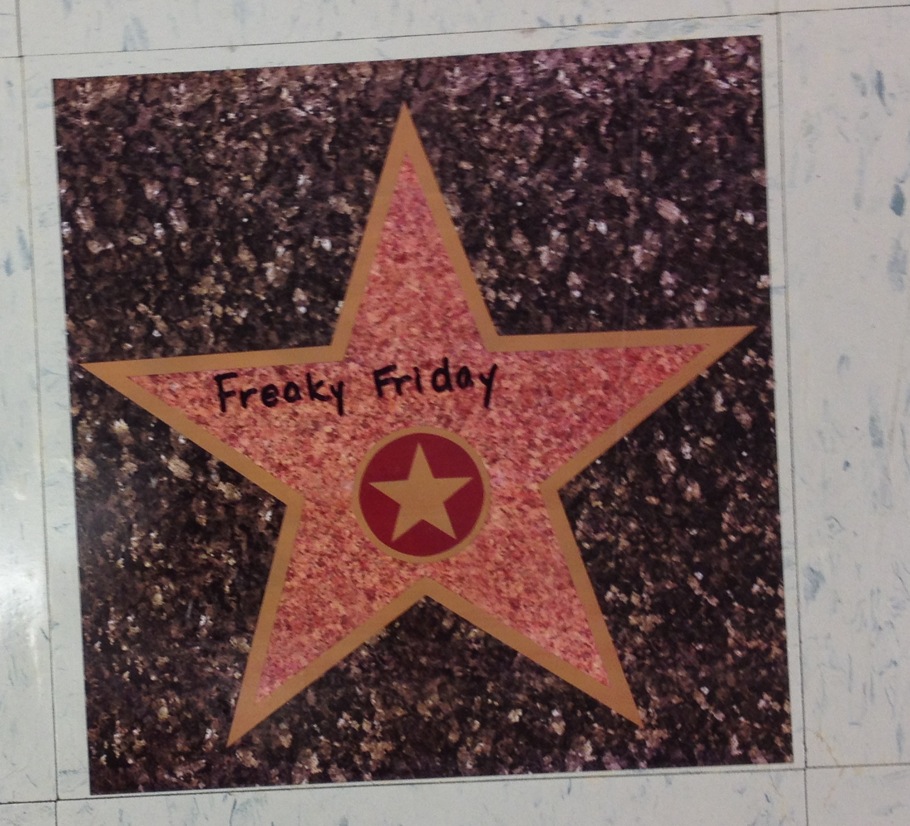
Once all the awards had been handed out, students mingled with their parents and other guests and posed for photos. All the nominations were displayed for visitors to read, and there were even Hollywood-like stars on the floor leading into the cafeteria.

ImageAlthough this ceremony lasted only half-an-hour, it’s impact will be felt for the rest of the year. By being sensitive to including as many students as possible in the ceremony, Kim and Bernadette created a supportive tone in their classrooms and sense of community that often takes much longer to establish. Even students whose books weren’t chosen had the opportunity to share the title of their book. Parents loved seeing their children celebrate their summer reading in a meaningful way, and the students started the year off with style, excited about reading and sharing books with their friends.

Thank you to Stacey at Two Writing Teachers for hosting Slice of Life Tuesdays!

It’s Monday! What Are You Reading?

IMWAYR

Nowadays, it seems that Labor Day is more about the last official summer holiday and sales, not about the workers it honors. So today it seems appropriate to share books about the everyday heroes who took tremendous risks and made many sacrifices to help shape the labor laws we have today.
Image

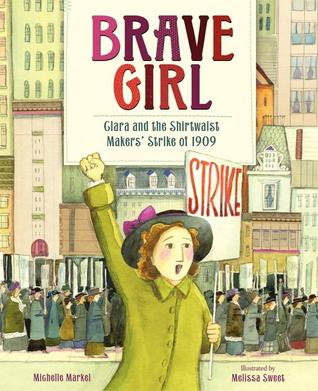
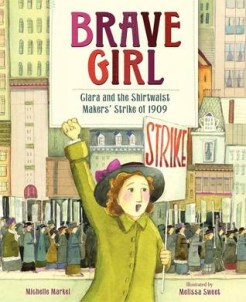
Brave Girl: Clara and the Shirtwaist Maker’s Strike of 1909, by Michelle Markel (Blazer + Bray, 2013; illustrated by Melissa Sweet) tells the true story of Clara Lemlich, who immigrated with her family from the Ukraine when she was 17 years old. Her father was unable to find work, so Clara went to work in one of the many shirtwaist factories on the lower east side of Manhattan in the early 20th century. Clara soon discovers the harsh realities of the garment industry, and helps organize the famous 1909 strike.

Melissa Sweet’s illustrations are always appealing, and here they provide a glimpse into the conditions of the tenements and factories of the time. Using her signature collage, Sweet incorporates fabric, stitching, and patterns to recreate Clara’s world. In an interview with Julie Danielson at Seven Impossible Things Before Breakfast, Sweet explains that this “felt like a fitting way to honor these brave seamstresses.”

The picture book format of Brave Girl shouldn’t discourage teachers of upper elementary grades from sharing this book with their students. In fact, Markel’s text is an ideal introduction to this important chapter of our history. Once students’ curiosity has been piqued, there are many other excellent books available to extend their learning.
Image

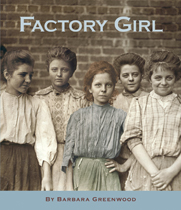
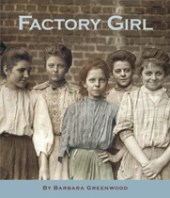
In Factory Girl, by Barbara Greenwood (Kids Can Press, 2007), combines fiction and non-fiction to bring the world of the garment and textile mills of New York and New England at the turn of the 20th century to life. Archival photos, many by Lewis Hine, reveal the terrible working conditions these children endured. This book also includes a timeline of the labor movement in the United States.

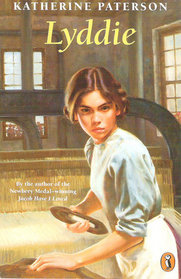
Katherine Patterson has written two novels that vividly depict the experience of young workers in New England textile mills. Lyddie (Dutton, 1991) takes place much earlier than the events in Factory Girl, but the situation is very similar. Lyddie arrives at a textile mill in Lowell, Massachusetts in the 1840s, just as several of the women are organizing to demand 10-hour working days. Patterson expertly weaves other aspects of life for these “factory girls” into the story. Facts like the “company” requirement of regular church attendance and the numerous restrictions on the girls’ after-work activities will be sure to provoke many heated discussions and are natural springboards for opinion and argument writing.
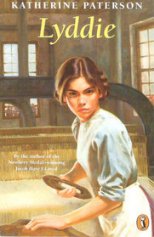
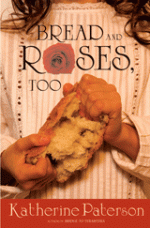
Image       Image

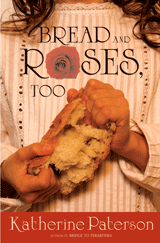
Bread and Roses, Too (Clarion Books, 2006) takes place in Lawrence, Massachusetts during the Bread and Roses strike of 1912. Sadly, the mill workers in this novel are still confronted with many of the issues Lyddie struggles against over half a century before.
Image

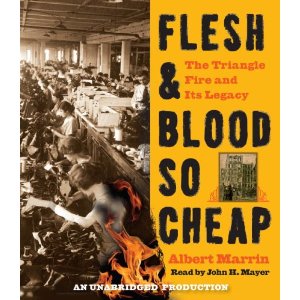
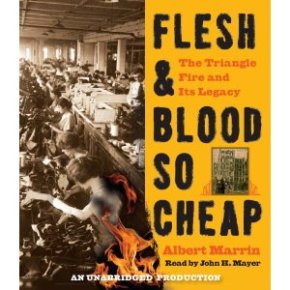
As is often the case, it took a tragedy before these conditions changed in any meaningful way. The 1911 fire at the Triangle Waist Company led to the deaths of 146 workers who were locked into the factory so they couldn’t leave early. Albert Marin has written a riveting account of the tragedy in Flesh and Blood So Cheap: The Triangle Fire and Its Legacy (Alfred A. Knopf, 2011). Marin sets the stage by telling the story of why so many Europeans were desperate to come to America in the first place. Incorporating archival photos and eyewitness accounts, this book is an important resource for students and teachers alike.

While children in the United States today are protected by child labor laws thanks to the efforts of Clara Lemlich and countless others, the same cannot be said for children around the world. These books open the door for students to conduct research and gain new insights into child labor around the world. The New York Times Learning Network has a lesson plan and resources related to the factory collapse in Pakistan earlier this year, and Teachers College Reading and Writing Project has an extensive collection of links to articles and videos available on-line, as well as books that address both the history of child labor and examples of child labor as it exists today.

There are many other fine books about other leaders of the Labor Movement, as well as fictional accounts of its many unsung heroes. I’d love to know which books are your favorites.

Be sure to visit Jen at Teach Mentor Texts and Kellee at Unleashing Readers to find out what other people have been reading lately. Thanks, Jen and Kellee, for hosting!

It’s Monday! What Are You Reading? Compost, Worms, & Chickens

IMWAYR

Without trying to be thematic, I read three books this weekend that all related to taking better care of the Earth and all the creatures we share our planet with.

Image

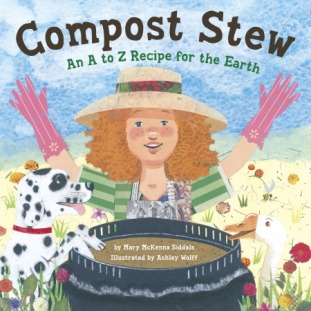
Compost Stew: An A to Z Recipe for the Earth by Mary McKenna Siddals (Tricycle Press, 2010; illustrated by Ashley Wolff) is a clever rhyming alphabet book that explains how and what to compost, as well as why composting is important. Ashley Wolff’s collage illustrations are a study in recycling themselves. The main character’s apron is made out of pages from the Farmer’s Almanac, beautiful papers are used for goose feathers, and found objects add depth to every page.

Years ago, we made composting columns out of soda bottles so kids could observe this process. This was a great project, although some kids were grossed our by the worms! Now, I would add a writing component to this unit, using the experience to model writing a how-to book. Instructions for how to construct these columns can be found here: http://www.learner.org/courses/essential/life/bottlebio/ecocol/build.html Marty McGuire Digs Worms by Kate Messner (Scholastic Press, 2012; illustrated by Brian Floca) is a natural read aloud choice for a unit like this.

Image

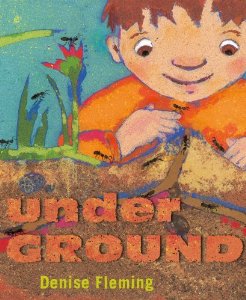
Denise Fleming is a favorite of early-childhood teachers everywhere. In underGround (Beach Lane Books, 2012), Fleming has created cut-away illustrations of the ground beneath our feet using pulp painting, “a papermaking technique using colored cotton fiber poured through hand-cut stencils.” (from a note included on copyright page) Animals, plants, rocks, and minerals are all shown with details sure to fascinate the youngest naturalists. Humorous touches are everywhere, making the book a kind of I-spy of buried treasures.  Two pages of facts about the critters who inhabit the book supplement the simple rhyming text.

Image

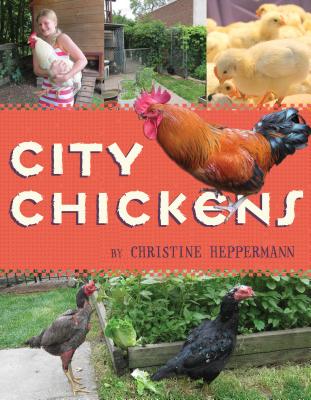
City Chickens (Houghton Mifflin Books for Children, 2012), by Christine Heppermann, is a non-fiction book for kids in second grade and up about Chicken Run Rescue, a shelter for rescued hens and roosters in Minneapolis. Heppermann includes a wealth of information about Mary and Bert Clouse’s efforts to care and find new homes for abandoned chickens. The reasons such a shelter is needed are explained, as is the responsibility of caring for these birds. You will have a different view of them after reading this book and seeing Heppermann’s gorgeous photographs. Notes include information for educators and a source list. This book could be used as a springboard for opinion writing about keeping chickens as pets. Teacher’s College Reading and Writing Project has a digital text set of additional resources on pets in the classroom here. More information about City Chickens is available on this website.

I grew up across the street from a working dairy farm. The rhythms of the farm were the rhythms of life. It makes me sad to know so many children are only able to experience nature from a distance, but these books will ignite the curiosity of children about the wonders that surround them.

Be sure to visit Jen at Teach Mentor Texts and Kellee at Unleashing Readers to find out what other people have been reading lately. Thanks, Jen and Kellee, for hosting!
It’s Monday! What Are You Reading?

IMWAYR

With the beginning of a new school year upon us, teachers around the country are making plans for a year that is sure to be filled with challenges. But right now, we aren’t thinking about those hurdles. We’re thinking about possibilities. Teachers are pros at seeing the possibilities and potential in children. We are tireless in our effort to find ways to bring out the very best in our students. One of the most important ways we do this is by sharing books that help our students see the possibilities and potential within themselves.

Artist and writer Debbie Millman recently told graduates at San Jose State University that success has nothing to do with luck. Rather, “it is really all about the strength of IMAGINATION.” This is an important message for students of all ages. Last week I came across several picture books that can help our students understand the importance of keeping their imaginations open to the wonders and possibilities all around them.

Image

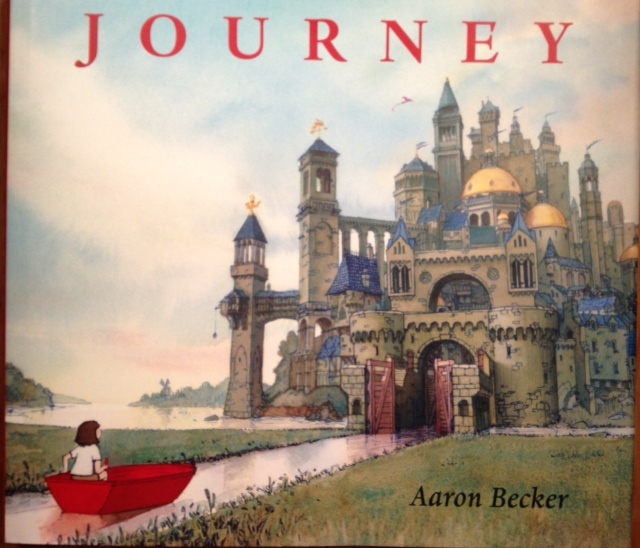
Journey (Candlewick Press, 2013) by Aaron Becker is a stunning book. It will remind readers of Harold and the Purple Crayon immediately, but Becker’s full color illustrations give this book a magical quality. There is an exotic mysteriousness to Journey that will lead to many questions and rich discussions about just exactly where the girl with the red crayon has gone. If you haven’t seen this book yet, the trailer will give you an idea of the riches within.

Image

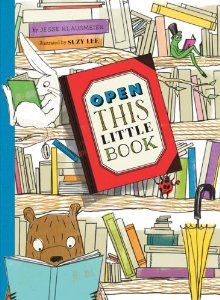
Jesse Klausmeier’s Open This Little Book (Chronicle Books, 2013; illustrated by Suzy Lee) is a book I would have adored when I was little. This is a book within a book within a book and so on. The story follows one pattern to the middle of the book, then follows another pattern to the next to the last page, when the pattern changes and readers are rewarded with Lee’s charming illustration depicting the endless possibilities in books. The cover of each little book hints at the animal featured within. This is just one of the clever details that will have young readers examining the illustrations over and over again.

Image

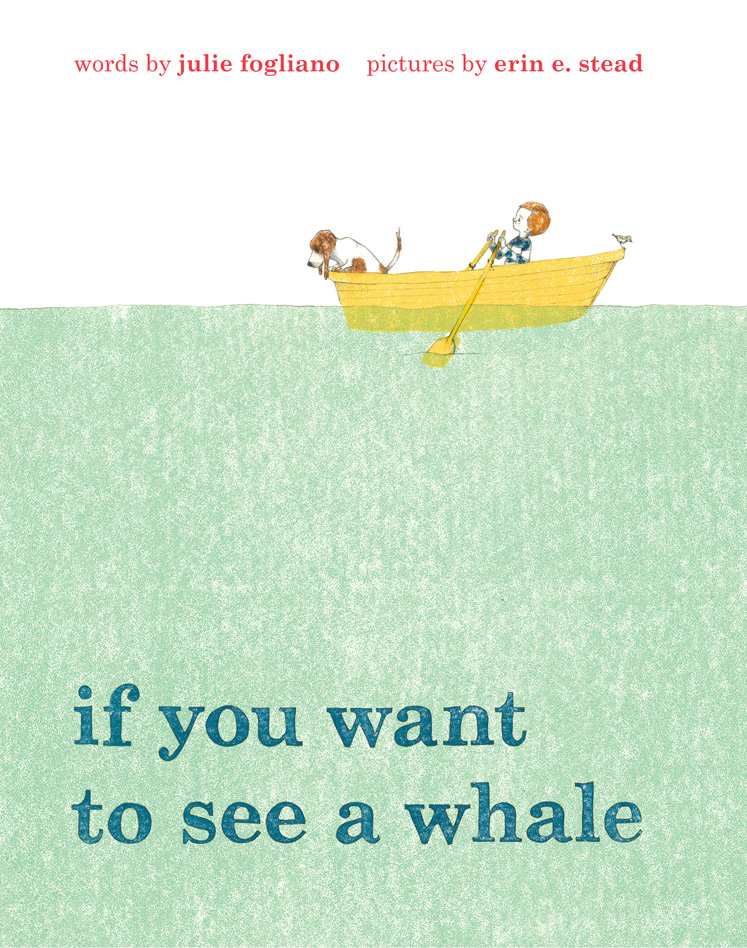
If you want to see a whale (A Neal Porter Book, Roaring Book Press, 2013; illustrated by Erin E. Stead) by Julie Fogliano is a lovely, quiet book. According to Fogliano, in order to see a whale, “you will need…time for waiting and time for looking and time for wondering…” This is an important reminder to children (and their parents!) in today’s busy world.

Yesterday, Donalyn Miller asked readers of the Nerdy Book Club blog what books they were looking forward to sharing with students this year. These are three titles I will be sharing with children again and again to encourage them to unleash the power of their imaginations.

Be sure to visit Jen at Teach Mentor Texts and Kellee at Unleashing Readers to find out what other people have been reading lately. Thanks, Jen and Kellee, for hosting!