It’s Monday! What Are You Reading?

IMWAYR

I haven’t written an IMWAYR post in months, but one of my goals for the new year is to blog more often, so I’m starting early with this post.

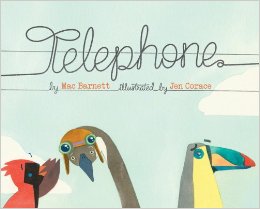
Telephone (Chronicle Books, 2014) by Mac Barnett, illustrated by Jen Corace

I was a little late to the Mac Barnett party, but I’ve been a devoted fan ever since I discovered Extra Yarn (Blazer + Bray, 2012). Having been on something of a bird kick this year, when I saw Telephone at my local bookstore, I grabbed it.

Barnett’s simple text and Corace’s illustrations work together to evoke a bygone era when kids played outside until it was time for dinner. The avian world on the telephone wire above echoes the human world below where kids are outside reading, running, and climbing. The story begins with Peter’s mother’s simple request, “Tell Peter: Fly home for dinner.” The young cardinal she asks is toting a baseball bat and hears what he wants to hear— “Tell Peter: Hit pop flies and homers.”  The birds along the wire continue to mangle this message until it is unrecognizable. Meanwhile, back in the human neighborhood, kids are waving goodbye as they get called inside. Finally, a zany, high-strung bird turns to an unflappable owl and tells him an outrageous mishmash of all the previous messages. The owl gives the other bird a sidelong glance, then calmly turns to Peter and tells him to “fly home for dinner.”

Corace’s illustrations are full of fine comic touches that add depth to the birds’ personalities: a distressed looking turkey is “too high on this wire,” and a rock-loving wren is decked out with star-shaped glasses and electric guitar.

Kids will love this book just for the pure silliness of it, but they’ll also love playing their own game of telephone. The witty word play also makes Telephone a terrific mentor text. Kids could have fun playing with rhymes, near rhymes, and synonyms to create their own version of Telephone. 

Don’t forget to visit Jen at Teach Mentor Texts and Kellee at Unleashing Readers to find out what other people have been reading lately. Thanks, Jen and Kellee, for hosting!

Slice of Life: Close “Reading” in Kindergarten

11454297503_e27946e4ff_h

Be curious always! For knowledge will not acquire you; you must acquire it.

~ Sudie Back ~

It’s hard to believe NCTE was almost a month ago! Amidst the chaos of the holidays, I’ve been reading books snagged in the Exhibition Hall (thank you, publishers!), reviewing my notes, and sharing the wealth of knowledge I gained from the terrific sessions I attended.

I was lucky to get into Chris Lehman, Kate Roberts, and Kristi Mraz’s standing-room-only session, CLOSE READING AND THE LITTLE ONES: HOW IT’S DIFFERENT (AND INCREDIBLY FUN AND EFFECTIVE) IN EARLY ELEMENTARY GRADES. With their characteristic blend of common sense and humor, these three inspiring educators shared routines K-3 teachers can use to capitalize on the natural curiosity of kids.

Chris, Kate, and Kristi pointed out that close reading in these early grades is akin to close study, or observation, “something that little ones are doing already.” Giving students opportunities to engage in close observation accomplishes many goals that support young learners, including opportunities to talk to others about their ideas. It also encourages students to “open up” their thinking through “meaningful, enjoyable experiences”

Close reading is only one part of “a balanced diet of reading instruction” that should

  • serve a specific purpose
  • focus on details in high success texts
  • allow kids to discover new meaning through carefully looking at details

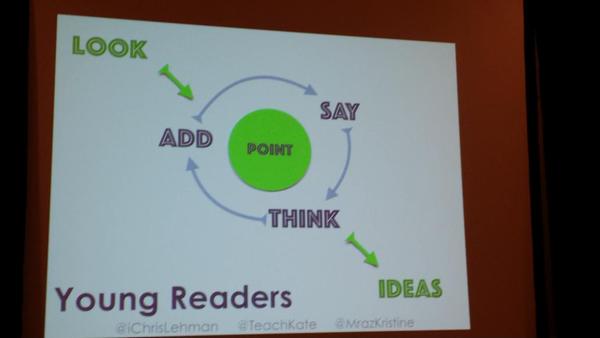
Adapting the paradigm for middle and high school readers Chris and Kate laid out in their book Falling In Love With Close Reading (Heinemann, 2013) for young readers resulted in this structure, or instructional routine, which should be repeated so often that it becomes a habit, which leads to independence.

Photo courtesy of Fran McVeigh

Kristi, Kate, and Chris emphasized that this close reading isn’t about teaching kids how to read, nor should everything be read closely. Rather, this routine is about “teaching kids a way of looking at a text or an image or an object so they can develop ideas about it.

This makes so much sense! I was excited to get back to school to share this thinking with my wonderful Kindergarten colleagues. Using Kristi, Chris, and Kate’s ideas about “close looking,” we designed an object study that coordinated with the Kindergarten’s current unit on the animal kingdom AND laid the foundation for daily close observation. As Kristi so wisely pointed out, “If you want to do strong work in reading, you have have to do strong work in other places.”

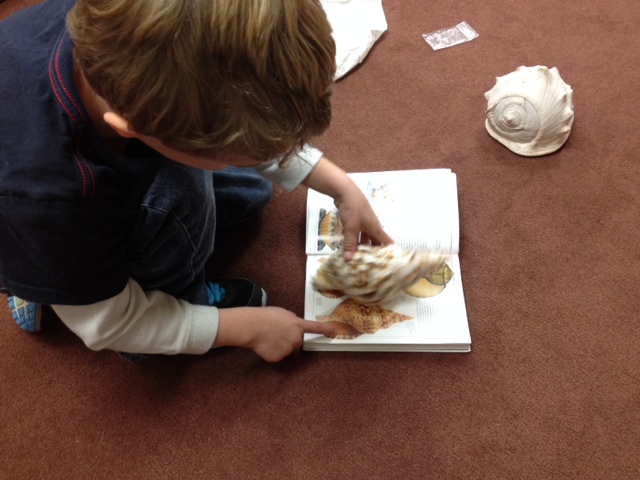
So we began by closely observing seashells. I modeled the cycle by looking closely at a shell, pointing to its surface and saying something about the color. Then I thought more about the color, and added more details about the variations of color on the shell. The kids couldn’t wait to get their hands on a shell to observe with their partners.

photo 1

Soon the room was filled with the hum of the children’s voices. They talked about the colors and the shapes and the textures. They noticed that some shells had bumps on the outside and others had spikes. They ran their hands along the smooth surface on the mouth of the shell and wondered why the texture was so different from the top of the shell. And they talked about the sounds they heard when they held the shells to their ears.

When we came back together so the kids could share their findings, it was clear they had developed some “big ideas” through their observations. Several children mentioned protection and camouflage when they talked about the colors of the shells or how hard they were. They all wanted to spend more time with the shells, comparing them and “getting to know [them] better.”

This is work we will return to daily. There are countless opportunities for close observation throughout the day, opportunities for kids to look at the world and say     “Wow!”

Thank you, Chris, Kate, and Kristi, for sharing your insights and pushing me as a teacher! Thank you to StaceyTaraDanaBetsyAnna, and Beth for this space for teachers and others to share their stories each Tuesday. Be sure to visit Two Writing Teachers to read more Slice of Life posts.

Slice of Life: NCTE 2014

11454297503_e27946e4ff_h        logo

As I flew home from the NCTE Convention last night, my mind was full of all I had learned over the past three days. I was also grateful that I had the chance to meet so many of my Slice of Life and Twitter friends. This online community is still a marvel to me. At one point, I glanced out the window and realized a large chunk of the eastern seaboard was spread out beneath me. Millions of lights clustered in cities and stretched into the distance, following roads that seemed to go on forever. They looked like a dew-drenched web, illuminated by the moon.

I was mesmerized by the sight, and my book lay forgotten on my lap. Kate DiCamillo’s words immediately came to mind: “Stories connect us.” The web of lights seemed like the perfect metaphor for the web of stories that were spun out by teachers, storytellers and poets throughout the vast Gaylord National Resort during the convention, connecting educators from all over the country and around the world. These dedicated people had all come to Washington seeking ways to help their students learn.

In his new book, Minds Made For Stories (Heinemann, 2014), Tom Newkirk says “When we strip human motives from our teaching, I suspect we make learning harder, not easier.” (p. 17) The stories shared at NCTE were full of the very human motives of passion and curiosity, and it will take me weeks to sort out and internalize them. Inspired and enlightened by people I admire and feel so lucky to know, I went to school today with one goal in mind: to share this passion with my students and colleagues. I can’t wait to help them, in the words of Paul Hankins, “be wonder bound.” I can’t wait to see them deepen their connections with the world and find their stories.

Thank you, StaceyTaraDanaBetsyAnna, and Beth for this space for teachers and others to share their stories each Tuesday. Be sure to visit Two Writing Teachers to read more Slice of Life posts.


Poetry Friday: Happy Birthday, Marilyn Singer!

poetry-friday-1-1

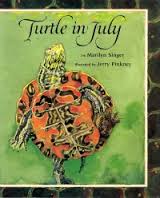
I have been a fan of Marilyn Singer’s work for many years. Her first book of poetry, Turtle in July (Simon & Schuster, 1989) has been a staple in my classroom since I started teaching. Written in the voice of a variety of woodland animals, Singer’s poems and Jerry Pinkey’s realistic illustrations are an irresistible combination.

imgres-2

Over the years, I’ve collected many of Marilyn’s poetry and picture books. And, because I’m fortunate enough to live near her home in Connecticut, I’ve had the pleasure of meeting Marilyn on several occasions at our local bookstore. She is always gracious, full of good cheer, and interested to know how I’m using her poems in the classroom.

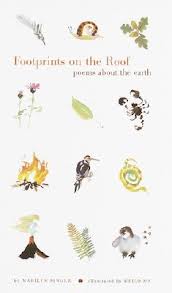
Footprints on the Earth (Alfred A. Knopf, 2002) is a favorite of third graders. As they learn about rocks, continents, and land forms, these “poems about the earth” offer a different perspective on our world. Filled with a sense of wonder and lyrical, often playful language, children love to listen to and read these poems over and over again.

“Burrows”

Out in the country I walk across towns

I’ll never see:

mazy metropolises

under the earth

where rabbits hide from foxes

foxes hide from dogs

full-bellied snakes sleep snugly…

Read the rest of the poem here.

        imgres-1      imgres

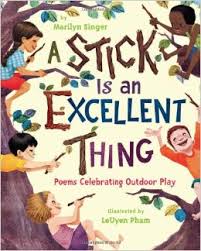
First graders (and my inner 6-year old) love the exuberance of the poems in A Stick Is An Excellent Thing (Houghton Mifflin Harcourt, 2012). Favorite childhood activities like jumping rope, swinging to the sky, and blowing bubbles are celebrated in this collection. LeUyen Pham’s realistic illustrations are the perfect pairing for these poems that capture the joy of being a kid outside on a summer day.

“A Stick Is An Excellent Thing”

A stick is an excellent thing.

If you find the perfect one,

it’s a scepter for a king.

A stick is an excellent thing.

It’s a magic wand. It’s yours to fling,

to strum a fence, to draw the sun.

A stick is an excellent thing.

If you find the perfect one.

I hope you have a perfect birthday, Marilyn! Thank you for “paying attention to the world around you” and sharing your words of discovery!

Be sure to visit Jama at Jama’s Alphabet Soup for the Poetry Friday Round Up.

Slice of Life: Between the Words

11454297503_e27946e4ff_h

“What we learn with pleasure we never forget.”

Alfred Mercier

When I was 7 or 8, my grandparents took me to a performance of the U.S. Navy Band. This was a huge thrill, as I’d never been to a live concert before. I can remember sitting in the audience, being mesmerized by the music. I was amazed that the sounds I was hearing were being created by the people and the instruments on the stage before me.

The memory of that night came back to me as I listened to Krista Tippett interview Yo-Yo Ma on her radio program, “On Being” over the weekend. During their discussion, Mr. Ma explained his “philosophy of curiosity about life and of performance as hospitality.” As I listened to this wise and generous man, it occurred to me that many of his ideas about music applied to education, and that infusing our teaching with them would make our classrooms better places.

Mr. Ma talked about the necessity of being flexible with plans. “The plan is always going to change. And you need to make sure that the audience is always the most important person in the room.” Such simple advice. It’s one of the most essential lessons I learned as a beginning teacher. Yet, in the day-to-day deluge of SLO’s, standards, testing, etc., I sometimes have to remind myself that the children at the heart of my plans are the most important people in the room.

Earlier this year, Mr. Ma was honored with the Fred Rogers Legacy Award. When asked about this, he recalled a conversation with Fred Rogers: “…do you know what a present that is, when you play something for somebody? It’s just like giving them a present.” To me, this captures what is at the heart of the interaction between teacher and student—I want to share this precious gift with you. Everything we share with our students should be selected with the care and thoughtfulness we put into choosing gifts. For, as Mr. Ma also said, “When you receive something that’s living, that goes inside you, because it becomes your own.” I want my students to own the stories we share and the lessons they learn when we’re together.

When Ms. Tippet asked him to describe his idea about beauty, Mr. Ma explained that he thinks of beauty as “an encapsulation of a lot of different things in a certain moment” and  “…when that encapsulated form is received, there’s a moment of reception and cognition of the thing that is, in some ways, startling.” This was the feeling I had sitting in that auditorium so many years ago, listening to the “music between the notes.” The wonder and joy within me at “that moment when something [was] transferred…a transfer of life,” seemed like a miracle to me. I’ve seen this same joy on a child’s face at that moment when she realizes that she has read a word or a sentence or a book. When she discovers the magic between those words. These are the moments of beauty that I strive for each day.

Thank you, as always, to StaceyTaraDanaBetsyAnna, and Beth for hosting Slice of Life each Tuesday. Be sure to visit Two Writing Teachers to read more Slice of Life posts.

Is Test Prep the Mint of Education?

Close reading has been my mind a lot lately. I recently read What Readers Really Do, by Dorothy Barnhouse and Vicki Vinton. I revisited Notice and Note: Strategies for Close Reading, by Kylene Beers and Robert Probst as well as Falling in Love With Close Reading, by Christopher Lehman and Kate Roberts. Yesterday, Tara Smith’s excellent post on reading journals gave me more to think about. This is important work. Work that will help our students “grow and develop new ideas and insights.” (Barnhouse & Vinton, pg. 152) I need time to process all this wisdom and work with my colleagues to determine how we’ll integrate these ideas into our teaching. I’ll be sharing more about this in the weeks to come. In the meantime, I want to share a post from 2013 that still holds true today.

Thank you, as always, to StaceyTaraDanaBetsyAnna, and Beth for hosting Slice of Life each Tuesday. Be sure to visit Two Writing Teachers to read more Slice of Life posts.

Catherine Flynn's avatarReading to the Core

Image via Wikimedia Commons

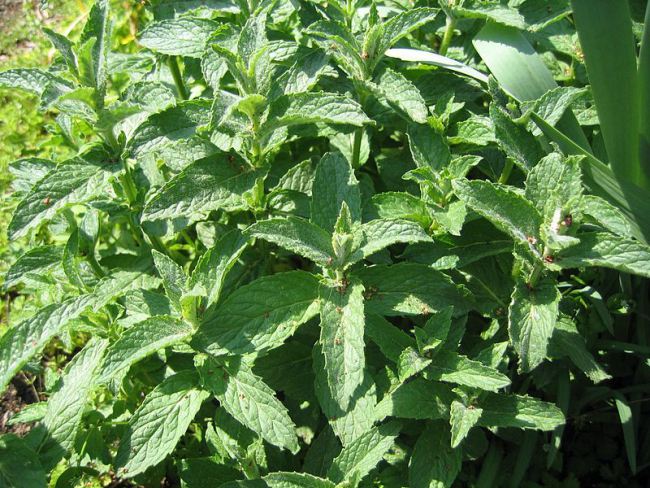
This morning as I was weeding my garden, it occurred to me that the mint that had overrun my herb garden was like standardized test prep. As schools across the country do their best to prepare students for the new CCSS-aligned assessments, test prep is running rampant. Just as the mint in my garden has choked out the basil and parsley, test prep, and the tests themselves, threaten to take over the school day, leaving no time to savor novels, delve into a character’s motivation, or write a deeply personal narrative.

I grow a variety of herbs in my garden because each herb has its own distinct flavor and use. The amount of the herb I use depends on what I’m cooking. The same is true for teaching. We have a wide variety of instructional resources and strategies available. As professionals, we take great care to make…

View original post 202 more words

Poetry Friday: “I Am Poetry”

poetry-friday-1-1

I have spent the past week at the Teachers College Reading and Writing Project’s Summer Reading Institute. My brain is bursting with all I have learned from my amazing section leaders and the keynote speakers. My senses are overwhelmed by the sights and sounds of New York City in August. My life is richer because of people I have met and friends I have made. It has been a glorious week.

How could I possibly choose a poem to share today that reflects my week? By focusing on one small piece of my experience.

Each teacher was given a book at the beginning of the week to use as a mentor text for the work of the Institue. I received Becoming Naomi León (Scholastic Press, 2004) by Pam Muñoz Ryan. I have loved every book I’ve read by Ryan, but somehow, I had missed this beautiful story about a young girl finding her true self. Pam Muñoz Ryan’s writing is so lyrical, I wondered if she’d written any poetry. A quick search reminded me about The Dreamer, Ryan’s lovely book about the young Pablo Neruda and led me to this poem:

“I Am Poetry”

by Pam Muñoz Ryan

I am poetry,

waiting to seize the poet.

I ask the questions

for which all answers

exist.

I choose no one.

I choose every one.

Come closer…

…if you dare.

I am poetry,

lurking in dappled shadow.

I am the confusion

of root

and gnarled branch.

I am the symmetry

of insect,

leaf,

and a bird’s outstretched wings.

Read the rest of the poem here.

If you haven’t read Becoming Naomi León, The Dreamer, or any of Ryan’s other novels for children, read one today. You’ll be glad you did. 

Please be sure to visit Heidi at My Juicy Little Universe for the Poetry Friday Round Up.

Picture Book 10 for 10: Friendship Favorites

pb 10 for 10 015

“…nothing breaks this golden strand

spun by heart and not by hand.”

Clare Mishica

Picture Book 10 for 10 is the brainchild of Cathy Mere of Reflect & Refine: Building a Learning Community and Mandy Robeck of Enjoy and Embrace Learning. During this annual event, now in its fifth year, teachers, librarians, and book lovers create lists of 10 essential picture books. Cathy and Mandy collect and share these lists, and everyone is richer because of their efforts. Be sure to visit their blogs to see their lists, and check out links to other lists. Thank you, Cathy and Mandy, for organizing this celebration of children’s literature! This is my third year joining in the fun. Last year, I devoted my list to favorite books by Jane Yolen, and the year before, I shared favorite wordless picture books.

Last month, Jillian Heise and Kim McSorley wrote about their “Top Ten Favorite Picture Book Friendships” for Nerdy Book Club. Their list included many of my favorites, especially several of Mo Willems Piggy & Elephant books, Flora and the Flamingo, by Molly Idle and Deborah Freedman’s The Story of Fish and Snail. But their list got me thinking about picture book friendships from the past, stories that my own children loved when they were small and stories that I’ve shared with my students throughout my teaching career. Here, in no particular order, are some of my favorites.

Amos & Boris  by William Steig (Farrar, Straus, and Giroux, 1971)

9780374302788_xlgI adore this timeless tale of friendship between a mouse and a whale. I spouted off about this book about a year ago. You can read more about it here.

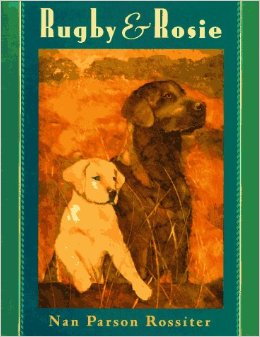
Rugby & Rosie, by Nan Parson Rossiter (Dutton, 1997)
51N8MPC5A6L._SX258_BO1,204,203,200_

This is a classic boy-and-his-dog tale with a twist. Rugby and the nameless narrator are always together: on the way to the bus, after school, and “he sleeps beside my bed at night.” Rosie, a puppy being trained as a guide dog, soon arrives and quickly becomes part of the family. Rossiter’s story follows the friends throughout the year of Rosie’s training and how the family deals with their sadness after Rosie’s inevitable departure.

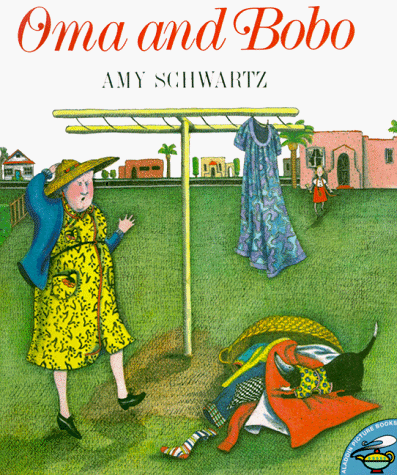
Oma and Bobo by Amy Schwartz (Bradbury Press, 1987)
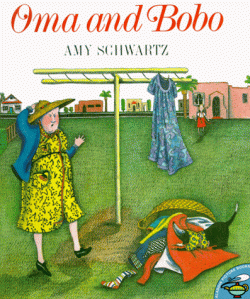
665429Alice is thrilled when her mother tells her she can have a dog for her birthday. She finds Bobo at the local animal shelter. When Alice asks her grandmother, Oma, what she should call the dog, Oma replies, “Trouble, Bother, and Nuisance.” Of course Oma’s feelings change by the end of the book and she plays a key role in Bobo’s success at obedience school.

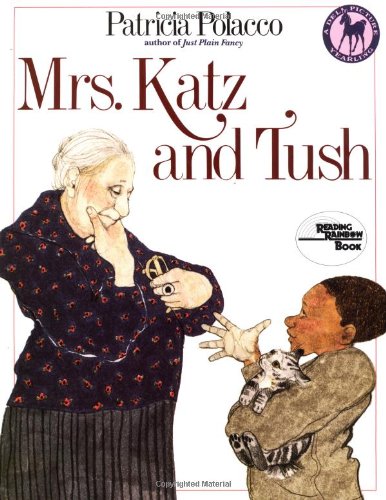
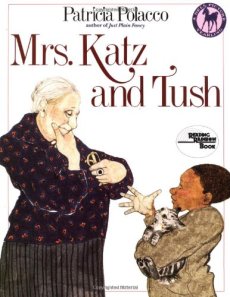
Mrs. Katz and Tush, by Patricia Polacco (Bantam Books for Young Readers, 1992)
517fcurW8NL

Patricia Polacco is a master at telling tales of friendship, and this story of an elderly woman and her young neighbor is a classic. Strangers at the beginning of the book, Larnel, Mrs. Katz, and her kitten, Tush quickly become friends. Larnel learns much from Mrs. Katz about caring, family, and tradition.

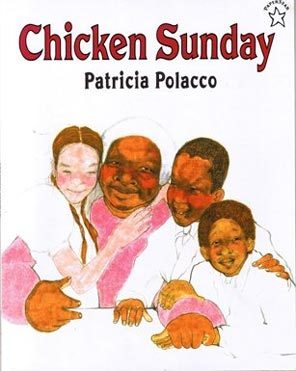
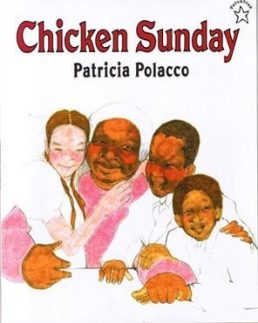
Chicken Sunday, by Patricia Polacco (Philomel Books, 1992)
2008583594

Another classic tale of intergenerational and multicultural friendship. As in many of her other books, Polacco combines illustration with family photographs, which give this book a very personal dimension. Kids love speculating about who’s who in the pictures on Miss Eula’s sideboard.

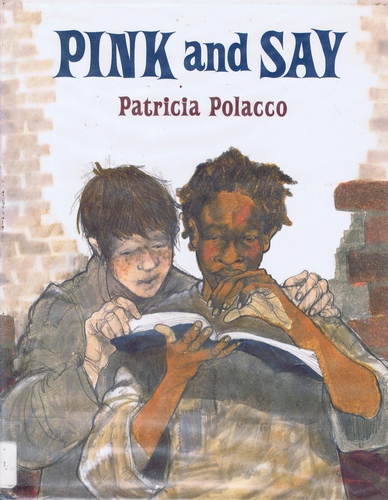
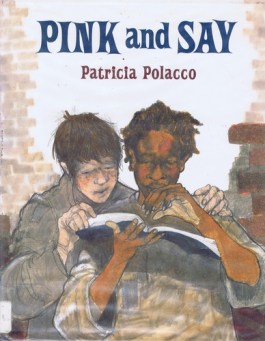
Pink and Say, by Patricia Polacco (Philomel Books, 1994)
715Y+itb7rL

Polacco tells this heart-breaking true story of two young Union soldiers with honesty and sensitivity. At the end of the book, Polacco shares how this story has been passed down through her family for generations. Thank you, Patricia Polacco, for sharing it with us.

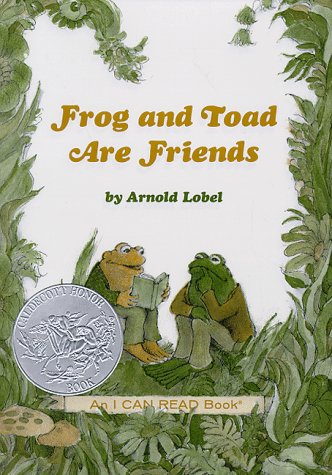
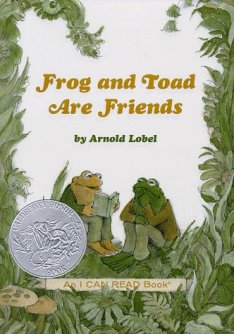
Frog and Toad are Friends, by Arnold Lobel (Harper Trophy, 1970)
Frog_and_toad_cover

Is there anyone who doesn’t love Frog & Toad? In this perennial favorite, Lobel depicts Frog and Toad weathering the everyday trials and tribulations of friendship with humor and compassion.

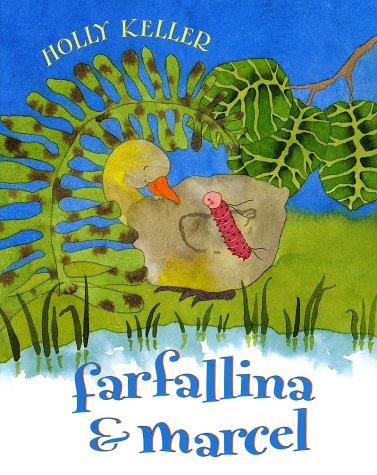
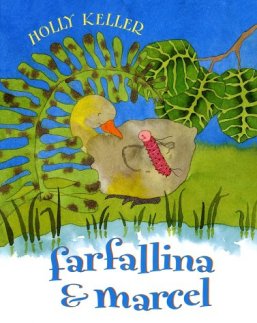
Farfallina & Marcel, by Holly Keller, (Greenwillow Books, 2002)
9780066239323

Holly Keller’s gentle tale follows the friendship between Farfallina, a caterpillar, and Marcel, a goose, and how they withstand separation and BIG changes.

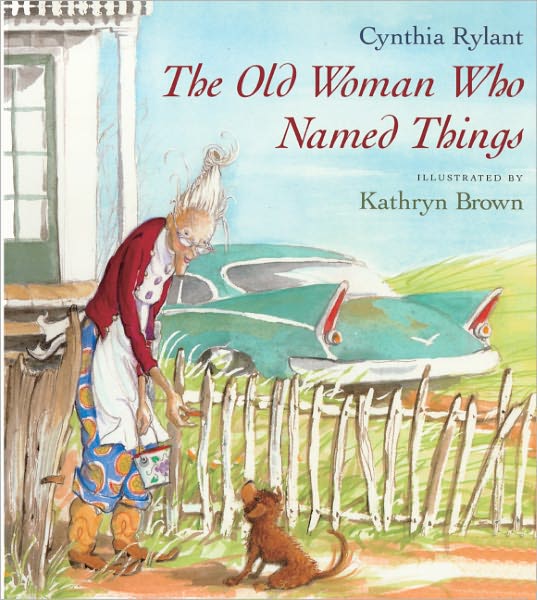
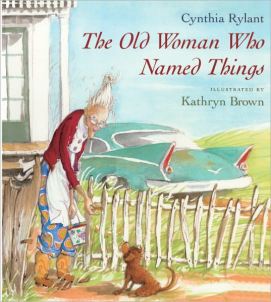
The Old Woman Who Named Things by Cynthia Rylant, illustrated by Kathryn Brown. (Harcourt, 1996)
old-woman-who-named-things

The old woman of the title has outlived all her friends and makes up for her loneliness by only giving names to things that will outlive her. But when a shy, brown dog arrives at her gate, the old woman reconsiders the wisdom of this decision. Rylant explores our universal need for companionship with tender understanding.

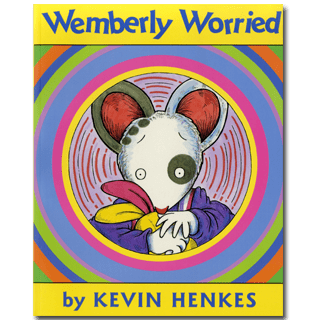
Wemberly Worried, by Kevin Henkes (Greenwillow Books, 2000)
8-19-Wemberly-Worried

Poor Wemberly worries about everything. Her family tells her she worries too much, but this doesn’t stop her. Wemberly’s list of worries gets even longer when she starts school. But when she makes a new friend, Jewel, her worries are forgotten. Wemberly Worried is a fine example of Henkes’s mastery of capturing the feelings of preschool and primary kids.

There are so many other books I could have included on this list. What’s your favorite tale of friendship?

It’s Monday! What Are You Reading? Summer Reading Edition

IMWAYR

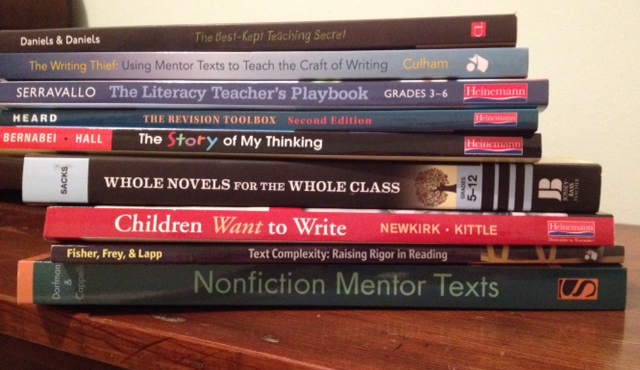
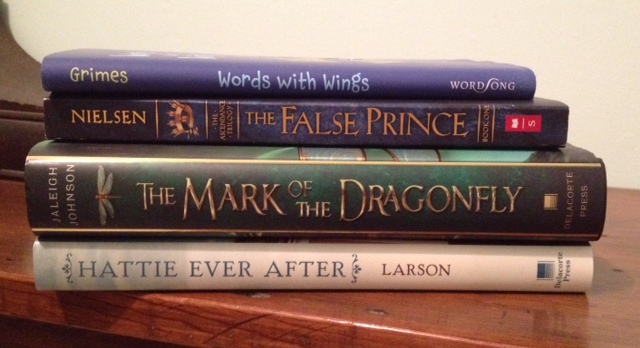
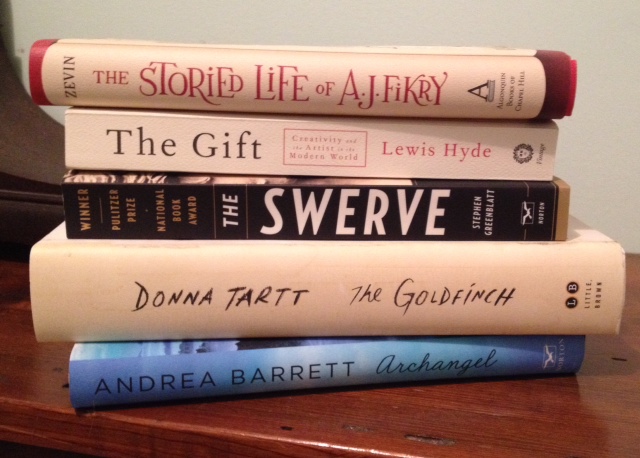
Every teacher knows that the last weeks of school are the most hectic of the year. I haven’t been very successful carving out time for reading anything other than the newspaper and a few blogs lately, but I have been thinking about summer reading. So in lieu of writing about what I have been reading, here are stacks of what I plan to read over the next few months.

photo 1
Professional books
photo 2
Middle grade & YA books
photo 3
Adult books

What’s in your summer reading stack? Happy reading!

Don’t forget to visit Jen at Teach Mentor Texts and Kellee at Unleashing Readers to find out what other people have been reading lately. Thanks, Jen and Kellee, for hosting!

A Saturday Celebration

celebrate-image

Thank you, Ruth, for providing this space and giving us the opportunity to pause and celebrate the joys from our week.

June can be a bittersweet time for teachers as we let go of children we have grown to love. This week, I want to celebrate one of these students.

I began working with this second grade girl at the end of November. She had struggled with reading in first grade, but by last September it was clear that she wasn’t making progress. Her parents consented to testing to see if she was eligible for special education, but these revealed that she had average skills and abilities, and therefore not eligible. But she was eligible for the Tier 3 reading support I provide.

When we began working together, she was reading at a level about a year behind where most second graders are in November. She came to our lessons eager to to her best, and began to make slow but steady progress.  

As I wrote earlier in the week, I usually have a short read-aloud time during my intervention lessons. About a month ago, I began reading Firefly July (Candlewick Press, 2014), Paul B. Janeczko’s wonderful collection of short poems, to this little girl. She was entranced by Melissa Sweet’s whimsical illustrations and several of the poems quickly became favorites. This line from Robert Wallace’s “In the Field Forever” even inspired her to write her own poem:

Sometimes the moon’s a scythe, sometimes a silver flower.

Here is her poem:

The Colors of the Moon

Sometimes the moon looks like a golden banana.

Sometimes it looks like a white hammock.

Sometimes it looks like a ripe orange.

Sometimes the moon looks like a cookie with a splash of milk.

Sometimes it looks like a red apple.

Isn’t that lovely?

All her hard work has paid off. She is leaving second grade only one level below our end-of-year expectation, and she is no longer mixing up lowercase “b” and “d”. But best of all, she is leaving second grade a poet and a much more confident and enthusiastic reader. Hooray for her!