Poetry Friday: The Swing

Poetry_Friday_Button-210

The Swing

by Robert Louis Stevenson

How do you like to go up in a swing,

Up in the air so blue?

Oh, I do think it the pleasantest thing

Ever a child can do!

Up in the air and over the wall,

Till I can see so wide,

Rivers and trees and cattle and all

Over the countryside–

Till I look down on the garden green,

Down on the roof so brown–

Up in the air I go flying again,

Up in the air and down!

img00001

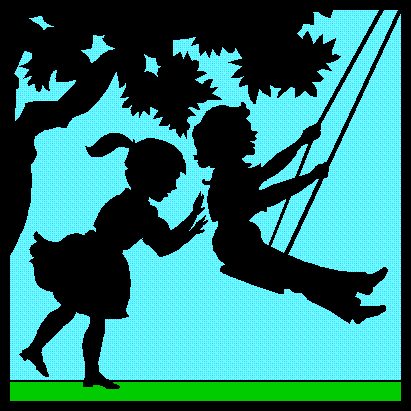
I spent hours on my swing set when I was a kid. Nothing compared to the exhilarating feeling of sailing up in to the air, then whooshing back down. Stevenson’s poem perfectly describes this glorious sensation. When my children were babies, they loved to hang out in their swing while I cooked dinner. Even now, with all our 21st century technology and gadgets available, kids still line up for their turn on the swings at the playground. Go outside today and swing, just for fun!

Be sure to visit Jone at Check It Out for the Poetry Friday Round Up.

Poetry Friday: When You Are Old

Image

When You Are Old

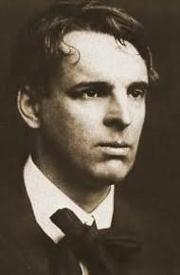
by William Butler Yeats

When you are old and gray and full of sleep,

And nodding by the fire, take down this book,

And slowly read, and dream of the soft look

Your eyes once had, and of their shadows deep.

How many loved your moments of glad grace,

And loved your beauty with love false or true,

But one man loved the pilgrim soul in you,

And loved the sorrows of your changing face;

And bending down beside the glowing bars,

Murmur, a little sadly, how love fled

And paced upon the mountains overhead

And hid his face amid a crowd of stars.

William Butler Yeats
Image
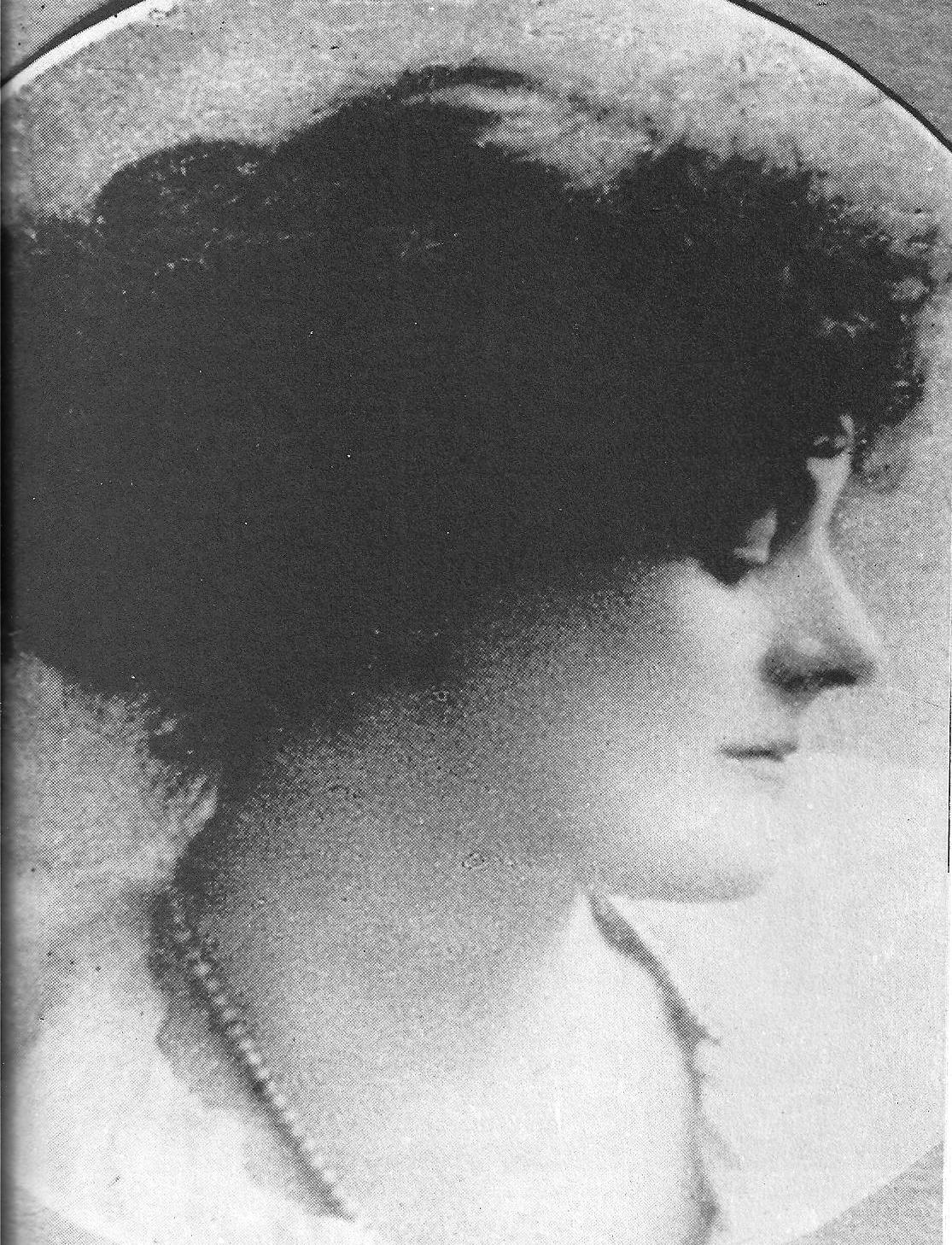
Maud Gonne, photo from All the Olympians, by Ulick O’Connor

This poem always stirs up nostalgic feelings in me. In just a few words, Yeats evokes the  beauty of the muse of his youth, Maud Gonne. And yet, “Love fled…and hid his face amid a crowd of stars.” Happy endings are not always possible, but our memories are with us always.

I sometimes think that I’m too nostalgic, but there was an article in the New York Times earlier this week about the positive aspects of nostalgia. Researcher Constantine Sedikides and his colleagues have found that “Nostalgia has been shown to counteract loneliness, boredom, and anxiety” as well as “make people more generous to strangers and more tolerant of outsiders.” Once again, poets know intuitively what it takes scientists years to figure out.

Be sure to visit Michelle at Today’s Little Ditty for the Poetry Friday Round Up.

Poetry Friday: Sonnet 30 by William Shakespeare

Image

Sonnet 30

William Shakespeare

When to the sessions of sweet silent thought

I summon up remembrance of things past,

I sigh the lack of many a thing I sought,

And with old woes new wail my dear time’s waste;

Then can I drown an eye (unused to flow)

For precious friends hid in death’s dateless night,

And weep afresh love’s long since cancelled woe,

And moan th’expense of many a vanished sight.

Then can I grieve at grievances foregone,

And heavily from woe to woe tell o’er

The sad account of fore-bemoaned moan,

Which I new pay as if not paid before;

But if the while I think on thee, dear friend,

All loses are restored, and sorrows end.

I’ve been thinking about this sonnet for the last week or so for a number of reasons. I love the phrase  “sweet silent thought.” And while the speaker is brooding for much of the poem, to me this phrase implies time to contemplate new ideas. Having quiet, unhurried time to think is a rarity these days. Just as by the end of the poem, the speaker has achieved peace thinking of his friend, taking this time to think can bring us peace. (Both literal and figurative!)

This poem has also been on my mind because of a story I’ve been working on. The main character is grieving over the loss of her mother, and by the end of the story I want her to come to the kind of reconciliation with her grief that this speaker has. Whether or not I can accomplish that for her is another story, but I’m going to try.

In the meantime, I think I’ll listen to Kenneth Branagh read this lovely poem once more:

http://www.popscreen.com/v/7adx9/William-Shakespeare-Sonnet-30-Kenneth-Branagh

Be sure to visit Keri at Keri Recommends for her inaugural Poetry Friday Round Up.

Poetry Friday: The Cities Inside Us

Image

I’m participating in Teachers Write! this summer, so I’ve been thinking about writing a lot this week. (If you haven’t heard about  this fabulous online summer writing camp for teachers and librarians, you can learn more on Kate Messner’s blog.) With all these thoughts whirling around in my head, it seems appropriate today to share a poem that speaks to the writer in all of us.

“The Cities Inside Us”

by Alberto Rios

We live in secret cities

And we traveled unmapped roads.

We speak words between us that we recognize

But which cannot be looked up.

They are our words.

They come from very far inside our mouths.

You and I, we are the secret citizens of the city

Inside us…

Read the rest of the poem here.

By Herkulaneischer Meister  via Wikimedia Commons
By Herkulaneischer Meister via Wikimedia Commons

Be sure to visit Amy Ludwig VanDerwater’s Poem Farm for today’s poetry round up.

Sometimes…

Image       Image

Mary Oliver’s “Instructions for Living a Life” advises that we should “Pay attention. Be astonished. Tell about it.”

I thought of this when I read today’s quick-write on Kate Messner’s Teacher’s Write blog post. I’m often astonished by the beauty of the fields around my house, especially in summer. I’ve written about this in my journals over the years, and Kate’s post inspired me to turn these observations into a poem.

Sometimes, on a summer morning

Grandpa Stuart’s fields are touched

by the rays of the rising sun

so just the top of the grasses

glow in the yellow light.

Goldfinches perch on purple thistles,

breakfasting on seeds.

Sometimes, a deer wanders into the field,

interrupting their feast.

Startled, they rise as one

into the air, darting and diving,

chittering as they fly

before settling down

to the business at hand:

harvesting the glorious sunshine

captured in those thistles.

Image
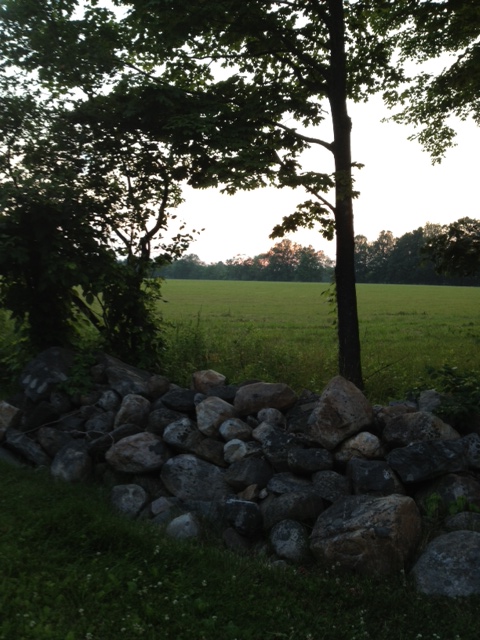
One of Grandpa Stuart’s fields at sunset. It was hayed this week, so there are no thistles.

What astonished you today?

This post is doing double duty for today’s Slice of Life Challenge at Two Writing Teachers. Thank you, as always, to Stacey and Ruth for hosting!

Poetry Friday: There Was a Frog

Image

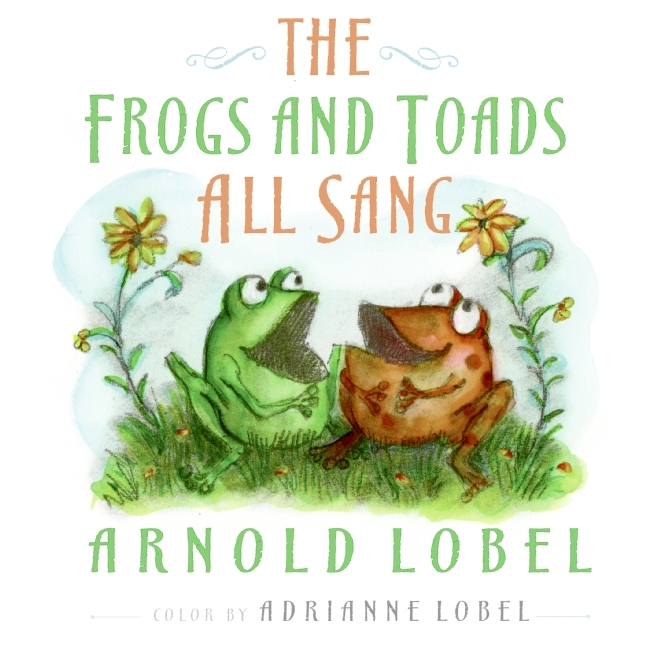
As the literacy specialist in a K-8 school, I have many roles and responsibilities on any given day. For the most part I enjoy them all. But hands down, the best part of my day is working with students. I work with first grade students through our RTI process (known as SRBI, Scientifically Research Based Instruction, in Connecticut). We begin each lesson with a poem to “warm up our ears.” The students choose one or two previously read poems to read to themselves, and then we read a new one together. Over the years, I’ve noticed particular poems that all the children seem to love. Many of these favorites come from The Frogs and Toads All Sang (HarperCollins, 2009), by Arnold Lobel.

Image

These poems were written and illustrated as a gift to writer Crosby Bonsall and her husband. Decades later, they were discovered at Bonsall’s estate auction and brought to the attention of Adrianne Lobel, Arnold’s stage-designing daughter. She added color to her father’s illustrations and this wonderful book was born. You can listen to Adrianne Lobel describe the process here:

By June, my first grade students are well on their way as readers. Lobel’s poems provide just the right balance of familiar and challenging words, not to mention the fact that the poems are about frogs and toads. (Not the Frog and Toad, but I haven’t met too many first graders who don’t love these charming amphibians.) In addition, these poems are silly. See for yourself.

There Was a Frog

by Arnold Lobel

There was a frog

Who had a car.

He drove it fast.

He drove it far.

He traveled

Fifty days and nights

And never

Looked at traffic lights.

“I learned to drive

Quite easily,

But I never learned

To stop,” said he.

What’s not to love about that? If you’re looking for the perfect summer read for any frog and toad loving first grader (or any primary grader, for that matter), this book is it.

Be sure to visit Margaret at Reflections on the Teche for today’s Poetry Friday Roundup

Poetry Friday: Ox Cart Man

Poetry_Friday_Button-210Ox Cart Man

by Donald Hall

In October of the year

he counts potatoes dug from the brown field

counting the seed, counting

the cellar’s portion out,

and bags the rest on the cart’s floor.

He packs wool sheared in April, honey

in combs, linen, leather

tanned from deerhide,

and vinegar in a barrel

hooped by hand at the forge’s fire.

Read the rest of the poem here

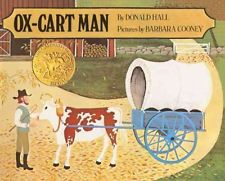
Donald Hall’s “Ox Cart Man” first appeared in The New Yorker on October 3, 1977. Two years later, Hall revised and expanded it into a picture book. Barbara Cooney’s primitive folk art paintings perfectly match the tone of this tale of a self-sufficient farmer and his family. Winner of the 1980 Caldecott Award, the book portrays 19th century farm life and its close ties to the seasons. The Horn Book described it as a “pastoral symphony translated into picture book format.”

mKfWmlodom587YNgD2dI95w

Be sure to visit Tabatha Yeatts at her lovely blog, The Opposite of Indifference for the Poetry Friday Round Up.
Poetry Friday: “Cadence” by Margaret Wise Brown

Image

Cadence

There is music I have heard

Sharper than the song of bird

Sweeter still while still unheard

There beyond the inner ear.

Softer than the sounds I hear

Softer than the ocean’s swell

In the caverns of a shell,

Tinier than cutting wings

Of flying birds and little things,

Like a cat’s paw in the night

Or a rabbit’s frozen fright.

This is the music I have heard

In the cadence of the word

Not spoken yet

And not yet heard.

by Margaret Wise Brown

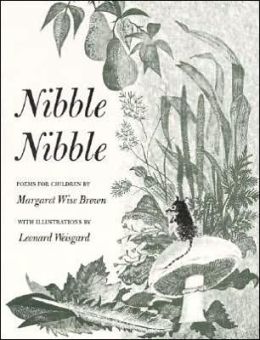
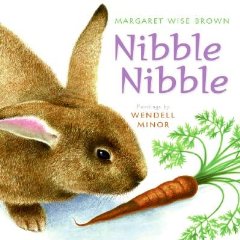
I discovered this poem on a bookmark in a book that someone at school was weeding out of their collection. I knew Margaret Wise Brown from her classics Goodnight Moon, The Runaway Bunny, and The Important Book, but I wasn’t familiar with this poem. It first appeared in Nibble, Nibble, a collection of 25 poems which was first published in 1959 with illustrations by Leonard Weisgard. Wendell Minor created new illustrations for “Cadence” and four other poems from the original collection in 2007.

Image  Image

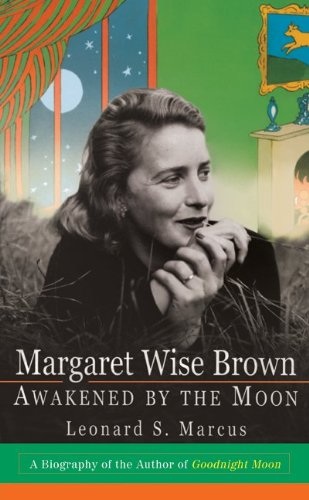
Brown was a pioneer in children’s literature and wrote hundreds of books. You can learn more about her life and work here. Leonard S. Marcus published a biography, Margaret Wise Brown: Awakened by the Moon (HarperCollins), in 1999 and Over the Moon: An Imaginary Interview with Margaret Wise Brown in the May/June 2010 of The Horn Book.

Awakened-by-the-moon

My favorite quote from this interview reveals Brown’s prescient wisdom about the lives of children.

“In this modern world where activity is stressed almost to the point of mania, quietness as a childhood need is too often overlooked. Yet a child’s need for quietness is the same today as it has always been–it may even be greater–for quietness is an essential part of all awareness. In quiet times and sleepy times a child can dwell in thoughts of his own, and in songs and stories of his own.”

We all need time to be lost in our thoughts, time to listen for those words “Not spoken yet/And not yet heard.”

Be sure to stop by Teaching Young Writers for today’s round up. Thank you, Betsy, for hosting!

Poetry Friday: Love Calls Us To The Things Of This World

Image

Image

Love Calls Us To The Things Of This World

by Richard Wilbur

The eyes open to a cry of pulleys,
And spirited from sleep, the astounded
soul
Hangs for a moment bodiless and
simple
As false dawn.
Outside the open window
The morning air is all awash with
angels.

Read the rest of the poem here or listen to Richard Wilbur read his poem.

Be sure to visit Jama at Jama’s Alphabet Soup for the round up of Poetry Friday posts.

Poetry Friday: America the Beautiful

Image

There’s a scene in the movie Peggy Sue Got Married where 43-year old Peggy Sue, played by Kathleen Turner, finds herself back in her high school home room singing either “America the Beautiful” or “The Star-Spangled Banner.” (I can’t remember which, and we no longer have a working VCR, so I can’t check.) She sings with such gusto that her friends look at her like she’s nuts. I’ve always found her passion inspiring.

I thought of this scene last night at a rehearsal for our town’s Memorial Day service next weekend. Every year for the past four or five years, I’ve sung with a group of other people in town at this and other occasions. I hadn’t practiced with them for a few months and I had forgotten not only how much fun we have, but also how moving the songs we sing are. Of course we sing “The Star-Spangled Banner.” We also sing “Battle Hymn of the Republic”, “God Bless America” and my favorite, “America the Beautiful.”

“America the Beautiful” was written by Katherine Lee Bates in 1893. Bates was an English professor at Wellesley College, and she was inspired to write her poem after a trip to Colorado.

O beautiful for spacious skies,
For amber waves of grain,
For purple mountain majesties
Above the fruited plain!

America! America!
God shed His grace on thee,
And crown thy good with brotherhood
From sea to shining sea!

Most people know only the first verse and chorus, which celebrates the beauty of the American landscape. The rest of the poem pays tribute to the Pilgrims and patriots who made the ideal of America possible and asks for God’s help in living up to the possibilities of our freedom. You can read it here (and learn more about Bates and her trip to Colorado). Although it had been sung to other tunes, Samuel Ward’s music, originally written in 1882, was added in 1910 and became the accepted version.

ImageImage

Several picture books have been created using Bates’s poem. Neil Waldman illustrated a version in 2002, and Wendell Minor’s interpretation of the poem was published in 2003. Anita Silvey featured this lovely book on her Children’s Book-a-Day Almanac last summer.

ImageImage

A stunning pop-up version was created by Robert Sabuda in 2004. In 2010, Katherine Lee Bates’s great, great, grandnephew, Chris Gall paired his unique vision with his relative’s famous verses. America the Beautiful: Together We Stand  is the most recent version, published just this year. This rendition is illustrated by a virtual who’s who of picture book illustrators. Quotes from presidents are paired with the lyrics and illustrations.

Image

After 9/11, my school had an assembly to come together and mourn. The principal said a few words, but we mostly sang patriotic songs. I was shocked to discover that many of my students didn’t know the words to these songs. After that, I always included a song in the morning routine my classroom. This is one of the things I miss the most about not having my own classroom.

These songs are part of our cultural heritage. No matter what our politics, curriculum, or testing demands, we should be sharing these songs with our students every day.  Peggy Sue shouldn’t be the only one excited about singing them.