“Poetry is a language in which man explores his own amazement.”
~ Christopher Fry ~
Every month, I lead our school’s Language Arts Committee meeting. The purpose of this committee is to promote the language arts and ensure that our teaching is based on the latest research. I usually begin the meetings sharing news from our state Department of Education, upcoming conferences and workshops, and information gathered at conferences I’ve attended. Teachers share lessons they’ve had success with and examples of student work. We always have snacks and these meetings are a nice way for teachers to learn about what’s happening at other grade levels.
I spent much of my afternoon planning tomorrow’s meeting. Since National Poetry Month is just a few days away, I will be sharing poetry resources and have a poetry activity planned. Here’s a preview of what’s on the agenda.
Poem in Your Pocket Day is on Thursday, April 24th this year. We’ll actually be in school on this day. For several years, this day has been during our April break.
Poet-to-Poet Project is “a multimedia educational project that invites young people in grades 3-12 to write poems in response to those shared by some of the award-winning poets who serve on the Academy of American Poets Board of Chancellors.” The resources for this project are incredible: videos of the poets reading their poems, lesson plans, and more. Students can submit their original poems to poets.org for possible publication on the website in May.
Book spine poems are a form of found poetry and are a fun way to ease into poetry. You can read about the basic steps at Kenn Nesbitt’s, our current Children’s Poet Laureate, website, Poetry4kids.com.
Poetry Tag Time is an e-book of 30 original poems for children compiled in 2011 by Sylvia Vardell and Janet Wong. A veritable who’s who in children’s poets contributed a poem after being “tagged” by the previous poet. Each poem is connected in some way. I participated in an activity very similar to this several years ago during an online Children’s Literature class, but it was called a poetry “merry-go-round.” The professor posted the first poem, then a student had to post a poem that linked to the original, and so on. I really enjoyed reading the different ways people connected to the poems, and read many wonderful poems I might never have seen. I asked everyone to bring a poem tomorrow so we can play Poetry Tag.
Thinking about Poetry Tag reminded me of a incredible project Linda Rief shared at NCTE last November. At the beginning of the year, Rief’s students created Heart Maps, an idea from Georgia Heard’s amazing book, Awakening the Heart: Exploring Poetry in Elementary and Middle School. Rief’s students then read volumes of poetry, gathering poems that spoke to them and exemplified an area of their heart map. Students copied these poems out by hand, and gathered them into a “Heart Book.” Vicki Vinton shared a description of this project on her blog, To Make a Prairie.
This seems like a lot to cover in the 40 minutes or so we have for our meeting! My hope is that everyone leaves the meeting with a collection of poems and at least one new idea to try during National Poetry Month. What are your plans for National Poetry Month?
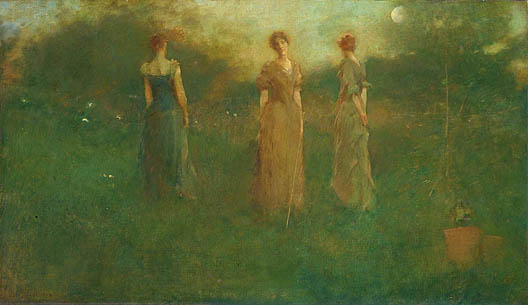
Several years ago, I visited the Smithsonian American Art Museum in Washington, D.C. with a friend. At the time, a room was devoted to the work of the American Impressionist Thomas Wilmer Dewing. I was captivated by the ethereal quality and soft colors of Dewing’s canvases. I bought a calendar that included several of his paintings, thinking I might frame them. Not long after this, my artist son asked if there was anything in particular I wanted for Christmas. I asked him to paint me a version of this painting:
Thomas Wilmer Dewing In the Garden 1892–94 oil 20 5/8 x 35 in. Smithsonian American Art Museum, Gift of John Gellatly
Michael’s version has hung over my bed ever since. I’ve often thought these women, my own graces, deserved a poem, but I never got around to writing one for them.
I was inspired to finally pick up my pen last month when Laura Shovan announced her Pantone® Poetry Project. Laura shared two or three colors each day, and challenged poets to write poems inspired by the colors. Day 10 featured Amberglow and Golden Glow, and although these aren’t the colors in Dewing’s painting, they are similar to Michael’s colors.
The month-long Slice of Life Challenge, hosted at Two Writing Teachers, is almost at the half-way point. Because this is a writing challenge, I’ve decided to share original poems for Poetry Friday during the month. What poetic form is better suited to capture Slices of Life than haiku?
1.
Slices of life–
Pieces of hearts on the page.
Stories connect us.
The weather has been extreme in Connecticut this week. Early in the week, the temperature soared, the sky was bright blue, and spring filled the air.
2.
Coming untucked,
the deep counterpane of snow
hides spring underneath.
But on Wednesday, the weather changed. Apparently, winter isn’t through with us, although we have had enough of him.
I grew up next door to my grandmother and have many happy memories of hours spent at her house. Many of those hours were spent in her kitchen watching and helping her cook. So in January, when Mary Lee Hahn shared her poem “Recipe,” I was inspired to write a poem about my grandmother and her kitchen. A list of words and phrases grew, but I couldn’t seem to find a way to organize them.
A few days later, Tricia Stohr-Hunt challenged readers to write a pantoum in her Monday Poetry Stretch. As I read about the structure of pantoums, I began to see possibilities for a poem about my grandmother. Then Fran McVeigh shared memories of her grandmother for her Slice of Life Challenge post earlier this week, and her slice prompted me to go back and revise this poem.
UPDATED: My apologies to Margaret at Reflections on the Teche for not thanking her for hosting the Poetry Friday Round Up yesterday. It’s not too late to visit her and read all the wonderful poems shared there.
Last Sunday, the New York Times Book Review featured Al Gore’s review of Elizabeth Kolbert’s new book, The Sixth Extinction: An Unnatural History (Henry Holt, 2014), an examination of “what biologists call the sixth mass extinction.” Gore states that Kolbert “makes it clear that doing what is right means accelerating our transition to a more sustainable world.”
It seems to me that educating our kids about the wonders of the natural world is one way to accomplish this transition. Children are naturally curious and amazed, and we should do everything we can to build on this sense of wonder. One natural way to do that by sharing books, beautiful nonfiction picture books that celebrate “The World Around Us.”
Sing of the Earth and Sky,
sing of our lovely planet,
sing of the low and high,
of fossils locked in granite.
Sing of the strange, the known,
the secrets that surround us,
sing of the wonders shown,
and wonders still around us.
Aileen Fisher
Each one of the books shared below open a window onto nature, and will help inspire awe and wonder about our world in children of all ages.
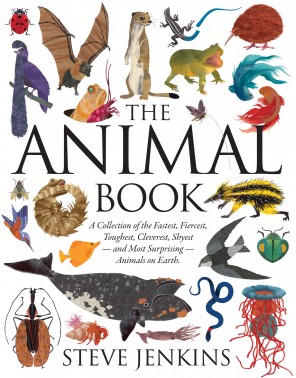
The Animal Book: A Collection of the Fastest, Fiercest, Toughest, Cleverest, Shyest–and Most Surprising–Animals on Earth, by Steve Jenkins(Houghton Mifflin, 2013)
This book is chock full of fascinating facts about animals of every kind, a book to savor and pore over. The stunning illustrations of each animal are carefully crafted in Jenkins’ signature collage technique. Jenkins provides a thorough explanation of his process in the book and in this video:
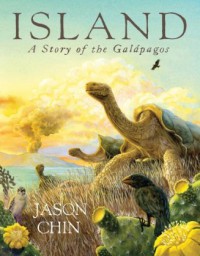
Island: A Story of the Galápagos, by Jason Chin (grades 2-4, Roaring Brook Press, 2012)
Jason Chin has created a richly detailed account of the creation of the Galápagos and how they came to be populated by so many species found only on these volcanic islands. The book ends with the arrival of Charles Darwin on the HMS Beagle and provides a brief explanation of how Darwin developed his theory of evolution based on his observations of animals during his visit to the islands.
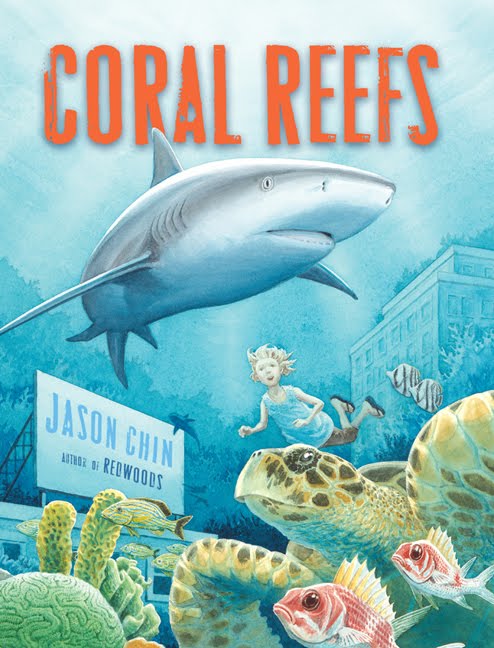
Coral Reefs, by Jason Chin (grades K-4, Roaring Brook Press, 2011)
Coral Reef begins with a girl taking Coral Reef down from a shelf in the Rose Main Reading Room of the New York Public Library. As the main character becomes immersed in her book, coral begins to appear, and soon the library is transformed into a magnificent coral reef. Chin’s text and illustrations are perfectly matched as the structure of the reef and the relationships of the animals who live in and around it are explained. An Author’s Note briefly explains the threat to coral reefs from global warming and offers suggestions for how readers can help slow this process. Chin also explains how he researched coral reefs and offers some additional resources.
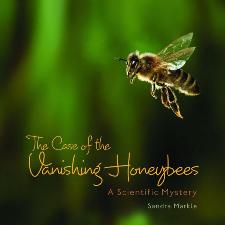
The Case of the Vanishing Honeybees: A Scientific Mystery, by Sandra Markle (grades 4-8, Millbrook Press, 2013)
Recommended by the National Science Teachers Association, Sandra Markle’s meticulously researched book explains in detail the essential role honeybees play in nature. Gorgeous photographs are clearly labeled and include explanatory captions. Markle raises the many questions scientists have about the cause of Colony Collapse Disorder and is realistic in her conclusion that honeybees are not out of danger. Suggestions for how to help honeybees are included, as well as a list of additional resources, a glossary, and index.
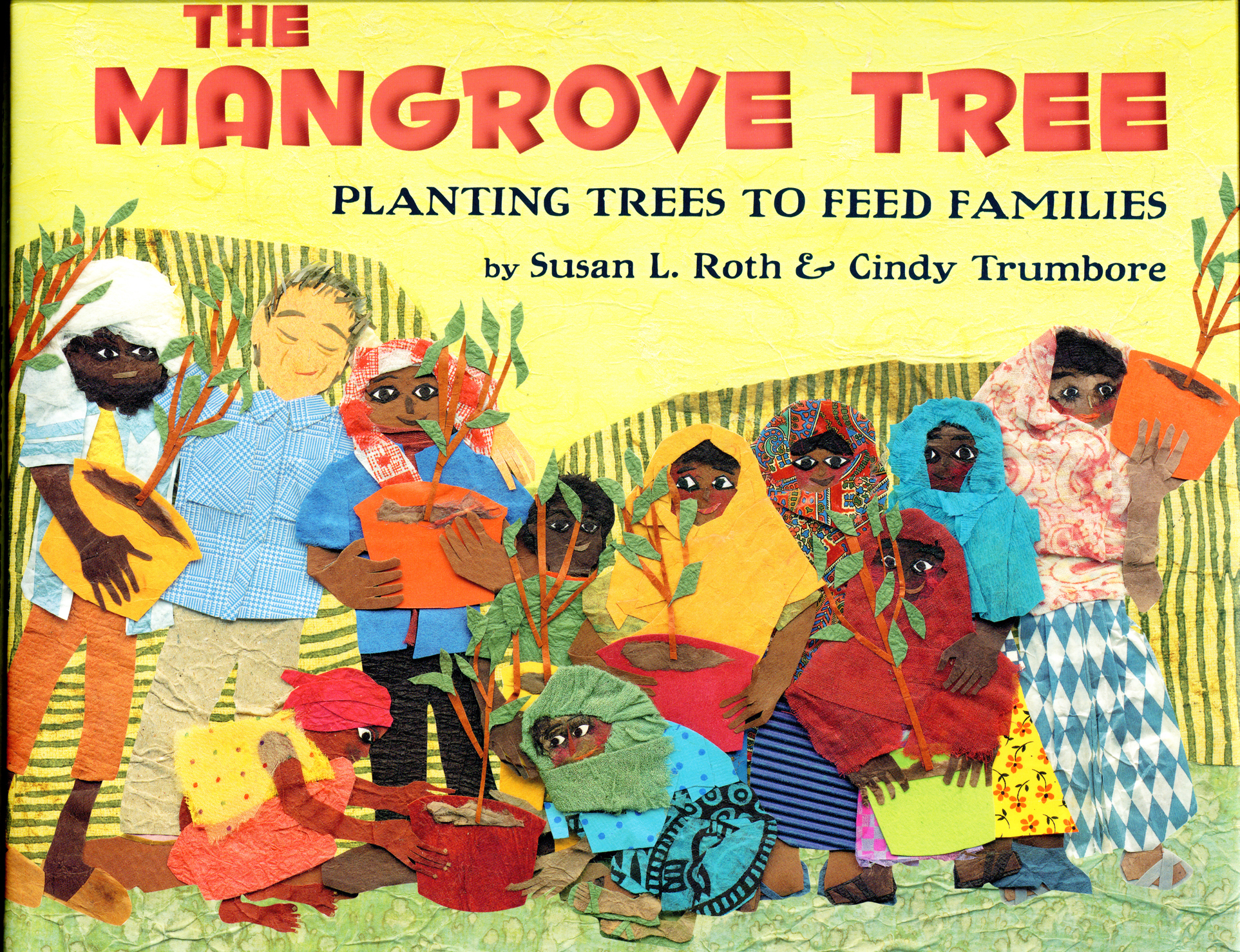
The Mangrove Tree: Planting Trees to Feed Families, by Susan L. Roth & Cindy Trumbore; collages by Susan L. Roth (grades 1 and up, Lee & Low Books, Inc., 2011)
Created by the same team behind Parrots Over Puerto Rico, winner of the 2014 Sibert Medal for the most distinguished information book published in the United States, The Mangrove Tree: Planting Trees to Feed Families describes the effort of Dr. Gordon Sato to ease the poverty and lack of food in the African country of Eritrea. The story is told in layers, the simplest of which is a cumulative rhyme a la “The Hose that Jack Built.” Sidebars explain Dr. Sato’s project in more detail, and an Afterword provides even more details as well as photographs of Dr. Sato, the mangrove trees, and the Eritreans who worked to make the project a success. A glossary, websites, and sources are also included.
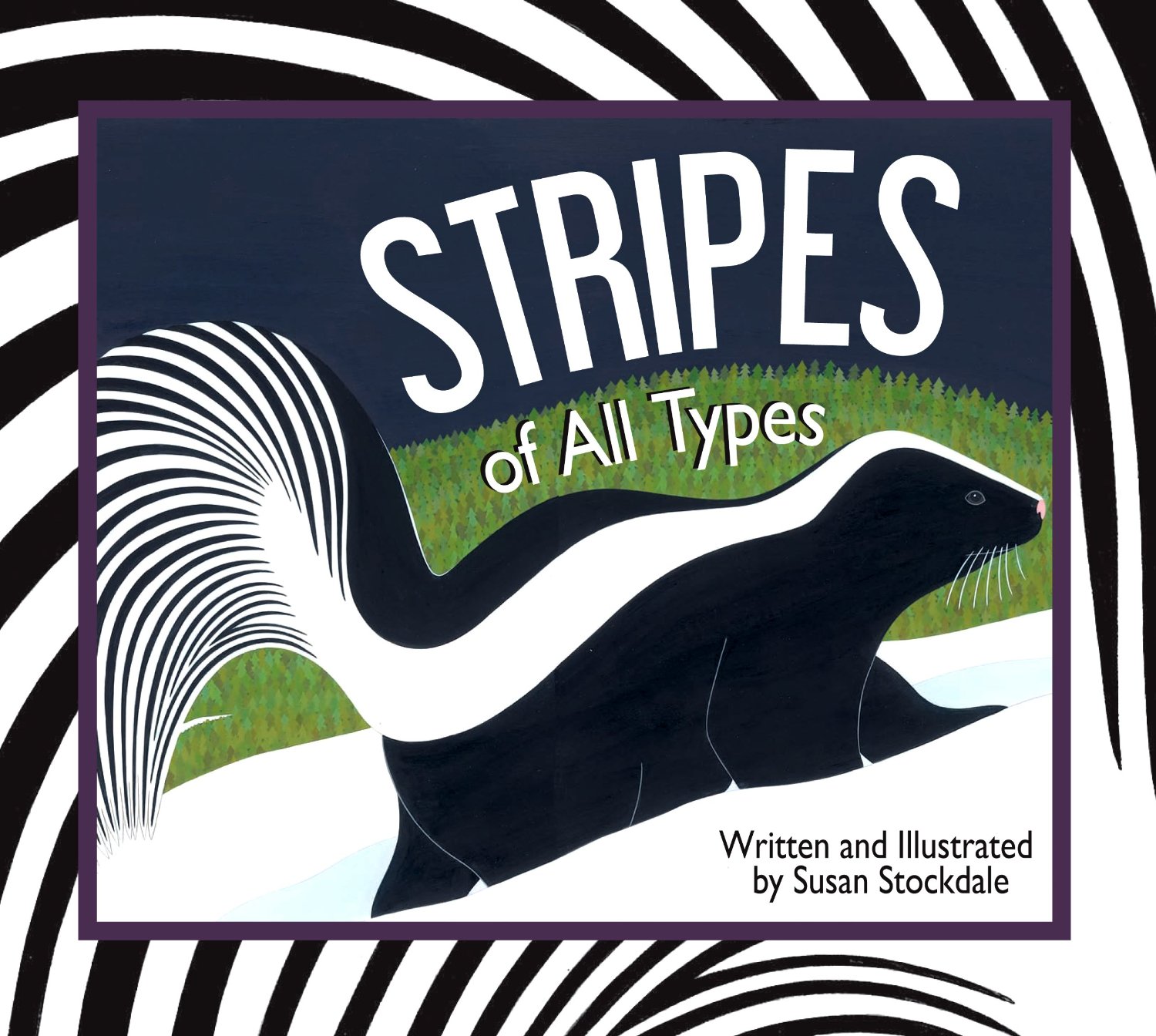
Stripes of All Types, by Susan Stockdale (Preschool-grade 1, Peachtree, 2013)
This simple rhyming text introduces young readers to a wide variety of animals whose stripes help them survive in different habitats. Stockdale’s writing is full of vivid language, and is perfect for building vocabulary. Additional information about each animal is provided at the end of the book.
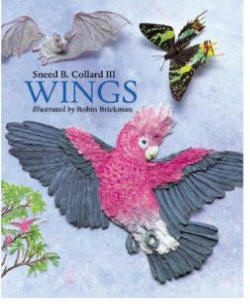
Wings, by Sneed B. Collard III; illustrated by Robin Brickman (grades 2-3, Charlesbridge, 2008)
Collard’s rich, descriptive language and Brickman’s stunning collages present readers with a surprising range of information about wings found all over the world, from “steamy rain forests to the frigid North Pole.” Details illuminate the wide variety of styles of wings, how many wings particular animals have, even the various purposes for wings. A list of both print and digital resources is included, as is a glossary and a brief description of Brickman’s paper collages.
Pointy, Long, or Round: A Book About Animal Shapes, by Patricia M. Stockland; illustrated by Todd Ouren (Kindergarten-grade 3, Picture Window Books, 2005)
Here’s another book organized around a trait many different animals have in common. Stockland’s text is simple yet descriptive, and provides details about how these animals use their shape for protection or survival. Additional details related to each animal’s shape can be found in side bars, which are cleverly incorporated into the illustrations.
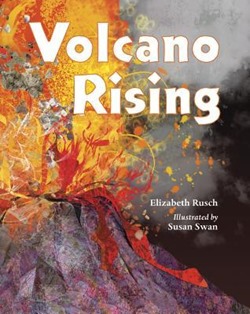
Volcano Rising, by Elizabeth Rusch; illustrated by Susan Swan (grades 1-4) Charlesbridge, 2013)
Volcano Rising explains what volcanoes are, how they work, and that “volcanoes are not just destructive. Much more often, volcanoes are creative.” This overview is told using one font style. Specific examples of each type of volcano, such as the creation of Paricutín, a volcano in Mexico that grew to a height of 1,300 feet in just nine years, are provided in a different font. Back matter includes a glossary, resources the author used, and books for further reading.
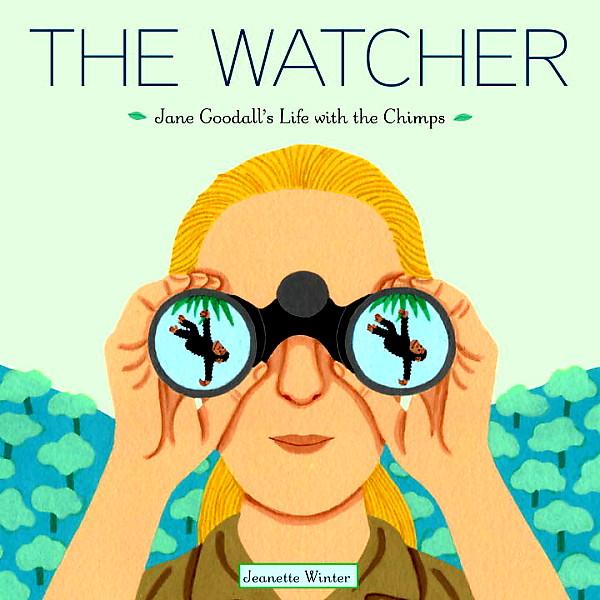
The Watcher: Jane Goodall’s Life with the Chimps, by Jeanette Winter (Preschool-grade 3, Schwartz + Wade Books, 2011)
When Jane Goodall first went to Africa, she “wanted to learn things that no one else knew, uncover secrets…” She did just that during her years studying the chimps of Gombe. Winter writes in language that is both simple and accessible, yet evokes Jane’s sense of wonder in all that she sees. She ends her account of Goodall’s inspiring life story with these words: “Jane carried with her the peace of the forest…and opened a window for us to the world of chimpanzees.”
Nonfiction Picture Book 10 for 10 is a “celebration of nonfiction picture books” organized by Julie Balen, Cathy Mere, and Mandy Robek. Many bloggers shared lists of their favorite nonfiction picture books on Wednesday, and a list of their posts can be found on Julie’s blog. My post is a little late because of internet issues, so I decided to combine it with Poetry Friday. Be sure to visit Karen Edmisten for the Poetry Friday Round Up. Thank you to all these ladies for devoting their time to make cyberspace a rich and inspiring place to visit.
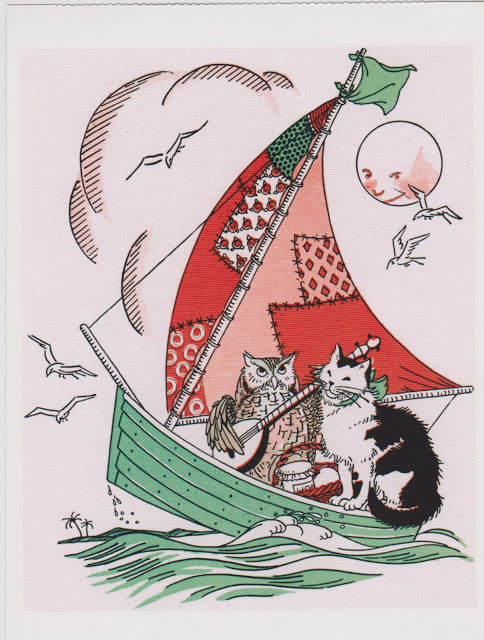
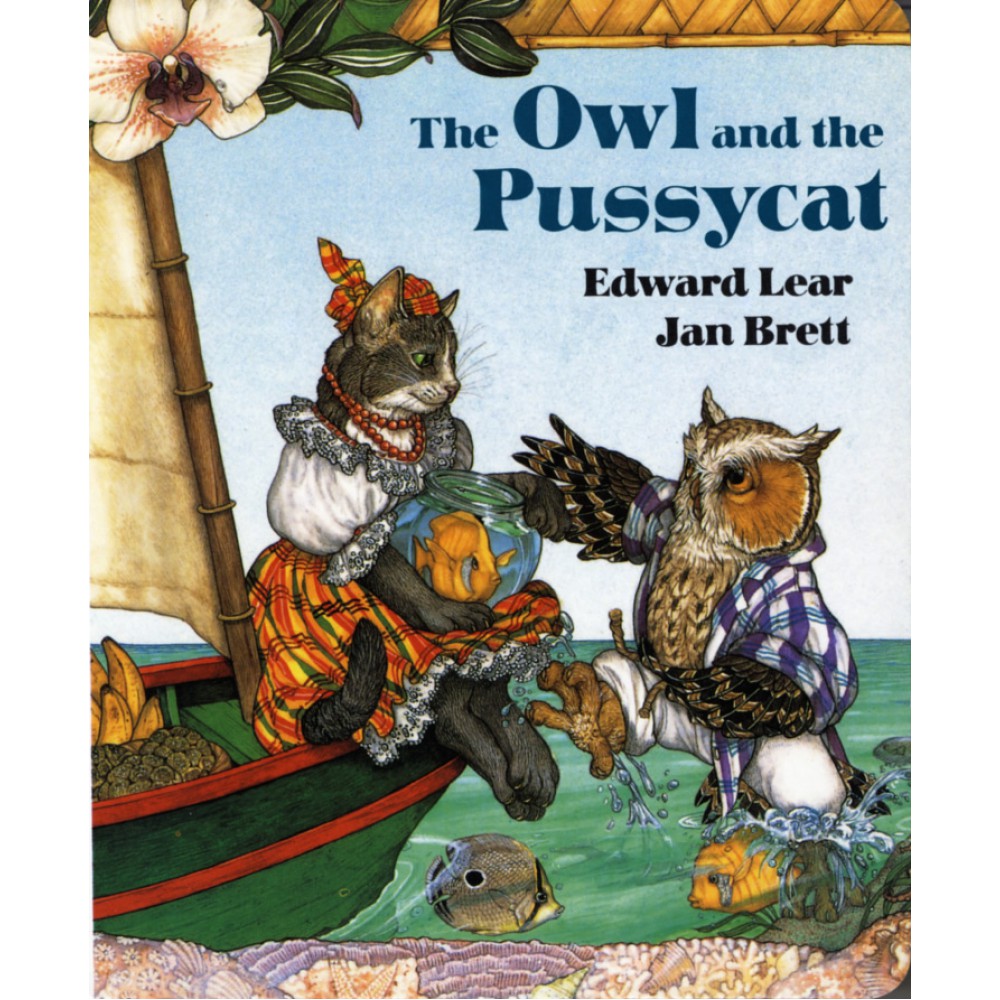
Happy Valentine’s Day, everyone! Over the past few days, I considered many favorite love poems to share today. Something from Shakespeare? Maybe a Beatles song, in honor of the 50th anniversary of their first visit to America. In the end, I did stick with a Brit I’ve loved since childhood. Edward Lear’s silliness has always appealed to me, and “The Owl and the Pussy-cat” is one of my all-time favorites.
Marguerite Davis
The Owl and the Pussy-Cat
by Edward Lear
The Owl and the Pussy-cat went to sea
In a beautiful pea-green boat,
They took some honey, and plenty of money,
Wrapped up in a five-pound note.
The Owl looked up to the stars above,
And sang to a small guitar,
“O lovely Pussy! O Pussy, my love,
What a beautiful Pussy you are.
You are,
You are!
What a beautiful Pussy you are!”
Pussy said to the Owl, “You elegant fowl!”
How charmingly sweet you sing!
O let us be married! too long we have tarried:
But what shall we do for a ring?”
They sailed away, for a year and a day,
To the land where the Bong-Tree grows
And there in a wood a Piggy-wig stood
With a ring at the end of his nose,
His nose,
His nose,
With a ring at the end of his nose.
“Dear Pig, are you willing to sell for one shilling
Your ring?” Said the Piggy, “I will.”
So they took it away, and were married next day
By the Turkey who lives on the hill.
They dined on mince, and slices of quince,
Which they ate with a runcible spoon;
And hand in hand, on the edge of the sand,
They danced by the light of the moon,
The moon,
The moon,
They danced by the light of the moon.
When I was little, my mother read this poem to me from a Childcraft book of children’s poems. My own children loved poring over Jan Brett’s richly detailed illustrations for the poem. Do you have a favorite version of Lear’s classic poem?
Whether on the edge of the sand or by the light of the moon, be sure to dance on over to Teacher Dance, where Linda has the Poetry Friday Round Up. Wishing you joy this Valentine’s Day!
Merriam-Webster defines “apology” as “an expression of regret for having done or said something wrong.” I truly did regret burning my sandwich. And although I wasn’t thinking about “This is Just to Say,” at the time, some part of my brain made the connection to William Carlos Williams’ famous poem of apology. You can read more about poems of apology at Joyce Sidman’s website, where she talks about the origins of her book, This is Just to Say: Poems of Apology and Forgiveness (Houghton Mifflin, 2007). For apology poems with a lighter touch, don’t miss Gail Carson Levine’s Forgive Me, I Meant to Do It(HarperCollins, 2012).
Please be sure to visit Renée LaTulippe at No Water River for the Poetry Friday Round Up.
Our fifth graders are in the midst of an informational reading/writing unit focused on inventions and inventors. While the students read mostly nonfiction during this unit, we also share several poems from Joyce Sidman’s remarkable book, Eureka! Poems about Inventors (Millbrook Press, 2002). In this volume, Sidman, winner of the 2013 NCTE Award for Excellence in Poetry for Children, celebrates in verse the invention of paper, hot air balloons, velcro, and more.
“Food of the Gods” describes the history of chocolate, from Quetzalcoatal dropping “ripe yellow pods of cacao” to Francois-Louis Cailler, who, in 1819,
“…seized upon them,
mixed and ground and tempered,
and by some clean and wholesome magic,
made of them a food–
a wafer of heaven,
a smooth slab of heart’s delight.”
For more about Eureka! as well as a Reader’s Guide and links to information about inventors, visit Joyce’s website.
In the past, the fifth grade teachers and I have talked about having the kids write their own inventor/invention poems, but we’ve never managed to find the time. I had my own eureka moment when I read Dana Murphy’s post about erasure poetry over at Two Writing Teachers last week. Suddenly, I knew this was the way to have our students craft poems about the inventors and inventions they’re studying. This technique is also a great way for students to practice zeroing in on important details and main ideas.
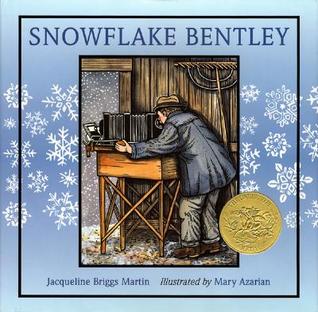
Here is my attempt at erasure poetry to use as a model with students. I chose Jacqueline Briggs Martin’s Snowflake Bentley (Houghton Mifflin, 1998), one of my all-time favorite books to share with students, as my subject. Mary Azarian’s stunning woodcut illustrations for the book won the Caldecott Medal. Although Wilson Bentley wasn’t an inventor like Gutenberg or Elijah McCoy, he did develop the process to photograph snowflakes and became world-famous for his miraculous pictures.
I worked in my notebook, jotting down lines that seemed meaningful as I read the book. As I reread, I thought about the importance of particular events and made decisions about including them in my poem. This kind of thinking can be challenging for students, and writing erasure poems will be an engaging way from them to practice these important skills.
The Snowflake Man
~Wilson Bentley~
born February 9, 1865
Jericho, Vermont
A boy who loved snow,
snow as beautiful as butterflies,
studied the icy crystals
through an old microscope.
Saw intricate patterns,
no two the same.
He wanted to find a way
to save snowflakes,
and tried drawing snow crystals,
but they always melted.
At sixteen,
he read about a camera with a microscope.
“I could photograph snowflakes,” he thought.
At seventeen,
his parents spent their savings
on that camera.
Mistake by mistake,
He would not quit.
Finally, in the second winter,
he figured out
how to photograph snowflakes.
Neighbors laughed when
he waited hours
to find just the right crystal.
Willie said the photographs
would be his gift to the world.
He wrote and gave speeches,
became famous,
and published a book.
A book of his best photographs,
of his treasures in snow.
Photo by Wilson A. Bentley; Smithsonian Institution from United States (Snowflake Study Uploaded by PDTillman), via Wikimedia Commons Please be sure to visit Tricia at The Miss Rumphius Effect for the Poetry Friday Round Up.
Yesterday, I was thrilled at the possibility of northern lights being visible in Connecticut. I have vivid memories of the handful of times I have witnessed this display of dancing light, but it’s been ages since I saw them last. These mysterious lights must have been terrifying to people throughout history without our knowledge of solar flares and ions bumping into Earth’s atmosphere. Fortunately, knowing this doesn’t diminish their beauty or their ability to inspire.
I don’t share my own poetry very often, but I couldn’t find a poem that matched my memories or feelings about the auroras I’ve seen. So here is a very rough draft of a poem inspired by watching northern lights with my boys in March of 1989.
Gaze at the world through the eyes of a four-year old today and be amazed. And, for plenty of amazing poetry, be sure to stop by Mainely Write, where Donna has the Poetry Friday roundup.
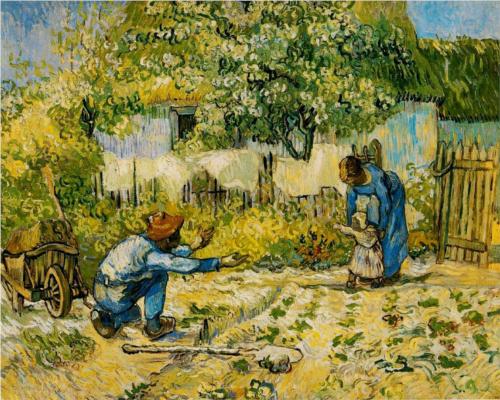
“First Steps (after Millet)” Vincent Van Gogh, 1890 Metropolitan Museum of Art, via wikipaintings.org
Eavan Boland is one of “the foremost female voices in Irish literature.” (Boland’s biography can be found at The Poetry Foundation) I wasn’t familiar with her or her work, but was struck by the imagery in “This Moment.” I can’t decide if Boland’s tone is meant to be ominous or just full of expectation. Either way, the anticipation of the unknown seemed appropriate for the New Year.
Wishing you all a happy and healthy New Year! Be sure to visit Betsy at I Think in Poems for the Poetry Friday Round Up.






![By Smithsonian Institution from United States (Snowflake Study Uploaded by PDTillman) [see page for license], via Wikimedia Commons](https://readingtothecore.com/wp-content/uploads/2014/01/wilson_a-_bentley_snowflake_1890.jpg)
![By Xander [CC-BY-2.0 (http://creativecommons.org/licenses/by/2.0)], via Wikimedia Commons](https://readingtothecore.com/wp-content/uploads/2014/01/800px-northern_lights_at_yellowknife.jpg)
 Reading to the Core