Although National Poetry Month has officially ended, poetry continues, always waiting for us to pay close attention and find it. For those of us still honing our craft, Ron Koertge has this advice.
“Do You Have Any Advice For Those of Us Just Starting Out?”
“Imagination is the beginning of the cognitive process through which we create meaning.”
Betty K. Garner
One morning last week, I found myself following a builder’s pickup truck on my way to work. A long length of yellow tape was trailing out of the bed of the truck. At first, I was slightly annoyed that this tape was slowing me down, but I became so fascinated watching its gyrations that I was sorry when the driver realized what was happening and pulled over to capture the escaped tape.
Coincidentally, I had just finished reading an article by Betty K. Garner called “The Power of Noticing” in Educational Leadership‘s February 2013 issue on creativity. Garner explains that taking the time to really notice something “supplies the raw material for creative thinking” and that “this kind of cognitive engagement stimulates curiosity and creativity.” So when I arrived at school, I rushed to my desk and wrote everything I remembered about what the wayward tape had conjured in my mind. Several days and several drafts later, here is a poem I created out of those images.
Since this is the last Tuesday of National Poetry Month, I hope Mary Lee won’t find this poem’s link to imagination too tenuous and mind if I share it with the readers of her “Our Wonderful World” poetry project.
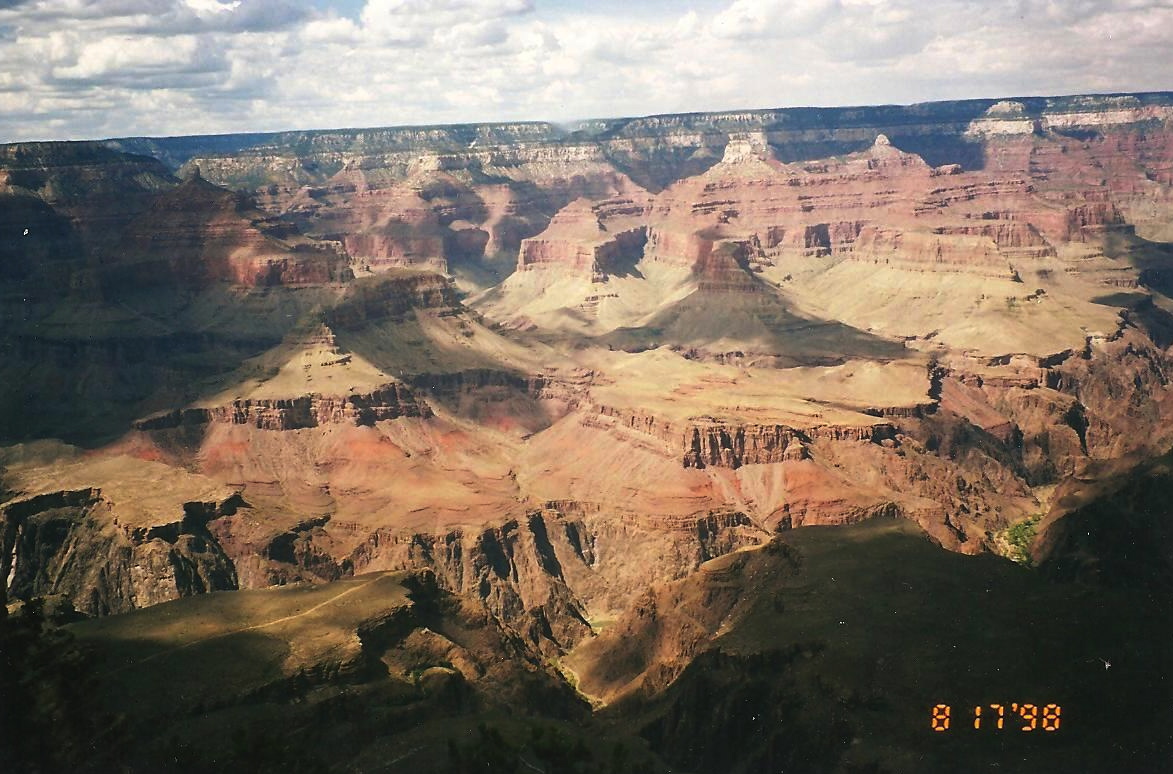
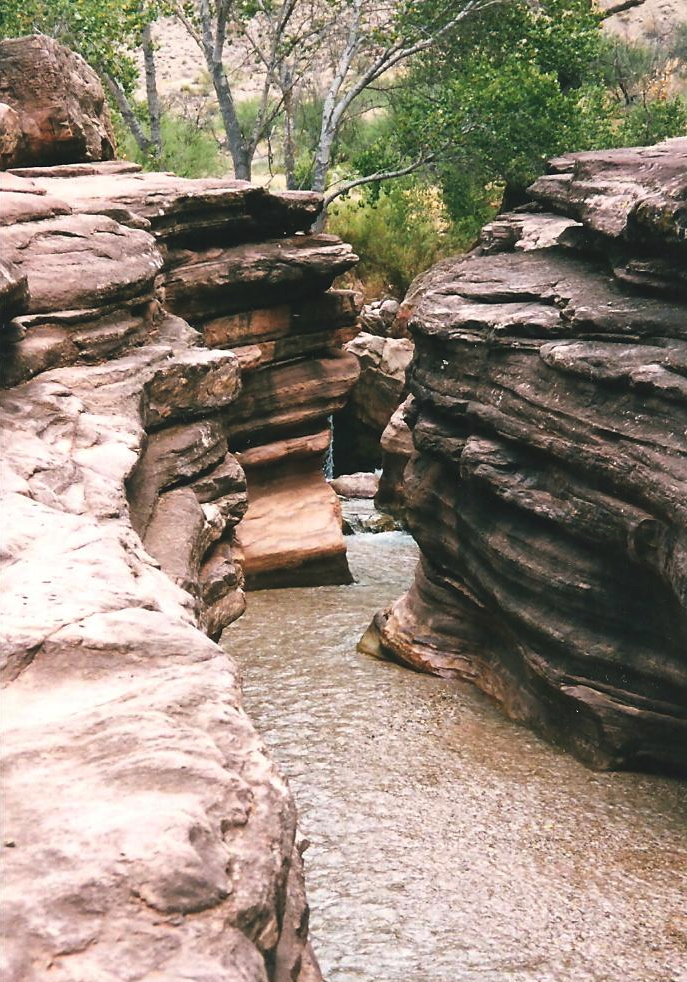
Mary Lee Hahn is celebrating National Poetry Month by celebrating “Our Wonderful World.” Each day, Mary Lee is writing an original poem in honor of either a man-made or natural wonder. Today’s wonder is the Grand Canyon. I have rafted down the Colorado River through the Grand Canyon twice, so I couldn’t pass up this opportunity to write a poem about my experience.
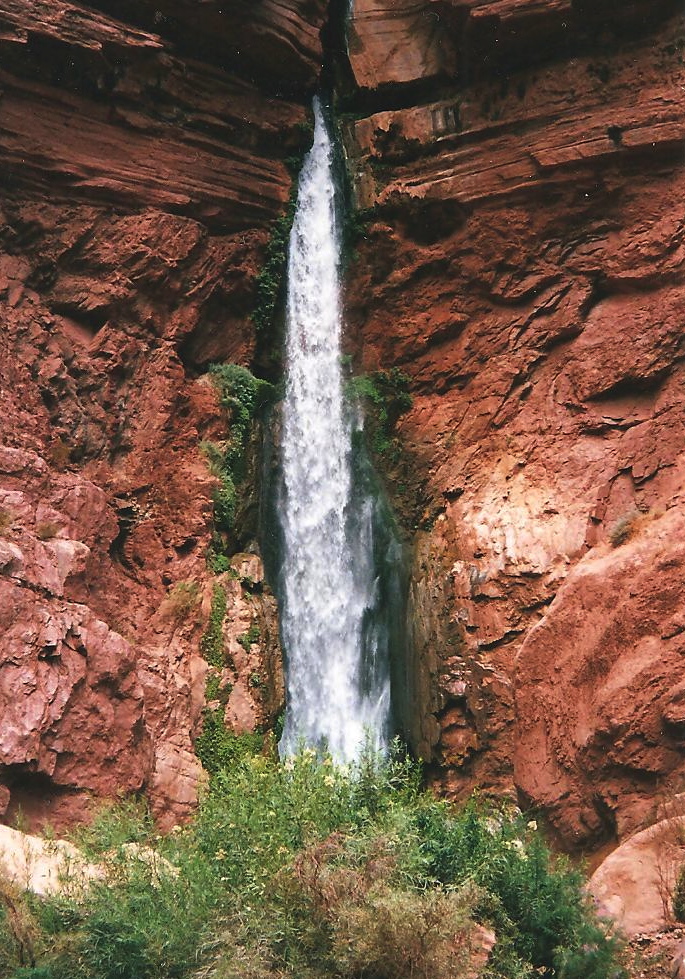
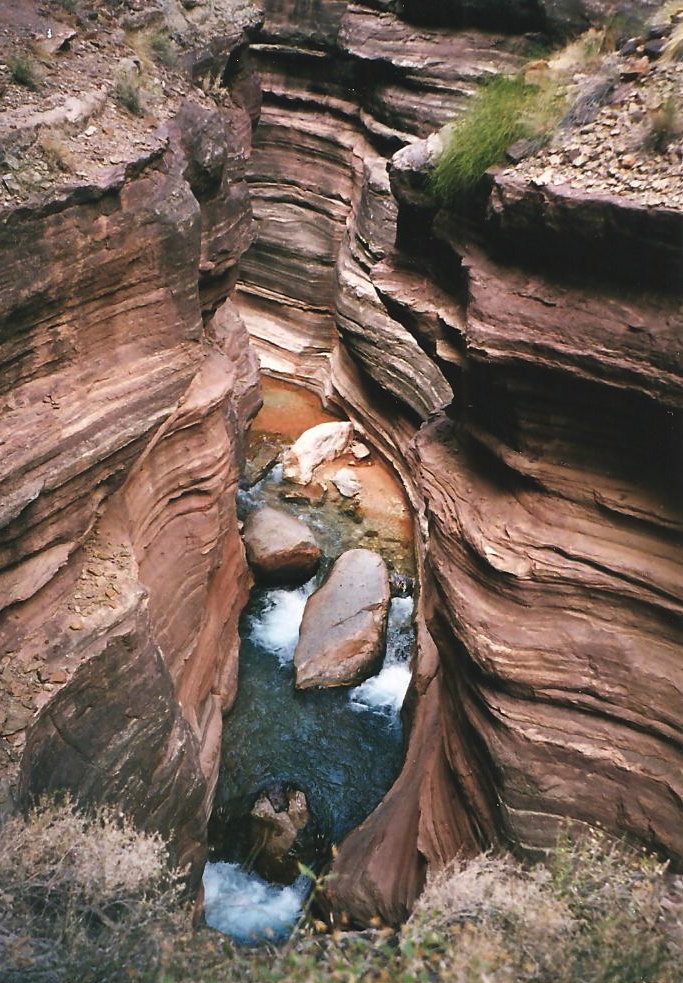
We have hundreds of photos from both of these trips, and I kept a journal during each trip. I have shared memories of our adventures in the past, Lava Fallsand The Legend of the Sanpodohavatulli Expedition. Before attempting to write this poem, I reread my journals, skimmed through many of the pictures, and jotted many notes. But this poem did not come easily. I didn’t know where to start. Then, after listening to Christopher Leheman’s Teacher Poets online workshop this morning, it became clear that I needed to focus on a small sliver of the entire trip. Our hike to Deer Creek was one of the most memorable, so I focused on this beautiful side canyon.
I’ve been captivated by Louise Erdrich’s writing for many years, since I first read her middle grade novel, The Birchbark House. This book was a favorite read aloud when I taught third grade. Since then, I’ve read all of her children’s novels and most of her adult novels. For the past several days, I’ve been reading Erdrich’s National Book Award winning adult novel, The Round House (Harper, 2012).
Often called a “Native American Faulkner”, Erdrich has created in her fiction what Maria Russo calls an “indelible Yoknapatawpha, a fictional North Dakota Indian reservation and its surrounding towns, with their intricately interconnected populations” (New York Times Book Review, Oct. 14, 2012)
Erdrich uses the tools of a poet to tell these finely spun tales. Metaphor, imagery, repetition, and more are skillfully woven together to create passages like this one from The Round House:
“I lay down on the warm wood and the sun went right into my bones. I saw no herons at first. Then I realized the piece of reedy shore I was staring at had a heron hidden in its pattern. I watched that bird stand. Motionless. Then, quick as genius, it had a small fish, which it carefully snapped down its gullet.”
Such craftsmanship isn’t surprising, considering the fact that Erdrich began her writing career as a poet. Many of her poems can be read online, but “Advice to Myself” resonated with me in way the others didn’t after a week of attempting to clear away the clutter of winter.
Advice to Myself
by Louise Erdrich
Leave the dishes.
Let the celery rot in the bottom drawer of the refrigerator
and an earthen scum harden on the kitchen floor.
Leave the black crumbs in the bottom of the toaster.
Throw the cracked bowl out and don’t patch the cup.
Chris Lehman recently invited teachers to join him in an online poetry workshop, TeacherPoets. He also invited people to respond to the question “Why poetry?” Many smart, insightful responses have been shared here. How to answer this question without restating what so many have already contributed? I decided to read through a few of my favorite poetry resources and create a found poem (some lines are slightly altered to work in the sequence).
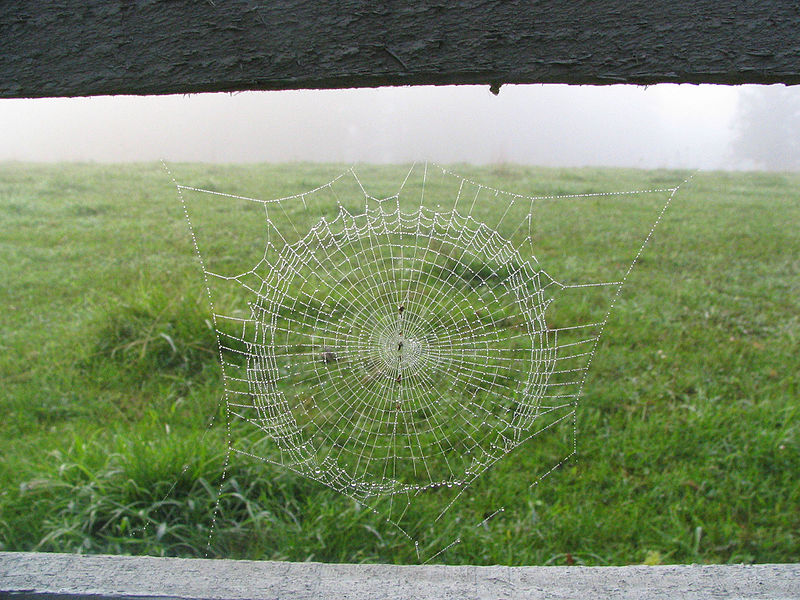
By Phyzome is Tim McCormack (Own work) , via Wikimedia Commons
Why Poetry?
Feel in touch with that universal rhythm.
Lift the veil from the hidden beauty of the world;
Find the mystery in everyday things and objects.
Rekindle a latent sense of wonder.
Have a good eye and a sharp ear.
Find your own voice.
Discover the perfect word for your purpose.
Use fresh imagery that rattles the senses and
Some wordplay that makes it sparkle.
Group them together in a shape or rhythmical structure.
Poems hum,
The breathings of your heart.
And words are nets to capture
The secrets you didn’t know you were keeping.
Here are the authors and sources of these lines, in order:
Lillian Morrison, Seeing the Blue Between: Advice and Inspiration for Young Poets, compiled by Paul B. Janeczko; Candlewick Press, 2003
Signs of spring are finally showing up here in my corner of Connecticut, and spring break begins TODAY! In honor of the season, I’m sharing “I Wandered Lonely As a Cloud” by William Wordsworth. This is one of the first “adult” poems I remember reading in high school that I really liked. Who wouldn’t want to be dancing with daffodils?
I wandered lonely as a cloud
That floats on high o’er vales and hills,
When all at once I saw a crowd,
A host, of golden daffodils;
Beside the lake, beneath the trees,
Fluttering and dancing in the breeze.
Continuous as the stars that shine
And twinkle on the milky way,
They stretched in never-ending line
Along the margin of a bay:
Ten thousand saw I at a glance,
Tossing their heads in sprightly dance.
The waves beside them danced; but they
Out-did the sparkling waves in glee:
A poet could not but be gay,
In such a jocund company:
I gazed—and gazed—but little thought
What wealth the show to me had brought:
For oft, when on my couch I lie
In vacant or in pensive mood,
They flash upon that inward eye
Which is the bliss of solitude;
And then my heart with pleasure fills,
And dances with the daffodils.
Parc de Bagatelle, Paris By Myrabella, via Wikimedia CommonsHappy Blog Birthday to Michelle at Today’s Little Ditty! Be sure to visit and help her celebrate and to read the Poetry Friday round up.
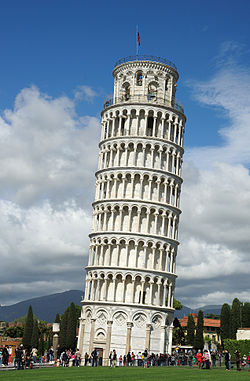
In honor of National Poetry Month, I’m sharing a slice of poetry today. I was inspired by Mary Lee Hahn‘s “Our Wonderful Word” poetry project. Each day during the month of April, Mary Lee is writing an original poem in honor of either a man-made or natural wonder. Today’s wonder is the Leaning Tower of Pisa.
I briefly considered becoming an architect when I was in high school, and although I chose a different path, my fascination with architecture remains. Not long after reading Brunelleschi’s Dome by Ross King, I found Tilt: A Skewed History of The Tower of Pisa, by Nicholas Shrady. When I pulled the book off my shelf last weekend, I was struck by how much the tower looked like a wedding cake. And although I’m sure I’m not the first person to make that comparison, it was the spark I needed for this poem.
How to write this final post of the 2014 Slice of Life Challenge? Yesterday’s post was reflective and full of thanks to everyone who made this challenge possible and who encouraged me through their generous comments. I had planned to do a standard “It’s Monday! What Are You Reading?” post, but as often happens, life intervened and I knew that plan wasn’t going to work.
I spent much of the day revising our fifth grade poetry unit and thought I could write about that, but that didn’t seem appropriate for my final slice. “In the end,” I decided to use a list poem (another list!) I read today, “Things To Do If You Are The Sun,” by Bobbi Katz, as a model for a poem that sums up how participating in this challenge has changed me as a writer.
Things To Do If You’re a Writer
Let words envelop you and swirl inside your head.
Look at a flower bud and see a diver poised on the brink of the board.
Hear an owl hooting and wonder what coded message he’s sending out
into the night.
Bite into a pear and taste summer in its sweetness.
Touch a puppy’s ear and feel the satiny edge of a well-loved blanket.
Breathe in the late winter air and sniff a hint of spring.
Gather these bits and pieces, like a magpie, and weave them
into something wonderful.
Share your creation with friends, who, through reading your words,
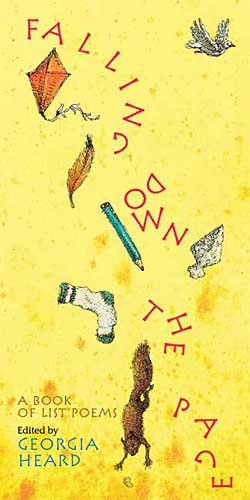
If you’d like to read “Things to do if You Are the Sun,” it can be found in Falling Down the Page: A Book of List Poems (Roaring Brook Press, 2009), edited by Georgia Heard. If you’d like to read other list poems and gather more ideas for using them as mentor texts with children, read Elaine Magliaro’s post at Wild Rose Reader.
“Poetry is a language in which man explores his own amazement.”
~ Christopher Fry ~
Every month, I lead our school’s Language Arts Committee meeting. The purpose of this committee is to promote the language arts and ensure that our teaching is based on the latest research. I usually begin the meetings sharing news from our state Department of Education, upcoming conferences and workshops, and information gathered at conferences I’ve attended. Teachers share lessons they’ve had success with and examples of student work. We always have snacks and these meetings are a nice way for teachers to learn about what’s happening at other grade levels.
I spent much of my afternoon planning tomorrow’s meeting. Since National Poetry Month is just a few days away, I will be sharing poetry resources and have a poetry activity planned. Here’s a preview of what’s on the agenda.
Poem in Your Pocket Day is on Thursday, April 24th this year. We’ll actually be in school on this day. For several years, this day has been during our April break.
Poet-to-Poet Project is “a multimedia educational project that invites young people in grades 3-12 to write poems in response to those shared by some of the award-winning poets who serve on the Academy of American Poets Board of Chancellors.” The resources for this project are incredible: videos of the poets reading their poems, lesson plans, and more. Students can submit their original poems to poets.org for possible publication on the website in May.
Book spine poems are a form of found poetry and are a fun way to ease into poetry. You can read about the basic steps at Kenn Nesbitt’s, our current Children’s Poet Laureate, website, Poetry4kids.com.
Poetry Tag Time is an e-book of 30 original poems for children compiled in 2011 by Sylvia Vardell and Janet Wong. A veritable who’s who in children’s poets contributed a poem after being “tagged” by the previous poet. Each poem is connected in some way. I participated in an activity very similar to this several years ago during an online Children’s Literature class, but it was called a poetry “merry-go-round.” The professor posted the first poem, then a student had to post a poem that linked to the original, and so on. I really enjoyed reading the different ways people connected to the poems, and read many wonderful poems I might never have seen. I asked everyone to bring a poem tomorrow so we can play Poetry Tag.
Thinking about Poetry Tag reminded me of a incredible project Linda Rief shared at NCTE last November. At the beginning of the year, Rief’s students created Heart Maps, an idea from Georgia Heard’s amazing book, Awakening the Heart: Exploring Poetry in Elementary and Middle School. Rief’s students then read volumes of poetry, gathering poems that spoke to them and exemplified an area of their heart map. Students copied these poems out by hand, and gathered them into a “Heart Book.” Vicki Vinton shared a description of this project on her blog, To Make a Prairie.
This seems like a lot to cover in the 40 minutes or so we have for our meeting! My hope is that everyone leaves the meeting with a collection of poems and at least one new idea to try during National Poetry Month. What are your plans for National Poetry Month?



![By Myrabella (Own work) [CC-BY-SA-3.0 (http://creativecommons.org/licenses/by-sa/3.0)], via Wikimedia Commons](https://readingtothecore.com/wp-content/uploads/2014/04/398px-parc_de_bagatelle_paris_printemps.jpg)

 Reading to the Core