Slice of Life: Feeling Intrepid

11454297503_e27946e4ff_h

Intrepid isn’t a word I would use to describe myself. And yet, I feel intrepid this week. As I write this, I’m sitting in a hotel room in New York City watching the snow. From this height, I can’t see the street, but I can hear the traffic rushing by on Broadway. I still can’t quite believe I’m here.

I feel incredibly lucky because this week I’m attending the Teachers College Reading and Writing Project Mini Institute on Content Area Literacy. After just one day, everything I learned yesterday is swirling around in my brain like the snow outside my window.

Harvey “Smokey” Daniels opened the Institute yesterday morning with an inspiring keynote on what’s missing from the CCSS. “Where’s engagement? Where’s curiosity and creativity? Choice and responsibility? Social justice? Where’s the fun?” he wanted to know.

I’ve often wondered that myself. Daniels suggested that our curriculum should be inquiry based. Turning the curriculum into questions the kids “can’t resist answering,” and creating opportunities for them to do authentic, purposeful work would go a long way toward ramping up the level of engagement AND achievement.

Daniels also questioned the omission of writing as a thinking tool, or “writing to learn.” He stressed the importance of giving our students opportunities to put their thoughts and ideas into words every single day. Teachers can engage students with this work by having “written conversations.” These can be between students or between the students and teacher or other adults. Writing letters is one way to give students an opportunity to express their feelings and develop their voice.

After Harvey’s session, the day was filled with more learning from the incredible staff developers at TCRWP. Amanda Hartman shared strategies for combining reading and writing units with content area teaching. From Lauren Kolbeck I learned more strategies that use literacy skills to support the work of young scientists. And finally, Alexis Czerterko shared ways to incorporating literacy in a unit of study on the American Revolution.

At the end of the day, I felt empowered by everything I had learned. I was energized to begin applying the strategies shared throughout the day to my own teaching. But I’m also excited to learn more. I’m excited about stretching myself as an educator so I can help my students be curious and passionate about their learning. I want to support them as they take risks and follow their dreams. I want them to be intrepid.
Final_RWPLogo-18kom4s

Don’t forget to head over to Two Writing Teachers today for more Slice of Life stories.
Poetry Friday: A Poem of Apology

Poetry_Friday_Button-210

To My Grilled Cheese Sandwich

~ A Poem of Apology ~

Forgive me.

I did not mean to burn you,

to char you till your crust was black.

But there was a word, a line I was pursuing,

like the birds, outside the kitchen window

searching for seeds in the snow

on this brilliant, sun-filled afternoon.

I hope the birds had more success.

I didn’t find the word;

the line is lost.

Literally up in smoke:

smoke that invaded my thoughts

as it drifted in

from the other side of the kitchen.

Don’t worry, though. I won’t abandon you.

I’ll eat you anyway.

After all, I forgot to buy bread.

© Catherine Flynn, 2014

Merriam-Webster defines “apology” as “an expression of regret for having done or said something wrong.” I truly did regret burning my sandwich. And although I wasn’t thinking about “This is Just to Say,” at the time, some part of my brain made the connection to William Carlos Williams’ famous poem of apology. You can read more about poems of apology at Joyce Sidman’s website, where she talks about the origins of her book, This is Just to Say: Poems of Apology and Forgiveness (Houghton Mifflin, 2007). For apology poems with a lighter touch, don’t miss Gail Carson Levine’s Forgive Me, I Meant to Do It (HarperCollins, 2012).

Please be sure to visit Renée LaTulippe at No Water River for the Poetry Friday Round Up.

Slice of Life: It’s Reading to the Core’s 2nd Birthday!

Image

Today is Reading to the Core’s second birthday! It seems completely appropriate that today is Tuesday, the day I usually participate in Slice of Life, a weekly writing challenge hosted by Two Writing Teachers. During my first year of blogging, I posted a grand total of eleven times. But last year, I committed myself to blogging, and this commitment has led to many positive changes in my writing and my life.

My life is much richer because of the connections I’ve made through blogging. It was a thrill to met several “slicers” personally during the past year, and I’ve also forged many online friendships. The stories shared by this community run the gamut from hilarious to heart-breaking, and they have inspired me in countless ways.

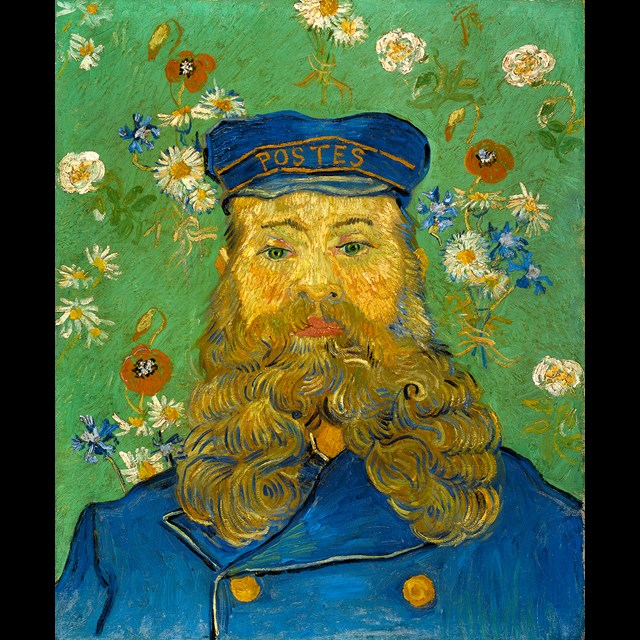
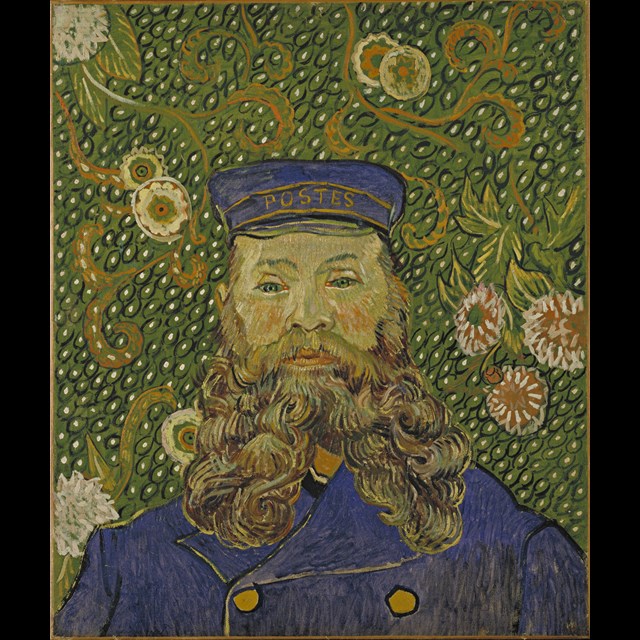
Not long ago, I visited the Philips Collection in Washington, D.C. to view “Van Gogh Repetitions,” a show devoted to Van Gogh’s artistic process. I never realized that there were different versions of some of Van Gogh’s most famous paintings (five different versions of “The Postmaster” alone!). The changes from painting to painting were sometimes dramatic, but more often were subtle, barely noticeable if you weren’t paying close attention.

VINCENT VAN GOGH The Postman Joseph Roulin, February–March 1889. Collection Kröller-Müller Museum, Otterlovan-gogh-portrait-of-joseph-roulin-1889

(On left, “The Postman Jospeh Roulin,” February-March 1889, Collection Kröller-Müller Museum, Otterlo. On right “Portrait of Joseph Roulin,” 1889. The Museum of Modern Art, New York. Digital Image © The Museum of Modern Art / Licensed by SCALA / Art Resource, NY)

It seems to me this is the pattern of life, and this has been true of my writing over the past two years. Most changes were minute, and often recognizable only in hindsight. Other changes were seismic; real breakthroughs for me as a writer. Taking part in last March’s daily Slice of Life Challenge was one of these watershed moments for me. I truly felt that I was part of a community, and this made me more confident about sharing my writing. I even branched out and began taking part in other memes, It’s Monday! What are You Reading? and Poetry Friday in particular.

Being a teacher who writes has improved my teaching, both with my students and the teachers I work with. I can help them through the hard parts (and as Katie Wood Ray would say, “they’re all hard.”) because I’ve worked through the hard parts myself. I can show them drafts full of cross-outs and arrows and say, “See, it can be done.”

This generous online community has also enriched my teaching. Blogs and tweets are full of ideas, resources, and book suggestions. My students have Skyped with authors, enjoyed books you’ve shared in give-aways, and benefited in countless ways from your collective brilliance.

So even though it’s my blog’s birthday, today I’m celebrating all of you, my PLN, my friends. Thank you for two exciting and inspiring years. I’m looking forward to many more!

Don’t forget to head over to Two Writing Teachers today to read what others are celebrating today.

It’s Monday! What Are You Reading?

IMWAYR

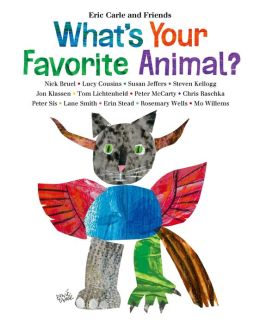
Take a five year-old’s favorite question, add Eric Carle’s joyous spirit and thirteen of the most accomplished illustrators working in children’s literature today and you have What’s Your Favorite Animal? (Henry Holt, 2014). This book is a glorious celebration of animals and art. Each artist responded to this important question with a short piece of writing and an illustration. The writing ranges from heartfelt recollections of childhood pets to whimsical imaginary pets. Nick Bruel’s Bad Kitty even gets to add her two cents.

9780805096415_p0_v2_s260x420

The writing that accompanies each illustration is rich with description and rationale. Peter Sís describes “…many families coming with their carps to the river and blue fish swimming toward the ocean. This gave us all hope!” Chris Raschka’s keen observation of the lowly snail gives readers a new appreciation of an animal who’s often overlooked: “But all her life she works her craft, adding to it day by day, until, when she dies, she leaves us something of great beauty.”

These words could describe the work of these artists, who have given the world so much beauty through their books. It seems fitting, then, that proceeds from What’s Your Favorite Animal? are being donated to The Eric Carle Museum of Picture Book Art. The Carle, dedicated to inspiring “a love of art and reading through picture books,” is one of my favorite museums. (Read more about my last visit here.)

What’s Your Favorite Animal? is a perfect mentor text for young writers making their first attempt at opinion writing. The CCSS calls for both Kindergarten and first grade writers to “write opinion pieces.” What better topic than animals, something every child has an opinion about?

I also found this book on my most recent trip to the bookstore:

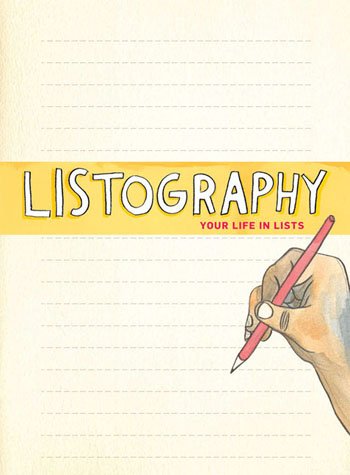
listography350
Listography: Your Life in Lists
Chronicle Books, 2007

Lisa Nola, creator of this book/journal explains in a note that the book “is designed to help you create your autobiography.” But I was drawn to Listography for a different reason. It’s ideal for using with kids when they complain, “But I don’t know what to write about.” WARNING! Don’t just hand this book to students; adults are definitely the target audience. Rather, choose an appropriate page and write the topic on the board. Like What’s Your Favorite Animal?, everyone has favorite toys, games, and songs.

This book appealed to me on another level, though. I don’t usually need lists like this for ideas of what to write about. Rather, I can see using this book and these list ideas to get to know my own characters better. I have seen many writing exercises that do just this. But the idea of having this whole volume filled with these lists really appeals to me. I’m hoping they’ll help me find, to use Ray Bradbury’s perfect metaphor, what’s “hidden under the trapdoor on the top of my skull.” Or, in this case, my character’s skull.

Be sure to visit Jen at Teach Mentor Texts and Kellee at Unleashing Readers to find out what other people have been reading lately. Thanks, Jen and Kellee, for hosting!

Poetry Friday: Eureka! Poems about Inventors, Snowflake Bentley, and Erasure Poetry

Poetry_Friday_Button-210

Our fifth graders are in the midst of an informational reading/writing unit focused on inventions and inventors. While the students read mostly nonfiction during this unit, we also share several poems from Joyce Sidman’s remarkable book, Eureka! Poems about Inventors (Millbrook Press, 2002). In this volume, Sidman, winner of the 2013 NCTE Award for Excellence in Poetry for Children, celebrates in verse the invention of paper, hot air balloons, velcro, and more.

300x300_485e3b7ebd52df056550489bea410b89

“Food of the Gods” describes the history of chocolate, from Quetzalcoatal dropping “ripe yellow pods of cacao” to Francois-Louis Cailler, who, in 1819,

“…seized upon them,

           mixed and ground and tempered,

and by some clean and wholesome magic,

made of them a food–

a wafer of heaven,

a smooth slab of heart’s delight.”

For more about Eureka! as well as a Reader’s Guide and links to information about inventors, visit Joyce’s website.

In the past, the fifth grade teachers and I have talked about having the kids write their own inventor/invention poems, but we’ve never managed to find the time. I had my own eureka moment when I read Dana Murphy’s post about erasure poetry over at Two Writing Teachers last week. Suddenly, I knew this was the way to have our students craft poems about the inventors and inventions they’re studying. This technique is also a great way for students to practice zeroing in on important details and main ideas.

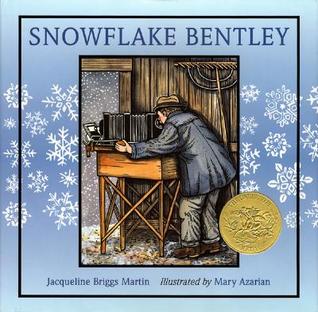
Here is my attempt at erasure poetry to use as a model with students. I chose Jacqueline Briggs Martin’s Snowflake Bentley (Houghton Mifflin, 1998), one of my all-time favorite books to share with students, as my subject. Mary Azarian’s stunning woodcut illustrations for the book won the Caldecott Medal.  Although Wilson Bentley wasn’t an inventor like Gutenberg or Elijah McCoy, he did develop the process to photograph snowflakes and became world-famous for his miraculous pictures.

348489

I worked in my notebook, jotting down lines that seemed meaningful as I read the book. As I reread, I thought about the importance of particular events and made decisions about including them in my poem. This kind of thinking can be challenging for students, and writing erasure poems will be an engaging way from them to practice these important skills.

The Snowflake Man

~Wilson Bentley~

born February 9, 1865

Jericho, Vermont

A boy who loved snow,

snow as beautiful as butterflies,

studied the icy crystals

through an old microscope.

Saw intricate patterns,

no two the same.

He wanted to find a way

to save snowflakes,

and tried drawing snow crystals,

but they always melted.

At sixteen,

he read about a camera with a microscope.

“I could photograph snowflakes,” he thought.

At seventeen,

his parents spent their savings

on that camera.

Mistake by mistake,

He would not quit.

Finally, in the second winter,

he figured out

how to photograph snowflakes.

Neighbors laughed when

he waited hours

to find just the right crystal.

Willie said the photographs

would be his gift to the world.

He wrote and gave speeches,

became famous,

and published a book.

A book of his best photographs,

of his treasures in snow.

By Smithsonian Institution from United States (Snowflake Study  Uploaded by PDTillman) [see page for license], via Wikimedia Commons
Photo by Wilson A. Bentley; Smithsonian Institution from United States (Snowflake Study Uploaded by PDTillman), via Wikimedia Commons
 Please be sure to visit Tricia at The Miss Rumphius Effect for the Poetry Friday Round Up.

Slice of Life: Pickles, Owl Moon, and the Hard Work of Revision

sols_6Last spring, during a poetry writing unit, a 5th grade student asked me to read a poem she had written. “I’d love to,” I told her as she handed me her notebook with pride. I knew this girl to be a good student and a strong reader, so I was quite surprised to read what she had written.  It was mostly about pickles, but her poem was full of forced rhymes and then no rhymes. I told her that her love of pickles was coming through loud and clear. Then I asked her about some of the more questionable rhymes.

“What do smelly feet have to do with sweet pickles?” I wondered

“Nothing, but sweet and feet rhyme,” she said matter-of-factly.

“I wonder if  there are any other words that rhyme with sweet that have more to do with pickles than feet.”

“Probably, but today I just feel silly and want to write a silly poem.”

“Fair enough. Let’s look at it again tomorrow and see if you still feel that way. Writers often see their work differently after a day or two,” I said.

She wasn’t convinced, and she didn’t change the poem.

Over the years, I’ve had plenty of students who were unwilling to revise their writing. It seems as if getting anything down on paper is torture enough. Then to have to make changes is just insulting. Part of me empathizes with them. I know it’s hard to get our thoughts down in the first place. But I also know how much better writing can be after the second or third revision.

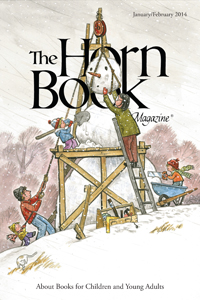
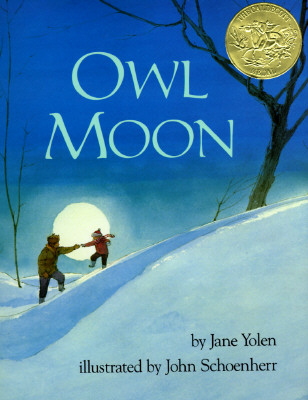
january2014cover_FAKE_200x300I wish I’d had Jane Yolen’s article from the current issue of The Horn Book to share with my reluctant reviser. In it, Yolen muses over different forms her Caldecott-Award winning picture book, Owl Moon, might have taken. A sonnet? No, too short. What about as a rap? Definitely not. She states that “a writer has to make choices [about] how to tell a story. But when a writer finds the right voice, everything comes together.” (pg. 46)

OwlMoon1

Writers do make choices. But I feel that our students don’t really understand that this means more that just thinking of words that rhyme. As Yolen goes on to say, finding this voice for our writing takes “hard work, inspiration, even perspiration.” (pg. 50)

So why did my young poet short-change herself and her poem? In this case, I think she just needed more time. Time to build the habit of writing every day so being asked to write didn’t feel like punishment. Time to experience the joy of finding just the right word, the perfect expression of her feeling. Time to play with different versions of her poem to find out if silly really was the right tone. Sometimes we may get lucky and stumble onto the right form on our first try, as Yolen feels she did with Owl Moon. But in most cases, we need to sweat over our writing before sharing it. Only then can we sit back and have a pickle.

Thank you to everyone at Two Writing Teachers for hosting the Slice of Life every Tuesday. Be sure to stop by to read the hard work of many devoted writers.

Slice of Life: Getting From Point A to Point B

sols_6

About a month ago, I found myself driving in an unfamiliar city at dusk. As I exited the highway into rush hour traffic, my GPS informed me that it had lost its satellite connection. After my initial panic, I took a deep breath and, because I had looked at a map before I left home and had the map feature open on my phone, was able to navigate to my hotel without a wrong turn.

Being able to read a map is an important skill. It provides us with a bird’s-eye view of where we’re going. Some people may argue that not knowing is what keeps life interesting, but I like having an idea of what lies ahead.

In teaching, our curriculum calendars and lesson plans are like maps in that they lay out a predictable path that will lead us from point A to point B. But like a driver encountering a roadblock, or me when my GPS failed, we need to possess the skills to help us adjust our teaching in a way that addresses the roadblock but still gets us, and more importantly, our students, to point B.

The school where I did my student teaching used a scripted math program that spiraled through concepts at a fairly quick pace. When we taught long division according to the program’s sequence, the kids were stumped. They just didn’t get it. They were frustrated and I was practically in tears. My cooperating teacher, however, believed in being responsive to the needs of students, not being a slave to the script. We worked together to use lessons from the old basal math program and other resources to give our students the time and support they needed to practice the steps of long division until they understood it well and were able to apply them independently. Without his guidance and support, I would have soldiered on and the kids wouldn’t have learned much about division.

I’ve been very fortunate in my career to have worked in a district where we’ve never had a scripted curriculum. The administrators have always trusted us. They’ve given us the autonomy and flexibility to make decisions about lesson plan and materials that we felt met the needs of our students. I worry that if teachers are never allowed to use anything other than a scripted curriculum, or are admonished or punished for deviating from this script, they will never know how to deal with the roadblocks our students present us with daily.

World of Ptolemy as shown By Johannes de Armsshein, Ulm, 1482 [Public domain], via Wikimedia Commons
Medieval cartographers labeled areas beyond their ken “Here there be dragons.” In other words, venture here at your peril. And yet, intrepid explorers ventured across unknown oceans. They trusted their knowledge, skills and instincts to carry them safely to shore. Teachers do this every day. We draw upon our past experiences, skills and knowledge as we interact with students. We aren’t always sure if our students are going to learn a skill or concept exactly they way we plan for them to, but we have a pretty good idea of what to do when we encounter a roadblock.

Just as drivers shouldn’t become dependent on their GPS, which might stop working at a critical juncture, teachers shouldn’t be held to scripts or curriculums that don’t meet the needs of our students. We have to have the flexibility to veer off course if needed, but still reach our destination. Anything less is a disservice  to our students.

Poetry Friday: Aurora Borealis

Yesterday, I was thrilled at the possibility of northern lights being visible in Connecticut. I have vivid memories of the handful of times I have witnessed this display of dancing light, but it’s been ages since I saw them last. These mysterious lights must have been terrifying to people throughout history without our knowledge of solar flares and ions bumping into Earth’s atmosphere. Fortunately, knowing this doesn’t diminish their beauty or their ability to inspire.

I don’t share my own poetry very often, but I couldn’t find a poem that matched my memories or feelings about the auroras I’ve seen. So here is a very rough draft of a poem inspired by watching northern lights with my boys in March of 1989.

By Xander [CC-BY-2.0 (http://creativecommons.org/licenses/by/2.0)], via Wikimedia Commons
By Xander [CC-BY-2.0 (http://creativecommons.org/licenses/by/2.0)%5D, via Wikimedia Commons
“Aurora Borealis”

Do you remember

that spring night, long ago,

when we stood on the lawn,

transfixed?

We gazed up in awe

as curtains of shimmering light

danced across the sky,

wrapping the big dipper

in veils of glowing green.

Your eyes grew wide

when a burst of red

flared and rippled,

casting an eerie glow

over the countryside.

“What is it, Mommy?”

you wanted to know.

“Magic,” I replied.

© Catherine Flynn, 2014

Gaze at the world through the eyes of a four-year old today and be amazed. And, for plenty of amazing poetry, be sure to stop by Mainely Write, where Donna has the Poetry Friday roundup.

Slice of Life: NCTE Edition

sols_6  logo-higher-logic

“The universe is made of stories, not atoms.”

 ~Muriel Rukeyser~

I arrived at the Hynes Convention Center in Boston on Thursday evening for my first NCTE Convention filled with anticipation about the upcoming three days. To say my expectations were fulfilled is an understatement! From meeting authors Jane Yolen, Gae Polisner, and Kate Messner, to having breakfast with fellow Slicers, to learning so much from all the amazing presenters, it was a weekend I will long remember.

My head is still filled with the wise words shared not only by the teachers, authors, and poets in front of the conference rooms, but with everyone I chatted with throughout the day. How to share all these thoughts swirling around my brain, like the leaves on the streets of Boston Sunday morning? As I pored over my notes, a pattern of recurring words and phrases began to emerge, and I “found” this poem:

Open the door…

welcome to this safe space.

A space to share our voices,

and tell our stories,

through poetry,

movement,

and art.

A place to explore,

imagine,

speculate,

and connect.

A space to find surprises,

insights,

knowledge,

and trust.

This place is a source of joy.

It has the power to change us; to

help us discover what’s in our heart.

It gives us the courage

to take our message

out into the world.

Thank you to Judy Blume, Nancie Atwell, Helene Coffin, Georgia Heard, Linda Rief, Tom Romano, Chris Leheman, Kate Roberts, Maggie Beattie Roberts, Joyce Sidman, Jane Yolen, Jerry Spinelli, Glenda Funk, Cherylann Schmidt, Kate Messner, Gae Polisner, Jo Knowles, Jen Vincent, Brian Wyzlic, Sara Egan, Brian Fizer, Sean Ruday, and Miriam Kopelow for so generously sharing these words, your experiences and your insights with teachers; for giving us the knowledge and the courage and the power to change our students’ lives.

Please visit Two Writing Teachers, where many wonderful and courageous teachers share their stories each week.

It’s Monday! What Are You Reading?

IMWAYR

I love going to conferences and workshops. They’re so invigorating. Sometimes an idea I have is confirmed, or I’m reminded of a strategy or activity I haven’t used in a while. But the best sessions are those where I learn something new that I can immediately use in my teaching and moves my thinking about a topic forward.

This happened on Saturday at the Teachers College Reading and Writing Project Saturday Reunion. Carl Anderson’s session on analyzing informational texts for teaching points to support student writing caused a noticeable shift in my thinking about these books.

Anderson, author of the classic book on conferring, How’s It Going? (Heinemann, 2000), opened his talk by reminding us that using mentor texts is essential if we want our students to write well in any genre. They have to “imagine the shape of their drafts.” In order to do this, they’ll need lots of exposure to models of the genre before they write.

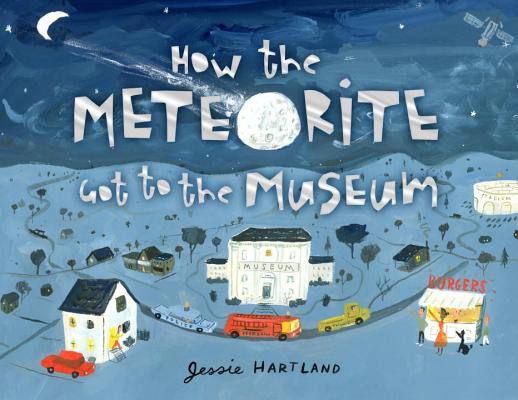
Teachers should look at possible mentor texts through several lenses, including meaning, structure, details, voice, and conventions. Anderson’s words came back to me a few hours later while I was browsing the shelves at Bank St. Book Store. Astronomy has always fascinated me, so Jessie Hartland’s new book, How the Meteorite Got to the Museum (Blue Apple Books, 2013), caught my eye. As I flipped through the pages, I realized I was reading the book differently that I would have just the day before. Many elements of the book’s structure and style popped out and grabbed my attention.

9781609052522

Told as a cumulative story in the tradition of “The House that Jack Built,” How the Meteorite Got to the Museum combines scientific facts with the daily lives of the people whose path the meteor crossed, making the story more interesting and engaging to readers. Hartland infuses the story with humor with lines like “Your car was in an interstellar collision!”

The Peekskill Meteorite’s descent to Earth is described with vivid details that include all the senses. Witnesses’ reactions are chronicled with a variety of verbs each time they’re mentioned, as is the meteorite’s journey itself. Hartland’s colorful, engaging illustrations, which remind me of Maira Kalman’s work, include diagrams, maps and other typical of non-fiction features.

All of these touches give this book a depth that will draw kids back to it again and again, a depth I might have missed if not for Carl Anderson’s ideas about analyzing mentor texts. How the Meteorite Got to the Museum is an ideal mentor text for 3rd or 4th grade students who’ve been writing informational text for a few years and are ready to stretch their writing wings and try a new text structure. And they’ll learn a few facts about meteorites along the way.

Be sure to visit Jen at Teach Mentor Texts and Kellee at Unleashing Readers to find out what other people have been reading lately. Thanks, Jen and Kellee, for hosting!