Slice of Life: Cultivating a Passion for Writing

11454297503_e27946e4ff_h

A few weeks ago, on her superb blog, Vicki Vinton asked “What are you doing to cultivate passion in readers and writers in your rooms?”

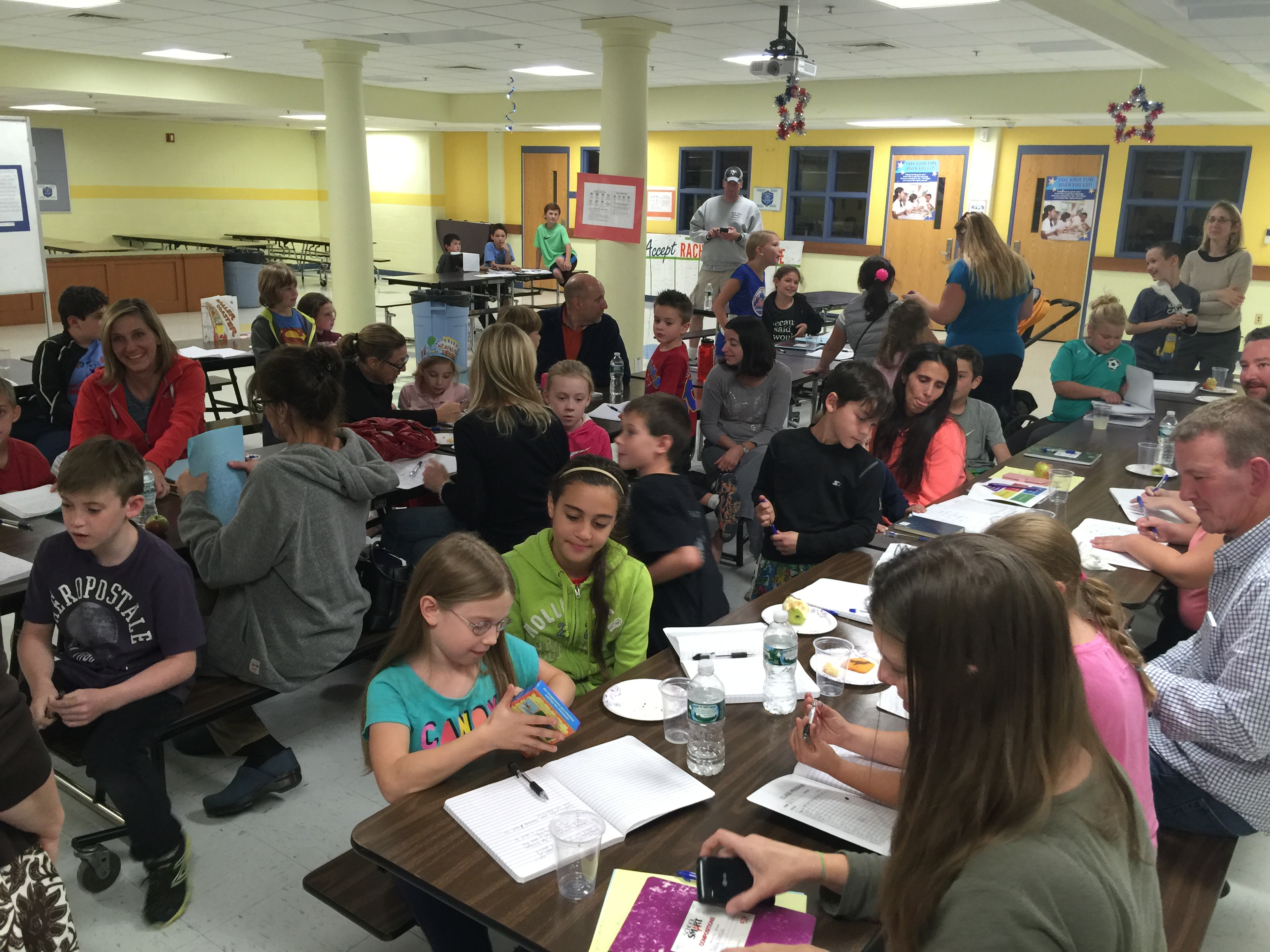
One way I try to cultivate passion is to wear my love for reading and writing on my sleeve. Another is to hold Family Writing Nights. Last winter, inspired by Dana Murphy’s presentation at NCTE, I organized our first writing night, which you can read about here. It was a big success, and many people asked if we could have another FWN. I’d hoped to squeeze it in last spring, but the schedule filled up quickly and there were too many conflicts. So this year I decided to hold our first writing night in the fall, followed by another in February.
File_004

The turnout wasn’t quite as high as last year’s event, but we still had an enthusiastic crowd.

Ralph Fletcher says that “memories are like a fountain no writer can live without.” Hoping to spark some summer memories, I began the evening by reading Marla Frazee’s exciting Roller Coaster (HMH Books for Young Readers, 2006). This gem of a small moment story recalls a child’s first time on that amusement park ride that everyone loves or loves to hate. Either perspective makes a good story!

I also shared a tip I learned recently from Shanna Schwartz shared at a TCRWP Writing Units of Study workshop. She suggested encouraging writers to use their body as a kind of memory map. Shanna said to have kids (or adults) start at the top of their head and ask if they have a story about their hair. I know I have my share of  disastrous hairstyles! Maybe they have a story about a time they cut their hair, or a time they cut someone else’s hair. Moving down, is there a story about a loose tooth? What about that broken arm? Are they wearing a t-shirt they got on vacation or with the name of their favorite sport team? Once you start asking these questions, the list of possible stories is endless!

At the end of the evening, one dad came up to me to say how much he had enjoyed the evening. He told me he’d had a pretty stressful day, and that sitting down to write had relaxed him and relieved some of his stress. The next day, several students brought their notebooks to school to share what they’d written after they got home.

That’s the kind of enthusiasm we hope for in all of our students. It’s incredibly gratifying to help others find their voice as a writer. That’s why I’ll continue to organize Family Writing Nights, doing everything I can to encourage writers of all ages.

Thank you to StaceyTaraDanaBetsyAnnaBeth, Kathleen, and Deb for this space for teachers and others to share their stories each Tuesday. Be sure to visit Two Writing Teachers to read more Slice of Life posts.
Poetry Friday: Oceans of Leaves

poetry-friday-1-1

“When we write, we should play with what pleases us,” Lester Laminack advised the audience at the Connecticut Reading Conference earlier this month. These words have been in my head as I’ve thought about what to write for Carol Varsalona’s “Finding Fall” Poetry Gallery. Once again, Carol has invited teachers, writers, and poets to contribute a seasonal poem, which she will assemble into a stunning visual gallery.

Autumn is a perennial favorite for poets, so finding a new angle is quite a challenge. Then, when I was walking my dog last week, I noticed how she sought out the piles of leaves collected along the roadside. She was having just as much fun in the leaves as I used to when I was little. I had found a topic that pleased me, a topic I could play with. Here is the result.

Oceans of Leaves

When autumn leaves transform
lawns into orange and yellow oceans,
our dog races through the piles
swelling and drifting across the yard.
Like a dolphin, diving in and out
of foamy ocean waves,
she plunges
into heaps of maple leaves
that rustle and crunch
under her sagging belly.
A smile of joy spreads across her face
as she catches the perfect wave
and rides the golden surf.

© Catherine Flynn, 2015

Please be sure to visit Jama Rattigan at Jama’s Alphabet Soup for the Poetry Friday Round Up.

Poetry Friday: A Writing Kind of Day

poetry-friday-1-1

It was raining yesterday morning when I arrived at the the Connecticut Reading Conference. But Ralph Fletcher’s inspiring keynote address and break-out session about the importance of narratives and mentor texts quickly drove away the day’s dreariness.

Fletcher told the ballroom full of teachers that “mentor texts breathe new life into the classroom; they expand kids’ vision of what’s possible.” He demonstrated this by asking us to use his poem, “The Good Old Days,” as a model for our own writing. A hush came over the room as everyone wrote feverishly about childhood memories. If anyone in the room doubted the importance of giving writers choices about their writing, this activity dispelled that notion.

He encouraged us to share powerful mentor texts with students so they can be “showered by the pixie dust” that comes off these books and poems and write their own powerful texts. He urged us to leave room in our curriculum for personal narratives so our students can learn to write with voice. “Kids find their stride as writers by writing about themselves,” he said.

After his session, Ralph graciously stayed to sign books and answer questions. When he signed my copy of his poetry collection, A Writing Kind of Day: Poems for Young Poets (WordSong, 2005) he told me his favorite poem in this book is “Squished Squirrel Poem.” I love it, too. I can picture a student (or two) of mine who would be inspired by this poem. This is a poem they could go into and find exactly “what they need” to create a poem of their own.

He also gave me permission to share this poem from the collection, the perfect poem for a rainy autumn day.

“A Writing Kind of Day”

It is raining today,

a writing kind of day.

Each word hits the page

like a drop in a puddle,

creating a tiny circle

of trembling feeling

that ripples out

and gathers strength

ringing toward the stars

Then it hit me,

Ma was my first word.

As if the word swam back

to where it all began.

I want my students to think every day is a writing kind of day. Thank you, Ralph Fletcher, for sharing your wisdom with teachers and inspiring us to create classrooms that will encourage our students to create “tiny circle[s] of trembling feeling.”

Please be sure to visit Cathy Mere at Merely Day By Day for the Poetry Friday Round Up. Thanks for hosting, Cathy!

Slice of Life: Writing Zenos

11454297503_e27946e4ff_h


A couple of weeks ago, Michelle Heidenrich Barnes featured an interview with poet J. Patrick Lewis on her blog. Lewis challenged Michelle’s readers to write a “zeno,” a poetic form he invented. Inspired by the mathematical “hailstone sequence,” a zeno, is “a 10-line poem with 8,4,2,1,4,2,1,4,2,1 syllables that rhyme abcdefdghd.”

I think students will have fun with this form, so I spent some time playing with zenos today. They are quite a challenge! Here’s the example I came up with to share with my students before they try their own:

In October apples ripen,

orchards are full.

Fruit hangs

thick.

Plump, juicy macs,

winesaps,

slick

with morning dew.

Fun to

pick!

© Catherine Flynn, 2014

Winslow Homer, 1878 [Public domain], via Wikimedia Commons
Thank you to Michelle and J. Patrick Lewis for this challenge! And thank you StaceyTaraDanaBetsyAnna, and Beth for hosting Slice of Life each Tuesday. Be sure to visit Two Writing Teachers to read more Slice of Life posts.

Slice of Life: Becoming Fearless

11454297503_e27946e4ff_h

“Play around. Dive into absurdity and write. Take chances. You will succeed if you are fearless of failure.” 

Natalie Goldberg, Writing Down the Bones: Freeing the Writer Within

I highlighted these lines in my copy of Goldberg’s wise and funny book years ago. But I feel like I’m just beginning to truly understand their implication in terms of what is possible for me as a writer.

Why did it take me so long to come to this understanding? Maybe I’m a slow learner. More likely is the fact that I’ve been writing a lot this summer. And through the process of becoming more immersed in the story I’m working on, I have become fearless. Okay, less fearful.

But there’s more to it than just writing more. Two experiences from the past month have played a huge role in helping me get to this point.

Thanks to a conversation Melanie Meehan and Betsy Hubbard had on Twitter a few months ago, I am now part of an online critique group. I cannot overstate how lucky I am to work with Melanie, Stacey, and Julie. They are incredibly supportive and kind, but also offer meaningful suggestions and advice. Another benefit of being part of this group is reading my partners’ amazing writing. Melanie, Stacey, and Julie are all talented writers, and I’ve already learned so much from the pieces they’ve shared with the group.

My experience at art camp earlier this month also helped me be more comfortable to “play around” and “take chances” in my writing. One of the activities that I found especially helpful was creating an “analog drawing” of a problem. In analog drawing, only lines are used to express emotion, among other things. As I sketched my problem, I realized I was creating a narrow doorway with a border that looked very much like battlements. “Is this how I approach problems?” I wondered, appalled at the thought. I began to sketch other doorways, doorways that opened wider and were less rigid. As I continued to draw, I came to the realization that these narrow doorways were impacting my writing.

So it was with these two experiences in mind that I was able to not, in Natalie Goldberg’s words, be “tossed away…by [the] fiasco” of this line in my first draft of a story about a girl whose mother has just died:

“Holly was devastated that she would be separated from her two best friends.”

As my husband might say, “Well, no s*&t, Sherlock.” As soon as I read this line, I knew my critique partners would point out its many weaknesses immediately. I really didn’t want them to even see this lame line. I also thought of my drawing of the opening doors. Why was I afraid to find out how Holly dealt with this devastation?  Just write. Dive in and see where this line leads.

After an hour of revision, one short sentence had become two pages of action and dialogue that reveal much about Holly and her mother. These are the lines (which still need plenty of work) that replaced the original, obvious statement of Holly’s feelings:

“Holly stared in disbelief at the lists taped up on the glass doors. Tears filled her eyes as she turned away and ran from the parking lot toward the playground. “Arrrgh!” she screamed as she jumped onto bottom rung of the jungle gym. Her hands clung to the cold metal of the bars as if they were all that kept her from falling into a giant black cave.”

In her book The Artist’s Way, Julia Cameron writes that we are “creating pathways [into our] consciousness through which the creative forces can operate.” I realize now that I had to write the first line in order to create the pathway to get to the second line. Uncovering deeper understandings about these characters and their story isn’t always possible without a surface level understanding of who they are. Put another way, just as artists have to sketch the outline of a subject before they can add layers of color that create nuance and depth in their drawing or painting, writers have to start with a general idea of what their writing is about before they can add the nuance and depth that creates memorable characters.

While I’m happy about the writing I’ve done over the past month, I’m unsettled by the implications of how I arrived at these insights for teaching. Having the luxury of filling my days with reading, writing, drawing, and thinking about what interests me, at my pace, is not an opportunity we give our students very often, if ever. Children need the time to play and explore, to discover what is possible, not just in writing, but in all areas of their lives. They also need the kind of supportive and nurturing environment my critique group has given me. Finding a way to provide these conditions is critical for anyone, young or old, to create the pathways into their consciousness that will awaken them to all the possibilities within themselves.

Thank you, as always, to StaceyTaraDanaBetsyAnna, and Beth for hosting Slice of Life each Tuesday. Be sure to visit Two Writing Teachers to read more Slice of Life posts.

Poetry Friday: “I Wandered Lonely As a Cloud”

poetry-friday-1-1

Signs of spring are finally showing up here in my corner of Connecticut, and spring break begins TODAY! In honor of the season, I’m sharing “I Wandered Lonely As a Cloud” by William Wordsworth. This is one of the first “adult” poems I remember reading in high school that I really liked. Who wouldn’t want to be dancing with daffodils?

I wandered lonely as a cloud
That floats on high o’er vales and hills,
When all at once I saw a crowd,
A host, of golden daffodils;
Beside the lake, beneath the trees,
Fluttering and dancing in the breeze.


Continuous as the stars that shine
And twinkle on the milky way,
They stretched in never-ending line
Along the margin of a bay:
Ten thousand saw I at a glance,
Tossing their heads in sprightly dance.


The waves beside them danced; but they
Out-did the sparkling waves in glee:
A poet could not but be gay,
In such a jocund company:
I gazed—and gazed—but little thought
What wealth the show to me had brought:


For oft, when on my couch I lie
In vacant or in pensive mood,
They flash upon that inward eye
Which is the bliss of solitude;
And then my heart with pleasure fills,
And dances with the daffodils.
By Myrabella (Own work) [CC-BY-SA-3.0 (http://creativecommons.org/licenses/by-sa/3.0)], via Wikimedia Commons
Parc de Bagatelle, Paris By Myrabella, via Wikimedia Commons
Happy Blog Birthday to Michelle at Today’s Little Ditty! Be sure to visit and help her celebrate and to read the Poetry Friday round up.

Slice of Life: Bo, the Outdoor Cat

11454297503_e27946e4ff_h

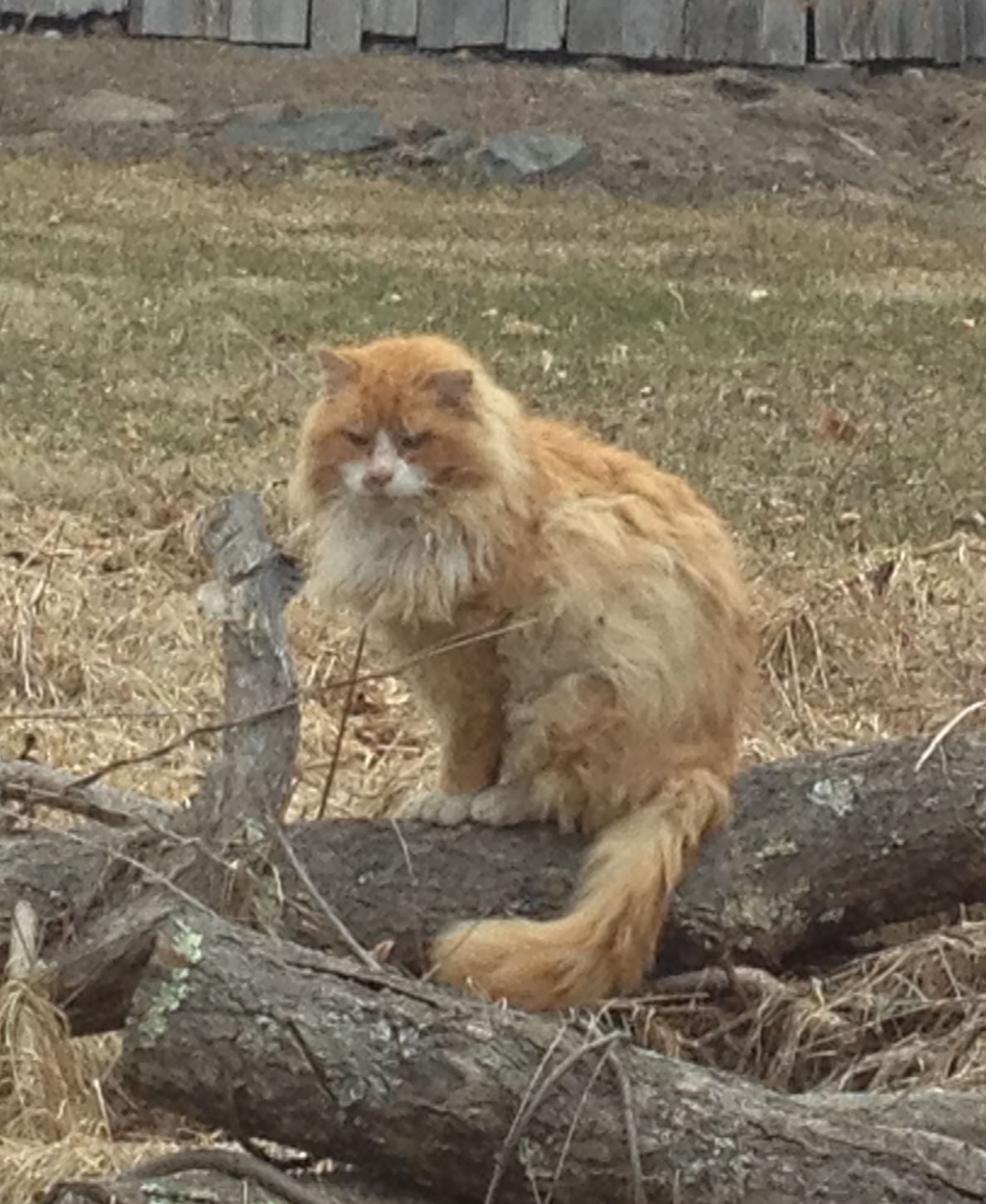
Two cats live at our house. Two fluffy orange cats. Every afternoon when I get home, Noodles, our indoor cat, is waiting for me at the front door. He darts out before the door is even open all the way, anxious to be out in the fresh air and sunshine. Noodles is always ready to come back inside, though, and curl up with me on the couch.

Bo is an outdoor cat. He adopted us; just started hanging around. At first we tried to shoo him away, but he kept turning up. I asked the neighbors if anyone was missing their cat, but no one knew anything about him. So I started feeding him. My husband was against this, said we didn’t need a stray hanging around. But Bo looked so sad. He’d clearly been in his share of fights, and his coat was matted and unkempt.

At first he scurried away whenever we were outside. He found a way into a ramshackle storage shed behind the garage and made a home for himself there. Whenever I left food on the porch, he’d slink up, gobble down the kibble, then run away to his hiding place after he was full.

Then he started sleeping on the wicker settee on the porch if the weather was fine. He still ran away if he saw us, but not all the way back to the shed. He stopped hissing at me when I brought food out for him.

Now, he’s part of the scenery. I named him Bo because I thought he was very bold to just make himself at home here. His hardscrabble looks also made me think of the song “Mr. Bojangles.” He waits by the front door every morning for his breakfast and doesn’t run away when I come outside. He seems content enough, but still doesn’t let me get close enough to pet him. And I’ve noticed that he always sleeps with his legs under him, ready to bolt at the first sign of danger.

He reminds me of a student who lived in our town for a short time a few years ago. He had been in a series of foster homes, and had a tough, gruff exterior. He didn’t act out or cause trouble, but he never looked completely comfortable or relaxed. He always looked ready to bolt.

I won’t ever know where Bo got his scars or how he landed on our doorstep. All I do know is that he needed a home and someone to care for him. I hope someday he’ll let me pet him. In the meantime, he reminds me everyday that sometimes the children who put up the toughest barriers are the ones who need our love the most.

Bo outside his shed.
Bo, outside his shed.

Thank you, as always, to StaceyTaraDanaBetsyAnna, and Beth for hosting Slice of Life each Tuesday. Be sure to visit Two Writing Teachers to read more Slice of Life posts.

SOLC 2014: Things to do if You’re a Writer

11454297503_e27946e4ff_h

How to write this final post of the 2014 Slice of Life Challenge? Yesterday’s post was reflective and full of thanks to everyone who made this challenge possible and who encouraged me through their generous comments. I had planned to do a standard “It’s Monday! What Are You Reading?” post, but as often happens, life intervened and I knew that plan wasn’t going to work. 

I spent much of the day revising our fifth grade poetry unit and thought I could write about that, but that didn’t seem appropriate for my final slice. “In the end,” I decided to use a list poem (another list!) I read today, “Things To Do If You Are The Sun,” by Bobbi Katz, as a model for a poem that sums up how participating in this challenge has changed me as a writer.

Things To Do If You’re a Writer

Let words envelop you and swirl inside your head.

Look at a flower bud and see a diver poised on the brink of the board.

Hear an owl hooting and wonder what coded message he’s sending out

into the night.

Bite into a pear and taste summer in its sweetness.

Touch a puppy’s ear and feel the satiny edge of a well-loved blanket.

Breathe in the late winter air and sniff a hint of spring.

Gather these bits and pieces, like a magpie, and weave them

into something wonderful.

Share your creation with friends, who, through reading your words,

know what is in your heart.

© Catherine Flynn, 2014

Thank you, everyone, for an amazing month.

9781596432208

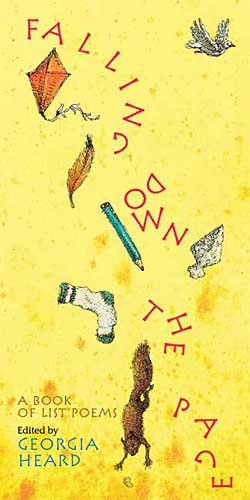
If you’d like to read “Things to do if You Are the Sun,” it can be found in Falling Down the Page: A Book of List Poems (Roaring Brook Press, 2009), edited by Georgia Heard. If you’d like to read other list poems and gather more ideas for using them as mentor texts with children, read Elaine Magliaro’s post at Wild Rose Reader.

SOLC 2014: The Perils and Pleasures of Writing

11454297503_e27946e4ff_h

“…there is nothing more wonderful than a list…”

~ Umberto Eco ~

As this month draws to a close, it seems natural to reflect on what I’ve learned. Lists have been popular this year.  I love lists and have tried a few different formats myself, and thought a compare/contrast style list would work to organize my jumbled thoughts about writing each day for the past 30 days. 

 The Perils of Writing Every Day

  • Chocolate on the computer–I guess as long as it doesn’t work its way into the keyboard or USB port, it really can’t hurt.
  • Almost driving into a snowbank as I watched a bobcat cross the road. (Thankfully, the snow is gone!)
  • Being so tired from reading and writing (not to mention life) that I could hardly see straight, yet when I finally got into bed and closed my eyes, words floated into my brain and I had to get up to write them down.
  • Washing my hair with body soap because I was still tired and distracted by my thoughts.
  • There was something else, but I can’t remember what it was because I didn’t write it down!

woman-writing1

The Pleasures of Writing Every Day

  • Finding exactly the right words to express my thoughts.
  • Reflecting on daily events through writing. This has helped me learn and deepen my understanding about a many topics.
  • Learning about myself as a writer–being conscious of my bad habits and trying to improve my writing.
  • Having the satisfaction of letting go of some self-doubt and accomplishing a goal — sharing an original poem each Friday was scary.
  • Being part of this supportive, nurturing community. Your comments and feedback have encouraged me and made me brave.

I am so grateful to Stacey, Tara, Dana, Anna, Betsy, and Beth for providing this space for us to share our writing, and to everyone on the support team who helped with all the details. I can only imagine the time and effort that have gone into making this month-long challenge a success. Thank you all for your generosity!

Finally, I am in awe of all of you. The writing that you have shared in response to the SOL challenge has been amazing. Your words have moved me to laughter and tears, and have given me new insights and understanding into life. Thank you so much for sharing.

SOLC: My Day at the Teachers College Saturday Reunion, 2014 Edition

11454297503_e27946e4ff_h

This morning, I left my house at 6:30 and drove to Teachers College at Columbia University for their spring Reading and Writing Project Saturday Reunion. I spent the day with thousands of dedicated teachers soaking up the wisdom of the amazing presenters. Because I am now quite tired, here is my day in pictures.

Diane Ravitch delivering the opening keynote.

Diane Ravitch’s keynote was a call to arms. Lucy Calkins, in her introduction, described Ravitch as “the single most important defender of public education” and “our hero, inspiring all of us to speak out and tell the truth.

Anna Gratz Cockerille sharing strategies to help children improve their informational writing.
Fellow Slicer Anna Gratz Cockerille sharing strategies to help children improve their informational writing.
Cynthia Satterlee had great advice for helping kids craft personal opinion essays.
Stephanie Harvey shared her wisdom about nonfiction.
Stephanie Harvey reminding teachers that “there’s a difference between thinking and knowledge. We have to teach kids to think so they can acquire and use knowledge.”
Kathleen Tolan describing how to "take an ordinary idea about a character and make it extraordinary."
Kathleen Tolan describing how to “take an ordinary idea about a character and make it extraordinary.”
The wisdom of Kathy Collins: "Children should believe that  when they give something to texts, they will get something back from the text."
The wisdom of Kathy Collins: “Children should believe that when they give something to texts, they will get something back from the text.”
photo-9
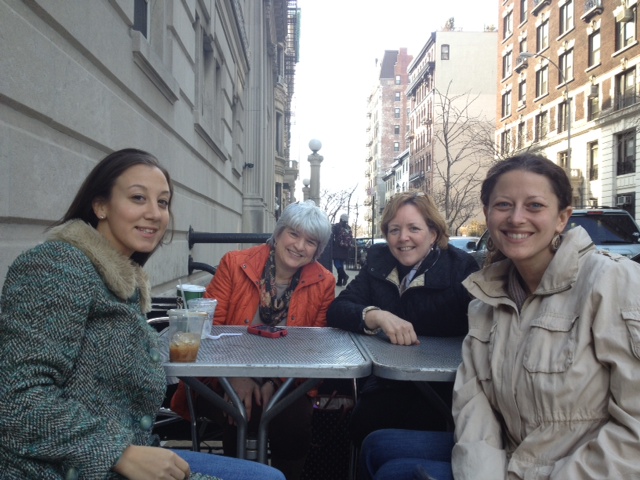
Having coffee with friends and talking about our wonderful day.
photo-10
On my way to Brooklyn, my first view of the Freedom Tower.
photo-11
The view from Brooklyn.
Dinner with my son and his girlfriend.

What an amazing day, filled with learning, laughter, family, and friends. Thank to everyone at Teachers College for hosting this amazing event!

Thank you, as always, to StaceyTaraDanaBetsyAnna, and Beth for hosting the Slice of Life Challenge. Be sure to visit Two Writing Teachers to read more Slice of Life posts.