SOLC 2014: Guiding Writing Instruction

11454297503_e27946e4ff_h

I’ve been thinking a lot about writing rubrics lately. All year, we’ve been continuing to incorporate the CCSS into our writing instruction and part of this work has been creating new rubrics. My school purchased the Units of Study by Lucy Calkins and her colleagues at the Teachers College Reading and Writing Project last spring, and we’ve made some minor changes to the rubrics in those units for grades K-5. However, the middle school rubrics have been a bit more of a challenge. Connecticut is part of the Smarter Balanced Assessment Consortium, and they have published rubrics that we’ve used as a guide to create documents that work for us. We found the Smarter Balanced documents cumbersome, so we’ve used the language from Smarter Balanced with the Units of Study format to draft rubrics for grades 6-8.

rubric-clip-art

There has been some disagreement among the teachers, however, about how many categories were needed on the rubric. Ultimately, we felt that everything on the SBAC rubric should be included on ours, but there is concern that the document has become unwieldy.

The challenge is to create a document that includes the standards being taught and assessed, but isn’t so lengthy that teachers don’t use it as a formative assessment tool to determine what our students are learning. As Clare Landrigan and Tammy Mulligan, authors of Assessment in Perspective, have pointed out on their blog, “Assessment, formal and informal, is the window into knowing our students.” Using the information gathered through these assessments to guide instruction is essential if our students are going to grow as writers.

One option is to use the whole rubric for pre- and post-assessments. Then, once learning needs are identified, relevant sections of the rubric can be used as an interim assessment tool to monitor the students’ progress toward their learning goals. Some teachers have found that this works for them; others are not yet convinced.

I know many of you have grappled with this same issue. I’d love to hear if anyone has any other solutions.

Thank you to StaceyTaraDanaBetsyAnna, and Beth for hosting the Slice of Life Challenge. Be sure to visit Two Writing Teachers to read more Slice of Life posts.

Slice of Life: Feeling Intrepid

11454297503_e27946e4ff_h

Intrepid isn’t a word I would use to describe myself. And yet, I feel intrepid this week. As I write this, I’m sitting in a hotel room in New York City watching the snow. From this height, I can’t see the street, but I can hear the traffic rushing by on Broadway. I still can’t quite believe I’m here.

I feel incredibly lucky because this week I’m attending the Teachers College Reading and Writing Project Mini Institute on Content Area Literacy. After just one day, everything I learned yesterday is swirling around in my brain like the snow outside my window.

Harvey “Smokey” Daniels opened the Institute yesterday morning with an inspiring keynote on what’s missing from the CCSS. “Where’s engagement? Where’s curiosity and creativity? Choice and responsibility? Social justice? Where’s the fun?” he wanted to know.

I’ve often wondered that myself. Daniels suggested that our curriculum should be inquiry based. Turning the curriculum into questions the kids “can’t resist answering,” and creating opportunities for them to do authentic, purposeful work would go a long way toward ramping up the level of engagement AND achievement.

Daniels also questioned the omission of writing as a thinking tool, or “writing to learn.” He stressed the importance of giving our students opportunities to put their thoughts and ideas into words every single day. Teachers can engage students with this work by having “written conversations.” These can be between students or between the students and teacher or other adults. Writing letters is one way to give students an opportunity to express their feelings and develop their voice.

After Harvey’s session, the day was filled with more learning from the incredible staff developers at TCRWP. Amanda Hartman shared strategies for combining reading and writing units with content area teaching. From Lauren Kolbeck I learned more strategies that use literacy skills to support the work of young scientists. And finally, Alexis Czerterko shared ways to incorporating literacy in a unit of study on the American Revolution.

At the end of the day, I felt empowered by everything I had learned. I was energized to begin applying the strategies shared throughout the day to my own teaching. But I’m also excited to learn more. I’m excited about stretching myself as an educator so I can help my students be curious and passionate about their learning. I want to support them as they take risks and follow their dreams. I want them to be intrepid.

Final_RWPLogo-18kom4s

Don’t forget to head over to Two Writing Teachers today for more Slice of Life stories.

It’s Monday! What Are You Reading?

IMWAYR

I love going to conferences and workshops. They’re so invigorating. Sometimes an idea I have is confirmed, or I’m reminded of a strategy or activity I haven’t used in a while. But the best sessions are those where I learn something new that I can immediately use in my teaching and moves my thinking about a topic forward.

This happened on Saturday at the Teachers College Reading and Writing Project Saturday Reunion. Carl Anderson’s session on analyzing informational texts for teaching points to support student writing caused a noticeable shift in my thinking about these books.

Anderson, author of the classic book on conferring, How’s It Going? (Heinemann, 2000), opened his talk by reminding us that using mentor texts is essential if we want our students to write well in any genre. They have to “imagine the shape of their drafts.” In order to do this, they’ll need lots of exposure to models of the genre before they write.

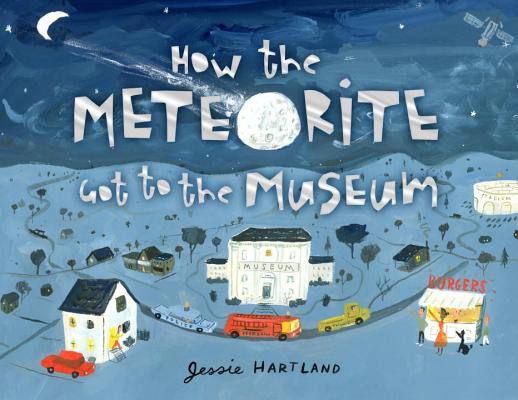
Teachers should look at possible mentor texts through several lenses, including meaning, structure, details, voice, and conventions. Anderson’s words came back to me a few hours later while I was browsing the shelves at Bank St. Book Store. Astronomy has always fascinated me, so Jessie Hartland’s new book, How the Meteorite Got to the Museum (Blue Apple Books, 2013), caught my eye. As I flipped through the pages, I realized I was reading the book differently that I would have just the day before. Many elements of the book’s structure and style popped out and grabbed my attention.

9781609052522

Told as a cumulative story in the tradition of “The House that Jack Built,” How the Meteorite Got to the Museum combines scientific facts with the daily lives of the people whose path the meteor crossed, making the story more interesting and engaging to readers. Hartland infuses the story with humor with lines like “Your car was in an interstellar collision!”

The Peekskill Meteorite’s descent to Earth is described with vivid details that include all the senses. Witnesses’ reactions are chronicled with a variety of verbs each time they’re mentioned, as is the meteorite’s journey itself. Hartland’s colorful, engaging illustrations, which remind me of Maira Kalman’s work, include diagrams, maps and other typical of non-fiction features.

All of these touches give this book a depth that will draw kids back to it again and again, a depth I might have missed if not for Carl Anderson’s ideas about analyzing mentor texts. How the Meteorite Got to the Museum is an ideal mentor text for 3rd or 4th grade students who’ve been writing informational text for a few years and are ready to stretch their writing wings and try a new text structure. And they’ll learn a few facts about meteorites along the way.

Be sure to visit Jen at Teach Mentor Texts and Kellee at Unleashing Readers to find out what other people have been reading lately. Thanks, Jen and Kellee, for hosting!

Slice of Life Tuesday:

sols_6

“Kind words do not cost much. Yet they accomplish much.” ~ Blaise Pascal

Last spring, at the Teacher’s College Reading and Writing Project Saturday Reunion, Lucy Calkins urged the thousands of teachers gathered at Riverside Church to be supportive of our colleagues and to treat one another with kindness through this tumultuous time in education.

The importance of maintaining this kind of positive attitude is being felt in schools across the country this fall. In Connecticut, where I teach, the state’s new teacher evaluation system is being rolled out this year. Teacher’s are now required to have five goals: two Student Learning Objectives (SLO’s), one Professional Growth Goal (linked to the Connecticut Common Core of Teaching Rubric), a whole-school goal linked to last year’s state assessment results, and a goal related to feedback from a parent survey. These have to be submitted by October 15. Needless to say, this is causing some stress.

And yet, as I meet with my colleagues each day to work on these goals, we feel a sense of accomplishment. As we read through writing samples, we learn more about our students and our writing goals become clear. We read and reread the standards, and our understanding deepens. Our unit plans begin to take shape, and we realize that we can do this. We are doing it. Together.

Thank you to Stacey at Two Writing Teachers for hosting Slice of Life Tuesdays!

It’s Monday! What Are You Reading?

IMWAYR

Nowadays, it seems that Labor Day is more about the last official summer holiday and sales, not about the workers it honors. So today it seems appropriate to share books about the everyday heroes who took tremendous risks and made many sacrifices to help shape the labor laws we have today.
Image

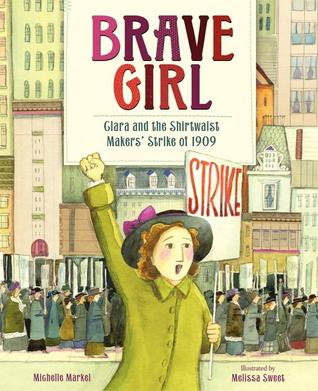
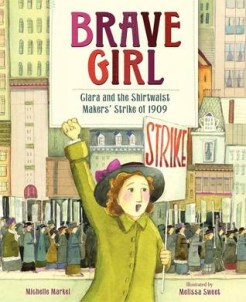
Brave Girl: Clara and the Shirtwaist Maker’s Strike of 1909, by Michelle Markel (Blazer + Bray, 2013; illustrated by Melissa Sweet) tells the true story of Clara Lemlich, who immigrated with her family from the Ukraine when she was 17 years old. Her father was unable to find work, so Clara went to work in one of the many shirtwaist factories on the lower east side of Manhattan in the early 20th century. Clara soon discovers the harsh realities of the garment industry, and helps organize the famous 1909 strike.

Melissa Sweet’s illustrations are always appealing, and here they provide a glimpse into the conditions of the tenements and factories of the time. Using her signature collage, Sweet incorporates fabric, stitching, and patterns to recreate Clara’s world. In an interview with Julie Danielson at Seven Impossible Things Before Breakfast, Sweet explains that this “felt like a fitting way to honor these brave seamstresses.”

The picture book format of Brave Girl shouldn’t discourage teachers of upper elementary grades from sharing this book with their students. In fact, Markel’s text is an ideal introduction to this important chapter of our history. Once students’ curiosity has been piqued, there are many other excellent books available to extend their learning.
Image

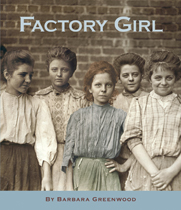
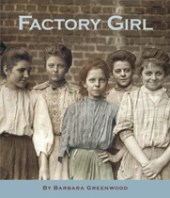
In Factory Girl, by Barbara Greenwood (Kids Can Press, 2007), combines fiction and non-fiction to bring the world of the garment and textile mills of New York and New England at the turn of the 20th century to life. Archival photos, many by Lewis Hine, reveal the terrible working conditions these children endured. This book also includes a timeline of the labor movement in the United States.

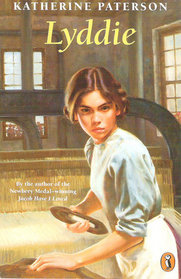
Katherine Patterson has written two novels that vividly depict the experience of young workers in New England textile mills. Lyddie (Dutton, 1991) takes place much earlier than the events in Factory Girl, but the situation is very similar. Lyddie arrives at a textile mill in Lowell, Massachusetts in the 1840s, just as several of the women are organizing to demand 10-hour working days. Patterson expertly weaves other aspects of life for these “factory girls” into the story. Facts like the “company” requirement of regular church attendance and the numerous restrictions on the girls’ after-work activities will be sure to provoke many heated discussions and are natural springboards for opinion and argument writing.
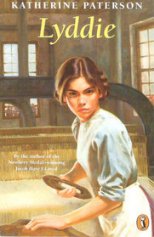
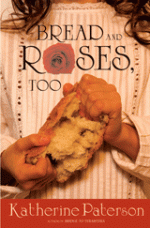
Image       Image

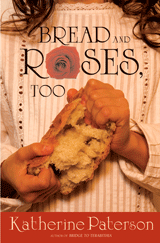
Bread and Roses, Too (Clarion Books, 2006) takes place in Lawrence, Massachusetts during the Bread and Roses strike of 1912. Sadly, the mill workers in this novel are still confronted with many of the issues Lyddie struggles against over half a century before.
Image

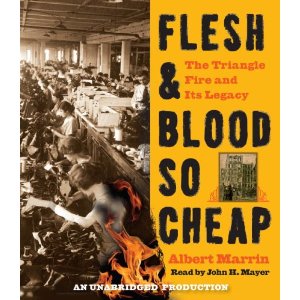
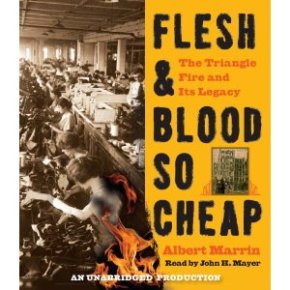
As is often the case, it took a tragedy before these conditions changed in any meaningful way. The 1911 fire at the Triangle Waist Company led to the deaths of 146 workers who were locked into the factory so they couldn’t leave early. Albert Marin has written a riveting account of the tragedy in Flesh and Blood So Cheap: The Triangle Fire and Its Legacy (Alfred A. Knopf, 2011). Marin sets the stage by telling the story of why so many Europeans were desperate to come to America in the first place. Incorporating archival photos and eyewitness accounts, this book is an important resource for students and teachers alike.

While children in the United States today are protected by child labor laws thanks to the efforts of Clara Lemlich and countless others, the same cannot be said for children around the world. These books open the door for students to conduct research and gain new insights into child labor around the world. The New York Times Learning Network has a lesson plan and resources related to the factory collapse in Pakistan earlier this year, and Teachers College Reading and Writing Project has an extensive collection of links to articles and videos available on-line, as well as books that address both the history of child labor and examples of child labor as it exists today.

There are many other fine books about other leaders of the Labor Movement, as well as fictional accounts of its many unsung heroes. I’d love to know which books are your favorites.

Be sure to visit Jen at Teach Mentor Texts and Kellee at Unleashing Readers to find out what other people have been reading lately. Thanks, Jen and Kellee, for hosting!

Slice of Life: More Thoughts on Writing

sols_6

“Quantity produces quality. If you only write a few things, you’re doomed.” –Ray Bradbury

800px-Парное-взаимное_обучение-в.Германии-080423-12
via Wikimedia Commons

To say that I have been obsessed with writing lately would be an understatement. The curriculum work I wrote about last week has me very excited about our school year. As I’ve prepared for school over the past week, though, I realized I left out at least one critical element of writing instruction: time.

In his 2008 book Outliers, Malcom Gladwell popularized the idea that it takes 10,000 hours of practice to become a master at any given task. Recently, some have questioned this notion, and Gladwell responded with a clarification on The Atlantic Wire by pointing out that this rule applies to “cognitively demanding activities that need significant thought.” Writing is certainly a cognitively demanding endeavor.

As Ronald T. Kellogg points out, writing “poses significant challenges to our cognitive systems for memory and thinking.” Researchers Flower and Hayes developed a Cognitive Process Model of Composition which illustrates that “most of the composing process is complex, multi-layered and recursive, so that many of those processes can be operating at once, and information can flow back and forth among boxes in several directions at once.”

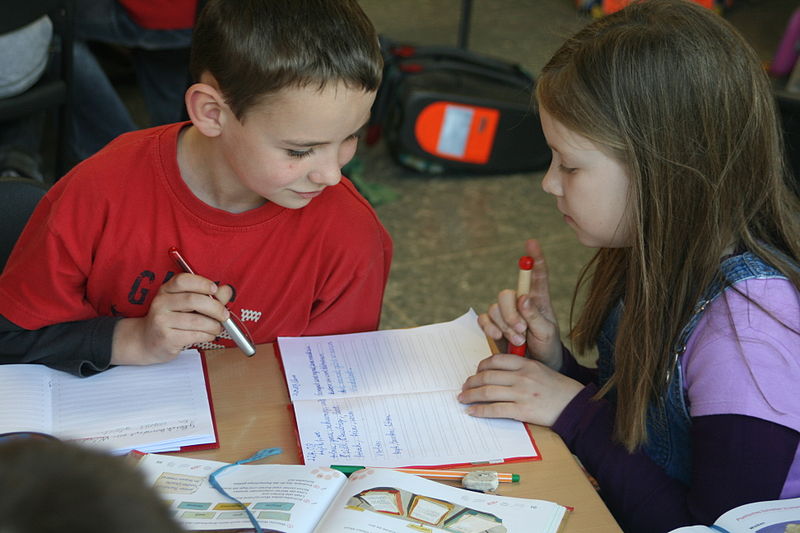
For students to become even proficient writers, they need time every day to write. Students need ample time to generate ideas. They need time to play with language so they develop a richer vocabulary and deeper understanding of language structures. They need time to develop confidence and their writing voice.

Time is a four letter word for most of us. We never have enough, are always running out of it. But time is exactly what our students need if they are to come anywhere close to mastery of writing. We will never make more time, but teachers are creative problem solvers. By closely examining long standing routines and our priorities, we can find more time in our schedule for this skill that is so critical to learning.

At our meeting to kick off the year yesterday, all of the speakers shared a personal story about their experience in education. Our students have their own stories that they want to share. They deserve the opportunity to tell them. After all, caring about each others’ stories is what makes us human.

Thank you, as always, to Stacey and Ruth at Two Writing Teachers for hosting the Slice of Life Challenge and providing a space for us to become better writers by telling our stories.

Slice of Life: Thoughts About Writing

sols_6

For the past six days, I’ve worked with an amazing group of teachers making revisions to our writing curriculum. The dedication and passion these men and women brought to this work made my job of facilitating much easier. I feel good about what we accomplished and know that these teachers all feel prepared to launch the writing workshop in their classrooms next week.

We still have so much work to do, but thanks to the Units of Study developed by Lucy Calkins and her colleagues at the Teachers College Reading and Writing Project, we have a good grasp of the process and new expectations. Everyone is excited for school to start so we can begin working with students and help them become capable, confident writers.

Teachers often ask me about the purpose of the writer’s notebook. They are uncomfortable with the idea of letting kids write about a self-selected topic. They want to know what they’re supposed to do with this writing. Do they grade it? Does it have to become a story or some other kind of a polished piece. I always explain that no, this writing is not graded. It doesn’t necessarily have to become something else.

Because of these questions and the discomfort some of them have with writing itself, I began our work days by giving the teachers time to write. Some days I offered a photograph or piece of art; some days I shared one of Corbett Harrison’s Sacred Writing Time slides. It was interesting to watch how the teachers reacted to the prompts and how they worked. (I did write, also.) But the real revelations came when the teachers shared their writing.

Everyone had approached the task from a different angle, an angle that was meaningful to them. Some were surprised by the direction their writing took. Others were grateful for the opportunity to sit quietly and be reflective after a hectic morning trying to get to school by eight o’clock. We talked about the importance of giving our students choices about their writing and about the importance of feeling comfortable enough to share our work. We all agreed that going through this process ourselves would help us as we guide our students in the weeks to come.

The most valuable insight for me came from what I wrote this morning. Harrison’s slides always include whatever “National” day it is. Today happened to be National Radio Day. This made me remember a record album of old time radio programs that my mother used to listen to when I was little. Like links in a chain, this thought led to other ideas, which led me to an insight about a character in a story I’ve been writing this summer. This cascade of memories reminded me of one of my favorite scenes from Ratatouille, when Anton Ego takes his first bite of the dish Remy and Colette have lovingly prepared for him.

Why wouldn’t we want our students to have this same kind of opportunity to see where their writing takes them? Who knows what they might discover about themselves?

Thank you, as always, to Stacey and Ruth at Two Writing Teachers for hosting the Slice of Life Challenge.

It’s Monday! What Are You Reading? The Day the Crayons Quit

Image

Last week, I was busy with lots of reading and writing. Our TCRWP Units of Study arrived, so I began reading A Guide to the Common Core Writing Workshop. In this overview of the series, Lucy Calkins lays out the hard work ahead. But, as always, her reassuring voice lets us know that she and her colleagues are there to guide us as we help our students learn to become the best writers they can be. My favorite nugget of wisdom so far is this:

“When you provide students with constant opportunities to write and when you actively and assertively teach into their best efforts, their development as writers will astonish you, their parents, the school administrators, and best of all, the youngsters themselves.” (p. 3)

Who can argue with that?

I also made a trip to the library to see what was new and grabbed an armful of picture books. (I did leave some for the kids, I promise!) I enjoyed them all, but one stood out for me.

Image

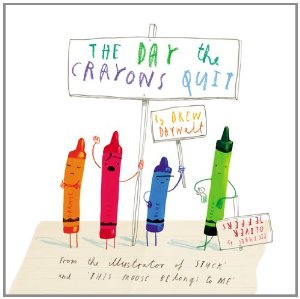
I’d heard much praise for The Day the Crayons Quit, by Drew Daywalt, illustrated by Oliver Jeffers (Philomel Books, 2013), and it is well-deserved. In his first picture book, film-maker Daywalt tells the story of a boy’s crayons going on strike. Each crayon writes to Duncan to express its feelings about how it’s being used (or not). Red feels overworked, while pink thinks Duncan should be more open-minded when it comes to using this “girls’ color.”

Daywalt gives each color a distinctive voice, which often matches our expectations, and these come through loud and clear in the letters. Oliver Jeffers’ expressive illustrations reinforce these personalities, yet retain a child-like quality that kids will identify with.

I can imagine all elementary grade students loving this book, but it seems especially well suited for second or third grade. After sharing the book for fun, The Day the Crayons Quit could be used to address Anchor Standard 6: “Assess how point of view or purpose shapes the content and style of a text.”

Children could also use the letters as models for their own writing. Narratives could be written from the point-of-view of their favorite color crayon, or some other familiar object. They could also write opinion pieces about a particular color.

This book could also be paired with collections of poems organized around colors such as Hailstones and Halibut Bones by Mary O’Neill or Color Me a Rhyme by Jane Yolen. The possibilities are endless. Which, in the end, is the point of this completely original picture book.

Be sure to visit Jen at Teach Mentor Texts and Kellee at Unleashing Readers to find out what other people have been reading lately. Thanks, Jen and Kellee, for hosting!

Slice of Life: Cake, Anyone?

Image

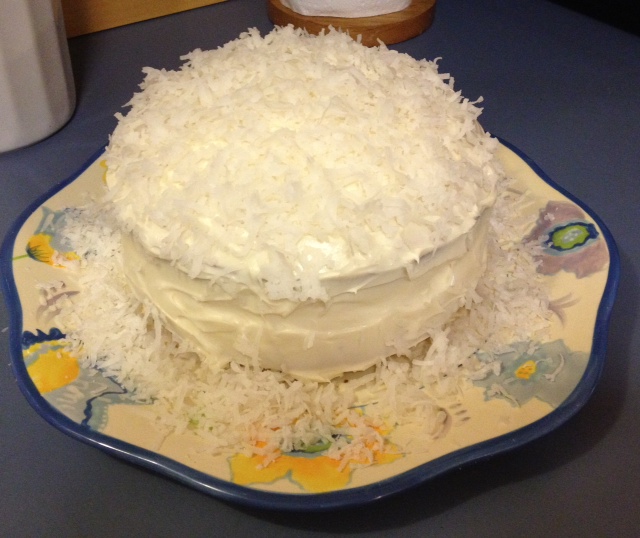
Last night, I baked a cake for a luncheon we had at school today. I’ve been baking for almost as long as I can remember. When I was growing up we lived next door to my Grandmother, and I spent a lot of time at her house. When she baked pies, she always sprinkled the scraps of dough with cinnamon and sugar, added a few raisins and butter, then rolled them up and baked them. I don’t remember if she had a name for these little treats, but they were delicious.

Image
Coconut cake with raspberry filling

When my own children were little, we baked all the time. So I was quite surprised when I started teaching and discovered how many of my students had never baked anything. Children’s books are filled with inspiration for heading to the kitchen. So we started baking.

Image

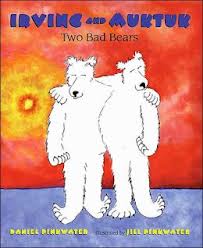
After reading Daniel Pinkwater’s Irving & Muktuk: Two Bad Bears (Houghton Mifflin Harcourt 2001), the story of two blueberry muffin loving polar bears, we made blueberry muffins.

Image

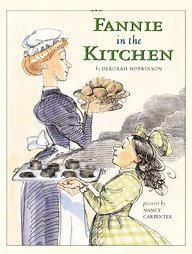
We read Deborah Hopkinson’s Fanny in the Kitchen (Atheneum Books for Young Readers, 2001) and made griddle cakes (pancakes).

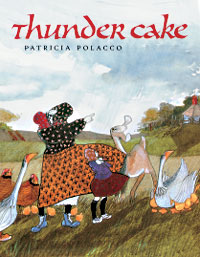
ImageThird graders love Patricia Polacco books and Thunder Cake (Philomel, 1990) was one of our favorites. So was the cake!

Image

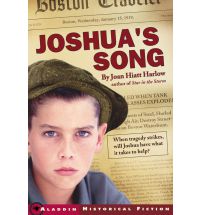
When fifth graders were reading Joshua’s Song, by Joan Hiatt Harlow (Simon & Schuster, 2002), a novel that culminates in the historic explosion of a molasses storage tank in Boston in 1919, many had never heard of molasses! Molasses cookies were whipped up in short order.

Cooking and baking with students may seem like a luxury in this time of Common Core Standards and high-stakes testing. But there are actually many benefits for mixing up some literature-related recipes.

  • At Teacher’s College Reading and Writing Project Saturday Reunion last month, Elizabeth Moore shared ways to use class experiments and demonstrations in science as a springboard to writing. (Read more about that session here.) Shared experiences in the kitchen could also be the basis for how-to books and cookbooks.  (Writing Anchor standard 2)
  • In a recent blog post, James Paul Gee reminds readers that “Humans learn through experiences in the world (using their minds, bodies…and interactions with others…)” All sorts of skills are learned through cooking, including reading recipes and doing the math to double or triple ingredient amounts.
  • First hand experience with different foods provides students critical background knowledge they need to successfully meet many of the Common Core reading standards. Knowing what molasses is will make learning it easier to learn about triangle trade in history class.

Cooking with students is nothing new. What is new is the pressure teachers feel to teach earlier, teach faster, teach more. Let’s remember to teach what’s important in meaningful ways. Adding a little spice to our lessons increases the chances our students will actually learn.

Thank you to Stacey and Ruth at Two Writing Teachers for hosting this weekly Slice of Life Challenge!

Slice 28 of 31: Unpacking Poetry

Image

Earlier this month, I attended the TCRWP’s Saturday Reunion in New York City. One of the sessions I went to was “To Lift the Level of Writing, We Need to Lift the Level of Rehearsal and Revision: Mentor Texts Can Teach Not Just Qualities of Good Writing, But Process,” presented by Brooke Geller. The session began with Geller stating that kids need to see the big picture before they begin writing. Knowing what the finished product will look like is the first step in engagement. Geller described the following process to immerse students in the genre being studied, in this case, a research-based argument essay.

Unpacking a Text

  • could be a published text, student work, or your own writing.
  • students should spend time with the text, reading and rereading
  • ask “What are you noticing?”
  • put kids in groups of 3-4, give them a piece of writing in the middle of a big sheet of paper
  • have them mark up the text with their observations and the evidence
  • students should use their prior knowledge about genre– “What do you know about essays?”
  • read first, then read with the eyes of a writer
  • teacher should go from group to group and add her own thoughts
  • come back together–create list of what they think are characteristics of the genre
  • charts can be used as teaching tools

At my school, the fifth grade teachers were getting reading to begin a unit on poetry. We’ve been talking about ways to increase student engagement and the quality of their writing, and I suggested that unpacking poems would be a great way to begin.

The teachers and I selected five poems and mounted them on sheets of butcher paper. At the start of class the next day, the classroom teacher and I modeled the process for the students. We discussed the importance of reading the poem aloud and rereading it several times. Then gave each group their poem and a marker. As they began working, the room was filled with the hum of their reading. The classroom teacher and I moved from group to group, talking and rereading along with the kids. Certain poetic elements were easier to spot; the poem either rhymed or it didn’t. Some students could describe what they noticed, but didn’t know what it was called.  It occurred to me that this activity was also an excellent form of pre-assessment. The teachers and I had a concrete list of what the students knew about poetry.

mentor text  photo-1

photo-3
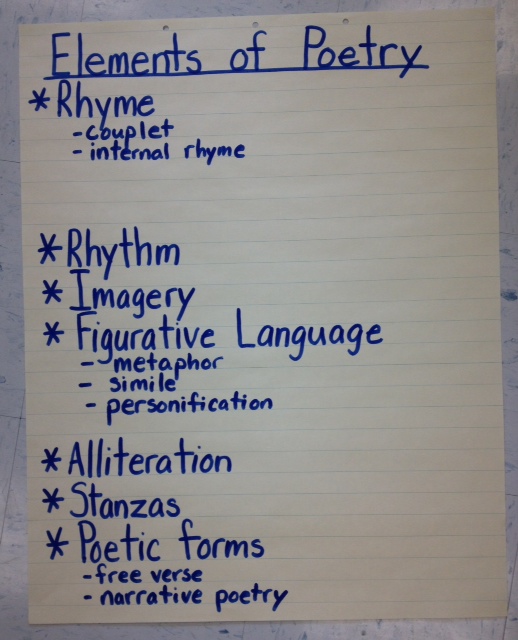
We left empty space so we can add more elements as they’re introduced.

After school, the classroom teacher and I created this chart to use throughout the unit.

photo-2

As students find examples of these poetic elements, they will be added to the appropriate column. These examples will support them when they begin writing their own poems. We will also add columns to the chart as we teach more poetic elements and devices.

A variation on this process suggested by Geller would be to put the same piece of writing on sheets of paper, but have a different focus question on each sheet.

Possible questions include:

  • What makes this text (poetry, essay, etc)?
  • How is this text set up? Why is this important?
  • What is the purpose? How do you know this?
  • How does the author show the heart of the story?

Students could rotate around room, rereading the text in light of each question.

As we reflected on the work of our students, we noticed that engagement had been high and all students participated in the discussions. We also noted that no one had mentioned anything about repetition of words, or the word choices the poets made. And while most students could spot a simile, metaphors were more difficult. Over the next few weeks, we will be crafting mini-lessons to teach these elements.  We will continue to use the wonderful ideas Brooke Geller shared at TCRWP throughout the unit. I’ll let you know how it goes.

Thank you to Stacey and Ruth at Two Writing Teachers for hosting this Slice of Life Challenge!