Slice of Life: Habits of Mind and Writing

“Habit is a cable; we weave a thread of it each day, and at last we cannot break it.”
~ Horace Mann ~

One of the professional books I’m reading this summer is Learning and Leading with Habits of Mind, by Arthur L. Costa and Bena Kallick. Published in 2008, this book outlines “a set of behaviors that discipline intellectual processes” and provides teachers with strategies to integrate them into “instruction in every school subject.” (p. 12-13) These habits “are dispositions that empower creative and critical thinking.” Costa and Kallick’s work begins with the same premise behind Carol Dweck’s work with growth mindset. That is, “intelligence is a set of teachable, learnable behaviors that all human beings can continue to develop and improve throughout their lifetimes.” (p. 12) During the coming school year, my colleagues and I will be working to incorporate these habits into our daily work with children. This, of course, will include modeling.

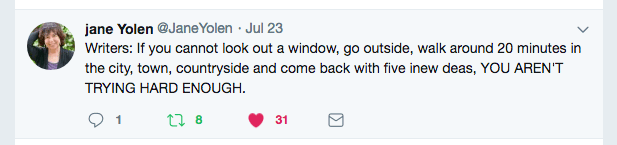
This tweet from Jane Yolen last week instantly provided a modeling strategy for three of the sixteen habits of mind:
* Gathering Data Through All the Senses

* Creating, Imagining, Innovating

* Responding with Wonderment and Awe

Writers won’t get far without these three habits, but we all know we have plenty of students who tell us “I don’t know what to write about.” Kids are so distracted by the world available to them through the myriad of devices to choose from, they can’t concentrate on any one topic for long. By modeling these habits in particular I think we can help our students focus on the world right in front of them. When they do that, they will find plenty to write about.

All of this was swirling around in my head when I went for a walk this morning. As usual, I had my phone with me because, for me, taking pictures is a form of prewriting. It didn’t take long to find five new ideas for writing.
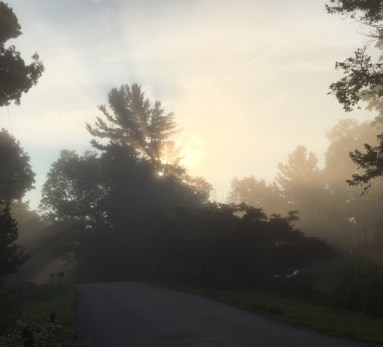
  1. How could you not respond to this view with wonderment and awe? I was reminded of the way the sun streams through the trees at the cabin in Maine where my family spent many summers. My boys canoed to an island in the middle of the lake and spent entire days being wild in the woods. I could write a story about their adventures.
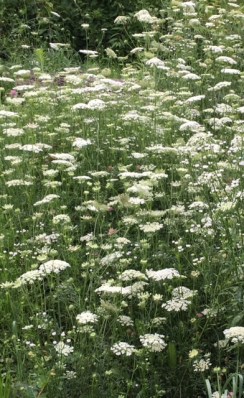
2. Again, a scene of wonderment and awe. This could inspire a poem or be woven into a scene in a middle grade story idea I’ve been playing with.
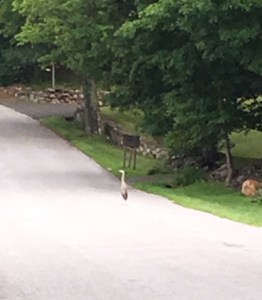
3. I was truly shocked to see this heron land on the road right in front of me! This is destined to be a poem, I think. It could also inspire a nonfiction piece about herons or birds of the neighborhood. 
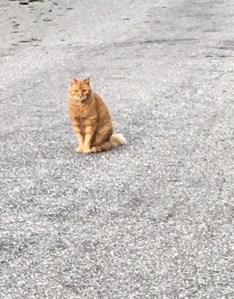
4. This is my cat Noodles. He likes to be included and often follows me to the end of the driveway when I leave the yard. Doesn’t he look sad at being left behind? This could inspire a small moment story or a series of adventures Noodles might have throughout the day.
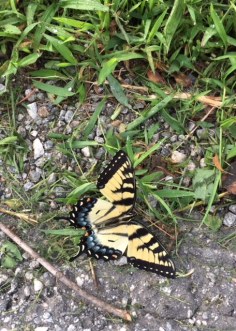
5. This swallowtail butterfly was trying desperately to fly, but appeared to be injured and couldn’t get off the ground. I gently moved him into the grass. When I went back to check on him, he was gone. I hope he was able to fly away after resting.

After sharing these images with my students, I will take them outside so they can respond with wonderment and awe as they gather their images that will inspire them to create, imagine and innovate. I’ve used similar strategies with students in the past with mixed success. Part of the reason for this may have been because we didn’t do this kind of activity often enough. Consistent trips outside to gather ideas will help students develop these behaviors into unbreakable habits. I’ll let you know how it goes.

Thank you to StaceyBetsyBethKathleenDeb, KelseyMelanie, and Lanny for creating this community and providing this space for teachers and others to share their stories every Tuesday. Be sure to visit Two Writing Teachers to read more Slice of Life posts.
 

Slice of Life: A Better View

A few weeks ago, I happened to notice a hummingbird perched near the top of a tree in our yard. I hurried for my camera. Of course she had flown away by the time I settled myself in front of an open upstairs window. But I’d seen her near this tree several times during the week, so I waited, hoping she’d return.

My patience was rewarded and she posed for me at the top of a branch. Unfortunately, the photos weren’t great. Only the bird’s silhouette was visible. So I moved over to the other window. Bingo. Now her colors were clearly visible. She even hovered for a moment, showing off her delicate wings.


As I looked at the pictures after she flew off, I was grateful I’d moved to the other window. Shifting myself a few feet, changing my perspective just slightly, gave me not just a clearer view, but a more complete image. I recalled the wisdom of Clare Landrigan and Tammy Mulligan in their book, Assessment in Perspective: Focusing on the Reader Behind the Numbers (Stenhouse, 2013). If you have any questions about literacy assessment, this book is a must read. But more importantly, Clare and Tammy explain in detail the importance of “triangulating …multiple sources of [assessment] data to illuminate, confirm, or dispute what you learned from an initial analysis of one piece of data. (Italics added.) How often does a child’s performance in the classroom not match data we have gathered through an assessment? Too often.

The key is to gather information from multiple vantage points, including informal and/or qualitative data gathered through observation. Pulling all this information together provides a much clearer image of who our students are as learners, as readers, as people. When we have this deep understanding, or what Clare and Tammy call “the stories of our readers,” we can plan and provide instruction that is responsive to their needs.

As July turns to August, I’ll be spending time thinking critically about which assessments I use to gather the information I need to get a clear, complete image of my students. Only then will I be well equipped to do the most important work of all: to help my students grow as readers, as thinkers, as people.

Thank you to StaceyBetsyBethKathleenDeb, KelseyMelanie, and Lanny for creating this community and providing this space for teachers and others to share their stories every Tuesday. Be sure to visit Two Writing Teachers to read more Slice of Life posts.

Slice of Life: Dumped in Dimples


Each week during Kate Messner’s Teachers Write summer writing camp, Jo Knowles posts a Monday Morning Warm Up. This week, Jo urged us to write about a “favorite summer memory from your teen years.” I’m not sure this is my favorite summer memory, but it is definitely the most vivid!

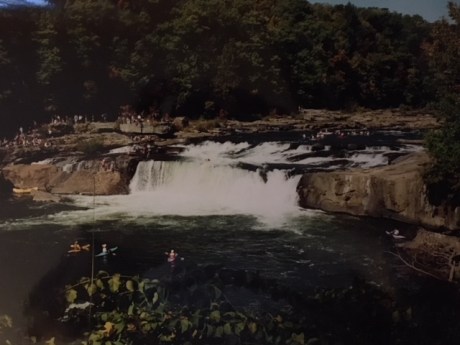
You hear the roar of the water before you see it. Then you face thousands of gallons of water cascading twenty feet down the face of a rock ledge, creating a foaming, turbulent froth just above where your raft is about to launch for a trek down-river.

Crazy paddlers, including my kids, running Youghiogheny Falls in 2010.

In July of 1976, when the rest of the country was swept up in Bicentennial celebrations, I gazed up at this waterfall in awe and relief that no similar falls waited downstream. The river that stretched in front of me was strewn with boulders. Little riffles of whitewater danced around them and clouds billowed in the sky above. Dense stands of pine and oak lined both banks of the river. I was ready for an adventure!

Little did I know what a ride I was in for.

The first two rapids were easy. Our raft bobbed up and down like a cork over the gentle, rolling waves. The splashes of cold water were refreshing after an hour in the hot July sun. By the time we got to Lunch Rock, I felt like a pro. I inhaled my peanut butter and jelly sandwich, the favored lunch of paddlers everywhere. Soon we were back on our way.

My future mother-in-law, was paddling at the front of the raft, showing me the ropes. “We’re coming up to Dimples,” she said. “We have to head straight for a boulder, then paddle hard right to miss hitting it. “Big Jeff out of Baltimore,” an old family friend, was steering at the back of the raft. “Don’t you dare dump us in this rapid!” she warned him.

“Never!” he laughed.

Again, I heard the roar of the water before I could see what was ahead. This sounded as loud as the waterfall at the put-in. “We’ll be fine,” Jeff reassured me.

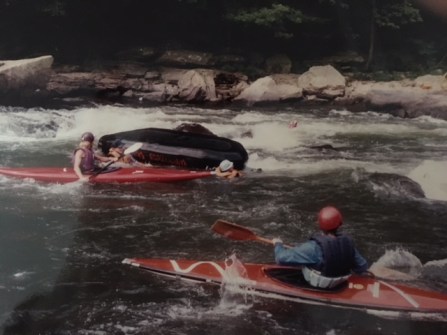
The once meandering current picked up speed and swept us into a ribbon of waves. A boulder as big as an elephant loomed up before us. “Paddle!” Jeff screamed. I dug my paddle into the water and pulled with all my might. But it was too late. The raft hit the massive rock head on.

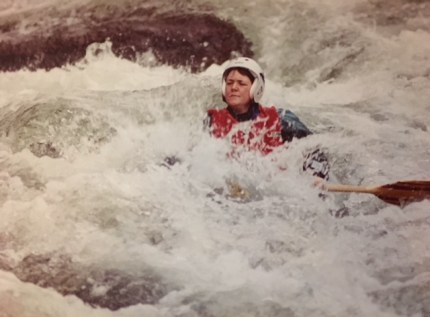
Before I really knew what was happening, I was in the rushing water, beneath the raft. Gasping, but trying to stay calm, I got myself out from under the boat. Somehow, I maneuvered myself and the capsized raft into and eddy at the bottom of the rapid. Dripping and paddle-less, I managed to turn the boat right side up.

But now I was on the other side of the river from where my mother-in-law-to-be and Big Jeff had washed up. The rest of our crew had gone ahead to “play” in the next rapid and were unaware of our plight. Miraculously, my paddle washed up next to me. With a whole two hours of rafting experience, I climbed back into the raft and guided it safely across the river.

Someone always gets dumped in Dimples! (This isn’t the raft I was in. If there are any pictures from that day, I don’t know where they are.)

By this time, the other paddlers (including my boyfriend!) had realized we were in trouble and came to our rescue. Fortunately, no one was really hurt. Shaken up? Absolutely! But aside from rubbery arms and scraped shins, I was fine.

After a rest on the rocks, we piled back into the raft and made it to the take out without any more mishaps. I survived my white-water rafting initiation! But “Big Jeff out of Baltimore” never heard the end of dumping me in Dimples!

Years later, I was able to make my way down the river on my own. And I’ve never flipped in Dimples again!

Thank you to StaceyBetsyBethKathleenDeb, KelseyMelanie, and Lanny for creating this community and providing this space for teachers and others to share their stories every Tuesday. Be sure to visit Two Writing Teachers to read more Slice of Life posts.
Slice of Life: Know Where You’re Going

Yesterday, Jo Knowles shared a writing warm up as part of the Teachers Write summer writing camp urging writers to “know where you’re going.” She also observed that “most general advice, if you think about it long enough, can be applied to writing.”

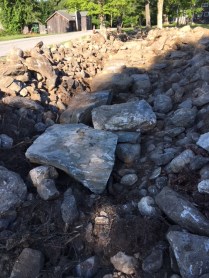
Jo’s words were still echoing in my brain as I headed out for my morning walk. When I paused to check the progress of the rebuilding of my neighbor’s stone wall, I thought, “Of course! Writing is like building a wall.” Not advice really, but certainly a useful metaphor.

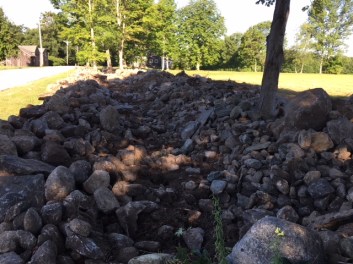
These talented stone masons have a direction, they know where they’re going. You can’t see them in these photos, but there are two strings precisely positioned on either side of this trench to guide construction. What else can we learn from these stone masons about writing (and teaching writing)?

Notice the huge rocks forming the foundation of the wall. This will stabilize the wall against the forces of weather and time and prevent it from crumbling. Without a strong foundation, our writing often falls apart. More worrisome to me, though, is how writing workshops can crumble if we don’t take the time to establish the rituals and routines that are the bedrock of any successful workshop.


Look how many rocks they have! They will never use them all in this wall. Just as these craftsman need multiple rocks so they can choose exactly the right one for the right spot, writers need to write and write and write. This will ensure they have plenty of material on hand as they craft personal, meaningful writing.

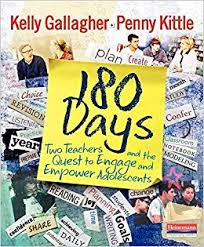
The men building this wall clearly know what they’re doing. They have a valuable skill, honed through years of hard work (see above). We also have skills. One of them is to help students view themselves as writers with stories to tell and ideas to share. Without this vision, writing is just a task to complete (or not). Students have to share our vision of what is possible through writing—or at least see its potential: providing the opportunity to “write something personal and powerful.” (Gallagher & Kittle, 2018, p. XV)

These ideas aren’t new or groundbreaking (pun intended!) But it’s important to revisit them. During these long summer days, when the demands on our time are different, take a few moments to consider the importance of laying down this bedrock, of building this foundation, layer by layer. Reflect on the year that was and use those insights to refine a vision for the coming year. Without it, we won’t know where we’re going.

Thank you to StaceyBetsyBethKathleenDeb, KelseyMelanie, and Lanny for creating this community and providing this space for teachers and others to share their stories every Tuesday. Be sure to visit Two Writing Teachers to read more Slice of Life posts.

Slice of Life: Summer Reading

Today is really only the second day of my summer break. (I don’t think the weekend should count.) I am working hard at looking busy and being productive. But honestly, I haven’t accomplished much and feel a little adrift.

One thing I have managed to do is read the first chunk of I’ll Give You the Sun, by Jandy Nelson for an online reading group organized by Sally Donnelly. This Printz Award winner and Stonewall Honor Book was on many Best-Book lists when it was published, deservedly so. At first, I was so caught up in the story that I missed the nuances of Nelson’s writing. I’m rereading now with ever-increasing awe at the power of this book.


I have stacks of novels and professional books I want to read this summer. Sunny, the third installment in Jason Reynolds’s amazing Track series is next on my list, followed by Refugee, by Alan Gratz and The Poet X, by Elizabeth Acevedo. Kelly Gallagher and Penny Kittle’s 180 Days: Two Teachers and the Quest to Engage and Empower Adolescents is at the top of my professional stack. Ellin Keene’s Engaging Children: Igniting a Drive for Deeper Learning and Jeff Anderson’s Patterns of Power are also on my list. Wish me luck!


What are you reading this summer?

Thank you to StaceyBetsyBethKathleenDeb, KelseyMelanie, and Lanny for creating this community and providing this space for teachers and others to share their stories every Tuesday. Be sure to visit Two Writing Teachers to read more Slice of Life posts.
Slice of Life: Welcome to the Bayou Teche

“One touch of nature makes the whole world kin.”
John Muir

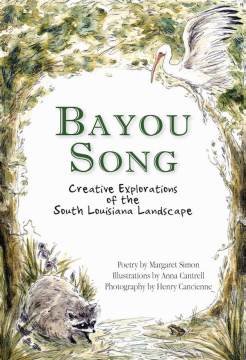
Welcome to the second stop on the blog tour for Margaret Simon‘s new book, Bayou Song: Creative Explorations of the South Louisiana Landscape (University of Louisiana at Lafayette Press, 2018)! Over the past few years, I’ve been lucky to get to know Margaret both as a writer and a friend through our online critique group. Sharing early drafts of your writing with another person is an act of trust, but it is also an invitation. An invitation to learn more about the truth of that person’s heart. The south Louisiana landscape is woven into Margaret’s heart and has always been integral to her writing. So it was no surprise when she first mentioned her idea for this book. Watching Bayou Song grow from that tentative glimmer to a published book and been a thrill and an honor.

Annie Dillard once wrote “there is no such thing as an artist–only the world lit or unlit, as the world allows.” I’m not sure I agree with the first part of this thought, but Margaret is definitely someone who sees “the world lit.” This light shines throughout Bayou Song, creating a brilliant mosaic that brings Margaret’s beloved Bayou Teche magically to life.

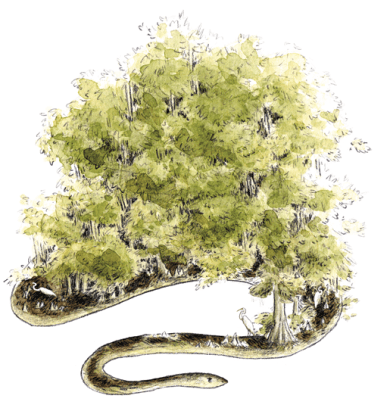
© Anna Cantrell, 2018

This book is an invitation to linger and get to know the Bayou Teche. From the opening pages, where we learn legend of the bayou’s origin, to “Bayou Sunset Tanka,” the collection’s final poem, we are captivated. “I Am a Beckoning Brown Bayou” literally invites us to “stay awhile” and get to know the many moods of this mysterious world.

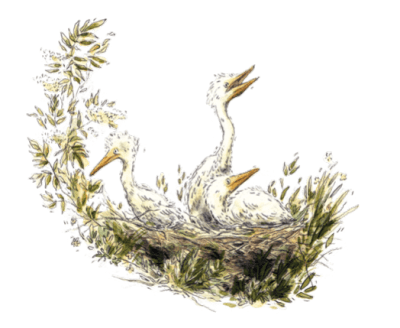
Margaret’s poems introduce us to the many plants and animals who make their home in the bayou. Nutria, with their “bright orange tusks” were unfamiliar to me. Other inhabitants were familiar, but Margaret’s vivid images helped me see them in a new light. I will never think of crawfish again without thinking of their “round peppercorn peepers.” And of course baby egrets are “feather-glistening,” “worm-juggling,” and “nest snuggling.”

© Anna Cantrell, 2018

Anna Cantrell’s illustrations and Henry Cancienne’s photographs complement Margaret’s words beautifully, bringing the bayou to life in a way any one medium couldn’t individually. Their collaboration is similar to the collaboration of our critique group. The work of each member makes the others stronger. Henry Cancienne’s photos provide visual support for readers who aren’t familiar with the diverse inhabitants of the bayou. Anna Cantrell’s watercolors, from two-stepping herons to “mischievous” raccoons bring Margaret’s whimsical images to life.  Together, they create a tapestry of “paper-lace fragments of butterfly wings” and the “waving leaves of cypress trees”

The inclusion of factual information about the plants and animals who call the bayou home adds another dimension to this incredible resource. Through the “Write It” and “Sketch It” sections, Margaret extends an invitation to readers to learn more about their own environment. This appeal to write and draw will help readers see the similarities between the animals that live in habitats familiar to them–raccoons, toads, turtles–as well as understand the adaptability of these animals that allow them to thrive in a variety of habitats.

I am grateful to Margaret for inviting me to share this journey with her. Of our group she writes, “You hold me up. You give me…confidence…” Our words are our own, but by sharing and letting others help us shape them, they become stronger, we become stronger. Strong enough to write an amazing book like Bayou Song.

Don’t miss the next stops on Margaret’s blog tour to learn more about Bayou Song!

Friday, June 22:
Michelle Kogan

Friday, June 29:
Ruth Hersey at There is no such thing as a God-forsaken town

Friday, July 6:
Kimberly Hutmacher at Kimberly Hutmacher Writes

Friday, July 13:
Linda Mitchell at A Word Edgewise

Tuesday, July 17:
Laura Shovan 

Tuesday, July 24
Amanda Potts at Persistence and Pedagogy

Friday, July 27:
Carol Varsalona at Beyond LiteracyLink

Monday, July 30
Linda Baie at Teacher Dance

Friday, Aug. 3
Dani Burtsfield at Doing the Work that Matters

Thank you to StaceyBetsyBethKathleenDeb, KelseyMelanie, and Lanny for creating this community and providing this space for teachers and others to share their stories every Tuesday. Be sure to visit Two Writing Teachers to read more Slice of Life posts.
SOL: Following a Poem

Naomi Shihab Nye has famously said that “poems hide…What we have to do is live in a way that lets us find them.” I often find inspiration in images, and when I saw this photo on Twitter recently, I knew a poem was hidden within:

Indigo Milk Cap, by Dan Molter [CC BY-SA 3.0 (https://creativecommons.org/licenses/by-sa/3.0)%5D, via Wikimedia Commons
What I didn’t expect was where this poem would take me. Which is, after all, the point of writing.

At a bend in the trail
I freeze, startled
by an upturned mushroom.
Suddenly,
I’m at your kitchen table,
wisps of morning breeze,
rich with melodies of songbirds,
drifting in through wide-open windows
as you set an ancient flow-blue
bowl before me.
Nestled within its chipped rim
are glistening blueberries,
which you rose at dawn
to pick,
making sure to leave a few
for the birds.

© Catherine Flynn, 2018

Thank you to StaceyBetsyBethKathleenDebMelanie, and Lanny for creating this community and providing this space for teachers and others to share their stories every Tuesday. Be sure to visit Two Writing Teachers to read more Slice of Life posts.
A Golden Shovel: “We Share This Tender Planet”


As you may know, April is National Poetry Month. Many poets and bloggers are writing and sharing a poem a day in celebration. I won’t be posting daily, but I am following these projects and joining in when I can. Today, I’ve created a Golden Shovel (Mary Lee Hahn’s project) with a line taken from a recent episode of Krista Tippett’s program, On Being. This is one of my favorite podcasts. Tippett interviews a wide range of theologians, scientists, philosophers, poets, among others to, as explained on their website, “pursue deep thinking and social courage, moral imagination and joy, to renew inner life, outer life, and life together.”

In “Cosmic Imagining, Civic Pondering,” Tippett facilitated a conversation between the creator and editor of Brain Pickings, Maria Papova, and Natalie Batalha, an astrophysicist at NASA’s Ames Research Center. Their rich and thought-provoking exchange was full of insights, and I found myself nodding in agreement over and over again. After poring over the transcript, I chose this line to create today’s poem:

“We share this tender planet.”
Maria Papova

Photo by Douglas Mills via Flickr

Thank you to StaceyBetsyBeth, KathleenDeb, Melanie, and Lanny for creating this community and providing this space for teachers and others to share their stories every Tuesday. Be sure to visit Two Writing Teachers to read more Slice of Life posts.
SOL18: An Ode to the Slices I Didn’t Write

For the first time in five years, I am NOT celebrating a month of slicing. Despite a record number of snow days, despite staying healthy, posting a slice every day eluded me. That’s not to say I haven’t been writing. I have. I just couldn’t get into a groove with slicing.

Photo by Aaron Burden via Unsplash

Even though I didn’t participate in the challenge on a regular basis, I did want to post something today. But as I drafted a few ideas last night, nothing clicked. Then, this morning, I read my friend Linda Mitchell’s Poetry Friday post. Linda had used Gary Soto’s “Ode to Pablo’s Tennis Shoes” as a mentor for a poem she read at a friend’s Bar Mitzvah. This was exactly the form I needed for my end-of-March slice.

Ode to Lost Slices

They wait in my notebook
half-baked, embryonic
ink-smudged
at the edges
where I feverishly
scribbled ideas
before they evaporated,
my attention grabbed
by a bird at the window.
Some thoughts made it
to page, to screen
to you (who are you?)
Others are gone,
out of reach.

Now it’s the end of March.
I sit at my desk, listening
to the birds chittering
it the treetops, grateful
for warm sunshine.
My ideas, friends
who flutter through my brain
are whirling.
I should not have slept,
But I did.
(Wisps of dreams
still cling to my hair.)

I want to tame
my thoughts,
still wild
and winged,
capture them
on this page
where they’ll make
some sense to me,
to you, a friend,
to whomever stumbles
across them in
this vast universe.
I love writing,
polishing ideas until
they shine, then
sending them out
to fly on their own.
But I’m distracted.
I skink into my chair.
My eyes sting
from the harsh words

that inundate our world.
I need eight hours (days?)
of peace and quiet
to let ideas settle,
grow their flight feathers,
and soar.

Thank you to StaceyBetsyBeth, KathleenDeb, Melanie, and Lanny for creating this community and providing this space for teachers and others to share their stories every day in March and each Tuesday throughout the year. Be sure to visit Two Writing Teachers to read more Slice of Life posts.
SOL 18 & Poetry Friday: Paint Chip Poetry


During a trip to the hardware store earlier this week, I found myself standing in front of a rainbow of paint chips. They reminded me of my friend Margaret Simon’s recent post about the poems she and her class wrote using paint chips. The shades of blues were irresistible to me. Without reading the names, I selected a handful of cards.

Later, I sorted the chips into categories. Soon I had a list of weather words, ocean words, and a few miscellaneous words. Margaret wrote unrelated words on the back of the paint chips she prepared for her students. I added words that the color names brought to mind and came up with this draft. The color names are italicized.

celestial light dapples
iridescent opal waters
rippled by sea winds
blowing in from
distant shores

Photo by Sime Basioli via Unsplash

This was so much fun I may go back to the hardware store today for more paint chips! I can’t wait to introduce paint chip poetry to students.

Please be sure to visit Heidi Mordhorst at My Juicy Little Universe for the Poetry Friday Roundup. Also, thank you to StaceyBetsyBeth, KathleenDeb, Melanie, and Lanny for creating this community and providing this space for teachers and others to share their stories every day in March and each Tuesday throughout the year. Be sure to visit Two Writing Teachers to read more Slice of Life posts.