Slice of Life: Mid-Year Goals and Productivity

sols_6

Mid-year goal meetings are coming up, and many teachers at my school are in a panic over the new reflection questions they have to respond to and the lesson plan that is required to be included in their portfolio as an “artifact.” I’ve been meeting with them over the past week, answering their questions and helping them as much as I can. But the paperwork still seems overwhelming when added to our daily responsibilities. This is why I was so happy to find this video about productivity at Brain Pickings Curated by Maria Popova, Brain Pickings is “a human-powered discovery engine for interestingness, a subjective lens on what matters in the world and why, bringing you things you didn’t know you were interested in — until you are.”  Popova’s posts are full of wit and wisdom, and if you haven’t discovered her website, you’re in for a treat!

.

I love this video because it’s succinct and full of helpful advice. And even though many of the suggestions are common sense, I feel better knowing that I am not the only person who needs to be reminded about the importance of habit and routine.

Now if you’ll excuse me, I have some reflections to write!

As always, thank you to everyone at Two Writing Teachers for hosting the Slice of Life every Tuesday. Be sure to stop by to read more Slices!

Slice of Life: Pickles, Owl Moon, and the Hard Work of Revision

sols_6Last spring, during a poetry writing unit, a 5th grade student asked me to read a poem she had written. “I’d love to,” I told her as she handed me her notebook with pride. I knew this girl to be a good student and a strong reader, so I was quite surprised to read what she had written.  It was mostly about pickles, but her poem was full of forced rhymes and then no rhymes. I told her that her love of pickles was coming through loud and clear. Then I asked her about some of the more questionable rhymes.

“What do smelly feet have to do with sweet pickles?” I wondered

“Nothing, but sweet and feet rhyme,” she said matter-of-factly.

“I wonder if  there are any other words that rhyme with sweet that have more to do with pickles than feet.”

“Probably, but today I just feel silly and want to write a silly poem.”

“Fair enough. Let’s look at it again tomorrow and see if you still feel that way. Writers often see their work differently after a day or two,” I said.

She wasn’t convinced, and she didn’t change the poem.

Over the years, I’ve had plenty of students who were unwilling to revise their writing. It seems as if getting anything down on paper is torture enough. Then to have to make changes is just insulting. Part of me empathizes with them. I know it’s hard to get our thoughts down in the first place. But I also know how much better writing can be after the second or third revision.
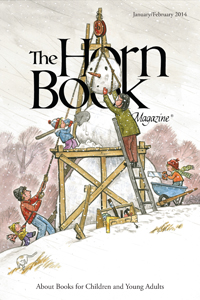
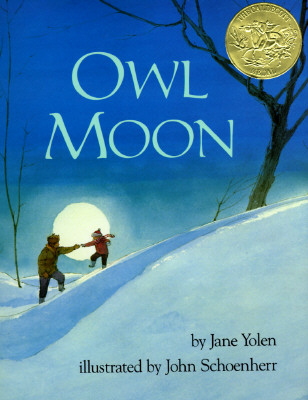
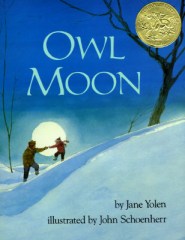
january2014cover_FAKE_200x300I wish I’d had Jane Yolen’s article from the current issue of The Horn Book to share with my reluctant reviser. In it, Yolen muses over different forms her Caldecott-Award winning picture book, Owl Moon, might have taken. A sonnet? No, too short. What about as a rap? Definitely not. She states that “a writer has to make choices [about] how to tell a story. But when a writer finds the right voice, everything comes together.” (pg. 46)
OwlMoon1

Writers do make choices. But I feel that our students don’t really understand that this means more that just thinking of words that rhyme. As Yolen goes on to say, finding this voice for our writing takes “hard work, inspiration, even perspiration.” (pg. 50)

So why did my young poet short-change herself and her poem? In this case, I think she just needed more time. Time to build the habit of writing every day so being asked to write didn’t feel like punishment. Time to experience the joy of finding just the right word, the perfect expression of her feeling. Time to play with different versions of her poem to find out if silly really was the right tone. Sometimes we may get lucky and stumble onto the right form on our first try, as Yolen feels she did with Owl Moon. But in most cases, we need to sweat over our writing before sharing it. Only then can we sit back and have a pickle.

Thank you to everyone at Two Writing Teachers for hosting the Slice of Life every Tuesday. Be sure to stop by to read the hard work of many devoted writers.

Slice of Life: Getting From Point A to Point B

sols_6

About a month ago, I found myself driving in an unfamiliar city at dusk. As I exited the highway into rush hour traffic, my GPS informed me that it had lost its satellite connection. After my initial panic, I took a deep breath and, because I had looked at a map before I left home and had the map feature open on my phone, was able to navigate to my hotel without a wrong turn.

Being able to read a map is an important skill. It provides us with a bird’s-eye view of where we’re going. Some people may argue that not knowing is what keeps life interesting, but I like having an idea of what lies ahead.

In teaching, our curriculum calendars and lesson plans are like maps in that they lay out a predictable path that will lead us from point A to point B. But like a driver encountering a roadblock, or me when my GPS failed, we need to possess the skills to help us adjust our teaching in a way that addresses the roadblock but still gets us, and more importantly, our students, to point B.

The school where I did my student teaching used a scripted math program that spiraled through concepts at a fairly quick pace. When we taught long division according to the program’s sequence, the kids were stumped. They just didn’t get it. They were frustrated and I was practically in tears. My cooperating teacher, however, believed in being responsive to the needs of students, not being a slave to the script. We worked together to use lessons from the old basal math program and other resources to give our students the time and support they needed to practice the steps of long division until they understood it well and were able to apply them independently. Without his guidance and support, I would have soldiered on and the kids wouldn’t have learned much about division.

I’ve been very fortunate in my career to have worked in a district where we’ve never had a scripted curriculum. The administrators have always trusted us. They’ve given us the autonomy and flexibility to make decisions about lesson plan and materials that we felt met the needs of our students. I worry that if teachers are never allowed to use anything other than a scripted curriculum, or are admonished or punished for deviating from this script, they will never know how to deal with the roadblocks our students present us with daily.

World of Ptolemy as shown By Johannes de Armsshein, Ulm, 1482 [Public domain], via Wikimedia Commons
Medieval cartographers labeled areas beyond their ken “Here there be dragons.” In other words, venture here at your peril. And yet, intrepid explorers ventured across unknown oceans. They trusted their knowledge, skills and instincts to carry them safely to shore. Teachers do this every day. We draw upon our past experiences, skills and knowledge as we interact with students. We aren’t always sure if our students are going to learn a skill or concept exactly they way we plan for them to, but we have a pretty good idea of what to do when we encounter a roadblock.

Just as drivers shouldn’t become dependent on their GPS, which might stop working at a critical juncture, teachers shouldn’t be held to scripts or curriculums that don’t meet the needs of our students. We have to have the flexibility to veer off course if needed, but still reach our destination. Anything less is a disservice  to our students.

One Little Word: Balance

sols_6

Three bloggers I admire very much have nominated me for a Sunshine Award. I feel so honored to be included on their lists of “bloggers who inspire,” lists that include the names of many bloggers who inspire me. Over the next day or two, I will answer all their questions and come up with my own list, but until then, I’m going to answer one question that both Amy and Michelle asked: What is your “one little word” for 2014?

Balance. We hear this word everywhere. Balance your checkbook. Eat a balanced diet. Balance your tires. Entire Eastern religions are built around the idea of balance. In art, balance is achieved when no single element of a work overpowers another. So why is it so easy for our lives to become unbalanced? How is it that we forget the importance of eating right, exercising, doing things we love, and finding time for friends and family every day?

photo-1

I took this picture at Point Judith lighthouse in Rhode Island last September. The asymmetry of the construction of this cairn intrigued me. How does the small stone on the left remain poised on the end of the stick? Does the stability of the larger rock on the right allow this?

In 2014, I want to be the small stone on the left, poised on the brink of whatever the day brings, yet able to maintain my balance. Just as bridges have firm footings and extra capacity (thanks, Anne!) that allows them to withstand forces of use, wind and weather, the firm foundation of the large rock keeps this cairn in place. I think that if our beliefs are solid, if we know our own mind, we have a firm foundation for our choices, both personal and professional. We may waver or deviate a little, after all flexibility is a good thing, but with secure footing and a good support system, we’ll be able to withstand whatever life throws at us.

Cairns have been used since prehistory to mark trails. This cairn will be marking my path through 2014, helping me to keep my balance.

Thank you to everyone at Two Writing Teachers and all my fellow slicers for their friendship and support over the past year. Wishing you all a happy, healthy, and balanced New Year!

Slice of Life: The Nutcracker

sols_6

“The spark divine dwells in thee; let it grow.”

~Edna Wheeler Wilcox~

On Sunday, my friend June and I went to see The Nutcracker. Dancers from a local theater and dance studio performed the ballet to Tchaikovsky’s beloved music. The cast was full of students from my school and it was wonderful to see them in a different light. Each dancer’s face beamed as they jetéd and glissaded across the stage. As I watched them, I was reminded of something I had read earlier in the day about yoga and the belief that “there is a Divine spark within each of us that is located in the heart chakra.” (Yoga Journal) Their Divine spark was shining through, bringing joy to every person in the auditorium.

June and I have known each other since Kindergarten. Our friendship has waxed and waned over those almost 50 (gasp!) years, but we have always been bound together by our love of music and dance. We started ballet class together when we were in second grade, and we sang together in chorus through all our years of school. We sing together still in a local choral group. Yet somehow, neither one of us had ever seen a performance of The Nutcracker. What more appropriate way for us to celebrate Christmas than by watching one of the most famous ballets in the world?

Thank you to everyone at Two Writing Teachers for providing this space to kindle our divine sparks. Wishing you all a season of light filled with love and joy and peace, filled with friends old and new.

Slice of Life: The “Ugly” Sweater

sols_6

I am a pack-rat. I hate to throw anything away. My cousins and I tease each other that this must be genetic because my grandmother saved EVERYTHING. I have a love/hate relationship with this part of my personality. On the one hand, the piles of boxes and books in my attic and office drive me crazy. On the other hand, I can usually find what I’m looking for and am glad that I still have whatever it is I’m trying to find.

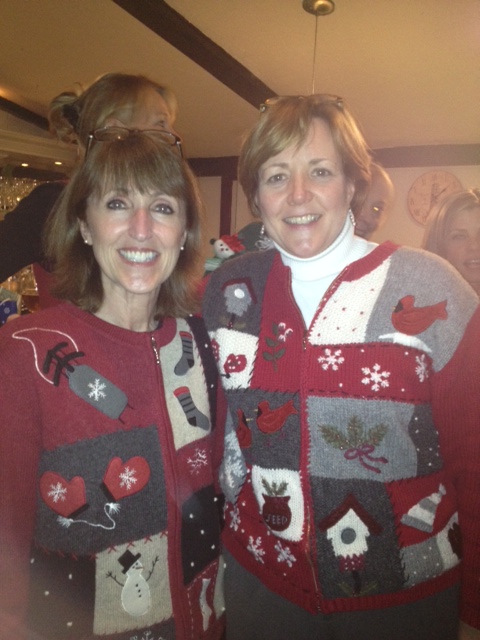
This was true last week when we had our Christmas party at work. The party organizers thought it would be fun to have an “Ugly Sweater” contest, with a prize for the ugliest sweater. “You know, those tacky holiday sweaters everyone used to wear,” one of my colleagues explained. Yes. I did know. I still have one. (Okay, maybe two, but I swear my tackiest Talbots sweater, circa 1994, went to Goodwill at least a year ago.) In the days leading up to the party, conversations like this could be heard throughout the halls: “Do you have an extra sweater I can borrow?” or “Maybe you can find one at the thrift store.”

Happy to know I didn’t have to search for something to wear, I was faced with another dilemma. I like my sweater. I don’t think it’s ugly. That’s why I still have it. I was relieved to find out that other people agreed with me. (Although maybe they were just trying to be nice.) Still, I felt better when I saw my friend Cathy.

photo-2

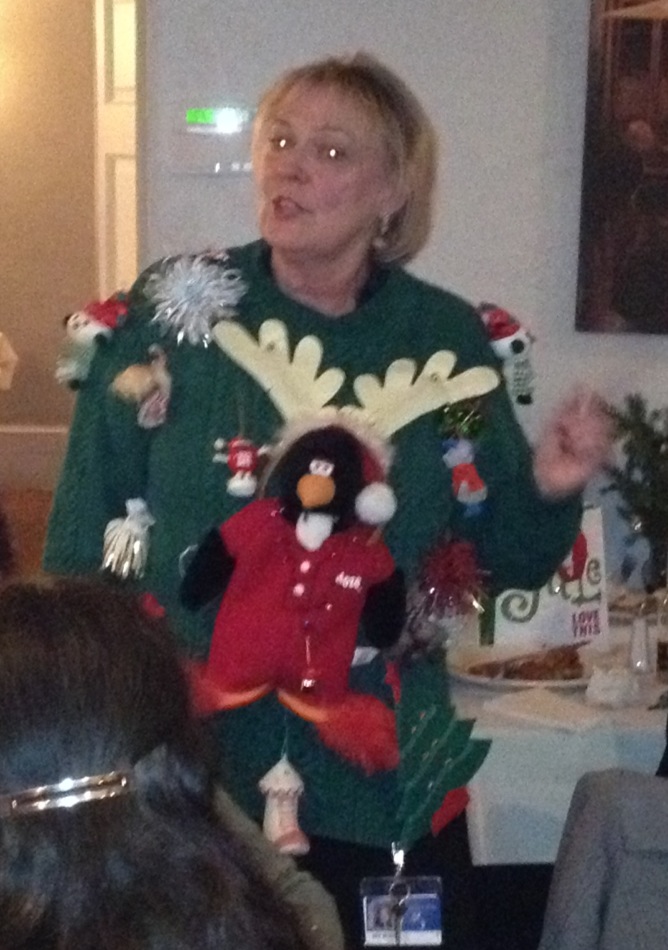
The winner of the contest didn’t have an ugly sweater, so she created one by raiding her Christmas decorations.

photo-1

All this good-natured fun got me thinking, though. Even if my sweater wasn’t ready for the donation box, are there elements of my teaching that are? Am I clutching to an activity or practice just because I’ve always done it? I like to think that I’m reflective and objective about this, but I’m not sure. I definitely have favorite books and projects, but I also read new books and am always on the look out for ideas that will improve my teaching.

The truth is we get comfortable with materials and routines. It’s scary to change our practices and habits. But is this in the best interest of our students? When I talk with colleagues about lessons or activities, I always ask them, “How does this help our students grow as readers and writers?” If there isn’t a good answer to this question, then we have to let it go. By the same token, we shouldn’t be in a hurry to toss everything over for some shiny new program. If a practice is effective, we should keep it. We may need do some tweaking, but there’s a big difference between abandoning and modifying. We have to trust ourselves to make good decisions in this time of rampant change.

And don’t throw that sweater away. You never know when it will be exactly what you want to wear.

Thank you to everyone at Two Writing Teachers for sharing your slices. Your stories always give me new ideas to think about.

Slice of Life: Christmas Trees and the Gift of Books

sols_6

“A book is a gift you can open again and again.”

Garrison Keillor

Every year in late November, my town library hosts a cocktail party/silent auction fund raiser to kick off the holiday season. People donate gift baskets, wreaths, and gift cards to local restaurants and businesses, but the highlight of the event are the Christmas trees. The decorations on each tree are inspired by a book, which is of course part of the package. My dear friend, Colette (of Used Books in Class fame), and I have been contributing a tree for at least the last 15 years, and it has become one of my favorite holiday traditions.

The Nutcracker
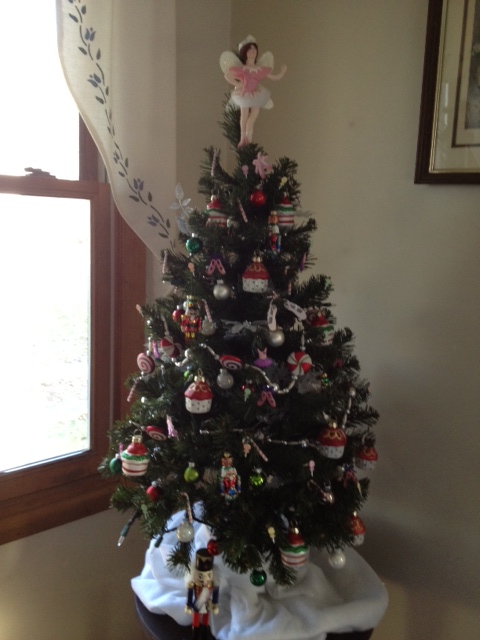
The Nutcracker Tree, topped by Boalt’s Sugar Plum Fairy

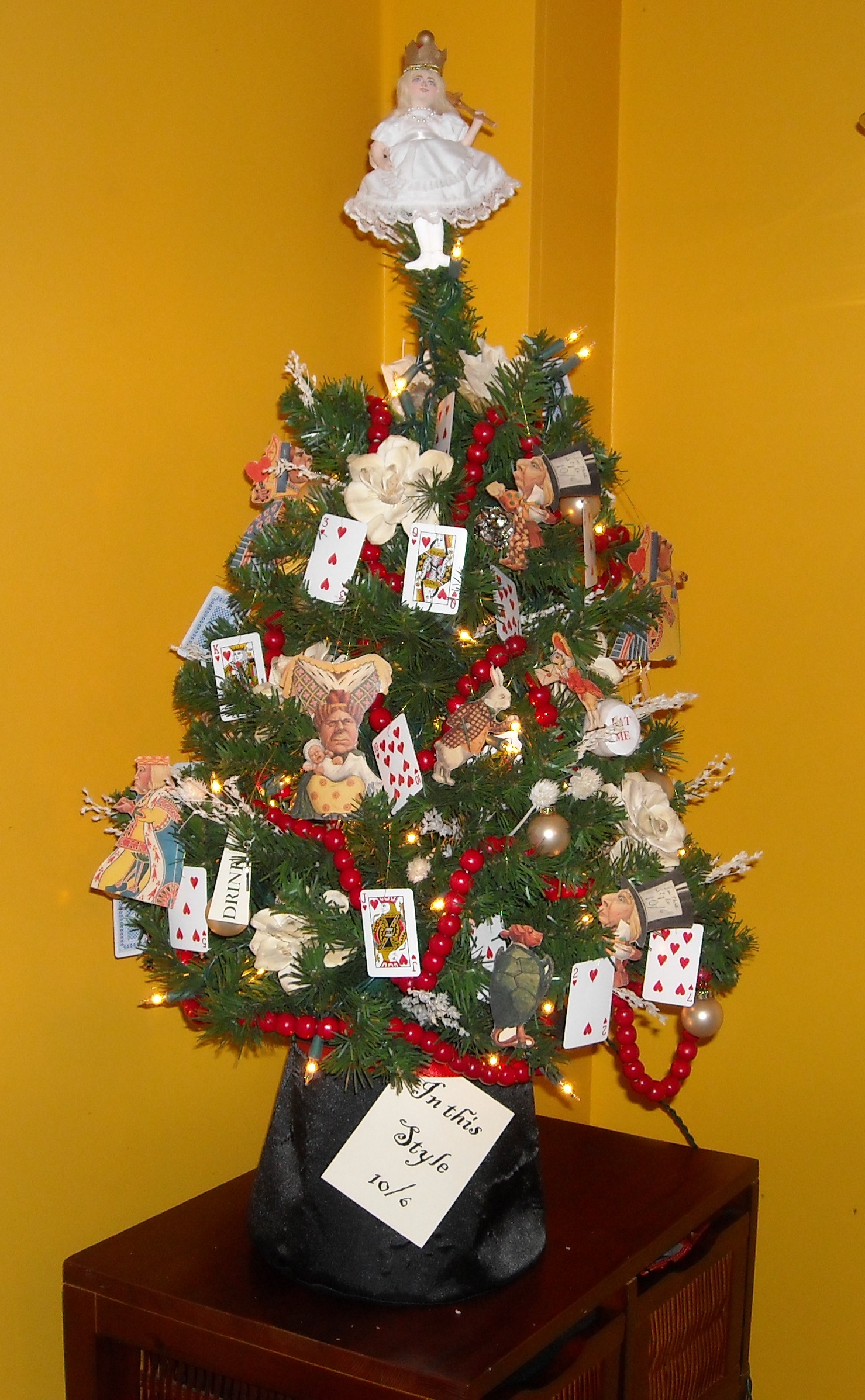
Our trees have most often been based on a children’s book, but we have done a few trees based on adult books. Our Under the Tuscan Sun tree was especially beautiful.  Sometimes we’re inspired by the book itself; other times we find an ornament that strikes our fancy. Many of our trees were inspired by the incredible handmade soft sculpture ornaments by Gladys Boalt. These usually adorn the tree top. The rest of the ornaments are generally a mix of purchased ornaments and ornaments that we make. We’ve gotten very creative over the years about making ornaments out of almost anything. Tiny terra-cotta flower pots and raffia became bells on the Tuscan tree, yellow grosgrain ribbon was transformed into the yellow brick road with the help of a black Sharpie, and a hand-knit I-cord became the garland for a tree full of little sweaters and hats.

Alice in Wonderland Tree

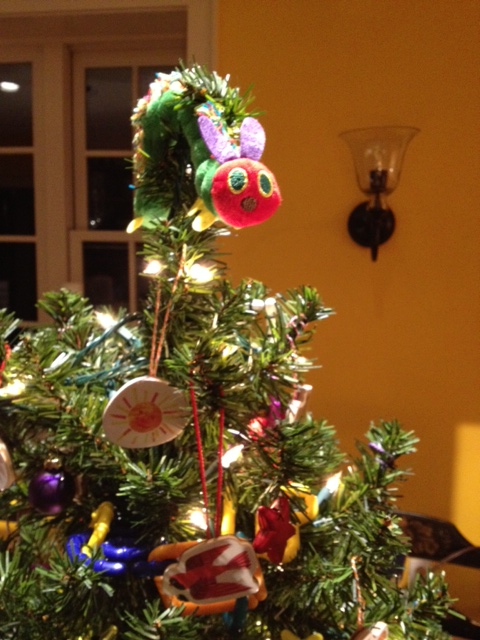
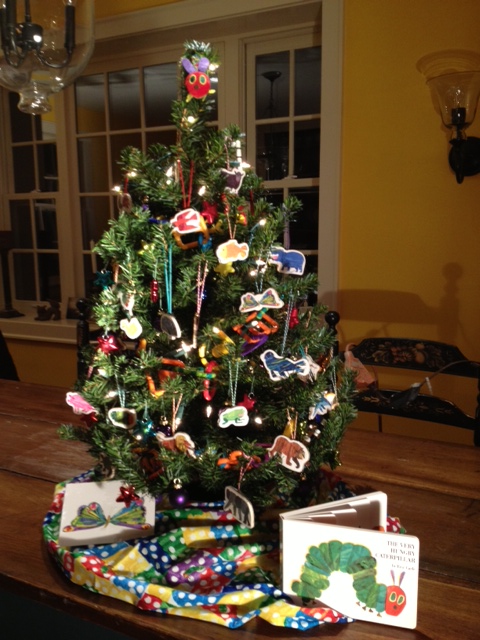
Ideas for a tree can strike at any time of the year. Colette is usually the mastermind, but I’ve had my share of brainstorms too. This year’s tree was inspired by a set of wooden magnets Colette found in the gift shop at the Eric Carle Museum back in March. With the help of brightly colored bakery string and scrap book paper (to cover the black backs), these adorable magnets became ornaments. Plastic alphabet links were turned into a garland, and the Very Hungry Caterpillar himself sat atop the tree.

The Very Hungry Caterpillar

Every year we ask ourselves why we do this, as it takes a fair amount of time to make sure we have all the materials we need, make the ornaments, and decorate the tree. Trees have to be delivered to the library (a big challenge in itself!) right before Thanksgiving, a very hectic time of year for teachers. But every year, as we’re making the ornaments, we remember why we do this. We love it. We love supporting our local library. We love using a creative part of our brain that we often neglect, and we love creating beautiful Christmas trees that bring joy to someone. Most of all, we love giving a child a book they will never forget.

This year's finished tree
This year’s finished tree

Thank you to everyone at Two Writing Teachers for creating and nurturing this supportive community!

Slice of Life: Connecting With Obsolescence

sols_6

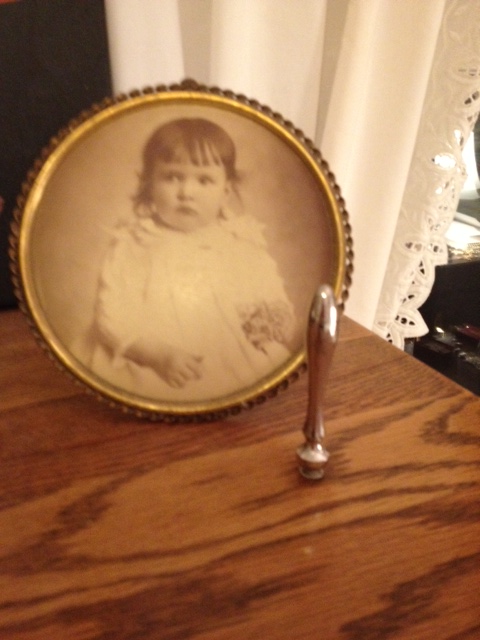
Last weekend, I took advantage of the extra days off to get ready for Christmas and did some cleaning. When I dusted some long-neglected shelves, I found a phone dialer from my grandmother’s house hidden in the shadow of a vase. As I held this totally obsolete object in my hand, I marveled at how perfectly its design matched its purpose: a finger-length cylinder tapered at the base so it could be easily grasped while a phone was dialed. I remembered watching my Grandmother as she used this dialer to call her friends or sisters to chat about recipes, gardens, and grandchildren.

My grandmother, c. 1905, and her phone dialer.

Although my grandmother, and the phone she dialed, are no longer around, the urge to reach out and connect with others never fades. From letters, phone calls, emails, and tweets, people still crave connections. The mode may change, but the desire remains.

Maybe it’s because of my age, but I still prefer phone or face-to-face conversations over emails, texts, or Facebook. But these new-fangled forms of communication let me keep in touch with high school and college friends who are scattered around the world. And I’m grateful for all the connections I’ve made through blogging and Twitter.

Although I can no longer use this phone dialer, I’m glad I have it. I’m glad I can hold it in my hand and remember the deep, loving connection I had with my grandmother. And I’m glad that when I put the dialer down, I can turn to my computer, and connect with the world.

Thank you to everyone at Two Writing Teachers for supporting this connected community!

Slice of Life: NCTE Edition

sols_6  logo-higher-logic

“The universe is made of stories, not atoms.”

 ~Muriel Rukeyser~

I arrived at the Hynes Convention Center in Boston on Thursday evening for my first NCTE Convention filled with anticipation about the upcoming three days. To say my expectations were fulfilled is an understatement! From meeting authors Jane Yolen, Gae Polisner, and Kate Messner, to having breakfast with fellow Slicers, to learning so much from all the amazing presenters, it was a weekend I will long remember.

My head is still filled with the wise words shared not only by the teachers, authors, and poets in front of the conference rooms, but with everyone I chatted with throughout the day. How to share all these thoughts swirling around my brain, like the leaves on the streets of Boston Sunday morning? As I pored over my notes, a pattern of recurring words and phrases began to emerge, and I “found” this poem:

Open the door…

welcome to this safe space.

A space to share our voices,

and tell our stories,

through poetry,

movement,

and art.

A place to explore,

imagine,

speculate,

and connect.

A space to find surprises,

insights,

knowledge,

and trust.

This place is a source of joy.

It has the power to change us; to

help us discover what’s in our heart.

It gives us the courage

to take our message

out into the world.

Thank you to Judy Blume, Nancie Atwell, Helene Coffin, Georgia Heard, Linda Rief, Tom Romano, Chris Leheman, Kate Roberts, Maggie Beattie Roberts, Joyce Sidman, Jane Yolen, Jerry Spinelli, Glenda Funk, Cherylann Schmidt, Kate Messner, Gae Polisner, Jo Knowles, Jen Vincent, Brian Wyzlic, Sara Egan, Brian Fizer, Sean Ruday, and Miriam Kopelow for so generously sharing these words, your experiences and your insights with teachers; for giving us the knowledge and the courage and the power to change our students’ lives.

Please visit Two Writing Teachers, where many wonderful and courageous teachers share their stories each week.

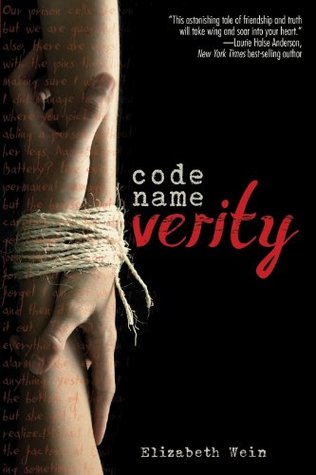
Slice of Life: Code Name Verity

sols_6

“Tell all the truth but tell it slant…”

Emily Dickinson’s words came to mind as I reread Code Name Verity, by Elizabeth Wein, over the weekend. When I originally read Wein’s tale of intrigue and suspense, I was caught up in the story of the two heroines. This time, I was more aware of Wein’s craft: her masterful use of foreshadowing and literary allusions that deepen the reader’s understanding of the characters.

Hyperion, 2012
Hyperion, 2012

But even as I noticed subtleties and connections I hadn’t on my first read, I was worried that my book group might not share my feelings about this title. Recommending a book you love to a friend is one thing. Suggesting it to your discussion group is another. A friend can always say she hasn’t gotten around to reading the book yet. In a group, though, it can be very awkward if everyone doesn’t love a book as much as the person who said, “Let’s read this!”

I needn’t have worried. Everyone liked Code Name Verity, even if some of the details were disturbing. The “YA” sticker on the book’s spine didn’t matter to anyone. The story drew them in, and held on to them until the end.

This is a great book for discussion. There aren’t any unresolved plot lines, but there are plenty of questions. Each person had their own unique interpretations and brought up ideas others hadn’t thought of. Listening to one another added layers to our insight and understanding of this powerful book.

Our diverse little group came together because we love books. We’ve developed a camaraderie over the years, sharing the ups and downs of our lives as we share our latest reading. I’m grateful for this community where I feel free to share my thoughts and ideas about books that I love. Books like Code Name Verity, where the truth lies waiting, even if the stories are made up.

Thank you to everyone at Two Writing Teachers for creating this wonderful community!