Slice of Life: This Post Is Not Perfect!

11454297503_e27946e4ff_h

I thought about starting a blog for at least two years before I finally took the plunge with Reading to the Core. Many questions plagued me before I started. What would I write about? Would anyone read my ramblings? But the loudest and most persistent question was this: What if it’s not perfect?

Perfection paralysis (not my phrase, but I can’t remember where I first read it), I’ve since discovered, is quite common among writers and bloggers. And it seems that teachers with blogs are the most seriously afflicted. Many teachers are perfectionists to begin with, and the thought of sharing a piece of writing that might not be perfect with the whole world is sometimes more than we can take.

Here’s the thing about perfection paralysis, though. Paralysis is not a good thing. We are meant to move and learn and grow. This lesson has played out in my life a number of times over the last year, most recently during my week at the TCRWP Reading Institute.

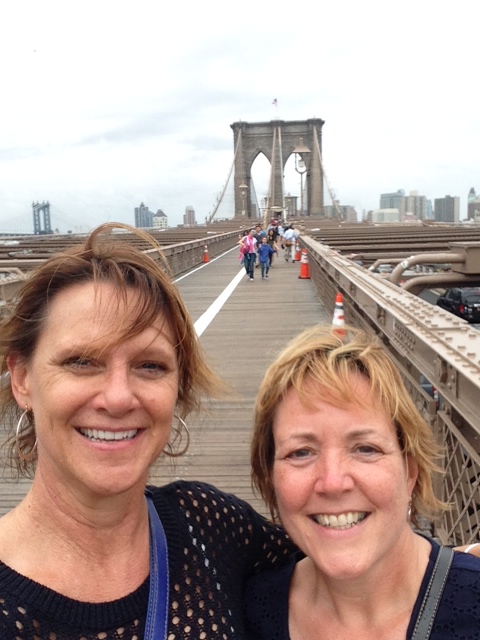
Last week I shared the story of my trek over the Brooklyn Bridge with Dayna Wells. When I got back to my hotel that night, it occurred to me that our adventure was an apt metaphor for the situation many teachers find themselves in these days. Neither of Dayna or I had ever been to the Brooklyn Bridge, and the windy, rainy weather was less than perfect. But we ventured out anyway.

We took a risk that paid off not because we were lucky, but because we set ourselves up for success. First of all, we were together, supporting each other along the way. We had several tools at our disposal, namely the apps on our phones. We did head off in the wrong direction at the start, but our instincts helped us realize our mistake and we quickly turned around. And finally, we had a positive attitude, and set off ready to succeed.

Today, teachers around the country are at the foot of the bridge into the future. We have many tools and resources at our disposal to help us on this journey. We have instincts and knowledge to help us know when we veer off the right path. It’s up to us to bring a positive attitude to this challenge; one that will help us when we get discouraged. It’s critical, though, that we support one another along the way. In her keynote that kicked off the Institute, Lucy Calkins urged us all “to lift up the level of the people” we work with. We have to help one another improve our teaching so our students can learn and grow at higher levels.

Starting my blog and becoming part of the amazing community of teacher-bloggers on Two Writing Teachers, Poetry Friday, Twitter, and more has lifted the level of my teaching in ways I could never have imagined two years ago. So as we begin a new school year, if you have perfection paralysis about joining Twitter, starting a blog, or even trying a new unit, let it go. You may have a false start, and there will be bumps along the way. But the view from the top of the bridge is spectacular!

Photo via everystockphoto.com

Thank you, as always, to StaceyTaraDanaBetsyAnna, and Beth for hosting Slice of Life each Tuesday. Be sure to visit Two Writing Teachers to read more Slice of Life posts.
Slice of Life: Over the Brooklyn Bridge

11454297503_e27946e4ff_h

One of the things I miss the most about having a class of my own is the chance to talk with the kids each morning about what they did the night before. I loved hearing about their soccer games, ballet lessons, or time spent with their family. This kind of talk is essential to creating relationships and developing friendships.

Unfortunately, in our busy lives, it’s sometimes hard to find time to maintain relationships and friendships we already have, let alone make new ones. But that’s exactly what happened last week when I was in New York for the TCRWP Reading Institute.

Fellow slicer and tweep Julieanne knew I was going to be at the Institute and told her friend, Dayna, to look me up. Miraculously, she found me as we were leaving Riverside Church after Lucy Calkins’ inspiring keynote. We agreed to meet at the end of the day and make plans for dinner.

We hit it off immediately, and decided to meet again after our sessions on Tuesday. That morning, my section leader, Annie Taranto, mentioned that one of her favorite things to do in the city was walking over the Brooklyn Bridge. This idea appealed to me immediately, and I hoped Dayna would want to come along.

She loved the idea. So even though it was windy and threatening to rain, we set off, armed with the apps on our phones and our sense of adventure.

We got off the subway at the City Hall station, and proceeded to walk a block in the wrong direction. We soon realized our mistake, turned around, and found the entrance to the pedestrian walkway leading from Manhattan to Brooklyn. Despite the weather, many people were out enjoying the views. The Empire State Building towered over the city to the north.  To the south, the Statue of Liberty came into view.

Then there was the bridge itself. The distinctive gothic arches of the towers and the web-like steel cables give the bridge a graceful beauty. We peered down onto the cars and trucks below and agreed we were glad not to be sitting in the tangle of traffic beneath us.

Without a doubt, though, the best part of the whole evening was spending time with Dayna and getting to know her. We talked about our families, our histories, and our jobs. We shared ideas from the sessions we’d been in that day and talked about books we love. It felt like we were long-lost friends.

On the bridge with Dayna, wind-blown but having a great time.

By the time we arrived back in Manhattan, it had started to rain and it was getting late. We found a pub not far from City Hall and continued to talk through dinner. It was much easier to find our way back to the subway, and soon we were headed back uptown to our hotels, tired and happy from our trek to Brooklyn and back. Happy to have found a new friend along the way.

Thank you, as always, to StaceyTaraDanaBetsyAnna, and Beth for hosting Slice of Life each Tuesday. Be sure to visit Two Writing Teachers to read more Slice of Life posts.
Slice of Life: Recipe for a Perfect Summer Day

11454297503_e27946e4ff_h

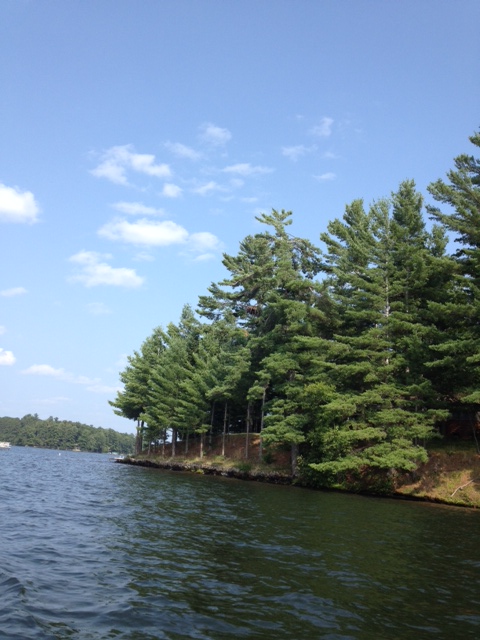
Last week I was lucky enough to spend four wonderful days at a lake in northern Wisconsin with my son, daughter-in-law, and her family. Inspired by the beauty surrounding me, and a poem I read recently by Laura Purdie Salas, I decided to write a recipe poem about my visit to Lake Minocqua.

photo-2

“Recipe for a Perfect Summer Day”

Take one lake filled with calm, clear water,

sun-warmed and sparkling.

Surround it with towering pine trees,

where bald eagles nest and perch.

Fill it with musky and largemouth bass,

walleye and northern pike.

Add:

pairs of loons, warbling their mournful cry,

graceful herons, still as statues on the shore,

iridescent dragonflies, darting over the surface.

Mix in families and friends who spend the day:

swimming and kayaking,

biking or hiking;

your choice.

Top with a campfire,

toasted marshmallows,

and gooey, chocolatey s’mores,

under a star-filled sky.

© Catherine Flynn, 2014

Thank you, as always, to StaceyTaraDanaBetsyAnna, and Beth for hosting Slice of Life each Tuesday. Be sure to visit Two Writing Teachers to read more Slice of Life posts.

Slice of Life: Becoming Fearless

11454297503_e27946e4ff_h

“Play around. Dive into absurdity and write. Take chances. You will succeed if you are fearless of failure.” 

Natalie Goldberg, Writing Down the Bones: Freeing the Writer Within

I highlighted these lines in my copy of Goldberg’s wise and funny book years ago. But I feel like I’m just beginning to truly understand their implication in terms of what is possible for me as a writer.

Why did it take me so long to come to this understanding? Maybe I’m a slow learner. More likely is the fact that I’ve been writing a lot this summer. And through the process of becoming more immersed in the story I’m working on, I have become fearless. Okay, less fearful.

But there’s more to it than just writing more. Two experiences from the past month have played a huge role in helping me get to this point.

Thanks to a conversation Melanie Meehan and Betsy Hubbard had on Twitter a few months ago, I am now part of an online critique group. I cannot overstate how lucky I am to work with Melanie, Stacey, and Julie. They are incredibly supportive and kind, but also offer meaningful suggestions and advice. Another benefit of being part of this group is reading my partners’ amazing writing. Melanie, Stacey, and Julie are all talented writers, and I’ve already learned so much from the pieces they’ve shared with the group.

My experience at art camp earlier this month also helped me be more comfortable to “play around” and “take chances” in my writing. One of the activities that I found especially helpful was creating an “analog drawing” of a problem. In analog drawing, only lines are used to express emotion, among other things. As I sketched my problem, I realized I was creating a narrow doorway with a border that looked very much like battlements. “Is this how I approach problems?” I wondered, appalled at the thought. I began to sketch other doorways, doorways that opened wider and were less rigid. As I continued to draw, I came to the realization that these narrow doorways were impacting my writing.

So it was with these two experiences in mind that I was able to not, in Natalie Goldberg’s words, be “tossed away…by [the] fiasco” of this line in my first draft of a story about a girl whose mother has just died:

“Holly was devastated that she would be separated from her two best friends.”

As my husband might say, “Well, no s*&t, Sherlock.” As soon as I read this line, I knew my critique partners would point out its many weaknesses immediately. I really didn’t want them to even see this lame line. I also thought of my drawing of the opening doors. Why was I afraid to find out how Holly dealt with this devastation?  Just write. Dive in and see where this line leads.

After an hour of revision, one short sentence had become two pages of action and dialogue that reveal much about Holly and her mother. These are the lines (which still need plenty of work) that replaced the original, obvious statement of Holly’s feelings:

“Holly stared in disbelief at the lists taped up on the glass doors. Tears filled her eyes as she turned away and ran from the parking lot toward the playground. “Arrrgh!” she screamed as she jumped onto bottom rung of the jungle gym. Her hands clung to the cold metal of the bars as if they were all that kept her from falling into a giant black cave.”

In her book The Artist’s Way, Julia Cameron writes that we are “creating pathways [into our] consciousness through which the creative forces can operate.” I realize now that I had to write the first line in order to create the pathway to get to the second line. Uncovering deeper understandings about these characters and their story isn’t always possible without a surface level understanding of who they are. Put another way, just as artists have to sketch the outline of a subject before they can add layers of color that create nuance and depth in their drawing or painting, writers have to start with a general idea of what their writing is about before they can add the nuance and depth that creates memorable characters.

While I’m happy about the writing I’ve done over the past month, I’m unsettled by the implications of how I arrived at these insights for teaching. Having the luxury of filling my days with reading, writing, drawing, and thinking about what interests me, at my pace, is not an opportunity we give our students very often, if ever. Children need the time to play and explore, to discover what is possible, not just in writing, but in all areas of their lives. They also need the kind of supportive and nurturing environment my critique group has given me. Finding a way to provide these conditions is critical for anyone, young or old, to create the pathways into their consciousness that will awaken them to all the possibilities within themselves.

Thank you, as always, to StaceyTaraDanaBetsyAnna, and Beth for hosting Slice of Life each Tuesday. Be sure to visit Two Writing Teachers to read more Slice of Life posts.
Slice of Life: Cultivating Creativity

11454297503_e27946e4ff_h

I am not an artist. But over the past year or so, drawing has been nudging its way into my brain. At NCTE, Linda Rief spoke about incorporating several different art techniques into a poetry project. Linda’s presentation inspired Vicki Vinton to invite readers of her blog, To Make A Prairie, to do “something creative” in response to a poem they love. So when I was offered the opportunity to attend an art “camp” for adults, I jumped at the chance. For the past two days, I have been sketching and painting and making collages.  This experience has been everything I hoped it would be and more.

One of yesterday’s activities found us out in the garden, gathering images. It was a classic summer day: bright blue sky, puffy white clouds, insects buzzing from flower to flower, birds chirping from the tree tops. It was lovely just to sit and soak in the beauty of the moment. Our teacher instructed us to do just that, but to write and/or sketch the images surrounding us.

Back in the studio, we were given time to turn our thoughts into haiku, then time to capture the image in watercolor or colored pencil.

I drafted two poems based on my observations:

1.

serene summer day

breezes whisper through pine boughs

lilies trumpet joy

photo-5
First try–tiger lilies are hard to draw!

2.

hidden sweetness

clover blossoms pink as dawn

bees hover and buzz

This experience has been quite an eye-opener, and I’ve had some interesting insights into my writing process through drawing. Driving to the studio yesterday, I was filled with anxiety about this experience. Now I wish I had more than four days to continue to forge what Julia Cameron, in The Artist’s Way, calls “pathways into [my] consciousness through which creative forces can operate.”

Thank you, as always, to StaceyTaraDanaBetsyAnna, and Beth for hosting Slice of Life each Tuesday. Be sure to visit Two Writing Teachers to read more Slice of Life posts.

Slice of Life: My Last Class

11454297503_e27946e4ff_h

Seven years ago, I said goodbye to the classroom and stepped into the role of literacy specialist. This position challenges me every day and has allowed me to grow as an educator in ways I could not have imagined. 

But I miss being a classroom teacher. I miss the hum of a classroom hard at work. I miss those moments when a hush falls over the room because we are all mesmerized by the final pages of our read aloud. I miss listening to young writers share their heart-felt stories. I miss seeing the joy on a child’s face when she sees a butterfly emerge from its chrysalis, or the furrowed brow of a child who is determined to solve a math problem. I miss a child trusting me so much and feeling so comfortable with me that he says “mom” when he has a question.

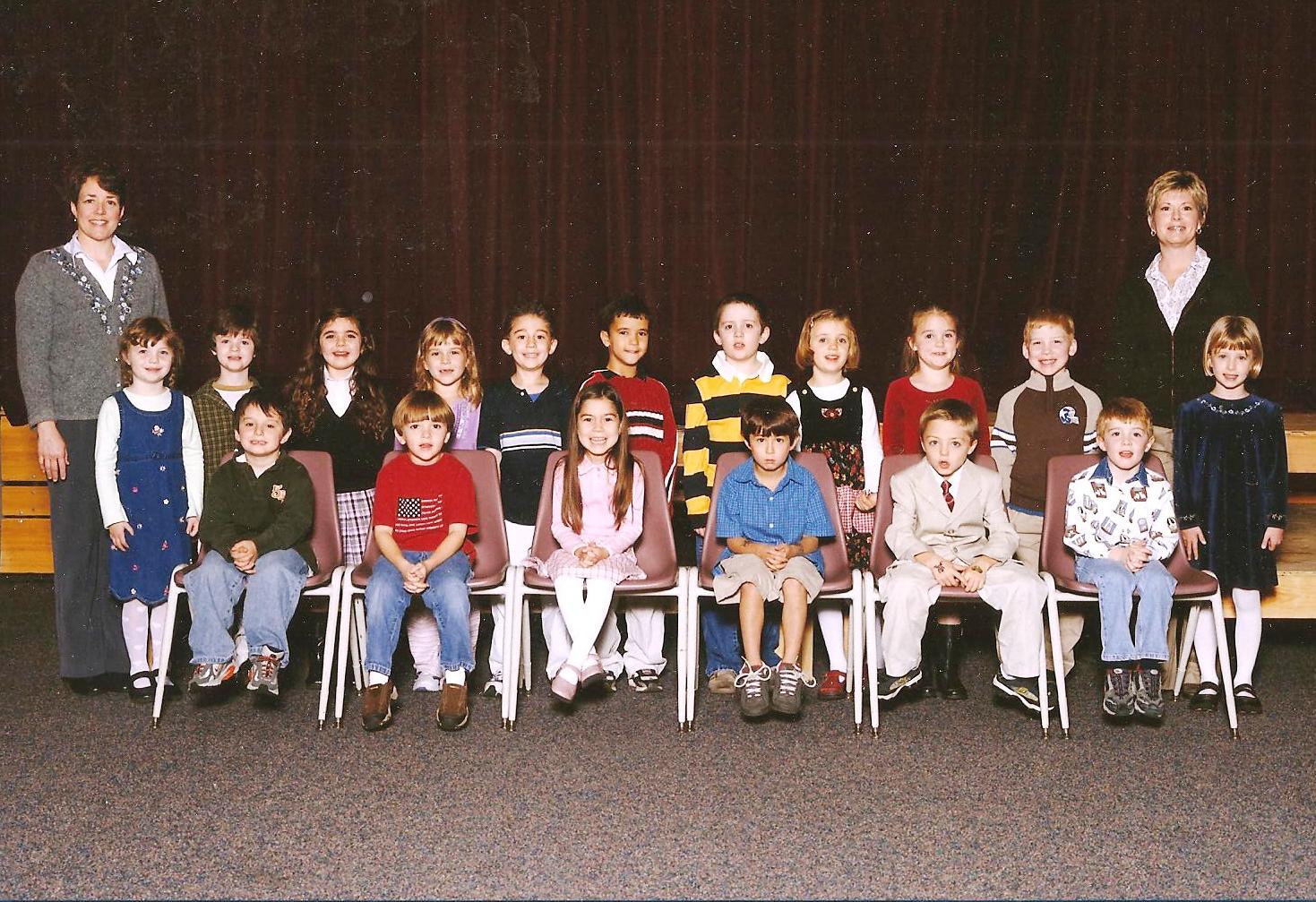
My last first grade class will graduate from eighth grade later this week. I have loved watching them grow into caring, capable young adults, but not as much as I loved spending one precious year with them.

Being their first grade teacher was a privilege I am thankful to have had. As they head off to high school, I hope they have the courage and opportunity to follow their dreams. I wish them love and joy and happiness in the years ahead.

Godspeed, my young friends.

last class

Thank you, as always, to StaceyTaraDanaBetsyAnna, and Beth for hosting Slice of Life each Tuesday. Be sure to visit Two Writing Teachers to read more Slice of Life posts.
Slice of Life: Read Alouds for Everyone

11454297503_e27946e4ff_h

Last night’s #readingjoy Twitter chat, led by Jennifer Seravallo, got me thinking about read alouds. Much has been written about the importance of parents reading aloud to children from the very start and making read alouds part of every classroom routine. I agree with every bit of this advice. I read to my own children from the day we came home from the hospital, and we never skipped read aloud time in my classroom. But I’ve also come to realize the importance of read alouds in my intervention lessons.

I left the classroom seven years ago to become our school’s literacy specialist. Because I work in a small district, this role includes many duties. One of these is working with tier 3 students. The children I work with are our youngest, most at-risk students who are typically non-readers when we begin working together. One of the biggest challenges they face is understanding why they should bother with reading at all. Usually this is because reading isn’t a priority at home. I meet with their parents to discuss the importance of reading to and with their children. I also give them pamphlets and links to websites with tips and information about how to make reading part of their routine at home. I send books home that children can keep. And yet, they still don’t read at home.

By the time these children arrive in my room, they’re convinced that I’m going to torture them. So I start by chatting with them about their pets, hobbies, and places they like to visit, just to break the ice. Once they are comfortable, I start asking about favorite books or subjects. Then I bring out my secret weapon. A book. I offer it as something I like, not as something I think they should like. Usually they ask for their own copy by the end of the week.

614a7cNL5EL

One of my first students was a first grade boy with a host of issues. (He was diagnosed with Autism during the time I worked with him.) He had no interest in anything other than Legos and hated school because he had to leave his Legos at home. He knew most of the letters and sounds, but didn’t know how to pull them apart or put them together to make words. For some reason, he took a shine to Emily Gravett’s Orange Pear Apple Bear (Simon & Schuster, 2007). I must have read that book to him a hundred times. Soon, he was reading it with me. And before long, he was reading lots of other books, too.

51wjVUX0s9L._SY300_

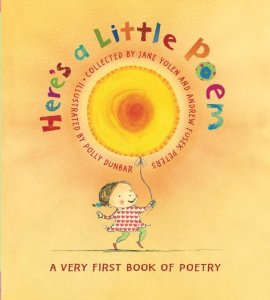
Another boy was adamant that he hated letters and wouldn’t learn to read. I told him that was his choice but that I was going to read to him. His “breakthrough book” was in fact a poem from Jane Yolen and Andrew Fusek Peter’s excellent collection Here’s a Little Poem: A First Book of Poetry (Candlewick, 2007). Peter’s own poem, “The No-No Bird,” introduced this child to a boy who liked the word “no” as much as he did. Maybe it was this flash of recognition that finally brought him around. Or maybe it was simply the fact that he could read the word “no.”

51R1jIhHu3L

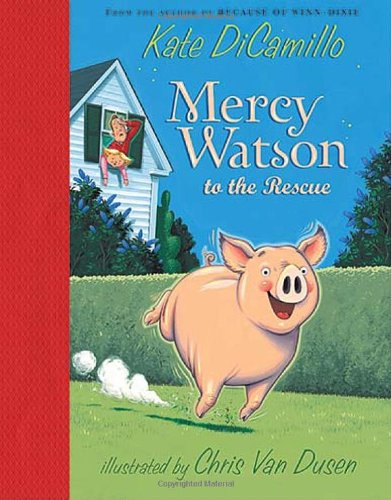
Last year I had a student who was so shy and quiet he barely spoke above a whisper. To break the ice, I began reading Kate DiCamillo’s Mercy Watson to the Rescue (Candlewick, 2005). He loved Mercy and her silly antics! Soon he was reading with me, asking questions, and thinking of further adventures for Mercy. Over the course of the year, we read every Mercy Watson book we could get our hands on. My heart was filled with joy at the look on his face when I presented him with his own copy of Mercy Watson at the end of the school year.

Do I know what it was about each of these books that made them the right books for these children? No. What I do know is that each child heard or saw something in them that made him happy. Something in these books helped him feel connected to another person and let him know he wasn’t alone. And that is, after all, why we read.

Thank you, as always, to StaceyTaraDanaBetsyAnna, and Beth for hosting Slice of Life each Tuesday. Be sure to visit Two Writing Teachers to read more Slice of Life posts.


Slice of Life: Caution Thrown to the Wind

11454297503_e27946e4ff_h

“Imagination is the beginning of the cognitive process through which we create meaning.”

Betty K. Garner

One morning last week, I found myself following a builder’s pickup truck on my way to work. A long length of yellow tape was trailing out of the bed of the truck. At first, I was slightly annoyed that this tape was slowing me down, but I became so fascinated watching its gyrations that I was sorry when the driver realized what was happening and pulled over to capture the escaped tape.

Coincidentally, I had just finished reading an article by Betty K. Garner called “The Power of Noticing” in Educational Leadership‘s February 2013 issue on creativity. Garner explains that taking the time to really notice something “supplies the raw material for creative thinking” and that “this kind of cognitive engagement stimulates curiosity and creativity.”  So when I arrived at school, I rushed to my desk and wrote everything I remembered about what the wayward tape had conjured in my mind. Several days and several drafts later, here is a poem I created out of those images.

Charmed by the warmth of the morning sun

and the fresh air filled with bird songs,

a length of yellow construction tape

rises up out of its cardboard home

in the back of a pickup truck

and catches a ride on the breeze.

Dancing down the road,

it undulates like a cobra,

lured out of its basket by the call of a pungi,

waving back and forth,

creating serpentine shapes,

its message of caution

thrown to the wind.

© Catherine Flynn, 2014

Since this is the last Tuesday of National Poetry Month, I hope Mary Lee won’t find this poem’s link to imagination too tenuous and mind if I share it with the readers of her “Our Wonderful World” poetry project.

Thank you, as always, to StaceyTaraDanaBetsyAnna, and Beth for hosting Slice of Life each Tuesday. Be sure to visit Two Writing Teachers to read more Slice of Life posts.

Slice of Life: The Leaning Tower of Pisa

11454297503_e27946e4ff_h

In honor of National Poetry Month, I’m sharing a slice of poetry today. I was inspired by Mary Lee Hahn‘s “Our Wonderful Word” poetry project. Each day during the month of April, Mary Lee is writing an original poem in honor of either a man-made or natural wonder. Today’s wonder is the Leaning Tower of Pisa.

I briefly considered becoming an architect when I was in high school, and although I chose a different path, my fascination with architecture remains. Not long after reading Brunelleschi’s Dome by Ross King, I found Tilt: A Skewed History of The Tower of Pisa, by Nicholas Shrady. When I pulled the book off my shelf last weekend, I was struck by how much the tower looked like a wedding cake. And although I’m sure I’m not the first person to make that comparison, it was the spark I needed for this poem.

Wikimedia
Wikimedia

Were I to bake

a wedding cake, 

festooned with frill and flower

it would list and tilt

like Pisa’s famous tower.

Each tier more precarious

than the one below,

how to keep it upright,

Heaven only knows.

Although it’s not perfection,

once topped with groom and bride,

my flour and sugar confection

will stand askew with pride.

© Catherine Flynn, 2014

Thank you, as always, to StaceyTaraDanaBetsyAnna, and Beth for hosting Slice of Life each Tuesday. Be sure to visit Two Writing Teachers to read more Slice of Life posts.
Slice of Life: Bo, the Outdoor Cat

11454297503_e27946e4ff_h

Two cats live at our house. Two fluffy orange cats. Every afternoon when I get home, Noodles, our indoor cat, is waiting for me at the front door. He darts out before the door is even open all the way, anxious to be out in the fresh air and sunshine. Noodles is always ready to come back inside, though, and curl up with me on the couch.

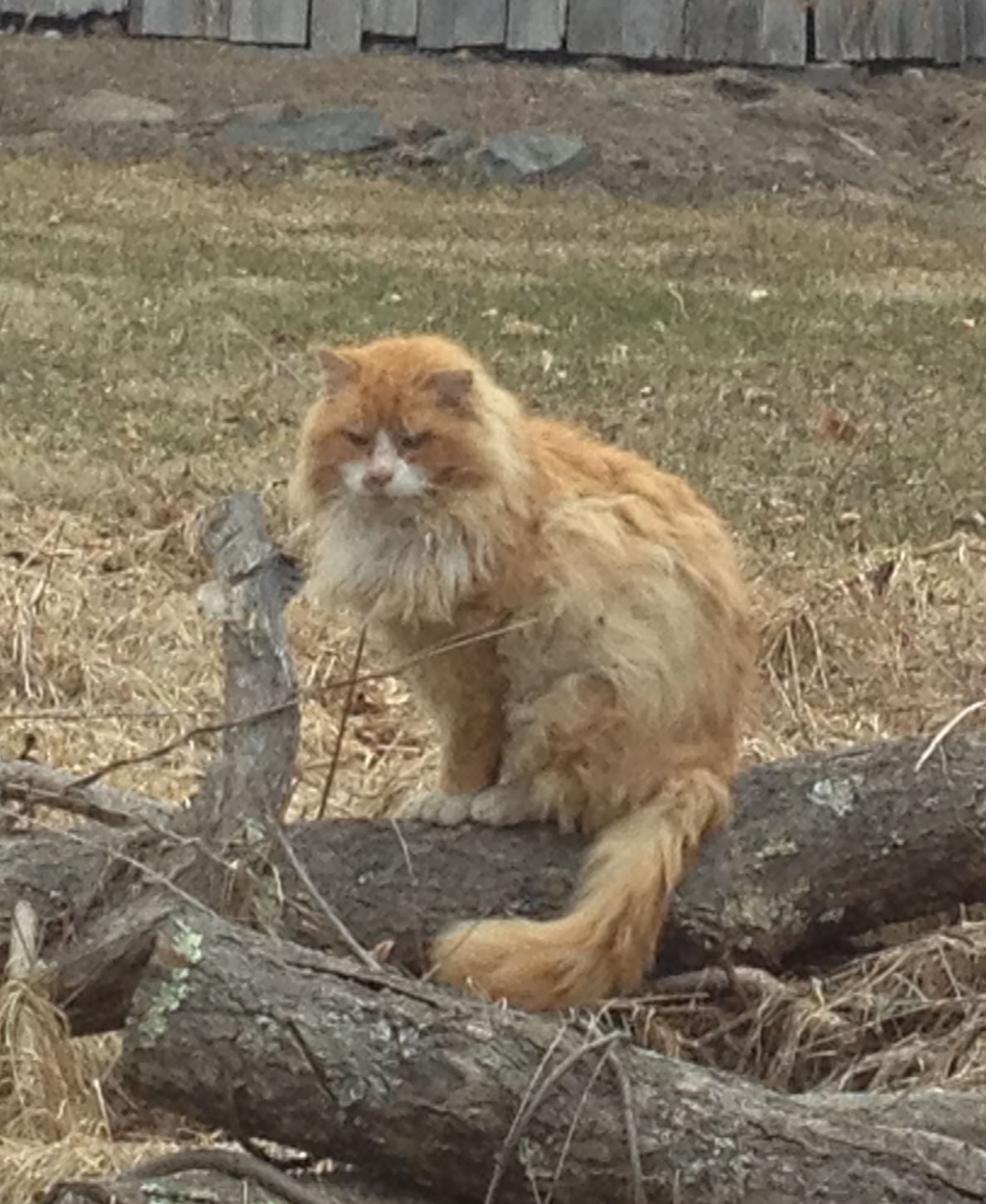
Bo is an outdoor cat. He adopted us; just started hanging around. At first we tried to shoo him away, but he kept turning up. I asked the neighbors if anyone was missing their cat, but no one knew anything about him. So I started feeding him. My husband was against this, said we didn’t need a stray hanging around. But Bo looked so sad. He’d clearly been in his share of fights, and his coat was matted and unkempt.

At first he scurried away whenever we were outside. He found a way into a ramshackle storage shed behind the garage and made a home for himself there. Whenever I left food on the porch, he’d slink up, gobble down the kibble, then run away to his hiding place after he was full.

Then he started sleeping on the wicker settee on the porch if the weather was fine. He still ran away if he saw us, but not all the way back to the shed. He stopped hissing at me when I brought food out for him.

Now, he’s part of the scenery. I named him Bo because I thought he was very bold to just make himself at home here. His hardscrabble looks also made me think of the song “Mr. Bojangles.” He waits by the front door every morning for his breakfast and doesn’t run away when I come outside. He seems content enough, but still doesn’t let me get close enough to pet him. And I’ve noticed that he always sleeps with his legs under him, ready to bolt at the first sign of danger.

He reminds me of a student who lived in our town for a short time a few years ago. He had been in a series of foster homes, and had a tough, gruff exterior. He didn’t act out or cause trouble, but he never looked completely comfortable or relaxed. He always looked ready to bolt.

I won’t ever know where Bo got his scars or how he landed on our doorstep. All I do know is that he needed a home and someone to care for him. I hope someday he’ll let me pet him. In the meantime, he reminds me everyday that sometimes the children who put up the toughest barriers are the ones who need our love the most.

Bo outside his shed.
Bo, outside his shed.

Thank you, as always, to StaceyTaraDanaBetsyAnna, and Beth for hosting Slice of Life each Tuesday. Be sure to visit Two Writing Teachers to read more Slice of Life posts.