Slice of Life 19: The Cult of the Cooking Channel

This poem, which is partially true, evolved from a story idea I found in my journal. This cheesecake is delicious and has become a holiday tradition in my family. You can find the recipe here.

The Cult of the Cooking Channel

She “got” cooking like
some people “get” religion.
The lure of pristine,
well-stocked kitchens was
impossible to resist.

Her favorite high priestess extolled
the virtues of butter,
so tubs of margarine
were tossed in favor
of sticks of unsalted butter.
Garlic was now purchased in bulbs,
not bottles.

She found herself at the mall,
clutching a recipe for cheesecake
searching for the kitchen supply store.
The saleswoman showed her how
to use a springform pan,
Located the “perfect microplane”
For zesting lemons.

At her next stop, she found
red currant jelly, something
she’d never heard of,
tucked away on the top shelf,
filled her cart with cream cheese,
sour cream, and eggs.

Assembling the batter was
surprisingly easy; she just
followed the recipe,
step by careful step.

After the pan was filled
and safely in the oven,
she ran her finger along
the rim of the bowl and licked.
She’d never tasted anything
so delicious.

Baking this luscious concoction
was tedious, but she never
deviated from her mentor’s
instructions.

When her creation was cool
and topped with raspberries tossed
in the warm melted jelly,
she offered it to her family.

Their mouths dropped open.
They regarded her with new eyes.
Who was this woman who had such
hidden talents?

An acolyte of the cooking channel,
eager to discover new recipes,
new truths about herself.

© Catherine Flynn, 2019

Thank you to StaceyBetsyBethKathleenDebKelseyMelanie, and Lanny for creating this community and providing this space for teachers and others to share their stories every day in March and each Tuesday throughout the year. Be sure to visit Two Writing Teachers to read more Slice of Life posts.
Slice of Life 19: By the Book

For the past two years, I’ve done a post modeled on the “By the Book” that runs each week in The New York Times Book Review. This column, subtitled “Writers on literature and the literary life,” interviews authors about what they’re currently reading, which books they love, and other interesting questions related to their reading. The column asks about a dozen questions, but my favorite is always the first: “What books are on your nightstand?”

I always have at least a dozen stacked by my bed and a dozen more by my desk. At the moment Sharon Creech’s new middle grade novel, Saving Winslow is at the top. Creech’s Newbery Award winning Walk Two Moons is one of my favorite books of all time, so I’m really looking forward to reading about “a sickly newborn mini donkey.”

I picked up Meg, Jo, Beth, Amy: The Story of Little Women and Why It Still Matters by Anne Boyd Rioux at the library last week. I’m only on the first chapter, but this book is already full of fascinating information about one of the most influential books in American literature.

A Primer for Poets and Readers of Poetry by Gregory Orr, who is a professor of English at the University of Virginia, is next. This book is pushing my writing and thinking about poetry in unexpected directions.

There is always at least one book that I’m embarrassed to admit I’ve never read. This year, it’s Opening Minds: Using Language to Change Lives by Peter H. Johnston. Johnston’s message, that through our language, we “construct the classroom worlds for our students and ourselves” and that “the worlds we construct offer opportunities and constraints” is a powerful one. If you haven’t read this book, find it and read it as soon as you can.

What books are on your nightstand?

Thank you to StaceyBetsyBethKathleenDebKelseyMelanie, and Lanny for creating this community and providing this space for teachers and others to share their stories every day in March and each Tuesday throughout the year. Be sure to visit Two Writing Teachers to read more Slice of Life posts.
Slice of Life 19: Pumpkin Bread

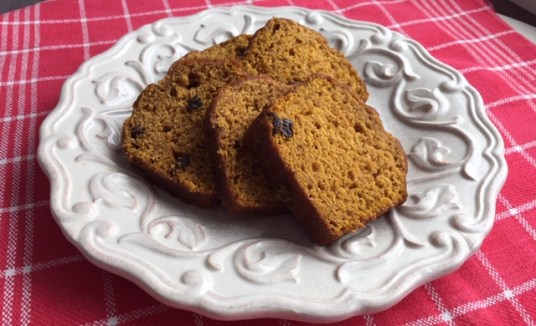
Yesterday, I wrote about the importance of choice. Sometimes that choice is within a broader topic. This poem is an example of that kind of choice. This month I am also participating in Laura Shovan’s “February” Poetry Project. (Why we’re doing it in March is a long story.) The theme this year is food, and yesterday Laura shared a picture of sourdough bread as a prompt. She also offered the alternative to write about a “bread of your choosing.” Since I don’t have much experience with sourdough bread, and have been baking pumpkin bread every year for almost forty years, this was an obvious substitution. Like the goal of writing a daily slice of life, the goal of Laura’s project “is to practice the habit of writing regularly…so that we can focus on generating ideas.” I may return to this poem to rework the ending, or I may not. I did enjoy the process of writing, and the piece of pumpkin bread (from a loaf hidden in the freezer) I ate to help me write it!

Pumpkin Bread

In November,
After the geese have flown south
And only brown oak leaves
Still cling to tree limbs,
It’s time to make pumpkin bread.

The cookbook falls open
To the recipe,
Spattered and stained
From thirty years of use.
The heady scent of cinnamon
And cloves fills the kitchen
As ingredients mix and meld
Into honey-colored batter.

I fill the pans, like a bee
Filling honeycombs.
Then into the oven, where
The golden glop transforms
Into loaves of amber sweetness
That we will devour
When they cool.

© Catherine Flynn, 2019

Thank you to StaceyBetsyBethKathleenDebKelseyMelanie, and Lanny for creating this community and providing this space for teachers and others to share their stories every day in March and each Tuesday throughout the year. Be sure to visit Two Writing Teachers to read more Slice of Life posts.
Slice of Life 19: Thoughts About My Writing Life

For the past three days, I have been part of a team of teachers visiting a neighboring district to learn more about this district’s English/Language Arts curriculum and its implementation. This was an incredibly rewarding experience, and I will be thinking about everything I learned there for days and weeks to come.

One of the questions we asked the teachers we visited was “What is the writing life of a student here?” I’ve been thinking about how I would answer this question for students in my district, as well as how I would answer it for myself. This seemed like a good place to begin the 12th annual Slice of Life Challenge.

I can honestly say that I owe my current writing life to the Slice of Life challenge. Late one Friday night seven years ago, I wrote my first slice more on a whim than anything else. That post led to more posts, and eventually I began attending conferences, meeting authors, and ultimately, publishing poems of my own and of my students.

So what is it about Slice of Life that enabled me to build a rich, rewarding writing life? Being part of a community of supportive writers is perhaps the most important thing slicing has given me. From the beginning, the encouraging comments and feedback have nurtured me as a writer and given me the confidence to continue writing. I think about this every day when I confer with my students about their writing.

Another critical quality of slicing is that, in terms of what to write about, the sky is the limit. Writers are free to write about whatever they want, using whatever genre or format that suits their topic. Just as I appreciate being able to make my own choices, I know students want this freedom also. That being said, I also appreciate the suggestions the Two Writing Teacher team members provide throughout the month. Sometimes it’s just hard to face a blank page without any guidelines. This is true for our students as well.

I also appreciate the many mentor texts shared by all slicers. Whether its a line of text that launches a dive into childhood memories, or a poem that provides a structure for a poem of my own, mentor texts are an essential component of any writing life.

These are just my initial thoughts about this question, but I’ll be returning to it over the course of the month. As John Ciardi said, “a good question is never answered. It is not a bolt to be tightened into place but a seed to be planted and to bear more seed toward the hope of greening the landscape of ideas.”  I look forward to watching the “greening of the landscape” with you.

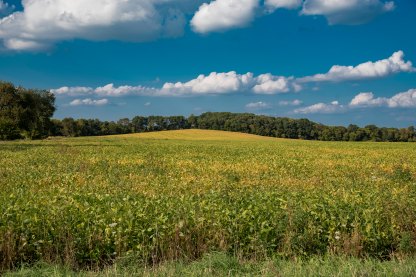
Photo by Good Free Photos on Unsplash

Thank you to StaceyBetsyBethKathleenDebKelseyMelanie, and Lanny for creating this community and providing this space for teachers and others to share their stories every Tuesday. Be sure to visit Two Writing Teachers to read more Slice of Life posts.
Slice of Life: Not Procrastinating

Just do it. Put your butt in the chair and write. So here I am, sitting in a chair, writing. I have a project I’ve been working on for several years that is nearing completion. An endless list of writing ideas for poems, picture books, and more. No more procrastinating.

This weekend, before I decided to stop procrastinating, I cleaned out my email inbox. (Is there such a thing as productive procrastination?) As I scanned the subject lines, certain words began to grab my attention. Simple words, but all words are full of possibilities, aren’t they? Soon, I had a list of more than twenty words in my notebook. Before I knew it, the words were arranging themselves into a poem.

There are many variations of found poetry. Some retain the word order as it appeared in an original text; others are more flexible. Because I found these words in email subject lines, I felt free to rearrange the order and add articles and small words such as to. Besides, keeping the beginning of the list in order resulted in this:

Today, hours
Are free.
The code
Is yours,
Waiting

Here

Here

Here.

If only!

Here is another poem I drafted with the found words from my email subject lines:

Seeds lie hidden
in books:
A collection, a code
waiting
to reveal
hidden gifts
for each soul
lucky enough
not to miss

the miracle.

Happy writing, everyone. Keep an eye out for those miracles!

Thank you to StaceyBetsyBethKathleenDebKelseyMelanie, and Lanny for creating this community and providing this space for teachers and others to share their stories every Tuesday. Be sure to visit Two Writing Teachers to read more Slice of Life posts.
Poetry Friday: Strong Women

Happy New Year to all my Poetry Friday friends! As I was entering important dates into my new desk calendar, I discovered that, by pure coincidence, I am hosting the Poetry Friday Roundup on International Women’s Day (March 8th). I thought it would be appropriate to celebrate the day by sharing poems that honor women. These could be original poems or poems written by others. They could be poems about an important woman in your life who deserves to be celebrated, someone famous, an unsung woman of historical significance, or a poem by your favorite female poet. The choice is yours. So please feel free to participate (or not) in any way that feels right to you. I’ll post a few reminders between now and March 8th.

The theme of this year’s celebration is #BalanceforBetter. In 2017, I wrote this poem celebrating the women in my life who helped me be a better person. (You can read the original post here.)

Strong women taught me
how to knit, to bake,
to cook and sew.

Strong women taught me
how to love, to live
through strife and woe.

Strong women taught me
not to count
on others for my bread.

Strong women taught me
to rely
on my own wits instead.

Strong women taught me
to be brave when lies
and hate are spread.

Strong women taught me
how to think, to stand
for what is right.

Strong women taught me
to be kind, to fill
the world with light.

© Catherine Flynn, 2017

With my sister and mother, still going strong at 81, on Christmas day.

Please be sure to visit Sylvia Vardell at Poetry for Children for the Poetry Friday Roundup.

Slice of Life: 2019 Reading Goals

Resolutions really aren’t my thing. I’m much better at setting goals and working toward them. That way, I’m always making progress.

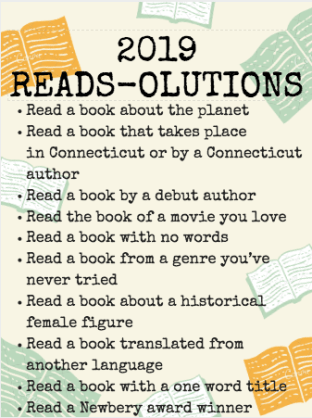
At school, we always challenge our students to, in the words of Lucy Calkins, “outgrow themselves as readers.” January is the perfect time to check our progress and set new goals. Knowing that many of our students need help choosing titles, we’ve adapted The Strand Book Store’s “Reads-olutions” (I know; I said I don’t like resolutions, but this is too catchy to pass up.) to guide them.

I always tell kids that these categories are only suggestions, and really, as long as they keep reading, they’re achieving their goal. I do share with them my reads-olutions (aka goals), and tell them that I almost never read every book I plan to, but always read many more that I didn’t know about when I made my list.

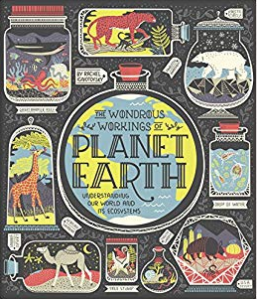
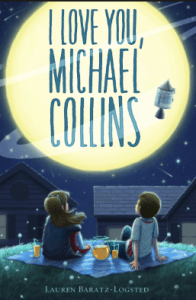
With that in mind, here are several titles I hope to read in 2019:

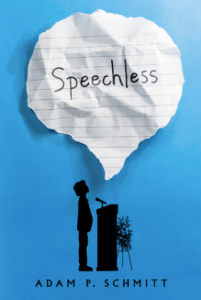
  • Book by a debut author (also covering Book with a one word title):
    Speechless by Adam P. Schmitt

  • A Newbery Award winner:
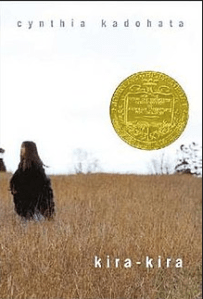
    Although I haven’t read every Newbery winner, I’ve read many of them. Kira-Kira, by Cynthia Kadohata is the most recent winner I haven’t read. Of course, if I haven’t read this year’s winner, I’ll add that to my list.

As always, I’ll continue to chip away at the mountains of books already scattered around my house, waiting to be read! Thanks to Betsy Bird for her fabulous blog, A Fuse 8 Production, and her incredible series, 31 Days/31 Lists. Many of these titles came from these posts. The Nerdy Book Club also has wonderful year-end lists if you need more suggestions.

What books are you looking forward to reading in 2019?

Thank you to StaceyBetsyBethKathleenDebKelseyMelanie, and Lanny for creating this community and providing this space for teachers and others to share their stories every Tuesday. Be sure to visit Two Writing Teachers to read more Slice of Life posts.
Slice of Life: A Christmas Miracle

The turkey had been roasting for about forty-five minutes when we heard the POP! At first we thought juices had spattered, but then the oven timer went off.

I hadn’t set the timer.

When I got to the oven, a bright green “F1” was flashing where the temperature setting should have read 325 degrees. Uh-oh.

I tried to open the oven door. It would not budge. Locked. Tight.

My twenty pound turkey was stuck in the oven. Thirty people would be arriving for a Christmas feast in just a few hours.

“Go turn off the breaker,” I said to my husband. “Maybe it will reset itself and the door will open.” Meanwhile, I was mentally scanning my neighbor’s kitchens. Who was likely to be home, not needing their oven a week and a half before Christmas?

“Did that work?” my husband called from the basement.

“Yes! The door’s open!” I hollered back as I dialed the neighbor most likely to have an empty oven. “Hi, Jean? I need a huge favor.”

Fifteen minutes later, my turkey was safely tucked into Jean’s oven. But I still had mashed potatoes, butternut squash, and broccoli to worry about.

“Well, we were going to get a new oven soon anyway,” my husband reasoned. “I’ll just go buy one today.”

Within the hour, my well-used, trusted oven was on its way to the great appliance graveyard.

Within three hours, our new oven was settled into its new home, gleaming brightly.

Four hours after that ominous pop, the turkey finished roasting in our new oven, the potatoes were mashed, and the squash was boiling. When our first guests arrived, everything was under control. They only reason anyone knew anything had gone wrong was because we told them.

At school, we help students to put their problems in perspective, categorizing them as bummers, glitches, or catastrophes. Thanks to a good neighbor and a handy husband, what at first felt like a catastrophe turned out to be only a glitch. Dinner was on the table a bit later than originally planned, but otherwise, our Christmas celebration with my husband’s family went off without a hitch. It was a miracle!

Wishing you all a glitch-free holiday! Thank you to StaceyBetsyBethKathleenDeb, KelseyMelanie, and Lanny for creating this community and providing this space for teachers and others to share their stories every Tuesday. Be sure to visit Two Writing Teachers to read more Slice of Life posts.
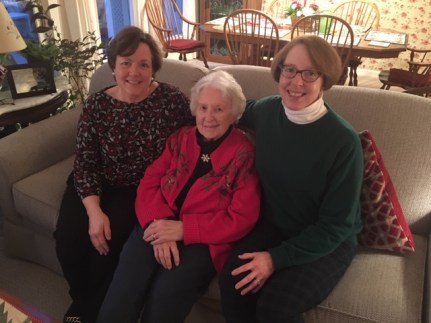
Photo by rawpixel on Unsplash

Slice of Life: Life is Short

Every teacher knows the week before school starts is one of the busiest of the year; a week that leaves little time for reflective, thoughtful writing. I’ve decided that working through some of the mentor texts in Linda Rief’s The Quickwrite Handbook is a realistic option to keep me writing during these first few weeks of school.

This week, Linda’s suggestion to borrow the phrase “Life is short…” from Maggie Smith’s poem “Good Bones,” appealed to me. Here is my response:

Life is short, so on the last Sunday of August, the day before school started, when I still had piles of books I wanted to read and at least one poem I wanted to write, I drove for half an hour to meet my friend.

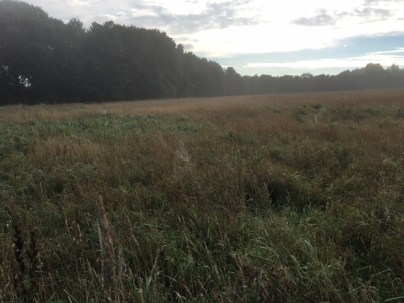
Life is short, so we met at a place where we could walk in the sunshine of a late summer morning through a field still wet with dew and bedecked with the lacy offerings of a thousand spiders and talk about our busy week, our busy children, our busy lives.

Life is short, so even though there was laundry to sort and rooms to vacuum, we drove to a diner where we drank hot coffee and ate fluffy eggs and ignored the hustle and bustle around us and talked some more and worked on the crossword puzzle, just like we used to when she lived down the street, enjoying the easy comfort of our long friendship, a friendship that makes this life beautiful.

Thank you to StaceyBetsyBethKathleenDeb, KelseyMelanie, and Lanny for creating this community and providing this space for teachers and others to share their stories every Tuesday. Be sure to visit Two Writing Teachers to read more Slice of Life posts.
Slice of Life: When I Was Young…

As summer winds down, I’ve been thinking not only about what I accomplished (closets cleaned, books read, poems written), but what I didn’t do. For many years, my in-laws had a very rustic cabin on a lake in “down east” Maine.  We spent many weeks there over the years. Going to camp was right up there with Christmas and birthdays for my boys. The cabin was sold long ago, but for some reason, I missed it more than usual this summer.

Maybe that’s because I started thinking about it in June after I received my copy of Linda Rief’s fabulous new book, The Quickwrite Handbook: 100 Mentor Texts to Jumpstart Your Students’ Thinking and Writing. One of Linda’s quickwrite suggestions is to “borrow Cynthia Rylant’s line ‘When I was young in the…’ (or ‘at the’) and write down all that comes to mind about that place you love or that place that you dislike.” Although I never spent time at the lake when I was young, it isn’t hard to imagine this magical spot through the eyes of a child.

When I Was Young at the Lake

(with thanks to Linda Rief and Cynthia Rylant)

When I was young at the lake, I woke to the sun shining through the trees, making puddles on the floor of the cabin’s loft. I skipped stones across the glassy water and paddled a canoe to the island near our cove. My brother and I ran wild through the forest and built a fort to defend our territory. We swam in the cold water and searched for unusual rocks on the beach.

When I was young at the lake, the air smelled of pine trees and we picked wild blueberries that grandma baked into a pie. On rainy afternoons, as raindrops pinged on the roof, we sat on the porch and put puzzles together. On clear nights, we watched meteor showers from the beach that were better than any fireworks we’d ever seen.

I fished for trout with my grandfather from our rowboat. Grandma always clapped when we presented her with our catch. Then she breaded each fish in cornmeal and fried them in her big cast iron skillet. Once a year, we drove to Machias for lobsters and corn on the cob. On those nights, we felt like kings as pulled tender meat from bright red claws and licked our buttery fingers clean.

When I was young at the lake, we fell into bed, exhausted from the day’s adventures, and drifted to sleep to the lullaby of loons.

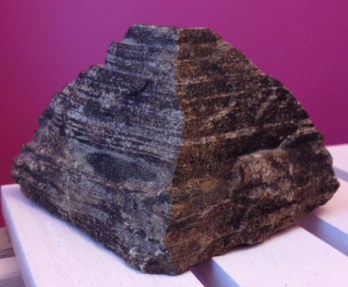
A rock from the shore of Beddington Lake.

Linda explains that “these quickwrites are seeds of ideas, the beginning of a piece to be worked on right away or, at the very least, captured for later use.” I can easily imagine revisiting “When I Was Young at the Lake.” I can imagine a poem emerging from these lines, or maybe a picture book. Even if these memories never get farther than this post, my memories of the lake are always in my “deep heart’s core.” (“The Lake Isle of Innisfree,” by W.B. Yeats)

Thank you to StaceyBetsyBethKathleenDeb, KelseyMelanie, and Lanny for creating this community and providing this space for teachers and others to share their stories every Tuesday. Be sure to visit Two Writing Teachers to read more Slice of Life posts.