Poetry Friday: Mindfulness and the Poet Joyce Sidman

Mindfulness, according to Jon Kabat-Zinn, “means paying attention in a particular way; On purpose, in the present moment, and nonjudgmentally.” Much easier said than done.  Author/illustrator Bryan Collier once asked an audience if they had caught the color of the day that morning when they left the house. In other words, were they being mindful.

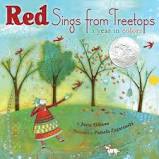
Winter has a reputation for being drab and gray. Sometimes a pristine blanket of white brightens the landscape, but too quickly it becomes trampled and dirty. Earlier this week, while driving to work (the one time of day I remember to be mindful), I was treated to a glorious pink sky. Joyce Sidman’s award-winning Red Sings from Treetops: A Year in Colors immediately came to mind. She writes

“In the WINTER dawn

Pink blooms

powder-soft

over pastel hills.”

Isn’t that lovely? Pamela Zagarenski’s Caldecott-Honor winning illustrations perfectly complement Sidman’s beautifully crafted images.
Image

Sidman’s mindfulness, her keen observation, is evident in every poem. Colors are personified as they change from season to season. Sidman’s imagery seems effortless, yet creates a sense of wonder that makes readers want to rush outside and drink in the beauty that surrounds them.

Teachers across the country have many questions about the place of poetry as they implement the CCSS. Can they even still teach poetry? Of course they can! Reading Literature Standard 4 states that students will “Interpret words and phrases as they are used in a text, including determining technical, connotative, and figurative meanings, and analyze how specific word choices shape meaning and tone.” This begs to be addressed through poetry. Joyce Sidman’s work is a perfect place to start. Not only can students examine her figurative language and word choice, they can follow her example of mindfulness. Teaching students to view the world with awareness so they can gather their own ideas, seeds of writing to come, is just as critical as any skill listed in the standards.

Joyce Sidman’s work deserves a place in all classrooms. Indeed, the National Council of Teachers of English just named her the 2013 winner of the NCTE Award for Excellence in Poetry for Children. Read more about Red Sings from the Treetops and Sidman’s other books here. Congratulations, Joyce, and thank you for creating poems that remind us to always pay close attention to the world around us.
Poetry Friday: Turn Again to Life

Turn Again to Life  importance-of-play-2

If I should die and leave you here awhile,

Be not like others, sore undone, who keep

Long vigils by the silent dust, and weep.

For my sake – turn again to life and smile,

Nerving thy heart and trembling hand to do

Something to comfort other hearts than thine.

Complete those dear unfinished tasks of mine

And I, perchance, may therein comfort you.

Mary Lee Hope

I first heard this poem when Lady Sarah McCorquodale read it at the funeral of her sister, Princess Diana. It touched me deeply, as a beloved aunt of mine was battling cervical cancer at the time. This poem was a great comfort to me when she ultimately lost her fight.

The past week has been beyond comprehension here in western Connecticut. Newtown is a neighbor, a friendly, welcoming town where I sometimes shop. As a teacher, this tragedy has the added anguish of knowing that my colleagues died defending their students. As a parent, I cannot fathom the despair the families are feeling right now, as they try to deal with their grief and loss.

Our country did a lot of soul-searching over the past week. Going about our daily lives seemed impossible. And yet we have gone on. Here at school, it is the children who make this possible. Each day, more than ever, I look forward to being with my students.

We owe it to the dedicated educators who died to take up their “dear unfinished tasks.” We must do everything in our power to create a world filled with love and joy; a world where all children can grow and flourish into the fullness of themselves.

Thanks to Heidi at my juicy little universe for hosting today’s roundup.

Poetry Friday: Something Told the Wild Geese

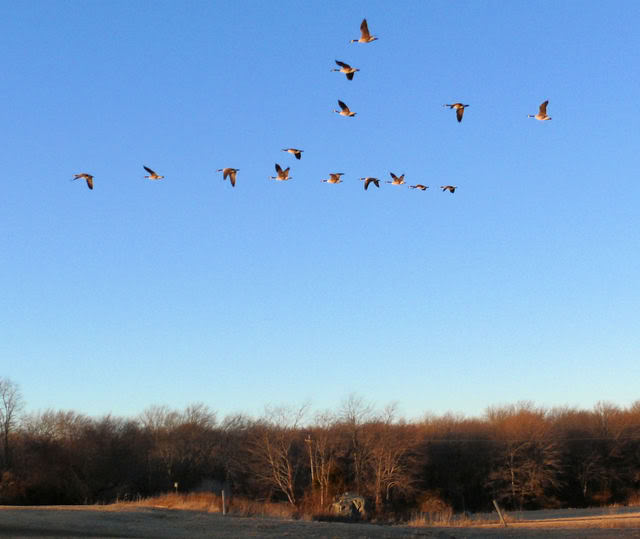
ImageAs I was walking my dog this morning (thanks to another no-power day at school), a flock of geese flew overhead. “Something told the wild geese…” came to mind immediately. It is a typical November morning here in western CT: low, gray clouds, a light, chilly breeze and trees that are mostly bare. So even though the weather isn’t exactly like that in the poem, it still seems like a perfect poem to share today.

Something Told the Wild Geese

by Rachel Field

Something told the wild geese

It was time to go,

Though the fields lay golden

Something whispered “snow.”

Leaves were green and stirring,

Berries, luster-glossed,

But beneath warm feathers

Something cautioned “frost.”

All the sagging orchards

Steamed with amber spice,

But each wild breast stiffened

At remembered ice.

Something told the wild geese

It was time to fly,

Summer sun was on their wings,

Winter in their cry.

Although I’ve never “taught” this poem, I’ve had a poster of it hanging in my classroom many times. Today, rereading it with the CCSS in mind, this poem seems tailor-made for the second grade Reading Literature standard: “Describe how words and phrases (e.g. regular beats, alliteration, rhymes, repeated lines) supply rhythm and meaning in a story, poem, or song.” The repetition of the word “something” adds an element of mystery. What is this force that’s urging these geese away from the golden fields and summer sun? Vivid verbs personify the inescapable coming of winter in a way students will easily relate to at this time of year. (At least here in the northeast.)

I would begin a discussion by asking simply, “What’s going on in this poem?” As Calkins, et.al point out in Pathways to the Common Core (Heinemann, 2012), “…the absolute first order of business (Reading Literature Standard one) is that students need to be able to grasp what a text actually says and suggests.” (p. 39) Letting the students gather the details that point to autumn is excellent practice in inferring. I’d also ask the kids what questions they have, and hopefully they’ll wonder about “sagging orchards.” If not, pointing to this line and asking “What would make the orchards sag?” will get them thinking about trees heavy with fruit.

This poem also offers wonderful opportunities for vocabulary learning. The demands aren’t heavy, but “luster-glossed” and “amber spice” are marvelous phrases and are perfect for discussions of word choice. (Language Standard four and five)

A Google search turned up at least two different musical versions of “Something Told the Wild Geese” and many performances of the Sherri Porterfield tune. I prefer this clip, http://www.youtube.com/watch?v=6sRIYcTNMhg sung by a group of very talented fifth graders. Repetition of “winter” at the end of the song offers a chance to discuss why the musician made the decision to emphasize that word.

I’m anxious now to share this poem with our second graders next week. I have some other ideas about how to follow up the discussion of the poem and song, but want to try them out with the kids first. I’ll share the results of our work next week.

For those of you who were affected by Sandy, I hope you’re lives are getting back to normal.