I’ve been thinking about my grandmother lately. Born in 1904, she passed away thirteen years ago this week. She grew up on a farm, had a garden until she was in her 70s and a tomato plant by her back door after that. Having lived through the Depression, she saved EVERYTHING. I loved spending time at her house because I never knew what treasure would turn up. Her father’s family emigrated from Scotland in the 1870s, and she was fiercely proud of her Scottish heritage. Robert Burns was one her favorite poets, so I thought it would be fitting today to share one of the “national poet of Scotland’s” most famous poems.
Alexander Nasmyth [Public domain], via Wikimedia CommonsA Red, Red Rose
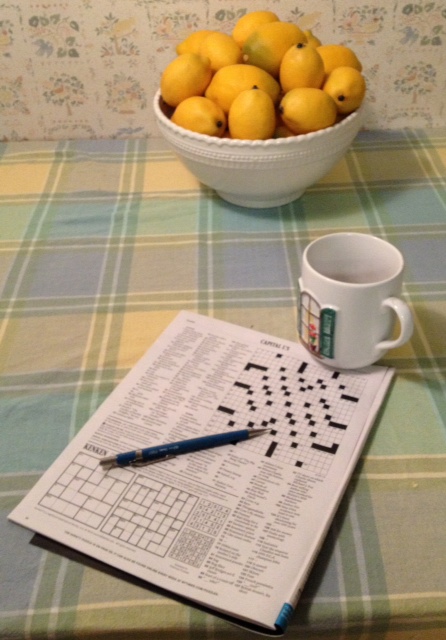
The idea for this poem came from a journal entry I wrote in response to one of Corbett Harrison’s “Sacred Writing Time” prompts. When my colleagues and I were working on our writing curriculum, we began each day by writing for ten minutes. On this particular day, the slide stated that “dreamt” is the only word in the English language that ends with “mt.” As a Scrabble player and crossword puzzle lover, this intrigued me. So I wrote about filing this tidbit away, thinking it would come in handy as I was “puzzling through the possibilities” when solving a puzzle. Right away, I noticed this phrase. I loved the alliteration and the potential it contained. So I began playing with ideas. I’m still puzzling over this draft; I’m not sure the middle flows as well as it could, but I’ve had fun working on it.
By the way, the Rossini clue is from the New York Times Sunday puzzle from August 25, 2013, constructed by Victor Barocas.
Be sure to visit Laura at Author Amok for the Poetry Friday Round Up.
As this week of commemoration and celebration of the fiftieth anniversary of the March on Washington and Martin Luther King, Jr.’s “I Have a Dream” speech comes to a close, I’d like to share a book of poetry that gives voice to a little-known chapter in the history of segregation and discrimination against African-Americans in the United States.
Dial Books, 2009
Sweethearts of Rhythm: The Story of the Greatest All-Girl Swing Band in the World, by Marilyn Nelson, is a completely original book. Nelson has created a mosaic of voices which, piece by piece, tells the story of “the first integrated all-women swing band in the world.” (Author’s Note) Rather than have each musician tell her story, Nelson lets the instruments talk. And do they have a tale to tell! Beginning with the band’s roots in the Piney Woods Country Life School, each poem shares details about the musicians and their music, as well as African-American life in the early 20th-century South.
Nelson’s poetry also illuminates the character of each instrument. In “Bugle Call Rag,” the trumpet isn’t shy about it’s status in the band:
“No trumpet has ever been tempted
Not to funambulate
On the filament of a melody.
We’re all stars; we were made for the limelight.”
Events of the wider world are also described in the poems, each one named for a popular song of the period. When war is declared against Japan, the tenor sax tells us that Twin Ione or Irene Gresham
“…bowed her head
Then lifted me and eased me into song…
It was ‘Chattanooga Choo-Choo,’ but it was a prayer for peace.
She was trying to change the world through sound.”
But, in “Jump, Jump, Jump,” the alto sax reminds us that the reality of life is never far away for these musicians.
“From ballroom to ballroom, the unsleeping eye of Jim Crow
Ever upon us, we traveled the United States
of Colored America, bouncing on back-country roads…”
Throughout the text, Jerry Pinkney’s amazing illustrations mix watercolors and collage to enhance the feeling of Nelson’s poems. Sepia tones are used to portray the desolation of the Dust Bowl, the indignity of segregated restrooms, and the injustice of Japanese internment camps. Warm, vibrant colors are used when children are jumping, couples are dancing, and victory is being celebrated.
Appropriately, in “That Man of Mine,” that show-off trumpet shares the news:
“Her pristine technique wove a shimmering texture of sound
That was shot through with joy, on the day the Armistice was declared.”
These lines could also describe Nelson’s crafting of these poems. Their “shimmering texture of sound” isn’t always shot through with joy, but it always contains the truth, a testament to the lives of these brave women and their instruments, who did bring joy to countless Americans despite the prejudices they faced.
Anna Mae Winburn and the International Sweethearts of Rhythm, performing “Jump, Children
Please be sure to visit Tara at A Teaching Life for the Poetry Friday Roundup for more poetry.
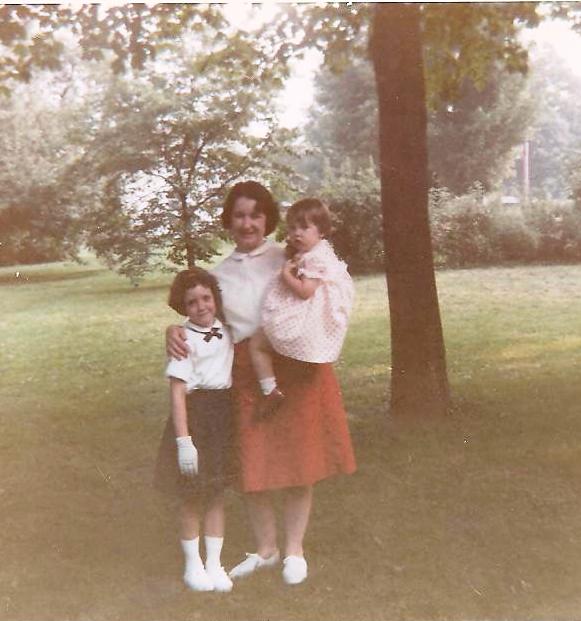
With my mother and sister before I marched in the parade for the first time.
Every August, my town is transformed by the Bridgewater Country Fair. Sponsored by the volunteer fire department, this annual event was one of the highlights of my childhood. The fair was a magical place with a merry-go-round and Ferris wheel, farm animals, flowers, and vegetables. All summer, I looked forward to eating all the food I could only get at the fair.
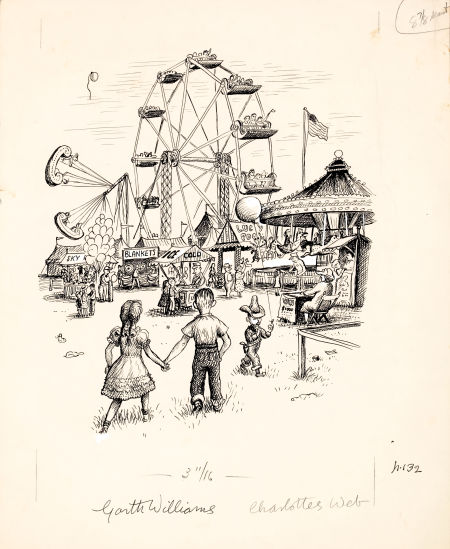
The fair where Wilbur and Charlotte have their final triumph has always reminded me of our fair. As a matter of fact, I think one of the reasons I loved Charlotte’s Web so much the first time I read it was because White’s description of the fair resonated so deeply with me. (I still love it, but for many other reasons.) I’ve often tried to write something about the Bridgewater Fair, but have never been happy with the results. So this year, inspired by Margaret, I decided to create a found poem using White’s own words. Drawn from chapters XVI, XVII, XVIII, and chapter XIX, this poem uses White’s language to capture my memories of the fair of my childhood.
“Off to the Fair”
The Fair only comes once a year.
Balloons aloft.
Clean straw,
new pigpen,
cattle barn,
sheep blatting,
first prize.
“Can I have some money?”
Have some fun on the midway:
Ferris wheel turning,
round and round in the sky.
Music of the merry-go-round,
steer a jet plane.
“Hold on tight!”
Spin a wheel, win a doll.
Many fine smells in the air:
Hamburgers frying,
popcorn,
candied apples,
lollypops.
Wonderful excitement!
Wonderful adventure!
~from the words of Charlotte’s Web, by E.B. White
Happy Friday, everyone! I’m “off to the fair!”
Thank you to Lisa at Steps and Staircases for hosting the Poetry Friday Round Up today. Be sure to head over and read more wonderful poetry!
TeachersWrite, the summer writing camp for teachers organized by Kate Messner, Gae Polisner, Jo Knowles, and Jen Vincent, ends Monday. While I’m sad that the structured lessons, quick-writes, and feedback opportunities will be ending, I’m very excited about the writing I’ve done this summer. I’ve learned so much and can’t wait to get back to school to share these insights with my colleagues and students.
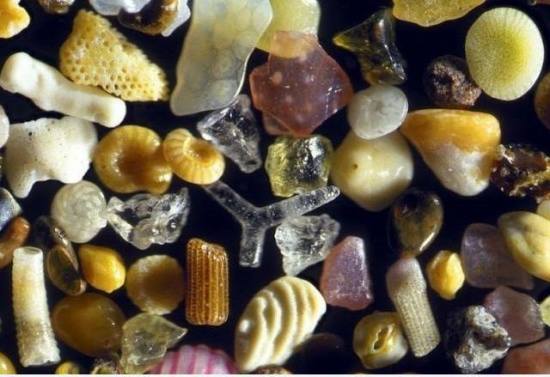
Today’s poem was inspired by this photo, which a friend shared on Facebook a few weeks ago. I was amazed by the uniqueness of each individual grain, and it got me thinking. This is the current draft of the resulting poem:
Sometimes in our busy lives,
we brush others aside
as carelessly as we brush
the sand off our feet
after a day at the beach.
But what if we stopped,
took a moment
for a closer look?
What wonders might be revealed to us?
The geologist, turning
her microscope to those few
grains of sand,
is rewarded with
an astonishing menagerie:
a crystal jack, broken in half
translucent beads, flecked with whirls of milky white
Many, many thanks to Kate, Gae, Jo, and Jen, for a wonderful, rewarding summer of writing. I’m looking forward to being back next summer! (And maybe meeting some of you at NCTE in Boston?)
There are more incredible photos of magnified sand at InspirationGreen. I think this would be a perfect quick-write to share with students of any age.
Thanks also to Renee at No Water River for hosting the Poetry Friday Round Up. Be sure to visit her and all the other Poetry Friday folks.
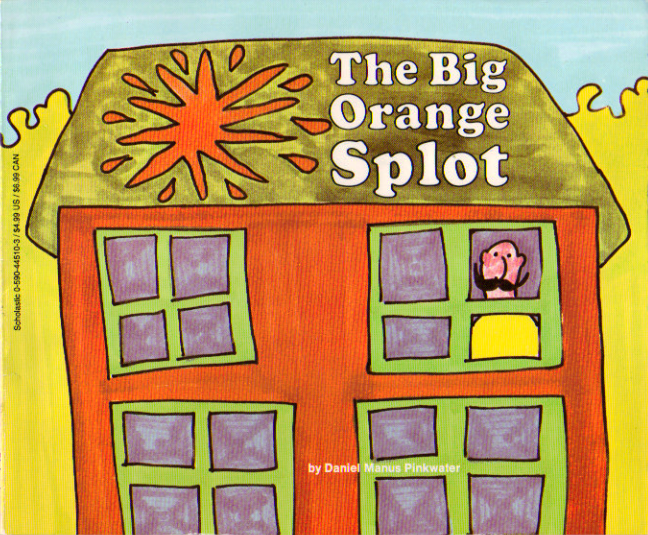
When I taught third grade, The Big Orange Splot, by Daniel Pinkwater, was always a favorite. This is the improbable story of what happens after an errant seagull flies over Mr. Plumbean’s house and drops a can of orange paint on the roof. Because “all the houses were the same” on their “neat street,” the neighbors assume that Mr. Plumbean will get right to work repainting his house. But he waits a little while. He thinks about the splot. When he finally does paint his house, it’s not at all what the neighbors had in mind. When asked what he has done, Mr. Plumbean simply replies, “My house is me and I am it. It looks like all my dreams.” At first the neighborhood thinks he’s nuts, but after a while they start to see the wisdom of Mr. Plumbean’s mantra. Eventually the houses aren’t the same at all and Mr. Plumbean’s neighbors dreams are revealed through their houses.
Kids loved the wackiness of Mr. Plumbean and his house, and were intrigued by the other houses in the neighborhood. I began collecting photos of unusual houses and buildings to display on a bulletin board when we read this story. Then I found this poem, the perfect complement to the pictures.
Buildings
by Myra Cohn Livingston
Buildings are a great surprise,
Everyone’s a different size
Offices grow long and high
Tall enough to touch the sky.
Houses seem more like a box
Made of glue and building blocks
Every time you look, you see
Buildings shaped quite differently
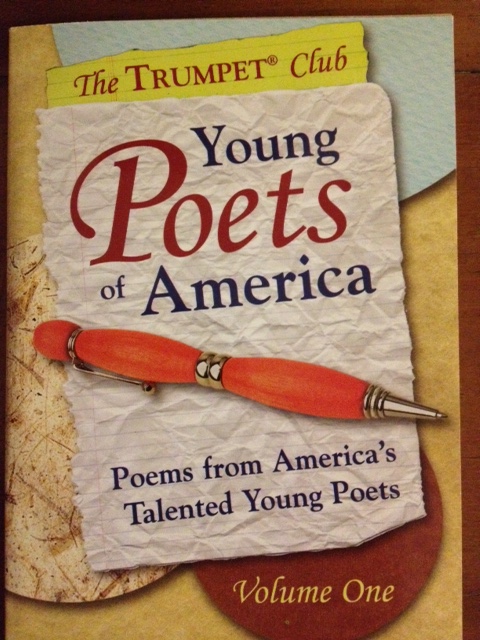
One year during this unit, a poetry contest was announced in the Trumpet Book Club order. (Trumpet either was or became part of Scholastic.) We had been reading and writing poetry since the start of school, so I shared this with my students and encouraged them to enter. I don’t remember specifically telling anyone to write a poem about a building, but the bulletin board did inspire some of them. Several students did submit poems to the contest and we were all thrilled when Allie’s poem was chosen to be included in this anthology:
A Windmill
by Allie Mandeville
Windmill dancing in the breeze,
With a swift, turning ease.
The windmill makes a squeaky sound
As it’s turning round and round.
Spinning once, spinning twice,
The sound of spinning
Sounds so nice.
And as the wind makes it turn,
The windmill looks so very stern.
The windmill looks so beautiful.
The windmill looks so nice.
But don’t you think
It must be full of mice?
(Thank you, Allie, for permission to share your poem.)
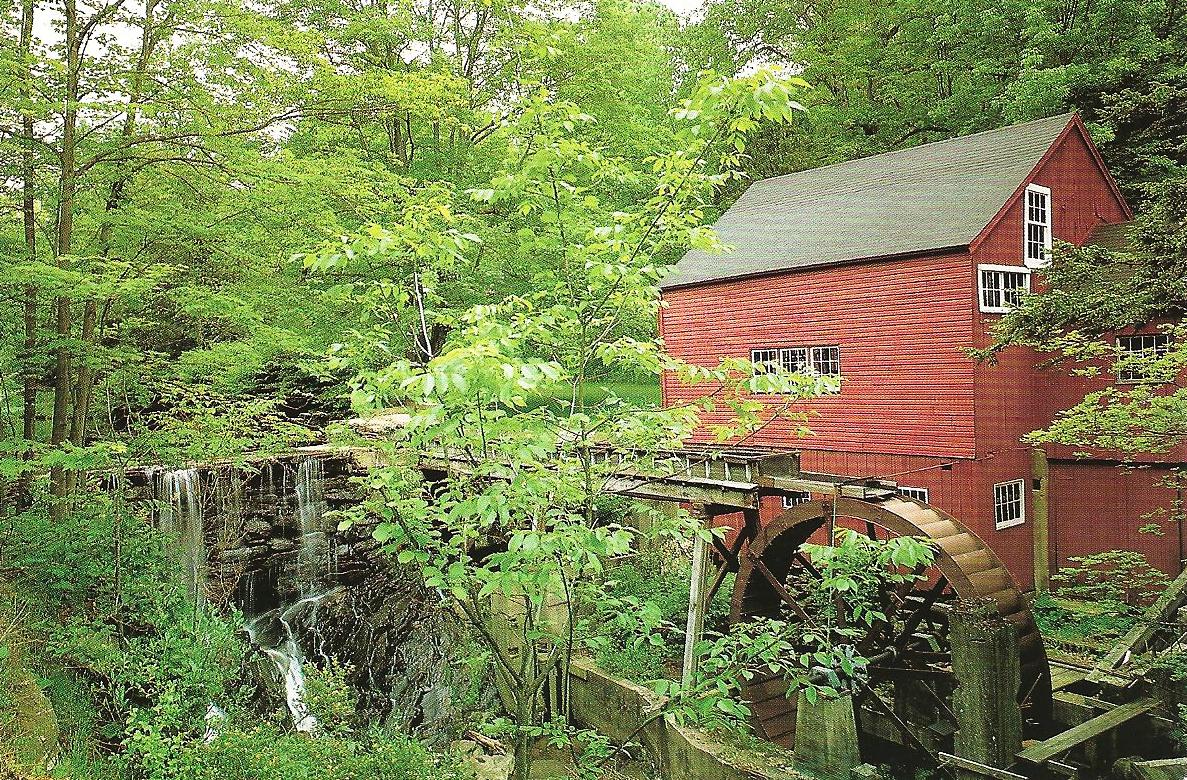
The picture that inspired Allie’s poem. Photo by Brad Stanton
I was reminded of all this recently when I found a copy of the anthology at a local book sale. I’m sure that if I were teaching third grade today I would still put up bulletin boards of interesting photos related to what we were reading and learning about. I know I would still be teaching writing using a workshop model. I would allow students to choose topics and subjects that interested them, not limit them to prompts provided by the state or some other distant textbook publisher.
I would do all this and more to help them understand that the world is full of possibilities. I would do this so they could write poems that are full of all their dreams.
I spent hours on my swing set when I was a kid. Nothing compared to the exhilarating feeling of sailing up in to the air, then whooshing back down. Stevenson’s poem perfectly describes this glorious sensation. When my children were babies, they loved to hang out in their swing while I cooked dinner. Even now, with all our 21st century technology and gadgets available, kids still line up for their turn on the swings at the playground. Go outside today and swing, just for fun!
Be sure to visit Jone at Check It Out for the Poetry Friday Round Up.
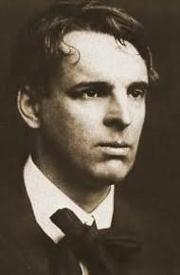
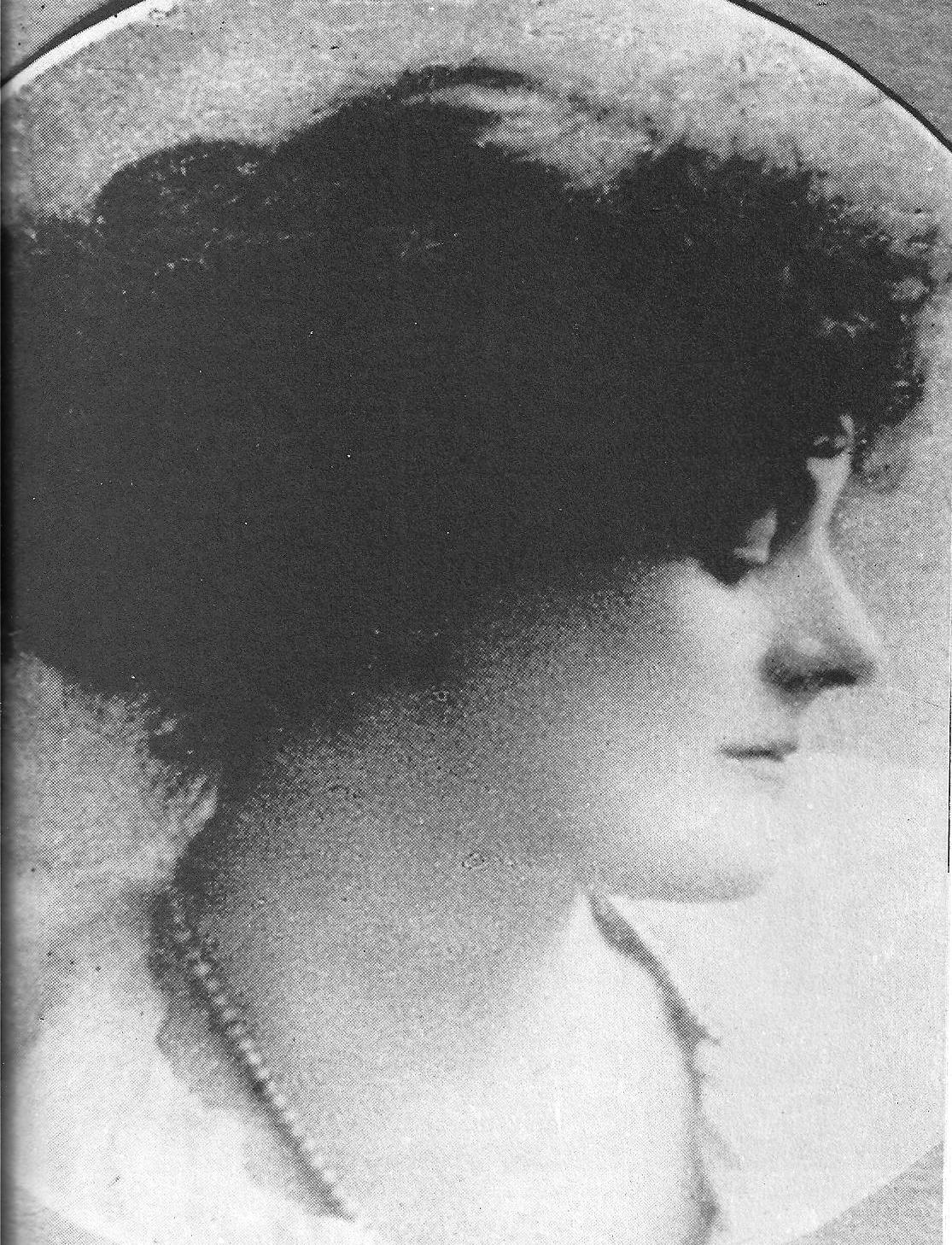
William Butler YeatsMaud Gonne, photo from All the Olympians, by Ulick O’Connor
This poem always stirs up nostalgic feelings in me. In just a few words, Yeats evokes the beauty of the muse of his youth, Maud Gonne. And yet, “Love fled…and hid his face amid a crowd of stars.” Happy endings are not always possible, but our memories are with us always.
I sometimes think that I’m too nostalgic, but there was an article in the New York Times earlier this week about the positive aspects of nostalgia. Researcher Constantine Sedikides and his colleagues have found that “Nostalgia has been shown to counteract loneliness, boredom, and anxiety” as well as “make people more generous to strangers and more tolerant of outsiders.” Once again, poets know intuitively what it takes scientists years to figure out.
Be sure to visit Michelle at Today’s Little Ditty for the Poetry Friday Round Up.
For precious friends hid in death’s dateless night,
And weep afresh love’s long since cancelled woe,
And moan th’expense of many a vanished sight.
Then can I grieve at grievances foregone,
And heavily from woe to woe tell o’er
The sad account of fore-bemoaned moan,
Which I new pay as if not paid before;
But if the while I think on thee, dear friend,
All loses are restored, and sorrows end.
I’ve been thinking about this sonnet for the last week or so for a number of reasons. I love the phrase “sweet silent thought.” And while the speaker is brooding for much of the poem, to me this phrase implies time to contemplate new ideas. Having quiet, unhurried time to think is a rarity these days. Just as by the end of the poem, the speaker has achieved peace thinking of his friend, taking this time to think can bring us peace. (Both literal and figurative!)
This poem has also been on my mind because of a story I’ve been working on. The main character is grieving over the loss of her mother, and by the end of the story I want her to come to the kind of reconciliation with her grief that this speaker has. Whether or not I can accomplish that for her is another story, but I’m going to try.
In the meantime, I think I’ll listen to Kenneth Branagh read this lovely poem once more:


![Alexander Nasmyth [Public domain], via Wikimedia Commons](https://readingtothecore.com/wp-content/uploads/2013/09/pg_1063burns_naysmithcrop.jpg)



 Reading to the Core
