Poetry Friday: A Treehouse All Your Own

poetry-friday-1-1

Each month, Michelle Heidenrich Barnes has a poetry challenge over at her blog, Today’s Little Ditty. This month, her guest poet, Corey Rosen Schwartz, challenged readers to “Write a stanza or two about building a treehouse and challenge yourself to come up with a rhyme word that is two or more syllables. “

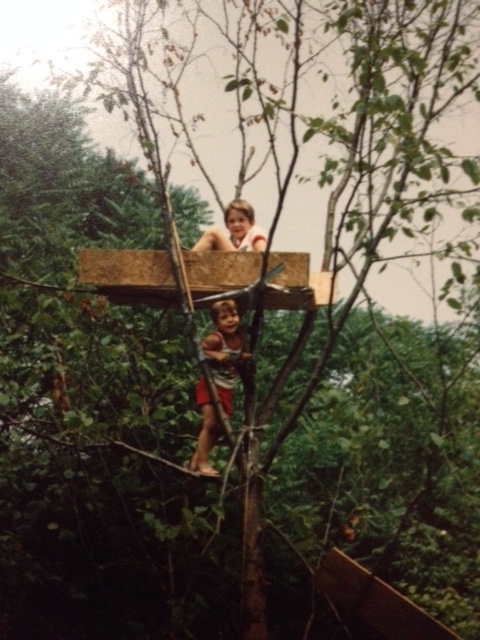
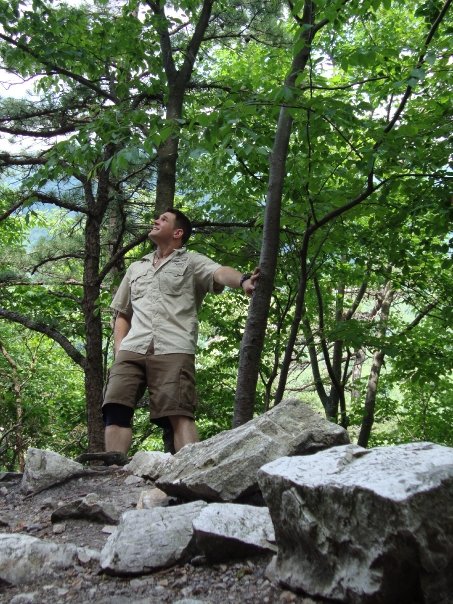
Well, I managed one pair of rhyming multisyllabic words in this poem inspired by my boys. And although their tree climbing days are long past, they still like to play in the woods.

IMG_2938

When you’re feeling boisterous,
rowdy, shouty, roisterous,
go outside and find a tree
that you can call your own.

One that has a flat, wide space
between the branches that can brace
a treehouse hideout
that you can call your own.

Find a friend to help you hoist
smooth pine planks for each floor joist
plywood walls and a flat tin roof
that you can call your own.

Once you’ve built your private lair
twenty feet up in the air,
you can jump and stomp and shout
in a treehouse all your own.

Be careful as you prance about.
The ground’s a long way down!

Catherine Flynn, ©2015

               4927_579285156077_2685386_n    1934992_1063901857594_7838799_n

Please be sure to visit Carol at Carol’s Corner for the Poetry Friday Roundup.

Poetry Friday: From Cocoon Forth a Butterfly

poetry-friday-1-1

Did you know today is Butterfly Day? Emily Dickinson, herself elusive as a butterfly, wrote many poems about these awe-inspiring insects. This is one of my favorites.

From Cocoon Forth a Butterfly (354)
by Emily Dickinson

From Cocoon forth a Butterfly
As Lady from her Door
Emerged—a Summer Afternoon—
Repairing Everywhere—

Without Design—that I could trace
Except to stray abroad
On Miscellaneous Enterprise
The Clovers—understood—

Her pretty Parasol be seen
Contracting in a Field
Where Men made Hay—
Then struggling hard
With an opposing Cloud—

Where Parties—Phantom as Herself—
To Nowhere—seemed to go
In purposeless Circumference—
As ’twere a Tropic Show—

And notwithstanding Bee—that worked—
And Flower—that zealous blew—
This Audience of Idleness
Disdained them, from the Sky—

Till Sundown crept—a steady Tide—
And Men that made the Hay—
And Afternoon—and Butterfly—
Extinguished—in the Sea—

Jan van Kessel the Elder [Public domain], via Wikimedia Commons

Please be sure to visit A Year of Reading, where Mary Lee has the Poetry Friday Roundup.

Poetry Friday: Bells

poetry-friday-1-1

At the beginning of May, Michelle Heidenrich Barnes, of Today’s Little Ditty, posted a lovely interview with Nikki Grimes. At the end of the interview, Grimes challenged readers to write a “wordplay exercise and create your own free verse poem” based on a word chosen from a short list. Be sure to head over to Michelle’s blog to read all of the poems contributed for this challenge.

I’ve been playing with this all month. First I picked lemon, but wasn’t happy with the results. Once I started thinking about bell, the possibilities and references in popular culture seemed endless. If I had more time, I think it would be fun to create a found poem just from lines in songs and movies. Here is my current draft:

Bell is a heralding word—
Whether pealing in joy
or tolling in grief;
clanging on trains
or ding-donging on doors,
a bell says, “Listen to me!”

Bells are blue in the garden
and silver on sleighs.
Bells of brass
sound on ships at sea.

Bells wake us each morn,
they urge us to flee;
they can jangle our nerves
or proclaim angels’ new wings.

Once the town crier,
now they ping on our phones.
Whatever song they send
through the sky,
Bells cry out “Listen to me!”

© Catherine Flynn, 2015

Please be sure to visit Margaret Simon at Reflections on the Teche for the Poetry Friday Round Up.

Poetry Friday: Emily Dickinson’s “The Grass so little has to do–“

poetry-friday-1-1

The Grass so little has to do–
A sphere of simple Green
With only Butterflies to brood
And Bees to entertain–

And stir all day to pretty Tunes
The Breezes fetch along–
And hold the Sunshine in its lap
And bow to everything–

And thread the Dews, all night, like Pearls–
And make itself so fine
A Duchess were too common
For such a noticing–

And even when it dies–to pass
In Odors so divine–
Like Lowly spices, lain to sleep–
Or Spikenards, perishing–

And then, in Sovereign Barns to dwell–
And dream the Days away,
The Grass so little has to do
I wish I were a Hay–

Emily Dickinson

Evelyn Simak , via Wikimedia Commons

Please be sure to visit Diane Mayr at Random Noodling for the Poetry Friday Round Up

Poetry Friday: Spring Blossoms

poetry-friday-1-1

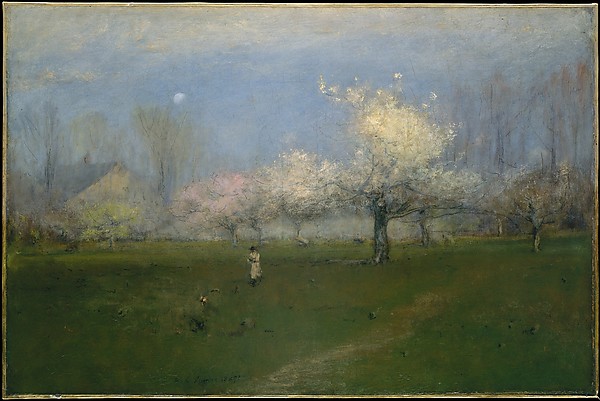
Spring has finally arrived in Connecticut. The weeping cherry trees, magnolias, and apple trees are in full bloom. Their beauty, and this painting by George Inness, inspired today’s poem.

Metropolitan Museum of Art, Gift of George A. Hearn, in memory of Arthur Hoppock Hearn, 1911

After “Spring Blossoms, Montclair, New Jersey” by George Inness, 1891

Beneath a sea of blue,
the orchard has unfurled
a delicate veil
of pink and white,
and the bees are all abuzz.

Under silken petals,
that soon will fall
like snow,
a farmer strides
toward the barn,
ready to tend
the newborn lambs.

© Catherine Flynn, 2015

Please be sure to visit Michelle Heidenrich Barnes at Today’s Little Ditty for the Poetry Friday Round Up.

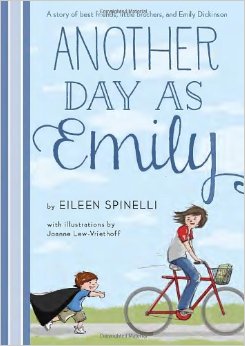
Poetry Friday: Eileen Spinelli & Another Day As Emily

poetry-friday-1-1

I can’t believe how quickly April flew by. Because today is Friday, I feel like we have a bonus day of National Poetry Month!

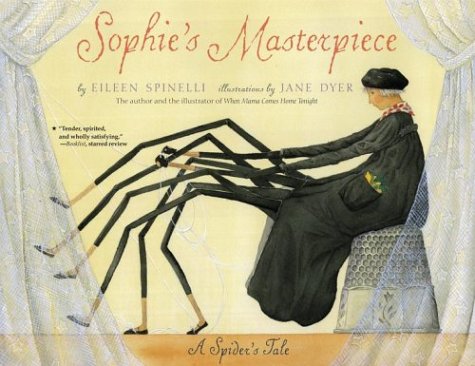
On her webpage, Eileen Spinelli has a list of tips for young writers. Her number one piece of advice? “Keep your eyes and ears and heart open.” There is no doubt that this is what drives Eileen’s writing as well. I first encountered Eileen’s writing in Sophie’s Masterpiece (Simon & Schuster, 2001). Sophie, the heroine of  this tale, is one of the most thoughtful and caring spiders this side of Charlotte. Sophie’s kindness and generosity inspired my third grade students to learn how to knit after 9/11 and, ultimately, create an afghan that we raffled to raise money for charity.

                     51X5BZ62W9L    519wFzxAgWL._SY344_BO1,204,203,200_

So when I wasn’t surprised when I saw that Eileen and her husband, Jerry Spinelli, would be part of a panel hosted by Janet Wong and Sylvia Vardell titled “Sharing Random Books of Kindness: The Power of Story” at NCTE last November. (Read Eileen’s heartbreaking “Poem for a Bully” in this post by Mary Lee Hahn & Janet Wong about the role of poetry in literacy learning here.) The next day, I waited in line to meet Eileen at a book signing and got a copy of her latest book, Another Day As Emily (Random House, 2014).

I finally found time recently to read this charming verse novel, and I’m so happy I did. Suzy Quinn is almost twelve. She collects rocks and loves the Philadelphia Phillies. She also has a pesky little brother named Parker, who saved their neighbor’s life and is now an official hero. Feeling left out because of all the attention Parker’s getting, Suzy plunges into a project for her library’s summer program and learns all she can about Emily Dickinson. At the same time, Suzy is trying to navigate the challenges of friendship. Overwhelmed when she isn’t chosen for a part in a play and devastated when her birthday trip to a Phillies game is cancelled, she retreats to her room “…to be left alone…Forever. Like Emily Dickinson.” Suzy dresses in white, bakes gingerbread, even renames her goldfish Carlo, after Emily Dickinson’s dog.

Spinelli spins a story full of realistic details about the trials and tribulations of adolescence. Suzy’s family and neighbors remain loving and supportive, even as Suzy pushes the limits of their patience. Eventually, Suzy decides there’s more to life “than being a twelve-year old hermit.” In the process, she discovers that she “missed herself,” even though the self she missed is forever changed.

One of the magical things about books is that they let you try on different personas. Lucky readers of Another Day As Emily get to try on two through the “eyes and ears and heart” of Eileen Spinelli. What a gift!

Here is another gift from the pen of Eileen Spinelli:

“The Month of May”

May is a merry month
a flower-into-berry month,
the month to skip outdoors to play,
to tuck your winter boots away,
to honor moms and aunties too
with cards and hugs for all they do.

Read the rest of the poem here.

Mary Lee at A Reading Year and Ellen at Elementary Dear Reader  have The Poetry Friday Round Up. Be sure to stop by for more poetic gifts.

Poetry Friday: An Egret’s Day

poetry-friday-1-1

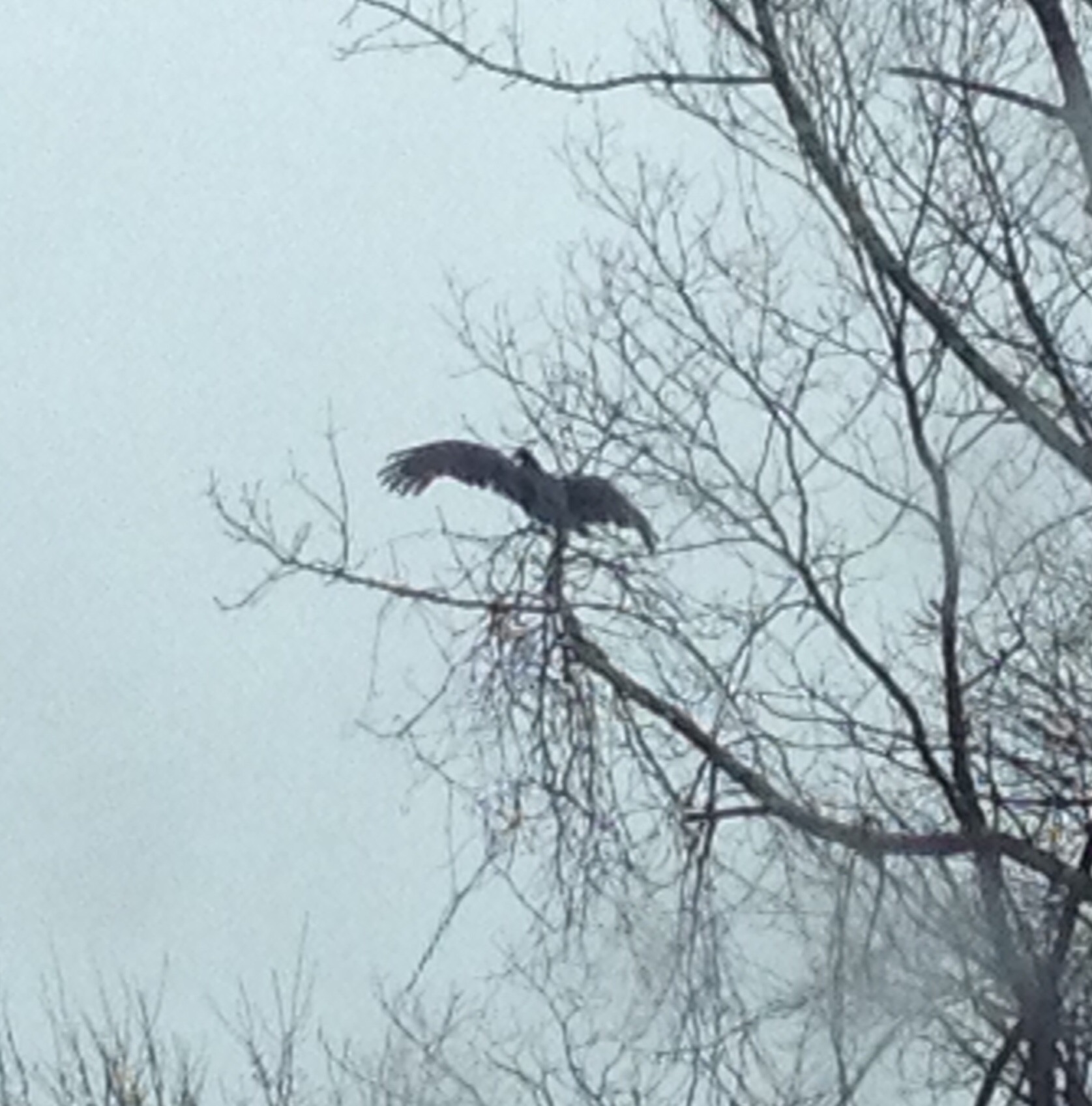
I’ve had birds on my mind this week because of an idea I hatched at the Highlights Foundation last week. One of Rebecca Kai Dotlich’s many wise pieces of advice was to research your topic. So I’ve been reading about birds, listening to birds, and watching for them whenever I’m outside. In fact, I almost drove off the road on Monday because of this bird:

FullSizeRender

I’m pretty sure this is a vulture, which are quite common where I live, but I have never seen one poised like this. After I pulled over to take this picture, I sat and watched this display. The bird stayed poised on this branch for at least five more minutes. Unfortunately, I had an appointment, so I couldn’t watch any longer.

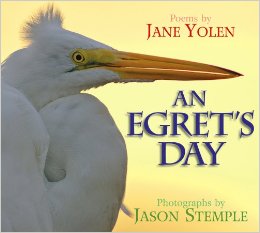
Rebecca also suggested reading poems about the topic you’re writing about, so I’ve been reading as many bird poems as I can find. One of my favorite collections is Jane Yolen and Jason Stemple’s gorgeous book, An Egret’s Day (WordSong, 2010). Yolen’s poetry follows egrets through their day and is accompanied by factual paragraphs about the poem’s topic. Stunning photographs by Jason Stemple, Yolen’s son, accompanies each poem, and gives readers a chance to observe these graceful birds up close.

511Ck0+HkZL._SX258_BO1,204,203,200_

Here’s a poem from this beautiful book:

“Egret in Flight”
by Jane Yolen

She’s an arrow
From a bow.
We watch in wonder
From below.

Origami
neck is folded.
All that we can do?
Behold it.

Read the rest of the poem here (It’s about 1/3 of the way down the page).

Small-Blue-RGB-National-Poetry-Month-Logo_0

I hope you have a chance to behold a beautiful bird or two today. There is always beautiful poetry to behold on Poetry Friday, so be sure to head over to Renee LaTulippe’s blog, No Water River, for the Poetry Friday Round Up.

Poetry Friday: Abraham Lincoln

poetry-friday-1-1

Poetry is an excellent way to introduce a subject. Concise, yet packed with meaning, poetry can convey the essence of a topic or subject in just a few lines. Often there are questions between those lines, pathways to a deeper knowledge and understanding of a subject.

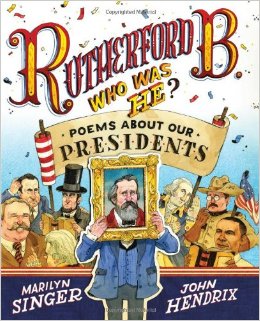
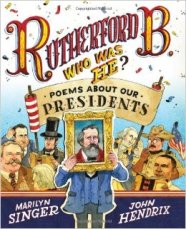
Marilyn Singer’s poem about Abraham Lincoln, from her collection of poems about our presidents, Rutherford B., Who Was He?: Poems About Our Presidents (Disney-Hyperion, 2013), is just such a poem. 

Abraham Lincoln
(Whig, Republican, 1861-1865)

By stovepipe hat, beard, large size,
       he’s the one we recognize.

By addresses of great note,
       he’s the one we often quote.

By leading through war—wrenching, bloody—
       he’s the one we always study.

By exercising his high station
       to proclaim emancipation,

then meeting such a tragic fate,
       he’s the one we rank as great.

“I am a slow walker, but I never walk back.”

Abraham Lincoln, 1809-1865

© Marilyn Singer, 2013
Shared with permission of the author

By the time kids are in 4th or 5th grade, they know who Abraham Lincoln is, but what is the address we often quote? Which war? What is emancipation? These are great introductory questions to a study of Lincoln and the Civil War.
   61XgPN6M6wL._SX258_BO1,204,203,200_ 51XtmW4iK3L._SX258_BO1,204,203,200_

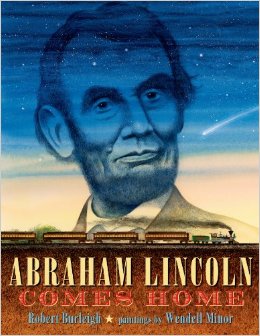
Wednesday was the 150th anniversary of Lincoln’s death. Our country was in the midst of celebrating the end of that “wrenching, bloody” war when John Wilkes Booth’s assassination of Lincoln plunged us into mourning once again. Young readers get a sense of how profoundly people grieved from Robert Burleigh’s Abraham Lincoln Comes Home (Macmillan, 2008). Burleigh tells the story of a boy and his father, up long before dawn, to travel “miles away” so they could view Lincoln’s funeral train and pay their respects to the fallen president. Wendell Minor’s illustrations depict crowds standing by bonfires along the tracks, waiting to get a glimpse of the train. This scene played out over and over again on the 13 day, 1,600 mile journey from Washington, D.C. to Springfield, Illinois, which is described in more detail in Burleigh’s afterward. There is also a map showing the route the train traveled, as well as a list of interesting facts.

Lincoln’s death inspired some Walt Whitman’s most memorable poetry. Here are the first lines of “When Lilacs Last in the Dooryard Bloom’d.”

When lilacs last in the dooryard bloom’d,
And the great star early droop’d in the western sky in the night,
I mourn’d, and yet shall mourn with ever-returning spring.
Ever-returning spring, trinity sure to me you bring,
Lilac blooming perennial and drooping star in the west,
And thought of him I love.
Read the rest of the poem here.
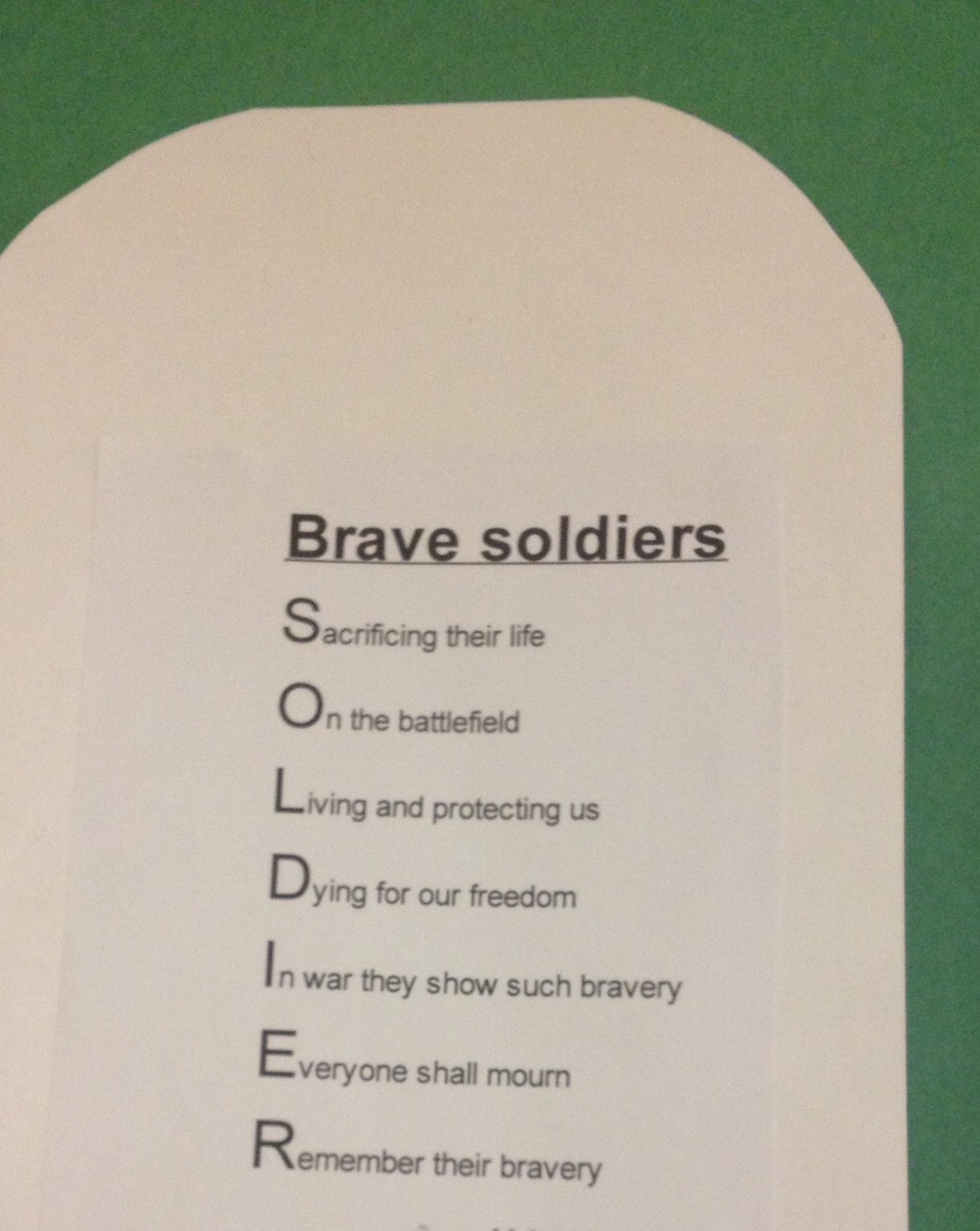
Finally, I’d like to share another poem from our 50 States Poem Project. Although this poem was inspired by Laura Purdie Salas‘s poem about Arlington National Cemetery, it seem a fitting way to close this post.

IMG_2732

Small-Blue-RGB-National-Poetry-Month-Logo_0

Please be sure to visit Robyn Hood Black at Life on the Deckle Edge for today’s Poetry Friday Round Up.

Poetry Friday: Read Across America Poetry Doors

poetry-friday-1-1

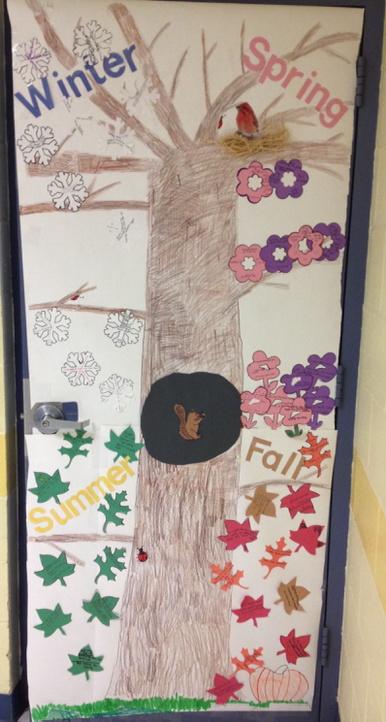
Our Read Across America celebration last month incorporated Laura Purdie Salas‘s Wacky, Wild, & Wonderful: 50 State Poems. (Read more here) Classes chose poems from Laura’s book related to their curriculum and used them to inspire their own poetry and door displays.

IMG_2733  CB7doIqW0AAsbrg

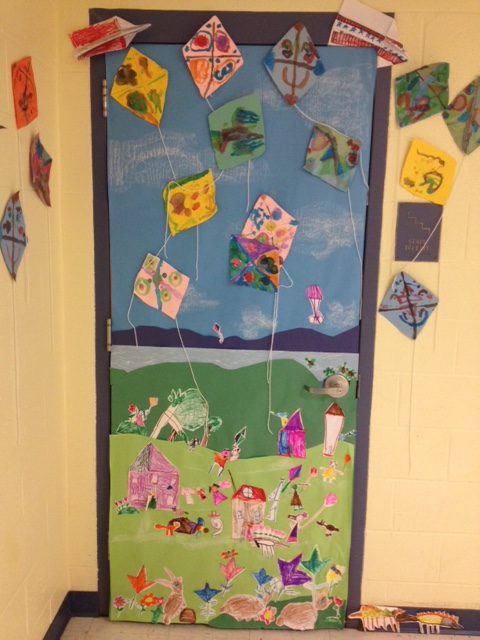
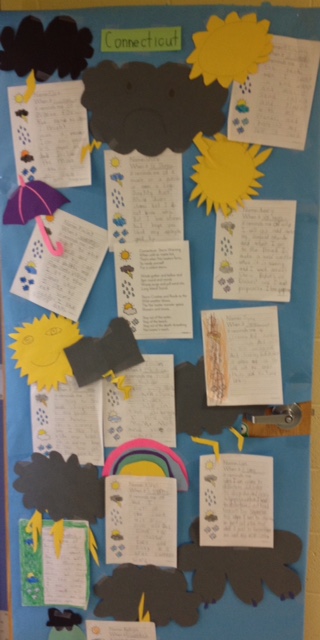
Laura’s poem about our state, “Connecticut: Storm Warning,” inspired many doors, including the two above from Kindergarten.

FullSizeRender-1    FullSizeRender-2

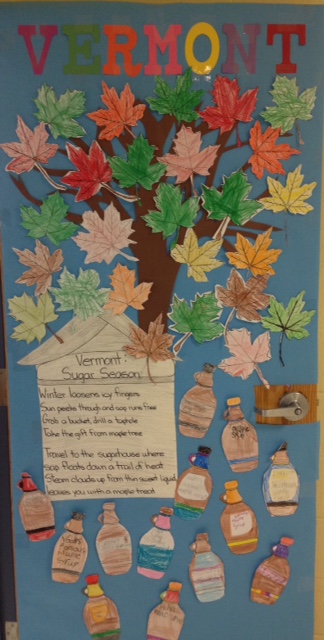
One first grade class was also inspired by “Connecticut: Storm Warning,” while another used “Vermont: Sugar Season” as the theme for their door.

FullSizeRender-3   FullSizeRender-4

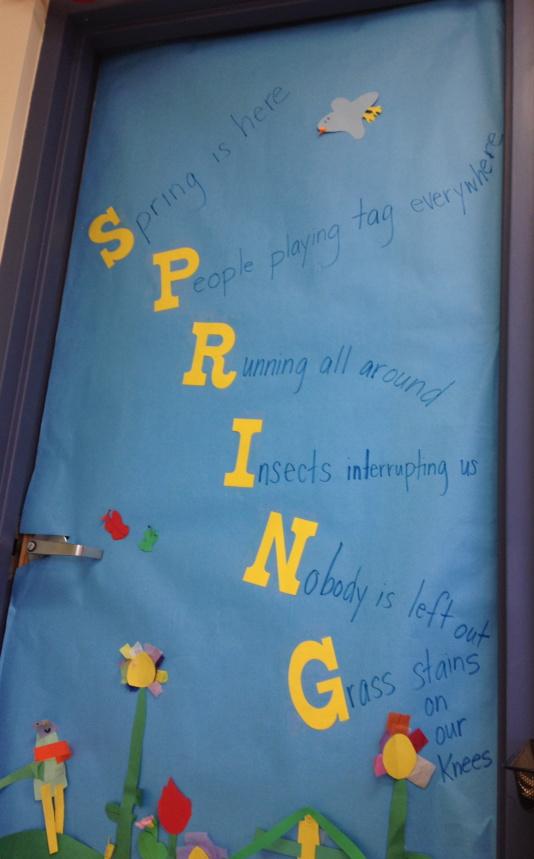
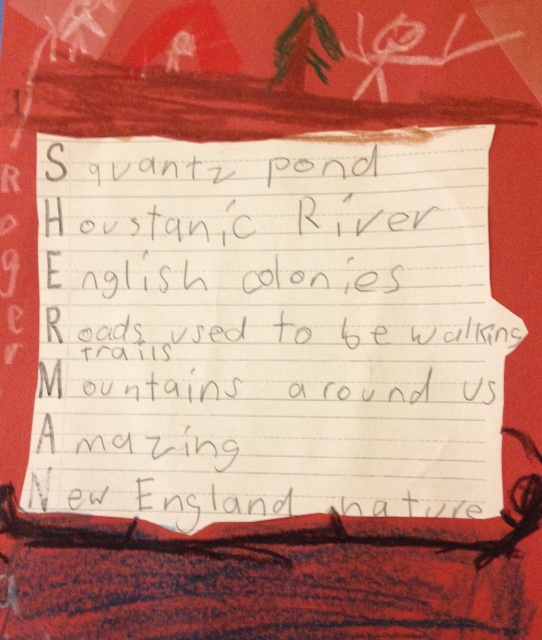
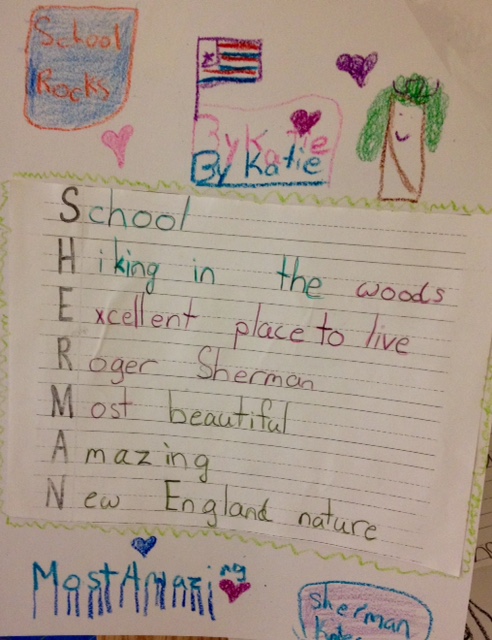
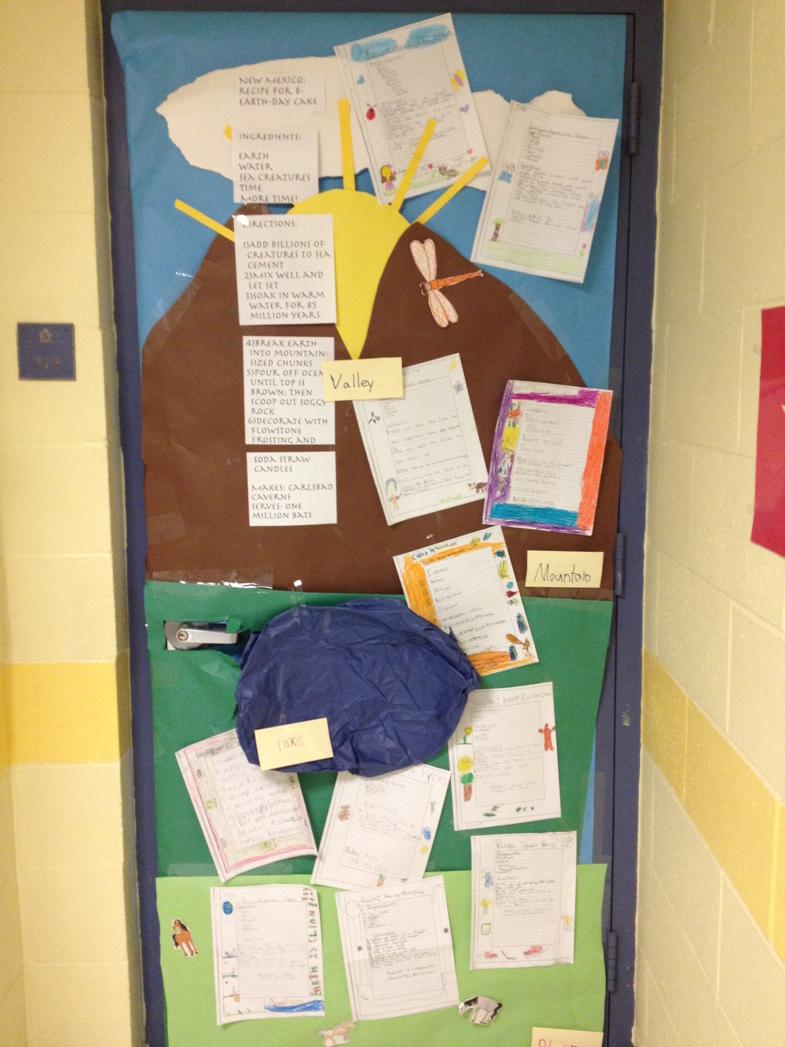
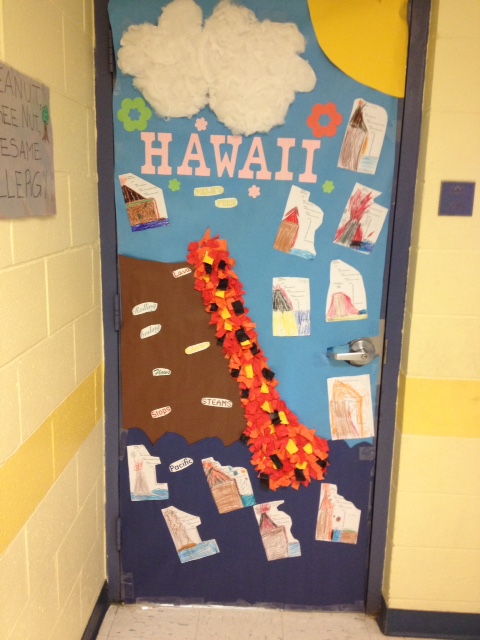
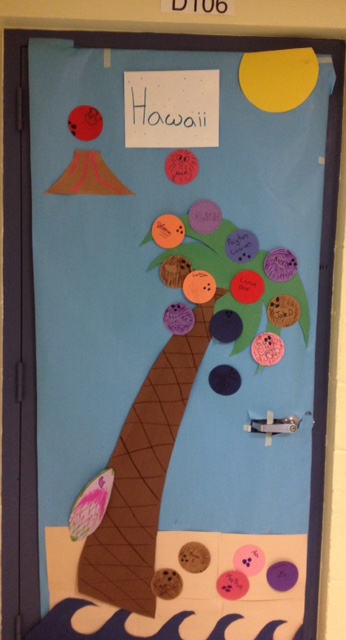
Second grade wrote acrostics about our town, while two third grades, below, connected “New Mexico: Recipe for a B-Earth Day Cake” and “Hawaii: Pele’s Fire” to their study of landforms.

CBwcAt-WEAAi2TQ   IMG_2523

FullSizeRender-6   FullSizeRender-4

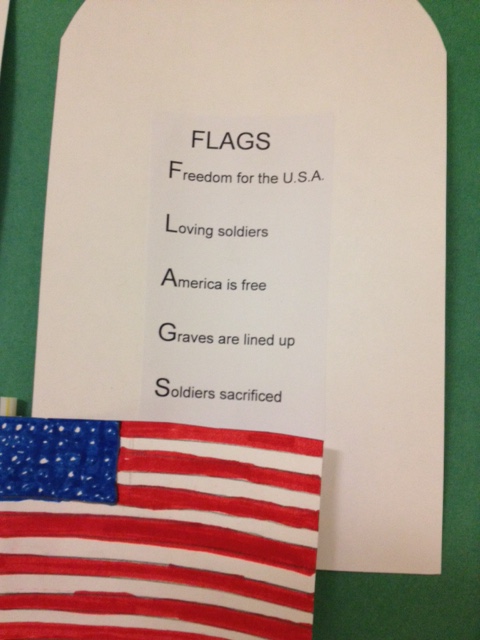
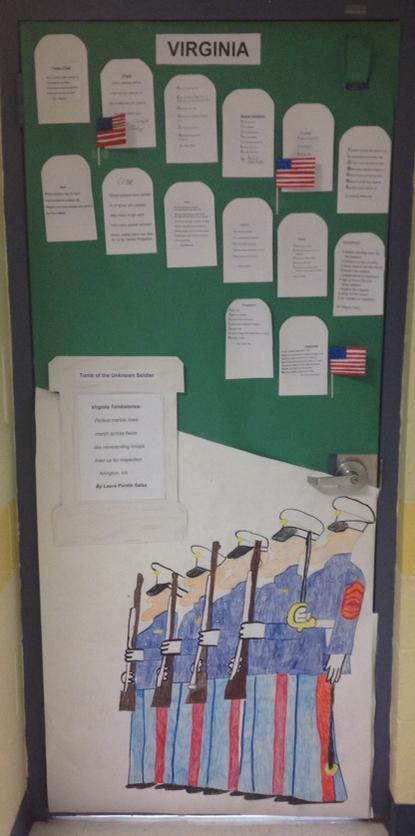
Another third grade connected Connecticut’s weather poem to their study of character traits. Fourth grade studies regions of the United States and Washington, D.C. One class was inspired by “South Dakota: Mountain Men” to create their own versions of Mt. Rushmore. Another, below, used “Virginia: Tombstones” to create their own tribute to Arlington National Cemetery.

CBnE7huWMAAJJbx    FullSizeRender-2

One fifth grade also used “South Dakota: Mountain Men” and linked it to their biography unit. Students wrote opinions about why their subject was worthy to be included on Mt. Rushmore.

FullSizeRender-10  CBrImHeUsAAajE-

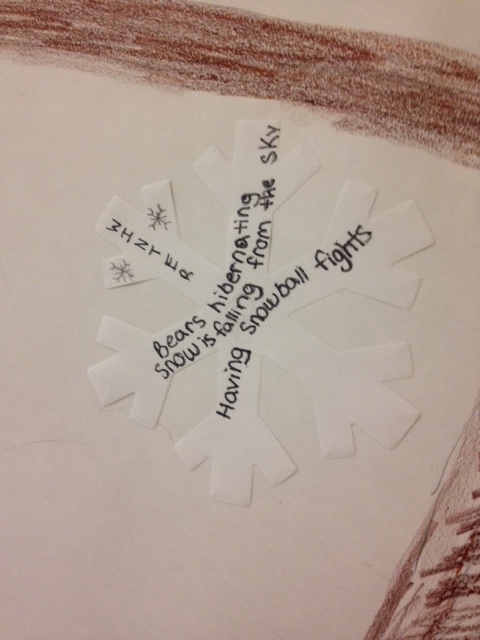
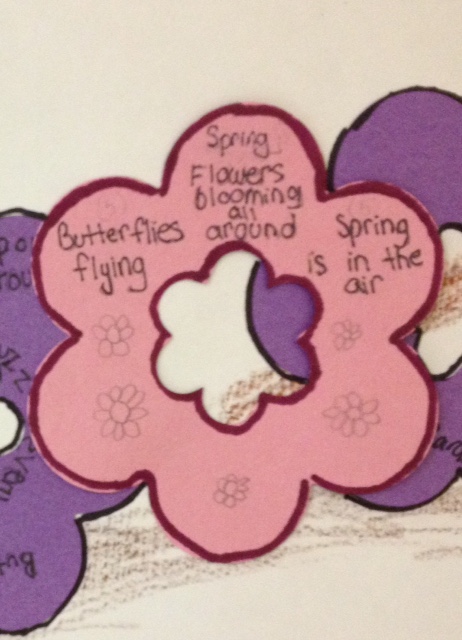
One of the fifth grade science units is about how the Earth’s revolution around the sun causes the seasons, so they were inspired by “New Hampshire: White on Orange” to write seasonal haiku.

IMG_2674  FullSizeRender-3

IMG_2696  FullSizeRender-9

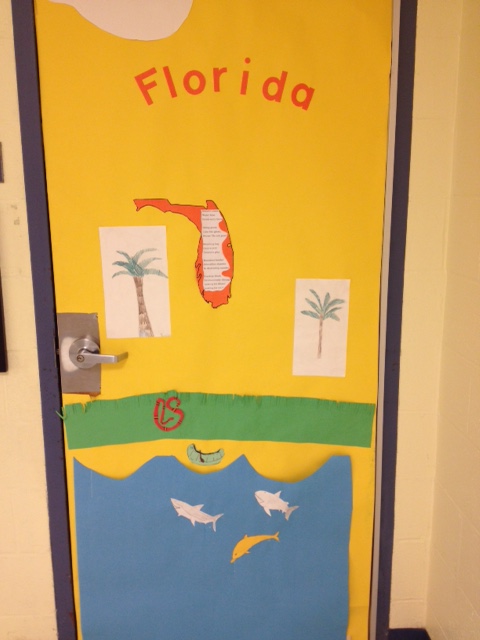
Sixth grade voted to determine their favorite state, and Florida was the winner. Seventh grade has been reading Shakespeare, so one class wrote couplets about our town.

FullSizeRender-8   FullSizeRender-7

Another seventh grade was also inspired by “Hawaii: Pele’s Fire” to create this festive door. Eighth grade has been studying civil rights, and “Louisiana: Cornet Survivor” inspired them to create this poem about the birth of jazz.

This was supposed to be a door decorating contest, but it was impossible to choose winners from all these amazing doors. It would be impossible to share all the wonderful poems the kids wrote in one post, so I’ll be sharing more over the next few weeks.

Laura is hosting the Poetry Friday Round Up at her blog, Writing the World for Kids, today so please be sure to head over to her blog to read more poetry.

Small-Blue-RGB-National-Poetry-Month-Logo_0

Poetry Friday: Neruda’s “Ode to My Socks”

poetry-friday-1-1

“To feel the affection that comes from those whom we do not know … widens out the boundaries of our being, and unites all living things.”
~ Pablo Neruda ~

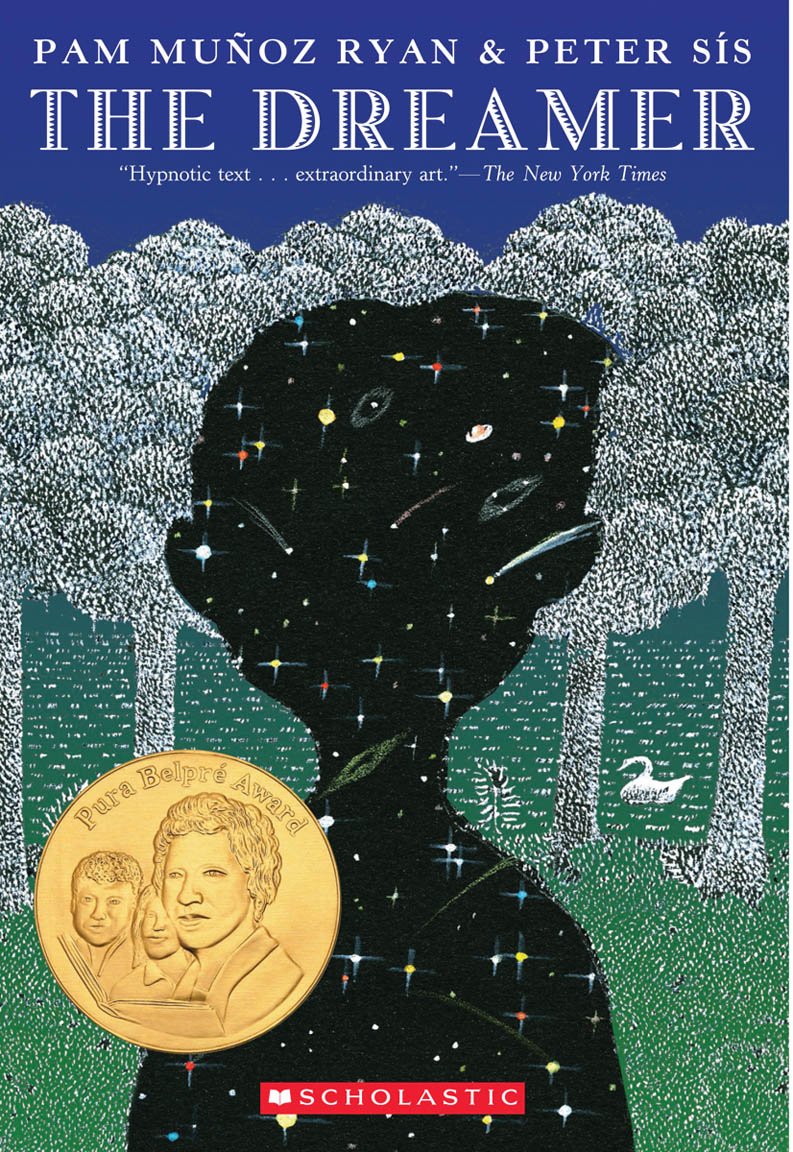
A confession: I can’t remember ever reading a poem by Nobel Prize winner Pablo Neruda until I read The Dreamer (Scholastic, 2010), which won the Pura Belpré Award in 2011. Pam Muñoz Ryan’s prose and Peter Sís’s illustrations work together seamlessly to tell the story of Neftali, a boy with deep curiosity about the natural world and a vivid imagination. This boy adopted the pen name Pablo Neruda to avoid the disapproval of his father, and the rest, as they say, is history.

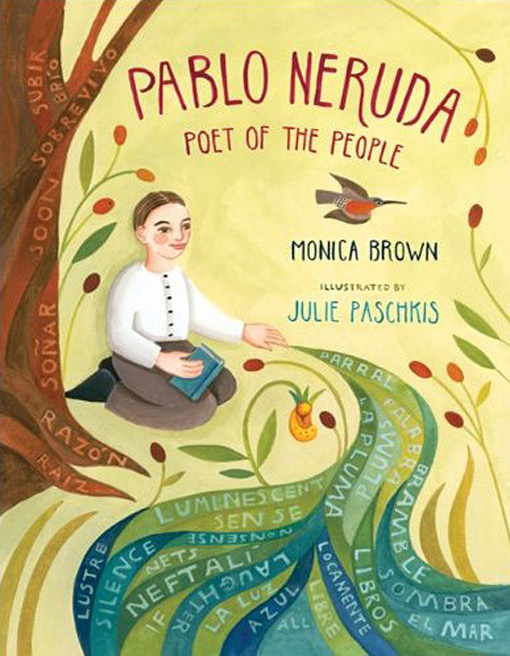
            81NTAwaXnWL    Neruda

Just a year later, Monica Brown and Julie Paschkis created Pablo Neruda: Poet of the People (Henry Holt, 2011), a gorgeous picture book biography about Neruda. 

Together, these books are a wonderful introduction to Neruda’s poetry, which is infused with his “spirit of inquiry” as Ryan describes it in her author’s note to The Dreamer. In an interview with Robert Bly, Neruda advises young poets to “discover things, to be in the sea, to be in the mountains, and approach every living thing.” (This interview can be found in Neruda and Vallejo: Selected Poems, Beacon Press, 1971, edited by Robert Bly) Many of Neruda’s poems are perfect for sharing with children. Along with his directive “to look deeply into objects at rest,” they will inspire children to create their own “odes to common things.”

Ode to My Socks
by Pablo Neruda

Mara Mori brought me
a pair of socks
which she knitted herself
with her sheepherder’s hands,
two socks as soft as rabbits.
I slipped my feet into them
as if they were two cases
knitted with threads of twilight and goatskin,
Violent socks,
my feet were two fish made of wool,
two long sharks
sea blue, shot through
by one golden thread,
two immense blackbirds,
two cannons,
my feet were honored in this way
by these heavenly socks.
They were so handsome for the first time
my feet seemed to me unacceptable
like two decrepit firemen,
firemen unworthy of that woven fire,
of those glowing socks.
Read the rest of the poem here.
Small-Blue-RGB-National-Poetry-Month-Logo_0
To discover more wonderful poetry, please be sure to visit Amy Ludwig VanDerwater at The Poem Farm for the first Poetry Friday Round Up of National Poetry Month.