PB 10 for 10: Follow Your Heart

“Never lose your curiosity about everything
in the universe–
it can take you to places you never
thought possible!”

~ Sue Hendrickson ~

Thank you to Cathy Mere and Mandy Robek for creating and curating this celebration of picture books. Please be sure to visit Cathy’s blog, Reflect and Refine to read all the lists contributed to this labor of love. It is teachers like them, and others in this community, who will keep the gift of stories alive for years to come.

Coming up with a theme for this year’s PB 10 for 10 celebration was difficult. There were several new picture books that I loved, but at first I didn’t see an obvious connection between them. As I read and reread, though, patterns began to emerge. A path presented itself, and I followed. Each book I’ve chosen to share this year involves a journey or exploration. Some of these journeys cross the globe, others plumb the soul, some do both. All enlarge our imagination.
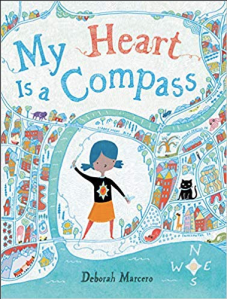
My Heart Is a Compass, written and illustrated by Deborah Marcero (Little, Brown, 2018), was my starting point this year. I have always loved maps, so this book appealed to me immediately. Maps show us the way, help us know we’re not alone and we don’t always have to rely on our own wits to help us find the path. In one way or another, these books may help readers find their way–even if it’s encouragement that sometimes we have to create our own paths and that’s okay, maybe even essential. They also help us understand that wherever we are on our path, someone else has been in a similar spot before, maybe are in a similar spot right now. How we respond and react to the spot we’re in is what matters. Getting love and giving love makes the journey so much easier.

Rose is on a quest: “Her heart was set on discovering something that had never been found…” Marcero’s rich language and evocative illustrations carry us along on this journey. Rose’s flights of imagination are distinguished from “real life” by use of a gorgeous blue that reminds me of cyanotypes. Her maps are worth poring over; a scientifically correct sky map is also filled with fancy–including “big dreams,” “empty thoughts,” and “first lines of poems” as well as a “brainstorm.” Close observers will recognize features of Rose’s journey covering the floor of her room before she embarks on her travels. This book will inspire readers to explore their own inner worlds. It is also a perfect choice to pair with Georgia Heard’s Heart Maps, (Heinemann, 2017).

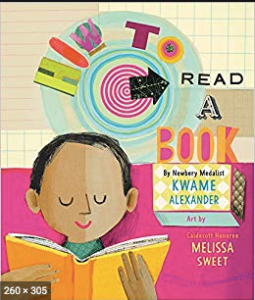
How to Read a Book, by Kwame Alexander with illustrations by Melissa Sweet (Harper, 2019) is a love letter to the joys of reading. Alexander encourages readers not to rush: “Your eyes need time to taste. Your soul needs room to bloom.” This is advice we all should heed. Sweet’s illustrations of “watercolor, gouache, mixed media, handmade and vintage papers, found objects including old book covers, and a paint can lid” (and at least one map) add layers of meaning and wonder that will keep readers coming back to this book again and again. A Teacher’s Guide is available here.
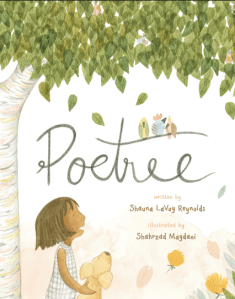
                                   

Poetree, by Shauna LaVoy Reynolds, illustrated by Shahrzad Maydani (New York: Dial Books for Young Readers, 2019) stars a dreamer and poet named Sylvia. The book begins with Sylvia writing a poem about spring. She “…tied her poem to a birch tree…hoping that it didn’t count as littering if it made the world more splendid.” Poetry brings two children together and helps them move past the misunderstanding at the center of the story. Reynolds sneaks in sly humor adult readers will appreciate: characters are named Sylvia and Walt, a dog named Shel, and a teacher, Ms. Oliver. There is also a nod to Joyce Kilmer: “I never thought that I would see/such lovely poems from a tree…” Maydani’s graphite pencil and watercolor illustrations of soft greens and yellows (is that Amy Krouse Rosenthal‘s yellow umbrella?) add to the overall gentleness and love of this book.

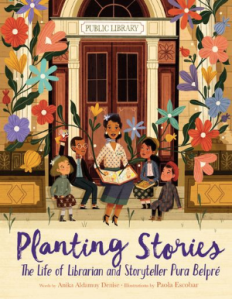
Planting Stories: The Life of Librarian and Storyteller Pura Belpré, by Anika Aldamuy Denise, illustrated by Paola Escobar; (Harper, 2019) is a lovely biography of Pura Belpré, the first Latina librarian in New York City. When Belpré first traveled to New York, “words travel[ed] with her” and libraries were “ripe for planting seed of the cuentos she carrie[d].” This metaphor of a garden of stories is carried throughout the book and is echoed in Escobars gorgeous digital illustrations. The words she brought from Puerto Rico took root and “grew shoots into the open air of possibility, (emphasis mine) have become a lush landscape…” Her legacy is honored through the Pura Belpré Award. A select bibliography is included, as well as suggestions for further reading and a brief description of Pura Belpre’s own stories. A teaching guide is available here


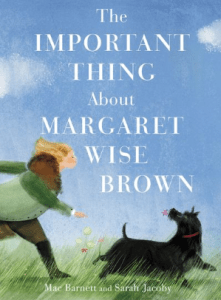
The Important Thing About Margaret Wise Brown, by Mac Barnett and illustrated by Sarah Jacoby (New York: Blazer + Bray, 2019) is, like its subject, an unconventional biography. Barnett gets to the heart of the matter quickly, though: “The important thing about Margaret Wise Brown is that she wrote books.” (p. 2) The truth is that Margaret Wise Brown had something to say and she didn’t let anyone stop her from saying it. The information Barnett includes underscores the fact that writers are real people. He includes possible origins of her stories: ”When Margaret Wise Brown was six or seven and she lived in a house next to the woods, she kept many pets.” (p. 7) Barnett asks thought-provoking questions, including “Isn’t it important that children’s books contain the things children think of and the things children do, even if those things seem strange?” These expand the range of who will appreciate this book. He also highlights important truths: “…in real lives and good stories the patterns are hard to see, because the truth is never made of straight lines” and “She believed children deserve important books.” (emphasis mine). Jacoby “used watercolor, Nupastel, and Photoshop magic to create the illustrations for this book” that give them a dreaminess we want to step into. Read and interview with Mac Barnett and Sarah Jacoby about the creation of this book here.

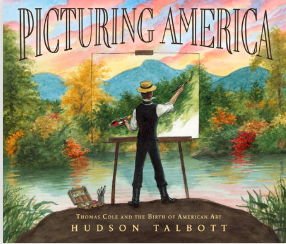
Picturing America: Thomas Cole and the Birth of American Art, by Hudson Talbott (Nancy Paulsen Books/Penguin Random House, 2018) takes us on another journey of discovery. Like many immigrants, when Thomas Cole and his family arrived in the US in 1818, they didn’t have much. Through hard work and sacrifice, Thomas discovered that “he had something to say and he was on his way to find it.” This book not only provides a brief introduction to the birth of the Hudson River School of painting, it helps children understand we all have something to say. Finding out what that something is and how best to express it is the journey of our life, it’s what gives our life meaning. Over the course of his life, Cole realized “he simply wanted to show what it meant to be human.”
    .     

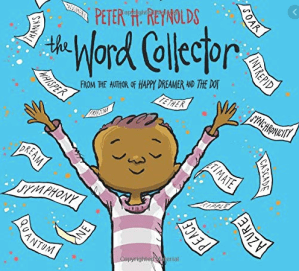
In The Word Collector (Orchard Books, 2018), Peter H. Reynolds extolls the joy and power of words. We learn about Jerome and his passion for words: “Words he heard…words he saw…words he read.” Jerome uses his words in poems and songs, and ultimately, shares all his words. After all, isn’t that words are for? This book will inspire word collectors of all ages. Resources are available here.


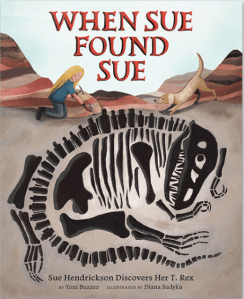
When Sue Found Sue: Sue Hendrickson Discovers Her T. Rex, by Toni Buzzeo, illustrated by Diana Sudyka. (New York: Abrams Books for Young Readers, 2019) This biography is a celebration of curiosity, exploration of the natural world, and following your dreams. “Sue Hendrickson was born to find things.” Buzzeo tells the story of how Sue’s whole life lead to the moment in 1990 when she discovered “the world’s largest, most complete, best preserved, Tyrannosaurus rex fossil discovered so far.” Named in honor of her discoverer, “Sue” is now on display in Chicago’s Field Museum. A Teacher’s Guide is available here.
                    .  

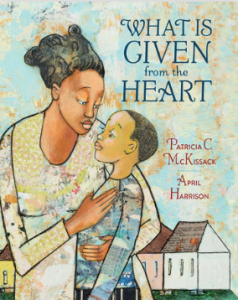
What is Given from the Heart, by Patricia C. McKissack, illustrated by April Harrison (New York: Schwartz & Wade Books, 2019) is the “final, magnificent picture book from three-time Coretta Scott King Award winner and Newbery Honor author Patricia McKissack.” James Otis and his mother have had “a rough few months.” When a neighbor’s home is destroyed by fire, James Otis’s church rallies to help them. But he can’t imagine how he and his mother can help when they “aine got nothing ourselves.” After much searching and consideration, James Otis finds exactly the right gift for his neighbor. Harrison’s mixed media illustrations add depth to the emotions of James Otis, his mother, and their neighbors.
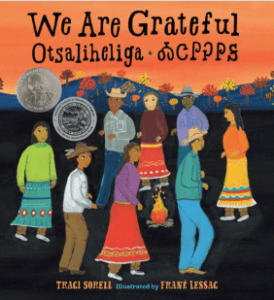
We Are Grateful: Otsaliheliga, by Traci Sorell, illustrated by Frané Lessac. (Charlesbridge, 2018) This book honors the Cherokee Nation’s tradition of otsaliheliga, an expression of gratitude that “is a reminder to celebrate our blessings and reflect on struggles–daily, throughout the year, and across the seasons.” A loving depiction of Cherokee culture, this is exactly the book we need right now: a reminder to be grateful for our family, our friends, and the many gifts of the earth.  

I am grateful for these books, their creators and the publishers who bring them into the world and make it a more beautiful place.

Note: I am editing my original post to include concerns about Home Is a Window. My original post included this paragraph about this book:

Home is a Window, by Stephanie Parsley Ledyard with illustrations by Chris Sasaki (New York: Near Porter Books/Holiday House, 2019) is an ode to the comfort of what is familiar: a favorite blanket or chair, a daily routine, a color. It also celebrates the fact that home isn’t necessarily a physical place; rather, it’s a feeling you have because of “the people gathered near.” This creative, comforting book is a perfect launching point for students to create their own definitions of home.

Cathy Mere also included this book on her list, but removed it after a reader raised “some concerns over the images in the text.” Cathy shared this link to CrazyQuiltEdi explaining her concerns about the images of several characters. 

My previous #PB 10 for 10 posts:

2017: Celebrating Nature
2016: Feeding Our Imaginations
2015: Poetry Picture Books
2014: Friendship Favorites
2013: Jane Yolen Picture Books
2012: Wordless Picture Books
 

SOL 17 & the Poetry Friday Roundup: “Out of Wonder”


“Writing is a tool to carve out our dreams”
~Kwame Alexander ~

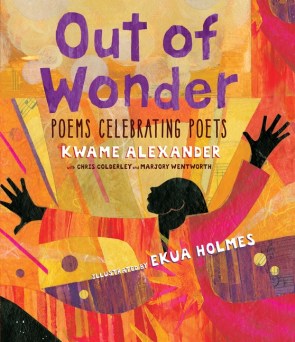
Welcome to the Poetry Friday Roundup! (Not sure what Poetry Friday is? Find out more from Renée LaTulippe here.) I’m happy you’re here because I have a stunning new collection to share today. Just in time for National Poetry Month, Newbery-Medal winning poet Kwame Alexander has teamed up with Chris Colderley, Marjory Wentworth, and Ekua Holmes to create a spectacular gift to poetry lovers of all ages, Out of Wonder: Poems Celebrating Poets (Candlewick Press, 2017).

In the Preface to Out of Wonder, Alexander explains his mission for this book is introduce readers to “…twenty of my favorite poets. Poets who have inspired me and my co-authors with their words and lives.” He and his co-authors also hope readers will see these poems “as stepping-stones to wonder” about the poets, poetry in general, and the poetry within themselves.

The book is divided into three parts. Part I, “Got Style,” includes poems written in the style of Naomi Shihab Nye and e.e. cummings, among others. “In Your Shoes” includes poems written about favorite topics of celebrated poets. Emily Dickinson’s love of flowers, Walter Dean Myers love of basketball, and Judith Wright’s love of the earth are just a few of the themes used to inspire new poems. The final section, “Thank You,” pays tribute to beloved poets themselves, including Gwendolyn Brooks, William Carols Williams, and Sandra Cisneros.

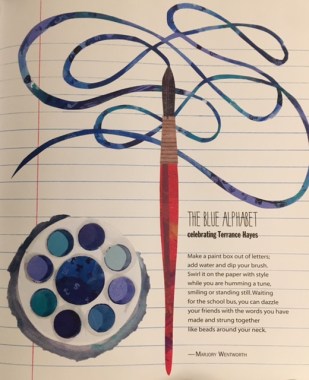
Ekua Holmes’s mixed media collages explode off the page, adding another layer of beauty to these pages. Her color schemes are perfectly suited to the poems. Subtle, muted hues create the winter woods of Robert Frost, while bold primary colors give wing to Maya Angelou’s “free bird.”

A brief biography of each celebrated poet is included at the end of the book, as well as a chronological listing of the poets and their country of origin. This section is a jumping off point for teachers and students who want to learn more about these poets.

In an interview with Rachel Martin on NPR, Alexander stated that he had “three aims for the book — to encourage kids to read poetry, to introduce them to great poets, and to inspire them to write poems of their own.” He goes on to say “It’s a lofty goal.” Lofty yes, but one he and his collaborators exceed in this joyful book.

Want to know more about Kwame Alexander’s thoughts about poetry? Read his conversation with Nikki Grimes here, and his article with co-author Chris Colderley about why poetry matters at the Poetry Foundation. In addition, Poetry Friday’s own Mary Lee Hahn wrote a terrific Teacher’s Guide that is chock-full of suggestions for sharing Out of Wonder to inspire your students.

Thank you to StaceyBetsyBeth, KathleenDeb, MelanieLisa and Lanny for creating this community and providing this space for teachers and others to share their stories every day in March and on Tuesdays throughout the year. Be sure to visit Two Writing Teachers to read more Slice of Life posts.

And now for the Roundup! Please click to add your link and read more poetic offerings.

PB10for10: Feeding Our Imaginations

pb 10 for 10 015

“We believe words can transform the world.”
~ Kwame Alexander ~

Jerry Pinkney, in his acceptance speech for the 2016 Laura Ingalls Wilder Award, proclaimed that he “learned through [his] own creativity that the world was limitless.” The books we share in our classrooms feed the creativity and imagination of children in limitless ways. Here are ten new books filled with beauty and humor that convey the power of observation and imagination.

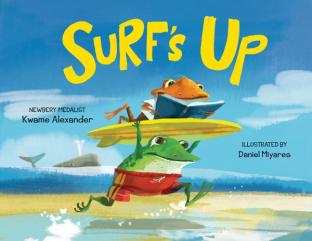
  1. Surf’s Up! by Kwame Alexander, illustrated by Daniel Miyares (North/South Books, 2016)
    “Books are boring”
    “DUDE, BOOKS ARE FASCINATING!”
    So begins this lively back-and-forth between two surfing frogs. Dude is ready to head to the beach, but Bro is engrossed in his book. The story Bro is so engrossed in comes alive through the illustrations, and as he reacts to the action, Dude gets drawn in & wants to know what’s so exciting. Bro won’t tell, so Dude starts reading, abandoning his surf board for a whale of a tale.

    9780735842205_zoom  9780399169137

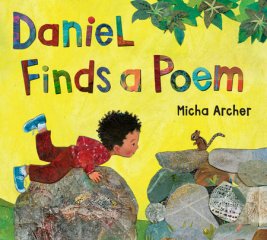
  2. Daniel Finds a Poem, by Micha Archer (Nancy Paulsen Books, 2016)— Curious because of a sign announcing “Poetry in the Park,” Daniel asks all his animal friends, “What is poetry?” Each animal replies with a poetic description of something important in their habitat. Daniel creates his own poem by stringing their lines together, learning in the process that poetry is everywhere.

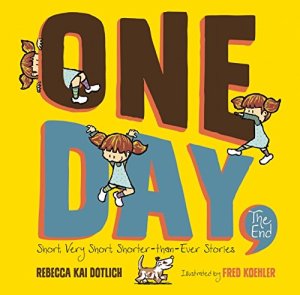
  3. One Day, The End: Short, Very Short, Shorter-Than-Ever Stories, by Rebecca Kai Dotlich, illustrated by Fred Koehler (Boyds Mills Press, 2016). When I was first teaching, a common writing assignment was to write a new ending to a story. In this charming book, Rebecca Kai Dotlich offers a variation: “For every story there is a beginning and an end, but what happens in between makes all the difference.” A series of episodes in a young girl’s life unfolds in Dotlich’s spare text. Fred Koehler’s witty illustrations bring these episodes to life. Together, the offer endless storytelling possibilities.

    ODTE-cover   9780399160493

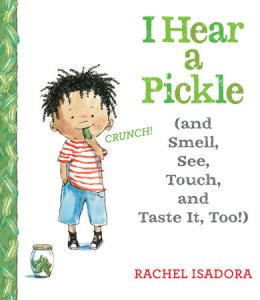
  4. I Hear a Pickle (and Smell, See, Touch, and Taste It, Too!), by Rachel Isadora (Nancy Paulsen Books, 2016) If, as Kwame Alexander tells us, “words can change the world,” we need a whole arsenal of them. This concept book for younger readers is a great introduction to onomatopoeia and what’s all around us to hear (and smell, see, touch and taste) when you open your senses to the world around you.
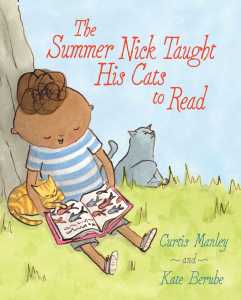
  5. The Summer Nick Taught His Cats to Read, by Curtis Manley, illustrated by Kate Berube (Simon & Schuster Books for Young Readers, 2016) It’s a truth universally acknowledged that cats have a mind of their own. So when Nick decides to teach his cats to read, we aren’t surprised they aren’t too cooperative. But Nick is determined. He makes flash cards in the shape of objects, “and Verne got interested.” and is “soon reading new stories all by himself.” Not so Stevenson, who hides whenever Nick approaches with a book. Lo and behold, Stevenson has his own ideas for a story and has drawn all the pictures. The three friends join forces to create “The Tale of One-Eyed Stevenson and the Pirate Gold,” which turns out to be the first of many adventures. The subtle humor and message of this book make it a must-read.

    the-summer-nick-taught-his-cats-to-read-9781481435697_hr    Yaks-YakAnimal-Word-Pairs-by-Linda-Sue-Park

  6.  Yaks Yak: Animal Word Pairs, by Linda Sue Park, illustrated by Jennifer Black Reinhardt. (Clarion Books, 2016) Words are beautiful and have the power transform us, but they are also funny and fun to play with. Clever illustrations contain a subplot and definition for each pair of words, and an afterword lists the origin of each animal name and its matching verb. 

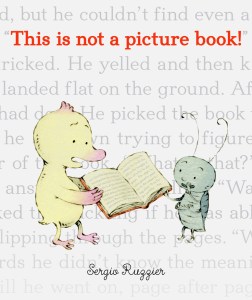
  7. This Is Not a Picture Book, by Sergio Ruzzier (Chronicle Books, 2016) Duck is excited to find a book, but quickly becomes discouraged when he discovers the book has no pictures. Luckily, he has a friend to cheer him on and encourage him to try reading the book anyway. Ruzzier brilliantly illustrates the magic of a book coming to life though his use of color and the gradual introduction of, wait for it, pictures! As Duck discovers he knows some of the words, he realizes that “Some are funny” and “Some are very sad.” The illustrations convey these shifting emotions and moods. A lovely reminder that words are magical, transformative, and “stay with [us] forever.

    ThisIsNotAPictureBook_FrontCover100    41Z2KyGc1hL._SX353_BO1,204,203,200_

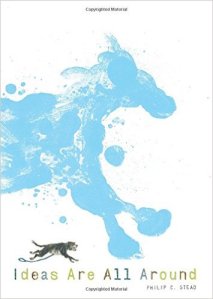
  8. Ideas Are All Around, by Philip C. Stead (Roaring Book Press, 2016) At the opening of this book, an unnamed narrator tells us “I have to write a story today. That is my job. I write stories. But today I don’t have any ideas.” How often have we all heard that? To unlock his stories, Stead takes his narrator (him?) on a walk around his neighborhood where ideas are indeed “all around.” The blend of photographs with “monoprint techniques and collage” add to the child-like quality of this book and make it accessible to kids. A wonderful testament to the fact that ideas for stories don’t have to be fanciful.

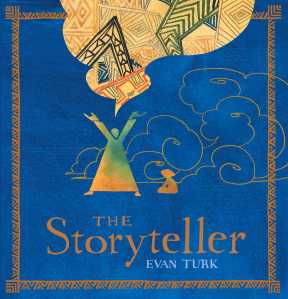
  9. The Storyteller, by Evan Turk (Atheneum Books for Young Readers, 2016) This rich and nuanced book draws on millennia of storytelling traditions, including frame stories and Scheherazade to weave a warning to the modern world of what’s at stake when”One by one, the storytellers were drowned out by noise…” and stopped telling stories. This beautifully illustrated book reminds us that our stories are as vital and nourishing to our lives as water.

    the-storyteller-9781481435185_hr  51Dqp6R3NaL._SX258_BO1,204,203,200_

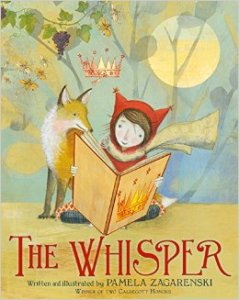
  10.  The Whisper, by Pamela Zagarenski (Houghton Mifflin Harcourt, 2015) Pamela Zagarenski is known for her whimsical illustrations full of fanciful crowns, somber tigers, and buzzing bees. These elements are all present and accounted for in The Whisperas is a clever subplot to the main story. “A little girl who loved stories” is given a “magical book of stories” by her teacher. Excited to read this treasure, the little girl hurries home, not realizing that the words are escaping out of the book as she runs. Bitterly disappointed by “the wordless book,” she soon hears a whisper telling her she “can imagine the words…and stories.” Slowly, the girl’s stories unfold and become more elaborate as she finds her voice and a storyteller is born.

    28114411
    BONUS BOOK
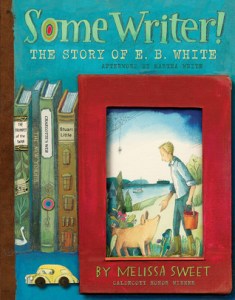
  11. Some Writer!: The Story of E.B. White, by Melissa Sweet (Houghton Mifflin Harcourt, 2016) At 176 pages, this biography is not a picture book, but it is filled with Melissa Sweet’s loving illustrations. It is sure to inspire older readers and writers to “be on the lookout for wonders.” When I was at the International Literacy Association in Boston earlier this summer, I happened upon the Houghton Mifflin Harcourt booth when an author signing was taking place. I wasn’t familiar with the author or the book, but there weren’t too many people in line, so I joined the queue. As I was waiting, one of the sales reps and I started chatting. There was a poster for Melissa Sweet’s new biography of E.B. White, which is coming out in October. I had already scoured the list of author signings to see if Sweet would be at the conference, but alas, she wasn’t on the schedule. So I asked the rep if there were any ARCs of Some Writer! hiding in the booth. To my astonishment and delight, there were! When the rep handed me the book, I felt that I had been given a great treasure, just like the little girl in The Whisper. I promised the rep I would write about the book. I will write a longer review closer to the actual publication date, but felt this list wouldn’t be complete without a mention of this book.

Thank you to Cathy Mere and Mandy Robek for creating and curating this celebration of picture books. You can read all the lists contributed to this labor of love here. It is teachers like them, and others in this community, who will keep the gift of stories alive for years to come.

My previous Picture Book 10 for 10 lists:

2015: Poetry Picture Books
2014: Friendship Favorites
2013: Jane Yolen Picture Books
2012: Wordless Picture Books