It’s Monday! What Are You Reading?

Image

I feel like I’ve been trying to catch up with a backlog of journal articles, blogs, and newspapers all week. But I did manage to squeeze in a few books for fun.

Steam Train, Dream Train (Chronicle Books, 2013) is a lovely bedtime story by Sherri Duskey Rinker and Tom Lichtenheld. A menagerie of zoo animals meet a steam train as it pulls into the station. They get right to work, loading the train with paint, sand, food and just about every toy imaginable. Once the train is loaded, the animals “settle in, and tuck in tight.” After it leaves the station, the final pages show a sleeping child with a toy train at the foot of the bed. Outside the window is a billowing cloud that looks suspiciously like a plume of smoke from a train. Although this is clearly aimed at the preschool set, I know a few Kindergarten and 1st grade boys who will love this book.

Watch the trailer here:

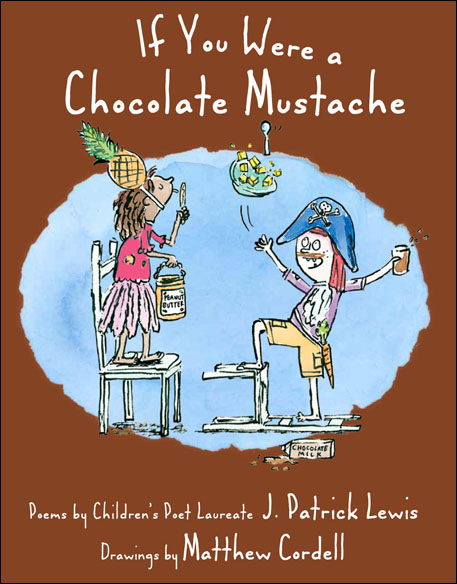
In If You Were a Chocolate Mustache (Wordsong/Boyds Mills Press, 2012), J. Patrick Lewis serves up more of his singular humor. Long poems, short poems, concrete poems, riddle poems, this collection has something for everyone. Matthew Cordell’s pen-and-ink drawings are the perfect complement for these madcap poems. This book is a must-have for elementary and middle grade classrooms.

Image

Be sure to visit Jen and Kellee at Teach Mentor Texts to find out what others are reading today.

It’s Monday! What Are You Reading?

Mon Reading Button PB to YA

We had a family visiting from out of town this weekend, so I didn’t have time to read too much. After everyone left yesterday afternoon, I did manage a to read some of the paper before I fell asleep for a lovely nap. The review of The Selected Letters of Willa Cather made me find my copy of My Antonia (more about that tomorrow) and I read Sean F. Reardon’s piece, “No Rich Child Left Behind” with dismay.

Hands down, the best part of my reading weekend was reading The Monster at the End of this Book to an almost 2 1/2 year old who’d never seen the book before. His year old brother enjoyed it too, but C’s reaction was priceless.

Image

He recognized Grover right away, and was excited for me to get started reading. Of course I put everything I had into it. Voice raised at the appropriate time, whispering at the fine print, adding exaggerated facial expressions. He was mesmerized. And so serious. He kept looking up at me with big, sincere eyes, not sure if he wanted me to turn the page, yet trusting me that it would be okay.

C. and I had quite an audience for this story time, but he was so engrossed in the book he didn’t pay any attention them, and I ignored them because I didn’t want to break the spell. When we got to the last page, he laughed and clapped and wanted me to read it again. Which I did.

So much has been written about the importance of reading to children from an early age. Reach Out and Read’s website states that “reading aloud builds sound awareness in children.”  NAEYC (The National Association for the Education of Young Children) recommends reading aloud to children from infancy. In “Reading Aloud With Children of All Ages,” Derry Koralek points out that reading aloud helps children “build their vocabularies with words they can understand and use.”

I could go on and on about the research. But C didn’t care about any of that. He cared that we shared a silly story, laughed and made crazy faces. For him, the best reason for reading aloud was that it was fun.

Be sure to visit Jen and Kellee at Teach Mentor Texts to find out what others are reading today.

It’s Monday! What Are You Reading?

Mon Reading Button PB to YA

Have you ever gone looking for a book and found a different book, one you haven’t thought about in a while, instead? That happened to me the other day when I came across Owen & Mzee: The True Story of a Remarkable Friendship, by Isabella Hatkoff, Craig Hatkoff, and Dr. Paula Kahumbu, with amazing photographs by Peter Greste (Scholastic, 2006).

9780439927802

This book tells the story of Owen, a baby hippo, who was left stranded on a coral reef off the coast of Kenya after the 2004 tsunami. Separated from his pod, Owen was too young to be released into the wild on his own, and wouldn’t be accepted by another pod. Arrangements were made for him to be taken to Haller Park, a wildlife sanctuary near Mombasa. Almost immediately after he arrived, Owen began to follow a 130-year old Aldabra tortoise named Mzee. Mzee had a reputation for being a loner, and everyone at the park was sure he’ll rebuff Owen. But, to the amazement of everyone, Mzee accepted Owen, and the two became inseparable. There are a number of other books that recount the story of Owen and Mzee, but this is my favorite.

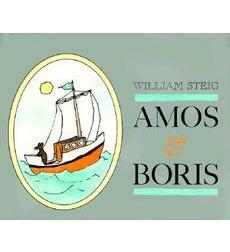
This story of a most unlikely friendship made me think of another tale of two very different creatures becoming devoted friends. Amos & Boris, by William Steig (Farrar, Straus & Giroux,1971) was one of the first picture books I read as an adult that opened my eyes to the power and depth of children’s literature. Children enjoy listening to the mouse Amos’s efforts to build and supply his boat, the Rodent. But events soon get serious, and a happy adventure turns into a matter of life and death in an instant.

9780374302788_xlg

Rescued by Boris, a kind whale, Amos professes his thanks and pledges to help Boris anyway he can, whenever necessary. Boris laughs at the thought of a tiny mouse being able to help a huge whale, but he accepts the offer. Of course, years later, Amos’s help is needed, and is gratefully accepted.

Both of these books offer children a picture of pure generosity. There is never a “what’s in it for me” thought; never a hesitation to help a soul in need. This alone is a good reason to share these books with children. There are others though, including the fact that these books both address a number of CCSS objectives. (Amos & Boris is listed as an exemplar text in Appendix B, but that is not why I love it.) Anchor standards 1-3 in both Literature and Informational text are easily met, and pairing these books seems like an obvious choice for anchor standard 9, “Analyze how two or more texts address similar themes or topics in order to build knowledge or to compare the approaches the authors take.” There are also plenty of opportunities to develop vocabulary (Literacy Anchor standard 4 and Language Anchor standards 4-6). Steig’s writing is filled with rich, descriptive language, as one of my favorite lines from the book shows:

“One night, in a phosphorescent sea, [Amos] marveled at the sight of some whales spouting luminous water…”

Owen and Mzee have their own website, and video clips of them are available.

Sharing short informational video segments on any of the animals in these books before or after reading would help teachers meet Literacy Anchor standard 7, “Integrate and evaluate content presented in diverse media and formats, including visually and quantitatively, as well as in words.”

Lucy Calkins recently stated that teachers have a responsibility to build our knowledge base and to be wary of packaged programs. Revisiting books already in our libraries, as well as staying abreast with all the wonderful books currently being published is one way to do this. Teachers working in the classroom have better ideas about how to use books with their students than textbook publishers do.

Be sure to visit Jen and Kellee at Teach Mentor Texts to find out what others are reading today.

It’s Monday! What Are You Reading?

Image

Yesterday, Donalyn Miller, in a post on the Nerdy Book Club blog, confessed that she was in a reading slump. She stated that she loses interest after she starts a book and has even chosen to watch TV over reading! I read all this with relief, realizing I’m not alone. When I went back to her post later in the evening, there were ninety comments! Ninety! Almost all of them were from teachers who were also feeling overwhelmed by their other commitments and hadn’t had the time or energy to read much lately.

I bring all this up because, even though I have stacks of books everywhere, many of the books I tried to read last week have a bookmark after the first or second chapter. I’m afraid my computer is going to crash because I have so many tabs open to blogs I haven’t had time to read. Don’t even get me started on the newspaper!

My solution to this situation? A trip to the library. I know this seems ridiculous: Why bring in more books if you can’t finish the ones you have? Because my library has all the latest picture books and early readers. If they can’t pull me out of a slump, nothing can.

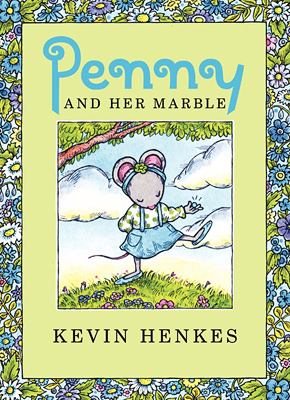
My favorite book from this visit was Penny and Her Marble (Greenwillow Books, 2013), by Kevin Henkes. It is impossible for me to overstate how much I love Kevin Henkes’s books. And Penny is the latest in a long line of lovable characters created by Henkes.

ImageOne of Penny’s most endearing traits is that she is self-reliant. Her problems are hers, and she solves them on her own. In Penny and Her Marble, she sees a beautiful blue marble, which seems to belong to no one, on her neighbor’s lawn and she picks it up and puts it in her pocket. Once she gets home, however, her conscience gets the better of her and she is haunted by the marble.

Penny never mentions any of her worries to her parents, yet they sense that something is bothering Penny. They support her in subtle ways, such as offering to bake her favorite cookies. Penny does the right thing in the end, and is rewarded for her honesty, but not in a preachy, LEARN THIS LESSON kind of way. Did I mention I am in awe of Kevin Henkes?  How does he accomplish this? He never hits a wrong note and he completely understands children and how their minds operate.

When I began this blog, I did intend to write about how I would use certain books to meet the Common Core State Standards, and I do this often enough. And although this book could be used to address several first grade standards, I would read it aloud to kids just because I love it. I would read it aloud to them because Penny is an imaginative, creative character I’d want for a friend. And I’d read it to them because they will recognize themselves in Penny.

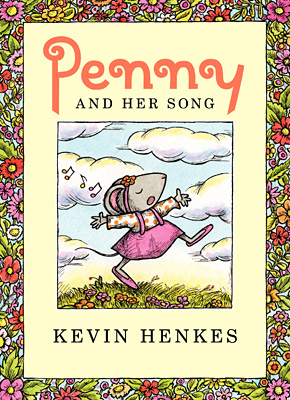
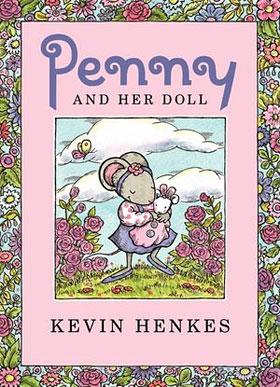
Don’t miss Penny’s other adventures in Penny and Her Song (2012) and Penny and Her Doll (2012). They are the perfect anecdote to any reading slump.

Image     Image

Dont’ forget to find out what others are reading today by visiting Jen and Kellee at Teach Mentor Texts.

It’s Monday! What Are You Reading?

Image

Poetry, of course! Today is the first day of National Poetry Month! Check out what others are reading today by visiting Jen and Kellee at Teach Mentor Texts.

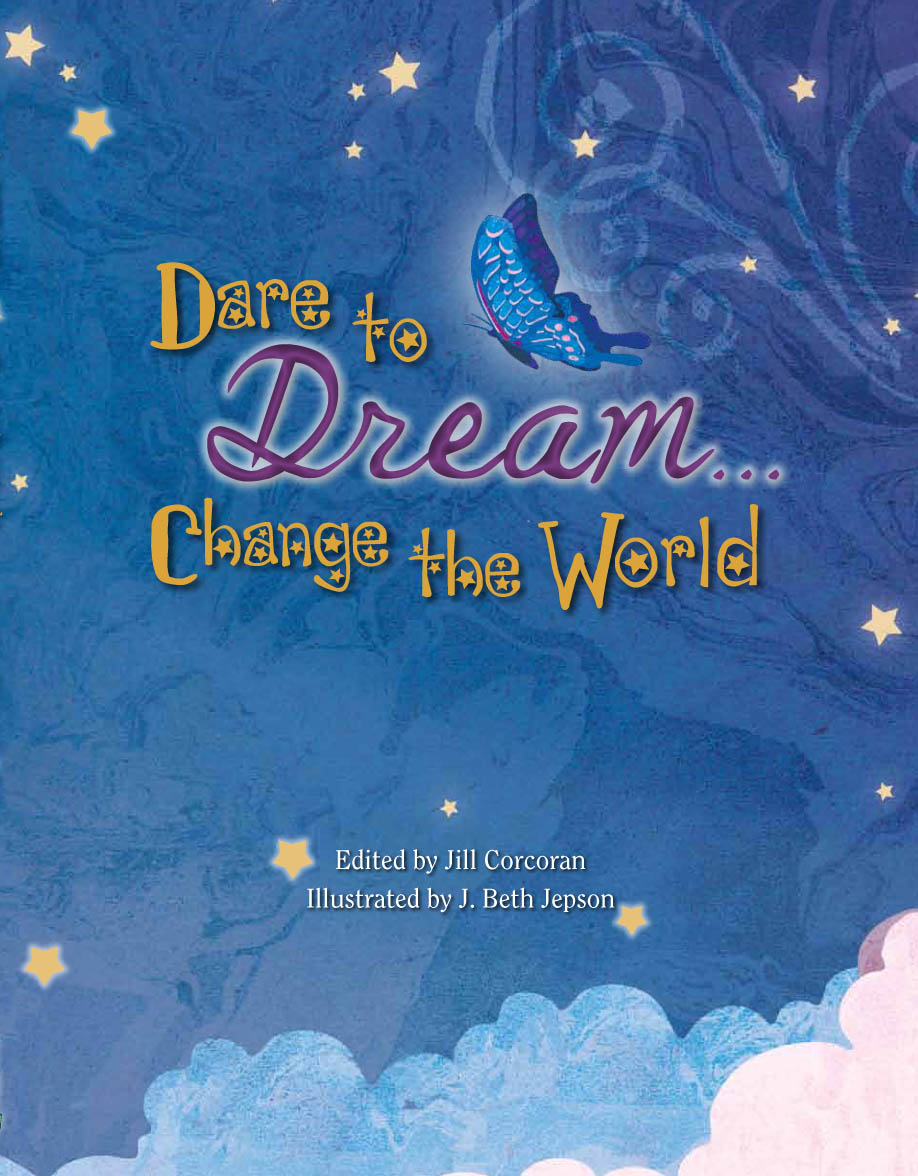
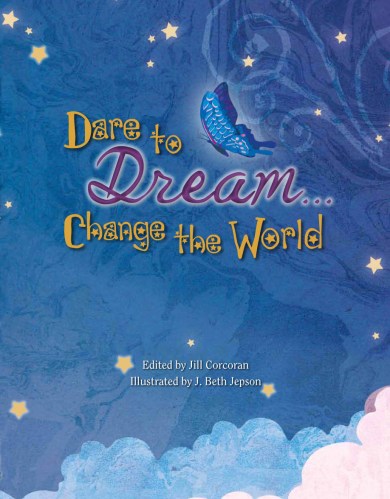
Dare to Dream…Change the World edited by Jill Corcoran, illustrated by J. Beth Jepson (Kane Miller, 2012) is an anthology of poem that celebrates people who have followed their dreams and, as a result, made the world a better place. A short note at the beginning of the book explains that Jill Corcoran was inspired to create this anthology while listening to a story on NPR about the uprisings in Egypt. Her dream was to “share the spirit of dreaming + action = change and that each one of us can make the world just a little better.”
Image

This is a beautiful book. J. Beth Jepson has created stunning, vivid illustrations that are perfectly suited to pairs of poems. These pay tribute to people who have made contributions to civil rights, music, medicine, sports, and more. One poem is biographical, the second is a response to the person’s accomplishment. Brief biographies of each individual are included. An all-star line up of poets contributed to this collection, and information about them is also included, as well as links to their websites.

When I first read this book, my mind instantly began thinking of all the possibilities for using it in the classroom, and a curriculum guide is available on the book’s website. The publishers are sponsoring a poetry contest for students in grades 3-8, which you can find out about here.

Jama Rattigan has a much more extensive review of Dare to Dream at her lovely blog, Jama’s Alphabet Soup.

My school is finishing up a school-wide read of Wonder. Before we began reading R.J. Palacio’s incredible novel, we all read Each Kindness, by Jacqueline Woodson. The final poem in the collection, is the perfect bookend to that story, a reminder that our actions have a lasting impact.

Ripples

No one acts in isolation

And no act leaves the world the same.

Words and gestures ripple outward,

What shores they reach we cannot name.

All our lives end in a riddle–

A mystery without an answer,

For even gone we ripple on,

Like a dance without a dancer.

Did you extend a friendly hand?

Did you lift a battered spirit?

The one you helped helped someone else

Ah! Now we’re getting near it.

That second someone dropped despair

Did not give in, instead revived

To teach, to love, to fight, to dare,

And what you’ve done lived on, survived.

On and out the circle widens,

Past all hope of comprehending.

The slightest touch can change the world

Healing, helping, lifting, mending.

Actions last for generations

Our father’s mothers mold our hearts.

We in turn shape all that follows;

Each time we act, a ripple starts.

by Bruce Coville

Where will your ripples go today?

Slice 25 of 31: It’s Monday! What Are You Reading?

ImageMon Reading Button PB to YA

Like many of my fellow participants in the month-long Slice of Life Challenge going on over at Two Writing Teachers, I spent much of my free time this weekend reading other slices. The caliber of the writing is incredible, and there’s such variety! I read many heart-felt remembrances of friends and family that moved me to tears. Observations about the trials and tribulations of daily life, both in and out of the classroom, had me laughing until I cried again. As the month is almost over (how is that possible?), many Slicers reflected on the lessons learned from writing every day and what they had learned about themselves as a writer. In addition, my sister was visiting from Rhode Island, so I spent lots of time with her. Needless to say, I didn’t make much of a dent in my TBR pile.

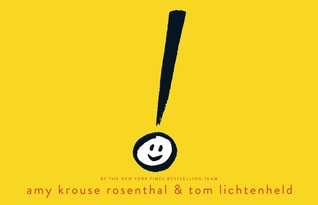
The one book I did get to, however, is priceless. Exclamation Mark (Scholastic Press, 2013), by Amy Krouse Rosenthal and Tom Lichtenheld, is the clever tale of a punctuation mark who knows he’s different from all the periods surrounding him. He tries to fit in, but nothing feels right. Then he meets a question mark, and he “discover[s] a world of endless possibilities.”

Image

The possibilities for using this book in the classroom also seem endless. Reading it for the fun of it is where I’d begin. I love the fact that the pages look like the lined paper familiar to Kindergarteners and first graders everywhere, and the word play is a riot.

With deceptively simple language, Exclamation Mark, is the perfect mentor text for asking questions and using “end punctuation in sentences.” (CCSS L.1.2.b) Exclamation Mark’s facial expressions perfectly match every word, and the word choice itself lends this book to addressing CCSS Language standard 5.d for first grade, “Distinguish shades of meaning among verbs differing in manner (e.g., look, peek, glance, stare, scowl) and adjectives differing in intensity (e.g., large, gigantic) by defining or choosing them or by acting out the meanings.” You can get a glimpse of all the fun by watching the book trailer:

Whatever else you do this week, get this book!

Thank you to Stacey and Ruth at Two Writing Teachers for hosting this Slice of Life Challenge!

Slice 18 of 31: It’s Monday! What Are You Reading?

Image

Over the past week I’ve had some family events that have kept me busy, as well as trying to keep up with all the incredible writing being done for the Slice of Life Challenge going on over at Two Writing Teachers. Needless to say, I really haven’t had time to read many books.

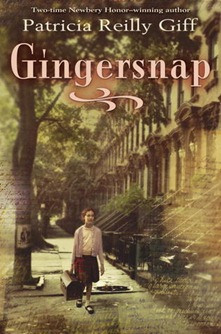
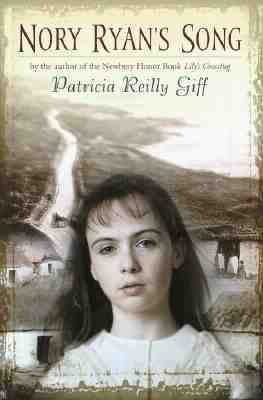
I did start Patricia Reilly Giff’s latest, Gingersnap (Wendy Lamb Books, 2013). I’m a big fan of Giff’s historical fiction, and when I found out this book was set in Brooklyn during World War II, I had to get it. I’ve been working on a project that takes place in Brooklyn during the same period, and I wanted to see how she handled the dialogue. So far I haven’t been disappointed.

Image

Patricia Reilly Giff has written many other books for kids. Here are a few of her historical fiction titles that I’ve enjoyed.

Image

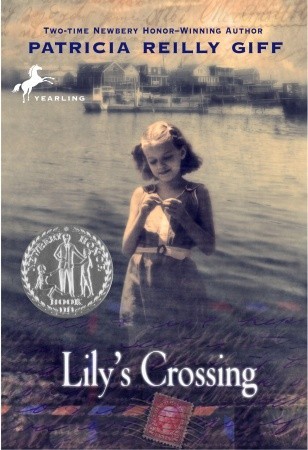
Newbery Honor book Lily’s Crossing (Delacorte Books for Young Readers, 1997)

Image

Nory Ryan’s Song (Delacorte Press, 2000)

Image

Water Street (Wendy Lamb Books, 2006)

Image

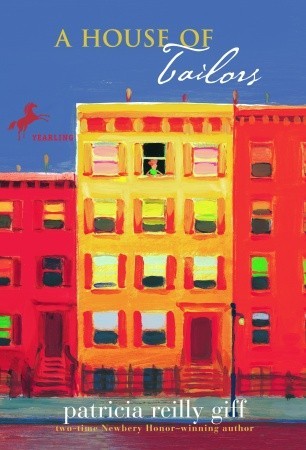
A House of Tailors (2006)

You can watch an interview with Giff here:

Random House has an extensive list of Giff’s books and other resources for using her books in the classroom. Unfortunately, it hasn’t been updated recently.

Check out what others are reading today by visiting Jen and Kellee at Teach Mentor Texts. Thank you to Stacey and Ruth at Two Writing Teachers for hosting this Slice of Life Challenge!

Slice 2013 11 of 31: It’s Monday! What are You Reading?

Image

Over the past few days, I’ve been exploring picture books related to anti-bullying for teachers to use as we continue to promote the theme of kindness.

Image

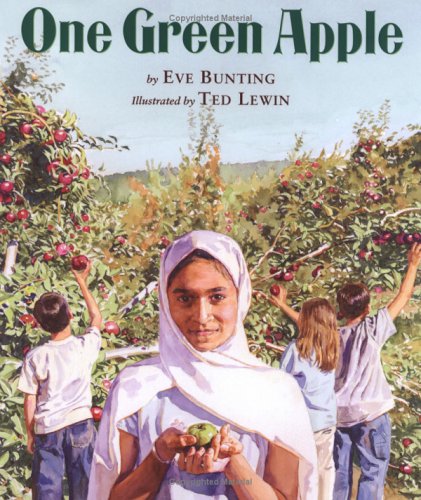
One Green Apple (Clarion Books, 2006), by Eve Bunting and illustrated by Ted Lewin is the story of Farah, a girl who’s recently emigrated to the United States. She doesn’t speak English and has just started school, where some students have been less than welcoming.

 Image

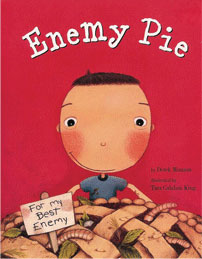
In Derek Munson’s Enemy Pie (Chronicle Books, 2000), illustrated by Tara Calahan King, Jeremy Ross is the new boy, and the boy next door has decided he’s the enemy. Dad has just the solution to get rid of enemies. Over the course of the story, the boy learns not to make up his mind about people before getting to know them.

Image

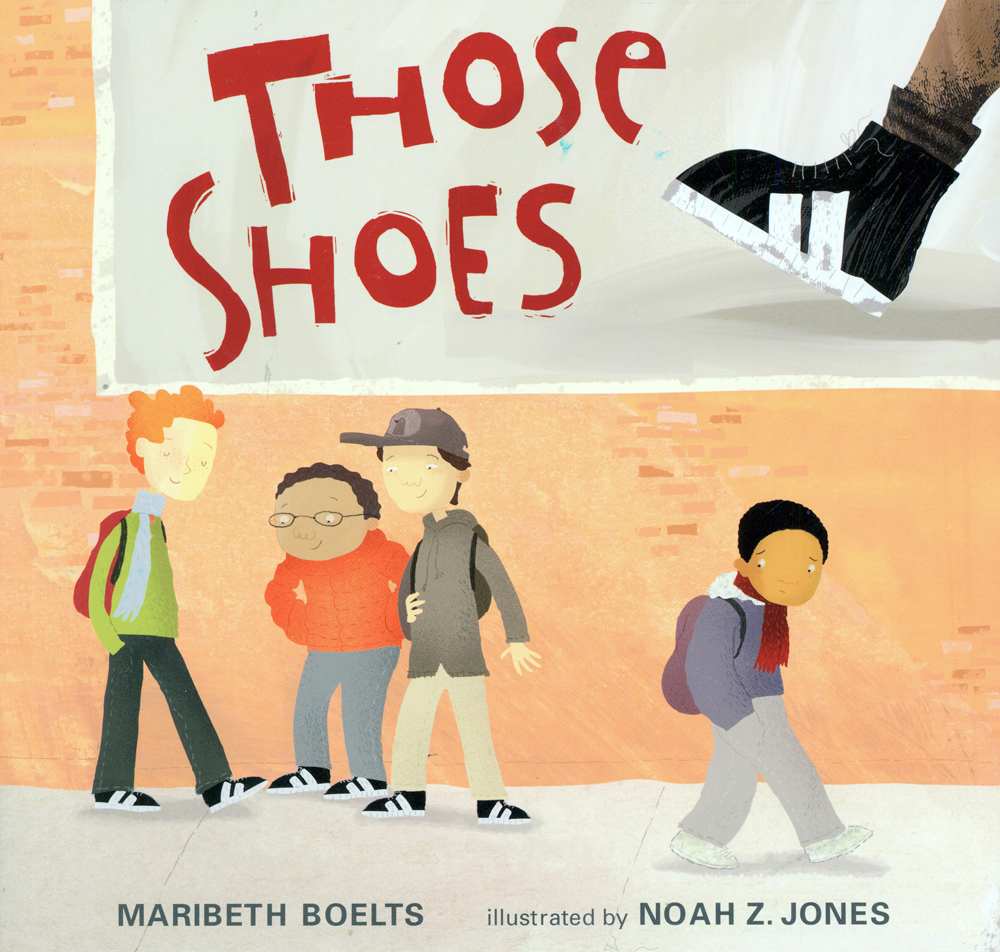
In Those Shoes (Candlewick, 2009), by Maribeth Boelts and illustrated by Noah Z. Jones, Jeremy wants the same cool shoes as all his friends, but his grandma tells him they only have room for need, not want. Jeremy is determined to find a way to get his shoes, but he finds out something about himself instead.

Image

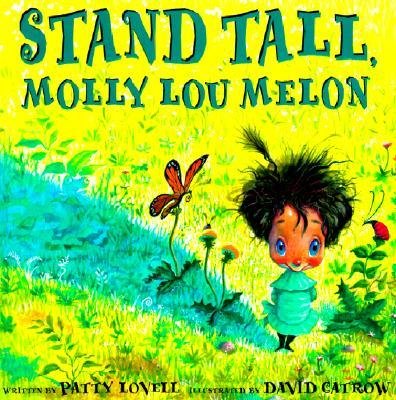
Molly Lou Melon is the star of Stand Tall, Molly Lou Melon, by Patty Lovell and illustrated by David  Catrow (Putnam, 2001). She isn’t like the other children, but that doesn’t stop her from enjoying herself every minute of the day.

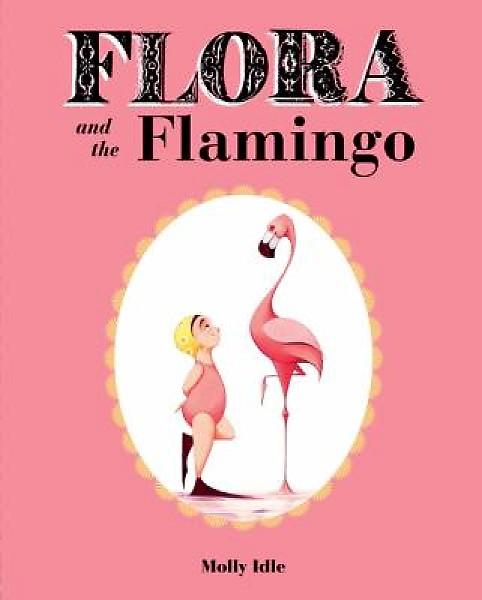
ImageMolly Idle’s Flora and the Flamingo (Chronicle Books, 2013) deserves all the praise it’s received since its publication. This wordless picture book is a joyful pas de deux between two unlikely friends.

If you’re looking for similar books, an extensive list can be found at Storytime Standouts and at the Massachusetts Reading Association. Check out what others are reading today by visiting Jen and Kellee at Teach Mentor Texts.

Thank you to Stacey and Ruth at Two Writing Teachers for hosting this Slice of Life Challenge!

It’s Monday! What Are You Reading?

Image

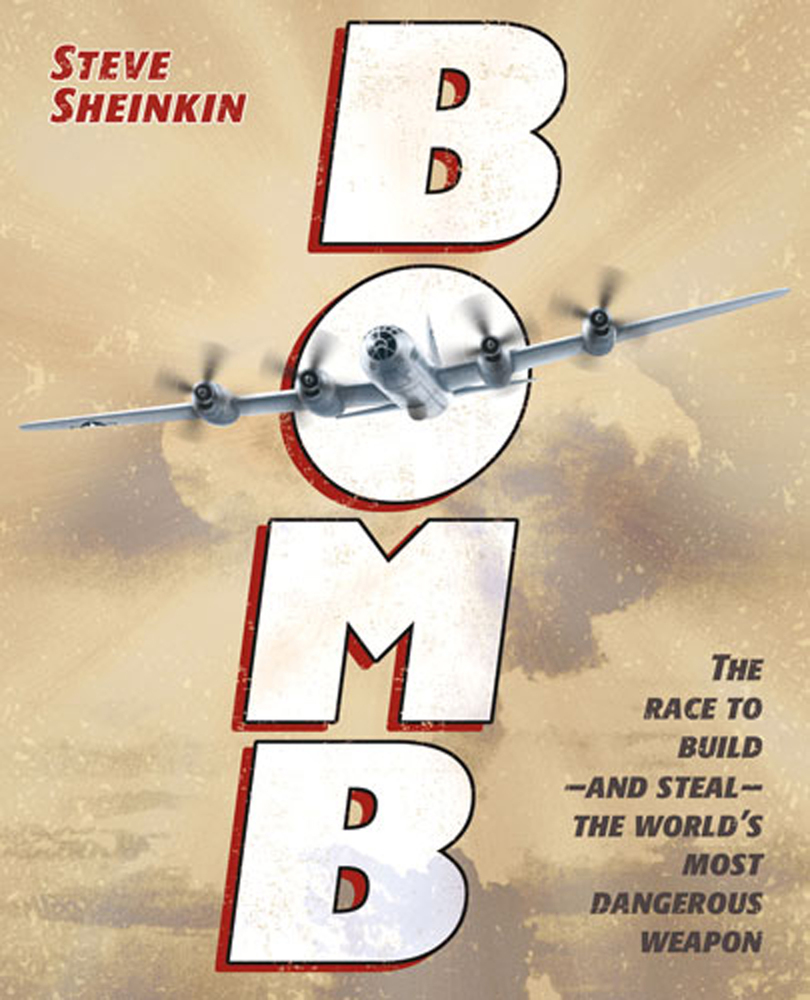
Yesterday I finished reading Bomb: The Race to Build–and Steal–the World’s Most Dangerous Weapon, by Steve Sheinkin, so now I’ve read all of this year’s Newbery books. Talk about a diverse selection! Each book is so different from the others, it’s difficult to say which I enjoyed the most. All of the novels would be excellent read-alouds. Splendors & Glooms has a lot of possibility for vocabulary and symbolism, and Clara’s family name Wintermute has to be one of the best charactonyms ever! I would certainly promote them for independent reading.

Bomb, however, is a different story altogether. Sheinkin, a former textbook writer, stated in an interview here that “history is just stories about people and dramatic events, so there’s nothing inherently boring about it.” He proves this in Bomb. This is the kind of book you could build an entire curriculum around. Science, history, math, it has everything. There are at least three separate story lines, and the narrative shifts back and forth between them, building suspense for readers who probably don’t have a lot of background knowledge about this subject. So many CC standards could be addressed through this text, especially Literacy anchor standard 3: “Analyze how and why individuals, events, or ideas develop and interact over the course of a text.”

The story of the heavy water plant in Norway is a thrilling adventure all on its own. My first thought was, how has this not been made into a movie? (Of course it has, once in 1948 and again in the 1960s.) Nova produced an episode devoted to these events in 2005. Surviving members of the team are interviewed, clips from the 1948 movie are included, and present-day footage of the area give viewers an even greater appreciation for what the commandoes accomplished. Incorporating clips from this episode while reading Bomb would allow students to “Integrate and evaluate content presented in diverse media and formats, including visually and quantitatively, as well as in words.” (CC anchor standard 7)

Image

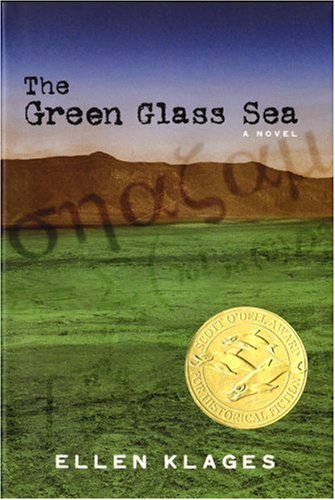
The Green Glass Sea, by Ellen Klages, is a great work of fiction to pair with Bomb. This 2007 winner of the Scott O’Dell Award for Historical Fiction centers on the life of Dewey Kerrigan, a bright 11-year old, whose father is involved with the work at Los Alamos. Historical figures, such as Robert Oppenheimer and Richard Feynman, make brief appearances in the story. Klages’ depiction of daily life at Los Alamos adds a depth of understanding and reality to the events described in Bomb. Feynman’s use of codes is mentioned in both books, and Dewey’s father writes to her in code. Watching the Trinity test, the children’s impromptu parade at the end of war and other events mentioned in both books would allow students to “Compare and contrast a fictional portrayal of a time, place, or character and a historical account of the same period as a means of understanding how authors of fiction use or alter history.” (RL.7.9)

In addition, both Bomb and The Green Glass Sea bring up the misgivings of many of the scientists, including Oppenheimer, about the use of atomic bombs after their use on Hiroshima and Nagasaki. This debate, as Sheinkin, states at the end of his book, are ongoing to this day. It is a natural topic for research and argument writing as spelled in Writing Anchor Standards 1,7, 8, and 9.

Bomb makes history exciting and engaging. It is exactly the kind of book we should be using in our classrooms to spark the imagination of our students and open doors to further study.

Be sure to stop by Teach Mentor Texts to see what other fabulous books people are reading today.