It’s Monday! What Are You Reading?

IMWAYR

My colleagues and I have been thinking about how we are going to adapt our instruction to meet CCSS Reading Literature standard Nine (Analyze how two or more texts address similar themes or topics in order to build knowledge or to compare the approaches authors take.) I have always tried to link texts thematically whenever possible, but in Connecticut, our state test has had an inordinate emphasis on text-to-self connections for years. So this standard is causing us to rethink some of our curriculum.

I think this is a very good thing, as there is plenty of evidence that reading multiple texts on the same topic and pairing fiction and nonfiction texts helps students build a stronger knowledge base. So we’ve been creating text sets to support our reading units of study. For example, we’ve  selected a variety of titles around the main theme of each unit so students have an independent reading book of their choice that has a similar theme to the short story or novel being read in class. For the past week or so, I’ve been reading and rereading several books we’re thinking about adding to our collection.
HITLERYOUTH2-1

In the spring, the 8th grade will study the Holocaust in social studies and English/language arts. In the past, students have read the play, The Diary of Anne Frank. We haven’t made all of our choices yet, but so far have added The Book Thief to this unit. We want to include nonfiction as well, so last weekend I read Hitler Youth: Growing Up in Hitler’s Shadow, by Susan Campbell Bartoletti. (Scholastic Nonfiction, 2005) This is a powerful book. Parts of it were difficult to read, but Bartoletti does an excellent job of creating a clear picture of how Hitler manipulated the young people of Germany to his purposes. Using extensive primary sources and photographs, readers experience life in Germany from the rise of the Nazis in the early 1930s to the end of the war and beyond. Bartoletti also includes the story of several teens who realized the Nazi leaders were lying to the German people. They tried to warn others, but were arrested and executed.  An epilogue tells readers what happened to the young people whose stories are told throughout the book after the war, and there is an extensive bibliography. In 2006, Hitler Youth: Growing Up in Hitler’s Shadow was named a Newbery Honor Book, a Siebert Honor Book, and an Orbis Pictus Honor book for Outstanding Nonfiction for Children.
we_fought_back

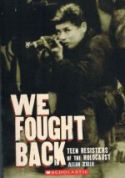
Bands of partisans fought against Hitler throughout Europe, and many of these brave men and women were teenagers. Allan Zullo has collected their stories in We Fought Back: Teen Resisters of the Holocaust. (Scholastic, 2012) This book has many gripping accounts of the harsh conditions the partisans endured, especially during the winter, and the dangerous missions they undertook in their attempts to break the Nazi war machine. There are notes about the lives of these resisters after the war, as well as recommendations for reading more about each individual.
Between-Shades-of-Gray-paperback

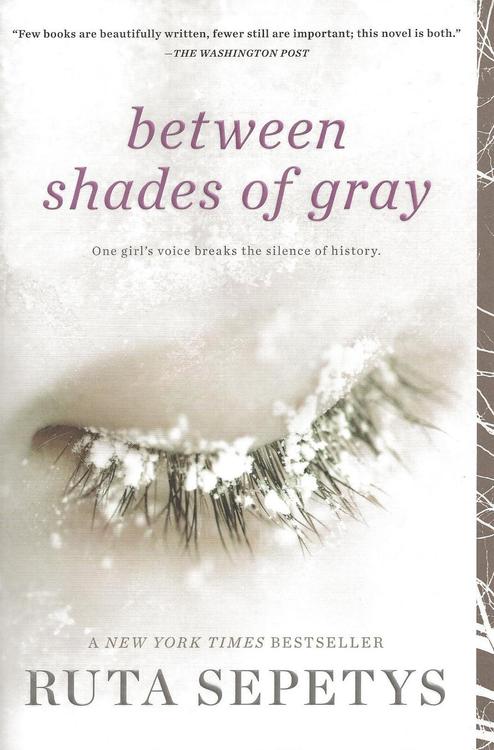
Although it isn’t about the Nazis, we will probably include Ruth Sepetys’s Between Shades of Gray in this unit, as there are so many similarities between Lina’s story of persecution and deportation in Soviet Russia under Stalin during World War II and what was happening in Germany and much of Europe at the time. If you haven’t read this amazing book, add it to your list today. In the meantime, you can learn more about it here.

It’s not easy to have the courage to stand up for what you believe in, for what what you know is right. We Fought Back: Teen Resisters of the Holocaust and Between Shades of Gray offer readers inspiring portraits of young people who fought against governments who denied their basic humanity. Reading these books in conjunction with Hitler Youth  will give readers plenty of opportunities to build their knowledge and discuss this terrifying time in world history.

There are many other excellent books that would fit in a unit on the Holocaust. What titles do you include in similar units? How are you addressing standard nine?

Be sure to visit Jen at Teach Mentor Texts and Kellee at Unleashing Readers to find out what other people have been reading lately. Thanks, Jen and Kellee, for hosting!
It’s Monday! What Are You Reading?

IMWAYR

Nowadays, it seems that Labor Day is more about the last official summer holiday and sales, not about the workers it honors. So today it seems appropriate to share books about the everyday heroes who took tremendous risks and made many sacrifices to help shape the labor laws we have today.

Image

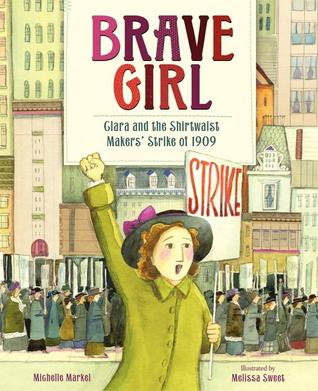
Brave Girl: Clara and the Shirtwaist Maker’s Strike of 1909, by Michelle Markel (Blazer + Bray, 2013; illustrated by Melissa Sweet) tells the true story of Clara Lemlich, who immigrated with her family from the Ukraine when she was 17 years old. Her father was unable to find work, so Clara went to work in one of the many shirtwaist factories on the lower east side of Manhattan in the early 20th century. Clara soon discovers the harsh realities of the garment industry, and helps organize the famous 1909 strike.

Melissa Sweet’s illustrations are always appealing, and here they provide a glimpse into the conditions of the tenements and factories of the time. Using her signature collage, Sweet incorporates fabric, stitching, and patterns to recreate Clara’s world. In an interview with Julie Danielson at Seven Impossible Things Before Breakfast, Sweet explains that this “felt like a fitting way to honor these brave seamstresses.”

The picture book format of Brave Girl shouldn’t discourage teachers of upper elementary grades from sharing this book with their students. In fact, Markel’s text is an ideal introduction to this important chapter of our history. Once students’ curiosity has been piqued, there are many other excellent books available to extend their learning.

Image

In Factory Girl, by Barbara Greenwood (Kids Can Press, 2007), combines fiction and non-fiction to bring the world of the garment and textile mills of New York and New England at the turn of the 20th century to life. Archival photos, many by Lewis Hine, reveal the terrible working conditions these children endured. This book also includes a timeline of the labor movement in the United States.

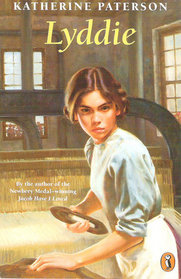
Katherine Patterson has written two novels that vividly depict the experience of young workers in New England textile mills. Lyddie (Dutton, 1991) takes place much earlier than the events in Factory Girl, but the situation is very similar. Lyddie arrives at a textile mill in Lowell, Massachusetts in the 1840s, just as several of the women are organizing to demand 10-hour working days. Patterson expertly weaves other aspects of life for these “factory girls” into the story. Facts like the “company” requirement of regular church attendance and the numerous restrictions on the girls’ after-work activities will be sure to provoke many heated discussions and are natural springboards for opinion and argument writing.

Image       Image

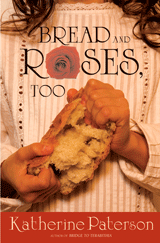
Bread and Roses, Too (Clarion Books, 2006) takes place in Lawrence, Massachusetts during the Bread and Roses strike of 1912. Sadly, the mill workers in this novel are still confronted with many of the issues Lyddie struggles against over half a century before.

Image

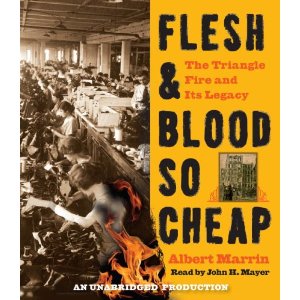
As is often the case, it took a tragedy before these conditions changed in any meaningful way. The 1911 fire at the Triangle Waist Company led to the deaths of 146 workers who were locked into the factory so they couldn’t leave early. Albert Marin has written a riveting account of the tragedy in Flesh and Blood So Cheap: The Triangle Fire and Its Legacy (Alfred A. Knopf, 2011). Marin sets the stage by telling the story of why so many Europeans were desperate to come to America in the first place. Incorporating archival photos and eyewitness accounts, this book is an important resource for students and teachers alike.

While children in the United States today are protected by child labor laws thanks to the efforts of Clara Lemlich and countless others, the same cannot be said for children around the world. These books open the door for students to conduct research and gain new insights into child labor around the world. The New York Times Learning Network has a lesson plan and resources related to the factory collapse in Pakistan earlier this year, and Teachers College Reading and Writing Project has an extensive collection of links to articles and videos available on-line, as well as books that address both the history of child labor and examples of child labor as it exists today.

There are many other fine books about other leaders of the Labor Movement, as well as fictional accounts of its many unsung heroes. I’d love to know which books are your favorites.

Be sure to visit Jen at Teach Mentor Texts and Kellee at Unleashing Readers to find out what other people have been reading lately. Thanks, Jen and Kellee, for hosting!
It’s Monday! What Are You Reading? Compost, Worms, & Chickens

IMWAYR

Without trying to be thematic, I read three books this weekend that all related to taking better care of the Earth and all the creatures we share our planet with.

Image

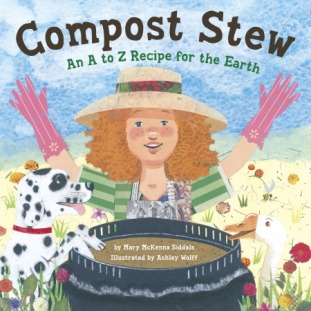
Compost Stew: An A to Z Recipe for the Earth by Mary McKenna Siddals (Tricycle Press, 2010; illustrated by Ashley Wolff) is a clever rhyming alphabet book that explains how and what to compost, as well as why composting is important. Ashley Wolff’s collage illustrations are a study in recycling themselves. The main character’s apron is made out of pages from the Farmer’s Almanac, beautiful papers are used for goose feathers, and found objects add depth to every page.

Years ago, we made composting columns out of soda bottles so kids could observe this process. This was a great project, although some kids were grossed our by the worms! Now, I would add a writing component to this unit, using the experience to model writing a how-to book. Instructions for how to construct these columns can be found here: http://www.learner.org/courses/essential/life/bottlebio/ecocol/build.html Marty McGuire Digs Worms by Kate Messner (Scholastic Press, 2012; illustrated by Brian Floca) is a natural read aloud choice for a unit like this.

Image

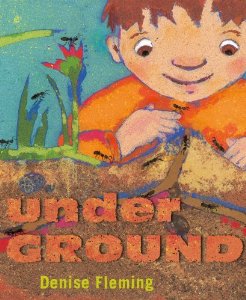
Denise Fleming is a favorite of early-childhood teachers everywhere. In underGround (Beach Lane Books, 2012), Fleming has created cut-away illustrations of the ground beneath our feet using pulp painting, “a papermaking technique using colored cotton fiber poured through hand-cut stencils.” (from a note included on copyright page) Animals, plants, rocks, and minerals are all shown with details sure to fascinate the youngest naturalists. Humorous touches are everywhere, making the book a kind of I-spy of buried treasures.  Two pages of facts about the critters who inhabit the book supplement the simple rhyming text.

Image

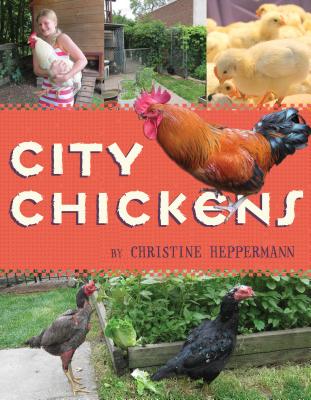
City Chickens (Houghton Mifflin Books for Children, 2012), by Christine Heppermann, is a non-fiction book for kids in second grade and up about Chicken Run Rescue, a shelter for rescued hens and roosters in Minneapolis. Heppermann includes a wealth of information about Mary and Bert Clouse’s efforts to care and find new homes for abandoned chickens. The reasons such a shelter is needed are explained, as is the responsibility of caring for these birds. You will have a different view of them after reading this book and seeing Heppermann’s gorgeous photographs. Notes include information for educators and a source list. This book could be used as a springboard for opinion writing about keeping chickens as pets. Teacher’s College Reading and Writing Project has a digital text set of additional resources on pets in the classroom here. More information about City Chickens is available on this website.

I grew up across the street from a working dairy farm. The rhythms of the farm were the rhythms of life. It makes me sad to know so many children are only able to experience nature from a distance, but these books will ignite the curiosity of children about the wonders that surround them.

Be sure to visit Jen at Teach Mentor Texts and Kellee at Unleashing Readers to find out what other people have been reading lately. Thanks, Jen and Kellee, for hosting!
It’s Monday! What Are You Reading?

IMWAYR

With the beginning of a new school year upon us, teachers around the country are making plans for a year that is sure to be filled with challenges. But right now, we aren’t thinking about those hurdles. We’re thinking about possibilities. Teachers are pros at seeing the possibilities and potential in children. We are tireless in our effort to find ways to bring out the very best in our students. One of the most important ways we do this is by sharing books that help our students see the possibilities and potential within themselves.

Artist and writer Debbie Millman recently told graduates at San Jose State University that success has nothing to do with luck. Rather, “it is really all about the strength of IMAGINATION.” This is an important message for students of all ages. Last week I came across several picture books that can help our students understand the importance of keeping their imaginations open to the wonders and possibilities all around them.

Image

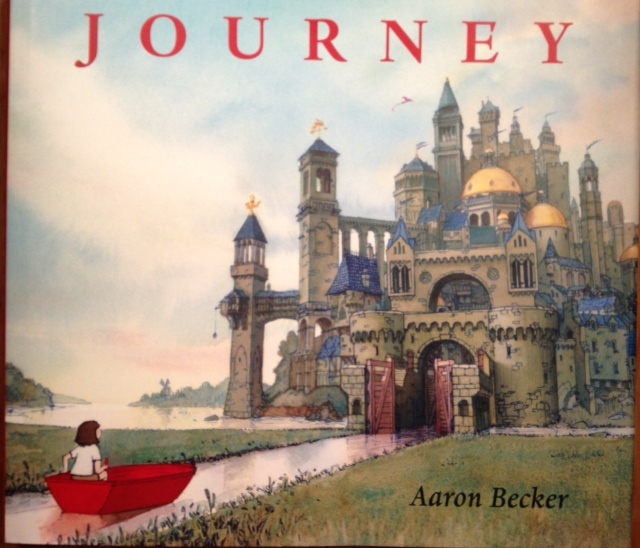
Journey (Candlewick Press, 2013) by Aaron Becker is a stunning book. It will remind readers of Harold and the Purple Crayon immediately, but Becker’s full color illustrations give this book a magical quality. There is an exotic mysteriousness to Journey that will lead to many questions and rich discussions about just exactly where the girl with the red crayon has gone. If you haven’t seen this book yet, the trailer will give you an idea of the riches within.

Image

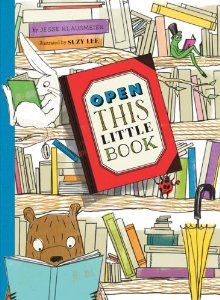
Jesse Klausmeier’s Open This Little Book (Chronicle Books, 2013; illustrated by Suzy Lee) is a book I would have adored when I was little. This is a book within a book within a book and so on. The story follows one pattern to the middle of the book, then follows another pattern to the next to the last page, when the pattern changes and readers are rewarded with Lee’s charming illustration depicting the endless possibilities in books. The cover of each little book hints at the animal featured within. This is just one of the clever details that will have young readers examining the illustrations over and over again.

Image

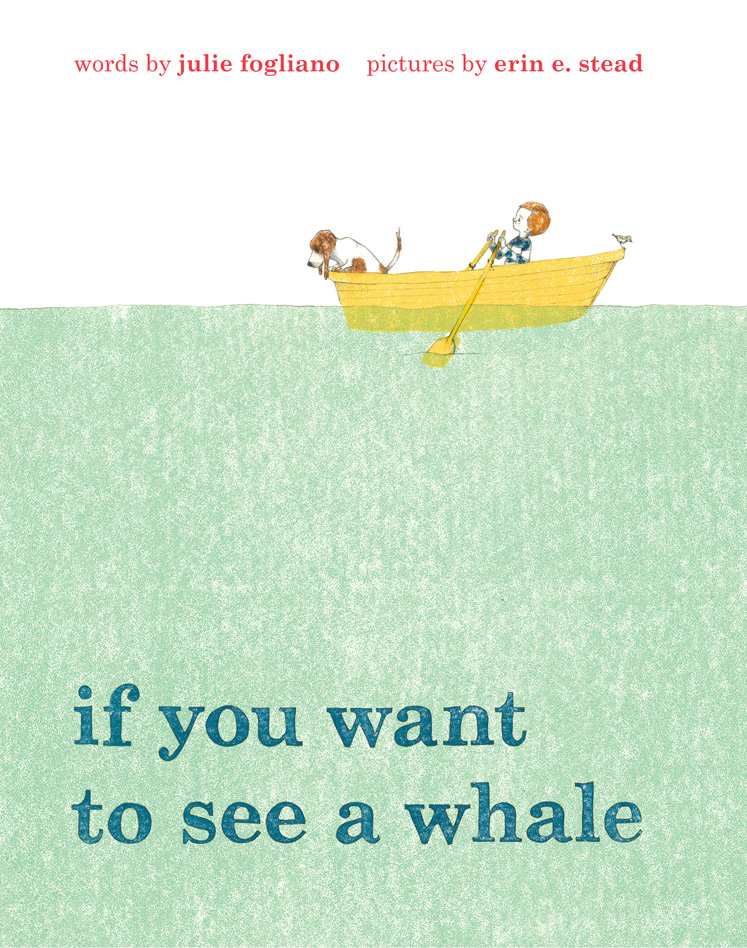
If you want to see a whale (A Neal Porter Book, Roaring Book Press, 2013; illustrated by Erin E. Stead) by Julie Fogliano is a lovely, quiet book. According to Fogliano, in order to see a whale, “you will need…time for waiting and time for looking and time for wondering…” This is an important reminder to children (and their parents!) in today’s busy world.

Yesterday, Donalyn Miller asked readers of the Nerdy Book Club blog what books they were looking forward to sharing with students this year. These are three titles I will be sharing with children again and again to encourage them to unleash the power of their imaginations.

Be sure to visit Jen at Teach Mentor Texts and Kellee at Unleashing Readers to find out what other people have been reading lately. Thanks, Jen and Kellee, for hosting!
It’s Monday! What Are You Reading?

Image

More Jane Yolen, of course! After highlighting just 10 (well, maybe a few more than 10) picture books by one of the most prolific authors ever for Picture Book 10 for 10, I can’t stop reading (and rereading) books by Yolen.

Image

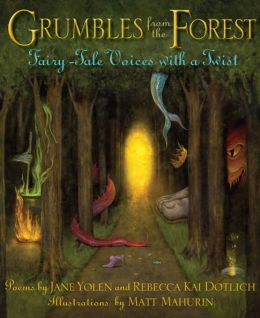
One of her more recent volumes is a book of poetry, co-written with Rebecca Kai Dotlich. In Grumbles from the Forest: Fairy-Tale Voices with a Twist (Wordsong, An Imprint of Highlights, 2013; illustrated by Matt Mahurin), Yolen and Dotlich use fifteen well-known fairy tales as a spring board for pairs of poems that let the characters speak for themselves. Snow White has her say, as do Gretel and Goldilocks. There are also poems that give voice to supporting characters, such as the the Wicked Fairy from Sleeping Beauty, who admits she “should’ve read/that page on tips.” While some of the poems do have a humorous tone, others reveal the dark side of the fairy tale. Beauty’s isolation is tinged with sadness as she wonders “what sounds children/might have made/running across the marble halls…”

These poems are naturals for reading after reading the original tale. Anchor Standard 9 of the CCSS states that students will  “analyze how two or more texts address similar themes or topics in order to compare the approaches the authors take.” At many grade levels, students are expected to use fairy tales, myths, and legends for this purpose.

In a note to their readers, Yolen and Dotlich also urge their audience to “try writing a fairy tale poem yourself [and] make a little magic.” By “juggling different perspectives,” students will develop a deeper understanding of characters who, in many retellings, are often no more than stereotypes.

Image       Image

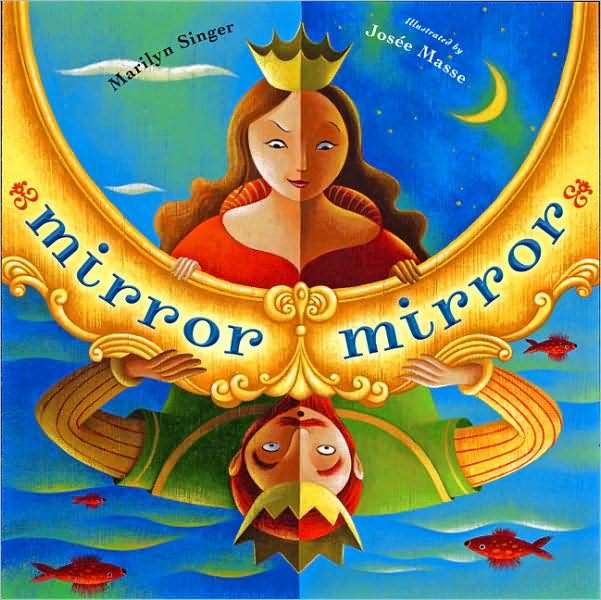
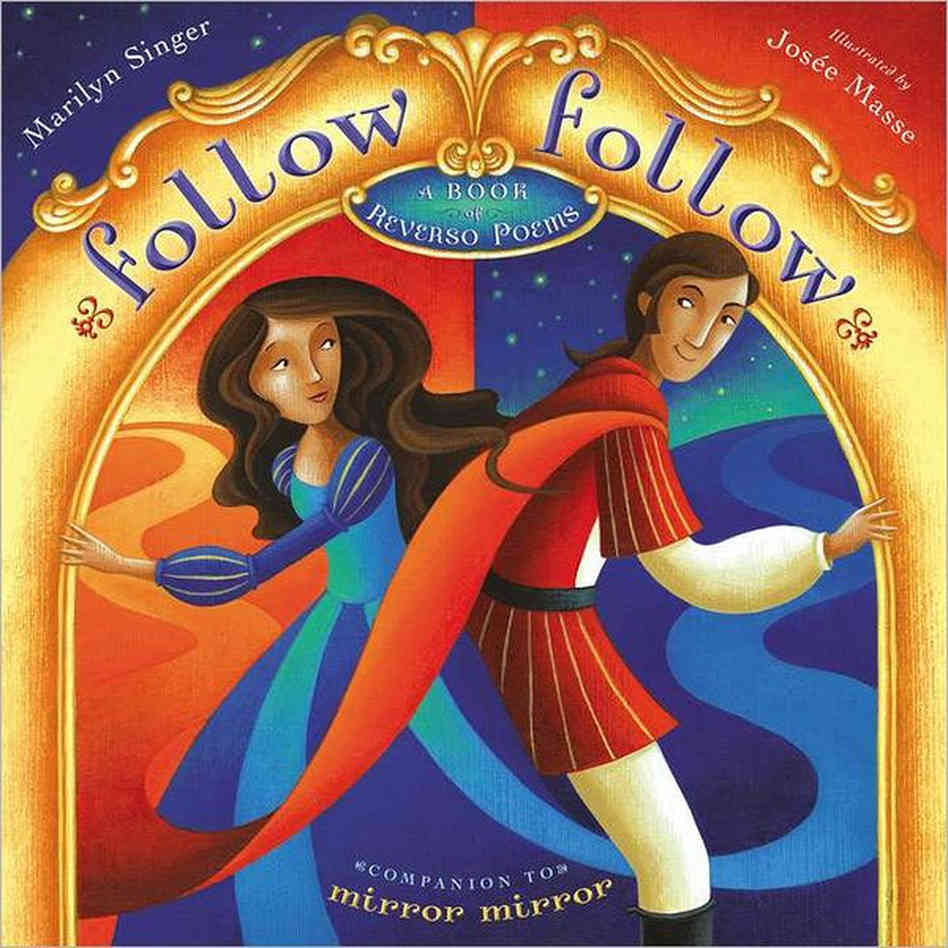
Of course, there are numerous versions of these tales that do adopt the point of view of a character who doesn’t usually have a voice. Since the huge success of The True Story of the Three Little Pigs, by Jon Scieszka (Viking Press, 1989; illustrated by Lane Smith) these “fractured fairy-tales” have become their own sub-genre. There are also other poets who have given a voice to favorite fairy tale characters. Marilyn Singer has written two books of reversos, pairs of poems which use the same words in reversed order to present the perspective of two different characters. Singer’s poems in Mirror, Mirror (Duttons Children’s Books, 2010; illustrated by Josee Masse) and Follow, Follow (Dial Books, 2013; also illustrated by Josee Masse) are similar to Yolen and Dotlich’s as they have humor but don’t shy away from the hard lessons these characters have learned. Masse amazingly repeats this feat in her illustrations.

Image    Image    Image

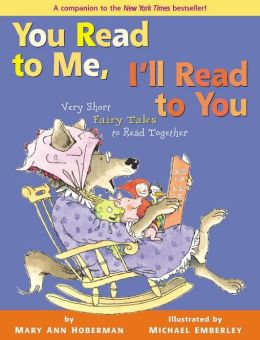
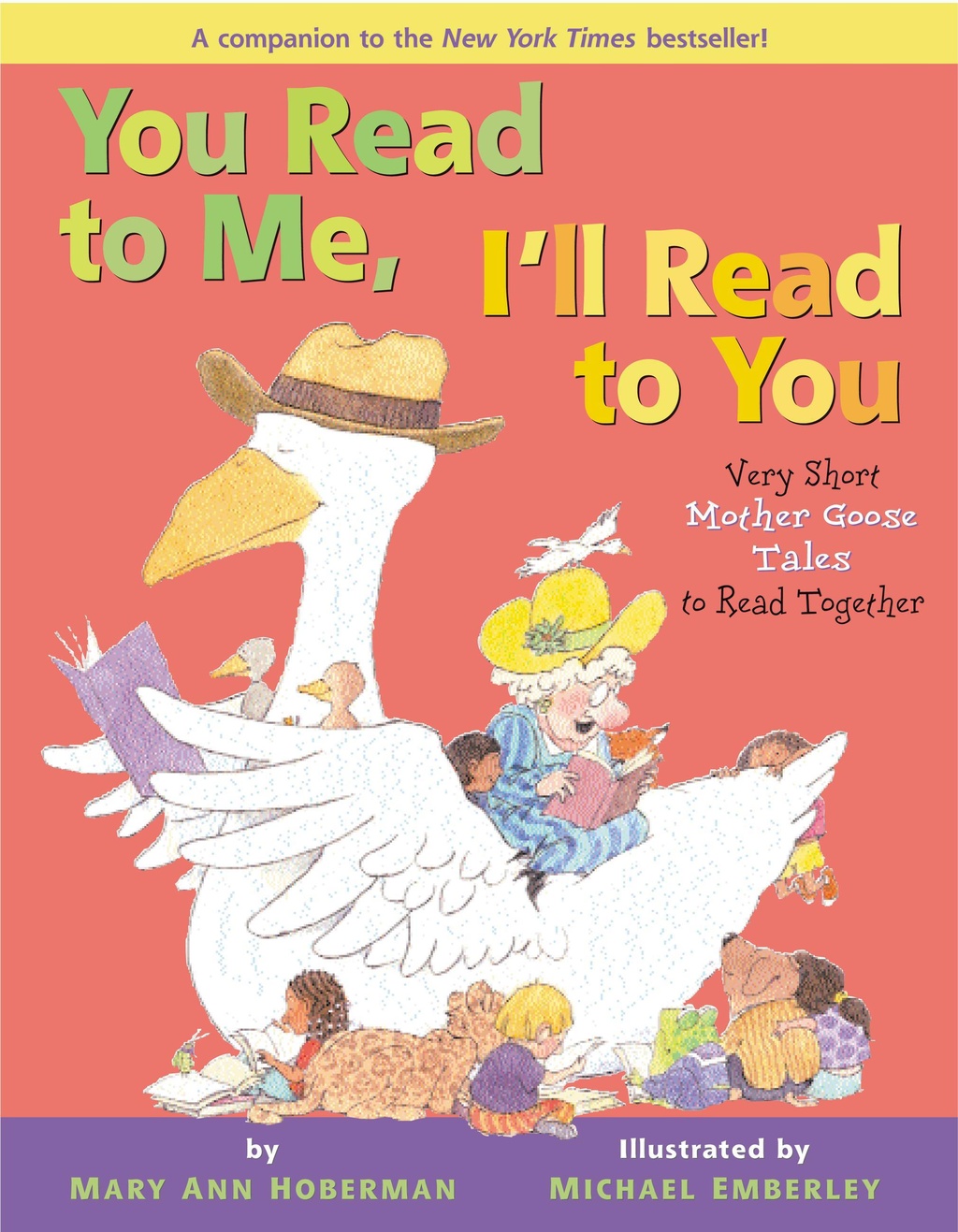
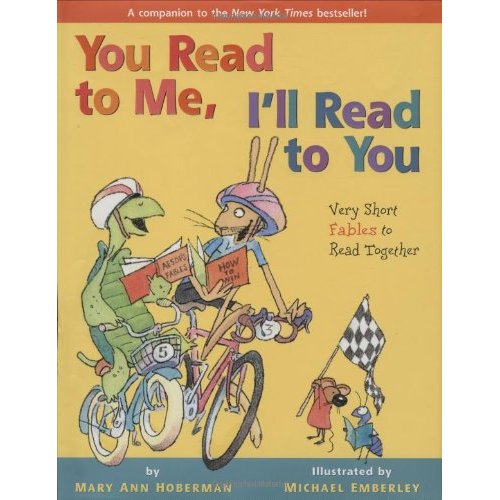
Grumbles from the Forest and both of Singer’s books will be best understood by students in third grade and up. Why should they have all the fun? Mary Ann Hoberman’s You Read to Me, I’ll Read to You series has a collection devoted to fairly tales, Mother Goose, and Aesop’s fables that are perfect for sharing with younger readers.

Sadly, I’m no longer surprised when students arrive at school not knowing these classic stories. My library, though, is well-stocked with classic versions of these stories, as well as many of the fractured variety. I share them with students every chance I get. I believe Yolen is absolutely correct when she wrote in Touch Magic: Fantasy, Faerie and Folklore in the Literature of Childhood, (August House, 2000) “that culture begins in the cradle…to do without tales and stories and books is to lose humanity’s past, is to have no map for our future.”

Be sure to visit Jen at Teach Mentor Texts and Kellee at Unleashing Readers to find out what other people have been reading lately. Thanks, Jen and Kellee, for hosting!
It’s Monday! What Are You Reading? The Day the Crayons Quit

Image

Last week, I was busy with lots of reading and writing. Our TCRWP Units of Study arrived, so I began reading A Guide to the Common Core Writing Workshop. In this overview of the series, Lucy Calkins lays out the hard work ahead. But, as always, her reassuring voice lets us know that she and her colleagues are there to guide us as we help our students learn to become the best writers they can be. My favorite nugget of wisdom so far is this:

“When you provide students with constant opportunities to write and when you actively and assertively teach into their best efforts, their development as writers will astonish you, their parents, the school administrators, and best of all, the youngsters themselves.” (p. 3)

Who can argue with that?

I also made a trip to the library to see what was new and grabbed an armful of picture books. (I did leave some for the kids, I promise!) I enjoyed them all, but one stood out for me.

Image

I’d heard much praise for The Day the Crayons Quit, by Drew Daywalt, illustrated by Oliver Jeffers (Philomel Books, 2013), and it is well-deserved. In his first picture book, film-maker Daywalt tells the story of a boy’s crayons going on strike. Each crayon writes to Duncan to express its feelings about how it’s being used (or not). Red feels overworked, while pink thinks Duncan should be more open-minded when it comes to using this “girls’ color.”

Daywalt gives each color a distinctive voice, which often matches our expectations, and these come through loud and clear in the letters. Oliver Jeffers’ expressive illustrations reinforce these personalities, yet retain a child-like quality that kids will identify with.

I can imagine all elementary grade students loving this book, but it seems especially well suited for second or third grade. After sharing the book for fun, The Day the Crayons Quit could be used to address Anchor Standard 6: “Assess how point of view or purpose shapes the content and style of a text.”

Children could also use the letters as models for their own writing. Narratives could be written from the point-of-view of their favorite color crayon, or some other familiar object. They could also write opinion pieces about a particular color.

This book could also be paired with collections of poems organized around colors such as Hailstones and Halibut Bones by Mary O’Neill or Color Me a Rhyme by Jane Yolen. The possibilities are endless. Which, in the end, is the point of this completely original picture book.

Be sure to visit Jen at Teach Mentor Texts and Kellee at Unleashing Readers to find out what other people have been reading lately. Thanks, Jen and Kellee, for hosting!
It’s Monday! What Are You Reading? The Cat Who Went to Heaven

IMWAYR

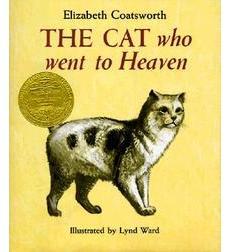
Last weekend Newtown’s C.H. Booth Library held their annual book sale. This sale is well-stocked, well-organized, and never disappoints. I always find a treasure or two, as well as more standard fare to restock our classroom libraries. One purchase I was especially pleased with this year was a paperback copy of The Cat Who Went to Heaven for fifty cents. This 1931 Newbery Medal winner by Elizabeth Coatsworth is a gem of a book. Many, if not all, of the CCSS literature standards could be addressed through a shared reading of this book. Certain passages are ideal for close reading.

 Image

The Cat Who Went to Heaven is an excellent example of a complex text, a text that Fisher, Frey, and Lapp describe as one that “often require[s] the reader’s attention and invite[s] the reader back to think more deeply about the meaning of the text.” (Text Complexity: Raising Rigor in Reading, IRA, 2012, p. 106) Shared reading of this story will help students develop the skills necessary to “readily undertake the close, attentive reading that is at the heart of understanding and enjoying complex works of literature,” a stated goal of the CCSS.

The story of a poor Japanese artist, The Cat Who Went to Heaven begins when the artist’s housekeeper returns from the market with a cat instead of dinner. The artist is  furious that she has spent his precious pennies on a “goblin…[who will] suck our blood at night!” The housekeeper convinces him that “there are many good cats, too.” The artist relents, and the cat, whom they name “Good Fortune,” becomes part of their household.

Soon, fortune does indeed smile on the artist, for he is asked by the local temple to paint a mural of the death of the Buddha. The rest of the story unfolds as a series of events in the Buddha’s life, each one revealing an important aspect of his character and the personal qualities at the heart of Buddhism.

This structure makes this book an ideal choice for meeting standard RL.6.3: “Describe how a particular story’s or drama’s plot unfolds in a series of episodes as well as how the characters respond or change as the plot moves toward a resolution.” The theme of the story is also well developed and students will be able to explain “how it is conveyed through particular details” (RL.6.2) These elements, along with Coatsworth’s rich use of vocabulary, should generate many thought-provoking questions and discussions.

I will share this book with my sixth grade colleagues, as China and Buddhism are part of the sixth grade social studies curriculum. The depiction of the beliefs and practices of Buddhism are conveyed throughout this story and would reinforce the social studies content.

Jazz vocalist and composer Nancy Harrow has adapted this book as a series of 16 songs, which are available on CD. These have been performed as classic Japanese puppet theater. Although I couldn’t find a full performance of the puppet theater, you can watch a short scene here:

An interview with Harrow, in which she describes the process of writing the songs, can be seen here:

Sharing Harrow’s work with students after reading The Cat Who Went to Heaven would also allow students to work on standard RL.6.7: “Compare and contrast the experience of reading a story, drama, or poem to listening to or viewing an audio, video or live version of the text, including contrasting what they ‘see’ and ‘hear’ when reading the text to what they perceive when they listen or watch.”

Teachers around the country are concerned about having the materials needed to meet the demands of the CCSS. Rather than spending money on new materials, many of questionable quality, we should invest in time to revisit materials we already have but may not be using to full advantage. The Cat Who Went to Heaven is the perfect example of just such a book.

Be sure to visit Jen at Teach Mentor Texts and Kellee at Unleashing Readers to find out what other people have been reading lately. Thanks, Jen and Kellee, for hosting!
It’s Monday! What Are You Reading?

Image

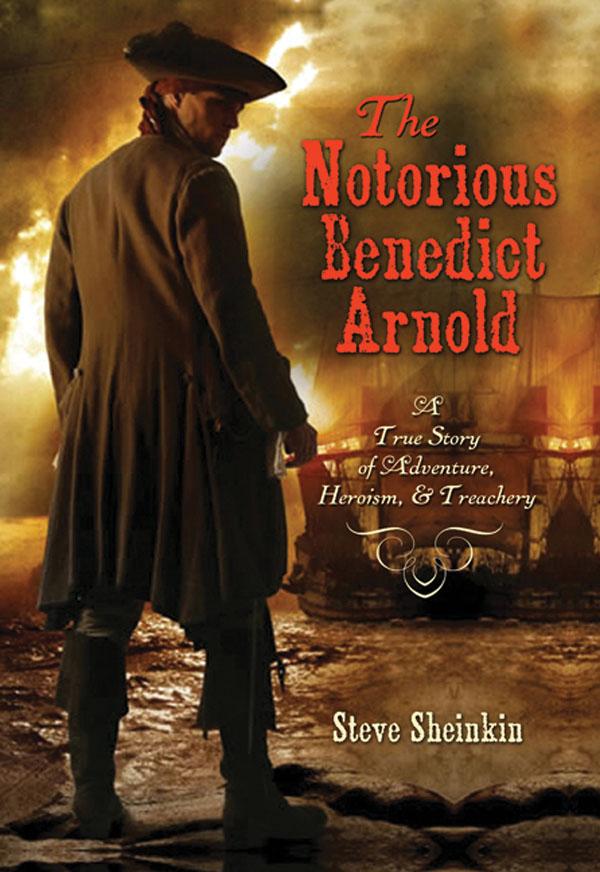
In his acceptance speech at the 2011Boston Globe-Horn Book Awards, Steve Sheinkin explained that he wanted The Notorious Benedict Arnold: A True Story of Adventure, Heroism & Treachery (2010, Macmillian) to be “a no-nonsense, non-fiction page turner; a straight-ahead action thriller.” Boy, did he succeed!

Image

The Notorious Benedict Arnold filled in many blanks in my knowledge of the American Revolution. Sheinkin tells the story of Arnold’s entire, adventure-filled life. Arnold was a decisive leader, and he played a key role in many of the early battles of the Revolution. By choosing to tell Arnold’s story as a narrative, Sheinkin allows his readers to know Arnold as a person and understand his motivation for betraying his country.

Sheinkin knows what historians since the time of Herodotus have known: “We make sense of out of the world by telling stories.” (Robert Burton, M.D., Nautilus) Or, as historian William Cronon writes in A Place for Stories: Nature, History, and Narrative, “Narrative remains essential to our understanding of history and the human place in natue.” Sheinkin’s narrative will help any reader make sense of one of the most notorious figures in American history.

If narrative history can give us a better understanding of events, pairing a non-fiction text with fiction can deepen that understanding even further. Teachers have long known that “fact enriches fiction and fiction makes facts memorable.” (Livingston & Kurkjian, Literature Links: Expanding Ways of Knowing) Recent brain research has provided evidence for why this is so. Psychologist Louis Cozolino explains that “Stories serve as powerful organizing tools for neural network integration.”

Image

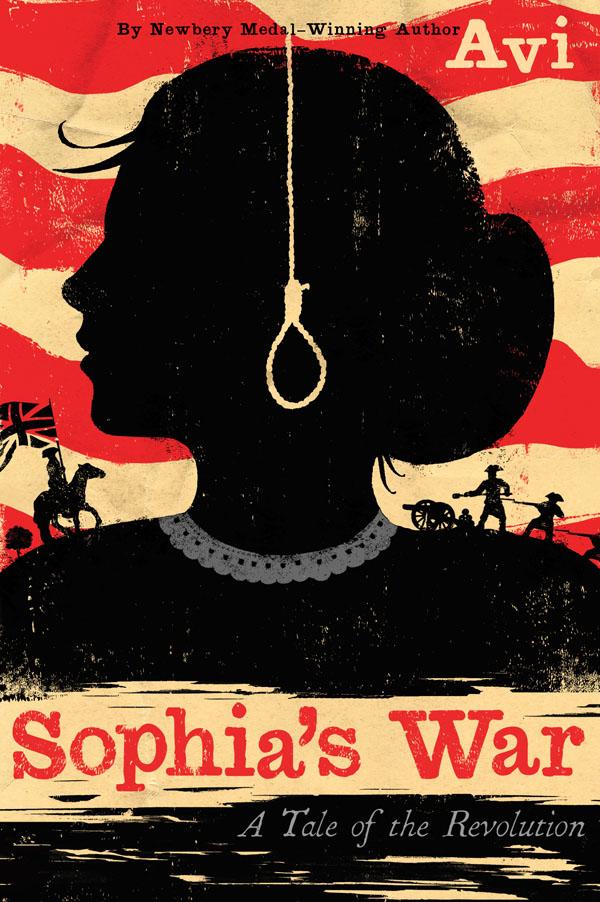
In his latest historical fiction novel for young readers, Sophia’s War (2012, Simon & Schuster), Avi masterfully weaves the true story of Benedict Arnold and British Major John Andre with the fictional story of Sophia Calderwood, a young girl whose family has been deeply affected by the war. Pairing these two books is the perfect opportunity for teachers to help their students build the neural networks necessary for deeper learning. The echoing of facts and events between these two books “acts as a magnifying glass of sorts…and is going to increase student’s assimilation of that curriculum.” (Ciesla, Building a Self-Supporting Web of Knowledge-What is Interdisciplinary Education?) This sort of knowledge building is exactly what the authors of the CCSS had in mind when they envisioned a “literate person in the twenty-first century.” This person will “actively seek the wide, deep, and thoughtful engagement with high-quality literary and informational texts that builds knowledge, enlarges experience, and broadens worldviews.”

Either The Notorious Benedict Arnold: A True Story of Adventure, Heroism & Treachery or Sophia’s War will build your knowledge and broaden your world view. Reading both together will enrich them even further. Like Sheinkin, you might become obsessed; you might even start planning a trip to Saratoga!

If you’re interested in other fiction/non-fiction pairings, be sure to read Susan Dee’s Nerdy Book Club post. She offers her ten favorite text sets, and there are many other suggestions in the comments.

Also, be sure to check out what other people have been reading at Teach Mentor Texts. Thanks to Jen for hosting!

It’s Monday! What Are You Reading?

Image

A few months ago, Betsy Bird had a post on her inimitable blog, A Fuse 8 Production about unreliable narrators in picture books. This post intrigued me, especially the inclusion of I Want My Hat Back and This Is Not My Hat, both by Jon Klassen. To me, these books are better examples of situational irony. Defined in my trusty Benet’s Readers Encyclopedia as when “there is a discrepancy between what might reasonably be expected and what actually occurs–between the appearance of a situation and it’s reality.”

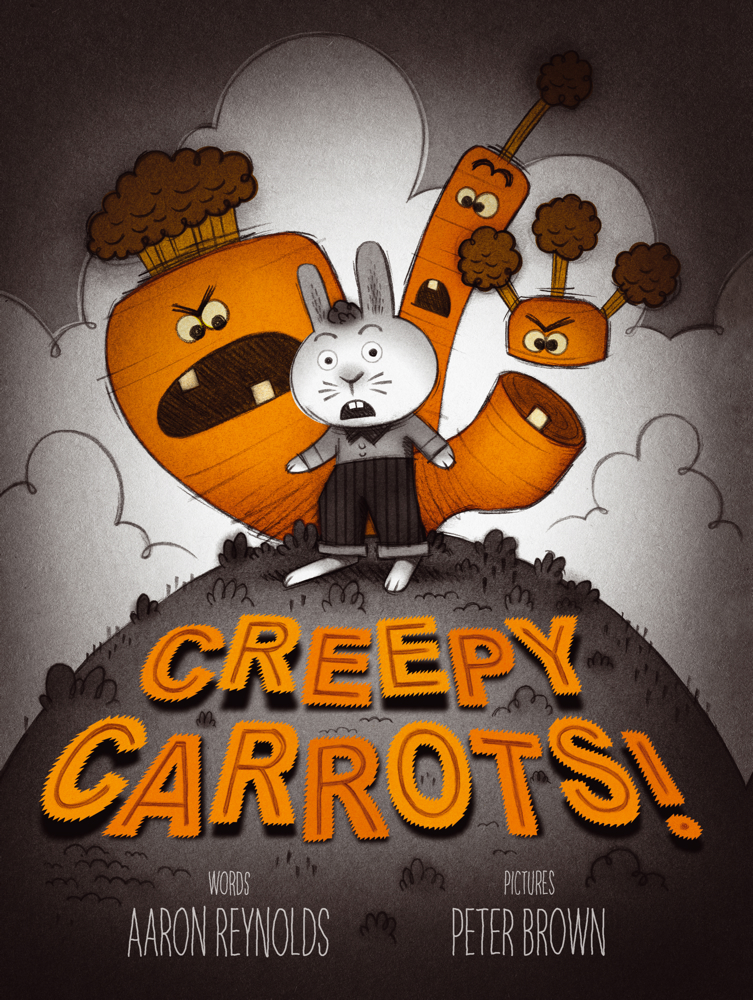
ImageI was reminded of this post over the weekend when I read Creepy Carrots (Simon & Schuster, 2012),  by Aaron Reynolds and illustrated by Peter Brown. If ever there was an example of situational irony, this is it! It’s also a great example of how authors build suspense. Peter Brown received a Caldecott Honor for his illustrations. Brown describes how he created his incredible artwork and his inspirations here:

That Is Not a Good Idea! (Blazer + Bray, 2013) by Mo Willems is another picture book with situational irony that will have children on the edge of their seats until the very end. Then they’ll be squealing with delight!

notagood_c-3_4_r537_c0-0-534-712

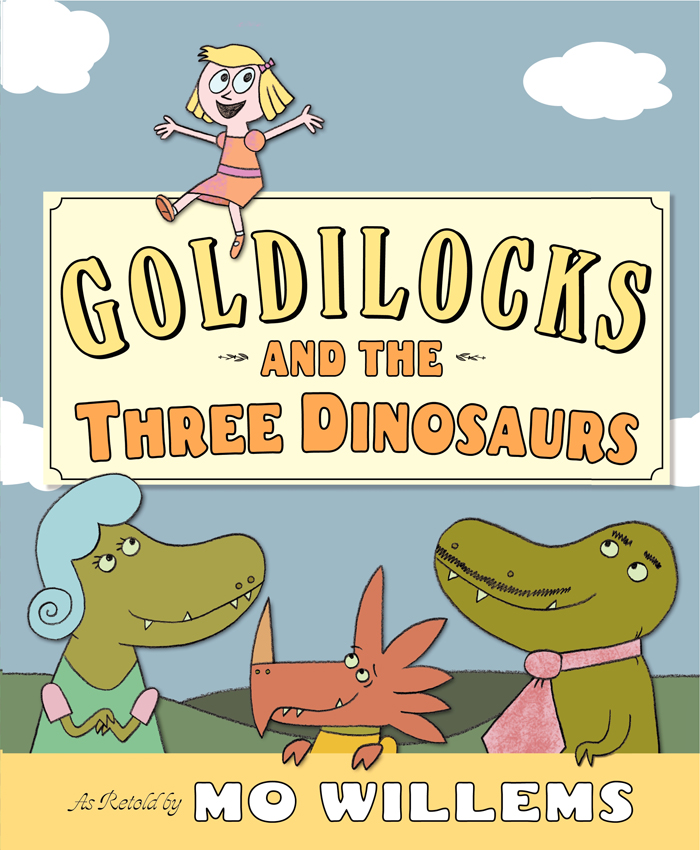
Another recent Mo Willems book, Goldilocks and the Three Dinosaurs (Blazer + Bray, 2012), has lots of verbal irony. Lines like “I SURE HOPE NO INNOCENT LITTLE SUCCULENT CHILD HAPPENS BY OUR UNLOCKED HOME WHILE WE ARE…uhhh….SOMEPLACE ELSE!” leave little doubt about the dinosaurs’ true intentions for Goldilocks.

Goldi hc c

According to the CCSS, irony is introduced in 8th grade (which is when we introduce it now). The standard (RL.8.6) states that students will “Analyze how differences in the points of view of the characters and the audience or reader (e.g., created through the use of dramatic irony) create such effects as suspense or humor.” Our students typically need lots of scaffolding to understand the subtleties of irony in 8th grade texts. But introducing the concept with these picture books makes it much more accessible, not to mention more fun!

Whether you share these books with middle school students to introduce the concept of irony or as a read aloud with five and six year olds, it really doesn’t matter. Just share them. Everyone will be glad that you did.

Be sure to visit Jen and Kellee at Teach Mentor Texts to find out what others are reading today.

It’s Monday! What Are You Reading? Picture Book Pairs

Image

Last week my school held its spring book fair. I have loved book fairs for as long as I can remember. All those new books, beckoning, begging to be picked up and read. This year I found some real treasures.

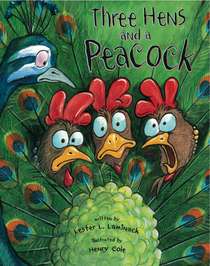
Three Hens and a Peacock (Peachtree, 2011) by Lester Laminack and illustrated by Henry Cole, was the first to catch my eye. This is the story of an interloper in the hen house and how he upsets the routines of life on Tuckers’ farm. By the end, life is back to normal, and the everyone has learned a lesson about not trying to change who they are.

Image       Image

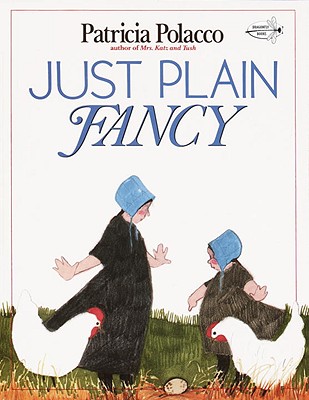
This book reminded me of Just Plain Fancy (Bantam Books, 1990), by Patricia Polacco. Polacco’s story is set on an Amish farm, where the unexpected guest arrives in the form of an egg. Two little girls have the responsibility for caring for the hens, and when they find the unusual egg, they add it to one of the nests in the hen house. Imagine their surprise when they realize that this bird is no hen!

Pairing these books would be a good way to address CCSS Anchor Standard 9: “Analyze how two or more texts address similar themes or topics in order to build knowledge or to compare the approaches the authors take.”  This work begins in Kindergarten by having children “compare and contrast the adventures and experiences of characters in familiar stories” with prompting and support.

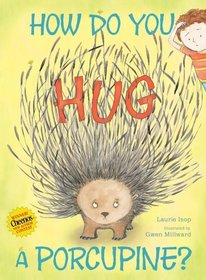
Actually, all of the books I found at the book fair could be used to meet this standard. How Do You Hug a Porcupine? (Simon & Schuster, 2011) by Laurie Isop and illustrated by Gwen Millward, answers this very prickly question. The boy who wants to attempt this, shown scratching his head on the cover, tries several very creative ways to protect himself from the porcupine’s quills. This book is a perfect mentor text for young writers. They could come up with their own solutions to this problem, or they could pose a similar question to answer.

Image      Image

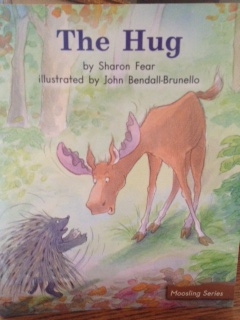
This book initially got my attention because several of my students had just finished reading The Hug, by Sharon Fear. This book is part of the Fountas & Pinnell Leveled Literacy Intervention series and is published by Heinemann. There are several stories about the main character, Moosling, in this series. Moosling is a loveable moose who gets himself into one predicament after another. In The Hug, Little Pins needs a hug so his good friend Moosling figures out how to give him one.

bookszisformoose

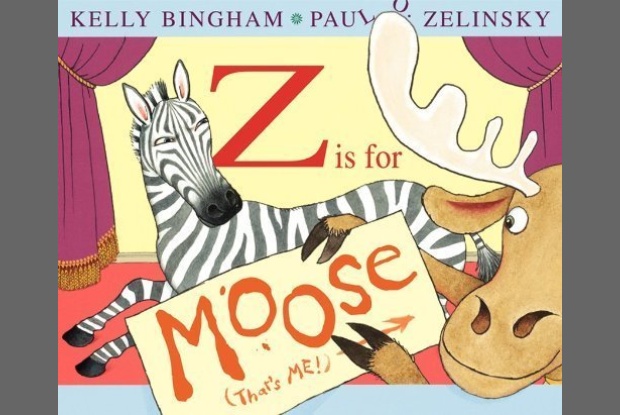
Speaking of moose, Kelly Bingham’s Z is for Moose (Greenwillow, 2012) has gotten all kinds of good press, but somehow I hadn’t read it yet. Hilariously illustrated by Paul O. Zelinsky, this book is a must-read. The book trailer is just as funny as the book.

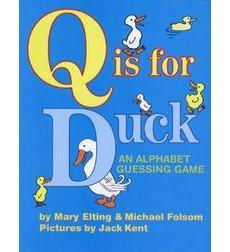
I would pair this book with Q is for Duck: An Alphabet Guessing Game (Clarion Books, 2005) by Mary Elting & Michael Folsom with pictures by Jack Kent, for more mixed up alphabet fun.

9780618574124_xlg

What treasures did you find at the book fair this year?

Be sure to visit Jen and Kellee at Teach Mentor Texts to find out what others are reading today.