Poetry Friday: Something Told the Wild Geese

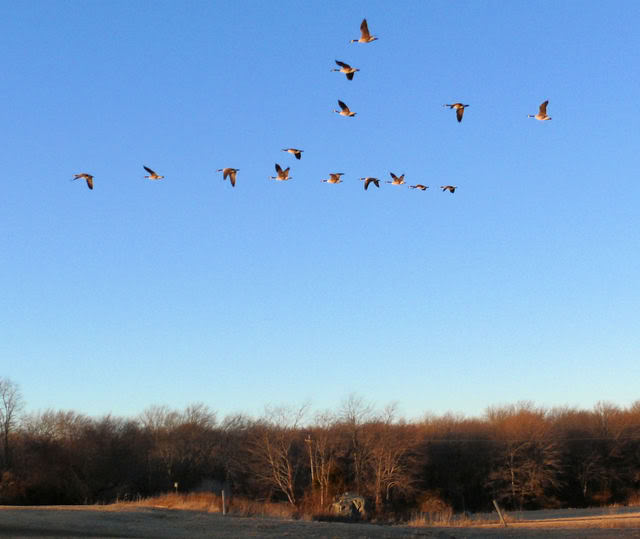
ImageAs I was walking my dog this morning (thanks to another no-power day at school), a flock of geese flew overhead. “Something told the wild geese…” came to mind immediately. It is a typical November morning here in western CT: low, gray clouds, a light, chilly breeze and trees that are mostly bare. So even though the weather isn’t exactly like that in the poem, it still seems like a perfect poem to share today.

Something Told the Wild Geese

by Rachel Field

Something told the wild geese

It was time to go,

Though the fields lay golden

Something whispered “snow.”

Leaves were green and stirring,

Berries, luster-glossed,

But beneath warm feathers

Something cautioned “frost.”

All the sagging orchards

Steamed with amber spice,

But each wild breast stiffened

At remembered ice.

Something told the wild geese

It was time to fly,

Summer sun was on their wings,

Winter in their cry.

Although I’ve never “taught” this poem, I’ve had a poster of it hanging in my classroom many times. Today, rereading it with the CCSS in mind, this poem seems tailor-made for the second grade Reading Literature standard: “Describe how words and phrases (e.g. regular beats, alliteration, rhymes, repeated lines) supply rhythm and meaning in a story, poem, or song.” The repetition of the word “something” adds an element of mystery. What is this force that’s urging these geese away from the golden fields and summer sun? Vivid verbs personify the inescapable coming of winter in a way students will easily relate to at this time of year. (At least here in the northeast.)

I would begin a discussion by asking simply, “What’s going on in this poem?” As Calkins, et.al point out in Pathways to the Common Core (Heinemann, 2012), “…the absolute first order of business (Reading Literature Standard one) is that students need to be able to grasp what a text actually says and suggests.” (p. 39) Letting the students gather the details that point to autumn is excellent practice in inferring. I’d also ask the kids what questions they have, and hopefully they’ll wonder about “sagging orchards.” If not, pointing to this line and asking “What would make the orchards sag?” will get them thinking about trees heavy with fruit.

This poem also offers wonderful opportunities for vocabulary learning. The demands aren’t heavy, but “luster-glossed” and “amber spice” are marvelous phrases and are perfect for discussions of word choice. (Language Standard four and five)

A Google search turned up at least two different musical versions of “Something Told the Wild Geese” and many performances of the Sherri Porterfield tune. I prefer this clip, http://www.youtube.com/watch?v=6sRIYcTNMhg sung by a group of very talented fifth graders. Repetition of “winter” at the end of the song offers a chance to discuss why the musician made the decision to emphasize that word.

I’m anxious now to share this poem with our second graders next week. I have some other ideas about how to follow up the discussion of the poem and song, but want to try them out with the kids first. I’ll share the results of our work next week.

For those of you who were affected by Sandy, I hope you’re lives are getting back to normal.
Growing Minds

Wallace Stegner once wrote that “Minds grow by contact with other minds. The bigger the better, as clouds grow toward thunder by rubbing together.” My mind grew by leaps and bounds at the 83rd Saturday Reunion of Teacher’s College Reading and Writing Project on Saturday, thanks to Tony Wagner, Mary Ehrenworth, Lucy Calkins, Chris Lehman, Audra Robb and Jack Gantos. Their passion about education in general, and the potential of the CCSS in particular, was truly inspiring.

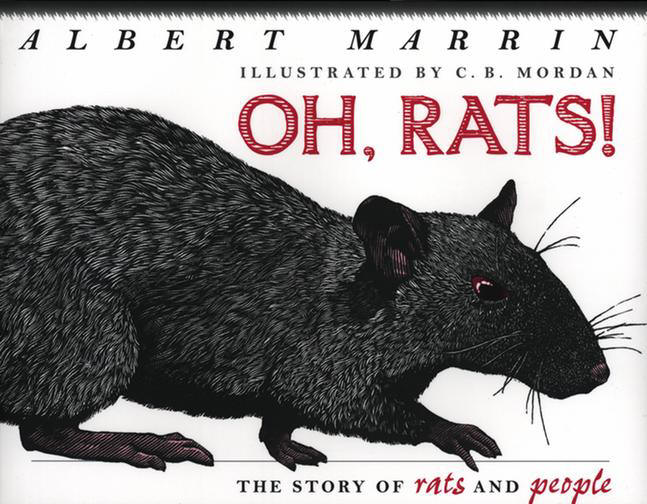
At the end of the day, I made a bee line for Bank St. Books, where I purchased Oh Rats! The Story of Rats and People, by Albert Marrin (2006). Mary Ehrenworth had read a passage from this during her session on teaching nonfiction skills and my interest was piqued. Did you know that an adult rat can bite down with a force of 7,000 pounds per square inch? Neither did I! Marrin’s book is filled with other amazing facts about this most-detested of mammals.

As I finished reading the text this morning, I had many thoughts about how to incorporate this book and all I had learned on Saturday into a unit for our 5th graders. Ehrenworth had stressed the importance of teaching kids how to note these details and then use them to support big ideas, of leading students to see not just a collection of interesting facts, but rather figuring out “what is this adding up to that really matters?”  This is definitely a challenge for many students. I also wanted to revisit “The Pied Piper of Hamelin,” which is of course mentioned by Marrin. So I headed to my bookcase and pulled this off the shelf:

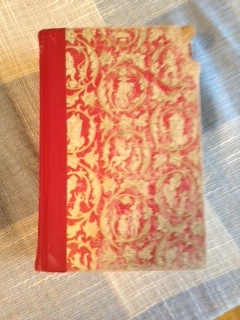
My well worn (and puppy-chewed) copy of The World’s Best Fairy Tales

My grandmother gave this book (a Reader’s Digest Anthology) to me in 1968 and I have hauled it with me everywhere ever since.  “The Pied Piper of Hamelin” was the first selection in the book. While reading, my thoughts flew to CCSS Reading Literature standard 4: “Interpret words and phrases as they are used in a text, including determining technical, connotative, and figurative meanings, and analyze how specific word choices shape meaning or tone” and the Language standards addressing vocabulary acquisition and use. The language of the version included in my anthology, attributed to Charles Marelles, Andrew Lang Collection, is rich and descriptive. The piper himself is “a tall, gawky fellow, dry and bronzed, with a crooked nose, a long rattail mustache, two great yellow piercing and mocking eyes under a large felt hat set off by a scarlet cock’s feather.” Isn’t that fabulous?

I’m not sure how this will all come together, but I do know that by sharing my thinking about Ehrenworth’s ideas with the 5th grade teachers, we’ll have the beginnings of a unit that will be purposeful and engaging; one that will grow the minds of our students.

12 for 12–A Picture is Worth 1,000 Words

Last week was filled with family, friends, and, dare I say it, work. So instead of 10 picture books, here are 12 of my favorites.

Picture books have been at the heart of my teaching for the past 17 years. Wordless picture books are particular favorites and I love teaching with them. They are perfect for improving students’ comprehension, writing, and visual literacy skills.

Wordless picture books can be used to support comprehension strategies in all readers, but can be especially useful with young readers as well as older struggling readers. Removing the challenge of decoding allows students to focus all their attention on understanding. They are a perfect scaffold, as they give students an opportunity to understand how to use a strategy to make meaning, then learn how to apply that strategy with print. Wordless picture books can also be used to address CCSS Anchor Standard 7: “Integrate and evaluate content presented in diverse media and formats, including visually and quantitatively, as well as in words.”

Not only do wordless picture books support comprehension development, they offer numerous writing possibilities. Narrative structure, dialogue, and use of details are just a few of the many writing skills that can be addressed through wordless picture books. The humor in many of these titles make them especially appealing to reluctant writers.

Some author/illustrators stand out in the wordless picture book genre. David Wiesner is my favorite, and most teachers are probably familiar with his work.

Image

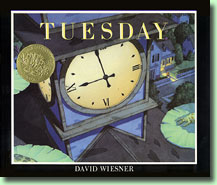
Tuesday, the 1991 Caldecott Medal winner, is a classic. Students love the humor this book, as well as the mystery of the airborne lily pads.

Image

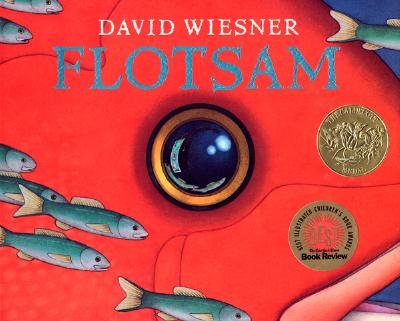
Flotsam, which won the 2007 Caldecott Medal, is a bit more mysterious and is better suited for older readers. They enjoy puzzling over the lush illustrations and discovering the endless creativity of David Wiesner’s imagination.

Image                                 Image

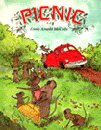
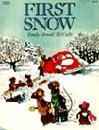
Emily Arnold McCully’s Picnic and First Snow (other titles featuring this family are School and New Baby) are well suited to the youngest readers. Featuring an endearing family of mice, these books chronicle their adventures through the eyes of the youngest sister. Identifiable by her pink hat or stuffed mouse, Kindergarten and first graders will identify with her immediately. Brief text was added in 2003, and although I have not used these versions with students, I prefer the wordless versions. These can sometimes be found at Powell’s, Better World Books or Alibris.

Image

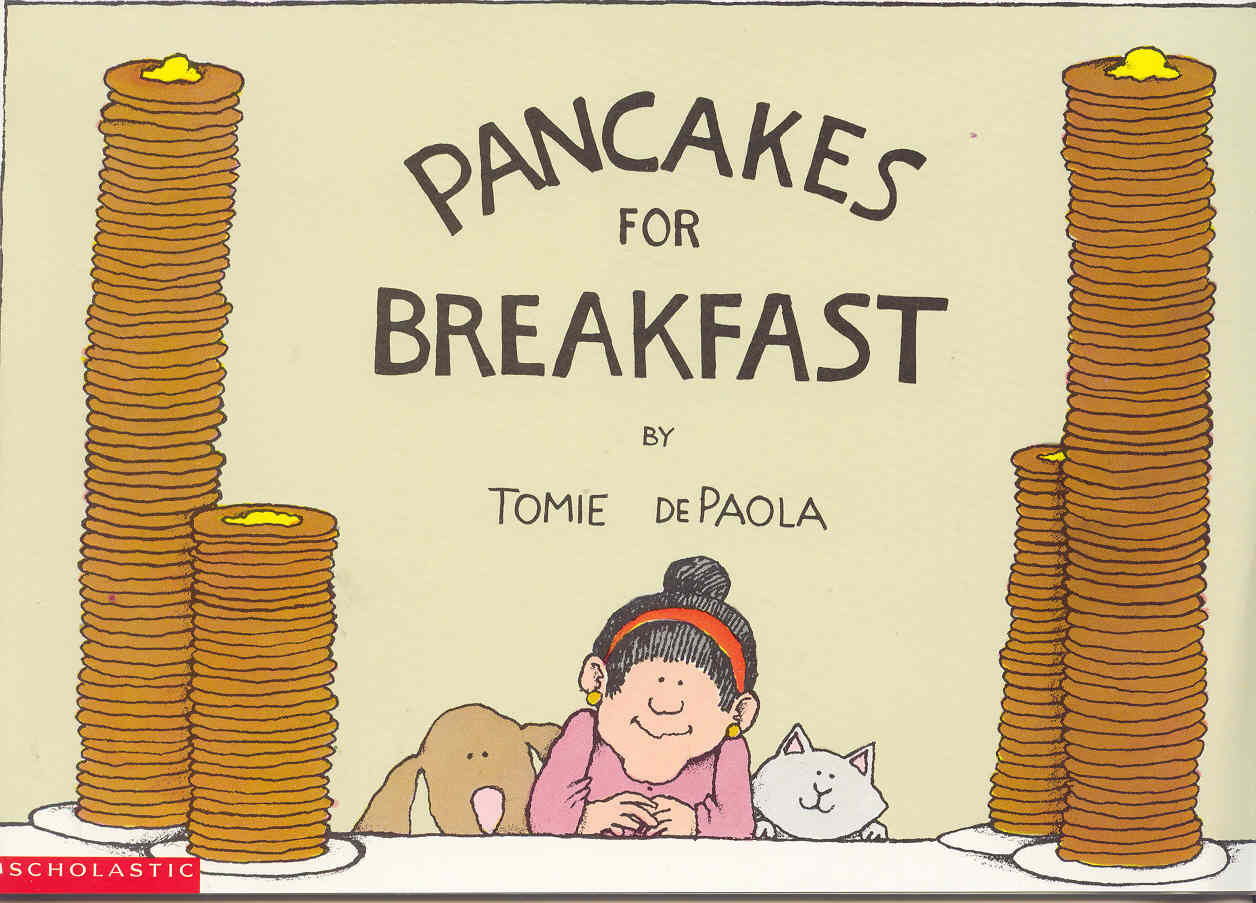
Be sure to read Pancakes for Breakfast, by Tomi dePaola, early in the day before everyone gets hungry. Or better yet, share the story, then make pancakes! The clear sequence in this book make it a perfect choice for writing an interactive how-to book.

Image

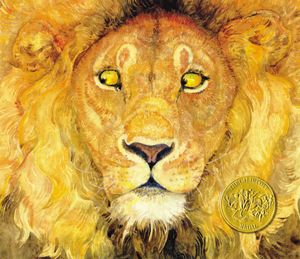
Jerry Pinkney’s The Lion and the Mouse, winner of the 2010 Caldecott Medal, is a lush retelling of a timeless tale.

Image

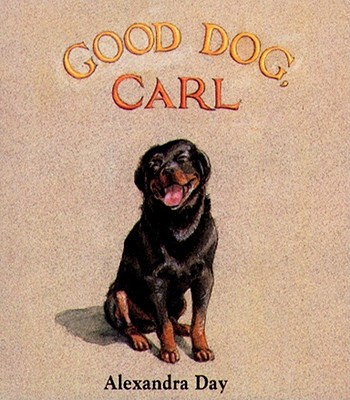
Good Dog, Carl by Alexandra Day. Dogs as babysitters are not new to children’s lit, but Carl is one of the most mischievous and lovable.

Image

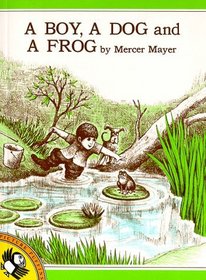
Mercer Mayer’s A Boy, a Dog, and a Frog is filled with the kind of adventures I loved as a kid. Perfectly sized for little hands, this book is the first in a series of the characters’ continuing escapades.

Image

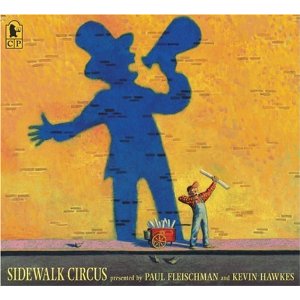
Sidewalk Circus by Paul Fleishman, illustrated by Kevin Hawkes is a very clever look at how, with a little imagination, everyday scenes can evoke completely different situations.

Image

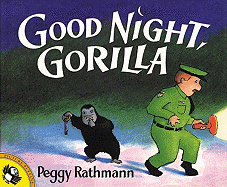
Good Night, Gorilla, by Peggy Rathmann is a mostly wordless gem. Students find great delight on being “in”on the fact that the animals are climbing out of their cages as soon as the zookeeper says goodnight. It just occurred to me that this may be a good text to introduce dramatic irony to older students. Again, those visuals provide lots of support!

Image

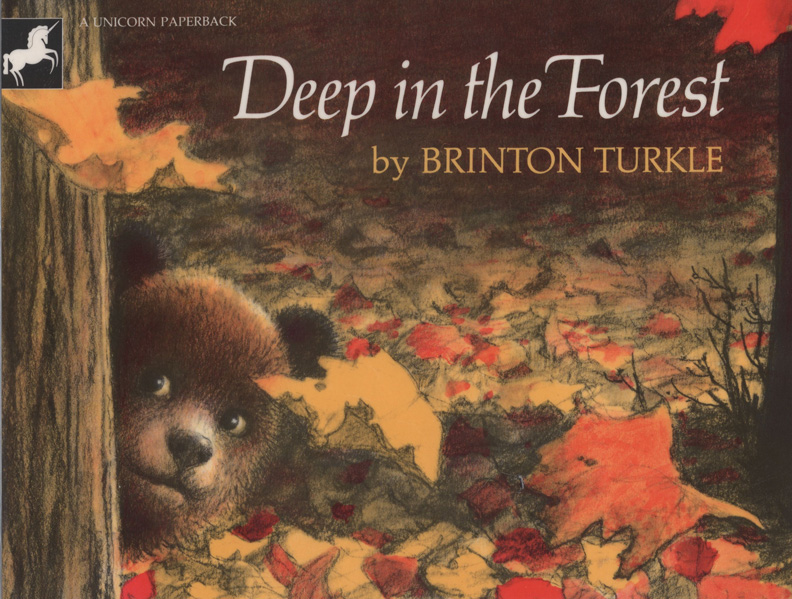
Deep in the Forest, by Brinton Turkle, is a clever variation on Goldilocks and the Three Bears. Teachers could easily pair this with a favorite version of Goldilocks to work on Anchor Standard 9 of the CCSS (Analyze how two or more texts address similar themes or topics in order to build knowledge or to compare the approaches the authors take.)

Image

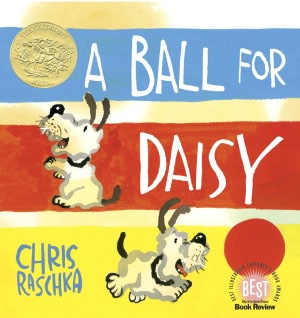
     A Ball for Daisy, by Chris Raschka is this year’s Caldecott Medal winner. Again, students will easily identify with this story of a dog and her ball. Daisy’s expressions are filled with emotion, making these illustrations perfect for introducing inferring.

This is in no way a complete list, just my favorites. I’d love to hear about yours!