

I feel like I’m late to the party for A Snicker of Magic (Scholastic, 2014), Natalie Lloyd’s debut middle-grade novel. Even though it’s only been out for a little over a month, A Snicker of Magic has gotten oodles of love on Twitter and kid lit blogs. This love is well deserved.
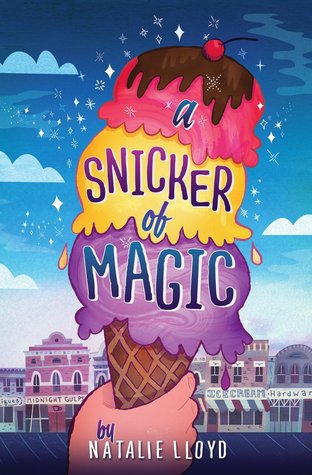
A Snicker of Magic is one of those “good stories” that “take your heart someplace else.” Felicity Pickle, a 12 year old who “sees words everywhere,” is the heart of Lloyd’s story. After years of being “sweet gypsies,” Felicity, her mother, and sister arrive in the tiny town of Midnight Gulch, Tennessee. Tired from years of wandering, Felicity is ready to stay, but fears her mother will become restless and want to leave again at any moment. Midnight Gulch “used to be a secret place… because the people who lived there had magic in their veins.” But the magic is gone. Felicity is curious about why it left and where it went. With the help of her new friend, Jonah, and a colorful cast of characters, she does her best to find the magic and return it to the town.
Felicity is a poet who knows that she holds “the finest magic, words worth spinning, stories worth telling.” Hope has perched in her soul, and she uses her gift with words to heal the pain caused by a century of anger and misunderstanding. Lloyd has spun a story filled with magic, a story well worth telling. A Snicker of Magic is a good choice for a read aloud in fourth or fifth grade and will likely inspire many students to become word collectors and poets themselves.
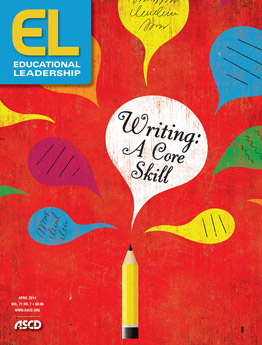
Educational Leadership, the monthly journal published by ASCD, always has timely articles by leading researchers, and the April issue is no exception. Devoted to “Writing: A Core Skill,” contributors include Carol Jago, Mary Ehrenworth, Kelly Gallagher, Penny Kittle, and more. I’m still reading, but can see already that this issue is a valuable resource. The articles I’ve read offer a succinct introduction to many elements of good writing instruction, including using mentor texts, teaching craft rather than formulas, types of writing, and more. I plan on sharing Jeff Anderson’s contribution, “What Writing Is & Isn’t,” with my colleagues. This article is the perfect springboard for a discussion about our understanding of writing instruction.
Don’t forget to visit Jen at Teach Mentor Texts and Kellee at Unleashing Readers to find out what other people have been reading lately. Thanks, Jen and Kellee, for hosting!
 Reading to the Core