Poetry Friday: Love Calls Us To The Things Of This World

Image

Image

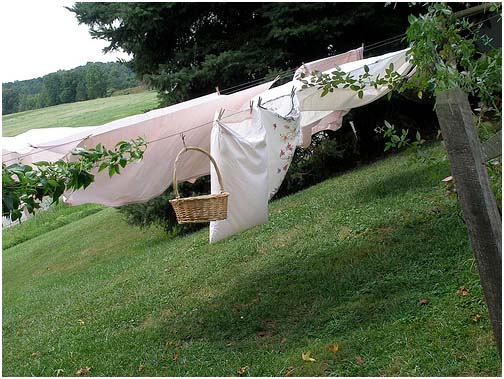
Love Calls Us To The Things Of This World

by Richard Wilbur

The eyes open to a cry of pulleys,
And spirited from sleep, the astounded
soul
Hangs for a moment bodiless and
simple
As false dawn.
Outside the open window
The morning air is all awash with
angels.

Read the rest of the poem here or listen to Richard Wilbur read his poem.

Be sure to visit Jama at Jama’s Alphabet Soup for the round up of Poetry Friday posts.

Poetry Friday: America the Beautiful

Image

There’s a scene in the movie Peggy Sue Got Married where 43-year old Peggy Sue, played by Kathleen Turner, finds herself back in her high school home room singing either “America the Beautiful” or “The Star-Spangled Banner.” (I can’t remember which, and we no longer have a working VCR, so I can’t check.) She sings with such gusto that her friends look at her like she’s nuts. I’ve always found her passion inspiring.

I thought of this scene last night at a rehearsal for our town’s Memorial Day service next weekend. Every year for the past four or five years, I’ve sung with a group of other people in town at this and other occasions. I hadn’t practiced with them for a few months and I had forgotten not only how much fun we have, but also how moving the songs we sing are. Of course we sing “The Star-Spangled Banner.” We also sing “Battle Hymn of the Republic”, “God Bless America” and my favorite, “America the Beautiful.”

“America the Beautiful” was written by Katherine Lee Bates in 1893. Bates was an English professor at Wellesley College, and she was inspired to write her poem after a trip to Colorado.

O beautiful for spacious skies,
For amber waves of grain,
For purple mountain majesties
Above the fruited plain!

America! America!
God shed His grace on thee,
And crown thy good with brotherhood
From sea to shining sea!

Most people know only the first verse and chorus, which celebrates the beauty of the American landscape. The rest of the poem pays tribute to the Pilgrims and patriots who made the ideal of America possible and asks for God’s help in living up to the possibilities of our freedom. You can read it here (and learn more about Bates and her trip to Colorado). Although it had been sung to other tunes, Samuel Ward’s music, originally written in 1882, was added in 1910 and became the accepted version.

ImageImage

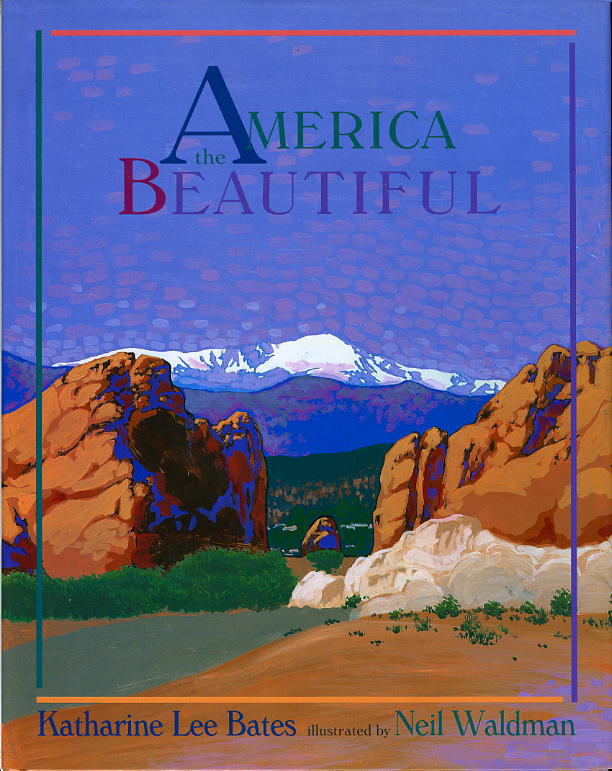
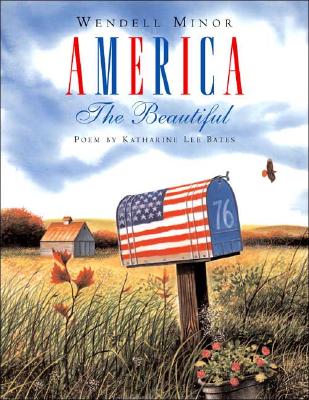
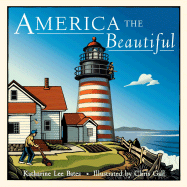
Several picture books have been created using Bates’s poem. Neil Waldman illustrated a version in 2002, and Wendell Minor’s interpretation of the poem was published in 2003. Anita Silvey featured this lovely book on her Children’s Book-a-Day Almanac last summer.

ImageImage

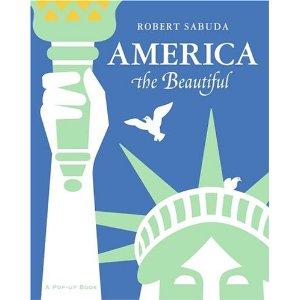
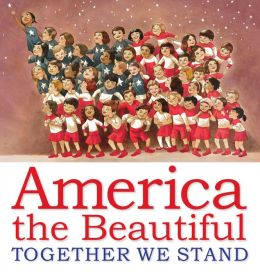
A stunning pop-up version was created by Robert Sabuda in 2004. In 2010, Katherine Lee Bates’s great, great, grandnephew, Chris Gall paired his unique vision with his relative’s famous verses. America the Beautiful: Together We Stand  is the most recent version, published just this year. This rendition is illustrated by a virtual who’s who of picture book illustrators. Quotes from presidents are paired with the lyrics and illustrations.

Image

After 9/11, my school had an assembly to come together and mourn. The principal said a few words, but we mostly sang patriotic songs. I was shocked to discover that many of my students didn’t know the words to these songs. After that, I always included a song in the morning routine my classroom. This is one of the things I miss the most about not having my own classroom.

These songs are part of our cultural heritage. No matter what our politics, curriculum, or testing demands, we should be sharing these songs with our students every day.  Peggy Sue shouldn’t be the only one excited about singing them.

Slice of Life: The Gift of Books

Image

“A book is a gift you can open again and again.” Garrison Keillor

This morning on her blog extraordinaire, A Fuse 8 Production, Betsy Bird announced a contest. The prize? “A hand-wrapped parcel from Sophie Blackall,” illustrator of Matthew Olshan’s just published The Mighty Lalouche (Schwartz & Wade, 2013). Take one look at the  photos on the post and you’ll understand that this will be a treasure. It made me want to wrap up a package and send it to someone! The rules for entering this contest? Just post a comment on Betsy’s blog telling her about the best present you ever received in the mail.

I’ve wracked my brain about this all day. I honestly don’t remember getting that many presents in the mail. I grew up in the same town where my grandparents and mother grew up, and my father grew up in the town next door. We were always together on gift giving occasions.  My mother certainly loved me, but she worked full time, so any care package sent when I was in college was most likely a check. (Which was greatly appreciated!)

Image

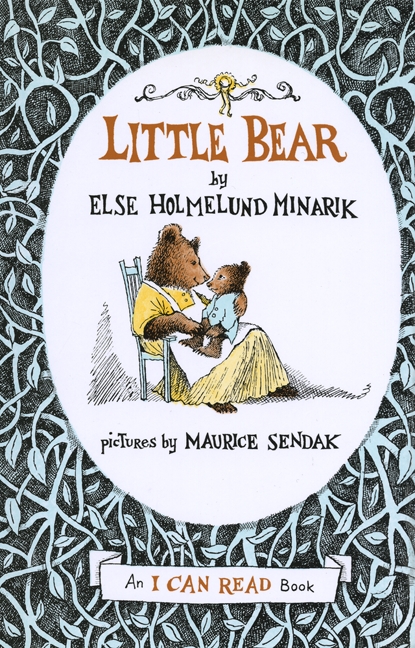
So what was the best present I ever got in the mail? A book, of course! I had a great-aunt who lived on Long Island who didn’t always come to Connecticut for Christmas, so she must have mailed our gifts from time to time. She had an uncanny knack for always choosing the perfect book for me. The first book I remember getting was Little Bear when I was 3 or 4. I still have this book, and read it to my children. They loved it just as much as I did. One of the last books she ever gave me was Little Women when I was 12 or 13. I thought I was much too old for such a book. How wrong I was!

Image

In between were other books, many of which I still have. But those are the two that stand out. What is best book you ever got as a present?

Thank you to Stacey and Ruth at Two Writing Teachers for hosting this weekly Slice of Life Challenge!

It’s Monday! What Are You Reading?

Image

I feel like I’ve been trying to catch up with a backlog of journal articles, blogs, and newspapers all week. But I did manage to squeeze in a few books for fun.

Steam Train, Dream Train (Chronicle Books, 2013) is a lovely bedtime story by Sherri Duskey Rinker and Tom Lichtenheld. A menagerie of zoo animals meet a steam train as it pulls into the station. They get right to work, loading the train with paint, sand, food and just about every toy imaginable. Once the train is loaded, the animals “settle in, and tuck in tight.” After it leaves the station, the final pages show a sleeping child with a toy train at the foot of the bed. Outside the window is a billowing cloud that looks suspiciously like a plume of smoke from a train. Although this is clearly aimed at the preschool set, I know a few Kindergarten and 1st grade boys who will love this book.

Watch the trailer here:

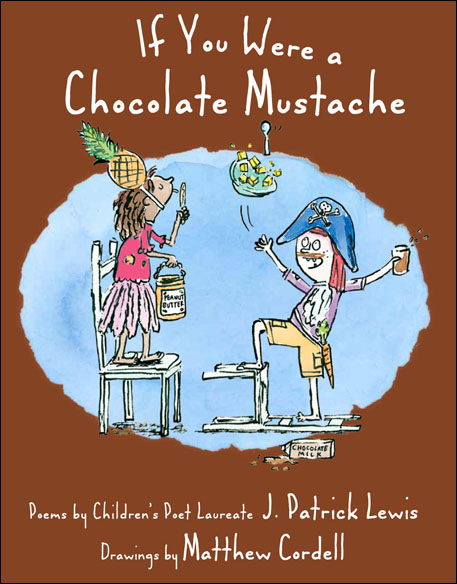
In If You Were a Chocolate Mustache (Wordsong/Boyds Mills Press, 2012), J. Patrick Lewis serves up more of his singular humor. Long poems, short poems, concrete poems, riddle poems, this collection has something for everyone. Matthew Cordell’s pen-and-ink drawings are the perfect complement for these madcap poems. This book is a must-have for elementary and middle grade classrooms.

Image

Be sure to visit Jen and Kellee at Teach Mentor Texts to find out what others are reading today.

Poetry Friday: “Think Like a Tree”

Image

At the beginning of Betty Smith’s A Tree Grows in Brooklyn, Francie Nolan gazes at the tree in her yard and recalls lines of poetry learned in school:

This is the forest primeval. The murmuring pines and the hemlocks,

Bearded with moss, and in garments green, indistinct in the twilight,

Stand like the Druids of old… (From H.W. Longfellow’s Introduction to Evangeline)

To Francie, her tree is hope, for “no matter where its seed fell, it made a tree which struggled to reach the sky.”

I’ve been thinking about trees, and the hope they represent, this week. This might be because a piece of land I pass on my drive to work each day is being cleared and the most amazing tree has been revealed, not twenty feet from the road. It has a huge limb that grows almost perpendicular to the trunk before it arches up toward the sky, creating an inviting perch. Every day I want to stop my car and climb onto that seat.

I loved to climb trees when I was a kid. I loved being enfolded in their branches. My mother used to have a fit that I was too high, that I would fall and break my neck. I never did fall. Somewhere along the way I grew too old for climbing trees. But I’ve never stopped admiring their beauty, their resilience.

Trees nurture us in countless ways. They provide shade in summer and shelter in winter. Our air is purified by their leaves. They produce fruit and harbor bees and their honey. It’s no wonder that cultures throughout history have considered trees sacred and have worshiped them.

“Think Like a Tree,” by Karen I. Shragg captures the beauty and magic of trees and reminds us of their wisdom.

Soak up the sun

Affirm life’s magic

Be graceful in the wind

Stand tall after a storm…

Read the rest of this poem here.

Writers and poets have been celebrating trees for millennia. What is your favorite tree poem?

Be sure to visit Anastasia Suen’s Poetry Blog for today’s round up of poems.

Poetry Friday: Picture-Books in Winter

Image

In case you haven’t heard, May is Get Caught Reading month. Sponsored by the Association of American Publishers since 1999, Get Caught Reading month is “a nationwide campaign to remind people of all ages how much fun it is to read.” You can find out more, including how to order the celebrity posters, here.

ImageTo celebrate, here is Robert Louis Stevenson’s “Picture-Books in Winter,”  a reminder that books allow us to experience any adventure imaginable, no matter what the season.

Picture-Books In Winter

Summer fading, winter comes–

Frosty mornings, tingling thumbs,

Window robins, winter rooks,

And the picture story-books.

Water now is turned to stone

Nurse and I can walk upon;

Still we find the flowing brooks

In the picture story-books.

All the pretty things put by,

Wait upon the children’s eye,

Sheep and shepherds, trees and crooks,

In the picture story-books.

We may see how all things are

Seas and cities, near and far,

And the flying fairies looks,

In the picture story-books.

How am I to sing your praise,

Happy chimney-corner days,

Sitting safe in nursery nooks,

Reading picture story-books?

by Robert Louis Stevenson

Pick up a book and have an adventure today!

You can learn more about Robert Louis Stevenson and read other poems from A Child’s Garden of Verses at Poets.org. Also, be sure to visit Liz Steinglass at her lovely blog for the round up of poems.

SOLC: Dakota Dugout

sols_6

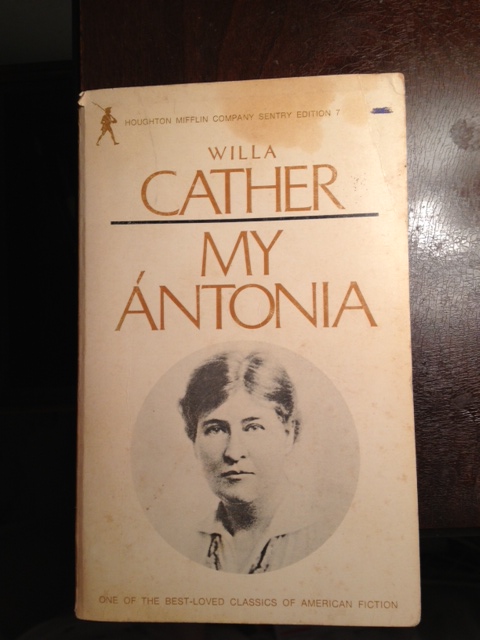
Sunday’s New York Times Book Review featured Tom Perrotta’s review of The Selected Letters of Willa Cather on the front page. Cather’s Death Comes for the Archbishop is one of my favorites, so I was interested right away. Perrotta quotes an irresistible line from one of Cather’s letters describing the prairie: “The whole great wheat country fairly glows, and you can smell the ripe wheat as if it were bread baking” As soon as I finished reading the review, I was off the couch and heading for the bookcase where I knew my copy of My Antonia waited. Although I’d had it for ages, I’d never read this book. No time like the present.

Image

I was immediately drawn into the story of Antonia’s immigrant family as told by her friend and neighbor, Jim Burden. Everything about the prairie is new to Jim, and Cather’s language transports us there. “The light air about me told me that the world ended here: only the ground and sun and sky were left,” Jim declares as he explores his new home for the first time.

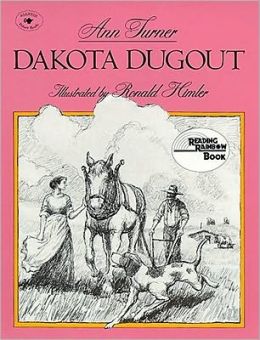
As I read, another book came whispering to me on that prairie wind. Ann Turner’s Dakota Dugout (Macmillan, 1985) is the story of a young couple trying to build a life in a sod home near the end of the 19th century. Told as a flashback from the wife’s point of view, Turner’s poetic text gives the reader an insight into a way of life few of us today can imagine. At the end of the book, the narrator tells her listener “talking brings it near again, the sweet taste of new bread in a Dakota dugout, how the grass whispered like an old friend, how the earth kept us warm.” The echoes of Cather’s letter are striking, aren’t they?

Image

I have used Dakota Dugout with fourth graders in the past to teach a number of reading strategies. It is a challenging text, but a worthy choice, as it is rich with details about a region of the country most of the students in my New England community have never experienced. Thinking about this book in light of the CCSS, the possibilities seem endless.

Reading Literature standards 1-3 could easily be taught using Dakota Dugout. Turner’s language makes this book a good choice for addressing the Language standards related to vocabulary (4-6) as well as Reading Literature standard 4, “Determine the meaning of words and phrases as they are used in a text…”

Teaching with primary sources isn’t something we’ve done a lot of in fourth grade, but because there are so many pioneer letters and diaries available, it makes sense to pair some of these with Dakota Dugout.  Reading Informational Text standard 6 states that students should “Compare and contrast a firsthand and secondhand account of the same event or topic; describe the differences in focus and the information provided.” The Library of Congress has a remarkable collection, Prairie Settlement: Nebraska Letters & Family Photographsthat are a perfect complement to this book. There is even a Standards alignment chart available.  The National Museum of American History also has resources to use with Dakota Dugout, including an online sod house building simulation.

The pioneers who settled the Great Plains are gone. But their spirit lives on in Willa Cather’s novels, scores of letters and diaries, and in books like Dakota Dugout. Through them we can “Tell you about the prairie years? I’ll tell you, child, how it was.”

Thank you to Stacey and Ruth at Two Writing Teachers for hosting this weekly Slice of Life Challenge!

It’s Monday! What Are You Reading?

Mon Reading Button PB to YA

We had a family visiting from out of town this weekend, so I didn’t have time to read too much. After everyone left yesterday afternoon, I did manage a to read some of the paper before I fell asleep for a lovely nap. The review of The Selected Letters of Willa Cather made me find my copy of My Antonia (more about that tomorrow) and I read Sean F. Reardon’s piece, “No Rich Child Left Behind” with dismay.

Hands down, the best part of my reading weekend was reading The Monster at the End of this Book to an almost 2 1/2 year old who’d never seen the book before. His year old brother enjoyed it too, but C’s reaction was priceless.

Image

He recognized Grover right away, and was excited for me to get started reading. Of course I put everything I had into it. Voice raised at the appropriate time, whispering at the fine print, adding exaggerated facial expressions. He was mesmerized. And so serious. He kept looking up at me with big, sincere eyes, not sure if he wanted me to turn the page, yet trusting me that it would be okay.

C. and I had quite an audience for this story time, but he was so engrossed in the book he didn’t pay any attention them, and I ignored them because I didn’t want to break the spell. When we got to the last page, he laughed and clapped and wanted me to read it again. Which I did.

So much has been written about the importance of reading to children from an early age. Reach Out and Read’s website states that “reading aloud builds sound awareness in children.”  NAEYC (The National Association for the Education of Young Children) recommends reading aloud to children from infancy. In “Reading Aloud With Children of All Ages,” Derry Koralek points out that reading aloud helps children “build their vocabularies with words they can understand and use.”

I could go on and on about the research. But C didn’t care about any of that. He cared that we shared a silly story, laughed and made crazy faces. For him, the best reason for reading aloud was that it was fun.

Be sure to visit Jen and Kellee at Teach Mentor Texts to find out what others are reading today.

Poetry Friday: “Poet’s Checklist”

Poetry_Friday_Button-210

An acrostic poem, according to Poetry4kids, is “a poem in which the first letters of each line spell out a word or phrase.” The word can be anything; colors, animals, names, and more. Acrostic poems have been around since antiquity, and they are still popular today in schools. (I wrote more about sharing acrostics with students and how they support the CCSS here.)

On this last Poetry Friday of National Poetry Month, I want to share one of my favorite acrostics. This poem, by Patricia Hubbard, appeared in the May, 2003 issue of The Reading Teacher (Vol. 56, No.8). I think Hubbard perfectly captures the process of writing a poem.

child-writing-picture

Poet’s Checklist

Always start with ideas that sing in your heart.

Choose sharp, juicy, whistling words.

Rhyme is fine, but it must shine.

Over and over and over–write, read, revise.

See, touch, taste smell, listen to your poem.

Too sloppy? Recopy.

Ideas dance on the polished page.

Celebrate–you are a poet. Share, speak, sing.

by Patricia Hubbard

Please visit Laurie Salas Purdie at Writing the World for Kids for the Poetry Friday Roundup!

Slice of Life: The Taming of Me

Image

Today is William Shakespeare’s 449th birthday. To honor him, I’m sharing a reminiscence of my first encounter with the Bard.

Image

I was a very energetic child. I’m not sure that irrepressible is exactly the right word, but I did love to run and jump and talk and…well, you get the idea. My teachers didn’t see the charm of all this energy. They were very specific about how misplaced it was. My report cards were filled with comments like “If Catherine spent less time talking…” or “If Catherine focused more on her work…”

By the time I got to sixth grade I was beginning to get the idea that maybe I could be good at school if I put in some effort. Part of what was different about sixth grade was Miss Morency. She brought Drama to our school. The first play we put on an adaptation of The Tempest. I played the part of Stefano, a drunken sailor. The only thing I remember about the play was staggering onto the stage with an empty wine bottle in my hand. Can you imagine? But I also know that I LOVED being onstage.

We were a huge hit, and we begged Miss Morency to put on another play. She agreed, and before long we had the script for an adaptation of The Taming of the Shrew in our hands. Needless to say, I wanted the part of Katherine! I practiced and practiced. All my hard work paid off, and, in the spring of 1972, I starred in Burnham School’s production of Shakespeare’s comedy.

Image
Petruchio (Kevin Black) and Kate (Emily Jordan) from a Carmel Shakespeare Festival production of “The Taming of the Shrew” at the outdoor Forest Theater in Carmel, CA., Oct, 2003. Via Wkipedia Commons

This experience was a turning point in my young life. I had never been very successful at anything in school. People were happy to remind me of this on a daily basis. Suddenly, I was good at something! I started putting more effort into school. I started to get better grades. I started to like school.

I performed in a few other productions throughout middle and high school, but I never matched my success as Katherine. But my performance in The Taming of the Shrew gave me the confidence I needed to pursue other dreams.

It seems like the arts are always under fire, the first programs to be cut when budgets are tight. And yet the value of theater, music and the fine arts to education is clearer than ever. The National Task Force on the Arts in Education, in a report to The College Board, states “Studies consistently show that the arts are effective in keeping students in school, engaging students in learning and promoting high achievement.” (p. 5)

Shakespeare knew that “It is not in the stars to hold our destiny but in ourselves.” I was lucky to have teachers who helped me find that destiny in myself. I pay tribute to them every day by helping my students find their destiny.

Thank you to Stacey and Ruth at Two Writing Teachers for hosting this weekly Slice of Life Challenge!